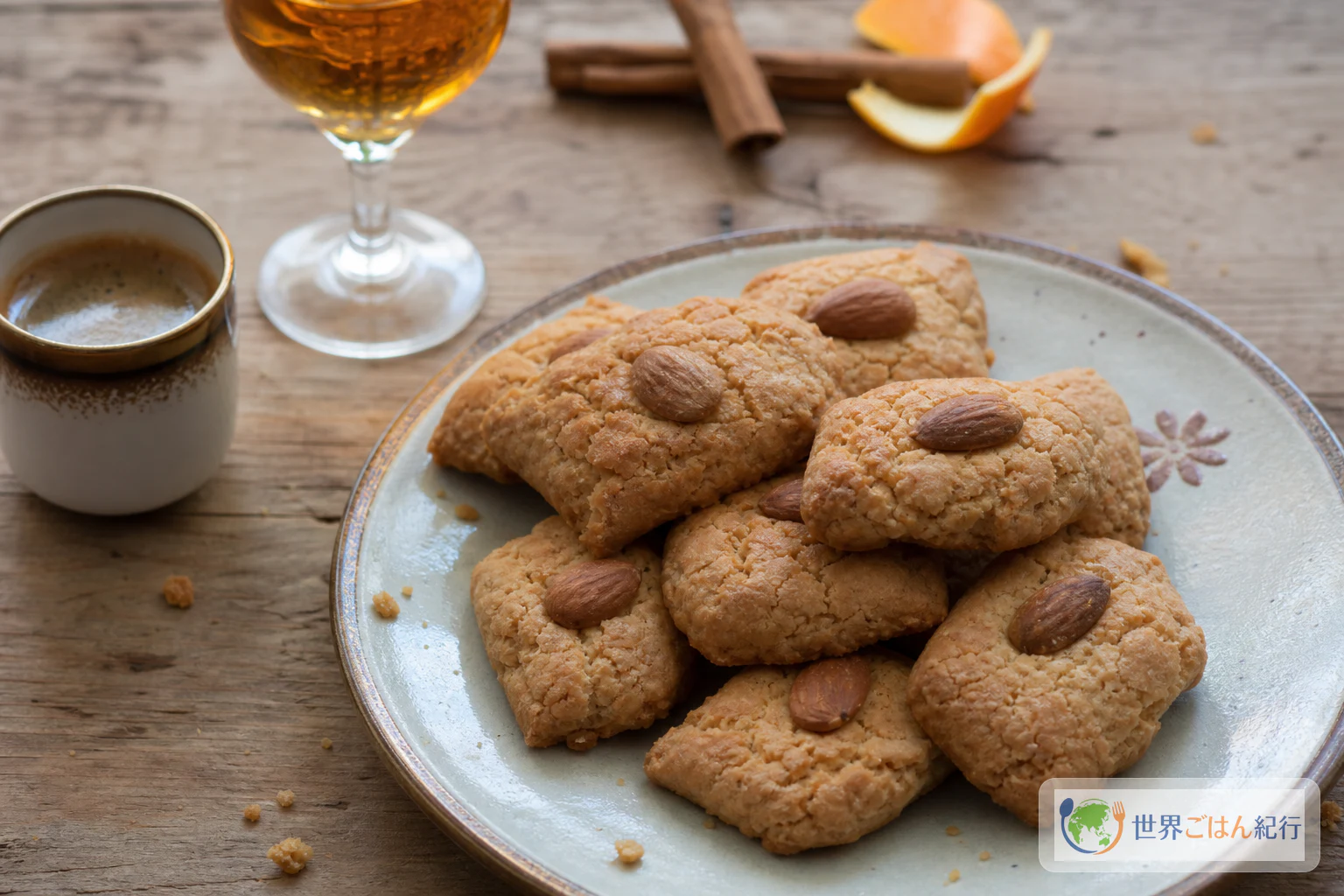
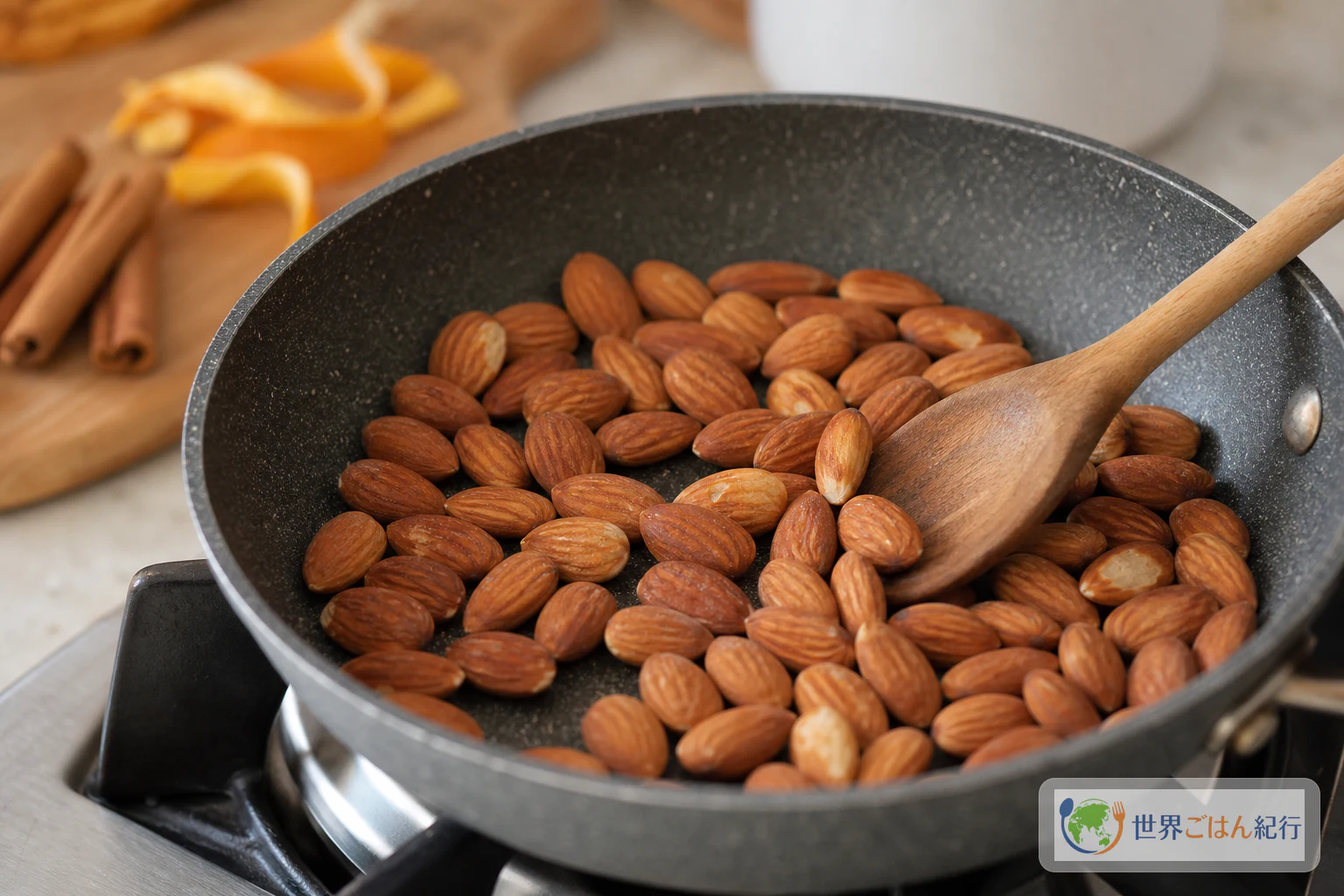
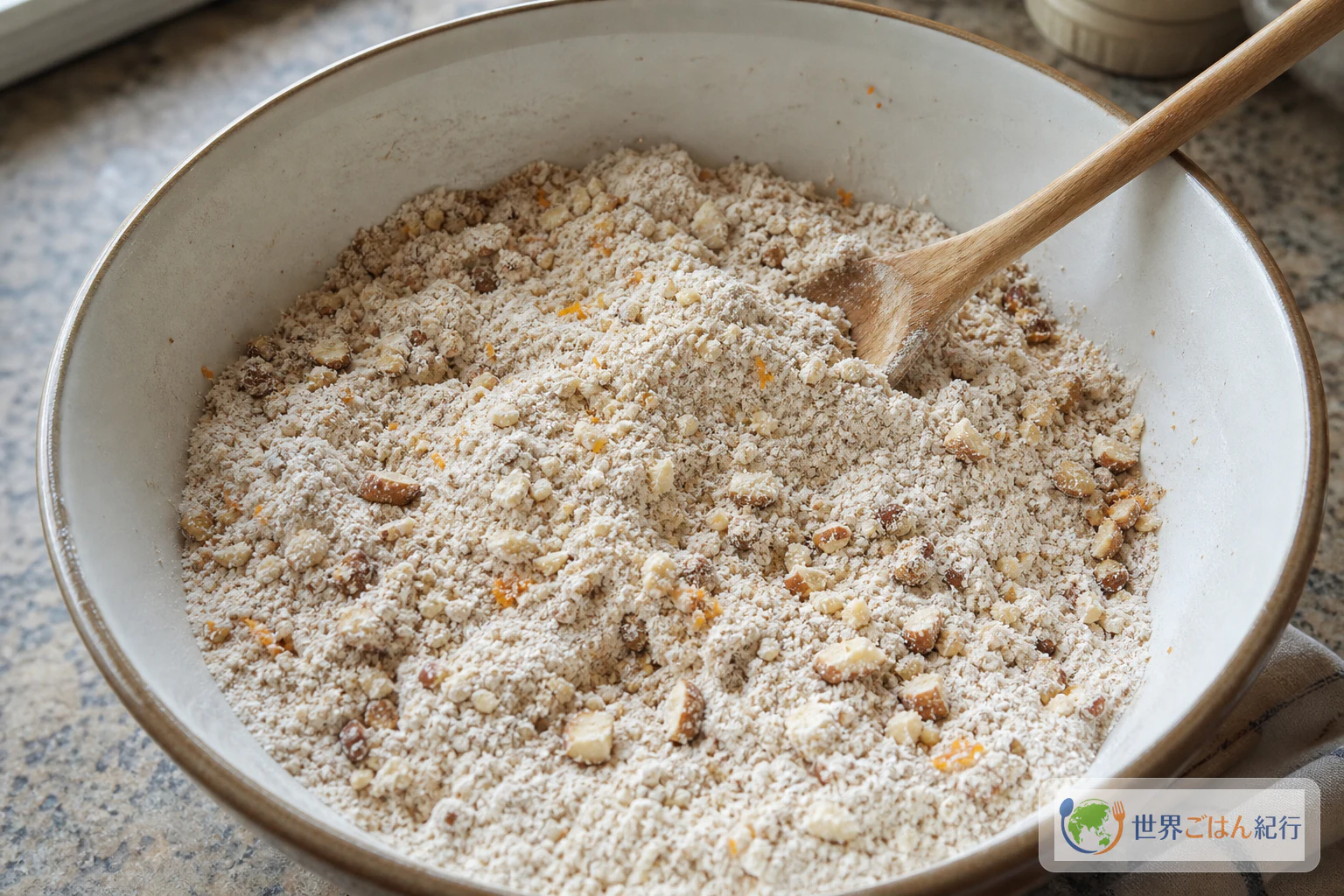
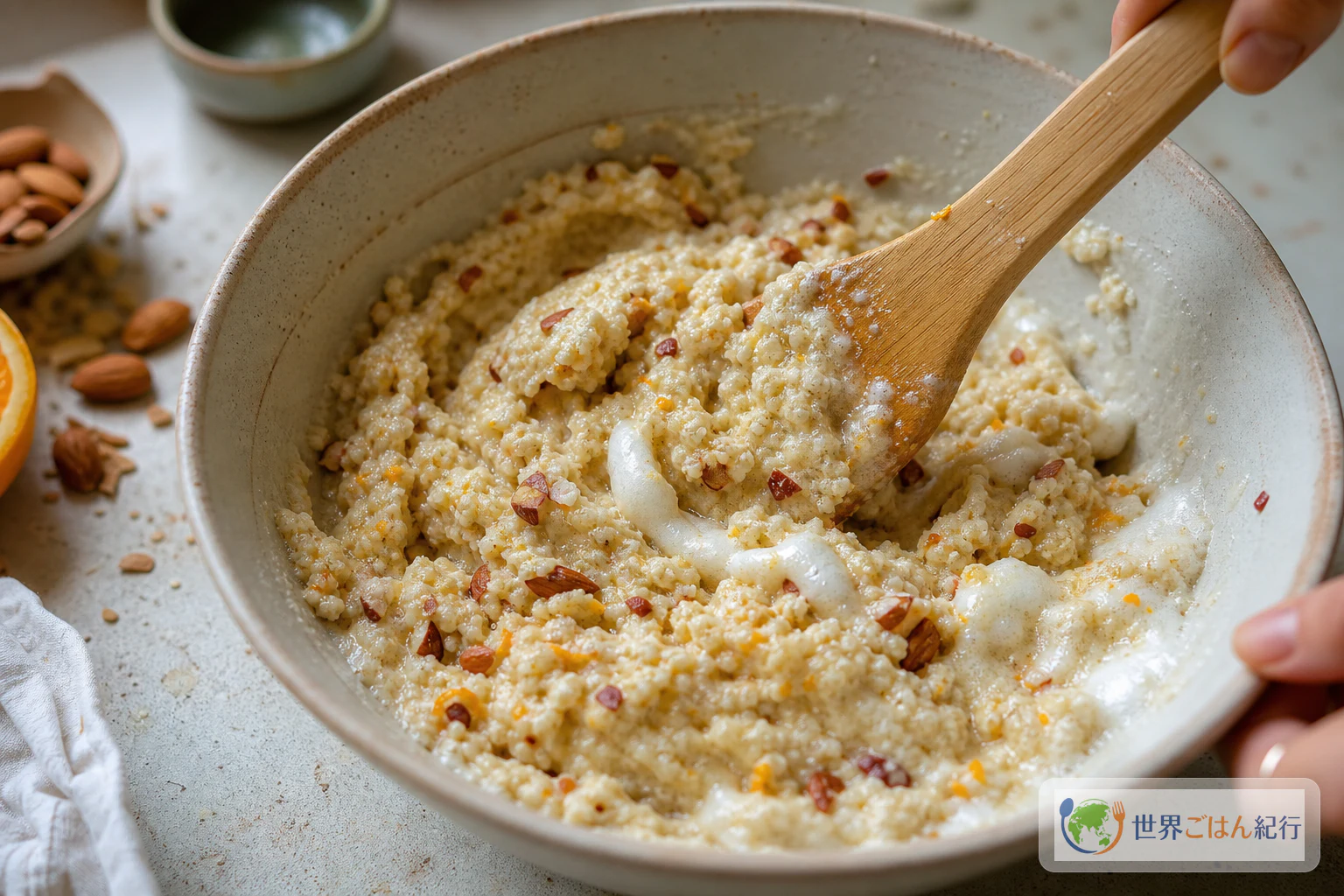
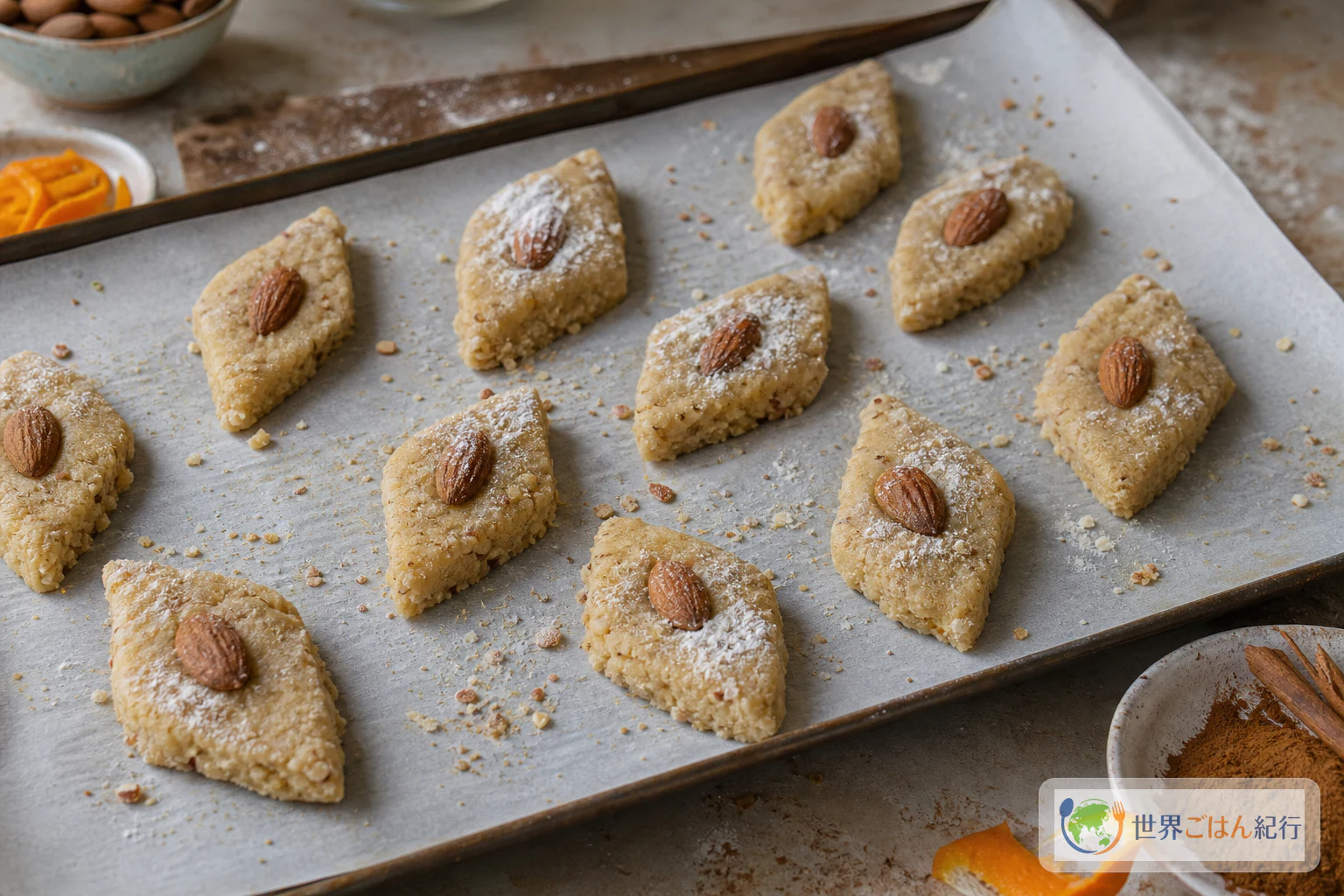
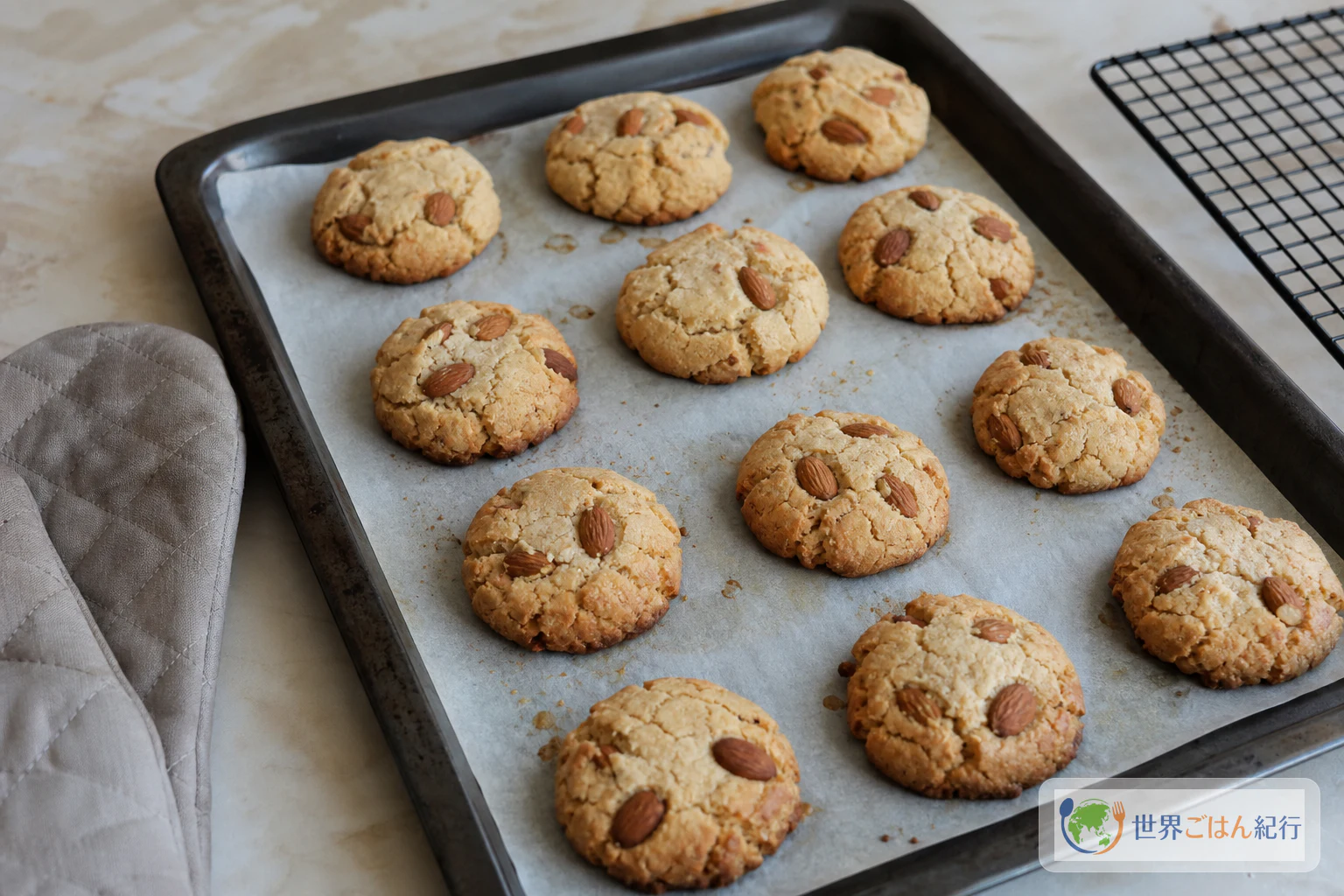
Crush dry-toasted almonds and you get less a powder than a rubble of small, stone-like grains. Add orange zest, cinnamon, and cloves, and before anything goes into the oven the kitchen already smells a little like a pastry shop you'd stumble on while traveling. 'Nzuddi ('Nzuddi / Nzuḍḍi) are the almond sweets of eastern Sicily, baked with that coarseness left in. They're golden, a little flat, crisp at the edges, and full of toasted almond, citrus, and warm spice. Next to a showier Sicilian sweet like mpanatigghi, they look plain on paper, but get the fragrance right and they're a small treat for espresso or a glass of sweet wine.
'Nzuddi in Messina and Catania
'Nzuddi were originally made by the Vincenziane nuns. The name is a shortening of "Vincinzuddu," the Messina dialect pet name for Vincenzo. The classic cookie is square and slightly flat, made from flour, chopped almonds, whole almonds, cinnamon, sugar, butter, honey, baker's ammonia, and egg white. They were once baked for the feast of Messina's patron, the Madonna della Lettera, on 3 June. Today you'll find them in pastry shops all year.
They belong just as much to Catania, where they're also made for the Day of the Dead and All Saints' Day, and they count as a typical cookie of both provinces. It's best to think of them as a dry almond sweet of eastern Sicily rather than one correct recipe. Bakers use different amounts of fat, egg, and baker's ammonia, but every version mixes chopped almonds into flour and sugar, adds spice, presses a whole almond into the center, and leans on toasted almond and citrus.
Even on the same island, the contrast with Modica's mpanatigghi is striking: those are half-moons wrapped around chocolate and meat, while 'nzuddi wrap nothing at all. They're closer in spirit to Catalonia's catànies, another almond sweet served after a meal, or the Maghreb's mhancha, which also ends a meal with nuts and fragrance.
Ingredients (makes 18)
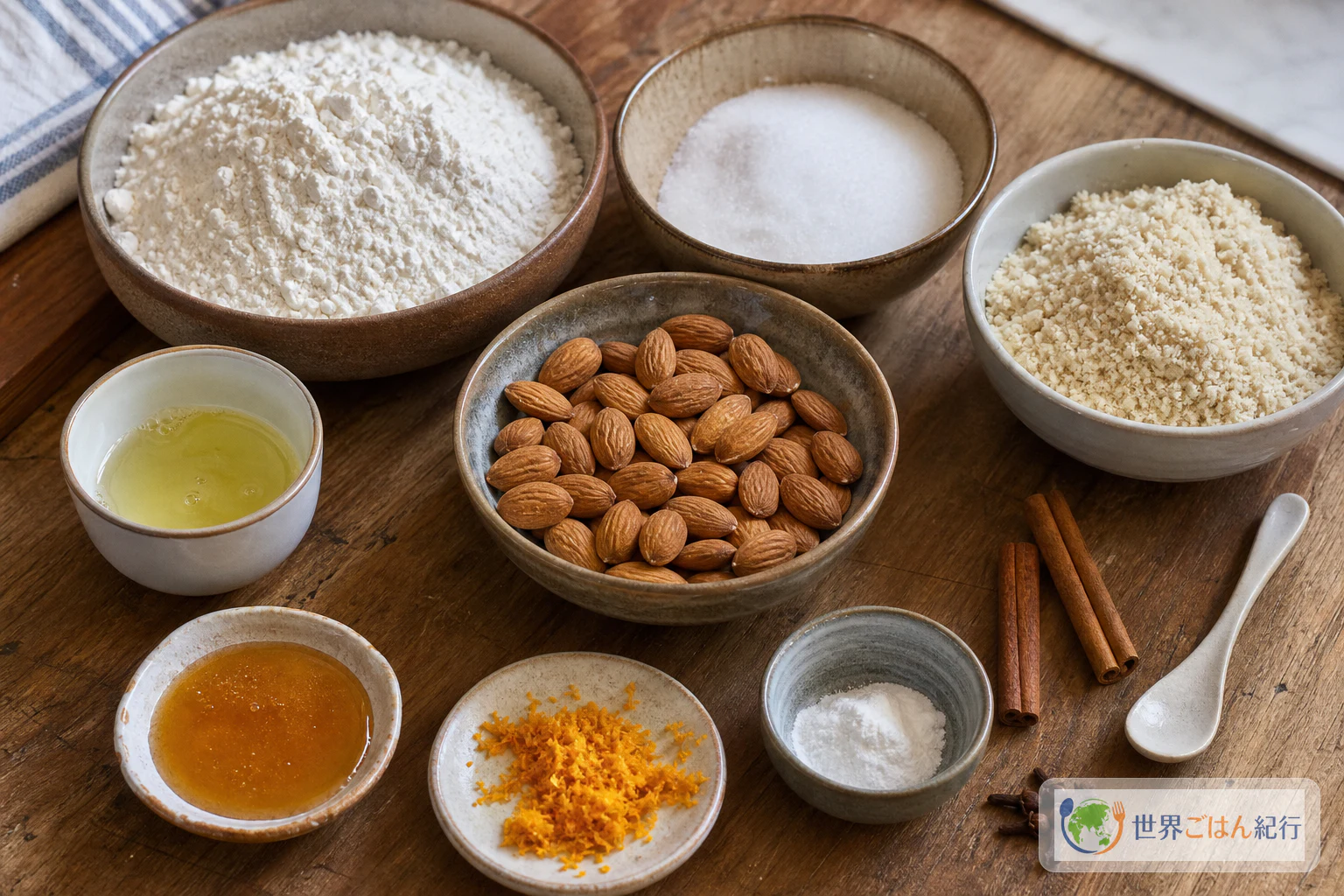
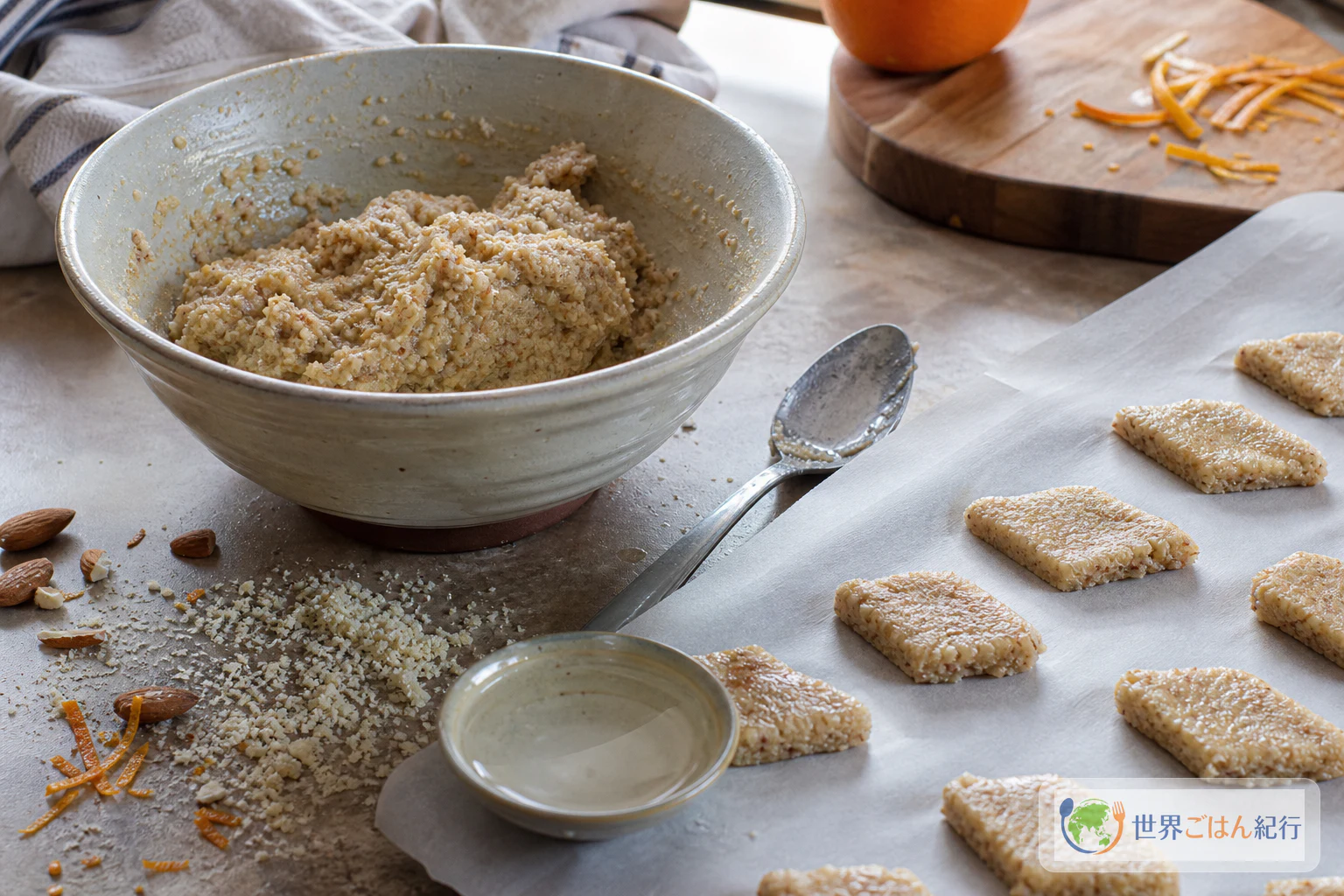
Local 'nzuddi can be large and baked hard. For home, to make them easy to finish, make flat sweets of about 1 oz (30 g) each, 2.5 inches (5 to 6 cm) across after baking. Thick ones are heavy in the center and too thin ones are just hard, so aim for 0.5 inches (1 cm) thick when shaping.
Substitutes and cautions
| Ingredient in question | Closer to local | Realistic option for a home kitchen | What changes |
|---|---|---|---|
| Leavening | Baker's ammonia | Baking powder, 4 g | Milder aroma, slightly softer texture |
| Almonds | Skin-on almonds chopped coarsely | Dry-toast whole almonds and grind coarsely in a food processor | The more grains remain, the more chew |
| Citrus | Candied orange peel | Candied orange peel, or grated zest | Peel leaves a sweet fragrance |
| Fat | Some formulas include butter or lard | Not used in this recipe | Leans toward a plain crunch rather than lightness |
| Drink | Malvasia delle Lipari or Moscato di Pantelleria | Espresso, strong tea, sweet wine | Meeting the sweet finish with bitterness makes it harder to tire of |
This recipe uses wheat, egg, and almonds. If you have a nut allergy, do not substitute; choose a different sweet. Because it contains honey, do not give it to infants under 1 year old.
Choosing ingredients and tools for 'nzuddi
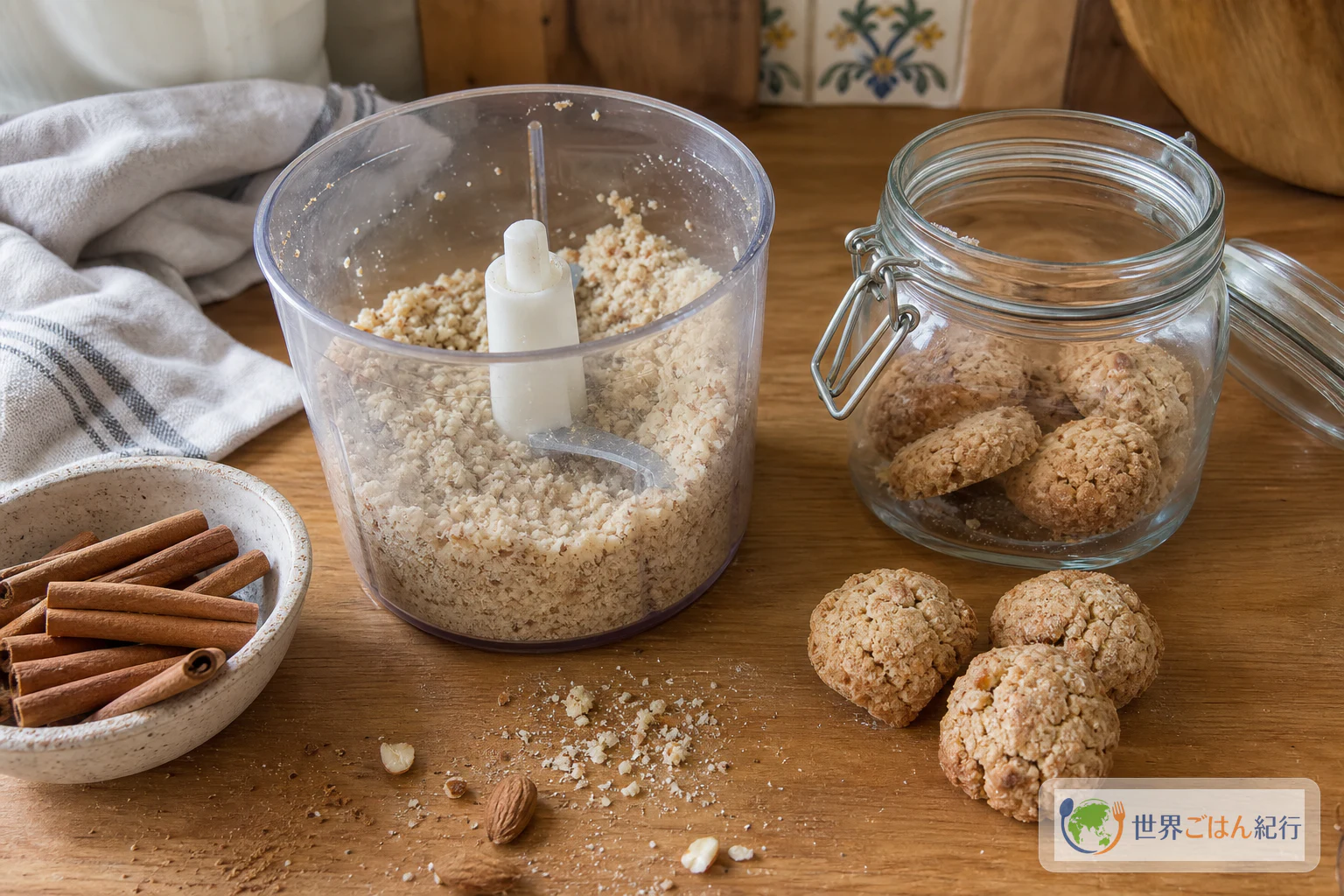
The almonds, flour, sugar, and eggs can all come from an ordinary supermarket. What's worth the effort is whatever keeps the fragrance and the coarseness consistent: freshly opened cinnamon, a small food processor that won't turn the pieces to powder, and an airtight container for after baking.
Cinnamon is about freshness, not quantity. A small amount that still has its fragrance holds the flavor together better than a lot of it, and a generous spoonful of old powder only pushes a floury taste forward. Buy a small jar you'll actually use up.
You can chop the almonds with a knife, but in larger batches the pieces end up uneven. To get 0.125 inch (2 to 4 mm) pieces without drifting into almond flour, short pulses in a small food processor are steadier.
The local formula uses baker's ammonia, a leavening agent common in old Italian baked sweets. It's hard to buy reliably, and its smell during baking can be alarming the first time, so this recipe swaps in baking powder. Cinnamon, cloves, orange zest, and honey carry the fragrance, and the coarse almonds keep the chew typical of Messina sweets. The result is crisp outside and slightly moist at the center, rather than the hard, dry texture of the local version.
How to make them: grind coarsely, bake flat
The work itself is not hard. What separates success from failure is not making the almonds too fine, not loosening the dough with too much water, and not baking to too dark a color. They puff up a little round while baking, so leave space between them on the tray.
Don't bake them through until dry and hard like biscotti. At home, aim for crisp outside once cool and a slightly moist center. They firm up the next day, so for the first batch, bake a little less.
Common 'nzuddi problems and fixes
Things rarely go dramatically wrong with 'nzuddi. Instead the fragrance turns blurry, the cookies come out too hard, or the inside feels heavy. Since the dough is mostly flour and sugar, tasting along the way tells you little about the finished texture, so the firmness of the dough and the point where you stop the color are what keep results consistent.
| What happened | Cause | How to fix next time |
|---|---|---|
| Just a hard cookie | Ground the almonds too fine, or baked too long | Leave 0.125 inch (2 to 4 mm) pieces and stop at 350°F (180°C) when the edges are a light color |
| Weak fragrance | Old cinnamon, too little orange zest | Use recently opened cinnamon and the zest of 1 orange without the white pith |
| Dough spreads | Added the water all at once, too much egg white | Add water 1 tsp at a time; stop when it holds its shape squeezed |
| Floury center | Shaped too thick, not rested enough | Make them 0.5 inches (1 cm) thick and 2.5 inches (5 to 6 cm) across, and rest 15 minutes so moisture spreads through the flour |
| Almond comes off | Pressed in too shallowly, surface dry | Wet your fingertips and press about 0.125 inch (2 mm) into the center |
The baking powder version has a gentler aroma than one made with baker's ammonia, and a slightly rounder texture. For something harder and drier, stop the water at 2 tsp (10 ml), then after baking turn off the oven, open the door slightly, and let them dry on residual heat for just 5 minutes. Try the basic bake first, though: dry them too much and they're hard to bite the next day.
Storing and serving 'nzuddi
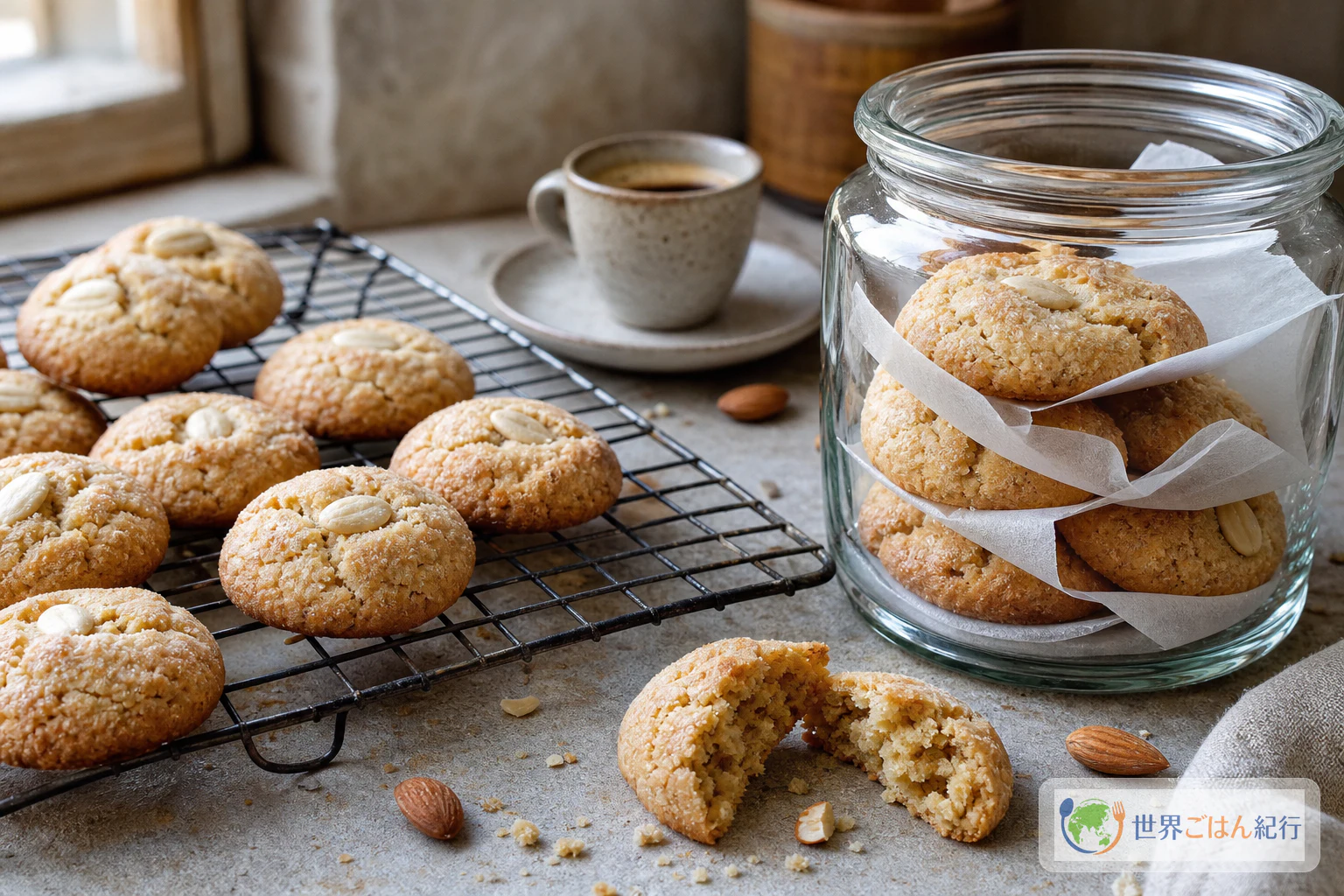
Let the cookies cool completely before sealing them, or droplets form inside the container and the surface turns heavy. Then layer them in a small airtight container with parchment between the layers. In humid weather keep them in the refrigerator, and take them out 15 minutes before eating so the aroma opens up. They're actually better the next day, once the almonds, citrus, and cinnamon have settled together.
To freeze, wrap each one and put them in a freezer bag. Move them to the refrigerator the day before, then on the day warm them for 3 minutes in a 325°F (160°C) toaster oven and cool on a rack for 10 minutes before serving. A microwave alone dampens the center, and the crisp surface won't come back easily.
Humidity is the main enemy: once the surface gets damp, those crisp edges turn heavy fast. If you're bringing them to a gathering, set each fully cooled cookie in a paper cup and line the container with dry paper towel. A cold pack touching the container causes condensation, so if you chill them, wrap the container in a cloth and open the lid just before serving.
Serve them with unsweetened espresso, strong tea, or a sweet wine such as Malvasia delle Lipari or Moscato di Pantelleria. After a meal at home, one or two per person on a small plate is just right.
Frequently asked questions
Can I make it with almond flour only?
You can, but you lose the coarse chew typical of 'nzuddi. If almond flour is all you have, add 20 g of plain roasted almonds chopped coarsely with a knife so the texture isn't monotonous.
Don't they include butter or lard?
Some formulas do. This recipe leaves out fat to keep the dough easy to handle at home, and holds it together with egg white and honey instead. For a more crumbly softness, melt 25 g unsalted butter, add it with the egg whites, and reduce the water by 2 tsp (10 ml).
Which is correct, square or round?
The classic shape is square and slightly flat, and Catania versions are also made round and flat. Either a square with rounded corners or a flat round works at home; what matters is keeping the thickness to about 0.5 inches (1 cm).
What is a good dish to serve them after?
They're small after-dinner sweets, so they fit nicely after a light Italian meal like panzanella or risotto. Bake them alongside mpanatigghi and you'll see how differently two sweets from the same island use fragrance.
What if they harden the next day?
Warm them lightly rather than adding moisture. A 325°F (160°C) toaster oven for 2 to 3 minutes, then 10 minutes on a rack, brings back the surface and the fragrance. Moisture during storage makes the surface heavy, so if you like dunking them in a drink, do it just before eating.