Potica: Slovenian Walnut Roll for the Holidays (Orehova Potica)

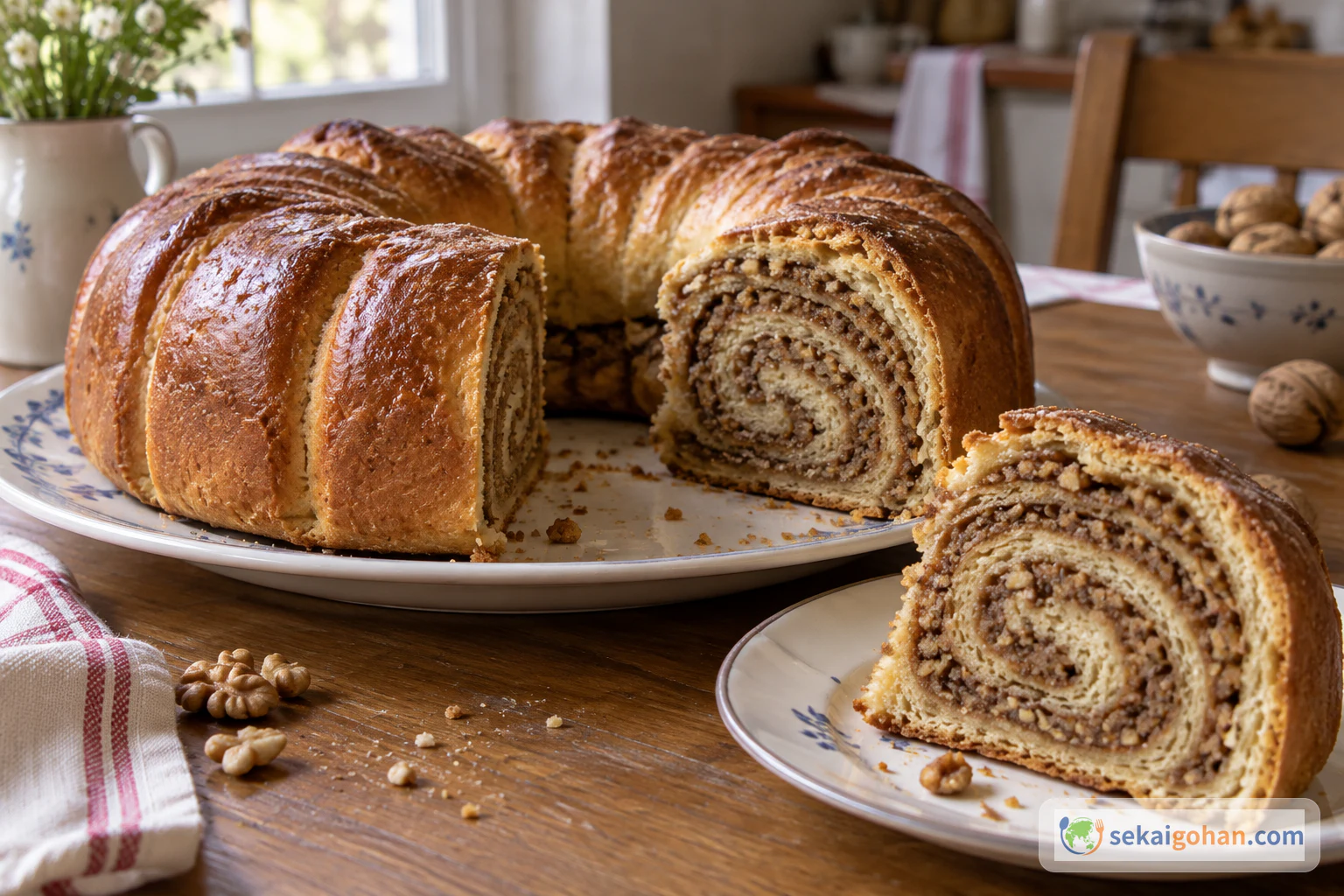
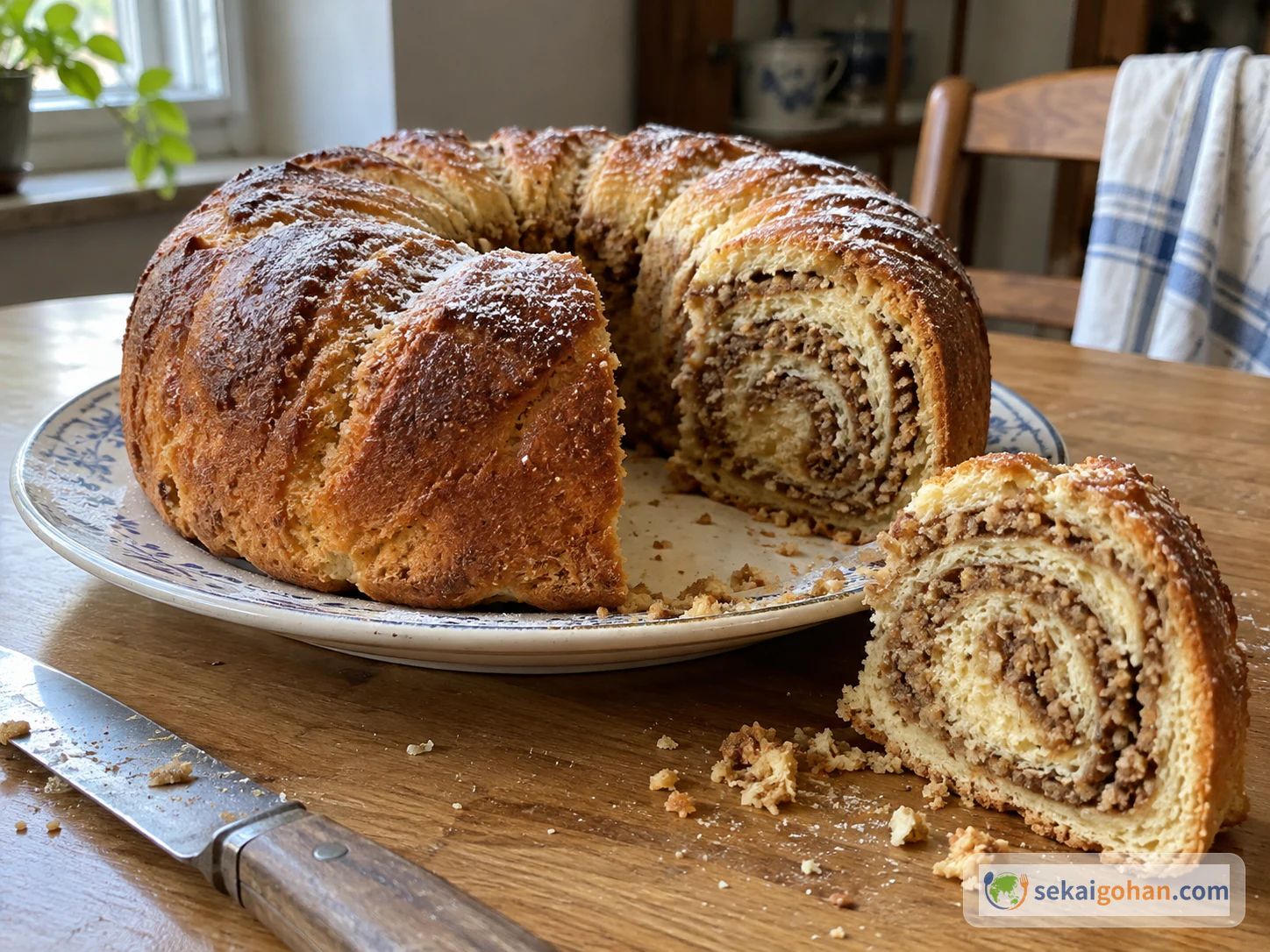
Slovenian potica with the walnut spiral visible in its cut surface
Level
Intermediate
Cuisine
Slovenian

How to make potica, the Slovenian festive pastry of rolled yeast dough, in a classic walnut version. Covers the dough, walnut filling, tight rolling, the round mold and two-stage baking, plus what the recipe leaves open and how recipes differ from family to family.

Cooking flow

Cooking steps

STEP11 / 8

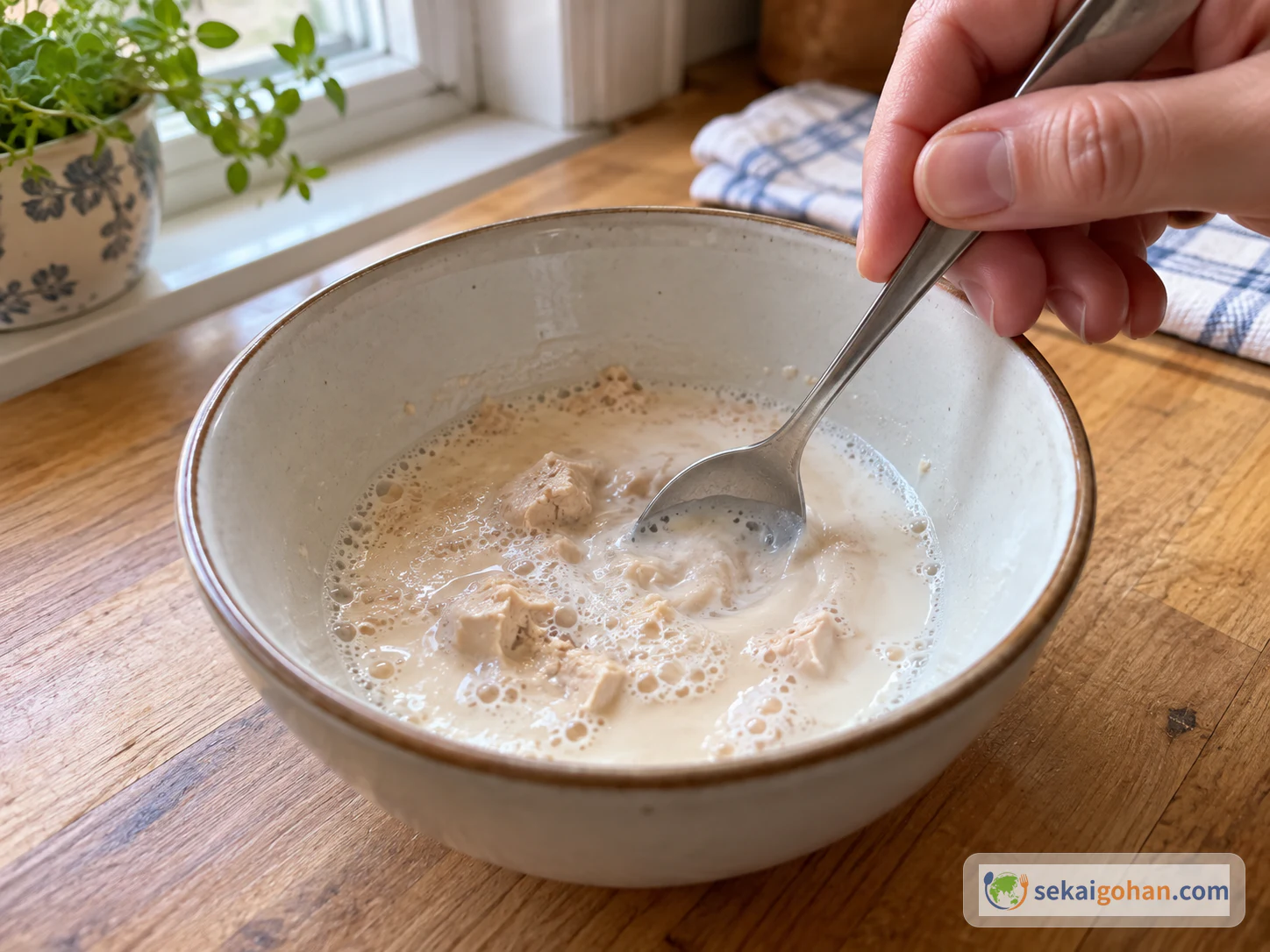
Wake the yeast

Fresh yeast mixed with lukewarm milk and sugar, proofing in a small bowl
The starter uses its own small amount of milk and sugar

Mix 3 tbsp lukewarm milk, 1 tsp sugar and 20 g fresh yeast in a small bowl. Leave it in a warm place until the yeast is active and begins to foam. Do not take this milk from the 2 cups (500 ml) meant for the dough.

STEP22 / 8

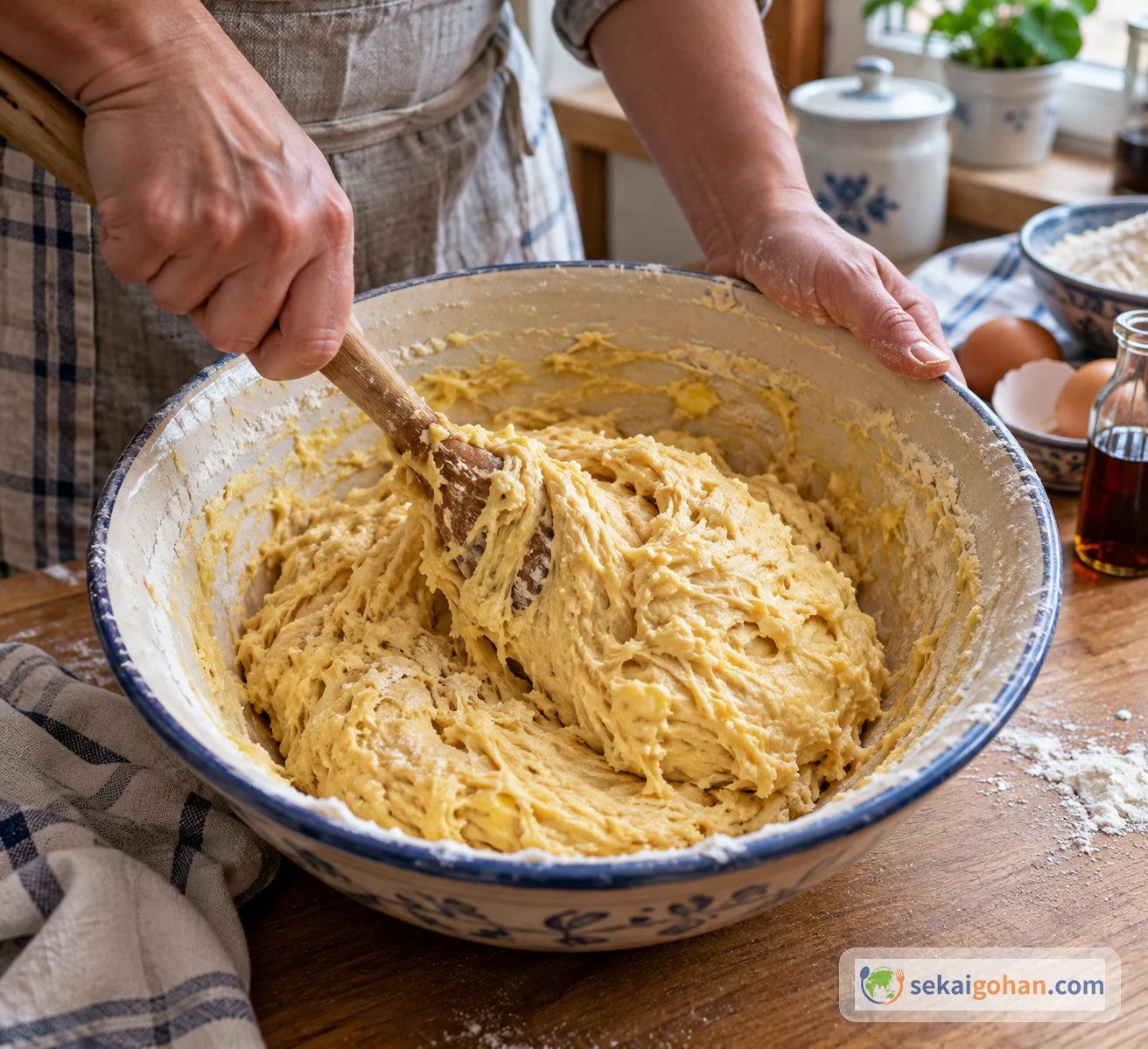
Beat the dough and let it rise

Potica dough with egg yolks and yeast being beaten hard in a bowl
Beat the dough with a spoon for 20-30 minutes

In a large bowl, combine 2 cups (500 ml) warm milk, 3.5 oz (100 g) melted unsalted butter, 2-3 tbsp sugar, 1 tsp salt and 1.75 lb (750 g) warmed flour. Add the yeast starter, 2 egg yolks, a little rum, lemon zest and vanilla sugar.

Beat vigorously with a spoon for 20-30 minutes. Dust the surface with flour, cover the bowl and let the dough rise. Judge the rise by how much the dough has swelled, not by the clock.

STEP33 / 8

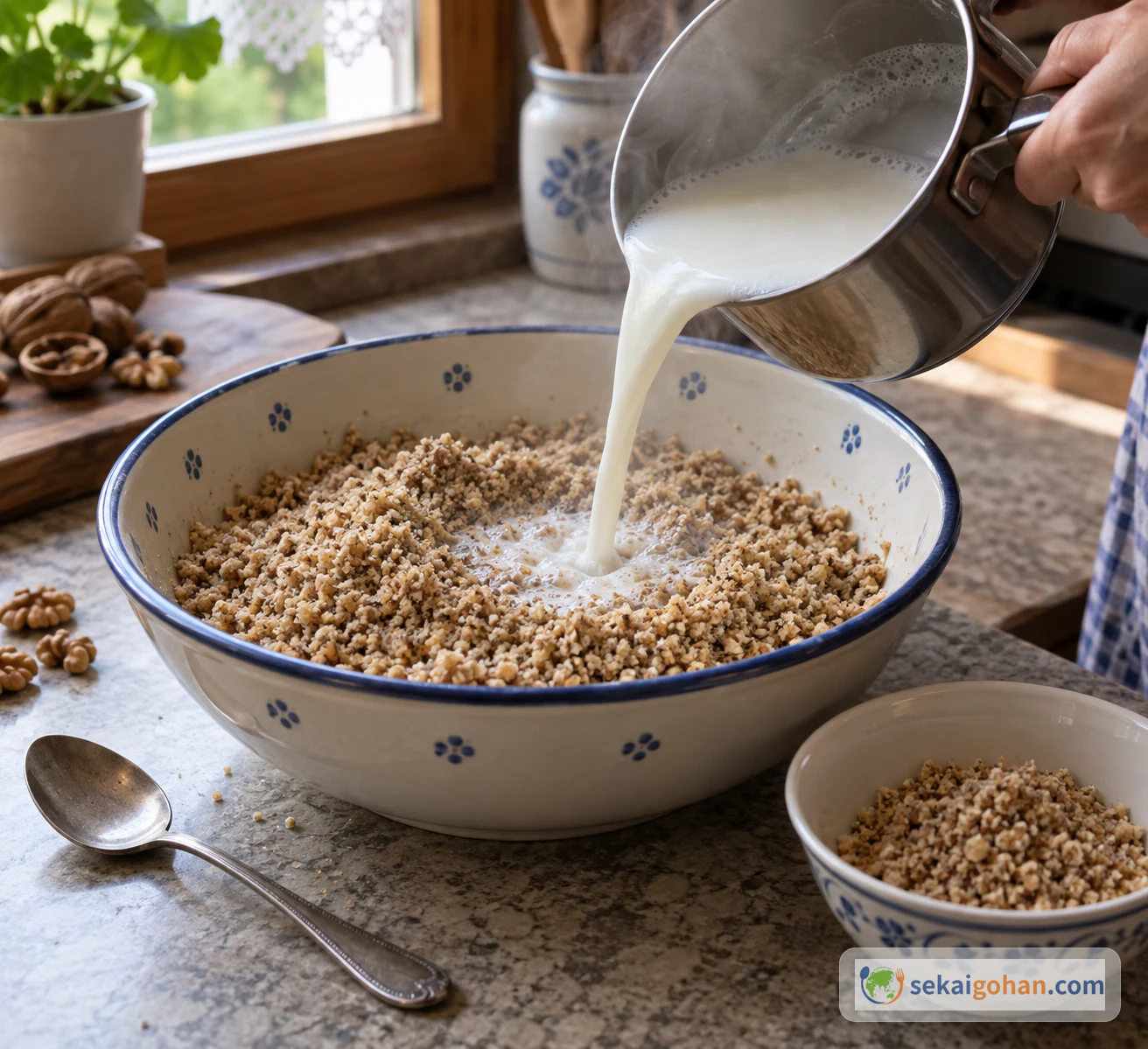
Grind the walnuts and pour on the hot milk

Part of the ground walnuts set aside while hot milk is poured over the rest
Keep the reserved walnuts out of the milk

Grind 2.25 lb (1000 g) shelled walnuts finely. Set aside 2-3 handfuls in a separate dish for sprinkling later. Pour 1 cups (250 ml) hot milk over the remaining ground walnuts and let them cool.

STEP44 / 8

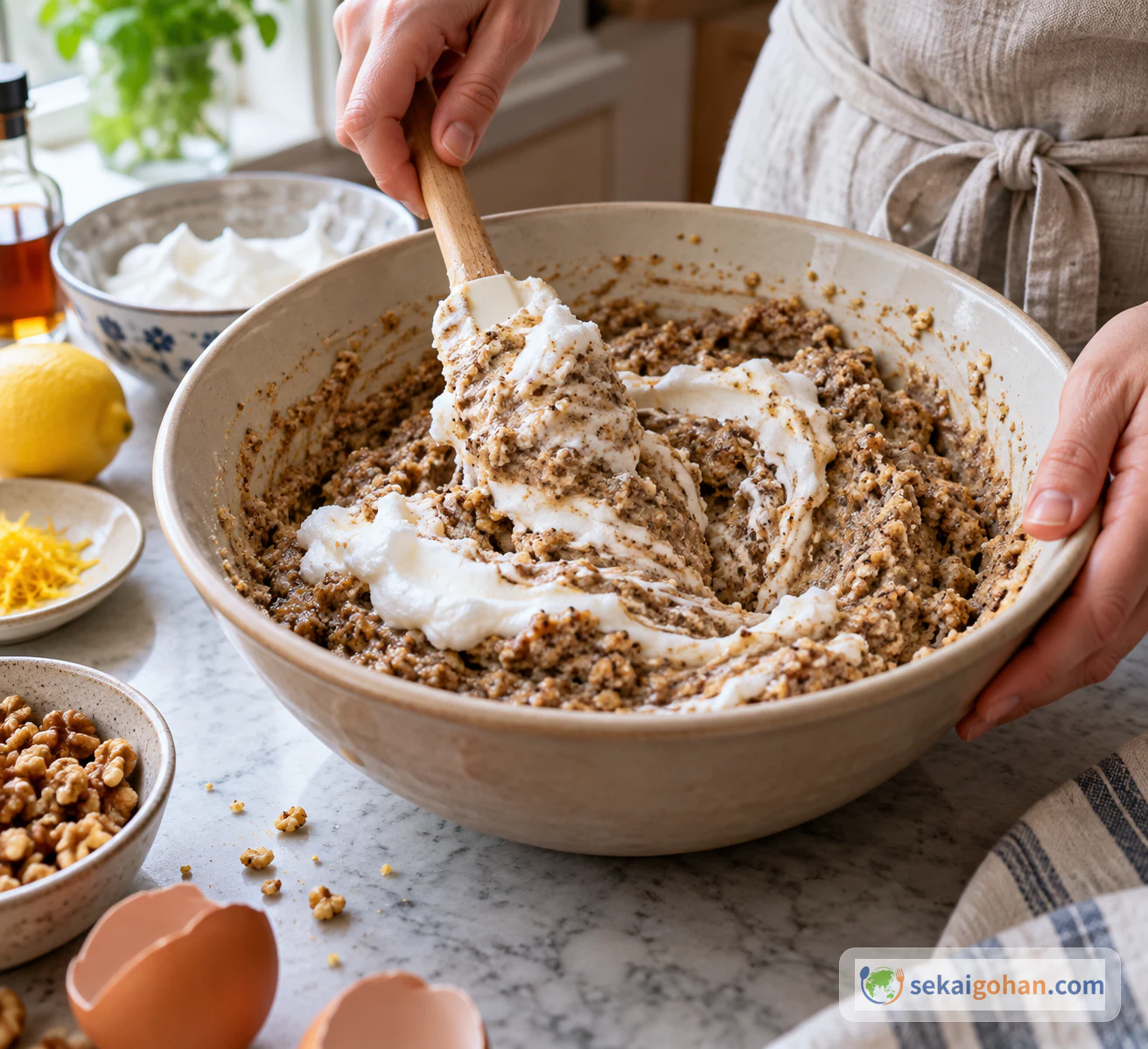
Finish the filling and fold in the whites

Dairy and egg yolks mixed into cooled walnuts, with whipped egg whites being folded in
The whipped whites go in last, with a gentle hand

Once the walnuts have cooled, mix in lemon zest, 2 tbsp sugar, 2 sachets vanilla sugar, 9 oz (250 g) sour cream, 5.5 oz (150 g) melted butter, 2 egg yolks and 3.5 tbsp (50 ml) rum.

In a separate bowl, whip the whites from 2 eggs until they hold stiff peaks. Gently fold them into the walnut mixture as the last addition.

STEP55 / 8

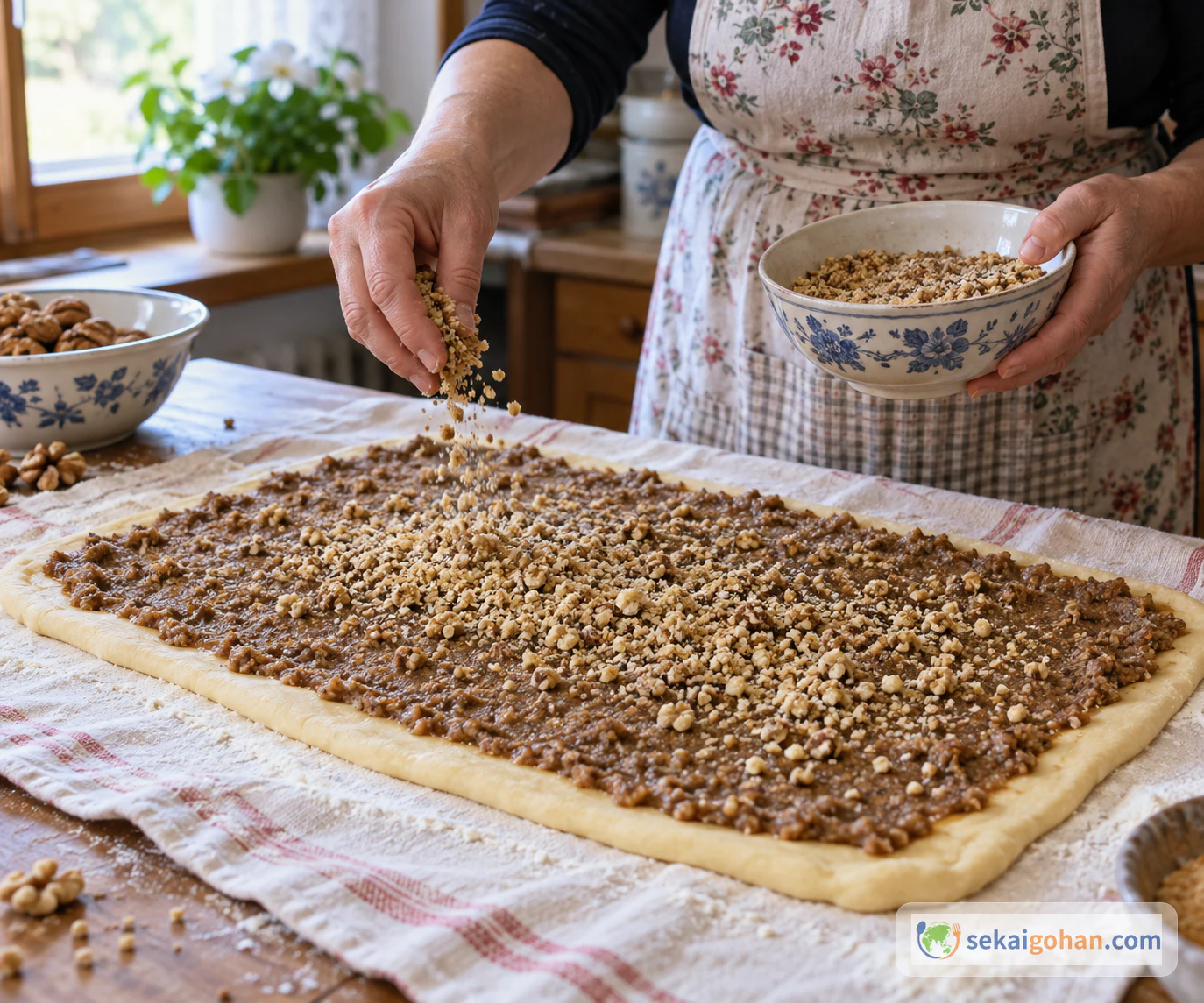
Roll out the dough and spread the filling

Walnut filling spread over risen dough rolled into a rectangle
An even layer of filling helps the roll stay even

Turn the risen dough onto a floured surface. Roll it out to the thickness of a finger and shape it into a rectangle. Spread the filling evenly over the dough, then sprinkle the reserved ground walnuts on top.

STEP66 / 8

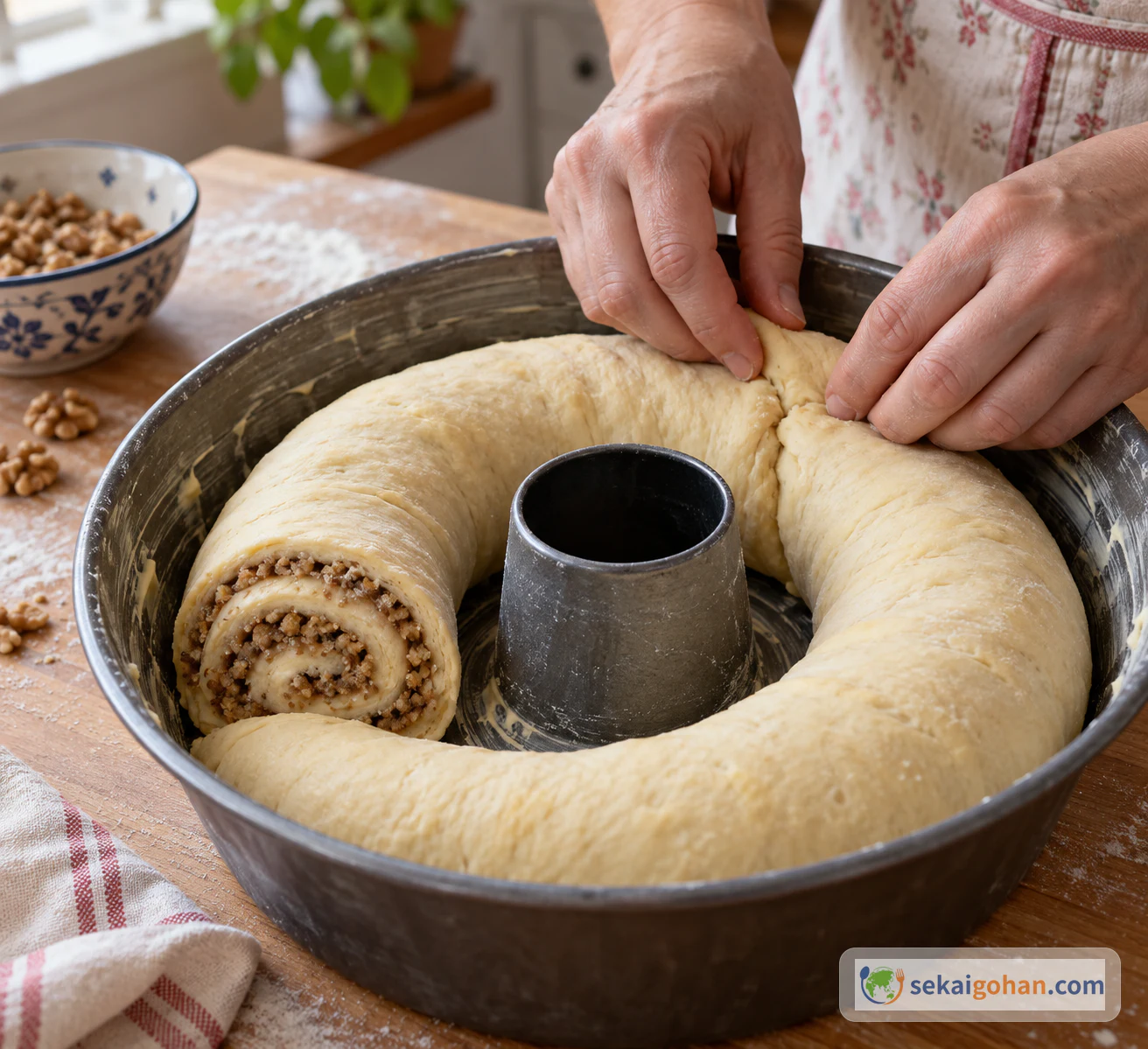
Roll tightly, fit the mold and let it rise again

Dough rolled tightly around the walnut filling and settled into a round mold
Bring the two ends together at the seam

Roll the dough up tightly, without pushing the filling out. Lay the roll in the buttered round potica mold and join the two ends.

If the roll is too long, cut off the extra and bake it in a small square dish. Keep an eye on it.

Cover the mold and let the potica rise again in a warm place. Judge this rise by the swelling of the dough as well.

STEP77 / 8

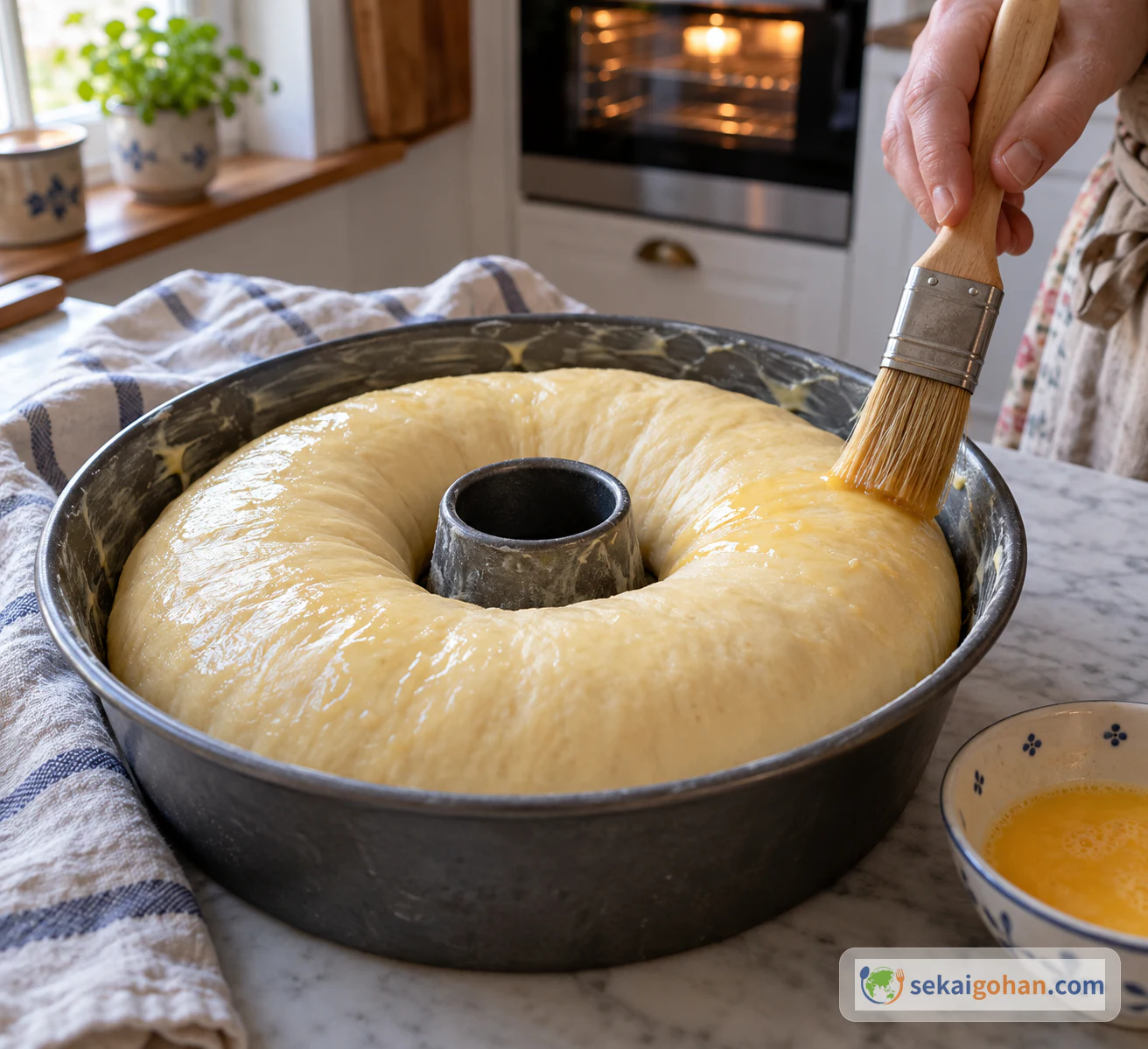
Glaze and bake in two stages

Risen potica in a ring mold being brushed with egg before baking
Brush on a thin coat of beaten egg just before baking

Beat the whole egg and brush a thin coat over the outside of the risen potica. Bake at 350°F (180°C) for about 45 minutes, then lower the oven to 300°F (150°C) and bake for about 25 minutes more. Molds and ovens differ, so do not judge doneness by color alone.

STEP88 / 8

Turn out, cool and cut

Cooled potica being cut into wedges
Cutting into wedges shows the spiral

Invert the mold to turn the potica out, then let it cool. Dust with powdered sugar if you like, and cut into wedges.

0 / 0
Ingredients

Ingredients

1 / 1

Ingredients

Ingredient Amount Role
Lukewarm milk 3 tbsp Yeast starter
Sugar 1 tsp Yeast starter
Fresh yeast 20 g Yeast starter
Warm milk 2 cups (500 ml) Dough
Unsalted butter, melted 3.5 oz (100 g) Dough
Sugar 2-3 tbsp Dough
Salt 1 tsp Dough
Rum a little Dough
Lemon zest to taste Dough
Vanilla sugar to taste Dough
All-purpose flour, warmed 1.75 lb (750 g) Dough
Egg yolks 2 Dough
All-purpose flour as needed Dusting the dough and the work surface
Shelled walnuts 2.25 lb (1000 g) Filling, with 2-3 handfuls set aside for sprinkling
Hot milk 1 cups (250 ml) Filling, poured over the ground walnuts
Unsalted butter, melted 5.5 oz (150 g) Filling
Lemon zest to taste Filling
Sour cream 9 oz (250 g) Filling
Vanilla sugar 2 sachets Filling
Sugar 2 tbsp Filling
Egg yolks 2 Filling
Egg whites from 2 eggs Filling, whipped and folded in last. Do not use the eggs that gave the dough yolks
Rum 3.5 tbsp (50 ml) Filling
Butter as needed Greasing the mold
Whole egg, beaten 1 Glaze, brushed on before baking
Powdered sugar as needed Optional finish
0 / 0

At Christmas and Easter in Slovenia, families bake potica for the holiday table. From the outside it's a plain golden ring, and the spiral of dough and walnut filling shows only when you cut the first wedge. Orehova potica, the walnut version, is the classic: a yeast dough rolled tightly around a filling of walnuts, and one of Slovenia's best-known desserts.

Potica in Slovenia

Potica is a rolled yeast pastry for holidays such as Christmas and Easter. It is also a family bake, and many households hand their recipes down. Slovenian potica has protected status as a guaranteed traditional speciality.

The range is wide, with more than 80 known fillings. Walnut, hazelnut, tarragon, poppy seed and cheese are among the most common. Even walnut versions vary. One uses 2.25 lb (1 kg) flour, 600-700 g walnuts, honey and cinnamon, and another honey-walnut version also starts from 2.25 lb (1 kg) flour. For more of the country's food, see our Slovenia page.

Ingredients for Walnut Potica
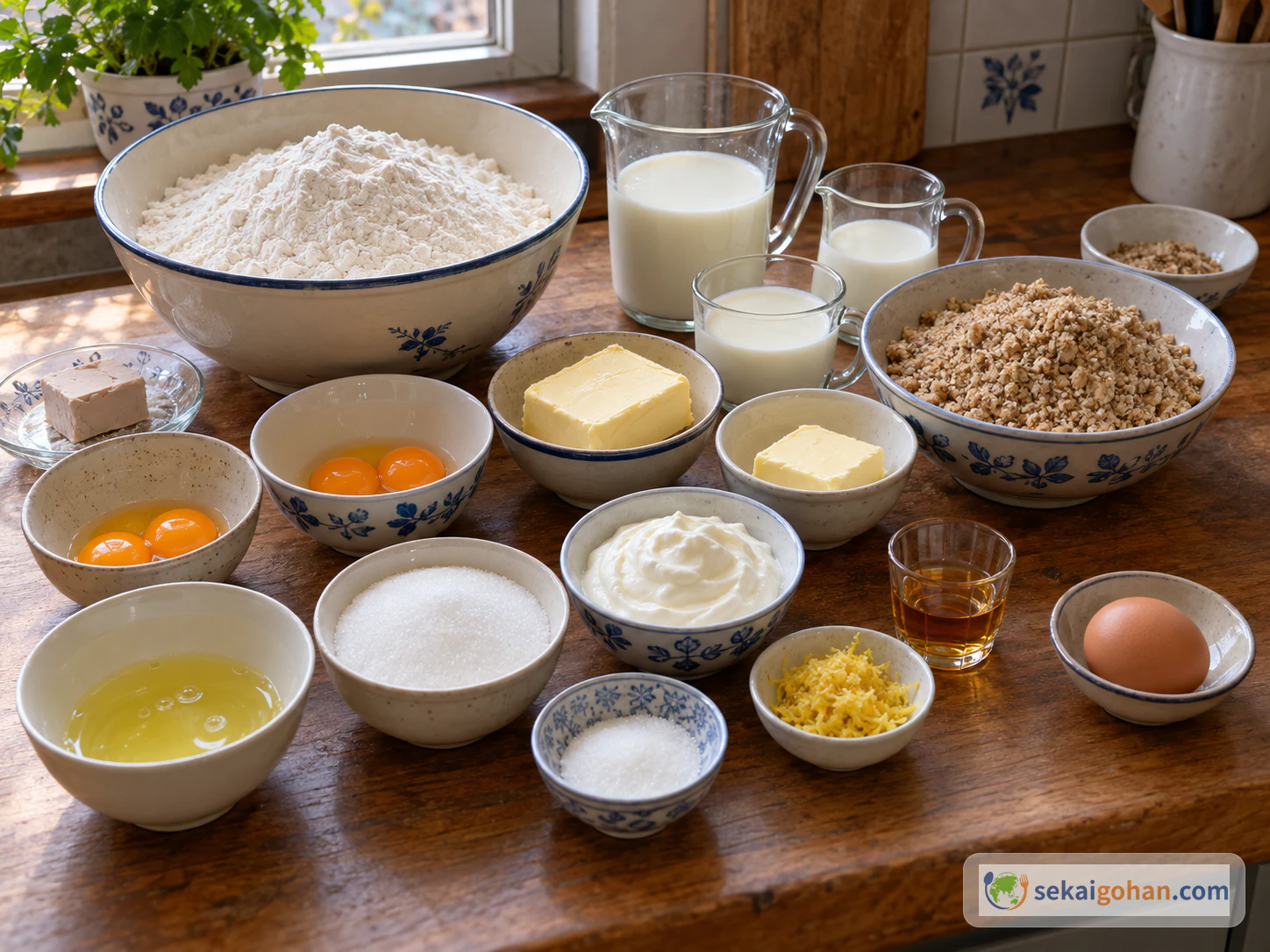
The full set of ingredients for potica dough and walnut filling
Sort the ingredients by stage before you begin
Allergens

This potica contains wheat, eggs, milk, walnuts (a tree nut) and rum. Watch for nut cross-contact as well. Allergy-friendly swaps would make a different pastry from the one described here.

Equipment

  • Round potica mold (potičnik), buttered before use
  • Large bowl and spoon for beating the dough
  • Small bowl for the yeast starter
  • Wide bowl for the walnut filling, plus a separate bowl for whipping the egg whites
  • Grinder for the walnuts
  • Spatula for folding
  • Rolling pin
  • Pastry brush
  • Small square baking dish, in case the roll is too long for the mold
  • Oven

Choosing Ingredients for Walnut Potica

  • Fresh yeast: If you can only find dried yeast, follow the package label and judge by how the dough behaves.
  • Sour cream: It brings acidity and dairy fat to the filling. Unsweetened yogurt changes both the texture and the sourness, so it isn't an equal swap.
  • Vanilla sugar: Brands differ in aroma and sugar content, and sachet sizes vary, so read the label on yours.
  • Flour: Use all-purpose flour for this dough.
  • Egg for the glaze: The potica is brushed with beaten egg before baking, and 1 whole egg covers it.
  • Powdered sugar: A dusting at the end is an optional finish.
  • Mold: Bake it in a round potica mold.

Method: From Yeast Starter to Two-Stage Bake

Plan the two jobs side by side

The filling can be made while the dough rises. Have it ready before the dough is rolled out.

Potica Troubleshooting

Two things that make the spiral

Keep the groups of milk, butter, sugar and egg apart, because each one goes in at a different stage. Roll the dough tightly around an even layer of filling so the walnut spiral shows when the ring is cut.

Problem Likely cause What to do
The dough has not swelled yet The dough needs more time Keep it covered in a warm place and go by the swelling
The whipped whites lose their foam The walnut mixture is still hot Let the walnuts cool first and fold the whites in last
The filling squeezes out while rolling Uneven layer, or pressing too hard Spread the filling evenly and roll tightly without pushing it toward the edge
The dough tears Uneven thickness Roll the dough to an even finger thickness before spreading the filling
The roll is too long for the mold The roll is longer than the mold's circumference Cut off the extra and bake it in a small square dish
The crust looks done early Color does not tell you about the inside Keep checking the bake throughout rather than going by color

Potica Variations

  • Other fillings: Hazelnut, tarragon, poppy seed and cheese potica are separate recipes, each with its own amounts.
  • Honey and walnut: This style uses different proportions, so treat it as its own recipe.
  • No rum: You can leave it out, though the aroma will be weaker. Simply omit it rather than adding water or another liquid in its place.

Frequently Asked Questions

How long should the dough rise?

Go by how much the dough has swelled, not by the clock. The whole recipe takes about 2 hours.

Do I need a special mold?

Use a round potica baking mold. If your roll comes out longer than the mold, bake the extra in a small square dish.

How many people does it serve?

The recipe is written for 4 portions.

Sources