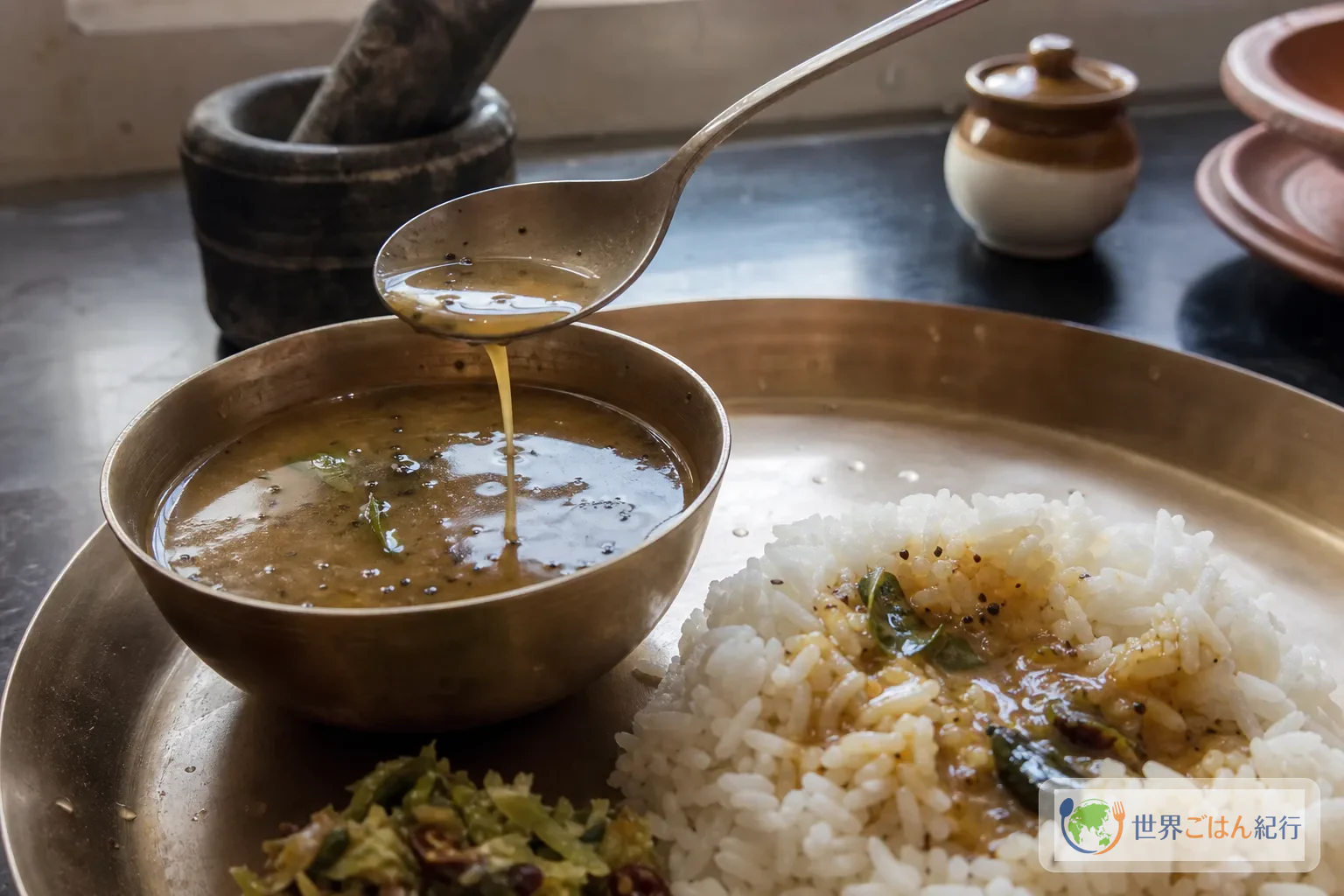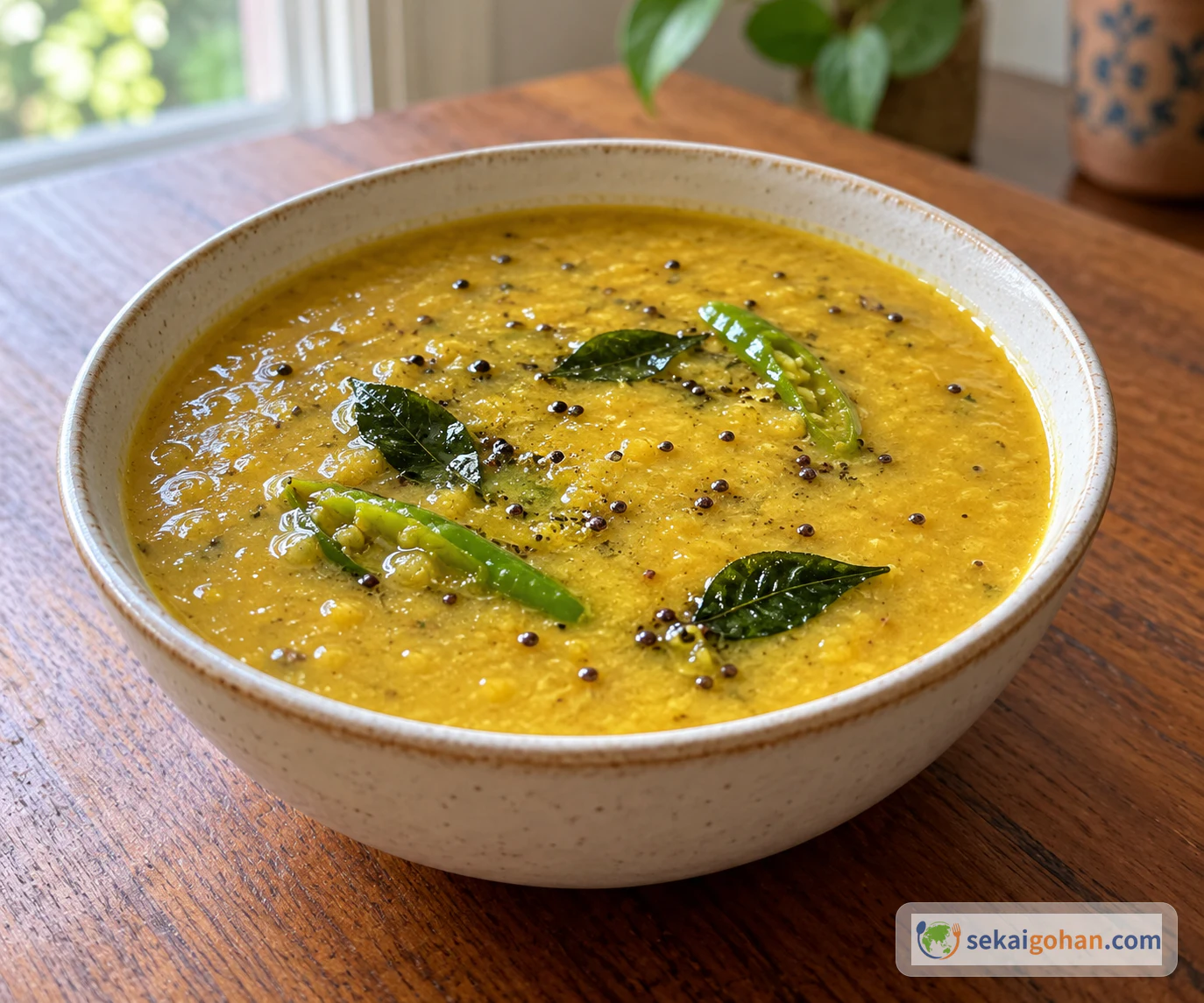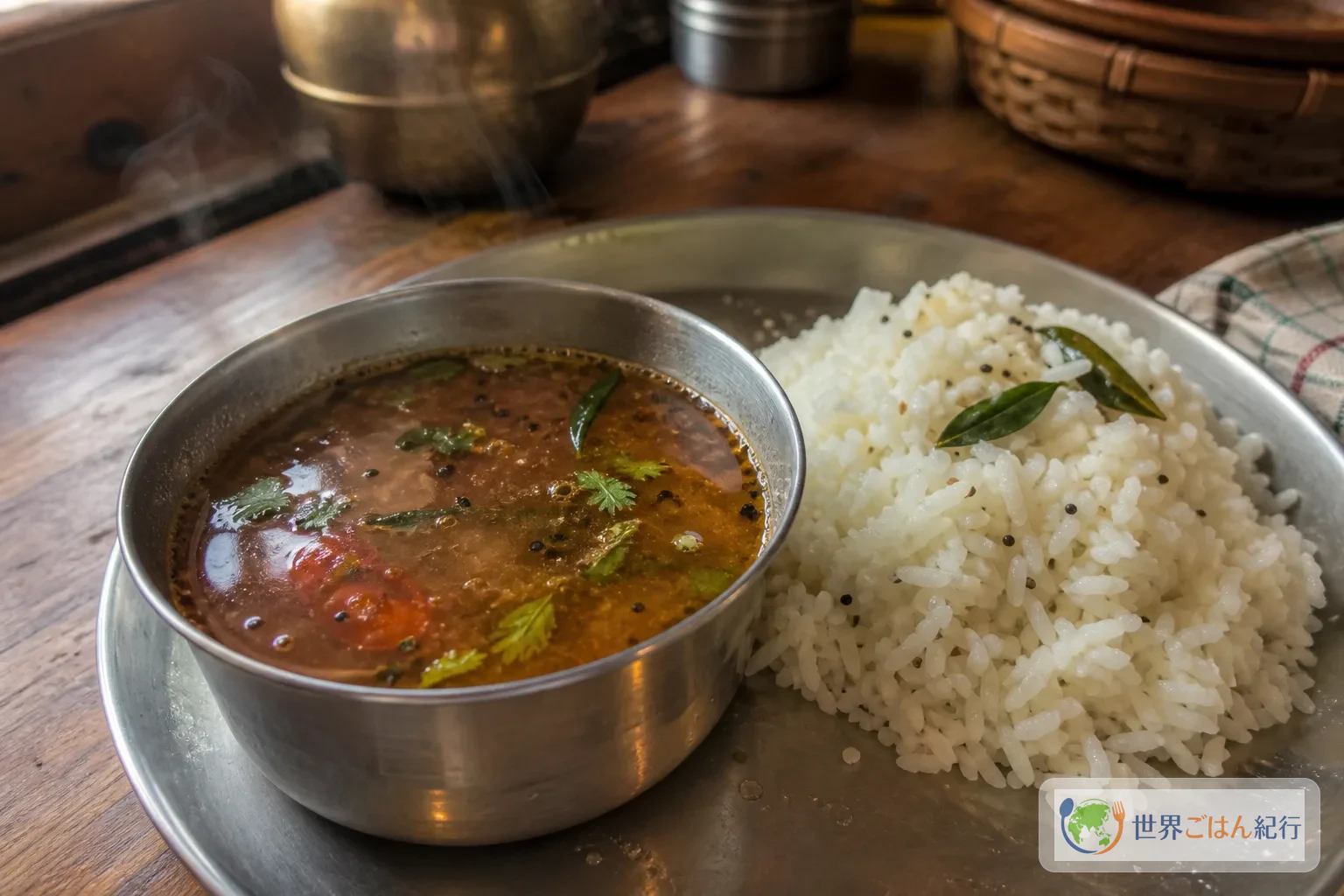
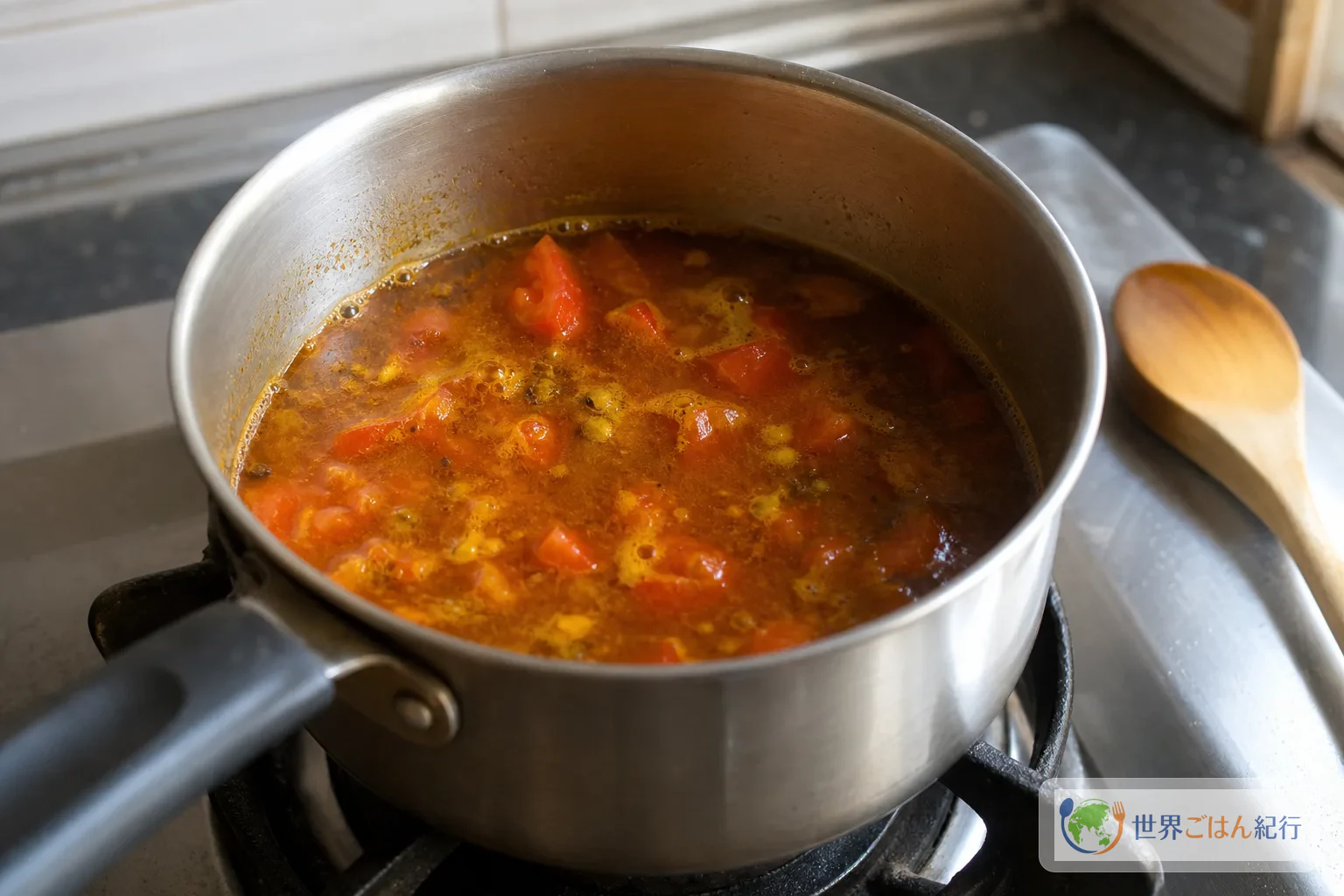
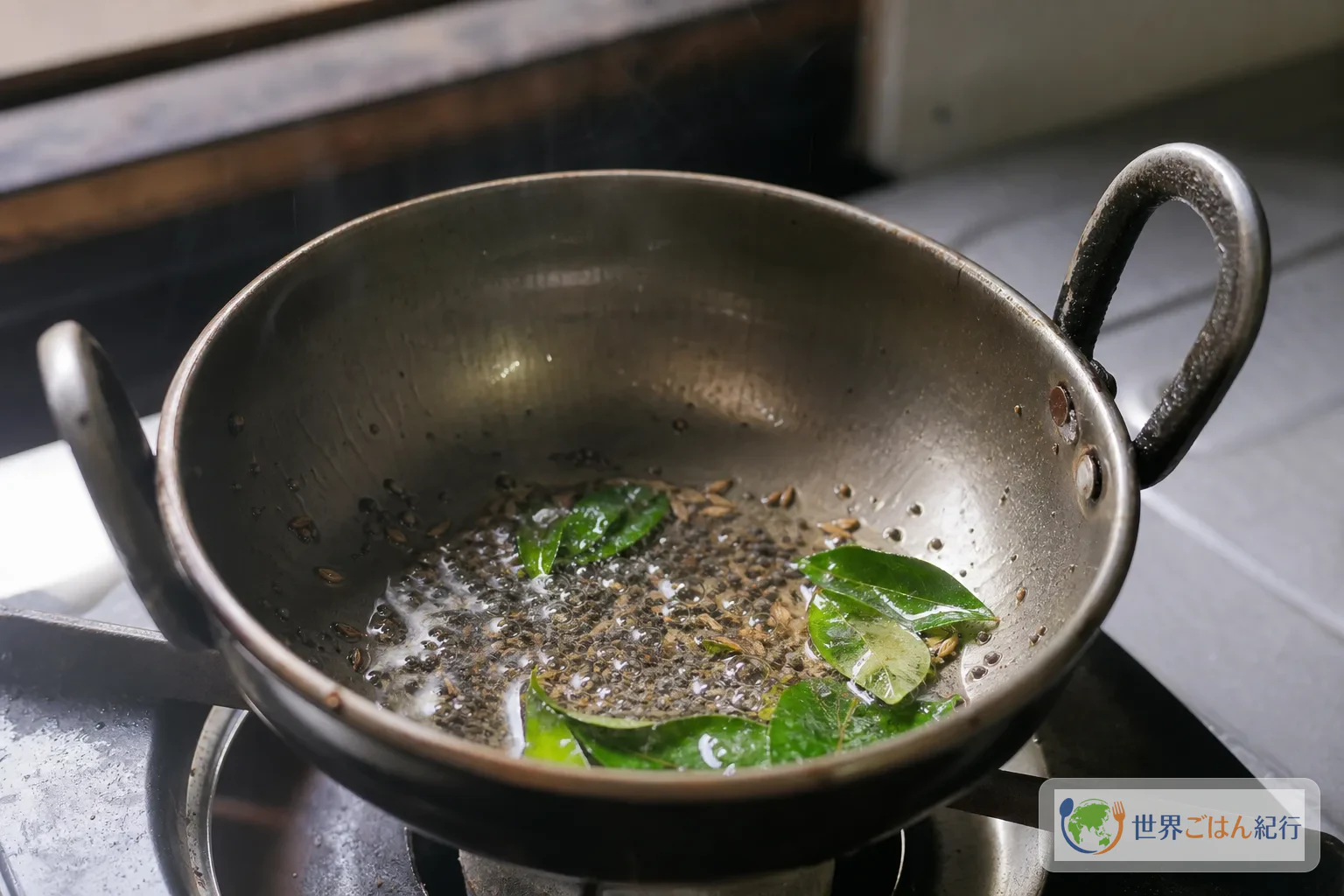
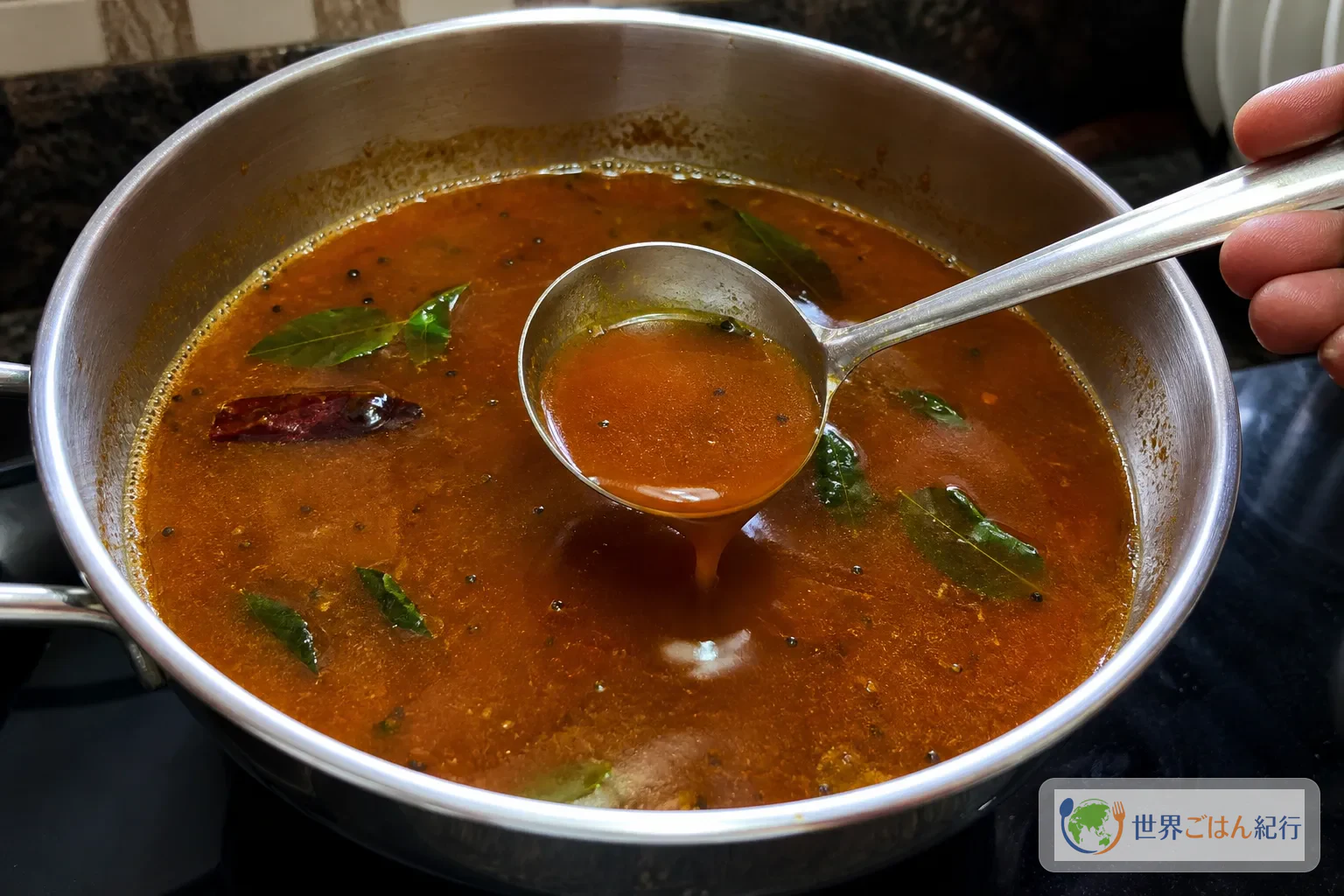
Mustard seeds hit the hot oil in a small pot, and a few seconds later they start to pop. Then the curry leaves crackle, coarsely crushed black pepper and cumin loosen in the oil, and in goes the reddish-brown tamarind water. The steam smells sour, with a little heat at the back of the nose.
Rasam is a thin South Indian soup of sourness and spice, and it's eaten with rice. In a bowl it looks a lot like a thin tomato soup. But boil it too hard and the sourness cooks off. Grind the spices to powder and its sharp flavor goes flat once it's on the rice. Rasam keeps you reaching for more rice because of where the aroma sits, not because of how much goes into the pot. That's why the decisions that matter at home are how much sourness to keep, how coarse to leave the spices and when to add the final tempering.
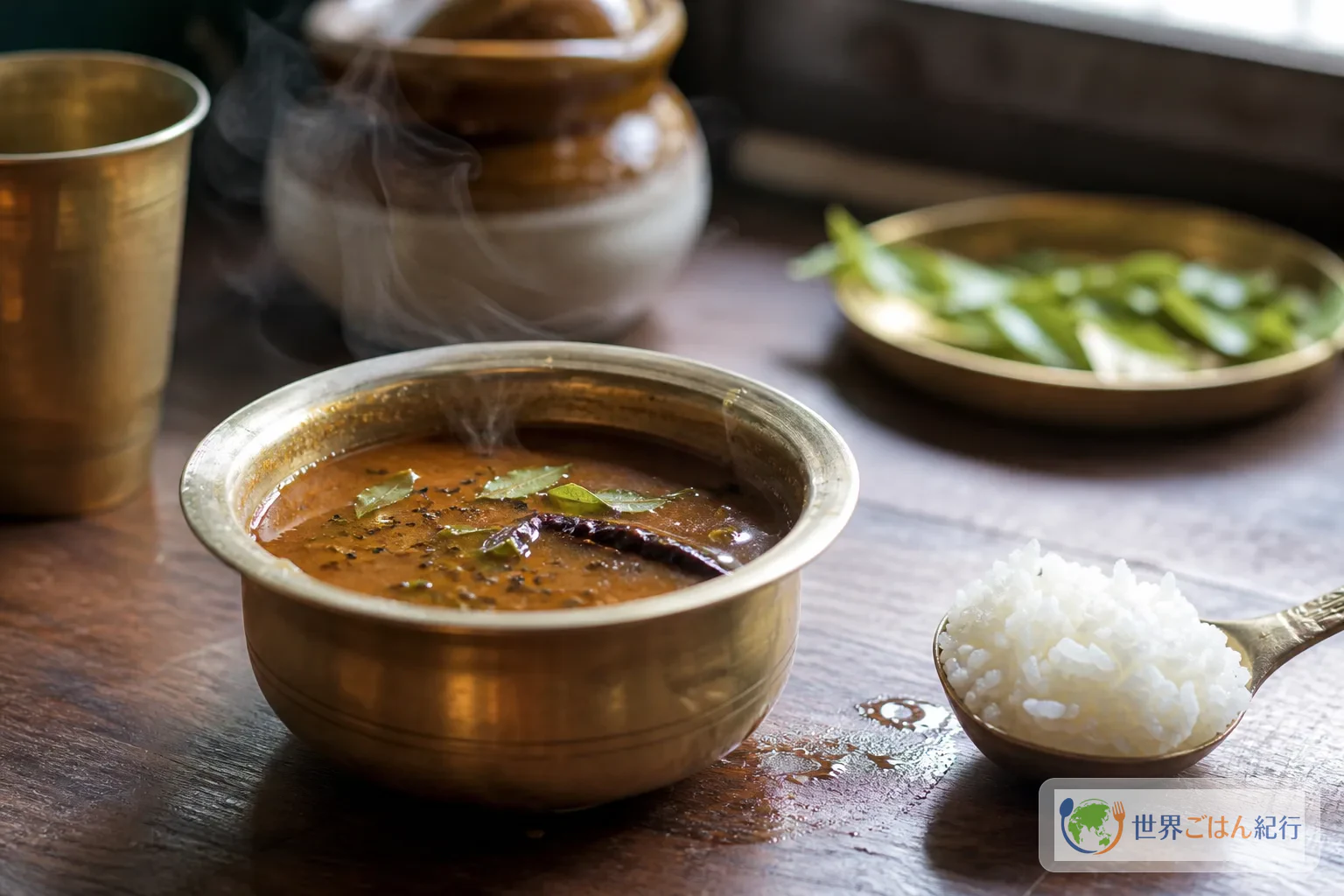
Rasam at the South Indian Table
A Soup That Resets the Palate
Rasam isn't meant to stand alone. A South Indian meal is built around rice, with lentil and vegetable stews, vegetable side dishes, pickles, yogurt and sweets. Rasam's job in that meal is to reset the palate. At Kerala's festival meal, the Onam sadya, it shows up alongside rice, sambar, avial and more. When the table is already crowded with dishes, a light, sour soup worked into the rice does more than one more rich dish would. So rasam shouldn't be loaded with ingredients until it becomes a meal in itself.
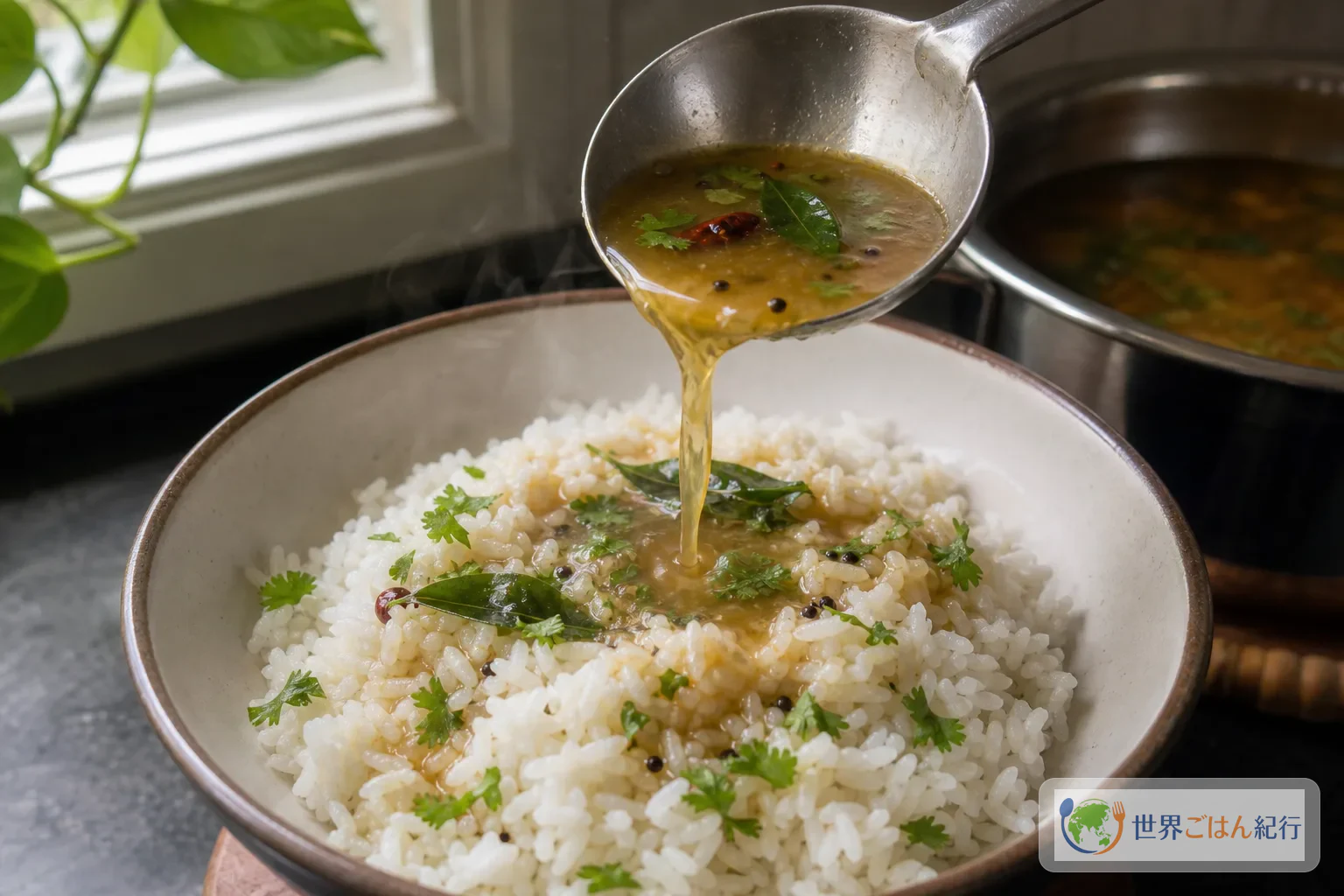
People eat it in different ways. Some drink the hot soup first. Others pour it over rice a little at a time and mix it in with sambar and side dishes. If you're cooking it away from South India, the easiest approach is to cook rice separately, ladle some rasam into a small bowl to taste it, then pour it over the rice.
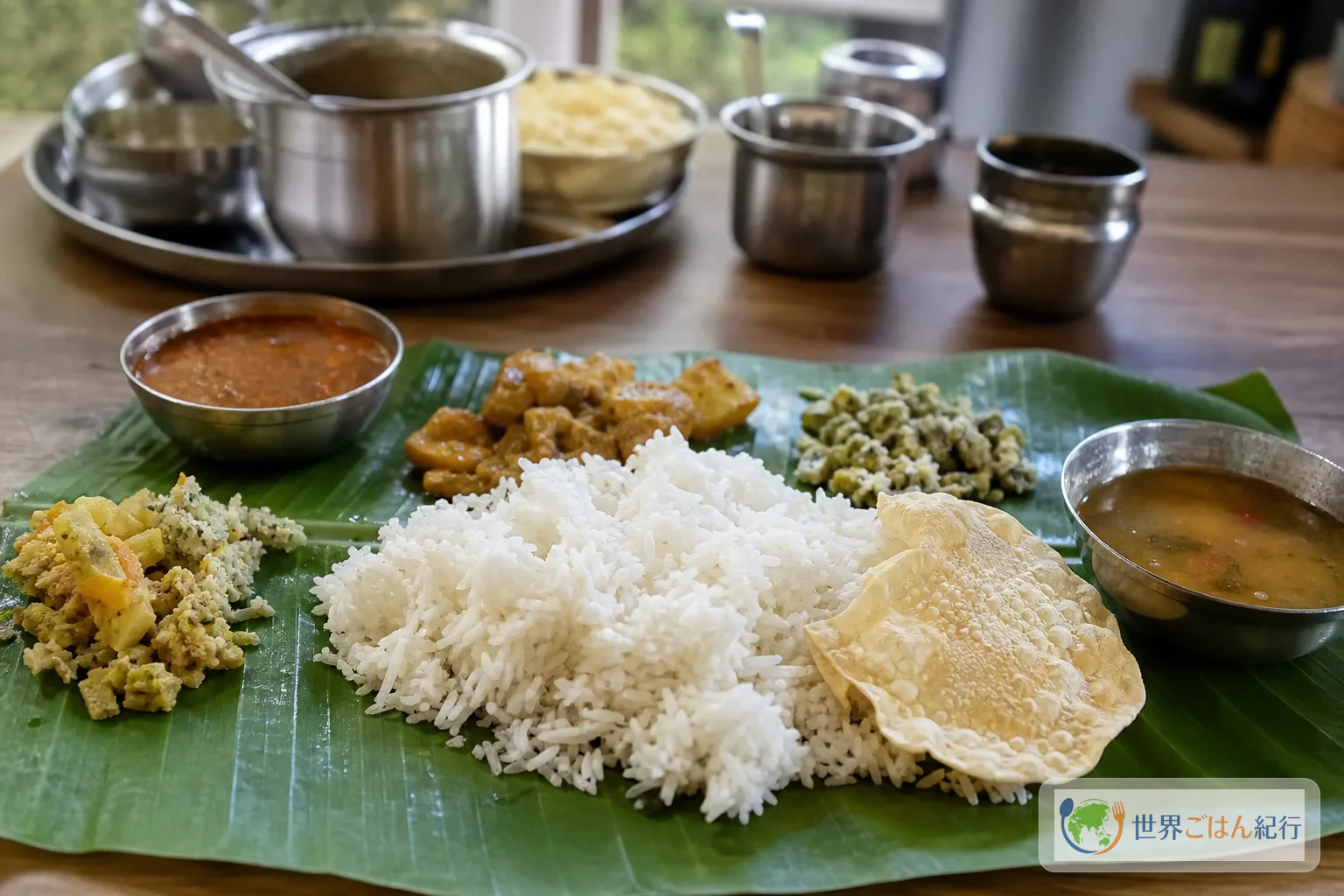
Names and Regional Styles
The name changes from region to region. You'll usually see rasam in Tamil Nadu and Kerala, saaru in Karnataka and chaaru in Andhra Pradesh and Telangana. Households differ too: some make tomato the star, some push the tamarind forward and some add body with lentil cooking water. These differences come from region and family taste, and none of them is the one right version.
Tamil Nadu is known for puli rasam, which brings the tamarind tang forward, and milagu rasam, which is built around black pepper. In Andhra, some households make chaaru with lentil cooking water, garlic and green chili. There are lime or lemon rasams too. Citrus loses its fragrance with too much heat, so the juice works best stirred in after the heat is off.
The English dish name mulligatawny also traces back to rasam. The Tamil "milagu thanni" means something close to "pepper water." The usual explanation is that the dish traveled west by way of colonial-era tables and turned into a different soup in the English-speaking world, with meat and vegetables added. Rasam was never one fixed dish. It spread as a way of layering aroma onto a thin broth.
How Rasam Differs from Sambar
Rasam and sambar both use tamarind and spices, and both go with rice, but they're aiming for very different things in the pot.
| Compared | Rasam | Sambar |
|---|---|---|
| Thickness | A soup that flows freely | A stew with body from lentils |
| Center of aroma | Black pepper, cumin, curry leaves | Cooked lentils, vegetables, sambar powder |
| Ingredients | A little tomato and aromatics | Okra, eggplant, daikon-type vegetables, in good quantity |
| How it is eaten | Worked into rice, or drunk as a soup | Poured over rice or dosa |
| Cooking heat | Compact, short cooking for sourness and aroma | Lentils and vegetables simmered as one |
Lentils such as toor dal and plenty of vegetables make sambar thick enough that it doesn't slide straight off a tilted spoon. Rasam needn't be so thin you can see the bottom of the pot, but it should stay loose enough to slip between the grains of rice. Thinner than sambar, more aromatic than soup. Aim for that middle and you'll avoid both common mistakes: too much tamarind, so all you taste is sour, and tomato cooked down to a thick sauce. For a first batch, build the base with tomato, set the level of sourness with tamarind and coarsely crush the black pepper and cumin so their aroma lasts.
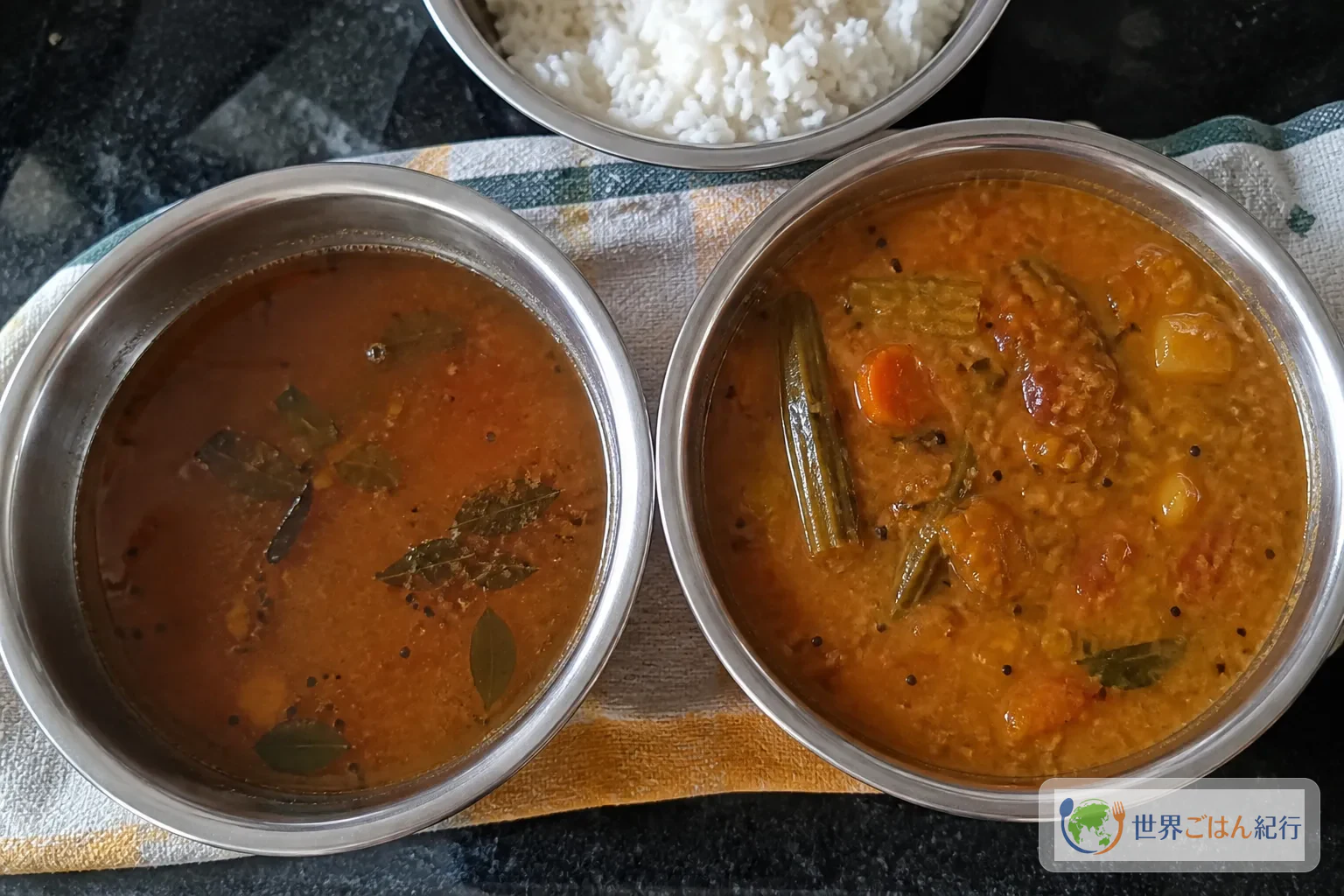
Ingredients (serves 4)
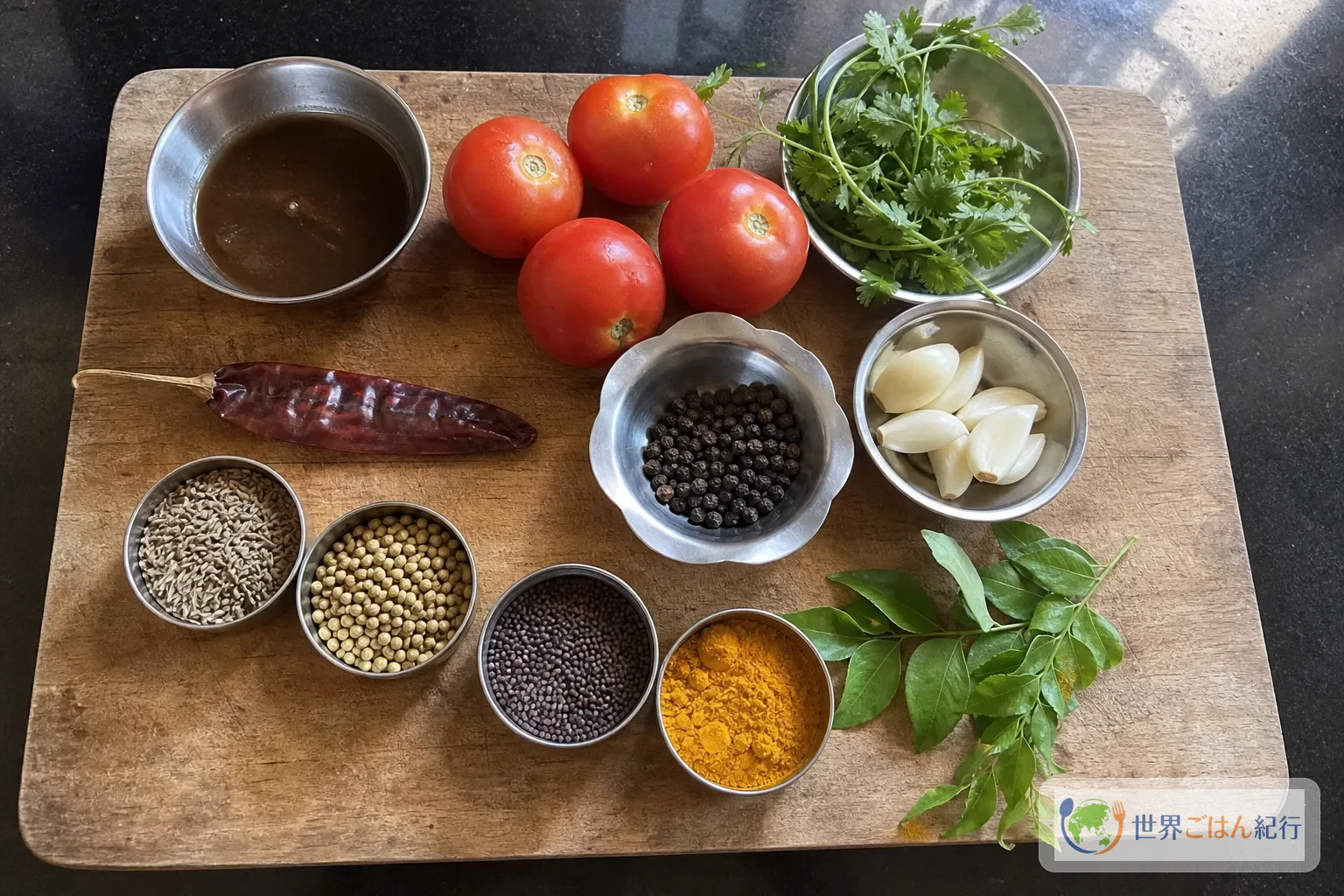
To avoid making the sourness too strong, do not put all the tamarind paste into the pot from the start; thin it first in ¾ cup (200 ml) lukewarm water before use.
For roundness from lentils, wash 1.75 oz (50 g) dried toor dal and cook it soft in 1 cup (250 ml) water, then add ½ cup (100 ml) of the cooking liquid as part of the water.
Even when you add lentils, do not make the whole rasam thick like a potage; keep it to supporting the aroma with the cooking liquid.
In place of tamarind paste, you can soak 25 g dried tamarind in lukewarm water for 30 minutes, knead it and use the strained liquid.
If you replace it with lemon or lime, omit the tamarind, simmer, and add 1–2 tbsp juice after turning off the heat.
This substitution gives a brighter aroma for the same sourness and makes a rasam of a different line.
If you cannot get curry leaves, there is no complete substitute for the aroma, but adding a little more cilantro at the end still holds the table together.
Because it uses mustard and sesame oil, if you have allergies check the labels, omit the mustard, and replace the sesame oil with rice bran oil or sunflower oil.
If you do not normally use turmeric, rather than a tiny sachet, choose a container of about 2.75 oz (80 g) where you can check the ingredients and content, so it can go into dishes other than rasam.
Choosing Ingredients for Rasam
What to Prioritize
You can make good rasam with what's at the supermarket if you know which flavors matter most. Settle that first, and the soup will still taste right on days you can't get to an Indian grocery.
| Priority | How to choose elsewhere | What changes |
|---|---|---|
| Sourness | Tamarind paste, or dried tamarind | Vinegar or pickled plums differ in aroma, so adjust from a small amount |
| Pepper aroma | Whole black peppercorns, coarsely crushed just before | Powder alone loses aroma quickly |
| Curry leaves | Prefer fresh or frozen | Dried is subtle in aroma |
| Oil aroma | Sesame oil or ghee | Rice bran oil is lighter, ghee gives a rounder aroma |
| Ingredients | Center on tomato | Without tomato the tamarind tang comes forward |
Tamarind is worth seeking out. Pickled plums or lemon can add sourness, but they lack the fruit's sweet depth and the distinctive aroma it keeps through cooking. For a first try, paste saves you the soaking and straining. Look for a product whose main ingredient is tamarind, and check the label for the content and solids, as well as the pack size, such as 7 oz (200 g). If you can already buy fresh or dried tamarind nearby, that works just as well.
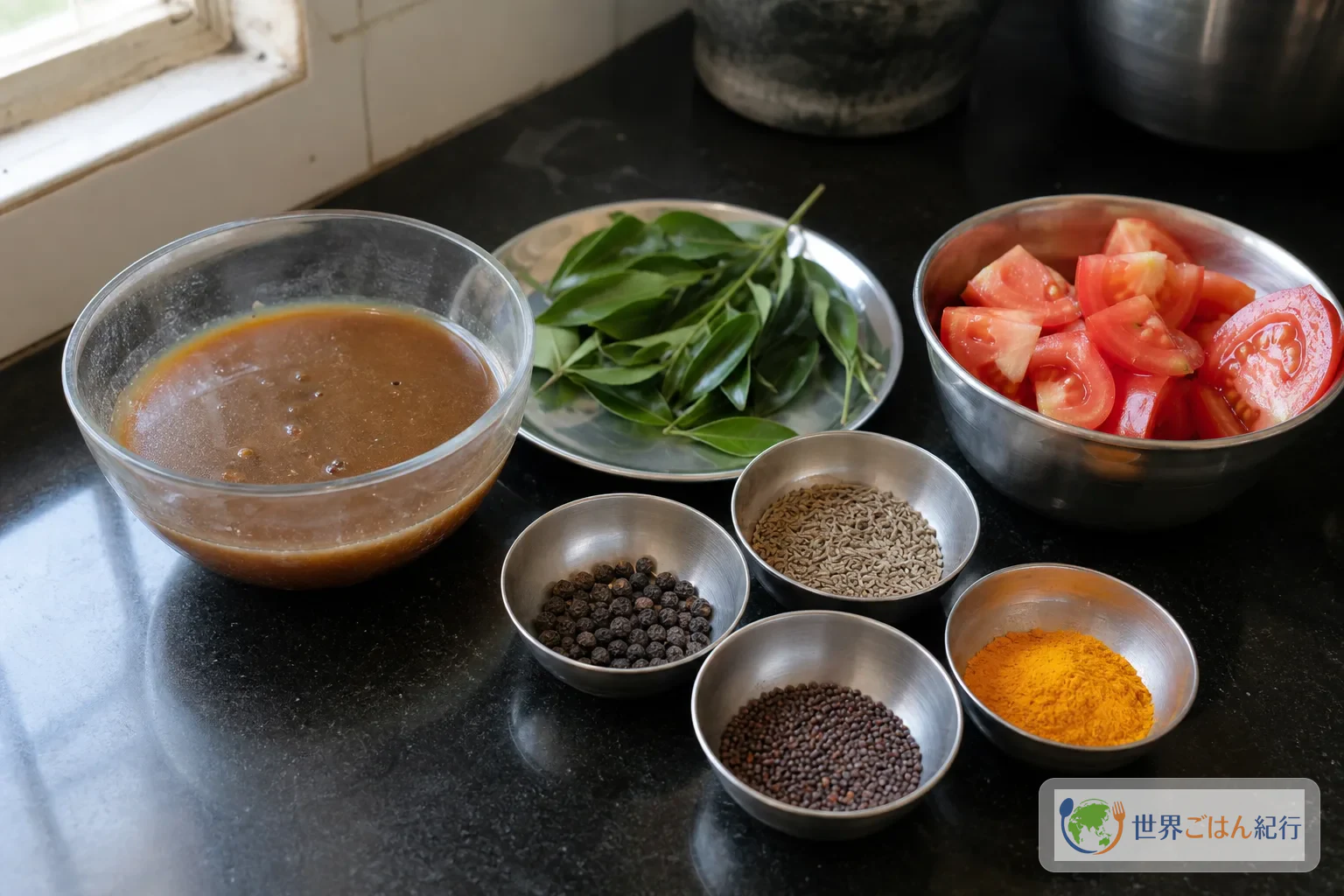
Pepper, Tomato and Tamarind
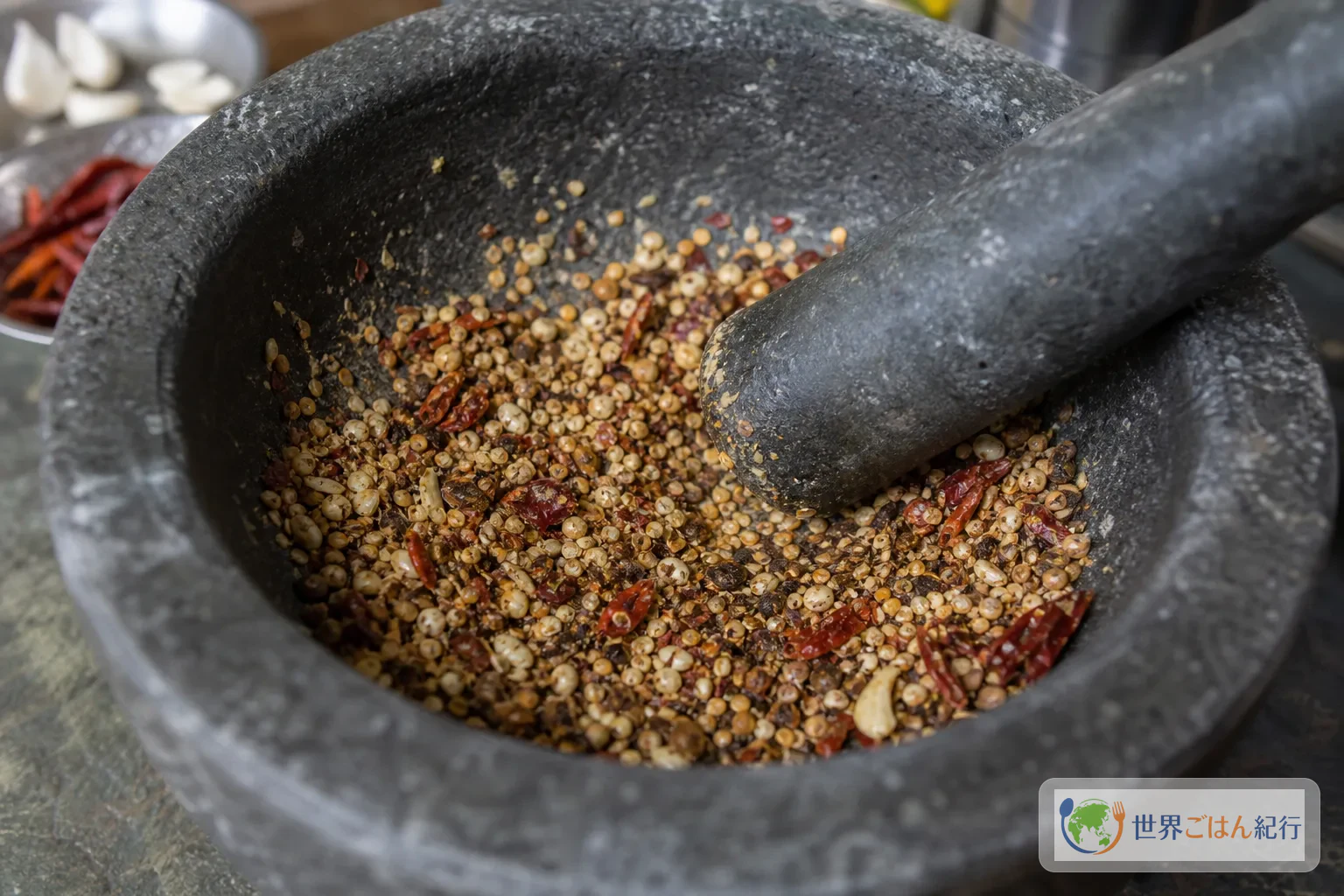
Leave the black pepper coarse in the mortar. When 1–2 mm pieces remain, the aroma rises a little with each mouthful of rice instead of all at once. Pieces much bigger than that mostly bring heat, so the safe move is to crush the pepper coarsely along with the garlic.
The tomatoes can go in unpeeled. Chop them coarsely or crush them lightly by hand to release the juice, and they'll break down in the pot on their own. If you want tamarind to lead the sourness, use 1 tomato and add 3.5 tbsp (50 ml) more water. If you're cooking for someone who isn't used to sour food, cut the tamarind to 15 g and add it a little at a time at the end. It's easier to add sourness than to take it out.
The final tempering is less about adding flavor than about floating spice-infused oil on the surface. Spices that simmer in the pot fade into the soup, but the tempering keeps the curry leaves and mustard vivid right up to the first spoonful.
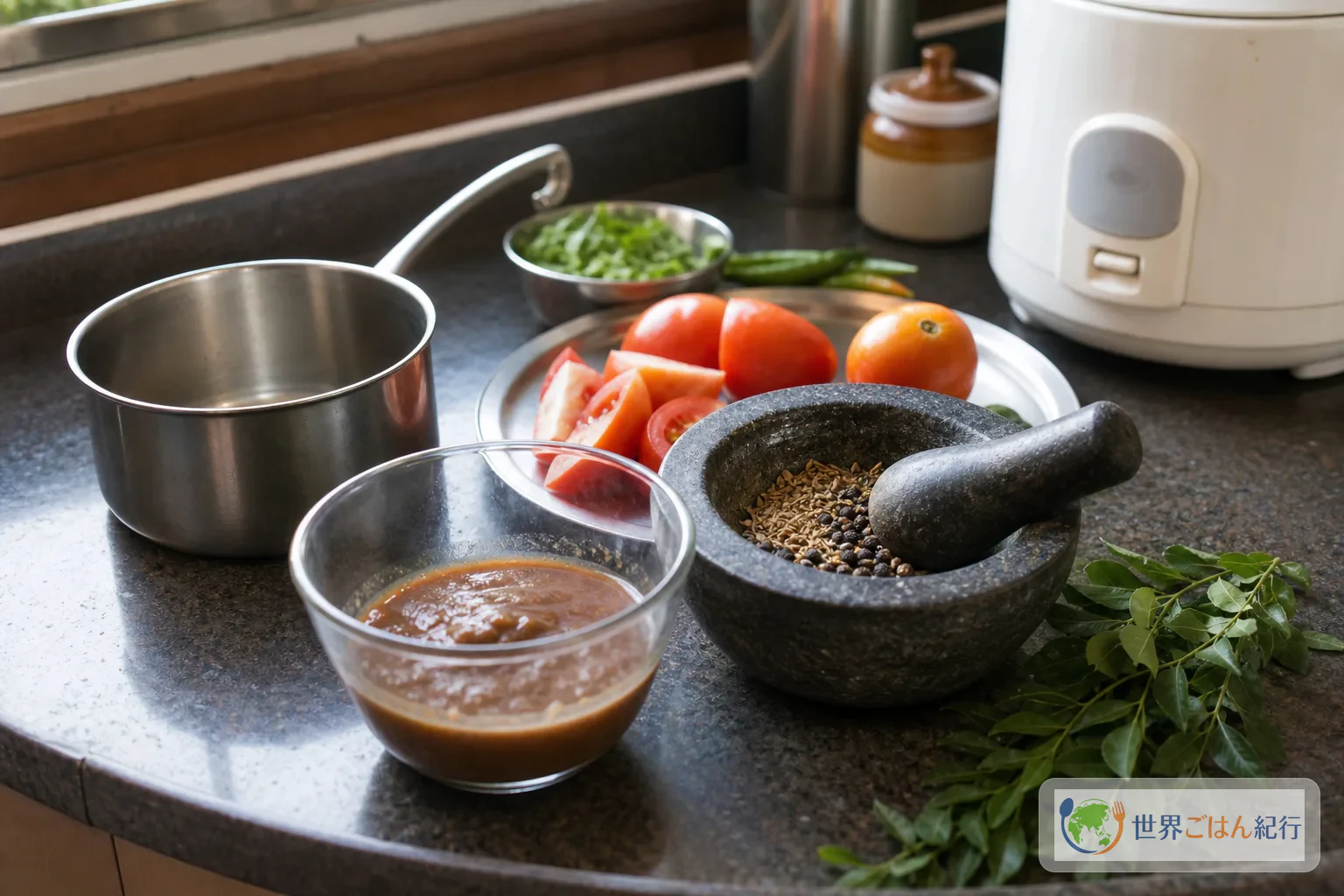
Tools for Crushing Spices
For a single batch, a mortar works fine, or a sturdy bag and a rolling pin. If you make rasam and chutney often, a small food processor run in short pulses keeps the grind even without turning it to powder. Leave the blade running, though, and the pepper and cumin go fine and lose their lift. If you're shopping for one, check the capacity and blade specs, and make sure it handles short pulses well rather than only continuous running.
Method: Put the Sourness in the Pot, Then Float the Aroma at the End
It is not a dish where you keep the pot boiling.
Remove the rawness of the tomato and tamarind, lower the heat when the first bubbles come, and layer the aroma at the end.
Preparation
Chop the tomatoes into 0.5 inches (1.5 cm) dice, and chop the cilantro stems and leaves separately.
Dissolve the tamarind paste in ¾ cup (200 ml) lukewarm water, and strain through a tea strainer if there are hard bits.
If using toor dal, cook it first and set aside ½ cup (100 ml) of the cooking liquid.
Common Rasam Problems and Fixes
When rasam goes wrong, the cause usually shows in the pot itself, and that's where you'll find the fix.
| What happened | Cause | How to fix it |
|---|---|---|
| Only the sourness is sharp | Too much tamarind, or too little liquid | Add water 1 tbsp at a time and adjust the salt a little |
| Bitterness remains | Scorched the cumin or curry leaves, or boiled too long | Remove the scorched tempering and thin with water and a little tomato |
| Weak aroma | Powdered the spices early, or simmered the finishing oil | Warm a little oil and cumin in a separate small pan, turn off the heat and add |
| Too thick to enter the rice | Reduced the tomato too far, or too much lentil | Add 3.5 tbsp (50 ml) boiling water at a time, and recheck salt and sourness |
| Gritty | Tamarind fibers or seeds remain | Pass through a strainer, add water if needed and rewarm |
| Too hot | Too much dried red chili or black pepper | Add a little tomato and water, and restore the outline with sourness and salt |
If it's too sour, don't dump in sugar. Sugar softens the edge, but the sourness is still there. Thin the pot first, then fix the salt, and only then add a little sugar. That way it gets easier to eat and still tastes like rasam.
If the flavor seems flat, cooking it longer will make it flatter, because the aroma cooks off. Skip the final tempering and only the sourness is left. The thinness is what lets rasam soak into the rice and open up in your mouth.
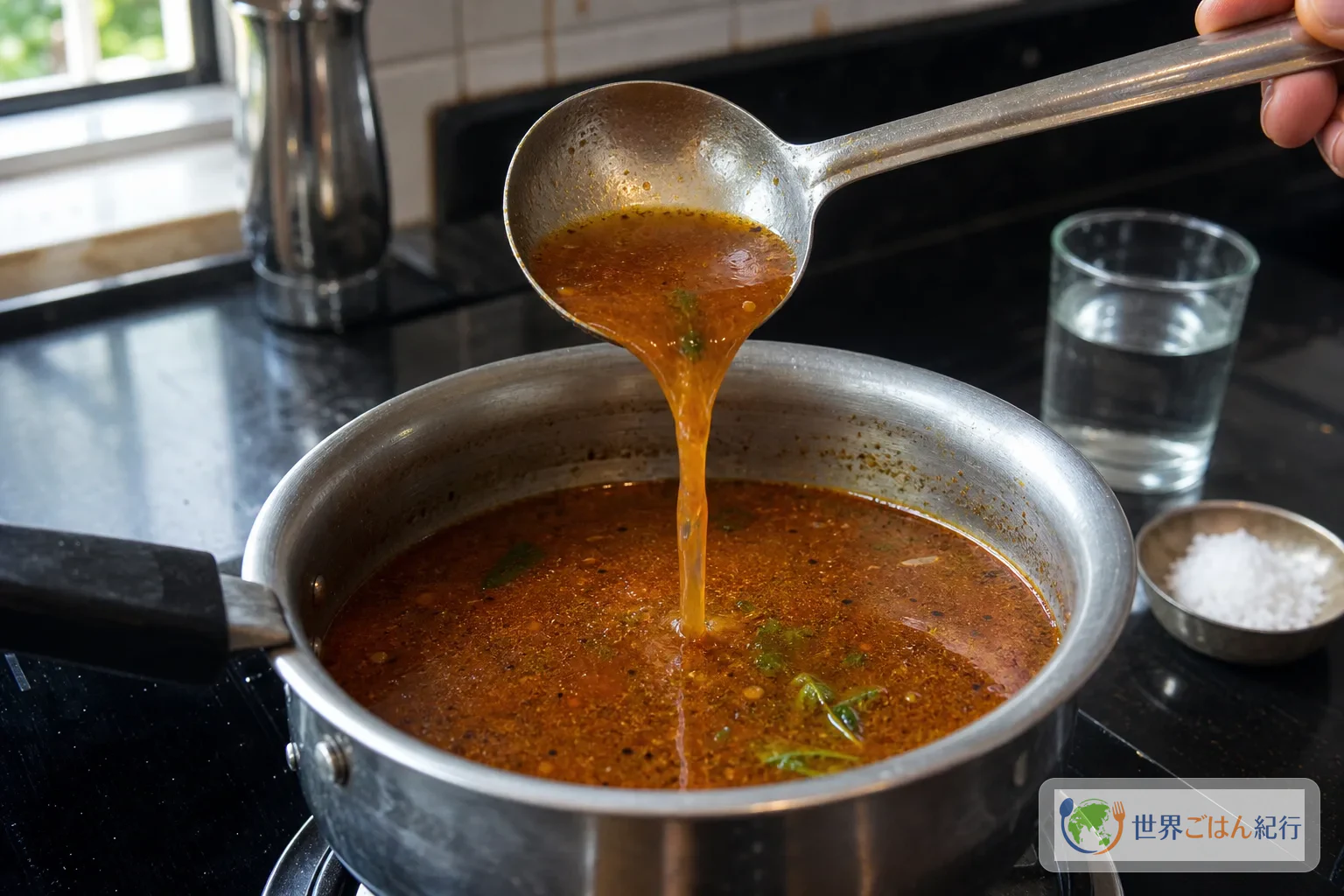
Rasam Variations, Pairings and Storage
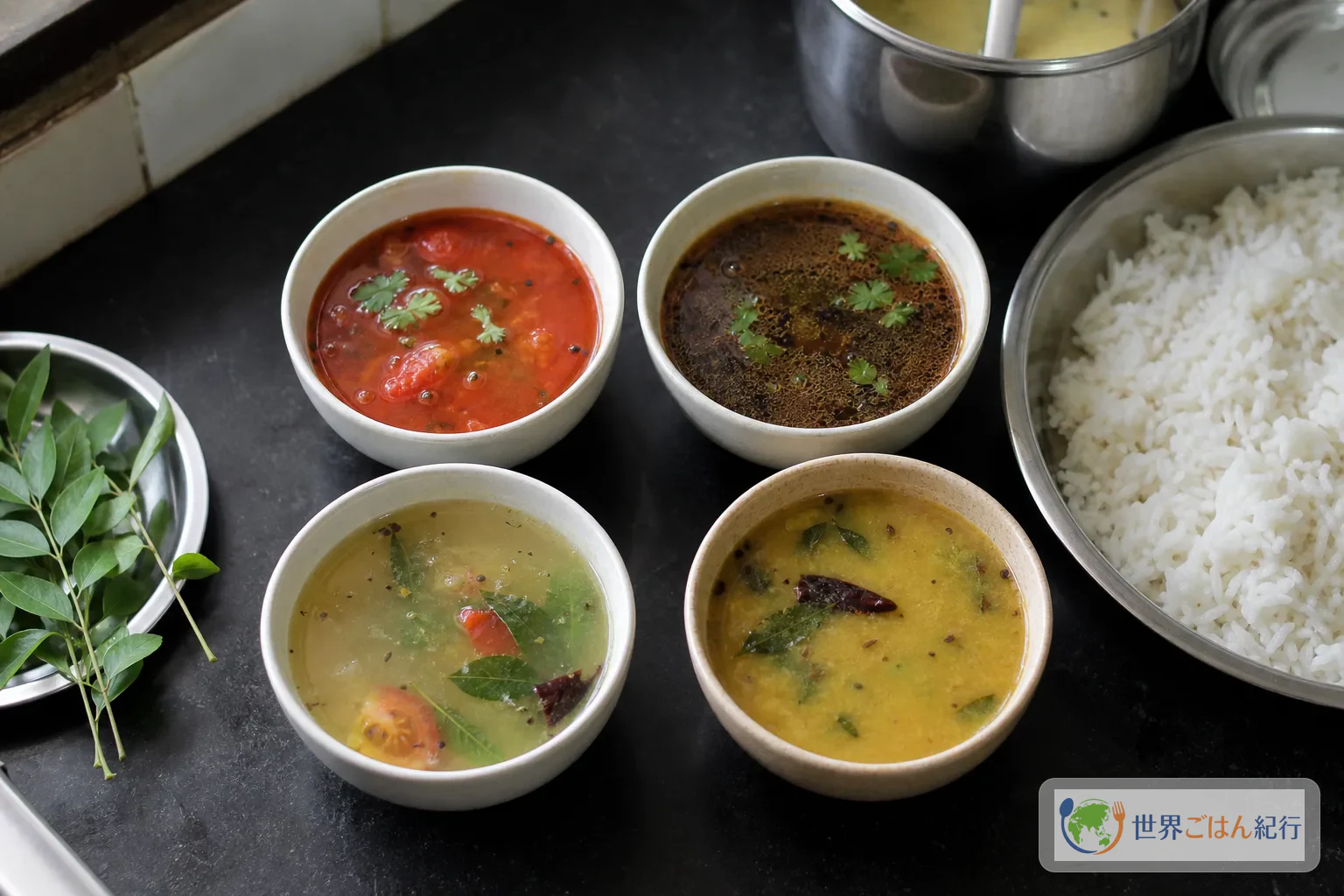
Six Ways to Vary Rasam
Once you have the basic pot down, changing the type of sourness or the lead aroma gives you a noticeably different rasam.
- Tomato-forward: Use 3 tomatoes and cut the tamarind to 10–15 g. The sourness is rounder, which suits children and anyone new to spices.
- Milagu rasam: Use 1 tomato and raise the black pepper to 1 1/2 tsp. The tamarind tang and the pepper's heat come forward, so pour it over rice a little at a time.
- With garlic: Coarsely crush 4 cloves, and add 1 more thinly sliced clove to the tempering. Turn off the heat before the garlic colors so it stays sweet.
- Lime-based, closer to chaaru: Leave out the tamarind and simmer the tomato and spices in water. Turn off the heat, let it rest 5 minutes, then stir in 1 tbsp lime juice. Added at the end, the citrus stays bright.
- With lentil cooking water: Replace part of the soup with ½ cup (100–150 ml) of the liquid from cooking toor dal for a gentle lentil sweetness. Adding the lentils themselves pushes it toward sambar, so start with the liquid.
- With pineapple or vegetables: Some households add a little sweet-sour fruit or green vegetables. Every addition takes away from rasam's lightness, so get to know the basic pot first.
What to Serve with Rasam
Rasam brings out the contrast in a meal: try it with the coconut richness of avial, the lentil depth of dal tadka (see dal tadka, in Japanese) or the toasty edges of dosa. A little rasam beside a soft rice-and-lentil dish such as ven pongal (see ven pongal, in Japanese) also works well.
Storing and Reheating Rasam
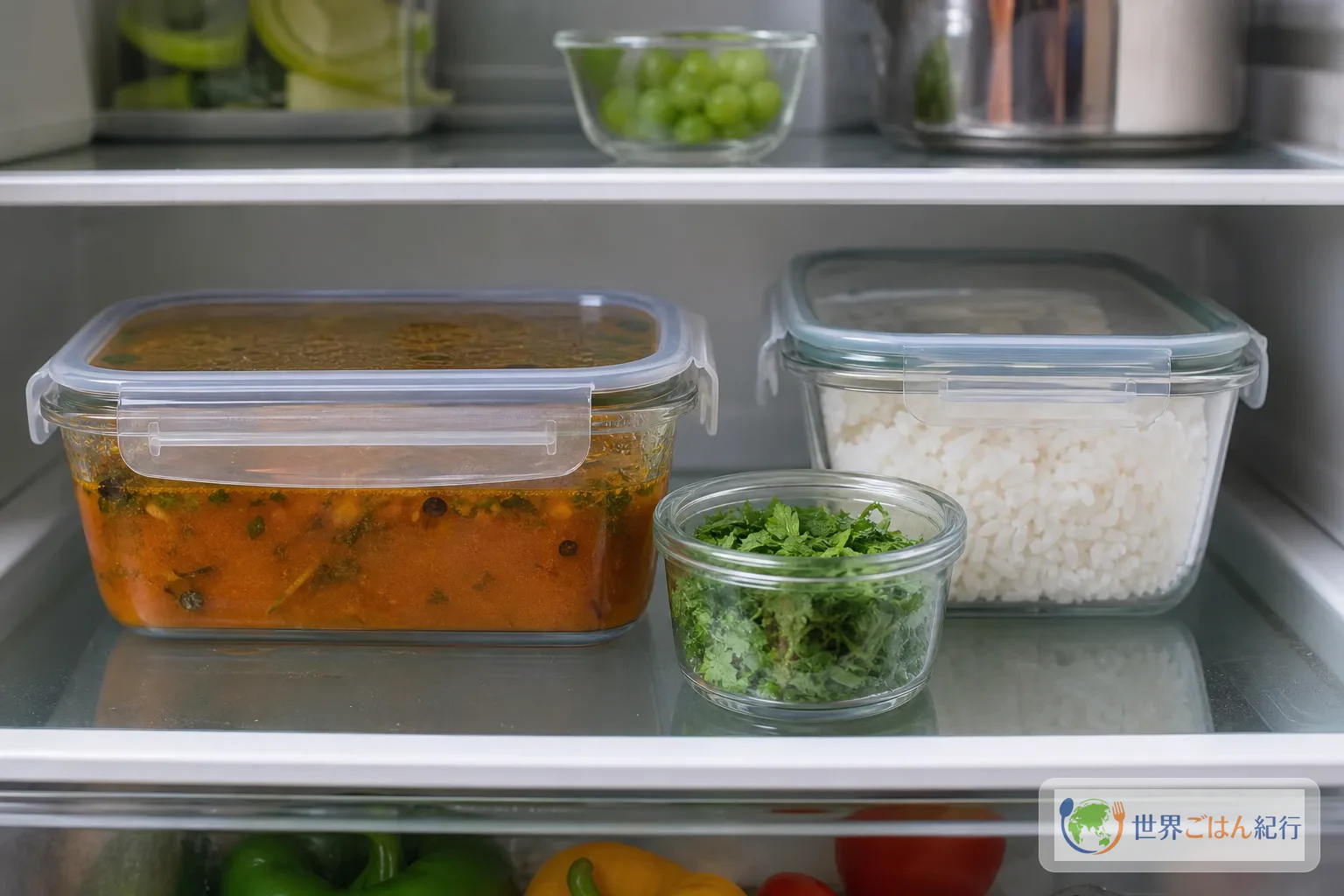
Rasam tastes better after resting about 30 minutes, once the tamarind and spices have blended. When it's cool, transfer it to a clean airtight container and finish it within about 2 days in the refrigerator. Store the broth on its own, without rice or cilantro, and don't add extra salt hoping it will keep longer. That only ruins the flavor.
Reheat it only once, in a small pot over medium-low heat, until steam rises from the center. A hard boil dulls the sourness and the curry leaves. To freeze it, divide the broth with few solids into single portions. Cilantro and tempering lose their aroma after thawing, so warm a little cumin in oil on the day and add it to bring the aroma back.
Frequently Asked Questions
Can I make rasam without tamarind?
Yes. Simmer the broth without it and add lemon or lime juice after you turn off the heat. Vinegar or pickled plums give a different kind of sourness, so start with a small amount.
Can I use store-bought rasam powder?
Yes. Each brand balances black pepper, cumin, lentils and chili differently, so check the label, start with 1 tsp and then adjust the tamarind and salt. The aroma won't match spices you crush yourself, but it's a practical shortcut on a busy day.
Isn't it too thin without dal?
It's fine without it. The thinness is what carries the sourness and aroma into the rice. If you want a rounder, lentil flavor, add some of the cooking liquid instead of the lentils, which is easier to control.
What should I do if it is too spicy?
Add a little boiling water or tomato, then bring the salt back up as you taste. Masking the heat with a lot of sugar throws off the balance of sour and sweet. Next time, leave out the dried red chili and start with half the black pepper.
Can vegetarians or vegans eat it?
This recipe uses no meat or fish. If you swap the ghee for sesame oil or rice bran oil, it suits tables that avoid dairy. Some store-bought rasam powders and asafoetida list ingredients such as lentils or wheat, so check labels as needed.
Which is correct, drinking it first as a soup or pouring it over rice?
Both are correct. In South Indian meals it's usually eaten as a soup alongside rice and side dishes, but tasting the broth on its own is a good way to judge its aroma. Take the first spoonful from the bowl and the next over rice, and you'll see why the thickness matters.