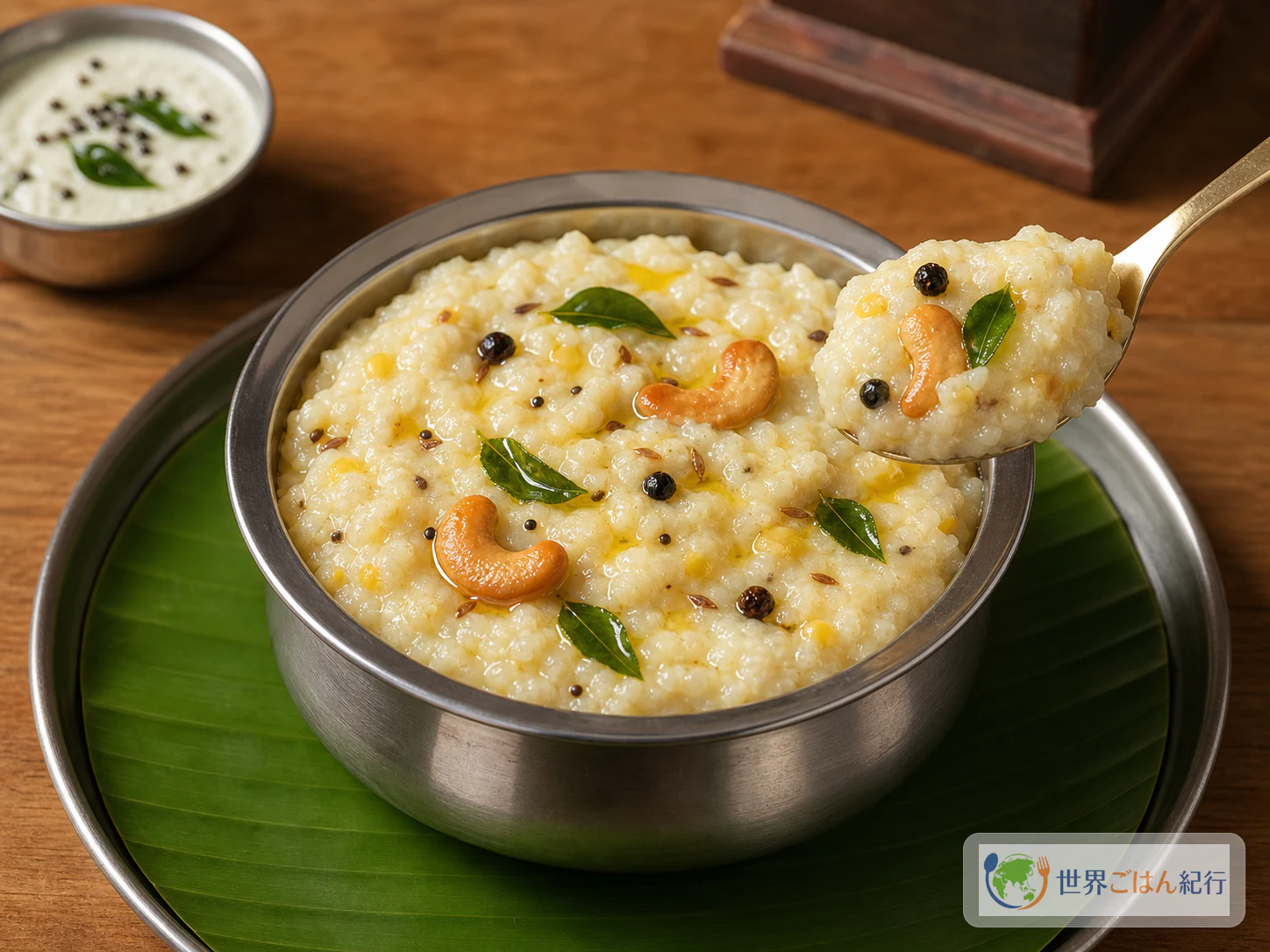
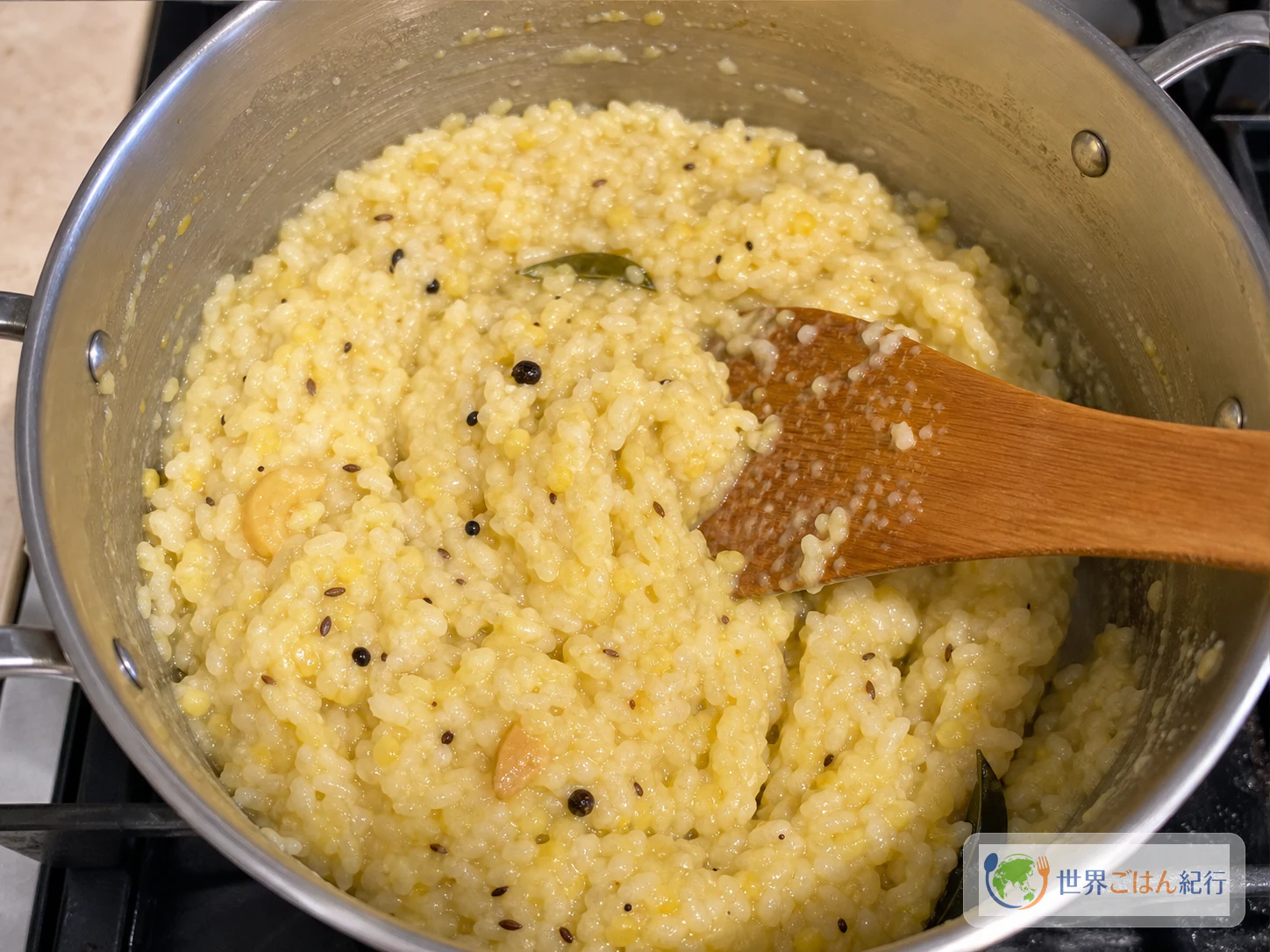
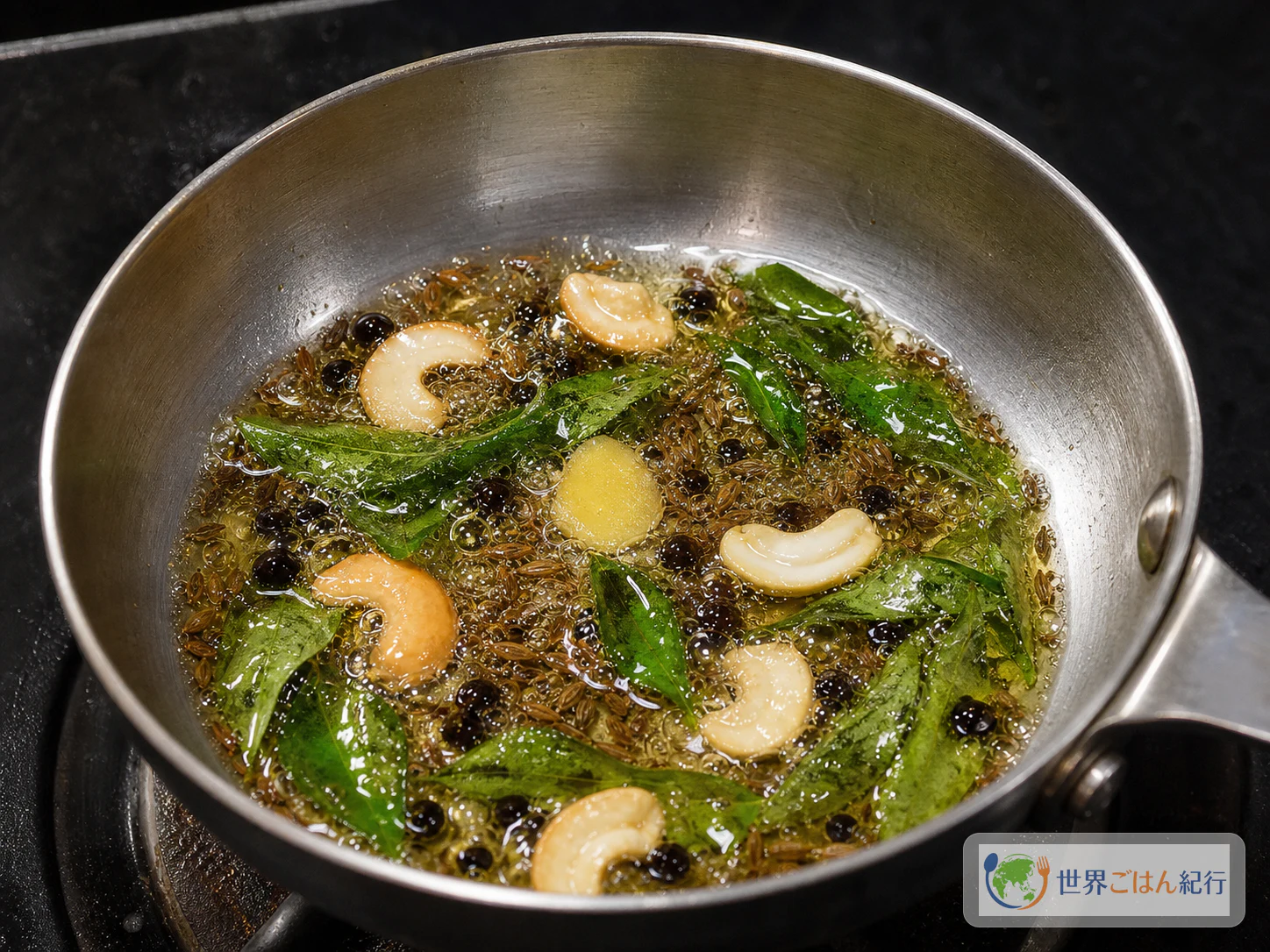
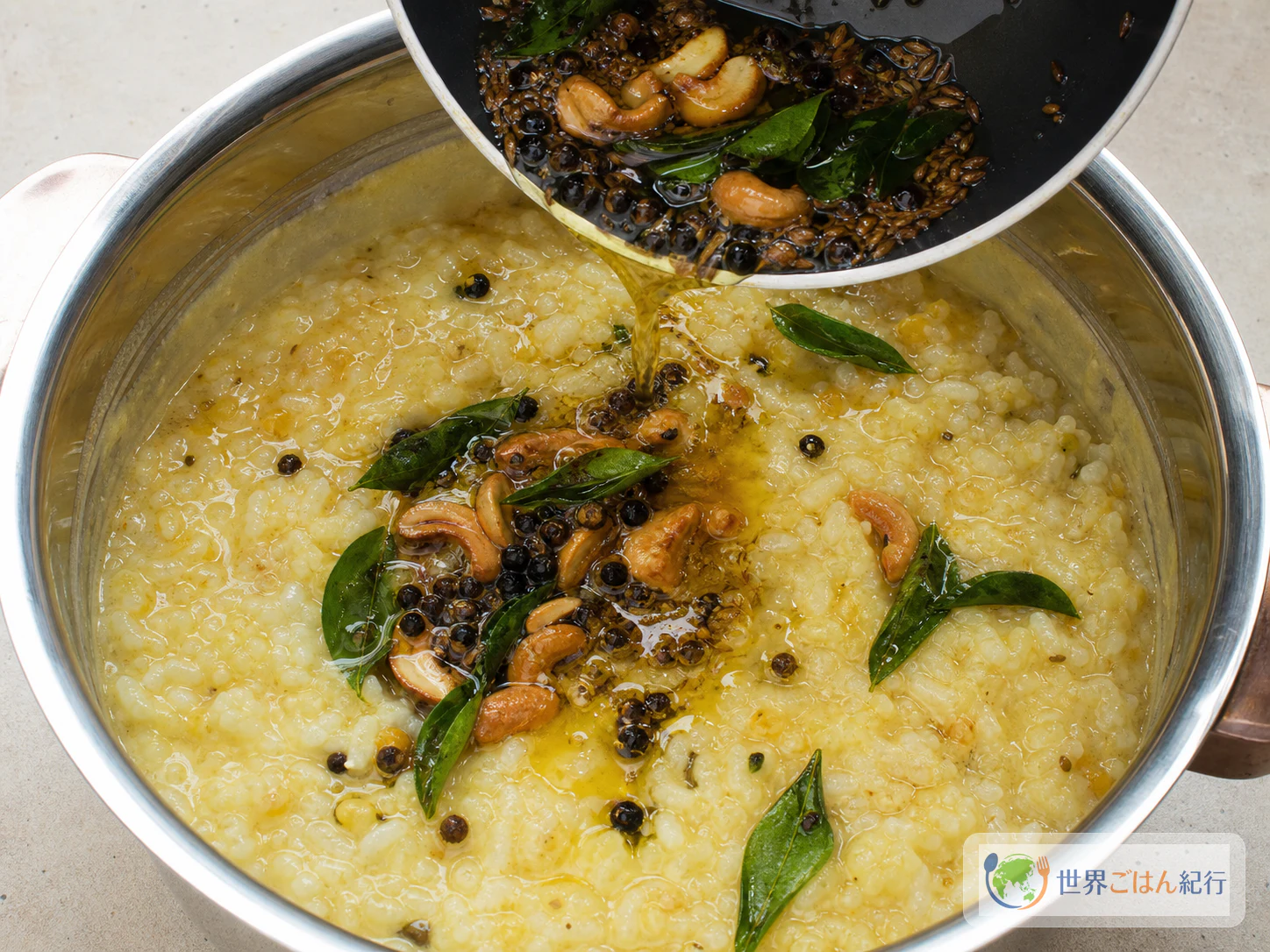
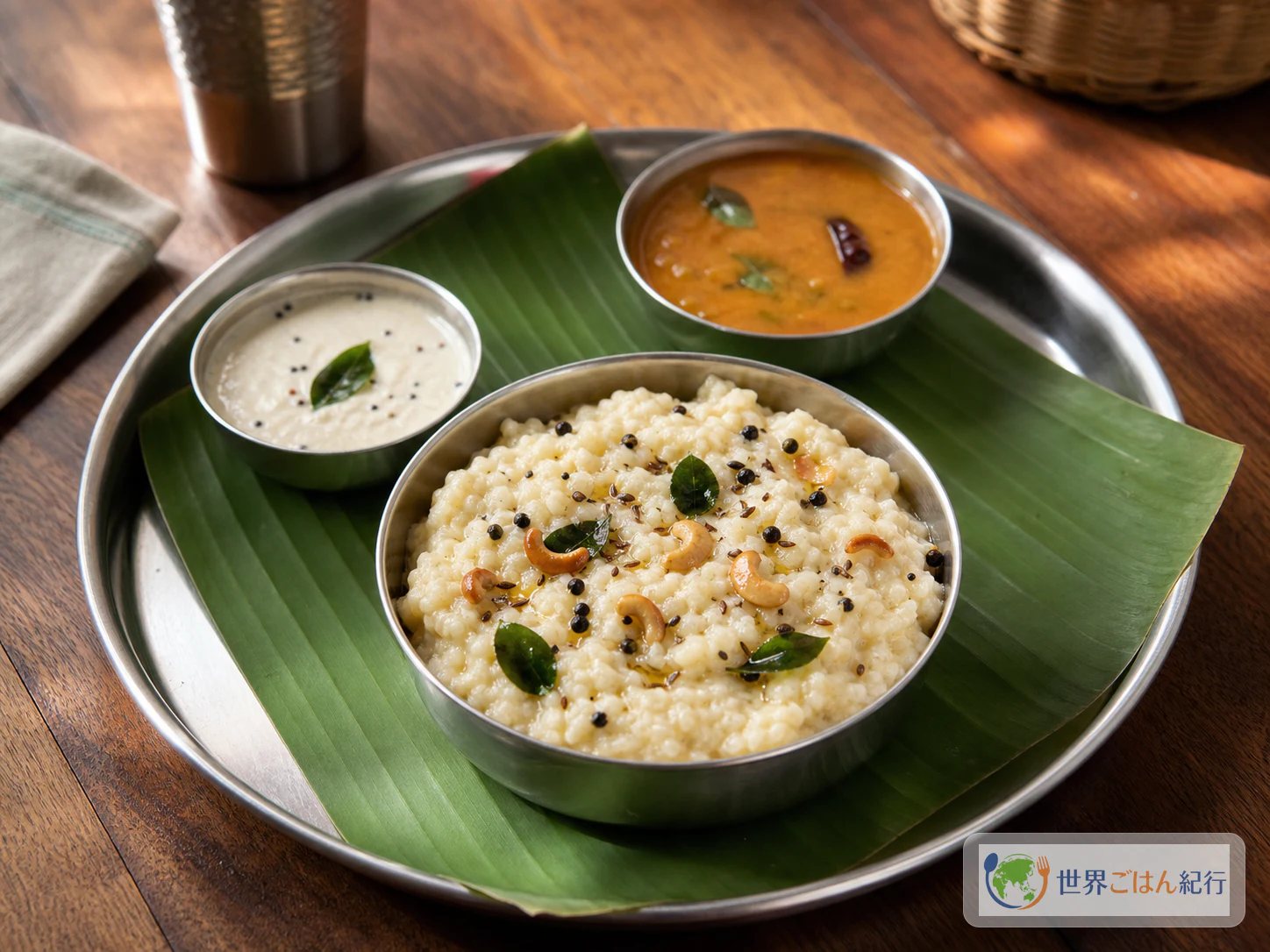
As the rice and lentils loosen in the morning pot, the bubbling slowly grows quieter. Then you heat ghee in a small separate pan and drop in black pepper, cumin and cashews. When the sputtering turns fine and the curry leaves crackle loudly once, it's time to pour that aroma back into the pot. Ven pongal (Ven Pongal, Tamil: வெண் பொங்கல்) is a South Indian breakfast of rice and skinless mung dal cooked until soft. It looks a lot like rice porridge or khichdi, but the first spoonful tastes of popping black pepper and toasty ghee. It's peppery and savory, with no sugar at all.
Ven Pongal from Festival Pot to Breakfast Table
Pongal is the name of a dish and also of a four-day harvest festival in Tamil Nadu. The Tamil word means "to boil over, to overflow." At the festival, people thank nature for the harvest by letting new rice and milk boil over the rim of the pot. Most kitchens would call that a mess. Here it's a wish for an abundant harvest.
The sweet sakkarai pongal is the version often offered at the festival. The "ven" in ven pongal means "white," and it is the savory version, seasoned with pepper and cumin and eaten often as an everyday breakfast.
In South India, ven pongal is a breakfast staple served with sambar and chutney. Home recipes share the same base: rice, mung dal, black pepper, cumin, ghee and cashews. In shops it usually comes soft and white, with pepper speckling the surface. At home, people change the share of dal, the amount of ghee and whether the pepper goes in whole or crushed to suit whoever is eating.
The dish also changes by region. In Tamil Nadu, with its strong rice culture, cooks make it soft with short-grain rice and mung dal and serve a strong sambar alongside to give it edge. Closer to Karnataka you'll also find rava pongal, a lighter version made with rava, or semolina. If you're cooking far from South India, the exact local rice matters less than two choices: savory or sweet, and whether to break the dal down or keep the grains distinct.
Method: Not a Porridge, but Cooked Until It Loosens Under a Spoon
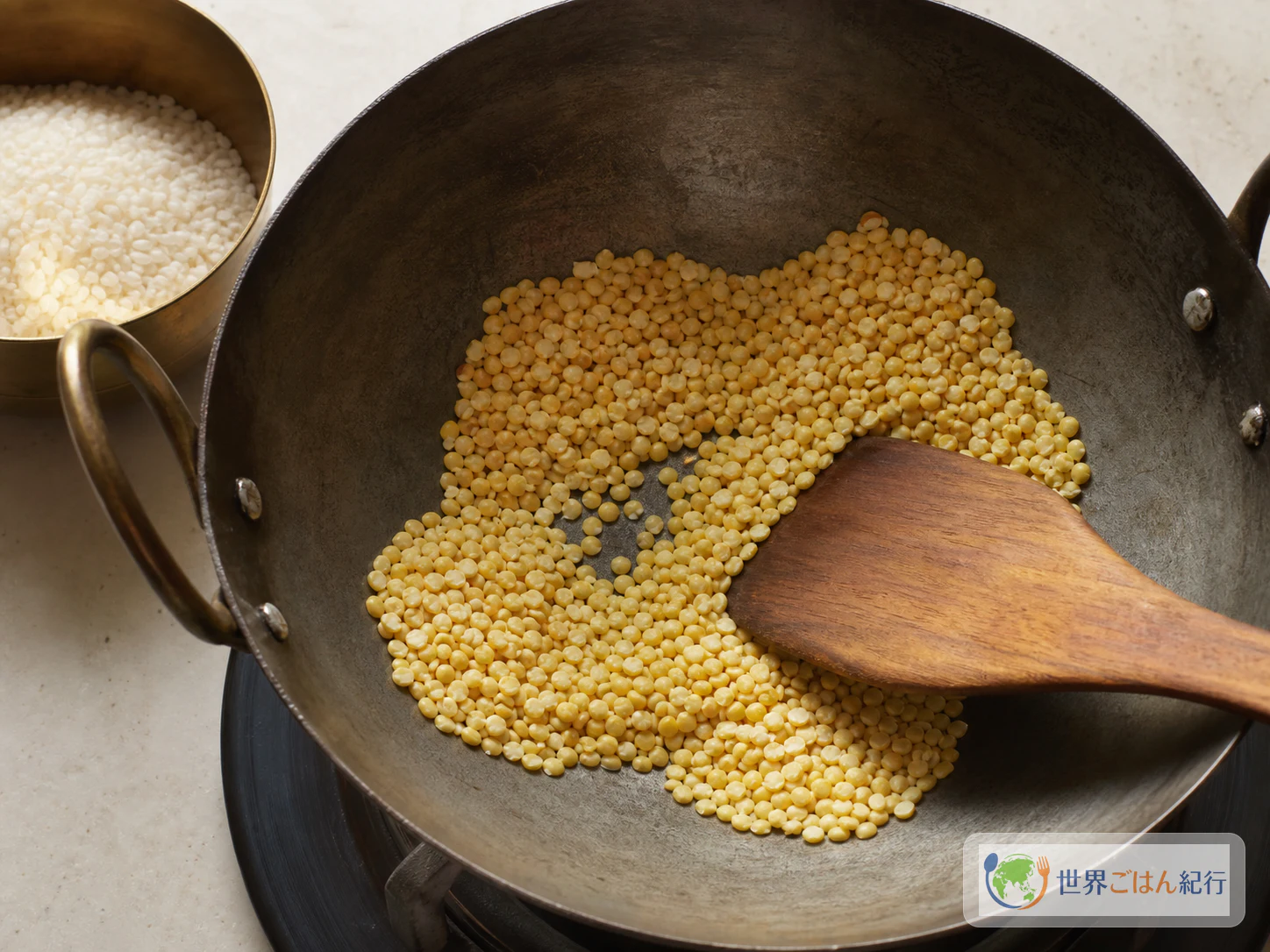
This is a method with a heavy pot, no pressure cooker needed. If the finished dish looks firm, you can add water and return it to the heat. The most important thing in this dish is not to cut the water too far from the start.
Ingredients (serves 4): Keep the Order of the Aroma Even with Ordinary Rice
Cashews and ghee contain tree nuts and dairy respectively. Some asafoetida products are mixed with wheat flour, so people avoiding gluten should check the ingredient label. Do not leave cooked rice and dal at room temperature for long; spread leftovers in a shallow container to cool quickly and move them to the refrigerator within 2 hours.
What Remains and What Disappears with Substitutes
Short-grain rice gets sticky, so it is actually an easy choice for ven pongal. With a South Indian rice such as sona masuri, it releases more lightly and the sweetness of the dal comes first. If you use red lentils instead, allow 5 to 8 minutes less cooking time. The color moves a little toward orange and the straightforward aroma of mung dal weakens.
You don't need to hunt down curry leaves and hing the first time. Without them, as long as the ghee, cumin, black pepper and ginger are there, the dish still comes out right. But you lose the green South Indian aroma, and the body that comes without onion or garlic gets fainter. Look for them online only if you want that flavor.
Choosing Ingredients for Ven Pongal
Short-grain rice works well, and black pepper and cumin from any nearby store are enough for a first try. Three other purchases change how the aroma comes together. None of them is essential, so make the dish once before you decide whether to buy them.
Ghee gives the tempering oil a toasty flavor that butter doesn't. A big tub is too much if you only want to try pongal once. It makes sense if you plan to go on to dosa and dal tadka and can keep jars at room temperature. Check the contents and size of any pack before you buy.
Whole cumin matters most in dishes where the seeds are warmed in oil, more than in dishes finished with a sprinkle of ground cumin. For pongal alone, a small amount from a nearby store will do. If you plan to cook dosa or dal next and keep tempering spices, look for a set with cumin, fenugreek, fennel and brown mustard that is all whole seeds.
You can crush black pepper with the flat of a knife. If you'll often crack seeds lightly to release their aroma, though, a small mortar is quicker and leaves less to wash. Skip it if you're making pongal only once or already own one. If you buy one, check that the bowl is wide enough for crushing spices and that it comes with a pestle.
Getting the Ven Pongal Texture Right
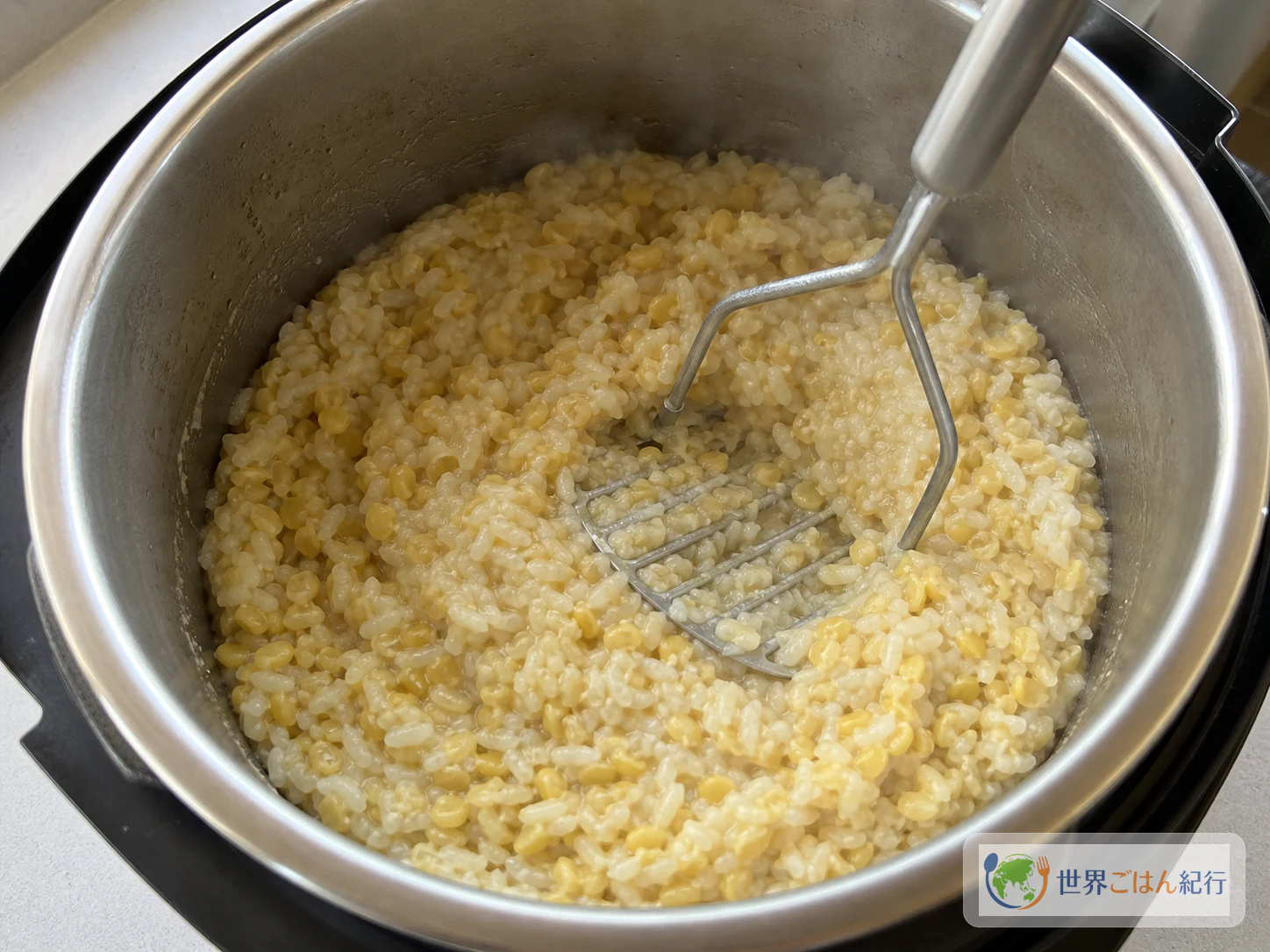
The tricky part is the cooking. Each grain of rice should keep a little of its shape while the dal falls apart smoothly under a spoon. Then stir in the tempering oil while it's hot, without letting it scorch. Use plenty of water. That's the real shortcut.
Aim for soft and heavy rather than loose. If the grains stay separate, like white rice from a rice cooker, it needs more water. If it's smooth all through, like baby-food paste, it's been stirred too much. A spatula's track should close slowly, with a cashew breaking with a crunch now and then. That contrast keeps a morning bowl interesting.
If it has firmed up, add 2 tbsp boiling water and warm it over low heat for 1 minute at a time, stirring. Cold water lowers the temperature and makes only the surface of the rice sticky. If the tempering oil scorched and turned bitter, don't stir it in. Throw out the blackened bits, then warm fresh cumin and cashews in new ghee for 30 seconds. The rest of the pot is fine.
Serving and Variations
Serve it with something cold. A loose raita with cumin coats the rice and cuts the richness of the ghee.
Once you know the basic version, you can change it a little. Halve the black pepper and add 1 green chili, and the heat spreads across the bowl instead of arriving in sharp bursts. Use 1 oz (30 g) roasted peanuts instead of cashews for a plainer texture. For more chew, swap half the rice for 2.75 oz (80 g) rolled barley and add ½ cup (100 ml) more water. Rava pongal uses 5.5 oz (160 g) semolina: dry-roast it, then add it a little at a time to boiling water instead of cooking rice and dal. To avoid dairy, use 3 tbsp rice bran oil instead of ghee. The aroma is lighter, but you'll still taste the pepper and cumin.
Storage and Frequently Asked Questions
Can pongal be made ahead?
Yes. Cool it quickly in a shallow container and refrigerate it until the next day. To serve, add 2–3 tbsp water and heat it all the way through in a pot or microwave. The tempering aroma fades overnight, so warm 1 tsp of reserved ghee and pour it over the top to bring it back.
How many minutes in a pressure cooker?
Check your cooker's manual first. In an electric pressure cooker, cook the rice and dal in 3½ cups (850 ml) water on high pressure for 10 minutes, then let the pressure release naturally. Open the lid and add boiling water until it's as thick as you like. The first time, go easy on cutting the water.
Can I substitute bay leaves for curry leaves?
I don't recommend it. Bay leaf gives off its aroma slowly as it simmers, while curry leaf has a green aroma that blooms in hot oil. If you can't find curry leaves, leave them out and add 2 g more ginger. The dish will still taste right.
Is hing essential?
No. A little adds depth, a bit like onion or garlic, but too much brings a sulfur-like smell. Use less than a pinch the first time. If you have a wheat allergy, check what the product is bound with.
What do I serve on days I have no sambar?
Coconut chutney, unsweetened yogurt, or diced tomato with a squeeze of lemon all go well. Something cold or sour works better than a sweet pickle and keeps the taste of the ghee from lingering too long.