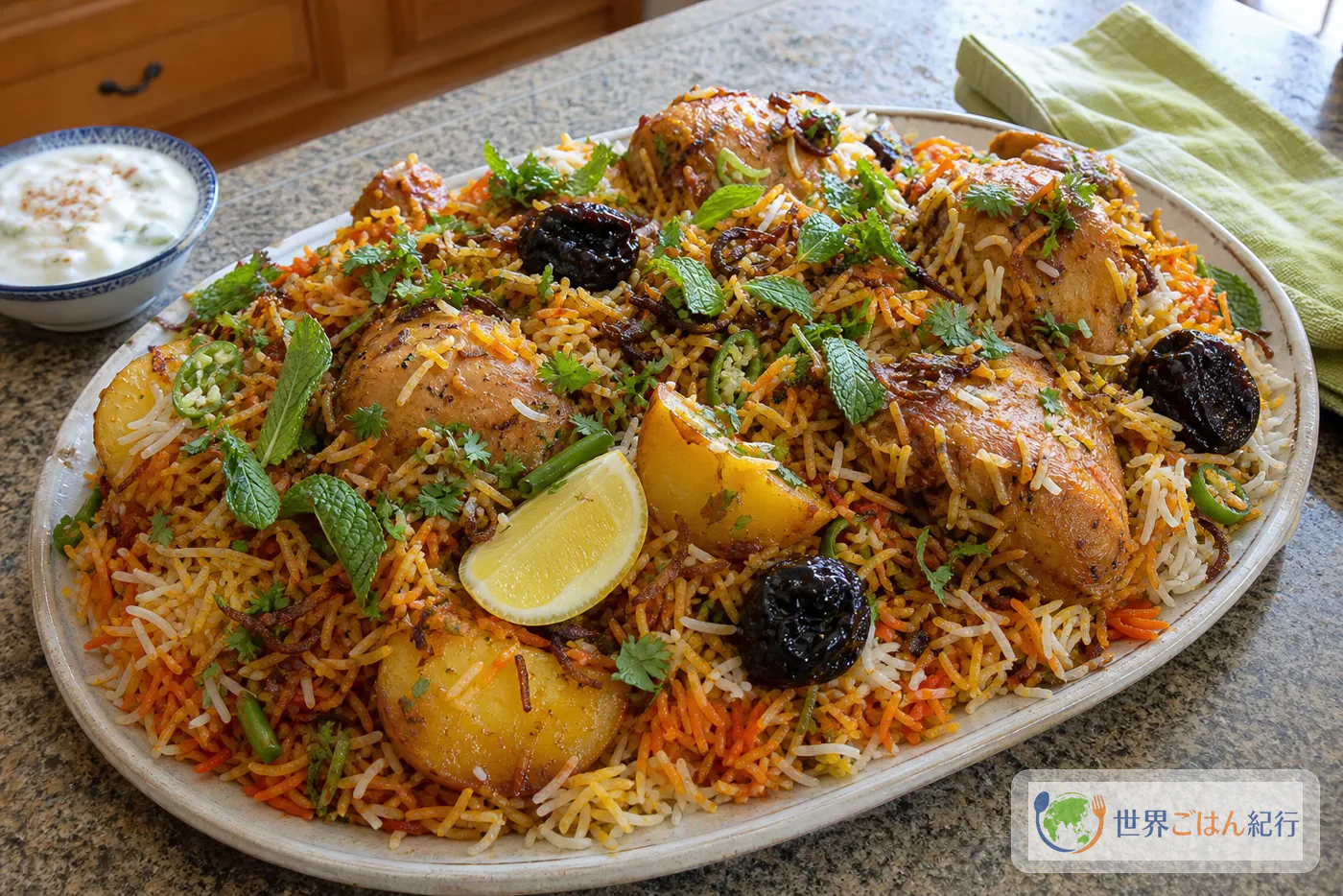
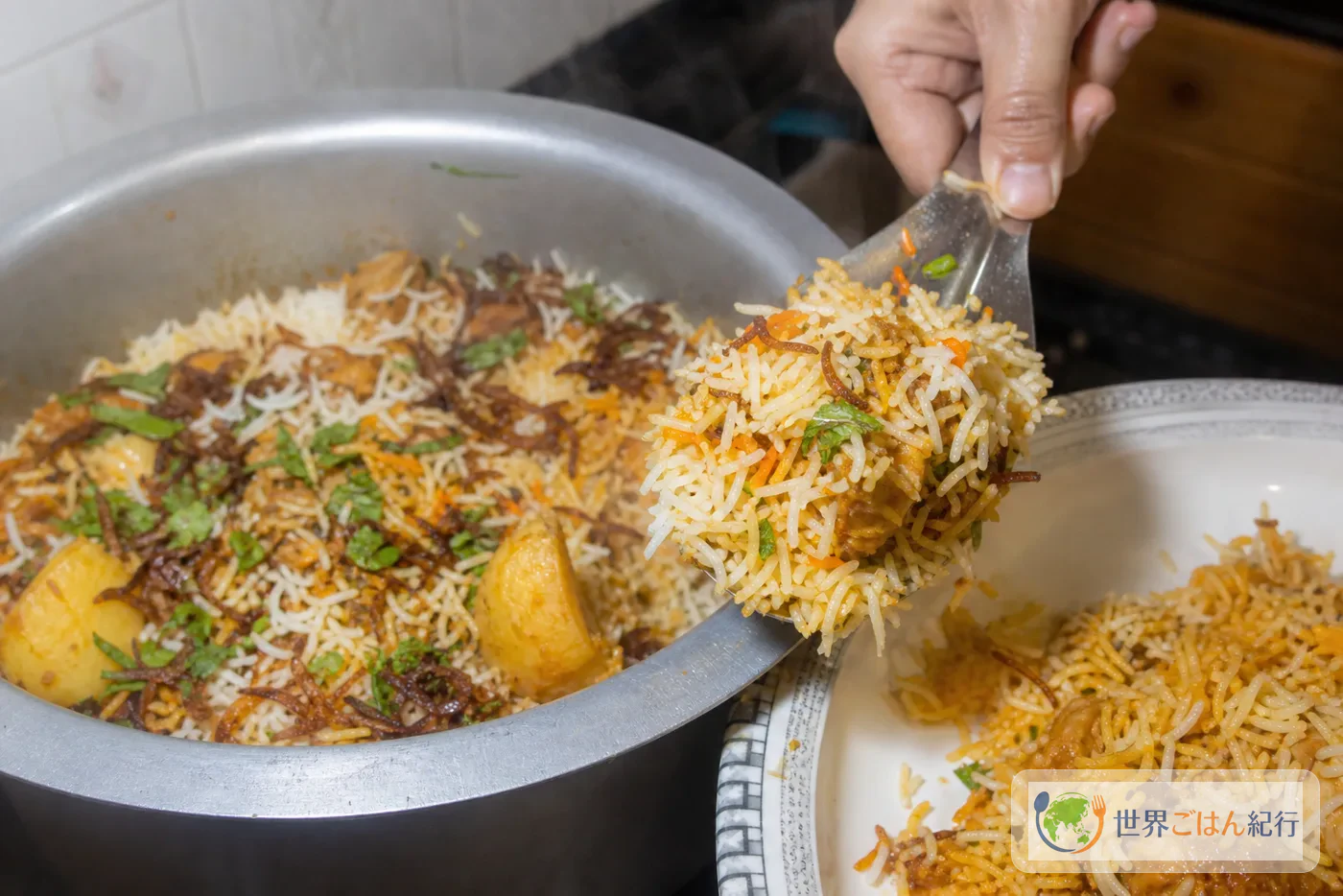
When you lift the lid, curry powder isn't what reaches you first. It's the sweetness of fried onions, the tang of yogurt and tomato, the green scent of fresh chilies and a little sweet-sour dried plum. The rice isn't one color, either: white patches sit beside grains stained red by the masala and yellow by saffron and turmeric, so the flavor shifts with every bite. This is Sindhi biryani (سنڌي برياني / سندھی بریانی / Sindhi biryani), the layered rice dish of Sindh province in southeastern Pakistan, and its pull comes from tang and fragrance as much as from chili.
What makes Sindhi biryani different
Many people know biryani from Indian restaurants, but on the Pakistani side Lahore, Karachi and Sindh each have their own rice dishes. Sindhi biryani shares the Pakistani table with dishes like chapli kebab and haleem.
In Sindhi biryani, the star is not the heat itself. Four things define it: large pieces of potato, dried plums called aloo bukhara, red masala and long basmati rice. Together they give a flavor unlike chicken biryani. The dried plum works less as a sweet fruit than as a small point of acidity that cuts through the oil and chili; you can leave it out, but with it you get much closer to a Pakistani table.
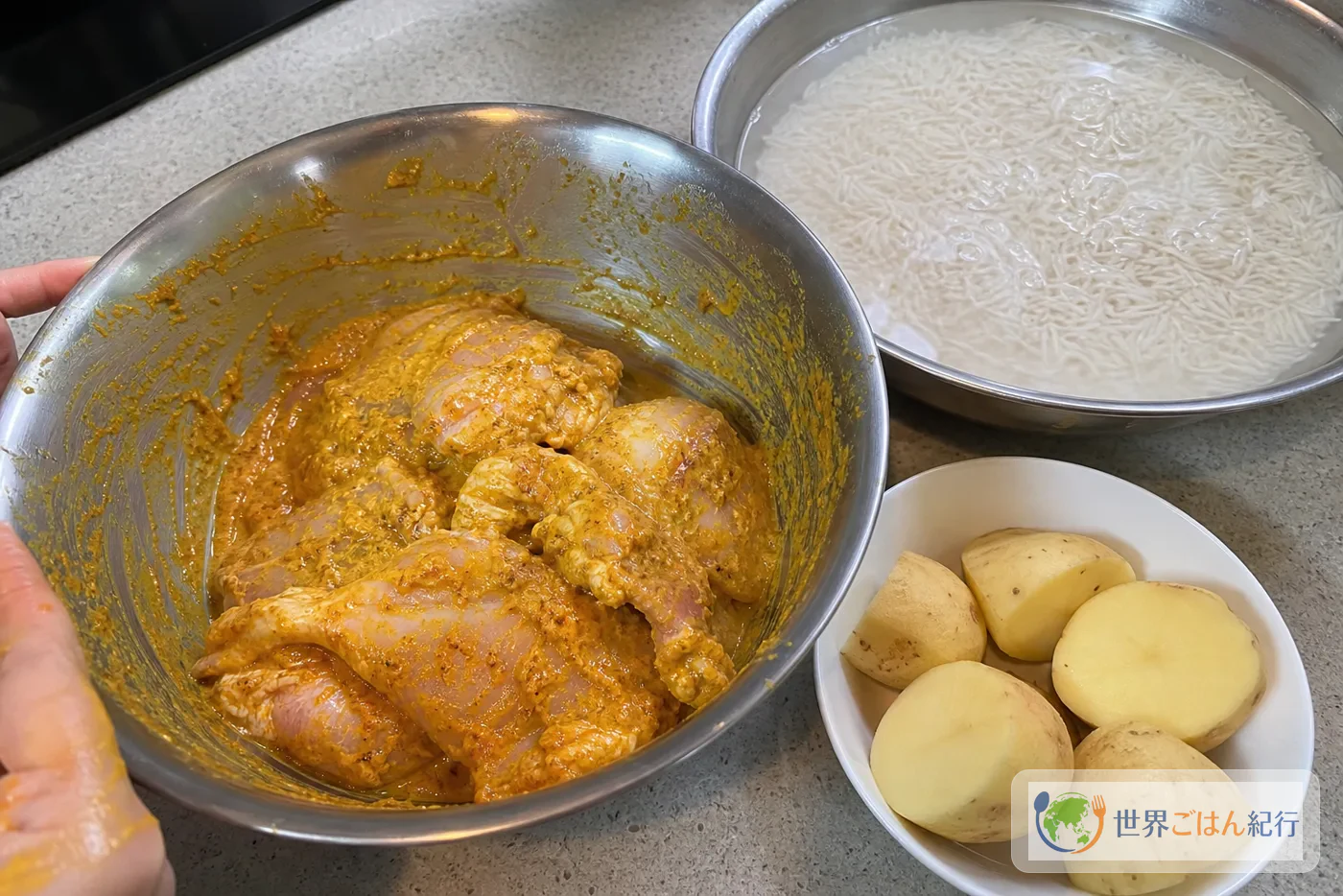
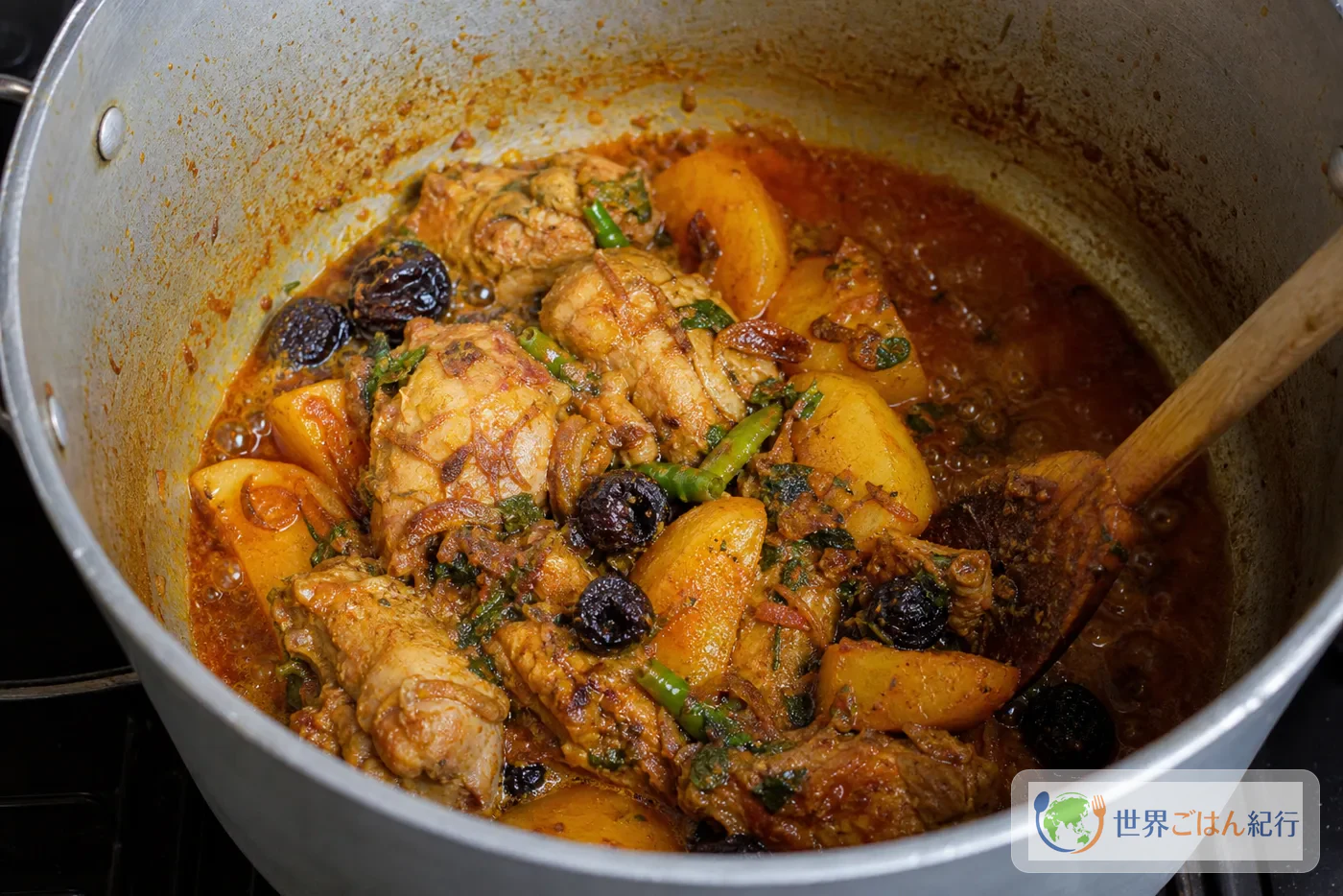
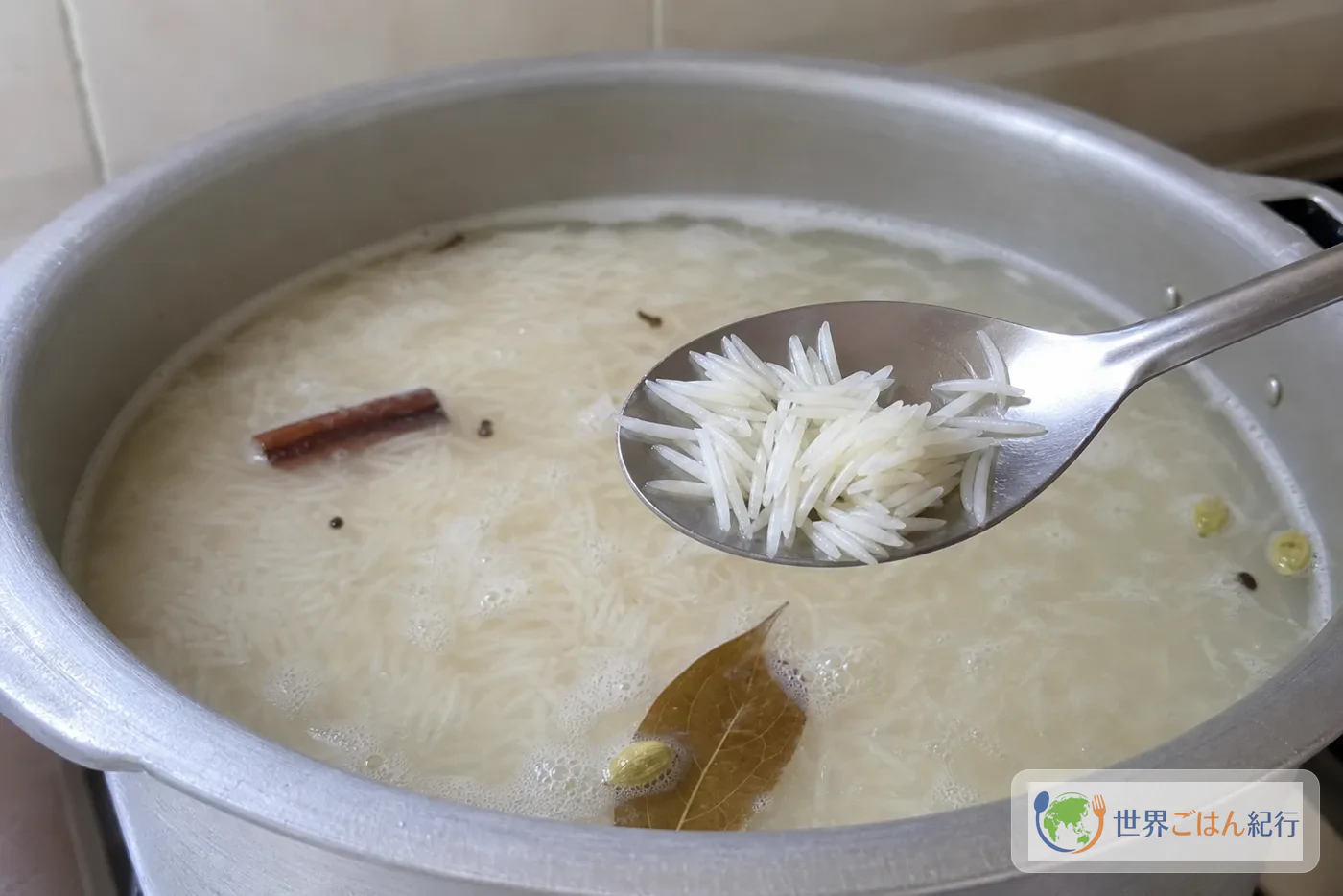
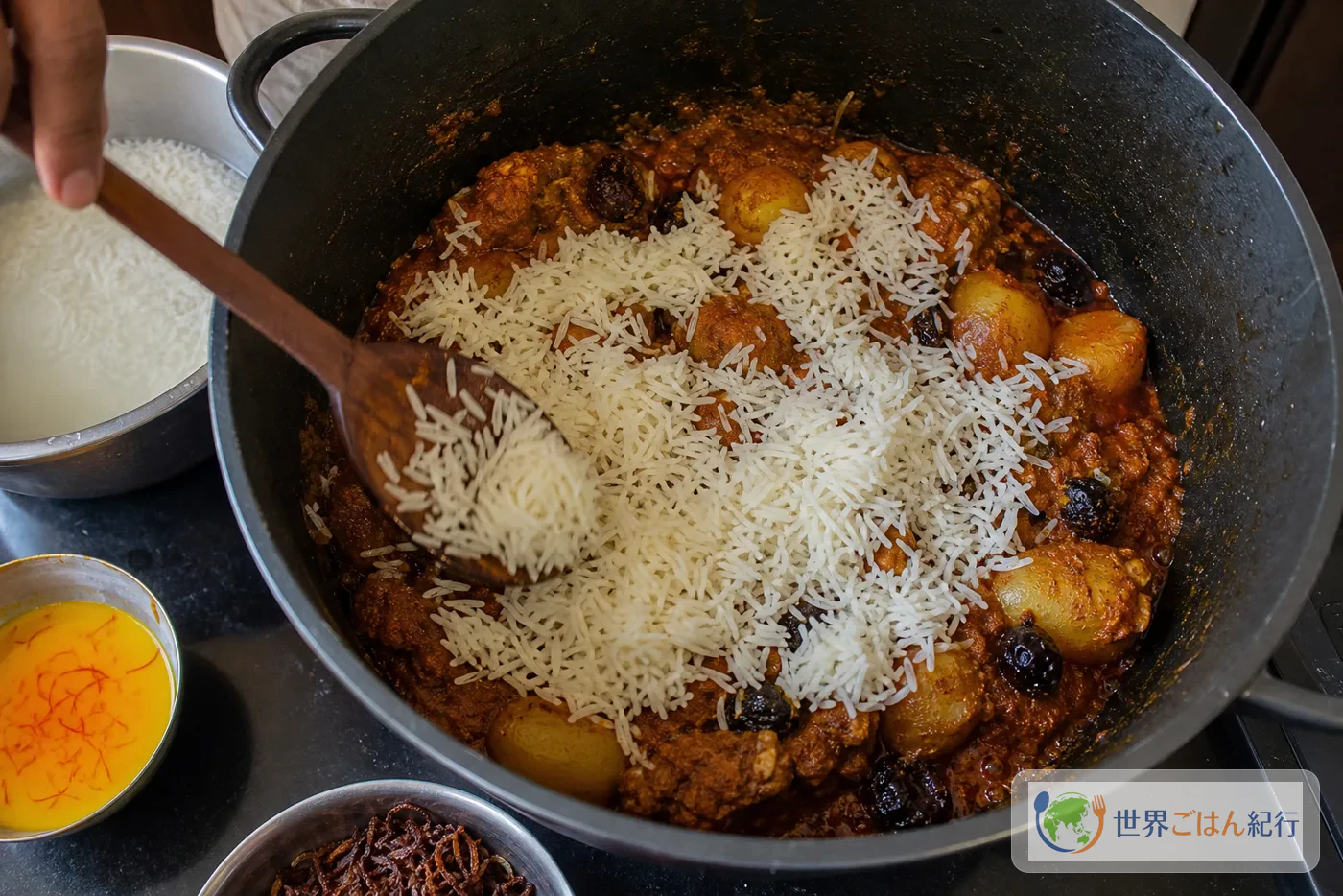
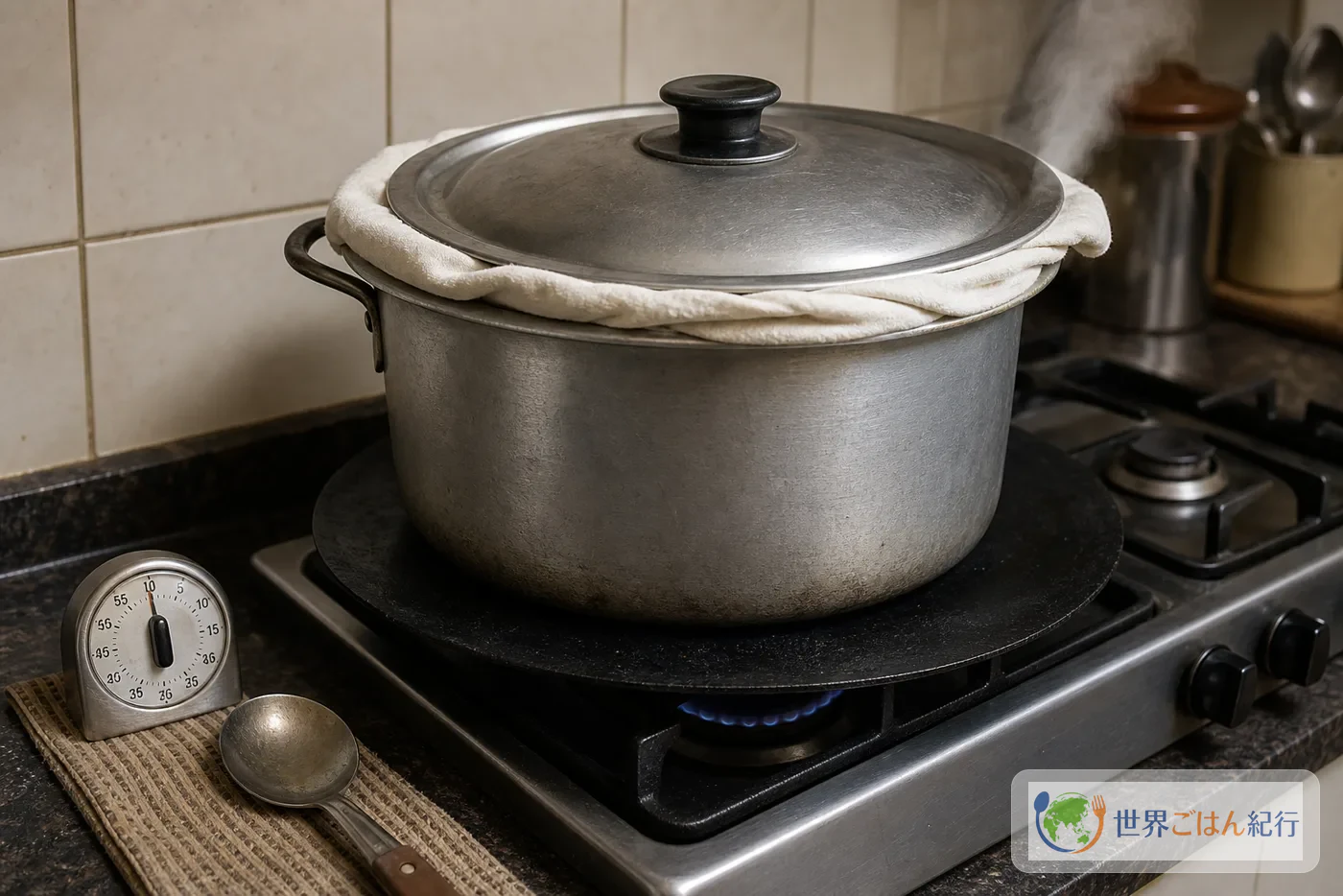
The layering comes from biryani: rice parboiled in a big pot, a red chicken masala made in another, then the two layered and steamed over low heat. Here the meat is chicken thighs, easy to find at any supermarket, so there's no hunting for bone-in cuts.
Local recipes often layer chicken or other meat, basmati rice, yogurt, tomato, green chilies, mint, cilantro, potatoes and dried plums together.
Ingredients (serves 4)
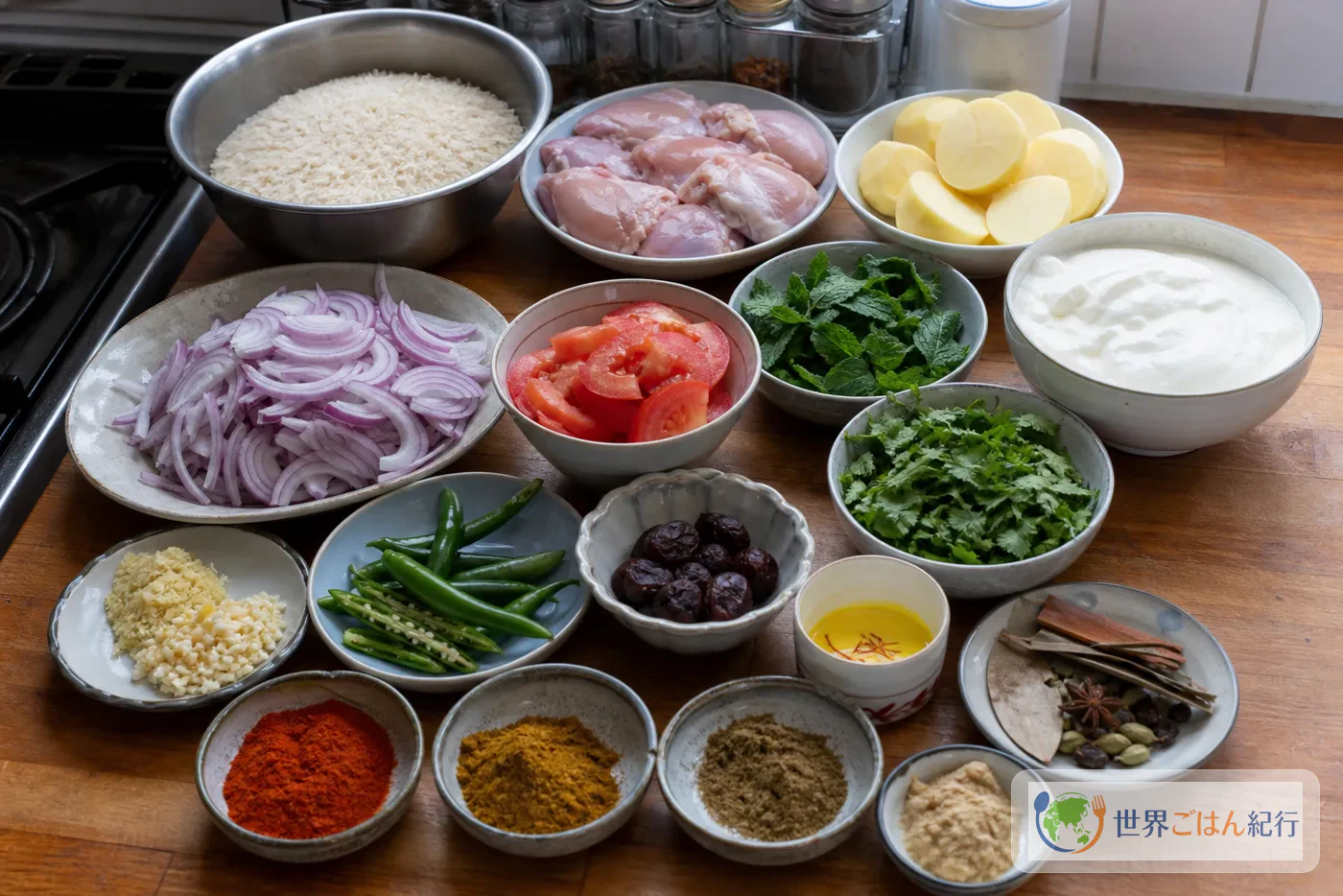
Serves 4. The quantities look large for a rice dish, but they are easy to handle on a platter. Chicken cut too small dries out during the steaming, so cut it into 2 inches (5 cm) pieces.
This recipe contains chicken and dairy. Check the label on store-bought biryani masala and fried onions, since they can be made in facilities that handle wheat, dairy, nuts and sesame.
Ingredients that need thought when shopping
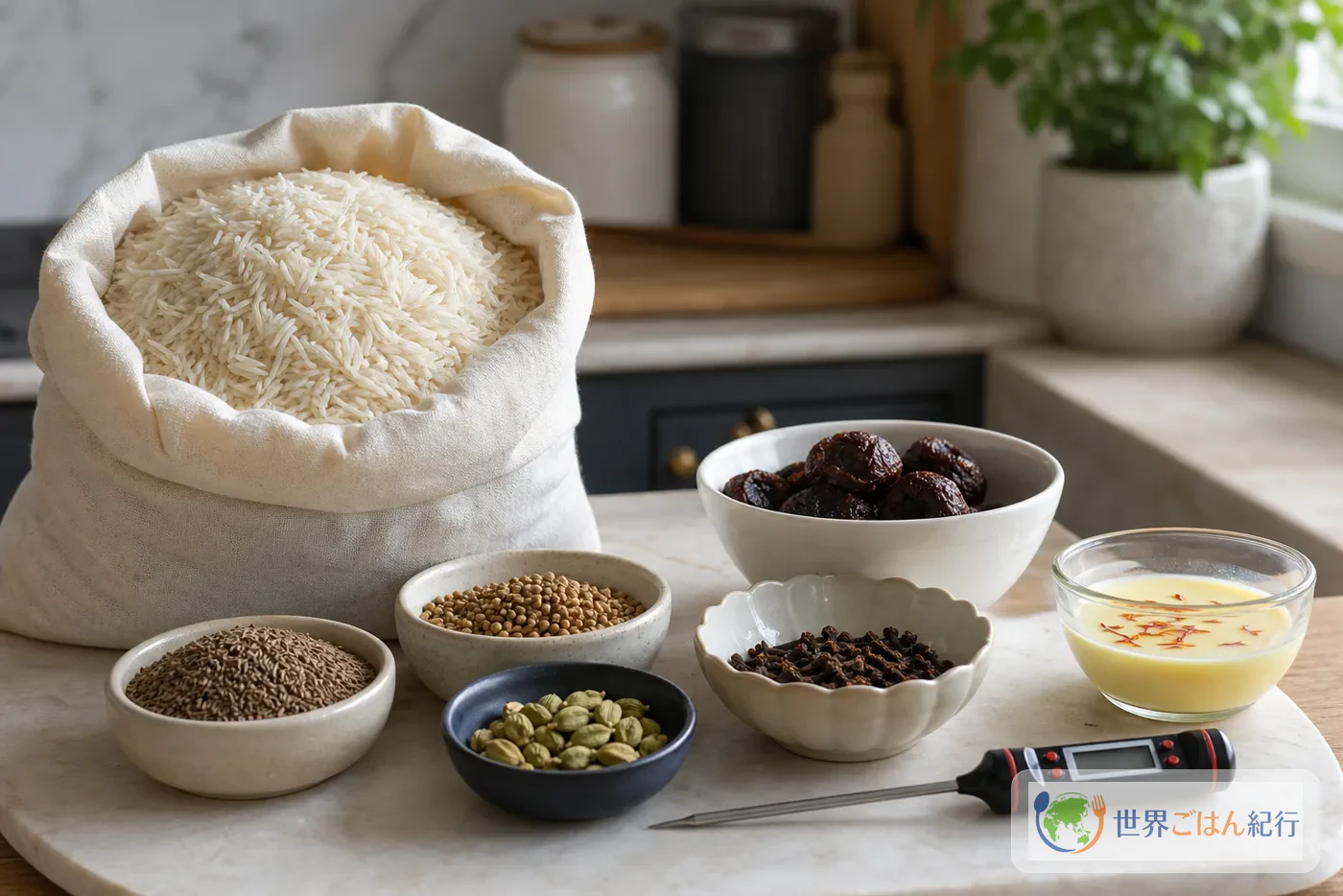
Milk, yogurt, chicken and potatoes are easy to buy at a nearby supermarket. Three things are worth seeking out: basmati rice, biryani masala and a thermometer. Look for dried plums as aloo bukhara at halal grocers or South Asian grocery stores. Without them, use pitted prunes, but they are sweet, so use less and add lemon juice for the acidity.
Basmati rice is hard to substitute in this dish. Japanese rice still makes a delicious chicken pilaf, but you won't get the lightness and long grains of a layered dish. It also goes into kabsa and mandi, so it's worth keeping a bag on hand if you cook the world's rice dishes.
You don't have to make biryani masala from scratch. Store-bought blends differ in salt and heat, so this recipe uses just 1 tbsp and fills in the missing aroma with coriander, cumin and black pepper. Check that the thick part of the chicken reaches 75°C (167°F) or higher. A rice dish is hard to see inside the pot, so a thermometer helps with steamed dishes as well as roasts.
Choosing ingredients for Sindhi biryani
What matters most is the long rice, the acidity and the size of the potatoes. Get those right and the dish works, even if your spice shelf is missing a jar or two.
Dried plums can be hard to find in an ordinary supermarket, though South Asian grocery stores sometimes sell them as aloo bukhara. On days you can't get them, halve 25 g of pitted prunes and add 1 tsp of lemon juice. Prunes are sweet with only mild acidity, and with 1.25 oz (35 g) or more the whole dish turns sweet, so don't replace 8 plums one for one. Japanese umeboshi (pickled plums) taste too much of Japanese cooking to stand in here.
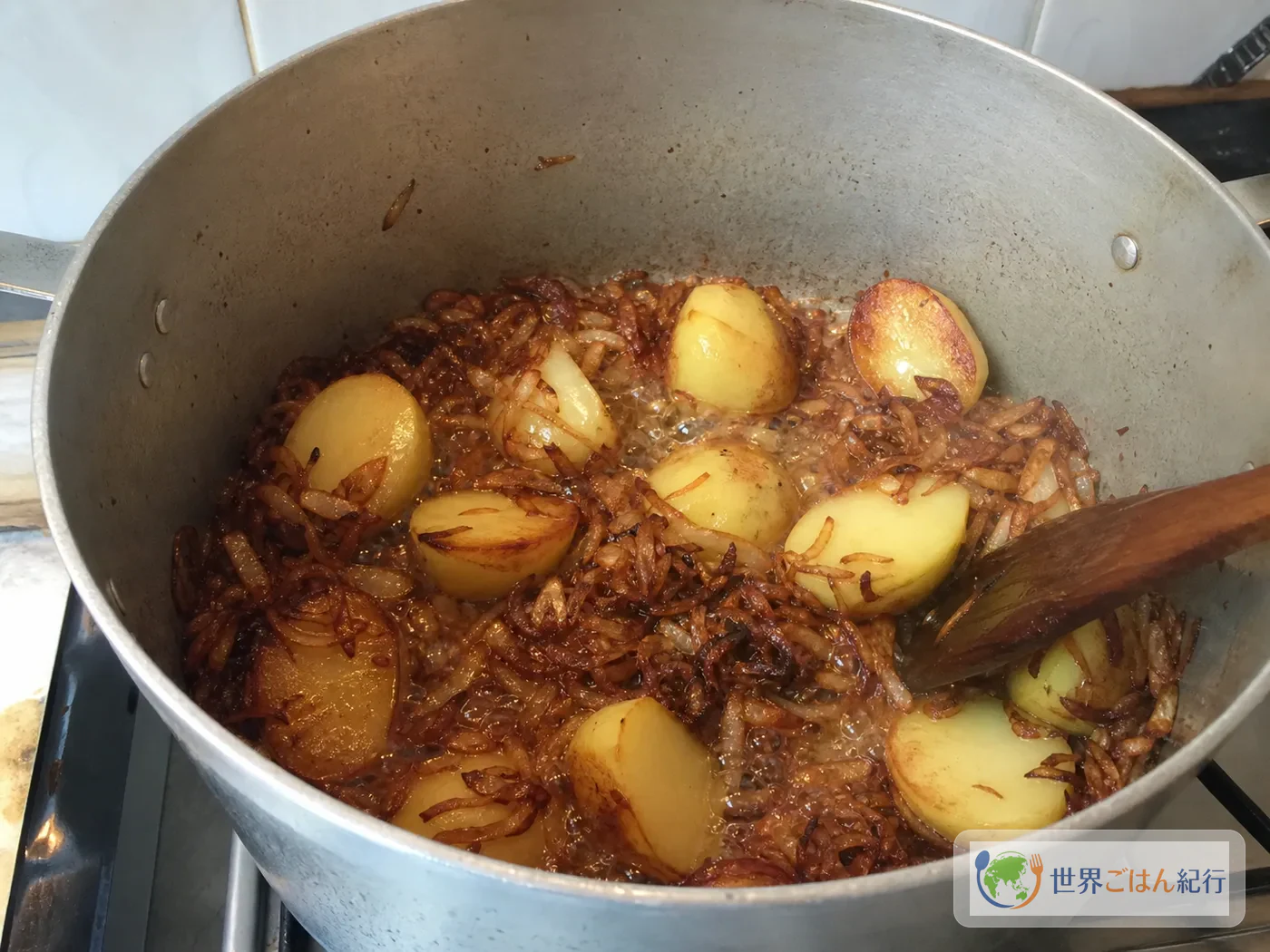
Keep the potatoes big. Cut to 1 inch (2 cm) cubes, they disappear into the rice and become just another filling; large halved potatoes showing in the dish give the satisfying bulk typical of Pakistani biryani.
Bone-in meat is closer to the local style, but chicken thighs are plenty for a home kitchen. If you mix in bone-in drumettes, use 6 drumettes and 10.5 oz (300 g) of chicken thighs, and check the temperature carefully before the dum. As for heat, two green chilies give aroma; if someone in the family dislikes heat, use 1.
Method
In Sindhi biryani, the rice is boiled separately and then layered. Cook the rice in the masala from the start and the flavors meld, but the white and red patches typical of Sindhi biryani, the potatoes and the small acidity of the dried plums get buried.
The safe minimum for chicken is 165°F, about 74°C. Aim for 75°C or higher in the thickest part, an easy figure to remember at home. If you can't tell by looks, check with a thermometer.
Common problems with Sindhi biryani
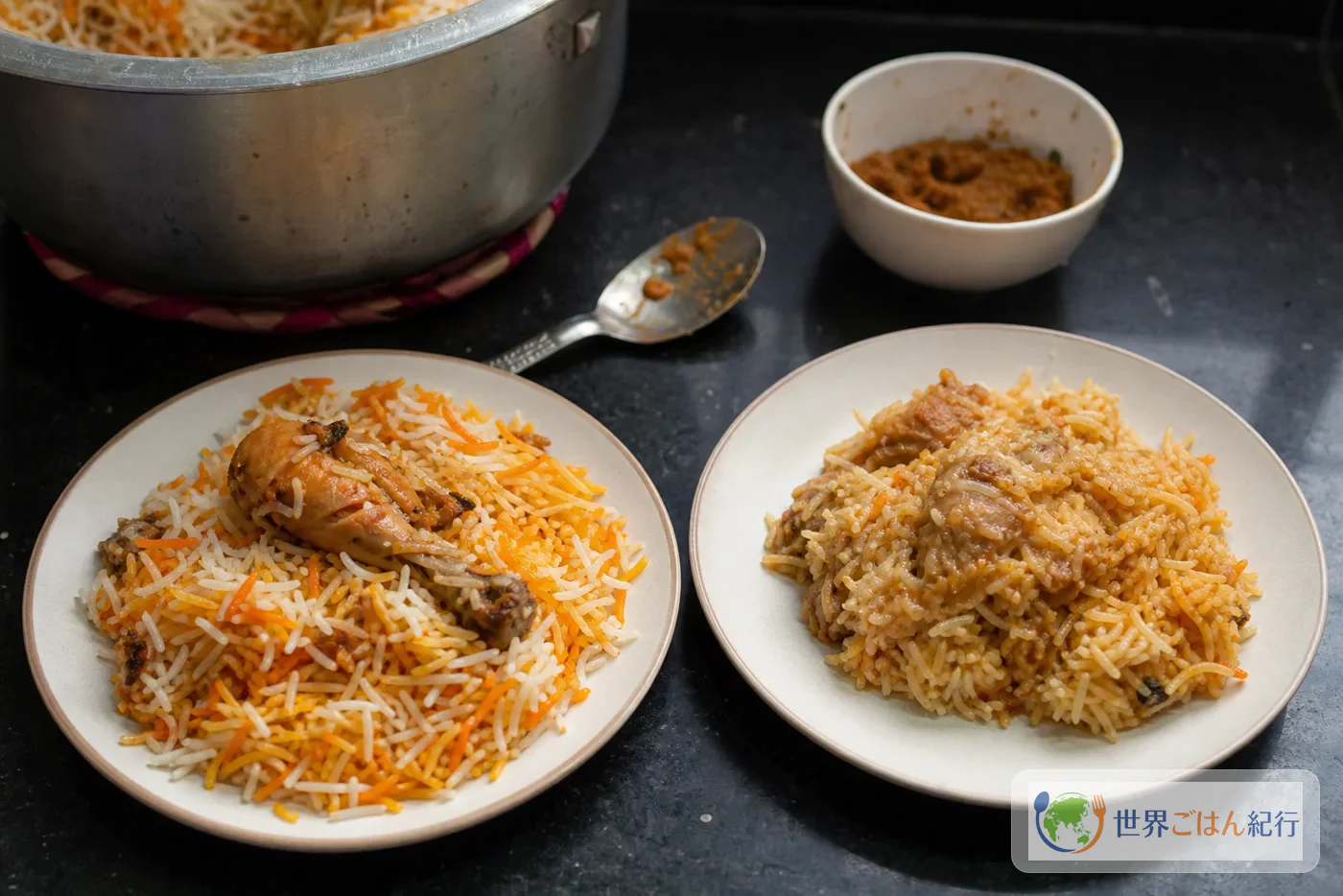
Most failures come not from the spices but from moisture. A masala that's too loose, rice boiled past a parboil, a dum fire that's too strong: when these overlap, the bottom of the pot scorches while the rice turns soggy. Keep the masala thick, stop the rice early and leave the layers unbroken at the end.
| State | Cause | How to recover |
|---|---|---|
| The rice is heavy | Rice fully cooked, masala too watery | Spread it on a platter for 5 minutes to let the steam escape |
| The bottom scorches | "Low" heat is too strong, thin pot | Leave the scorched bottom; transfer only the rice above |
| The chicken is tough | Cut too small, cooked too long | Keep to 2 inches (5 cm) pieces and stop the simmer at around 12 minutes |
| The potatoes break apart | Not browned first, simmered too long | Halve them and brown only the surface before adding |
| The flavor is flat | Not enough acidity or herbs | Add lemon juice, mint, cilantro and raita at the table |
| Too hot | Both chili powder and green chilies increased | Use plenty of raita and red onion, and halve the chilies next time |
Stirring watery rice in the pot only breaks the grains and makes it heavier. Spread it on a platter instead, let the excess steam out, then scatter cilantro and fried onions on top to bring back the look and texture. If the rice is hard, skip the pot and water: microwave it in a dish at 600 W for 1 minute, then let it stand covered for 3 minutes so the core softens.
Four signs will tell you how the pot is doing, even when your amounts drift a little: oil seeping red at the edge of the pot, a white core left at the center of the rice, a bamboo skewer going halfway into the potatoes, and white and red still in patches after the rest.
Serving and storing Sindhi biryani
At the table
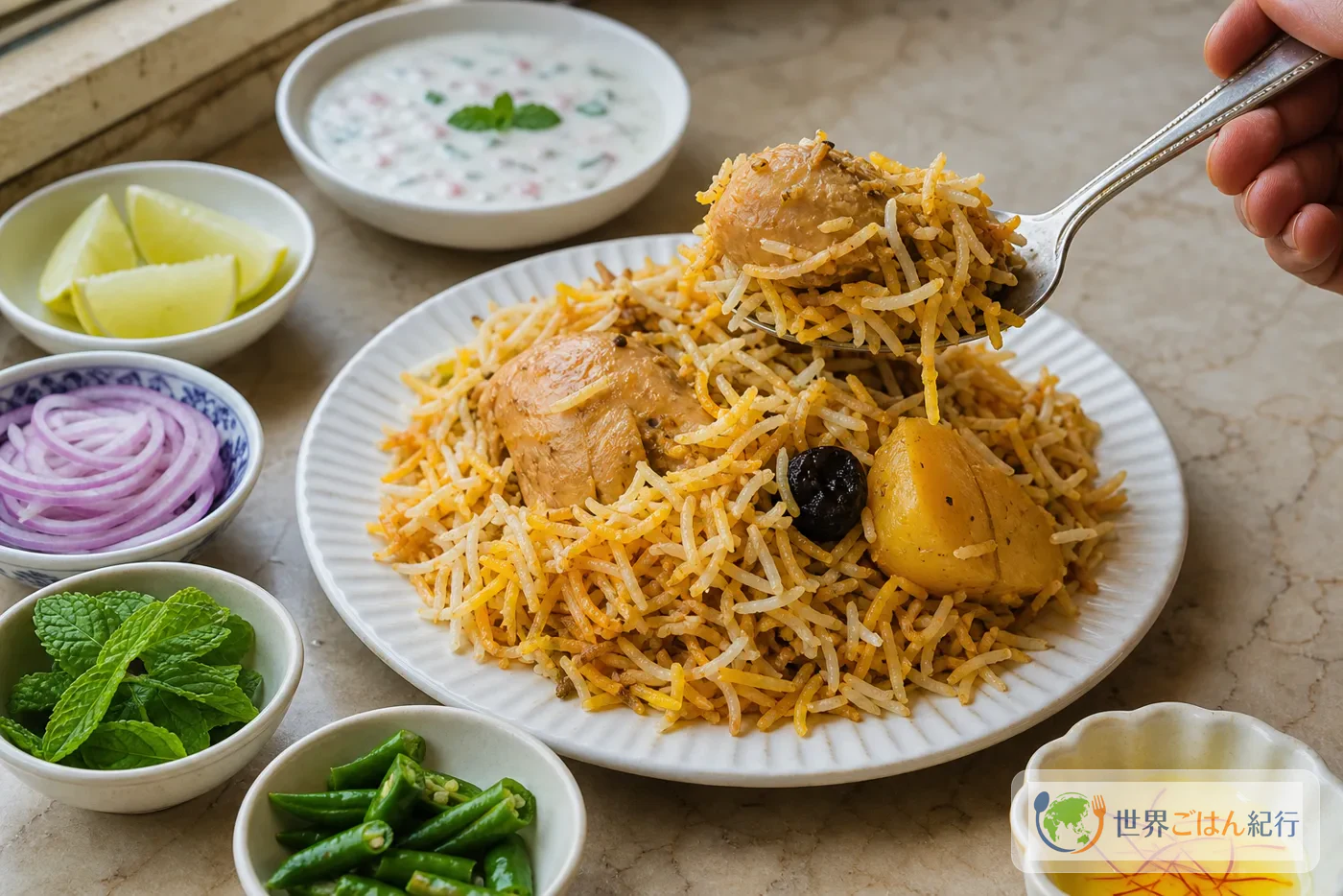
Set out lemon, red onion, cucumber, raita and sliced green chilies separately, so everyone can adjust the heat around the same pot. Take the first bite plain, then add raita, lemon and onion a little at a time. Where a dried plum turns up, it's sweet-sour; where there's potato, it's dense with masala. Leave those differences on the plate rather than mixing everything evenly.
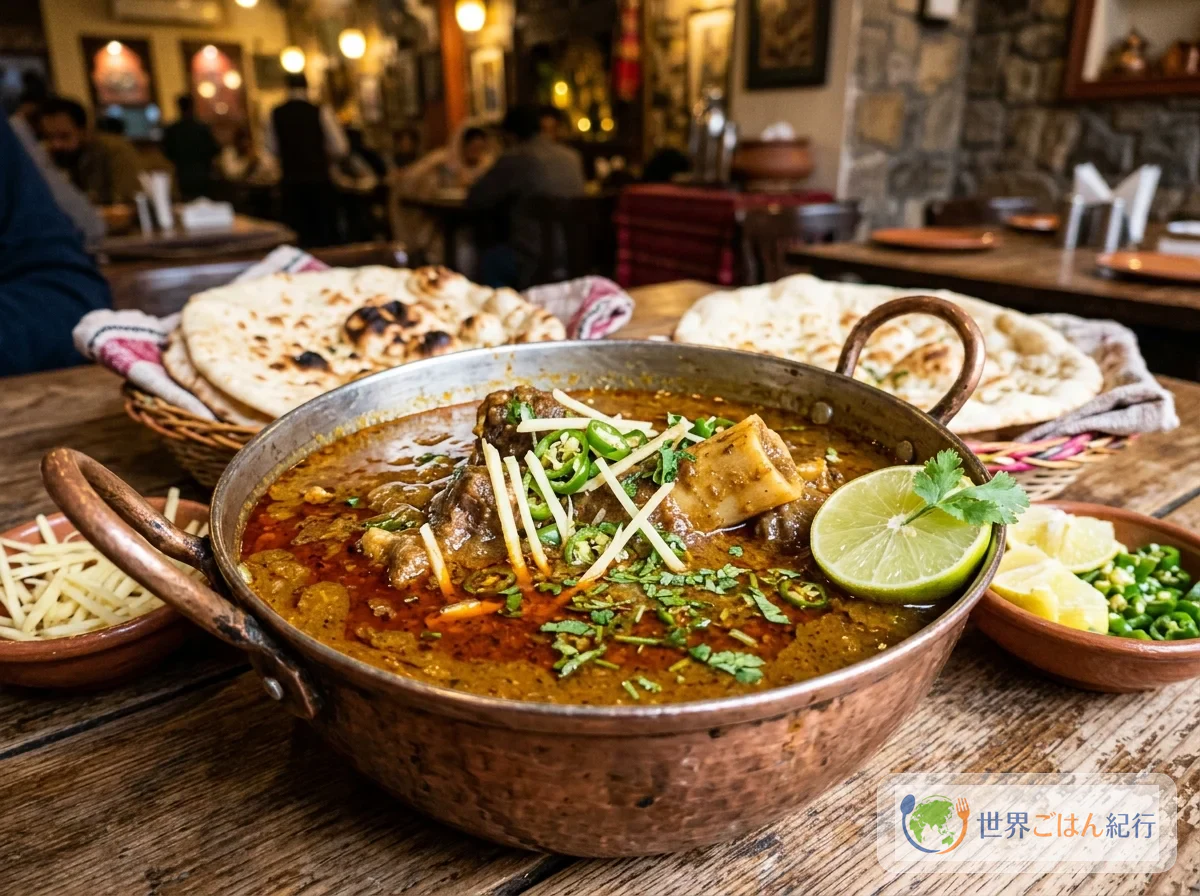
Unlike a rich stew such as nihari, Sindhi biryani is eaten for the lightness of its rice, so reach for acidity, coolness and herbs rather than more heat or oil, and you can keep eating to the end. If you build a menu around it, go easy on heavy mains: with a little chapli kebab or a small portion of nihari, add more salad and raita. For a broader South Asian spread, a small samosa alongside gives variety.
Next to the sweet carrot and raisin kabuli palaw or the Gulf's machboos, Sindhi biryani is more sour, its masala redder, and its potatoes stand out on the plate.
Storage and reheating
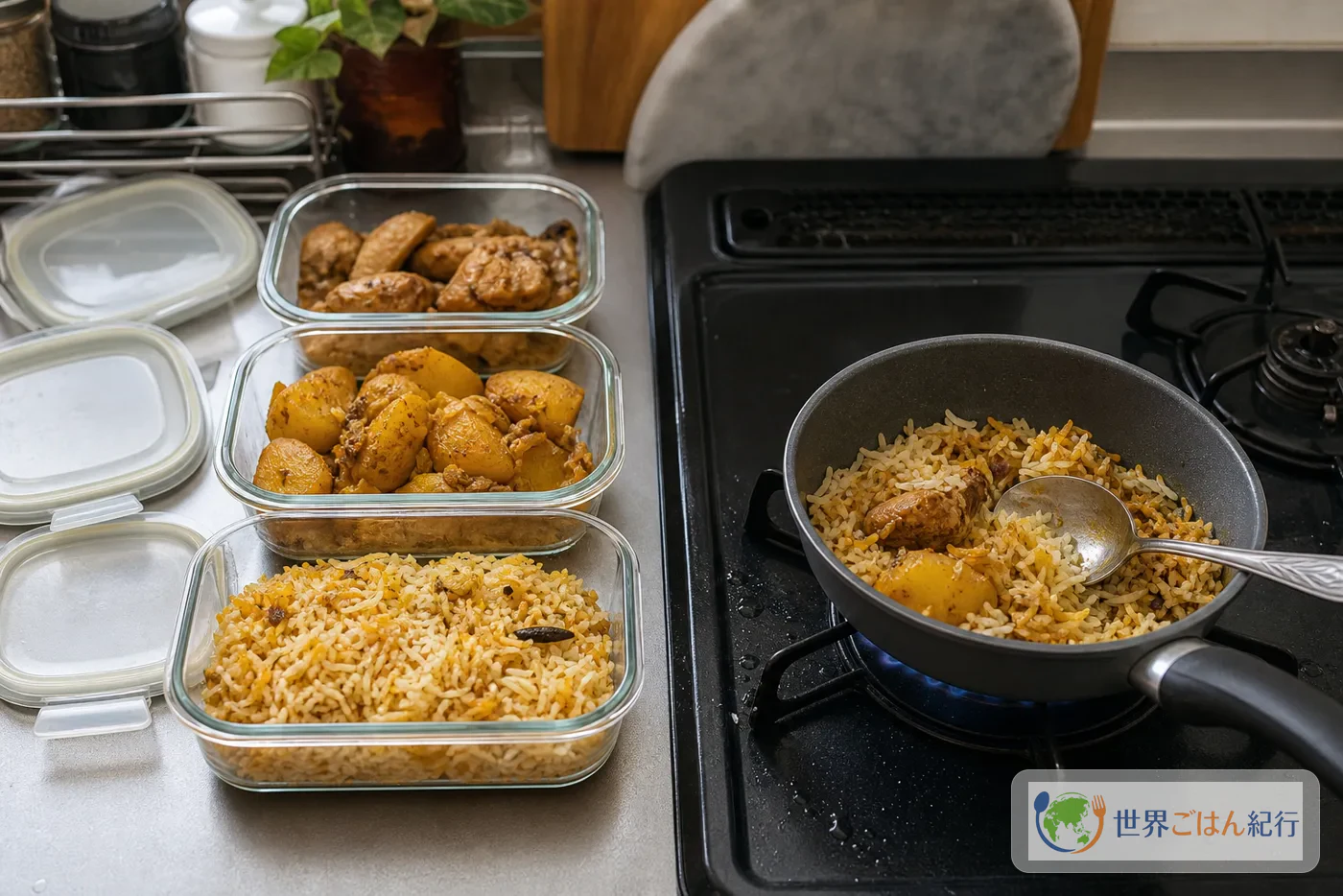
Keep it in the refrigerator for 2 days. Rice, chicken, yogurt and side dishes all spoil quickly, so once the heat is gone, divide it into single portions in shallow containers. Frozen, it keeps for 2 weeks, though the potatoes lose some texture.
To reheat in a frying pan or pot, sprinkle 1 tbsp of water over one portion, cover and heat over low heat for 4 minutes, turning it from the bottom just once. In a microwave, heat it at 600 W for 2 minutes and check that steam rises from the center. Reheat leftovers to 165°F, about 74°C; at home, 75°C or higher is the easiest number to remember.
FAQ
Q1. Can I make it with Japanese rice?
You can, but it becomes closer to a Sindhi-style chicken pilaf than Sindhi biryani. With 2 Japanese cups of rice, skip the soak, boil the chicken masala down well, and keep the liquid to 5 mm (1/4 in) above the surface of the rice. You won't get the lightness of the layers, so use basmati the first time.
Q2. Can I make it with only store-bought biryani masala?
Yes. Use 2 1/2 tbsp of the store-bought blend and halve the coriander, cumin, red chili and garam masala. Some products contain salt, so start with 1 tsp of salt in the masala and taste before layering.
Q3. Is food coloring necessary?
No. Some local recipes use color powder, but at home tomato, chili, turmeric and saffron milk are enough. Patches of white, red and yellow, rather than an even orange all through, keep every bite interesting.
Q4. How do I change it for bone-in chicken?
Use 850 g of bone-in chicken thighs or drumettes. Add 5 minutes to the simmer and check after the dum that the area near the bone is 75°C (167°F) or higher. Bone-in meat gives more savoriness but is harder to portion, so if you serve it on a platter, put out tongs.