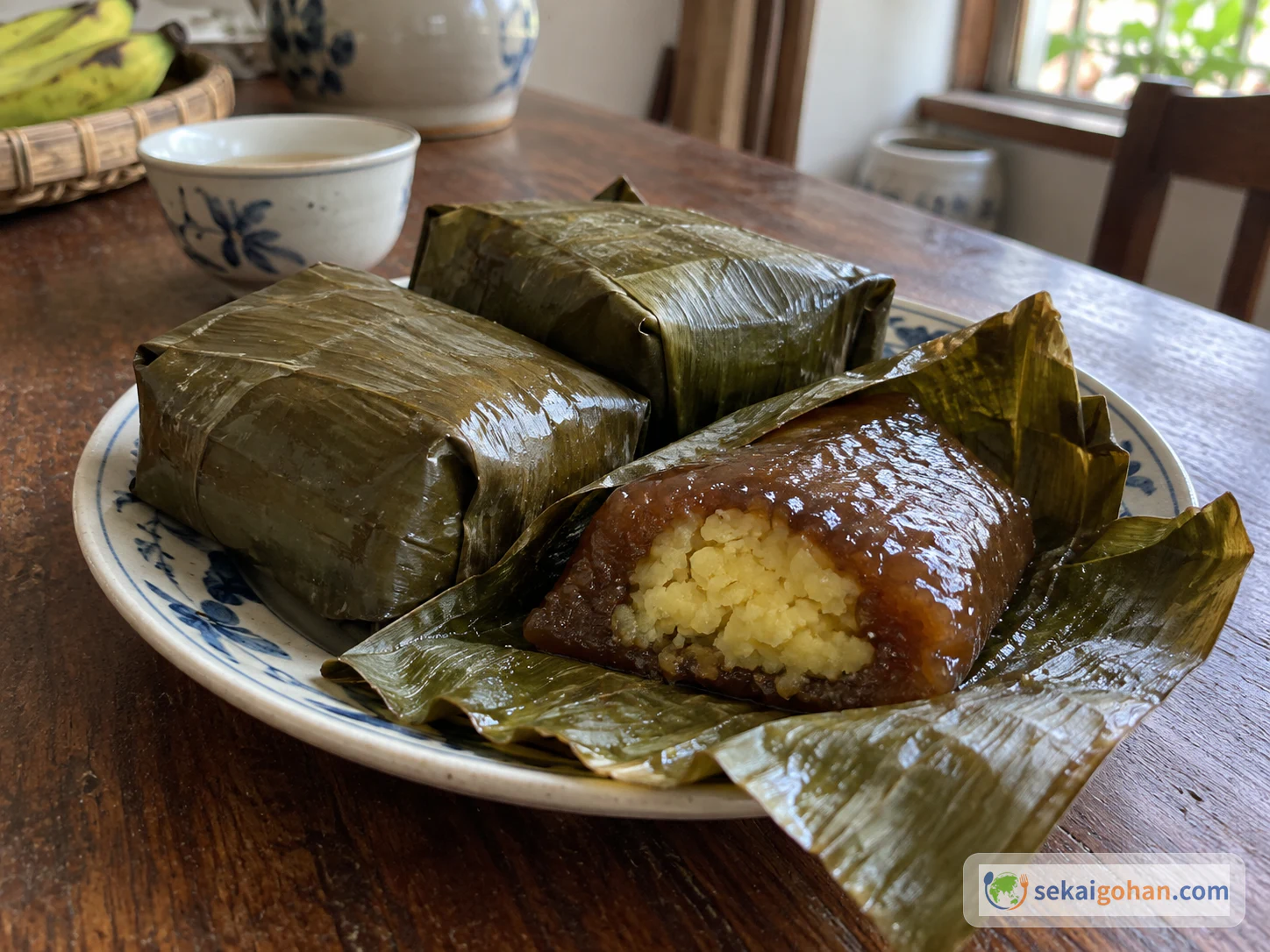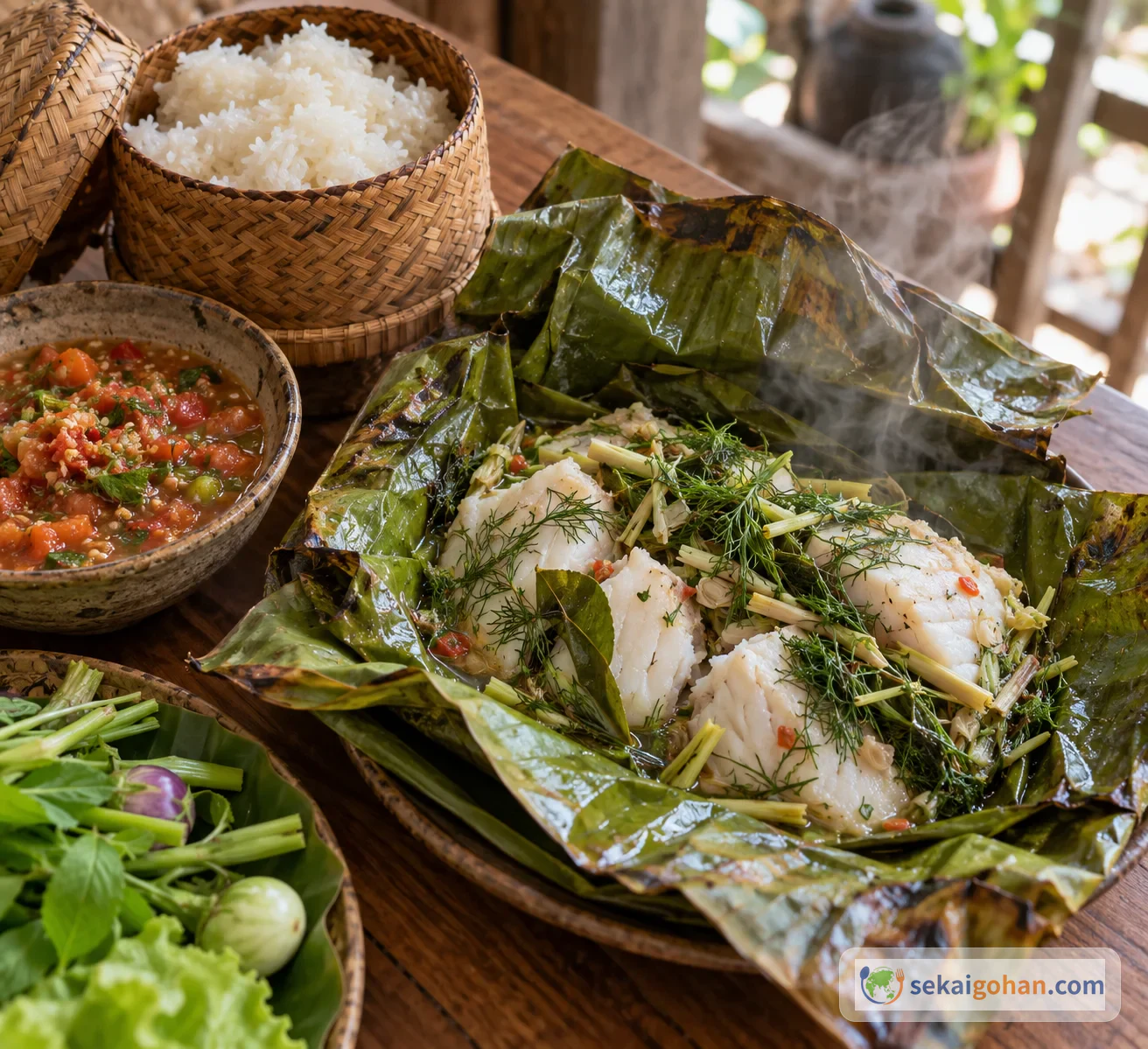
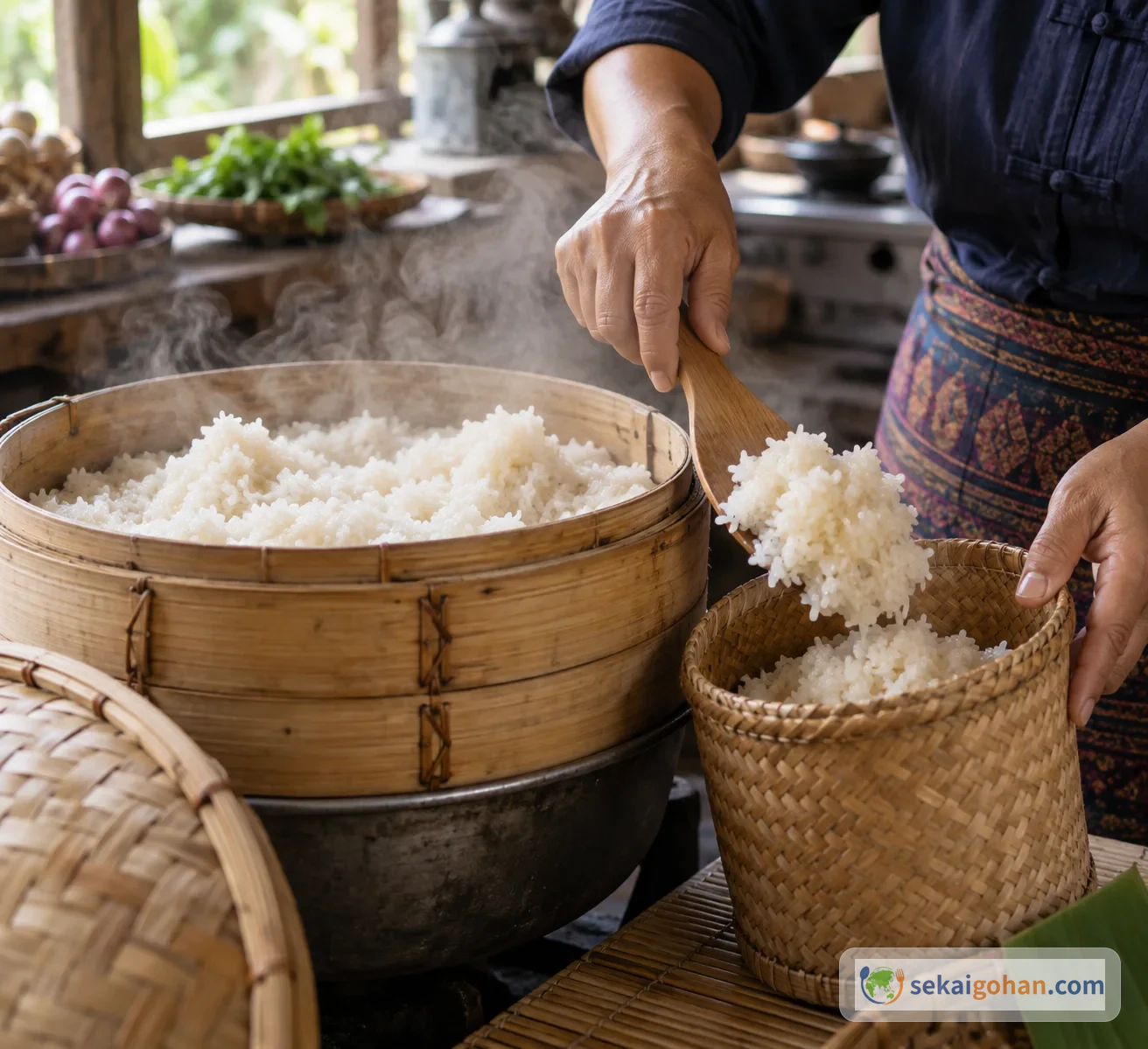
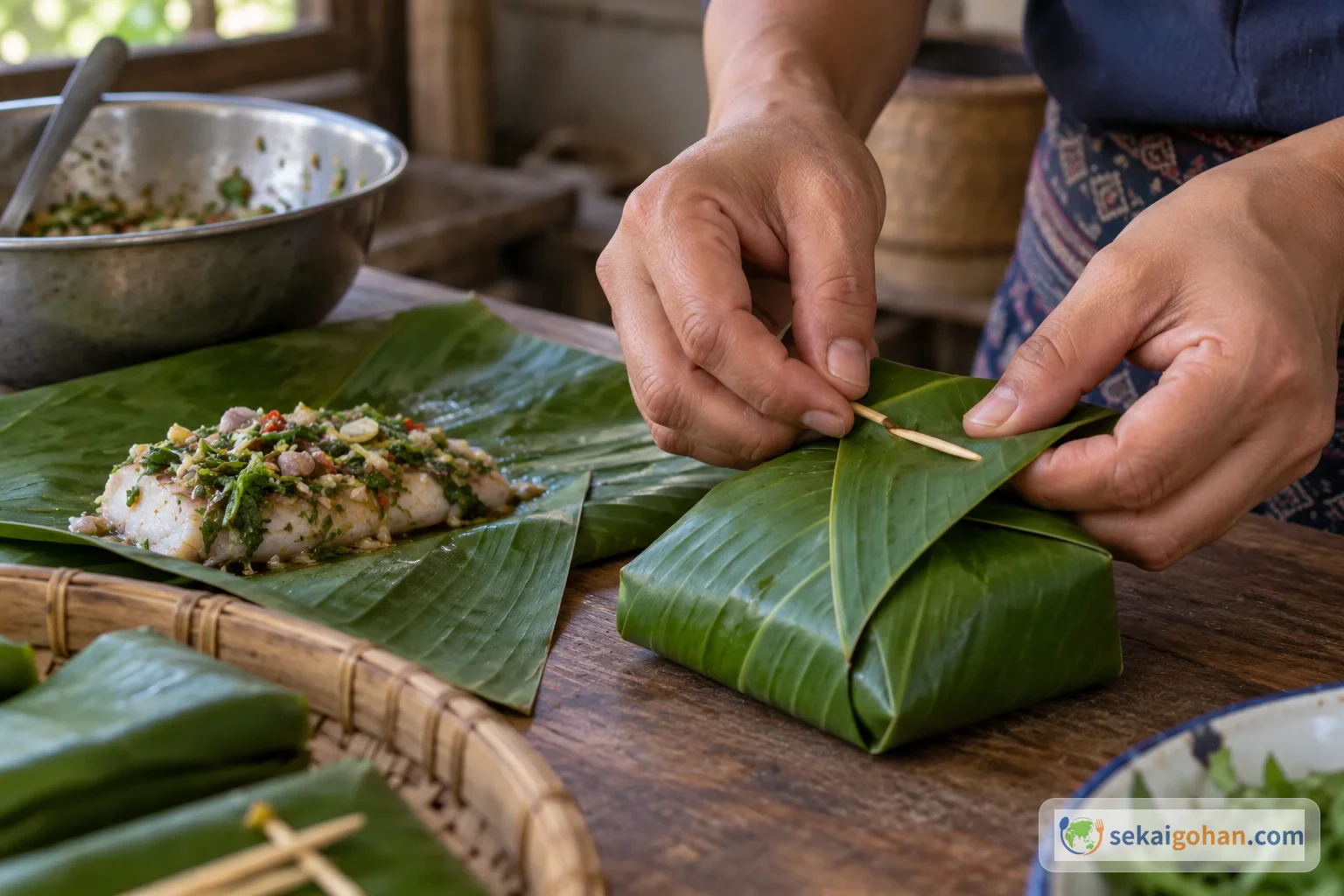
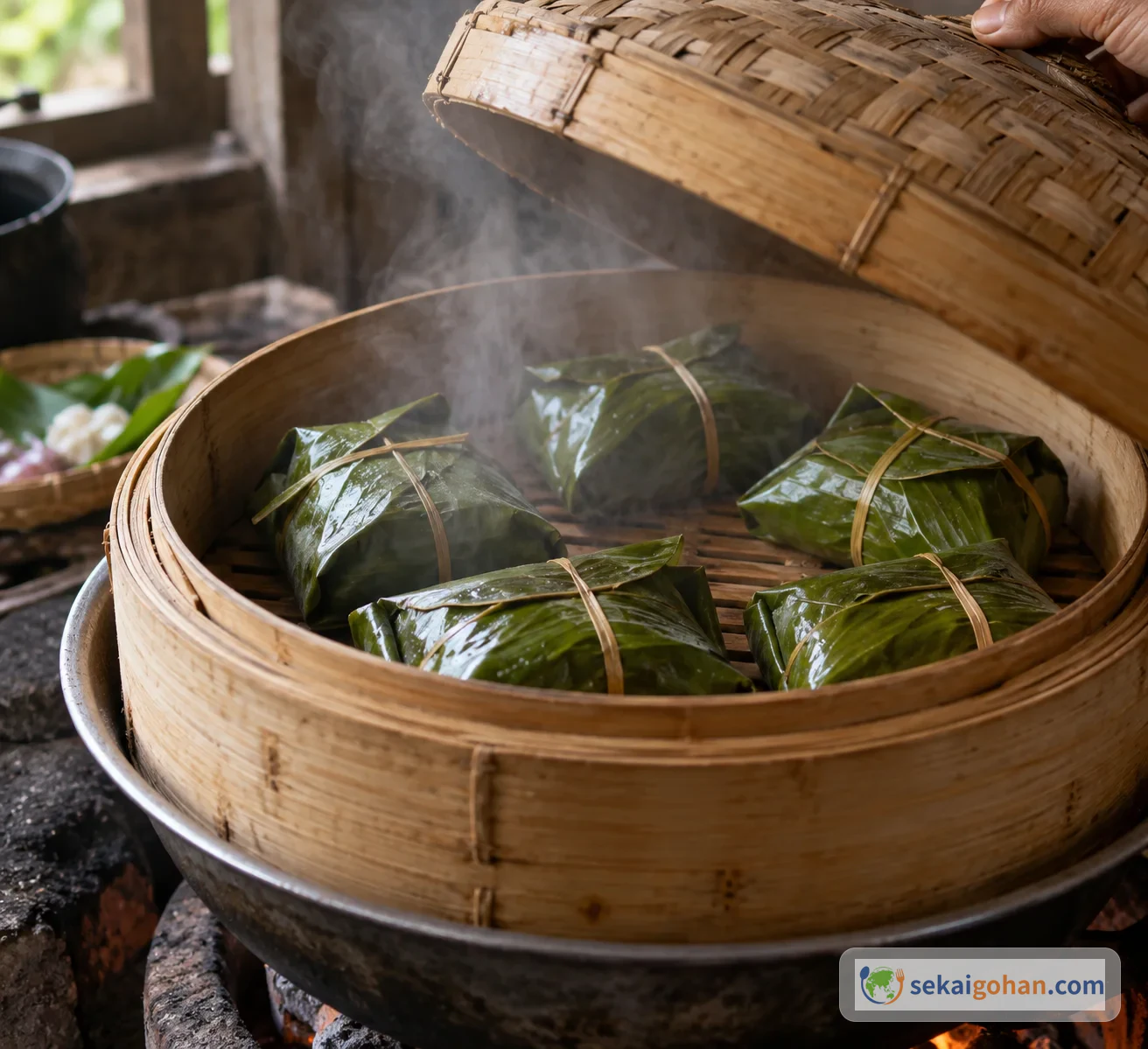
Picture a table in a Luang Prabang family kitchen: banana-leaf parcels still holding a little steam, chopped dill and lemongrass, a basket of freshly steamed sticky rice. The moment the leaf is opened, a green, grassy scent drifts up, with something like citrus behind it. Mok pa (ໝົກປາ) is Lao fish, mixed with herbs, wrapped in banana leaves and steamed. The fish soaks up the aroma of dill and lemongrass, and you eat it by scooping it up with sticky rice.
What Mok Pa Is
Mok: Steaming Foods from the Water's Edge in Leaves
Mok is a Lao way of seasoning foods from the water's edge with herbs, chiles, salt and fish sauce, then wrapping them in banana leaves and steaming them. Small fish, aquatic insects, tadpoles and plenty of other things get the same treatment, so mok is not one fixed recipe. Mok pa is the fish version, and the filling and proportions change from region to region and family to family. Mok is also a dish handed down from grandmothers in the family kitchen, and mok pa nahm kong, fish steamed with herbs in banana leaves, is one of its forms.
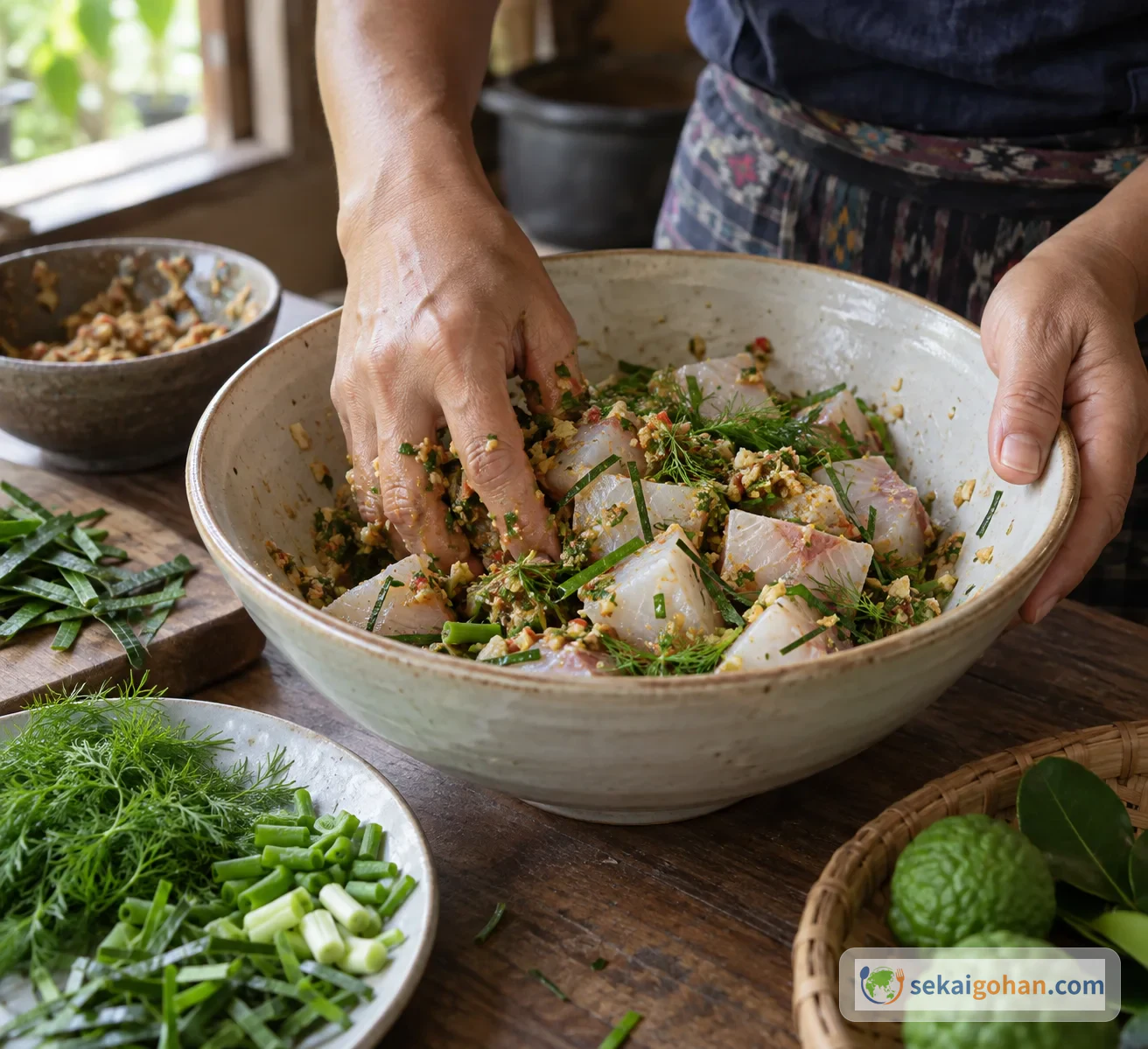
The fish isn't braised whole in a sauce. It's cut into bite-size pieces, mixed with herbs, fish sauce, chiles, salt and a sticky-rice binder, then steamed inside the leaf. Because the fish is wrapped and steamed rather than simmered, its moisture and aroma stay in the parcel. When you open it, the scents come up in layers with the steam escaping from the parcel: first the green smell of the leaf, then grassy dill and citrusy lemongrass, and underneath it all the quiet, fermented savoriness of fish sauce.
Mok Pa at a Luang Prabang Table
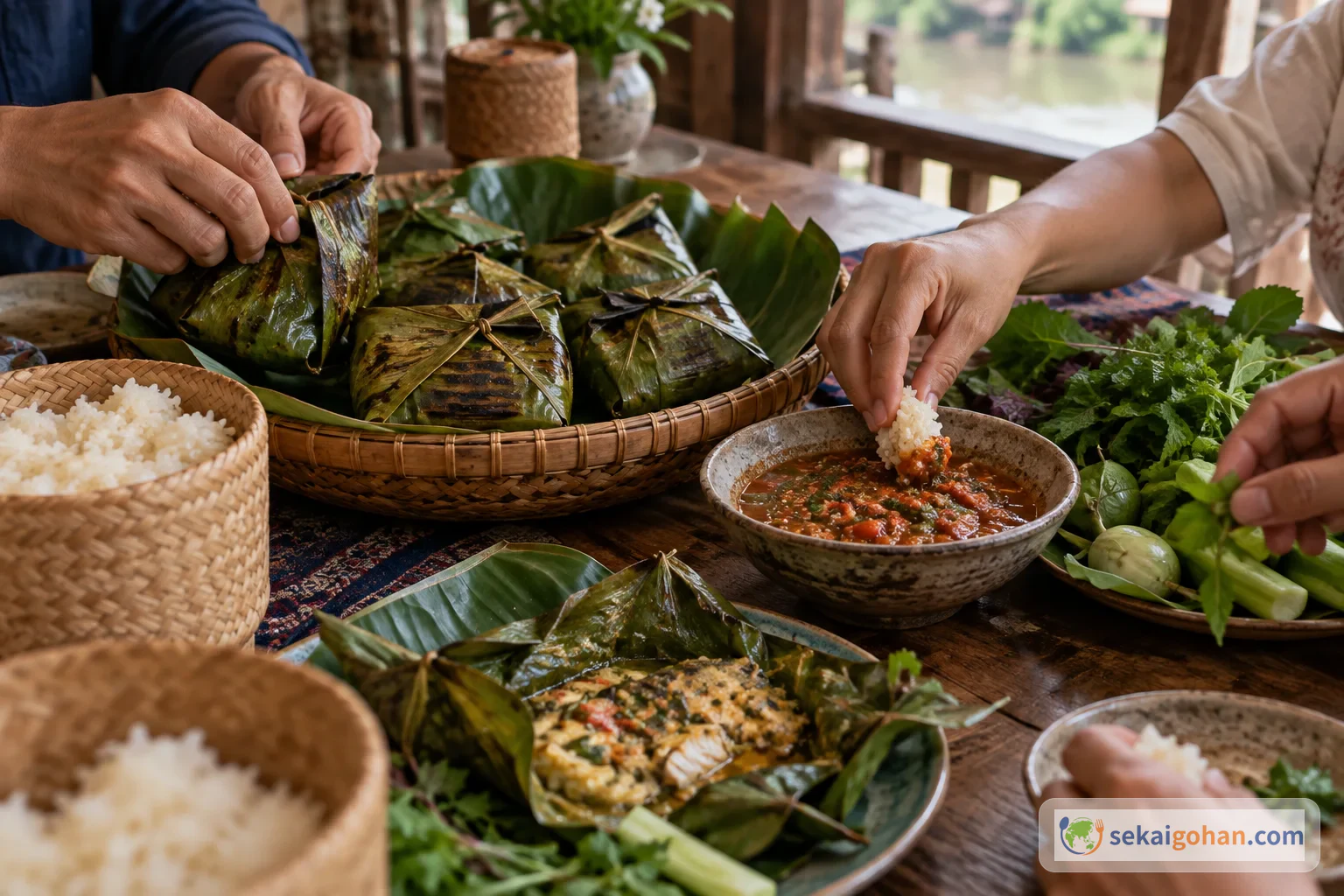
At a Lao table, you roll warm sticky rice into a small ball with your fingertips and use it to scoop up the fish. No spoon, no chopsticks; fish and herbs go to your mouth in one bite. Lao meals are shared among family, and this is a dish that gets passed around from the center of the table.
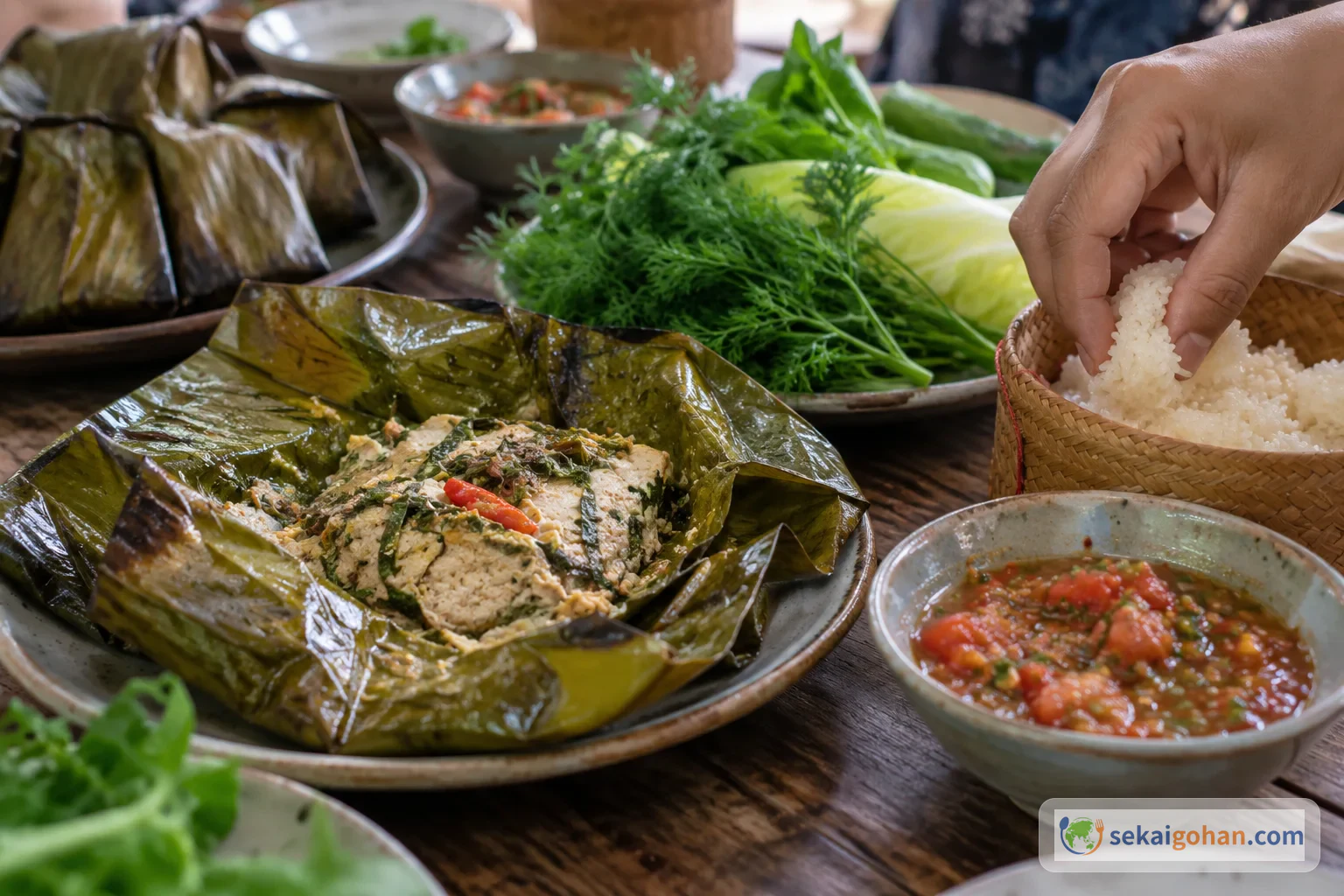
One version is a MOK PA of tilapia, made with ingredients from local farms and fish from Ban Phonexay farm, seasoned with lemongrass, dill, garlic and chile and served with a spicy tomato dip. In Luang Prabang there's also a custom where guests shop at Phosy Market with a host family, make sticky rice, mok pa and other dishes, offer them at a temple, and then share them at lunch. From gathering ingredients at the market to sharing the food after the offering, the same leaves and herbs show up at the temple and at the family table.
How Mok Pa Differs from Amok
Mok pa goes a different way from Cambodian fish dishes made with coconut milk. It has no coconut and puts dill, fish sauce and the flavor of freshwater fish up front. If you want to taste the difference, try it alongside Cambodian amok or Lao laab, which features fresh herbs and fish sauce.
Ingredients (serves 4)
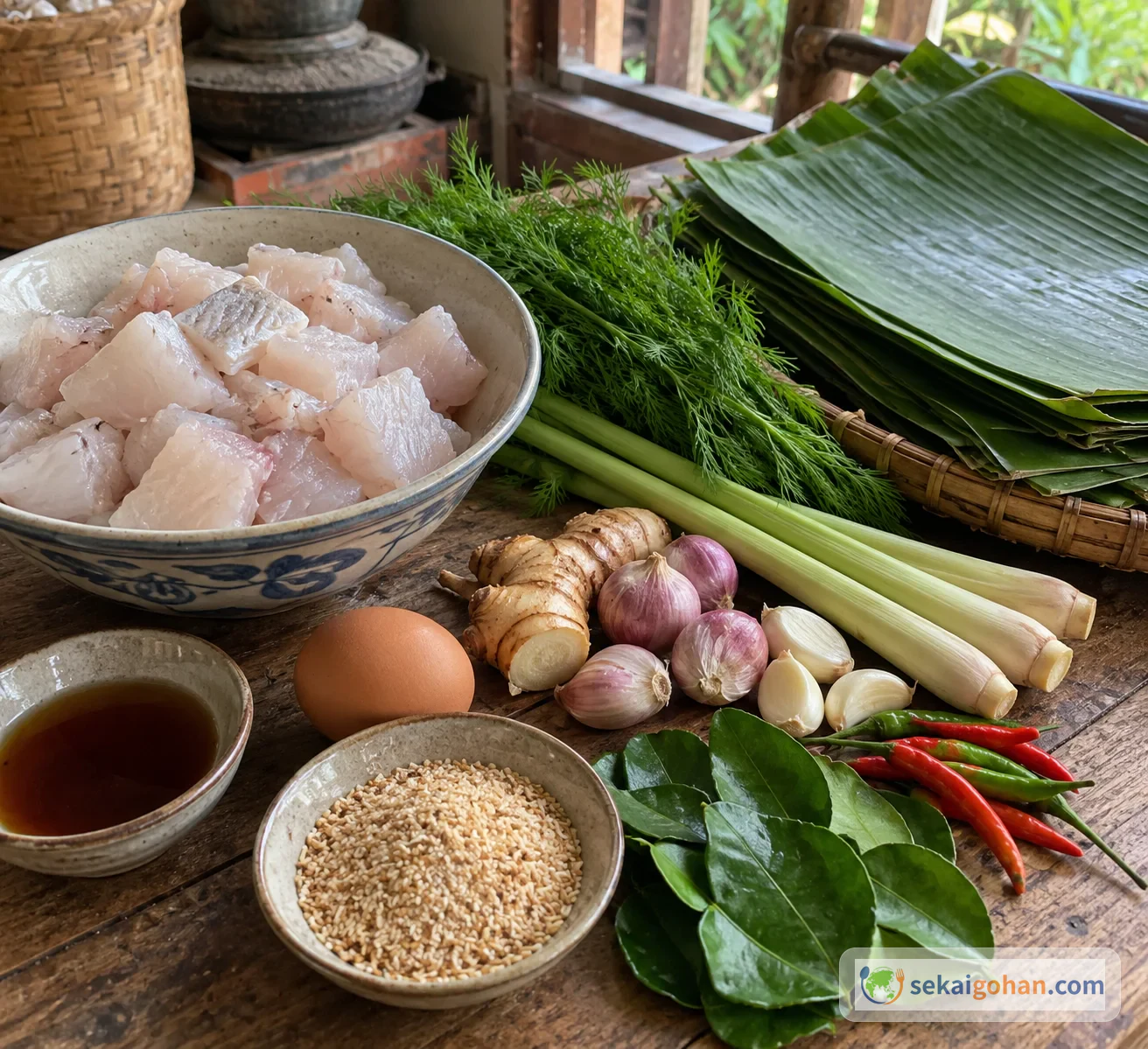
The ingredients fall into two groups: those that set the aroma of the fish, and those for wrapping. The base recipe uses 600 g of white fish divided among 4 parcels. The three pillars of aroma are dill, lemongrass and makrut lime leaves, while fish sauce and chiles adjust saltiness and heat. If you have padaek, it can replace part of the fish sauce, but fish sauce alone works fine. When shopping, keep three things in mind: 600 g white fish, 1 cup dill and 8 banana leaves. Amounts and substitutes are in the tables below.
Fish sauce and padaek contain fish, so they are not suitable for anyone with a fish allergy. The recipe also uses egg, so check labels. Keep raw fish in the refrigerator, and keep cutting boards, knives and hands used for it separate from foods eaten raw. Don't taste the aromatic paste, whether before or after the raw fish is mixed in. It's easy to get burned by the hot water used to soften the leaves, the steamer lid, and the steam when opening the parcels, so keep your face and hands away. To check doneness, the center of the fish should reach 63°C (145°F), or the flesh should be opaque and separate easily with a fork.
Lime zest won't give you the same aroma as makrut lime leaves. The leaf's fragrance is hard to replace, so rather than hunting through shops for a small amount, frozen leaves from an Asian grocer or online are the quicker route. Check the package size of frozen leaves to see whether you'll use them up. Fresh dill, lemongrass, white fish and an ordinary steamer, on the other hand, are easy to find nearby. Buying the everyday ingredients locally keeps things simple.
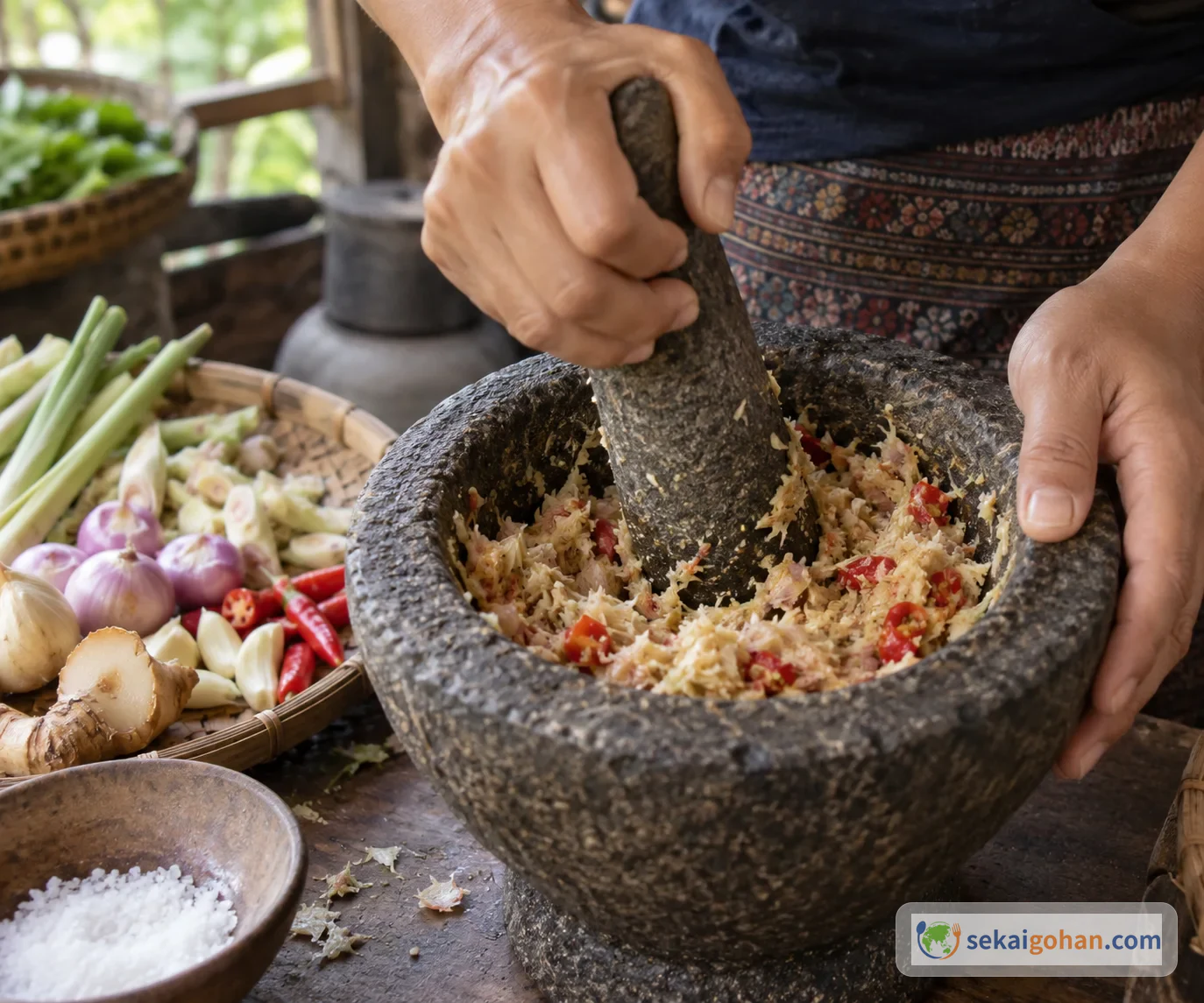
The aromatic paste is traditionally made with a knife and a mortar and pestle. A food processor is not essential; if the amount is small enough to chop by hand, you can do without one. If you do use a machine, the key is short pulses rather than running it continuously. This is to keep the paste coarse: overprocess it and the lemongrass fibers disappear and the paste turns watery.
Choosing Ingredients for Mok Pa
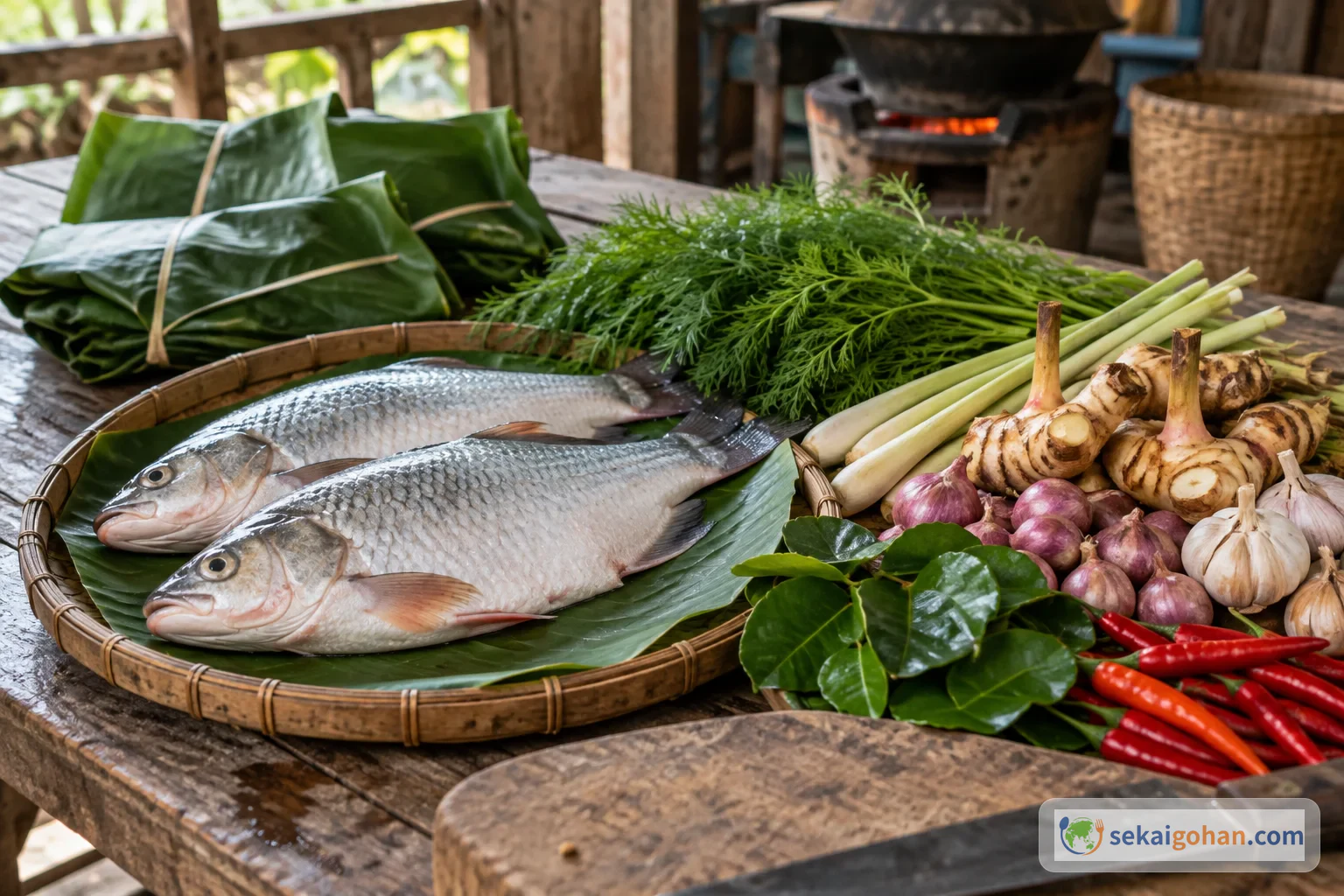
In Laos the fish might be a local freshwater fish, catfish or tilapia. Tilapia and catfish keep that freshwater character, while cod or sea bass make an easy white-fish version with few bones. Either way, cutting the fish into even bite-size pieces lets the herbs coat every piece and helps it all cook at the same rate.
The herbs are where substitutes show the most. Keep the dill no matter what; its grassy scent is what makes the dish taste Lao. Ginger can stand in for galangal, but you'll lose galangal's sharp, distinctive aroma, and lime zest in place of makrut lime leaves changes the layers of fragrance. Both swaps work, as long as you know the dish will smell a little different.
Padaek, a seasoning made from fermented fish, has a stronger fermented aroma than fish sauce, and the gap between padaek and fish sauce is wider than you might expect. Some recipes use fish sauce alone. If you do, go easy on the salt.
Binders vary too: toasted, coarsely crushed sticky rice, glutinous rice flour or egg can all hold the filling together. Here crushed sticky rice and egg work as a team. The rice soaks up the liquid the fish gives off and the egg binds everything into one mass, so because the sticky rice absorbs moisture, the filling is less likely to run onto the plate when you open the parcel.
How to make it
The key to planning is soaking the sticky rice the day before and steaming the fish parcels right before eating. The process has five stages: pound the aromatics, mix them into the fish, soften the leaves, wrap, and steam. Each step gives times, heat levels, cut sizes, and cues for color, consistency and texture. Keep three points in mind and the flow becomes clear: make a coarse aromatic paste, cross the leaf veins when wrapping, and finally confirm 145°F (63°C) at the center. Never leave raw fish at room temperature. Once the fish is mixed, refrigerate it, and bring the steamer water to a boil ahead of time.
Mok Pa Problems and Fixes
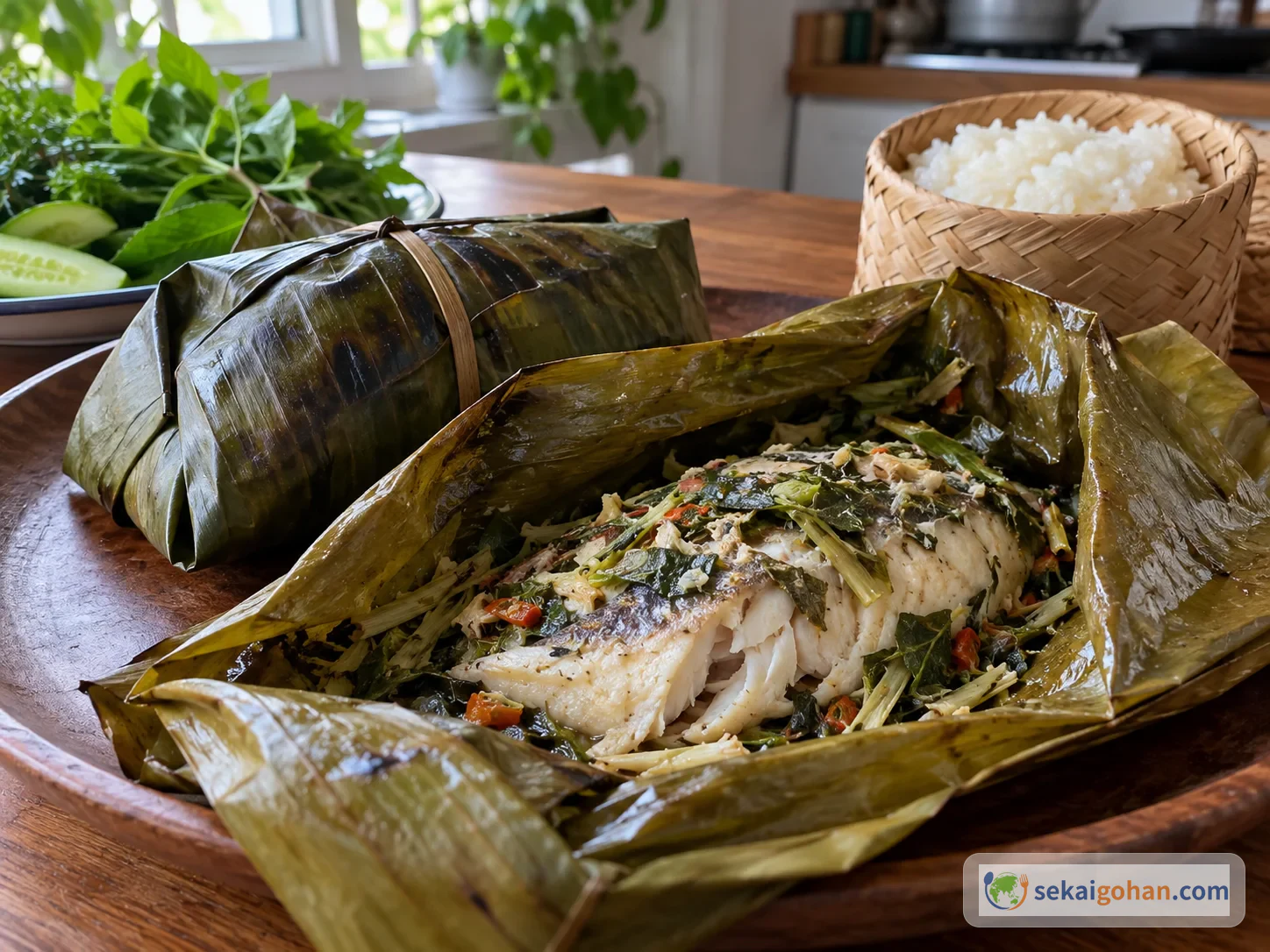
You know it's done when the flesh is opaque when you open the leaf, the scent of dill and lemongrass rises, and there's no big pool of liquid at the bottom. If one of those is missing, this table should help.
| Problem | Likely cause | Fix |
|---|---|---|
| Liquid pools in the bowl before wrapping | Wet fish surface, paste too smooth, or water left on thawed leaves | While the filling is raw, pat the fish dry, add 1 tsp glutinous rice flour and chill 10 minutes. After steaming, don't add flour; eat it with the tomato dip and well-drained sticky rice |
| Leaves won't close and juices leak | Stiff leaves, a single leaf used, or filling too thick | Before steaming, soften the leaves in hot water and stack 2 with crossed veins. Make portions smaller than a quarter and keep the seam on top |
| Center still translucent | Thick parcels, weak steam, or taken out right at 30 minutes | Close the parcel, return it to the steamer and add 3–5 minutes at a time. Check until the center hits 63°C or is opaque and flakes |
| Fish is hard and dry | Pieces cut too small, oversteamed, or weak steam under the lid | Fish that has been taken out can't be fixed. Next time keep to 1 inch (3 cm) cubes and get the steamer fully boiling. This time, serve with sticky rice and the dip to add moisture |
Serving and Storing Mok Pa
Eat mok pa hot, the Lao way: make a bite with sticky rice, scooping up the fish with a small ball of rice, and add heat with the tomato dip.
Don't leave steamed parcels at room temperature for long. Cool leftovers and refrigerate them, sealed, within 2 hours, plan to eat them by the next day, and reheat until hot all the way through the center. Freezing hurts the texture of the leaves and fish. If you do freeze, freeze the steamed parcels, not the raw filling, and only for a short time. If anything smells off or feels slimy, throw it out; reheating won't save it.
FAQ
What if I don't have banana leaves?
Parchment paper or aluminum foil works, though you'll lose the aroma and look of banana leaves. Use two layers of parchment, keep the seam on top and don't let steam escape. If you use foil, keep strongly acidic sides out of the parcel.
Can I wrap the fish as whole fillets?
Whole fillets take longer to cook through in the center. Cutting them into 1 inch (3 cm) cubes lets the herbs touch all of the fish and keeps the parcels an even thickness. Choose fillets with few bones, and check for any leftover bones before eating.
Is padaek essential?
No. If you can get it, use 1 tbsp in place of part of the fish sauce. Fish sauce alone works too, but you won't get padaek's particular fermented aroma. Saltiness varies by brand, so go easy on any extra salt.
For fish sauce and herbs in an uncooked form, see Lao laab. To see herbs and fermented seasonings become a noodle broth, compare Lao khao poon. For a leaf-steamed fish dish from next door where coconut and egg take center stage, there's Cambodian amok.