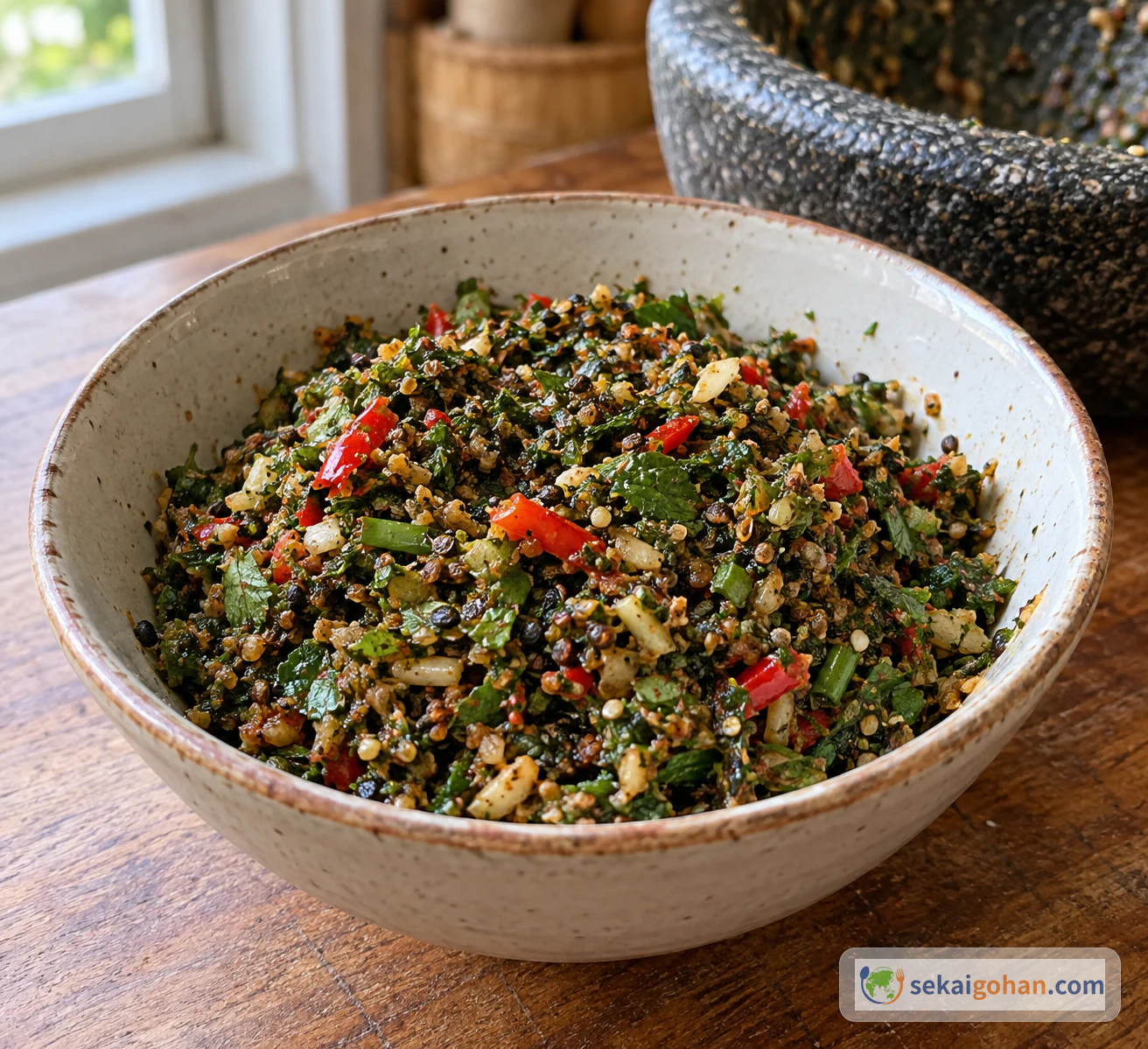
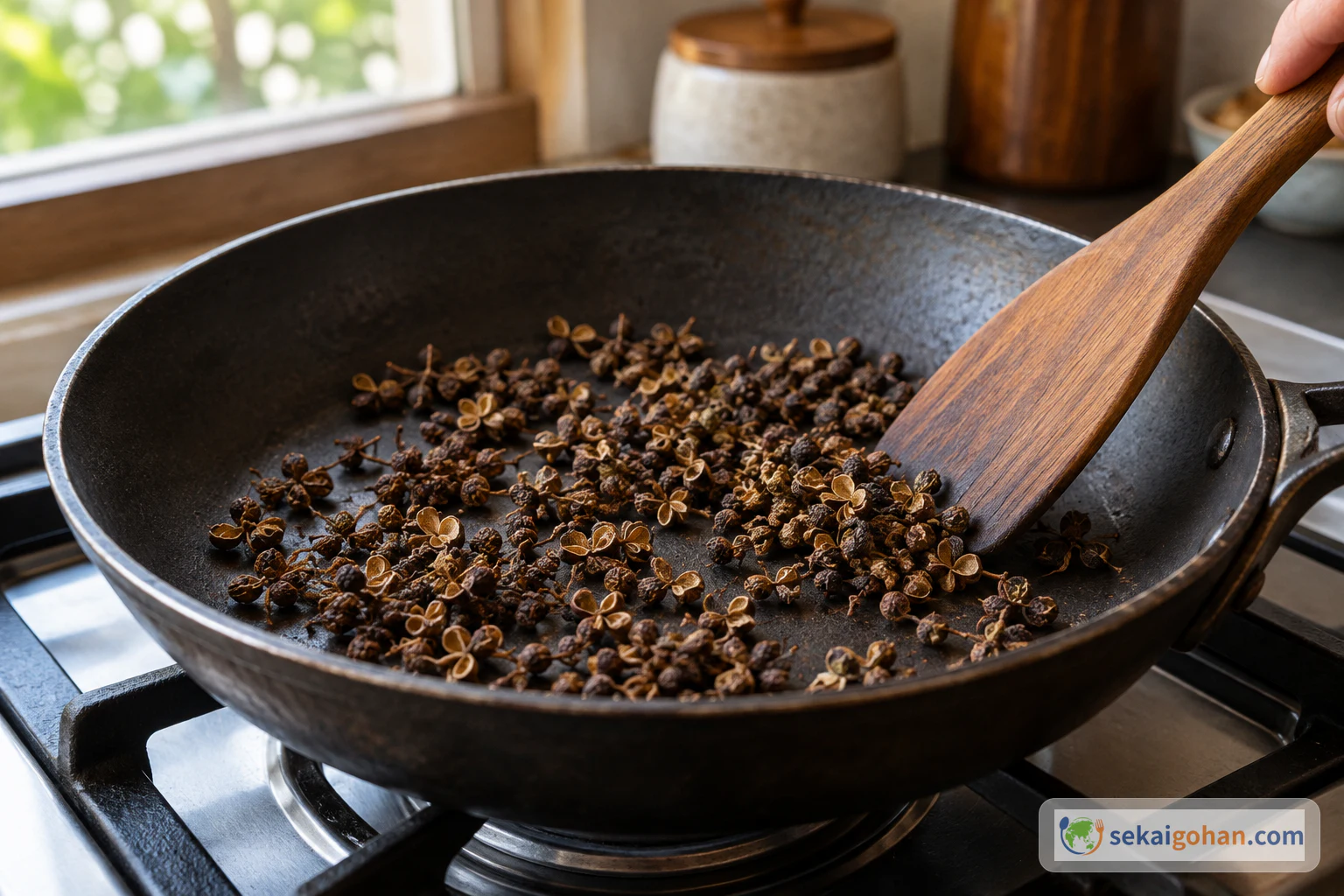
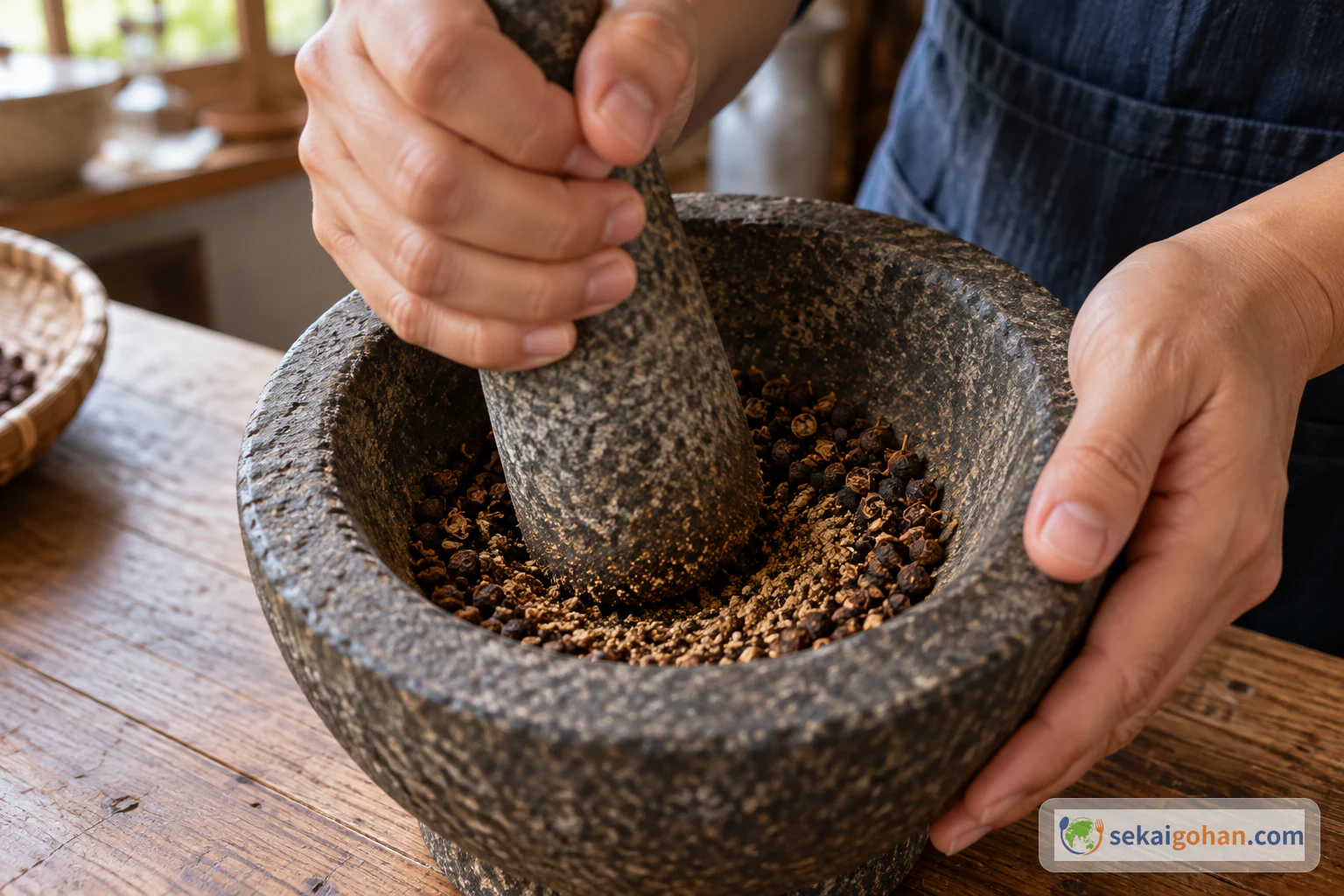
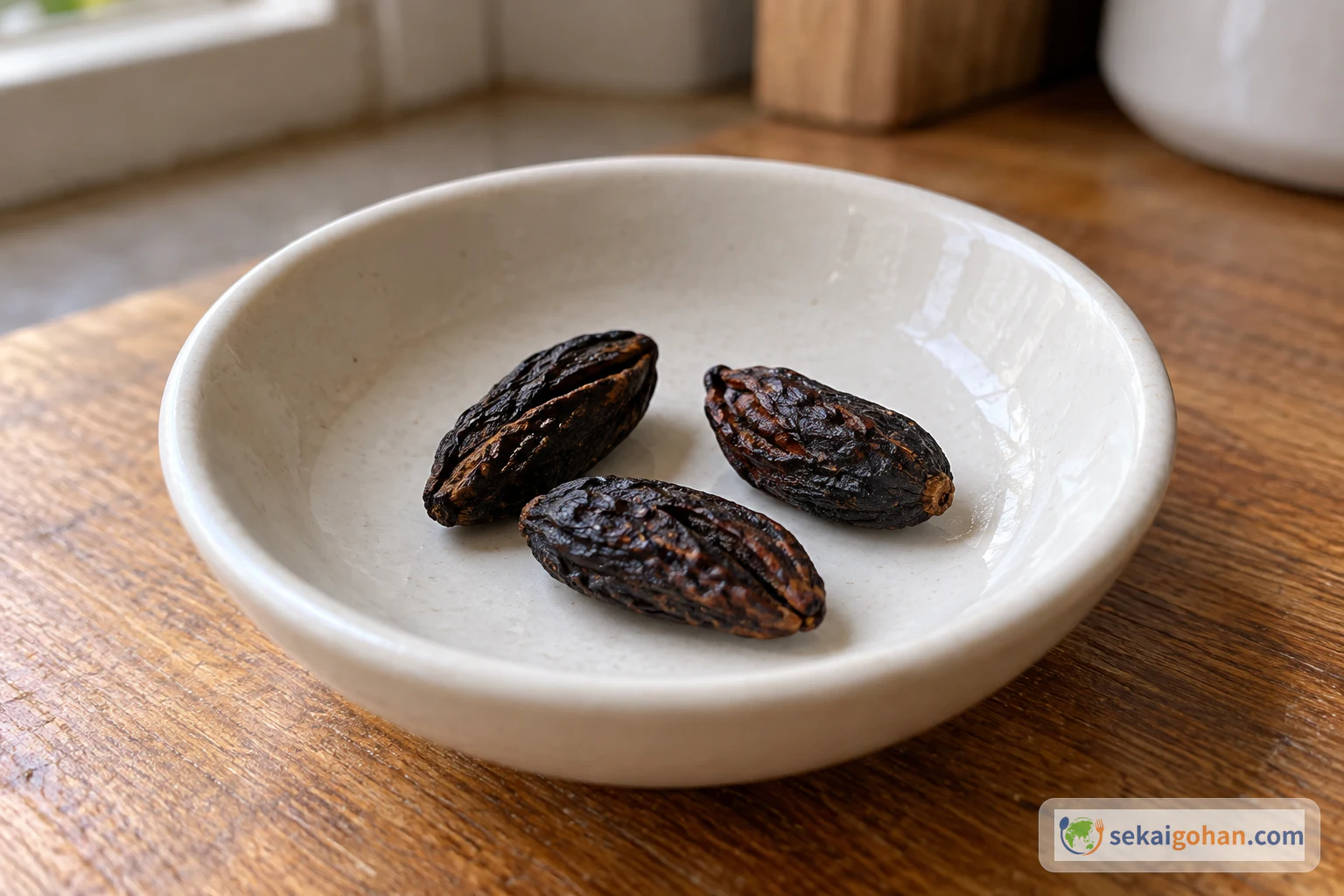
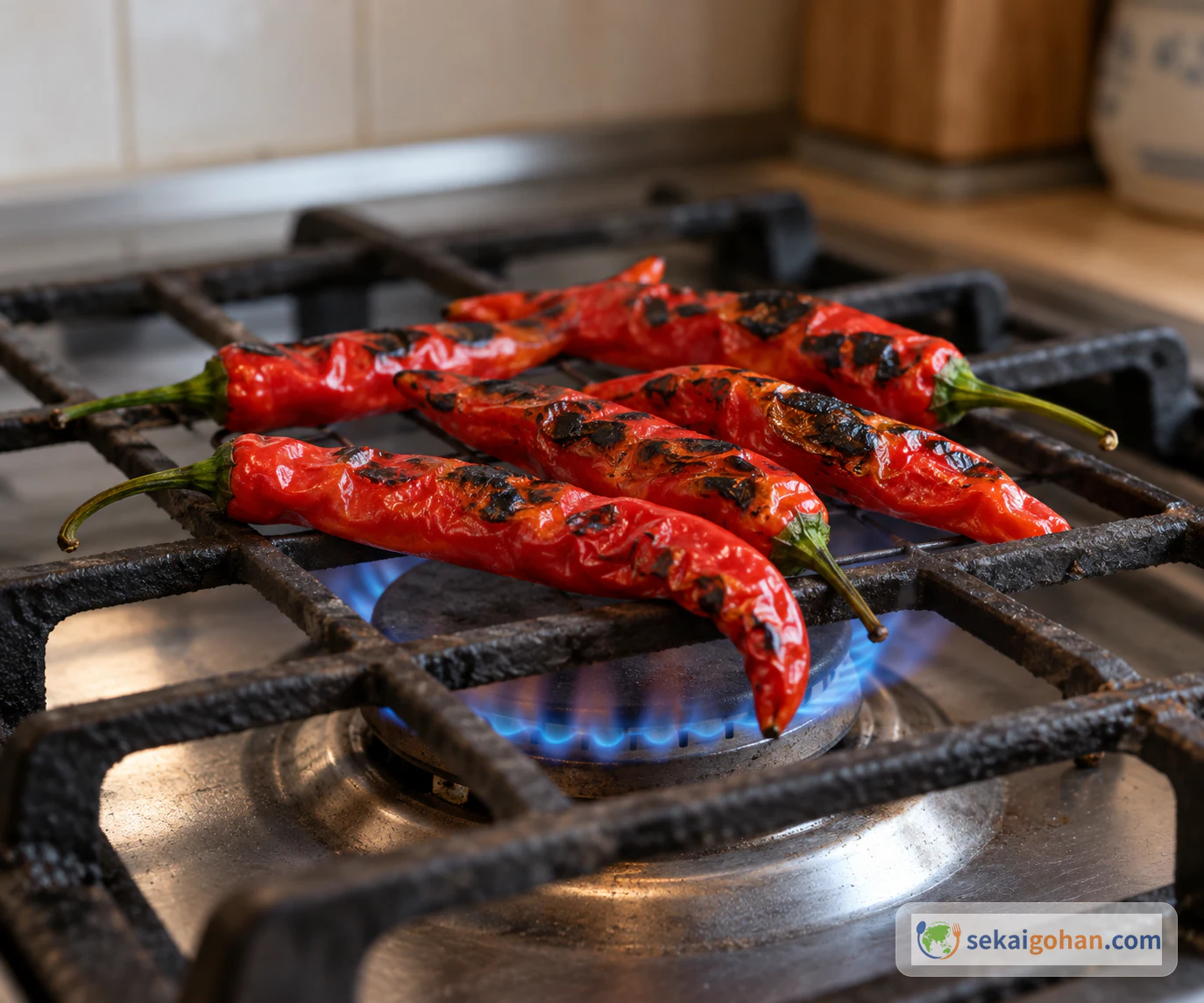
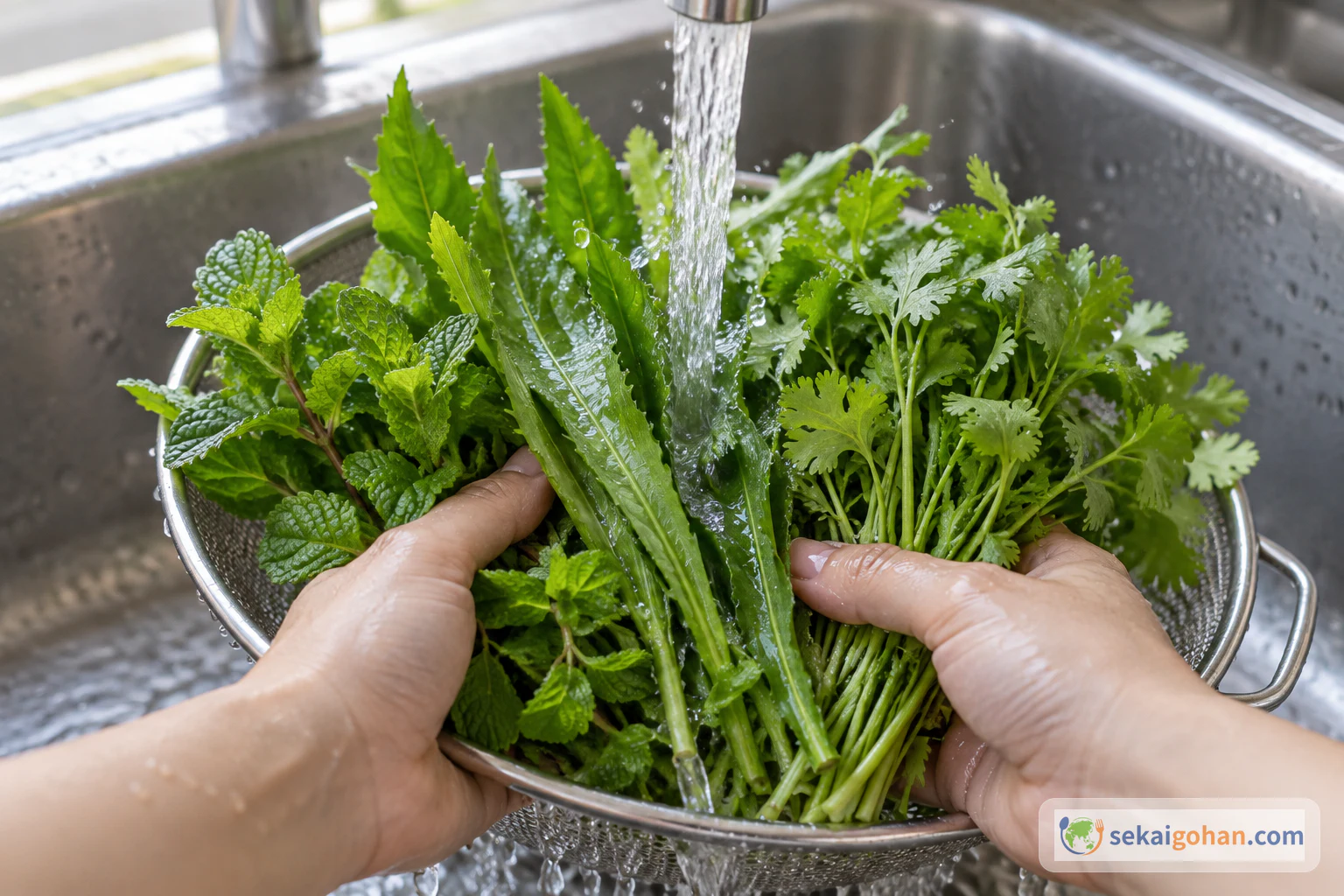
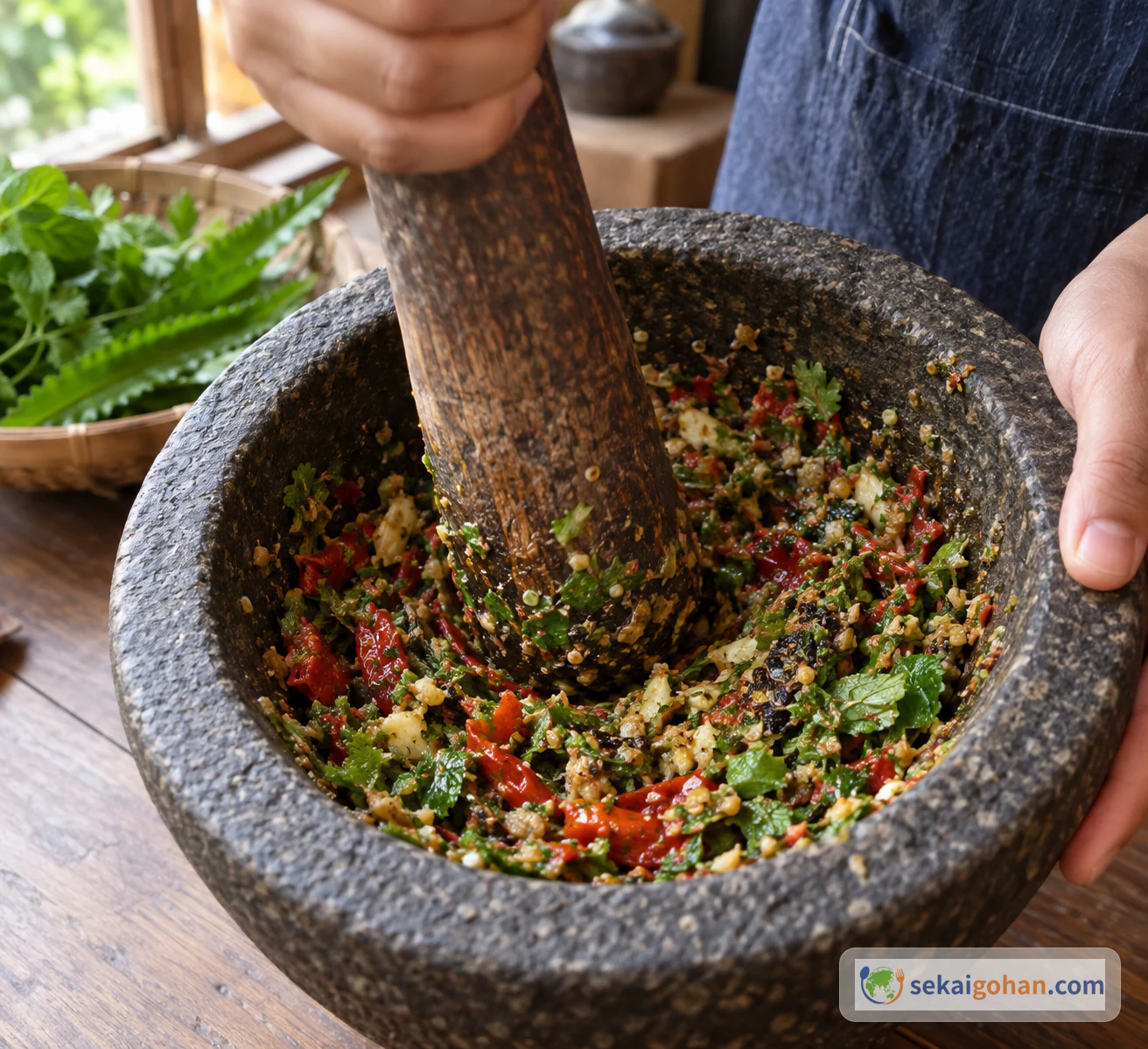
Whole mắc khén is stirred in a dry pan until it smells fragrant, then crushed to a powder. Two or three hạt dổi seeds are roasted until their aroma comes out, and fresh chilies go over the heat until they just begin to wilt. Everything goes into a mortar with peeled garlic, a small piece of ginger, salt and a handful of washed herbs, and you pound until it all holds together as a fine, damp paste. That is chẳm chéo, a dipping condiment (thức chấm) from the mountains of northwestern Vietnam: moist and finely pounded, never a liquid sauce.
Chẳm Chéo in Northwestern Vietnam
Chẳm chéo belongs to the tables of the Thái (Tai) ethnic communities of northwestern Vietnam. It is one of several dips made in the region, and it stands apart from the familiar Vietnamese nước chấm or Thailand's nam jim jaew because it is built on pounded spice and herbs rather than a poured liquid. You'll see the name spelled both Chẳm chéo and Chẩm chéo.
The condiment changes with the food it accompanies, and cooks use different ingredients for different pairings, so no single recipe is the only authentic one. Newer interpretations exist too. One restaurant in Da Nang finishes its version with olive oil.
Ingredients: What the Source Measures and What It Leaves Open
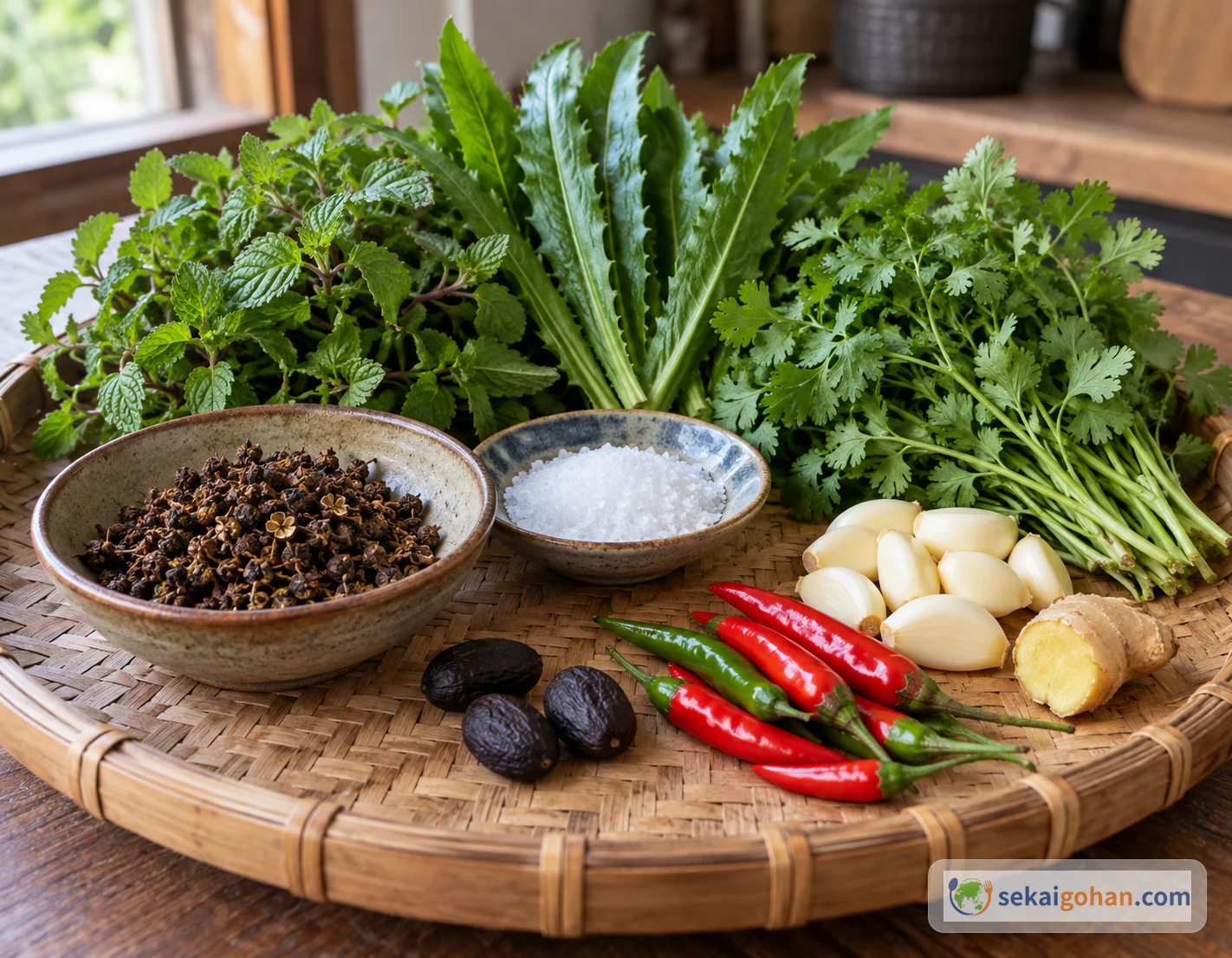
Where the table says 'as needed,' add to taste. The photographs show a portion, not a measurement.
No water, fish sauce, lime, lime leaves, olive oil, sugar, meat, fish or liver goes into this recipe. Use salt or seasoning powder (bột canh). This recipe uses plain salt.
Equipment
- A dry pan for toasting the mắc khén
- A heat source for roasting the hạt dổi and the chilies
- A mortar and pestle
- A small serving bowl
Choosing Chẳm Chéo Spices and Herbs
The two spices are the hardest ingredients to replace. Mắc khén is not ordinary black pepper, and hạt dổi is not nutmeg. Either swap gives you a different condiment, so use the real spices. If your mắc khén is already ground, skip the toasting and grinding in step 1 and start from the powder.
The herbs are three separate ingredients, and each one matters:
| Name | What it is | Note |
|---|---|---|
| Húng dũi | A mint-type herb | Keep it separate from the other two |
| Mùi tàu | Sawtooth coriander (culantro), with long leaves | Different from ordinary cilantro |
| Rau mùi | Cilantro (coriander leaves) | Used alongside the other two |
Method: Toast, Roast, Wash, Pound
Step 1 makes the mắc khén powder. In step 2, prepare the hạt dổi, chilies, garlic and ginger in whatever order suits your kitchen. Everything meets in the mortar in step 4.
Fixing Common Chẳm Chéo Problems
| What you notice | Likely reason | What to do |
|---|---|---|
| It is runny like a sauce | Water, fish sauce or oil went in | Make the next batch with pounding alone |
| Ginger overpowers the herbs | Too much ginger | Use only one small piece |
| It tastes like black pepper or nutmeg | One of the spices was swapped | Use mắc khén and hạt dổi themselves |
| Only two kinds of herb went in | One herb was replaced by another, such as cilantro standing in for mùi tàu | Keep húng dũi, mùi tàu and rau mùi as three separate herbs |
| You're unsure how much salt, chili or garlic to use | No set amount is given | Add to taste |
Serving and Variations of Chẳm Chéo
Make chẳm chéo in a small bowl and set it out with steamed sticky rice and boiled foods, dipping as you eat. Since it's meant to shift with what it's served beside, there's room to adjust. Some cooks add a little water to suit certain foods, and bột canh (seasoning powder) can stand in for salt. Versions made to go with fish or offal are separate preparations of their own.
Frequently Asked Questions
Can I use black pepper instead of mắc khén?
Mắc khén is a different spice from black pepper, and using pepper gives you a different condiment. The same goes for hạt dổi and nutmeg.
How big is the "small spoon"?
The thìa nhỏ (small spoon) has no set capacity, so use a small spoon from your kitchen.
Is it the same as nước chấm or nam jim jaew?
No. Chẳm chéo, as made here, is a pounded mix of spices, herbs and salt with no fish sauce or added liquid, which makes it a different condiment from either of those dips.