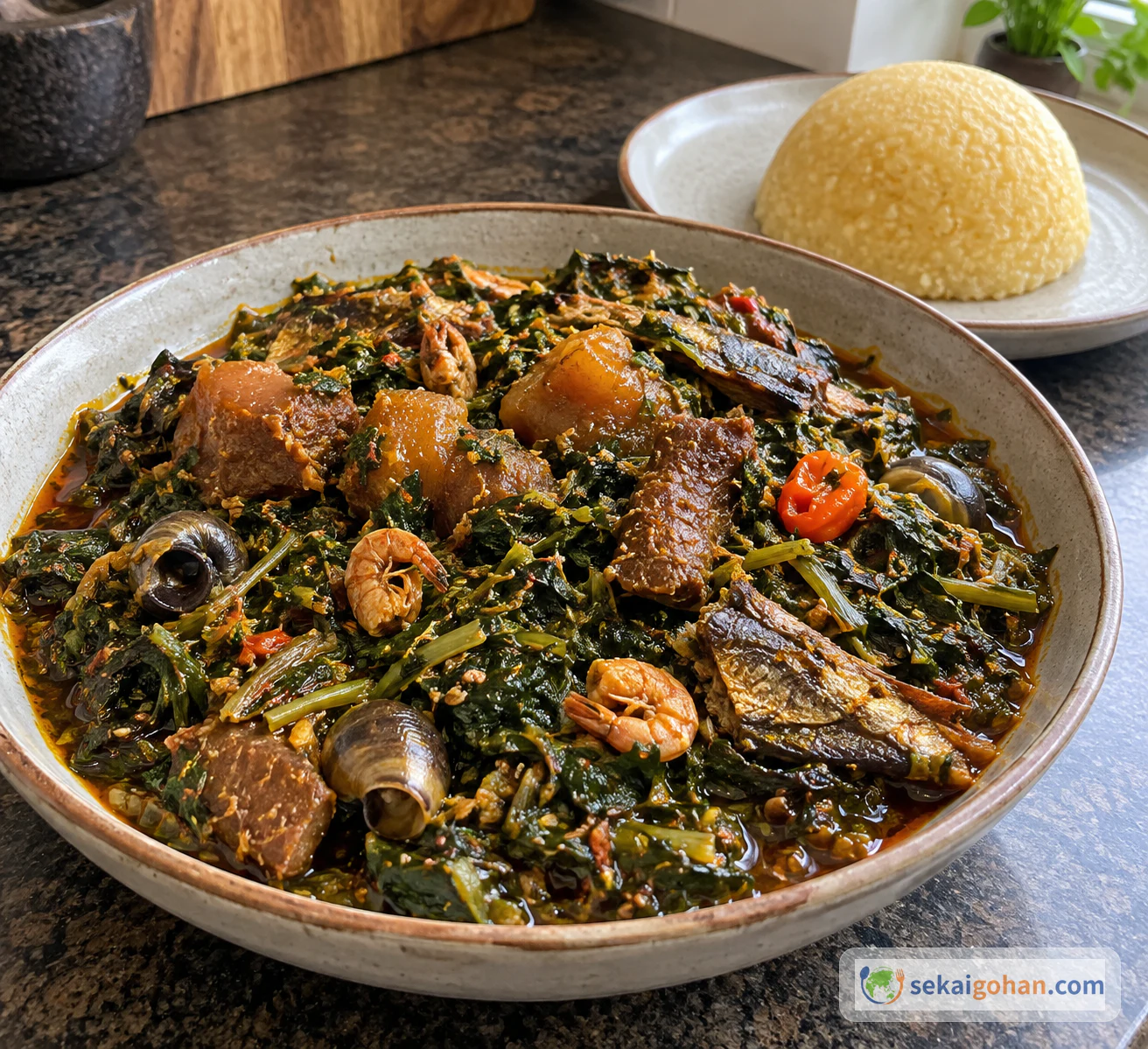
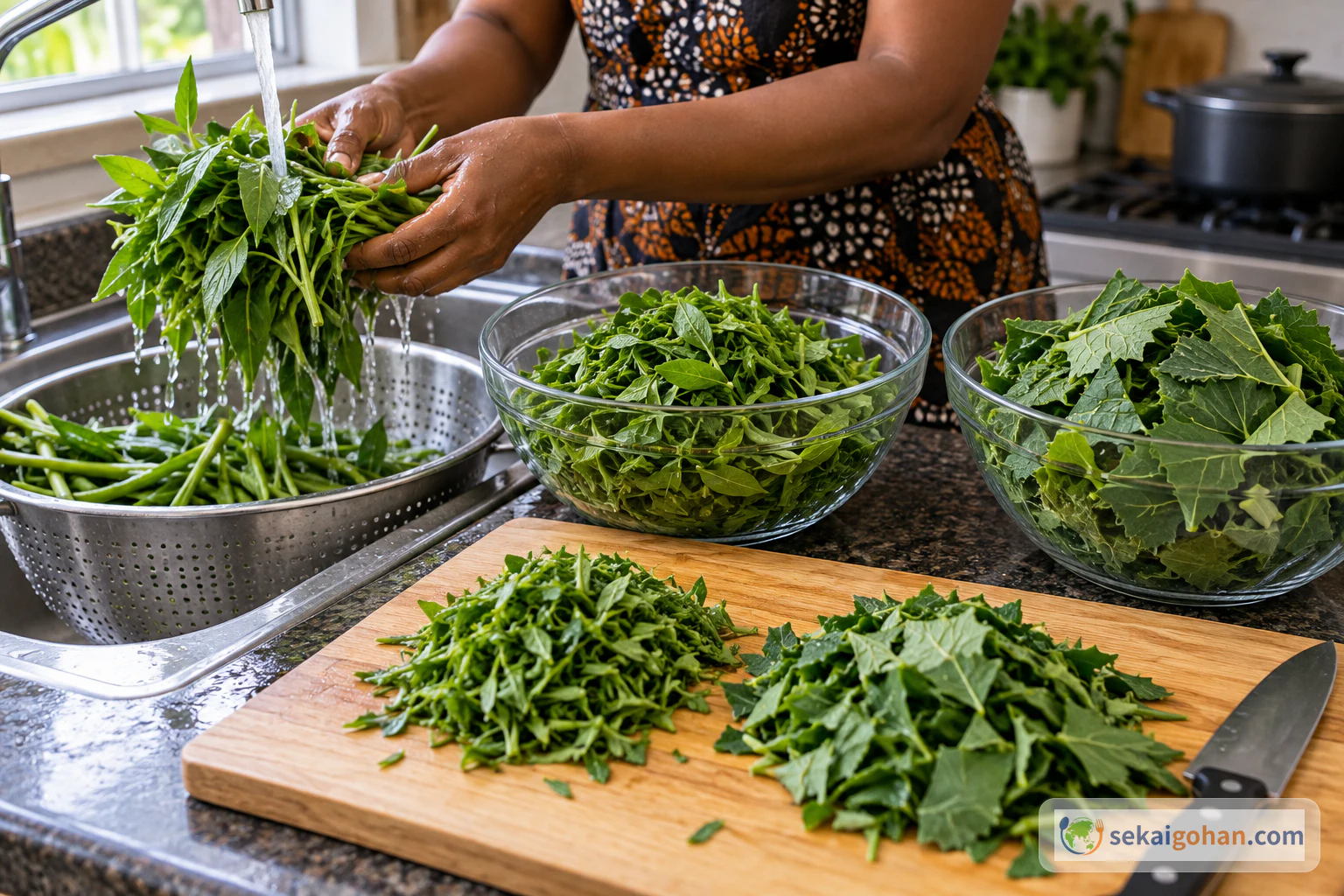
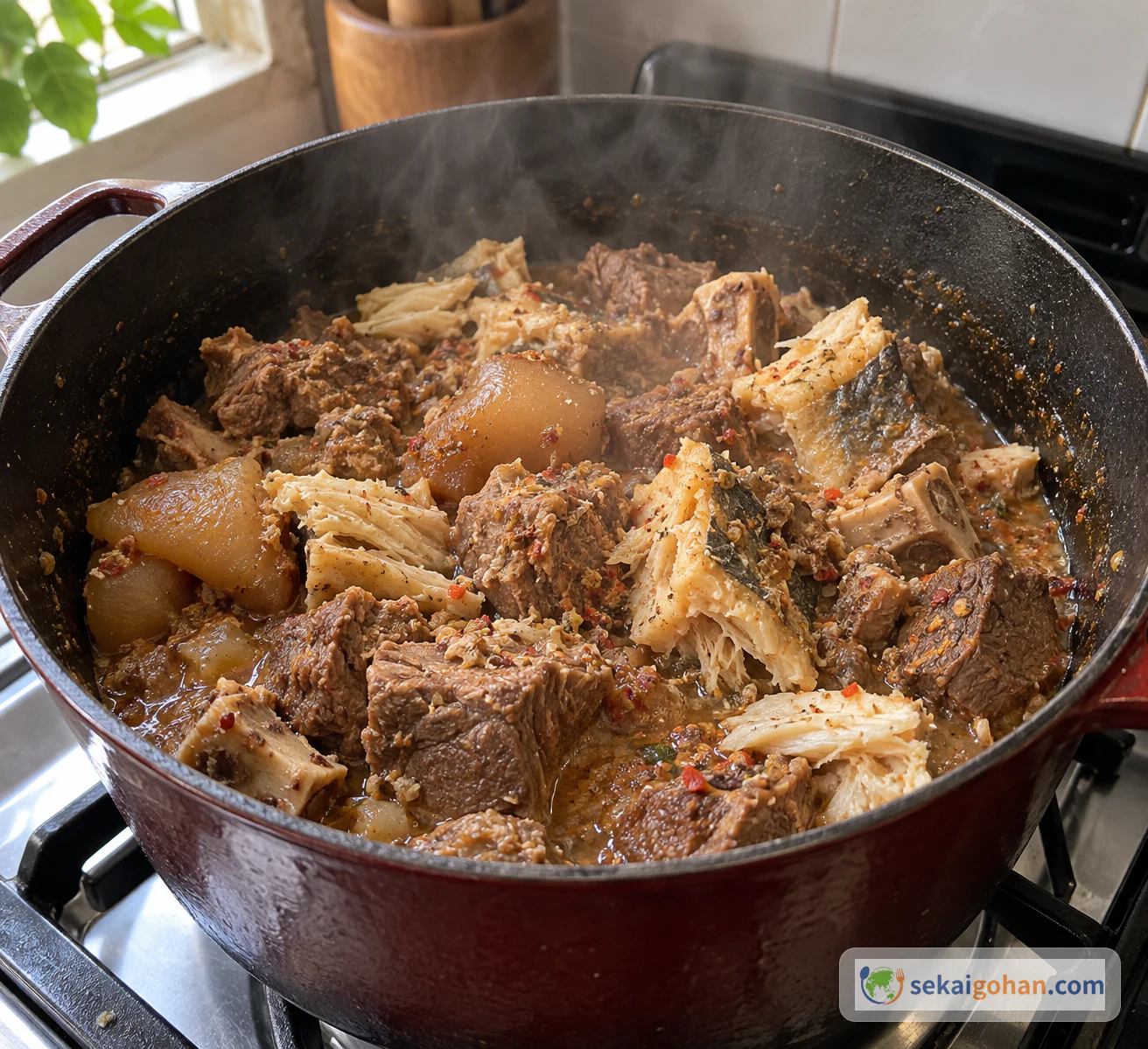
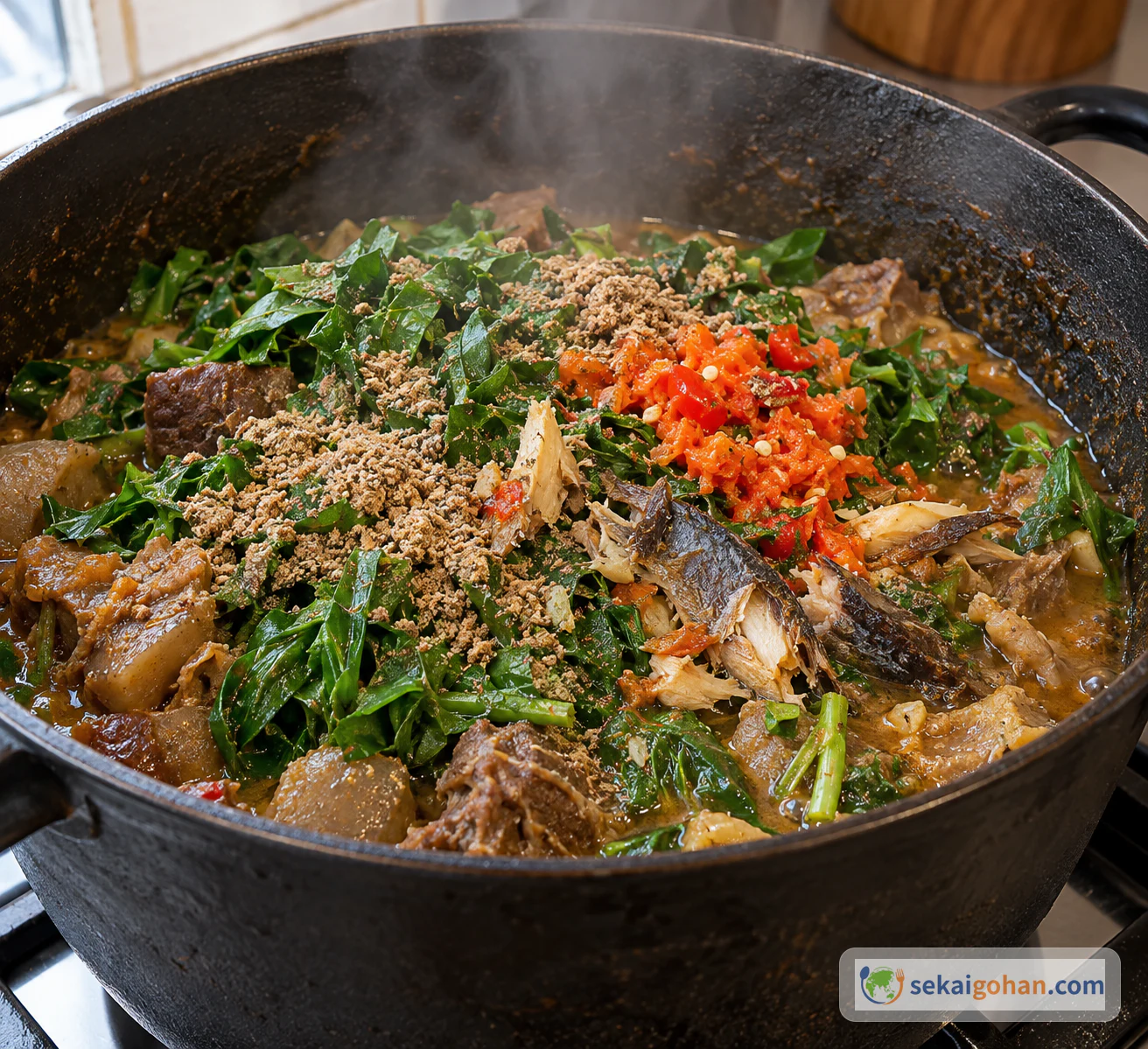
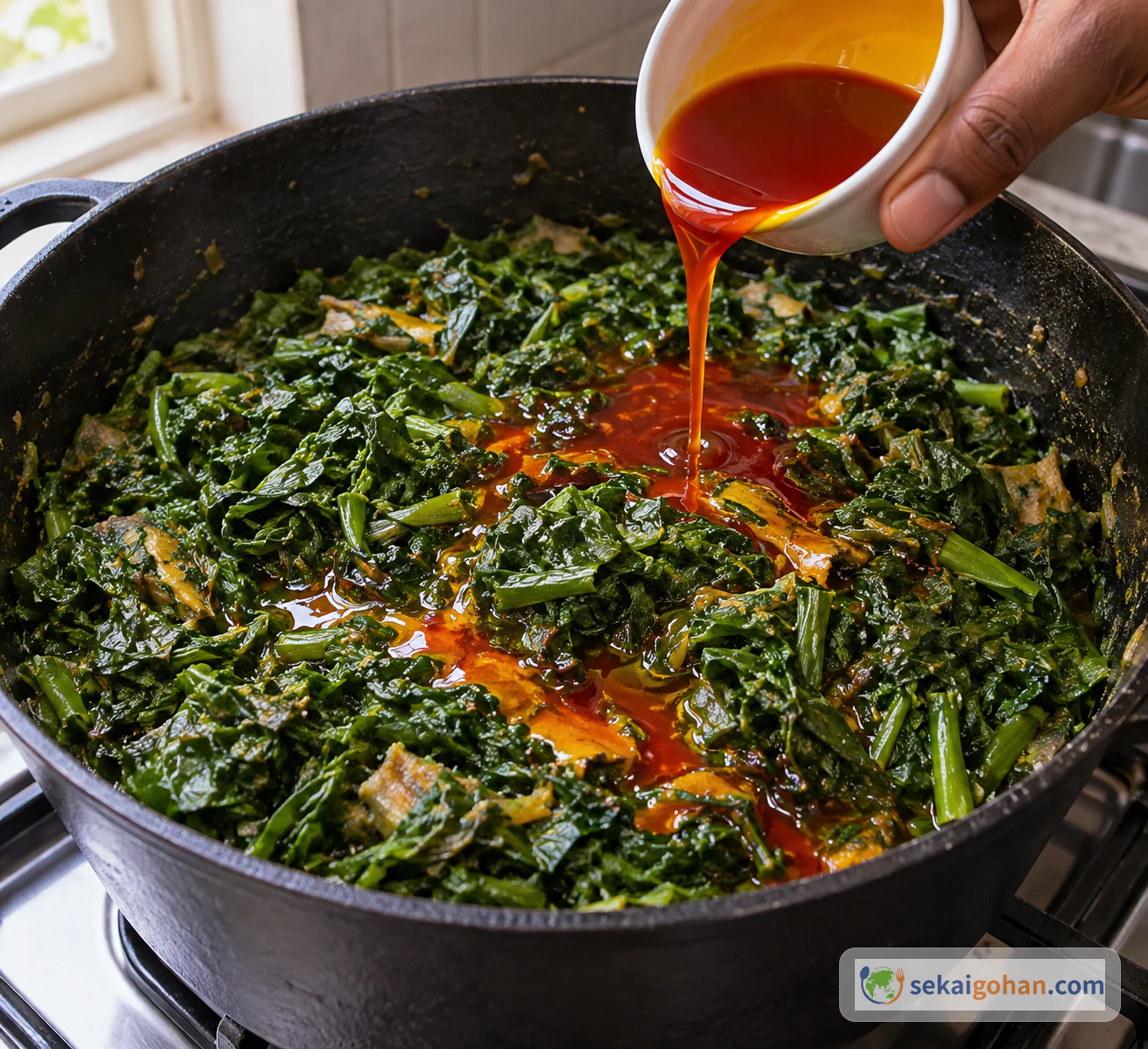
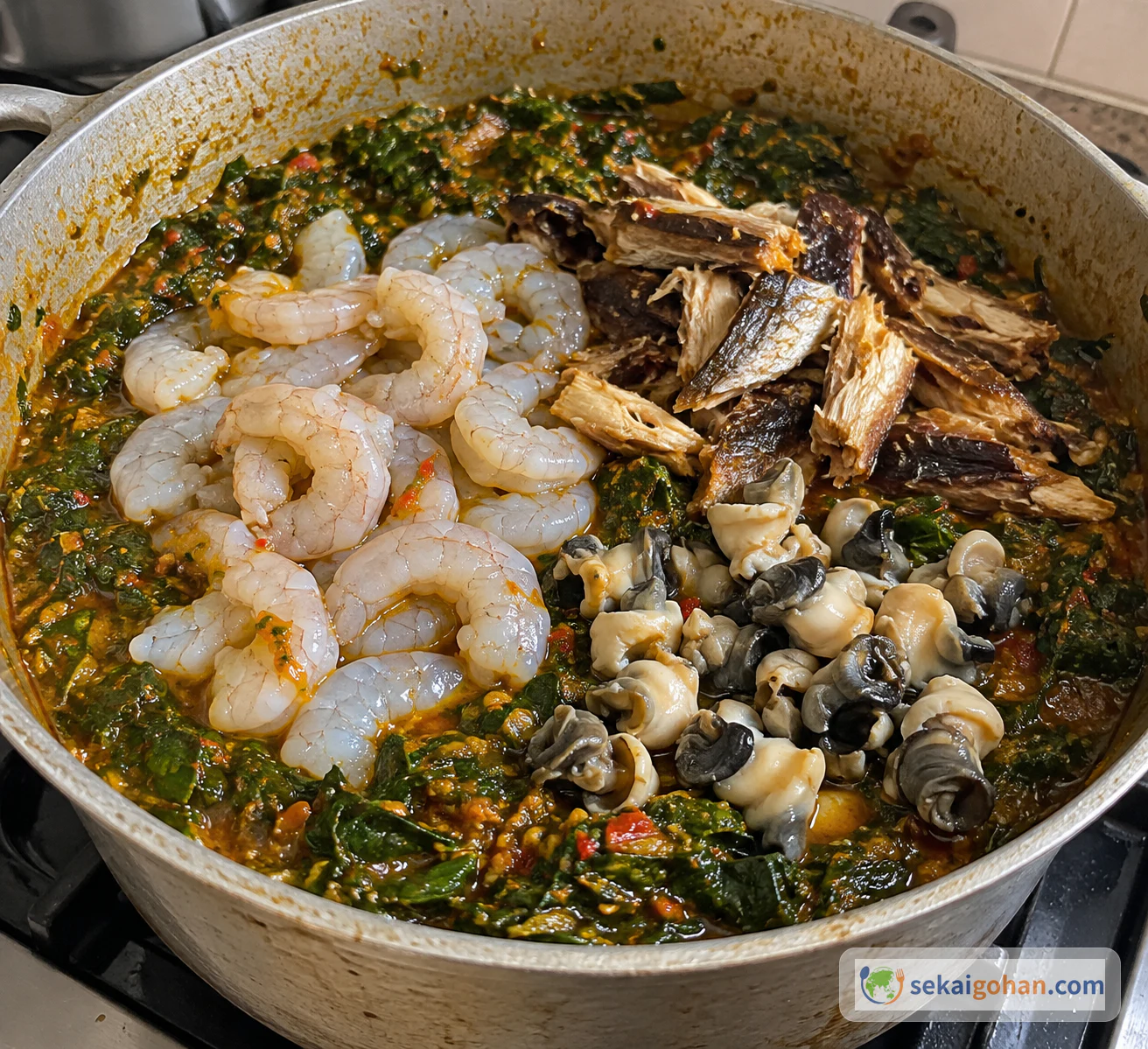
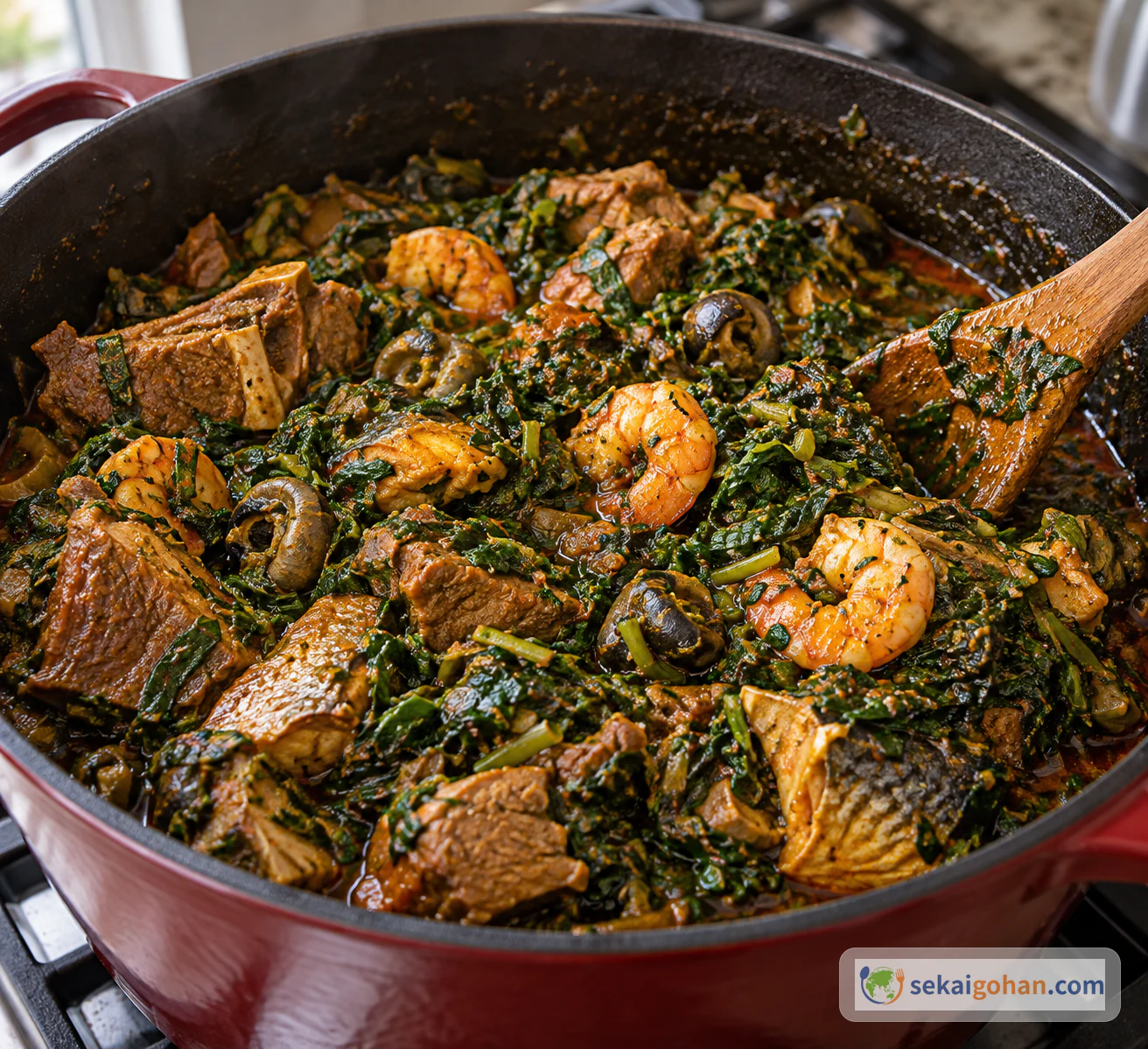
Ugu and waterleaf go into this pot one after the other, never together. First the waterleaf (or spinach) cooks until most of the water it releases is gone. Only then do the ugu (or kale) and red palm oil go in. The result is Edikang Ikong (also written Edikaikong or Edi-kang Ikong), a dense Nigerian leafy soup that is closer to a thick stew of greens than to a broth. The leaves, meat and seafood cling together, so you can pick them up with a swallow such as eba.
Two kinds of leaves, added one after the other. Very little liquid. Red palm oil, crayfish and dried fish holding the greens together with the meat and seafood.
About Edikang Ikong
Where the Dish Comes From
Edikang Ikong belongs to the Efik and Ibibio peoples of southern Nigeria, and it is centered on Akwa Ibom State in the South-South. It is sometimes called the king of Efik soups. What sets it apart is the pairing of ugu (fluted pumpkin leaves) and waterleaf, with ugu as the defining ingredient. For more dishes from the same country, see Nigerian cuisine.
How It Differs from Efo Riro and Afang Soup
Efo riro, a leafy dish from south-western Nigeria, starts from a pepper sauce base. Edikang Ikong uses ugu and has no such base. Both can be called "vegetable soup," but they are separate dishes, and adding a tomato-and-pepper base here would pull the result toward efo riro.
Afang soup is another leafy soup from the same broad region, built on afang (okazi) leaves rather than ugu and waterleaf. Shops and recipes sometimes use the names loosely, and the leaves are the quickest way to tell which dish you are making.
Ingredients for 9 Servings
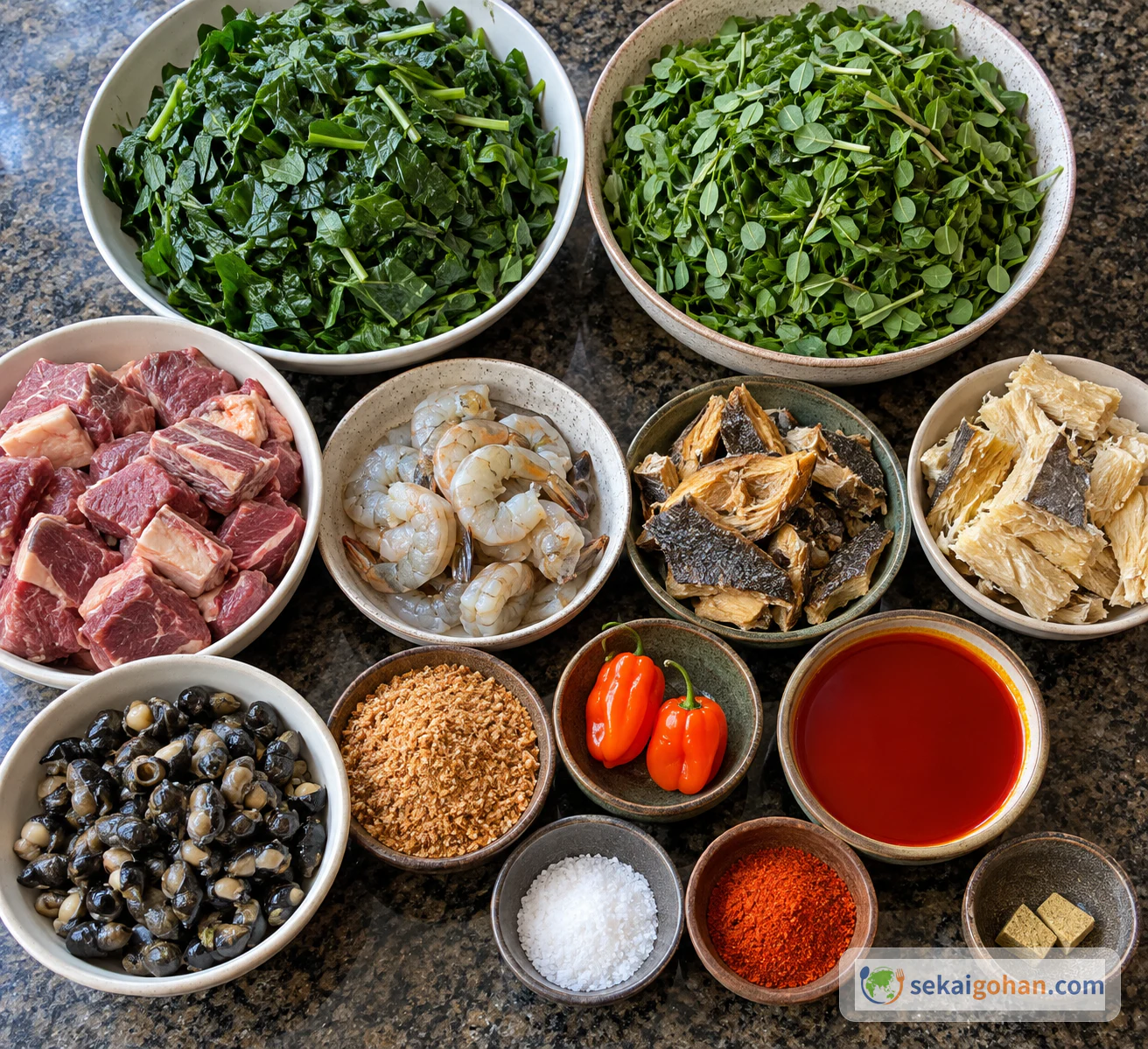
Serves 9. Each leaf line is an either/or choice. Use waterleaf or spinach, and ugu or kale. Do not add both from the same line.
Eba, fufu or pounded yam are served alongside as a swallow. They are not part of the soup itself.
This soup contains shellfish and fish: shrimp, crayfish, dried fish, stockfish and periwinkles. Check product labels for individual allergen information. Keep raw meat and fish apart from other foods and do not let their juices touch anything eaten raw. Cook the meat until the center reaches 75°C (167°F) and stays there for at least 1 minute. Make sure the raw shrimp are cooked through before serving.
Equipment
No special equipment is needed.
- A large pot with room for a 9-serving quantity of leaves and seafood
- Cutting board and knife for chopping the leaves
- Separate bowls to keep the two leaves apart after chopping
- A wooden spoon or spatula for turning the soup from the bottom
- A clean food thermometer for checking the center of the meat
Choosing Leaves and Seafood for Edikang Ikong
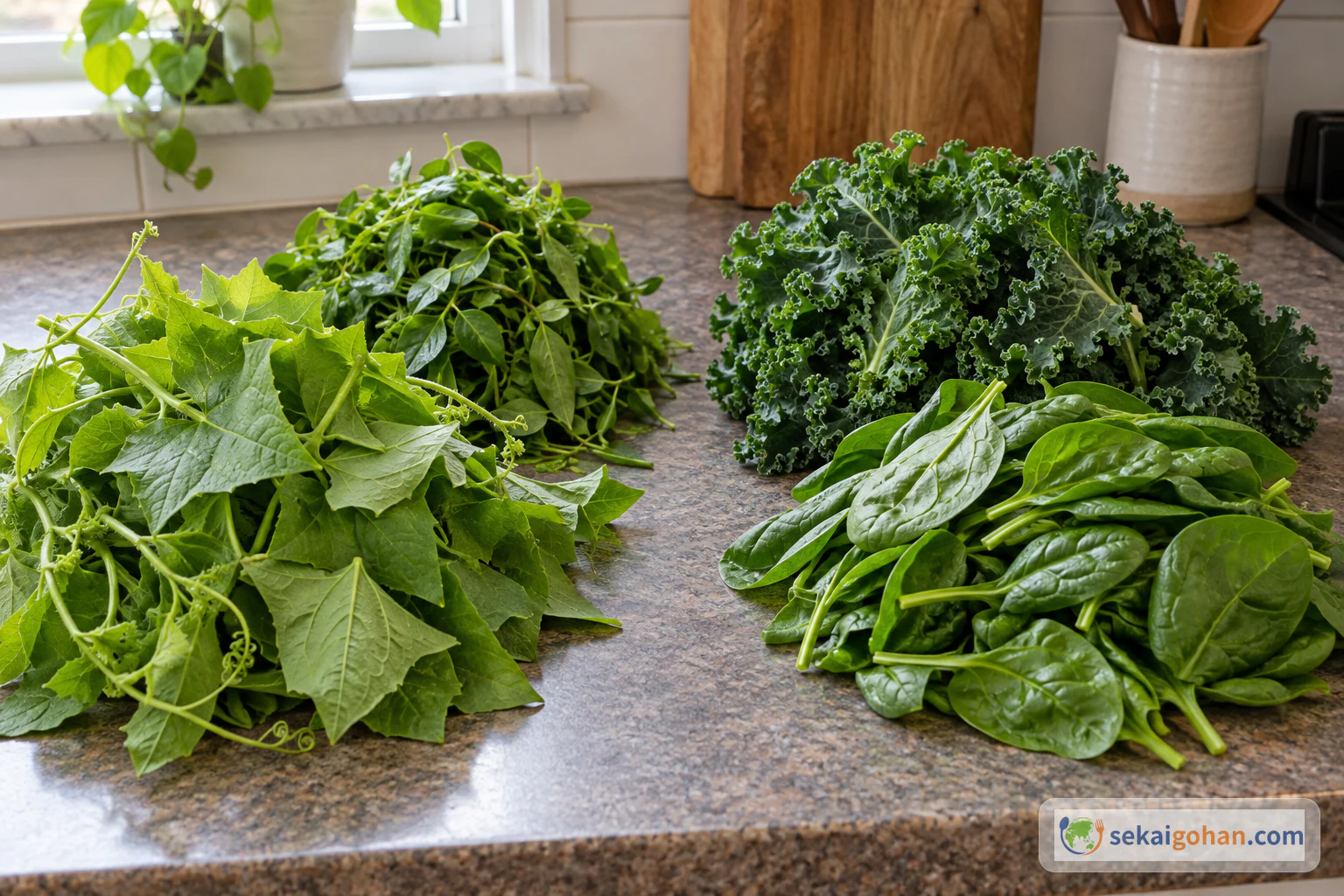
Outside Nigeria, ugu and waterleaf are hard to find together. You may find one and not the other, or neither. No substitute matches either leaf exactly, and versions of the soup vary in their amounts and order. If you keep the order of the leaves and hold back on liquid, the soup stays recognizable even when the leaves change.
Ugu → kale. Kale gives a similar thick, chewy body, though the aroma will differ.
Waterleaf → spinach. Spinach is the usual stand-in, and watercress or Malabar spinach also work. Each one releases a different amount of water than waterleaf and has different fibers. Add no extra water, and watch the pot until the released liquid settles.
Periwinkles and stockfish. If you can't find them, leave them out or use whatever dried fish you can get. Without them the layers of seafood will be thinner.
Keep the dried and fresh seafood straight. Ground crayfish is a dried seasoning, raw shrimp is fresh seafood, and dried fish is smoked or dried whole fish. All three appear in the recipe, and none of them replaces another.
Reducing the habaneros will change the flavor of the dish. Heat comes from both the habaneros and the dry pepper powder, so adjust one at a time rather than both at once.
Method: Four Additions, Each Judged by the State of the Pot
Judge the meat and the leaves by their state, not the clock. Move on when the meat is tender and the liquid has nearly cooked away, then when the water released by the first leaves has mostly gone. The only fixed time is 6 minutes after the shrimp go in.
Fixing Common Edikang Ikong Problems
Most problems come back to the order of additions or to too much liquid.
| Condition | Likely cause | What to do |
|---|---|---|
| The soup is watery | Water added after the leaves, or the ugu went in before the waterleaf liquid had settled | Add no water once the leaves are in. Let the released liquid cook down before the next addition |
| The meat is tough | The leaves went in before the meat was tender | Cook the meat until tender before any leaves go in. Time depends on cut and size, so judge by the meat, not the clock |
| Too salty | Salt from stockfish, dried fish, crayfish and bouillon stacking up | Bouillon is optional. Taste after the dried ingredients are in before adding salt |
| Flavor is flat | All the crayfish went in at once, or too little | Split the crayfish: 1 tbsp with the meat, the rest with the first leaves |
| Leaves are mushy or the aroma is dull | Both leaves added at the same time | Add the waterleaf (or spinach) first and the ugu (or kale) later |
| Too thick | Liquid cooked away more than expected | Add a little more oil rather than water |
Serving and Storing Edikang Ikong
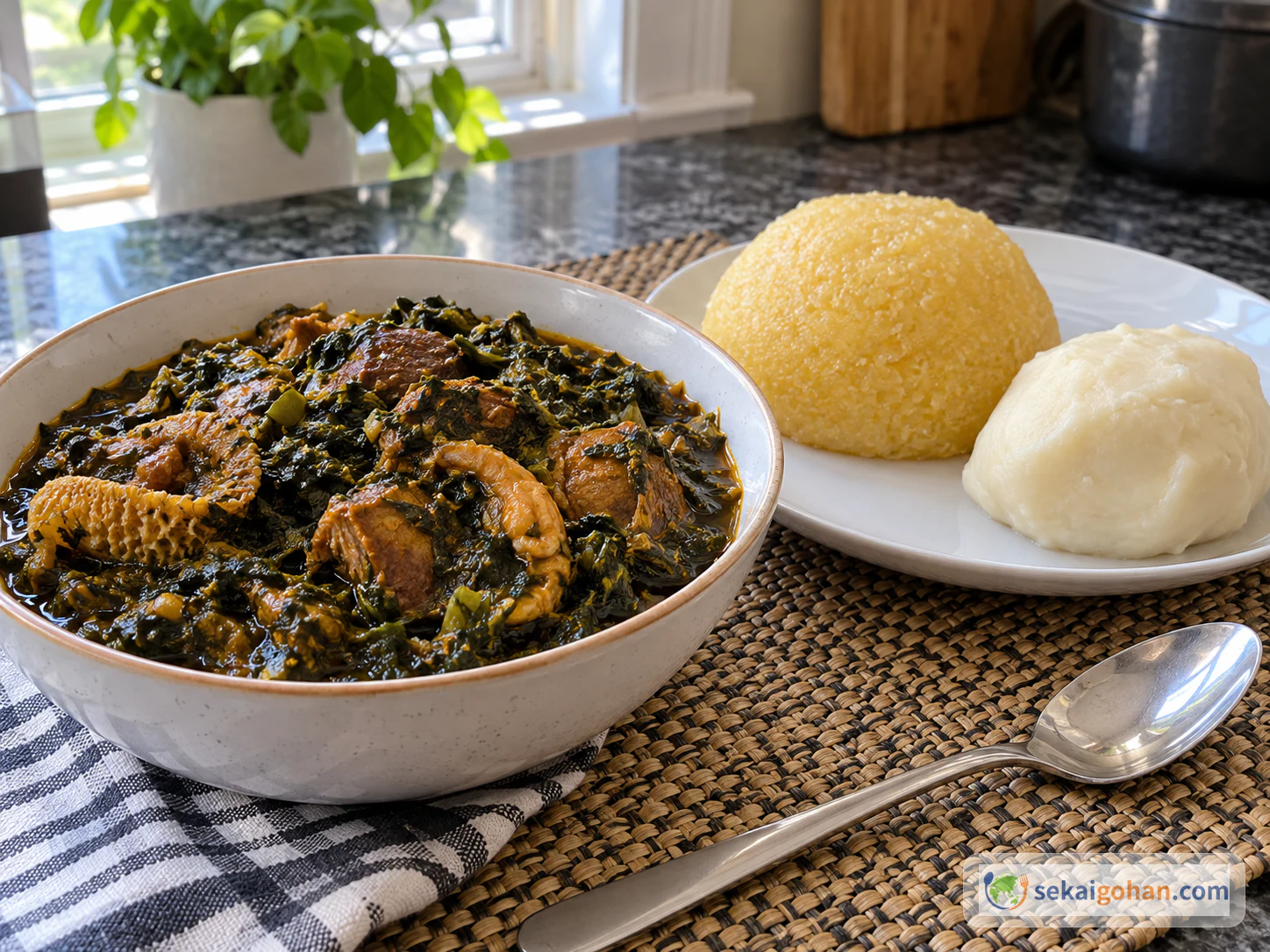
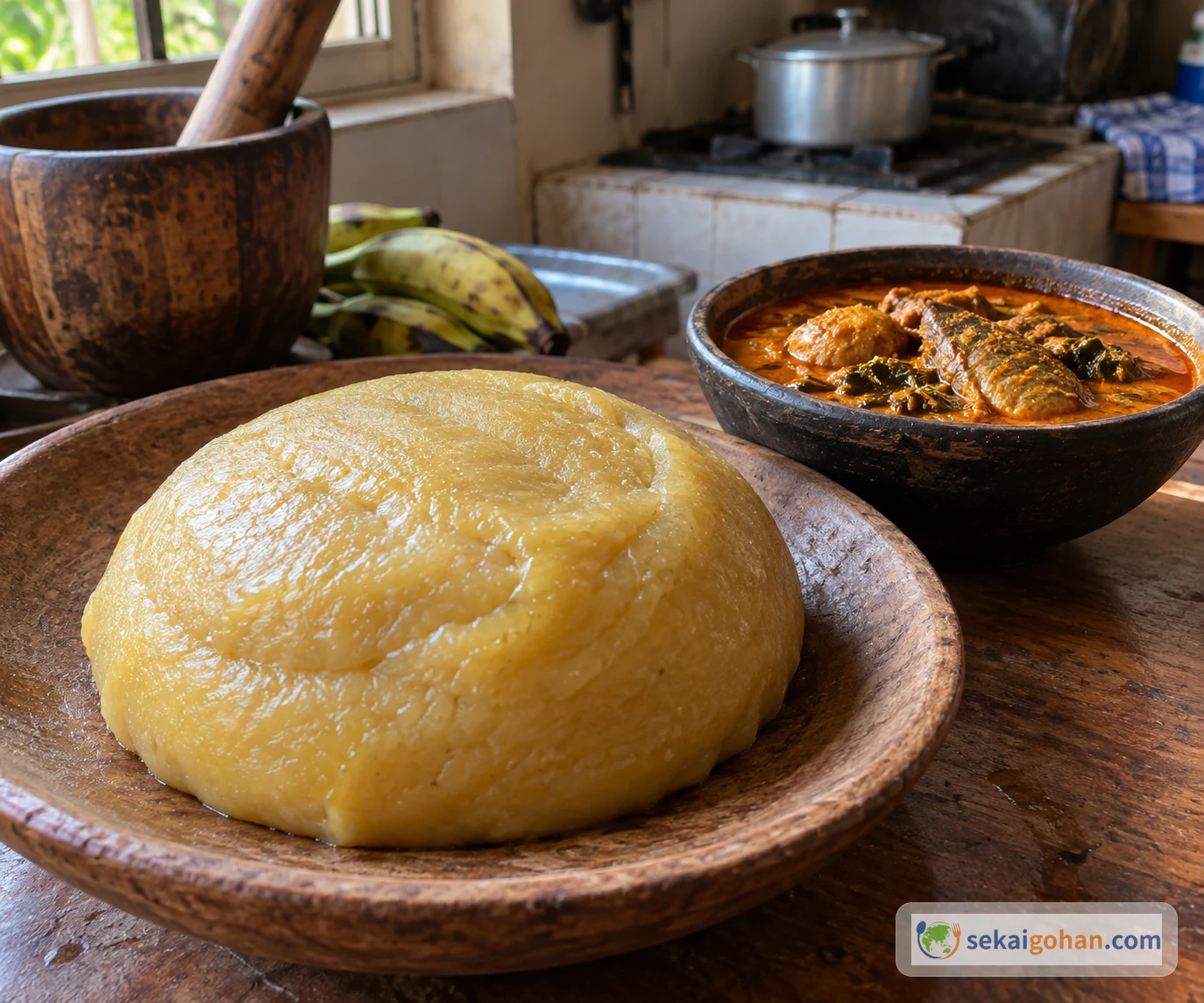
Serve it with any swallow: eba (made from cassava garri), fufu, pounded yam or somvita. The swallow sits on its own plate. Pinch off a small piece and use it to scoop up the leaves and pieces of meat and fish. If you have no swallow on hand, the soup is still good eaten on its own.
Don't leave the cooked soup at room temperature for long. Divide leftovers into clean, shallow containers so they cool quickly, and refrigerate them promptly. When reheating, heat the soup until it is hot all the way through.
Frequently Asked Questions
What can I use if I can't find ugu?
Use kale, in the same 16½ oz (about 468 g) amount. The texture is similar, but the flavor is not the same.
What can I use if I can't find waterleaf?
Use spinach. Watercress or Malabar spinach also work. Each releases a different amount of water, so cook until the liquid has mostly gone before adding the second leaf, and add no water.
How long does it take?
Prep takes 10 minutes and cooking takes 30 minutes, for 40 minutes in total. Allow extra time to soak the dried fish and stockfish and to prepare the periwinkles. The meat stage has no fixed time, so go by the state of the pot: first tender meat with almost no liquid, then the leaf liquid mostly gone, then 6 minutes after the shrimp go in, with the shrimp cooked through.