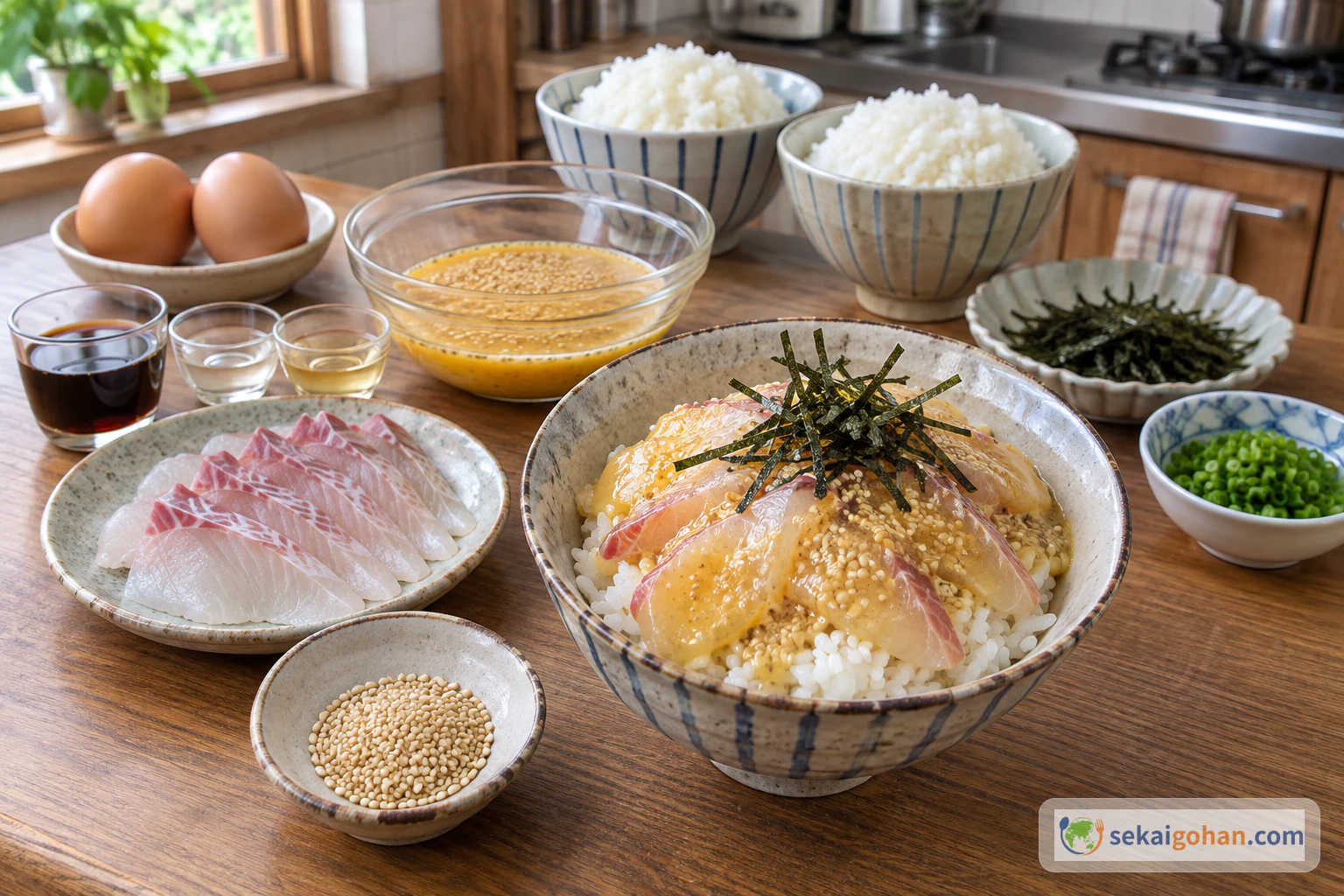
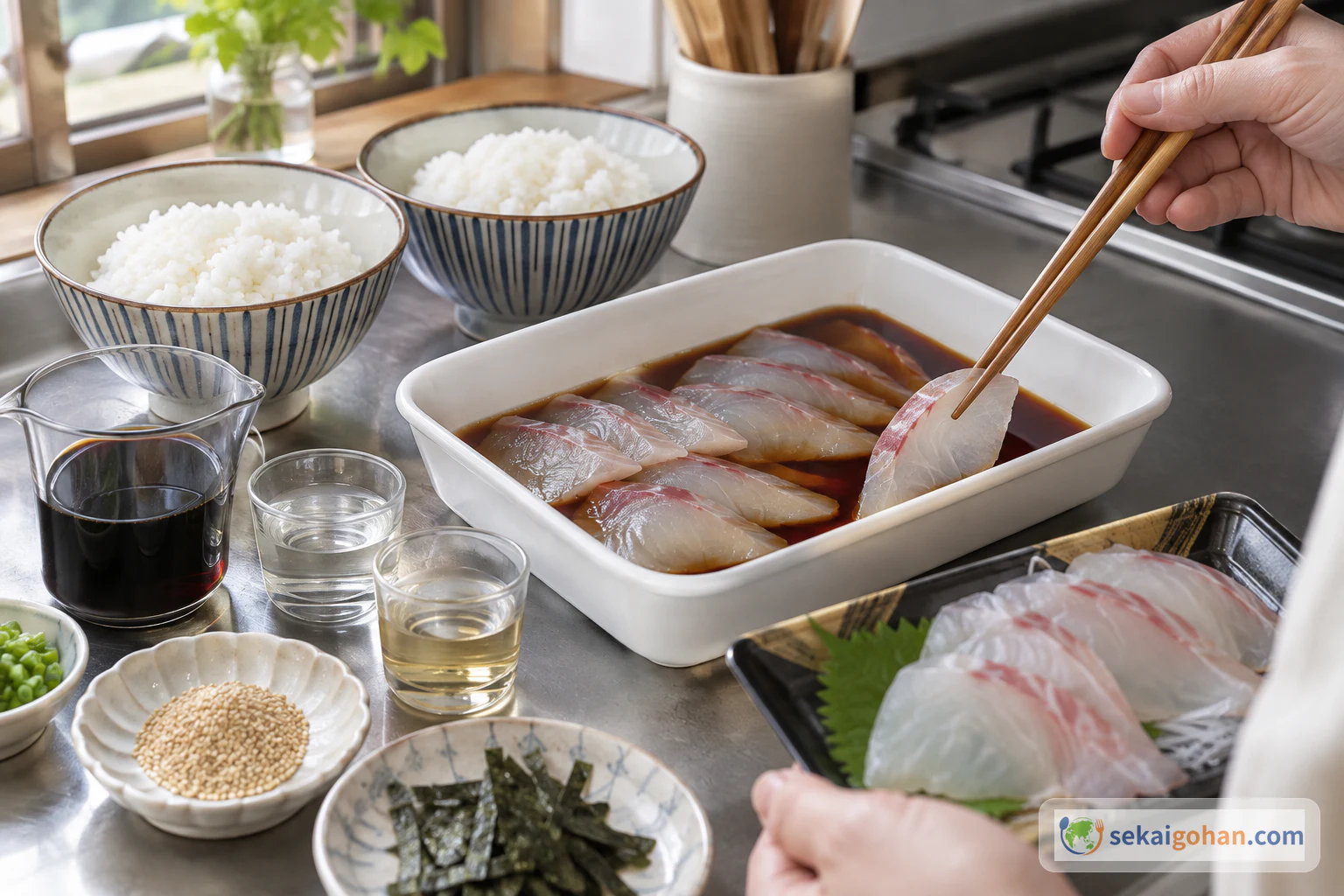
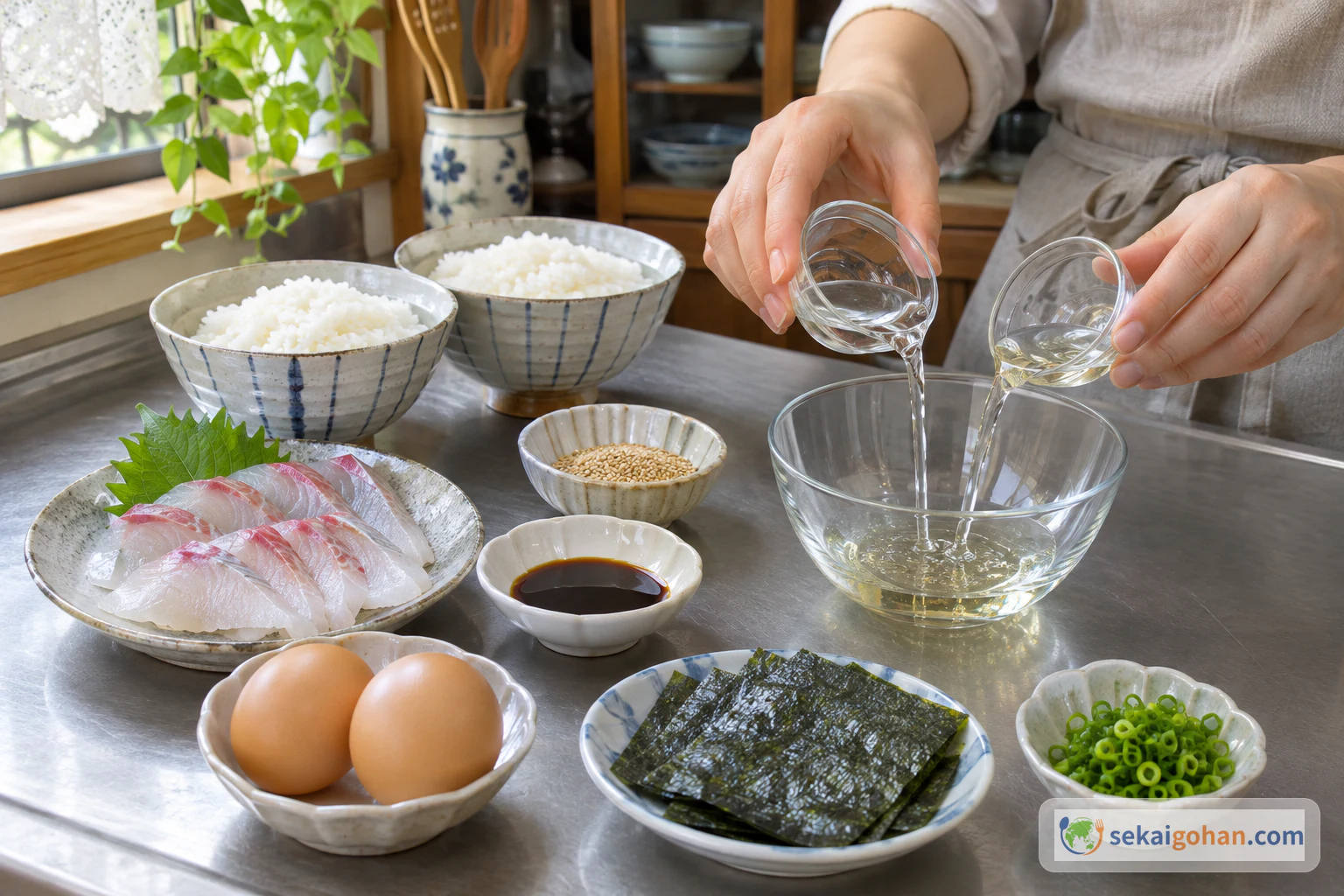
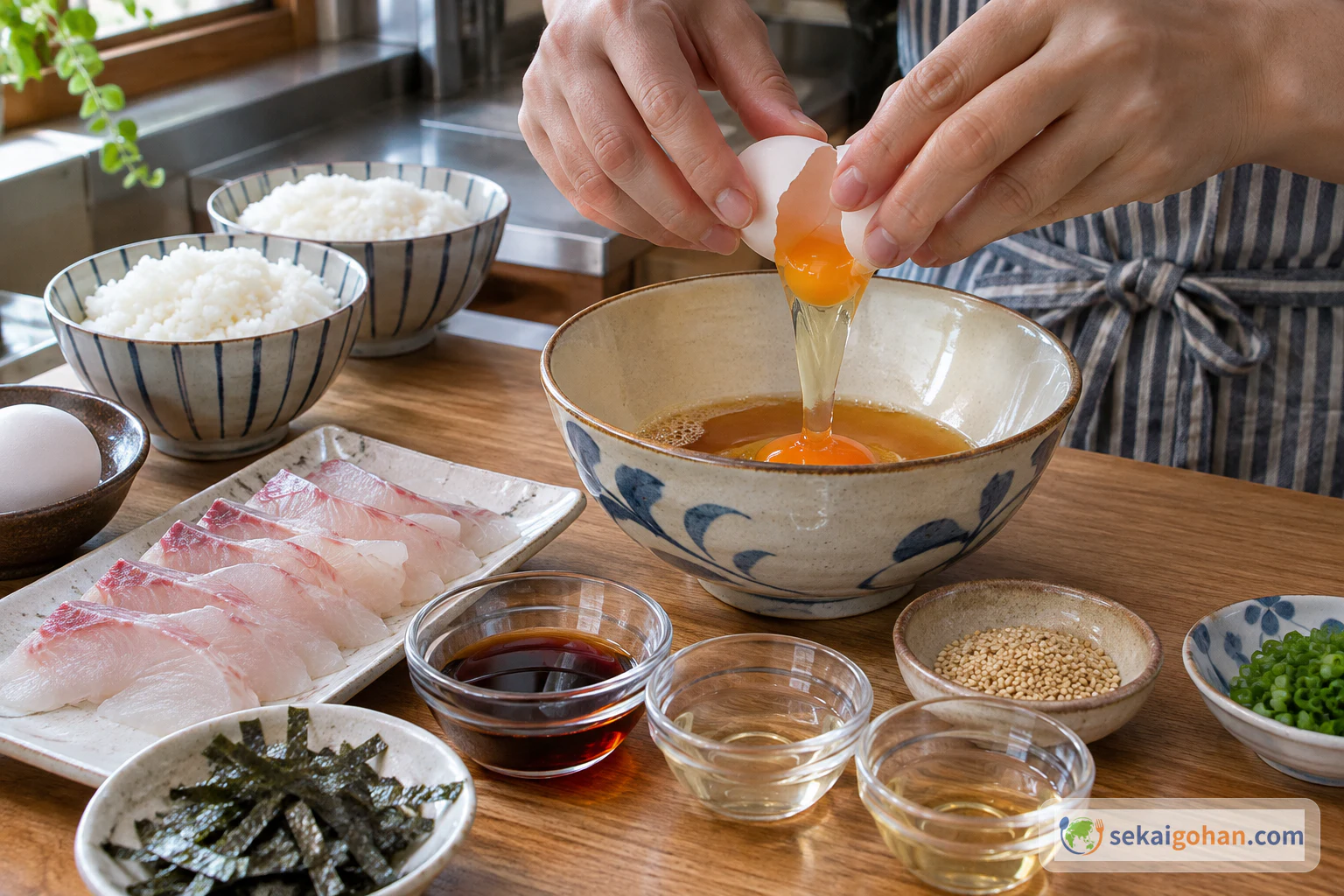
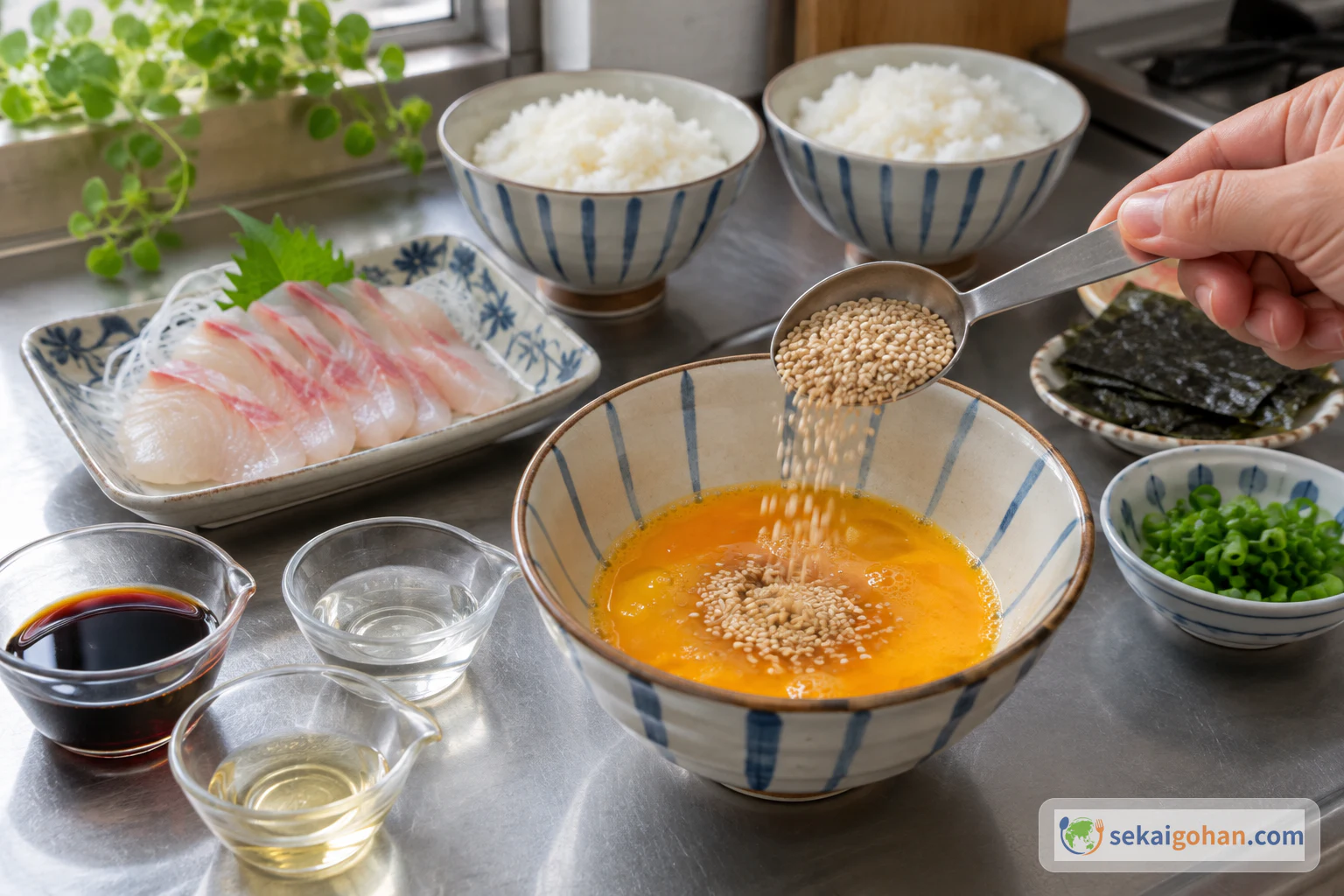
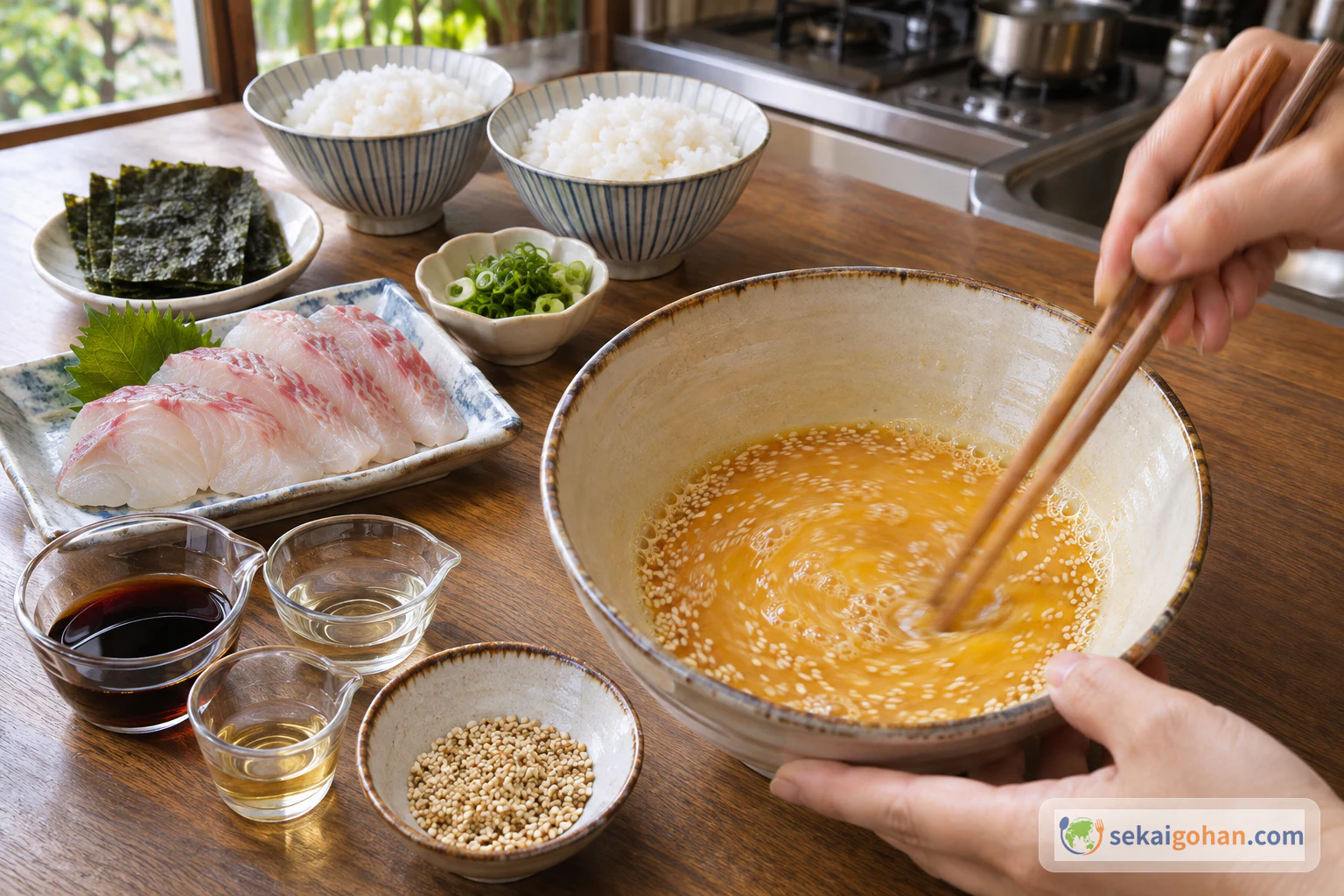
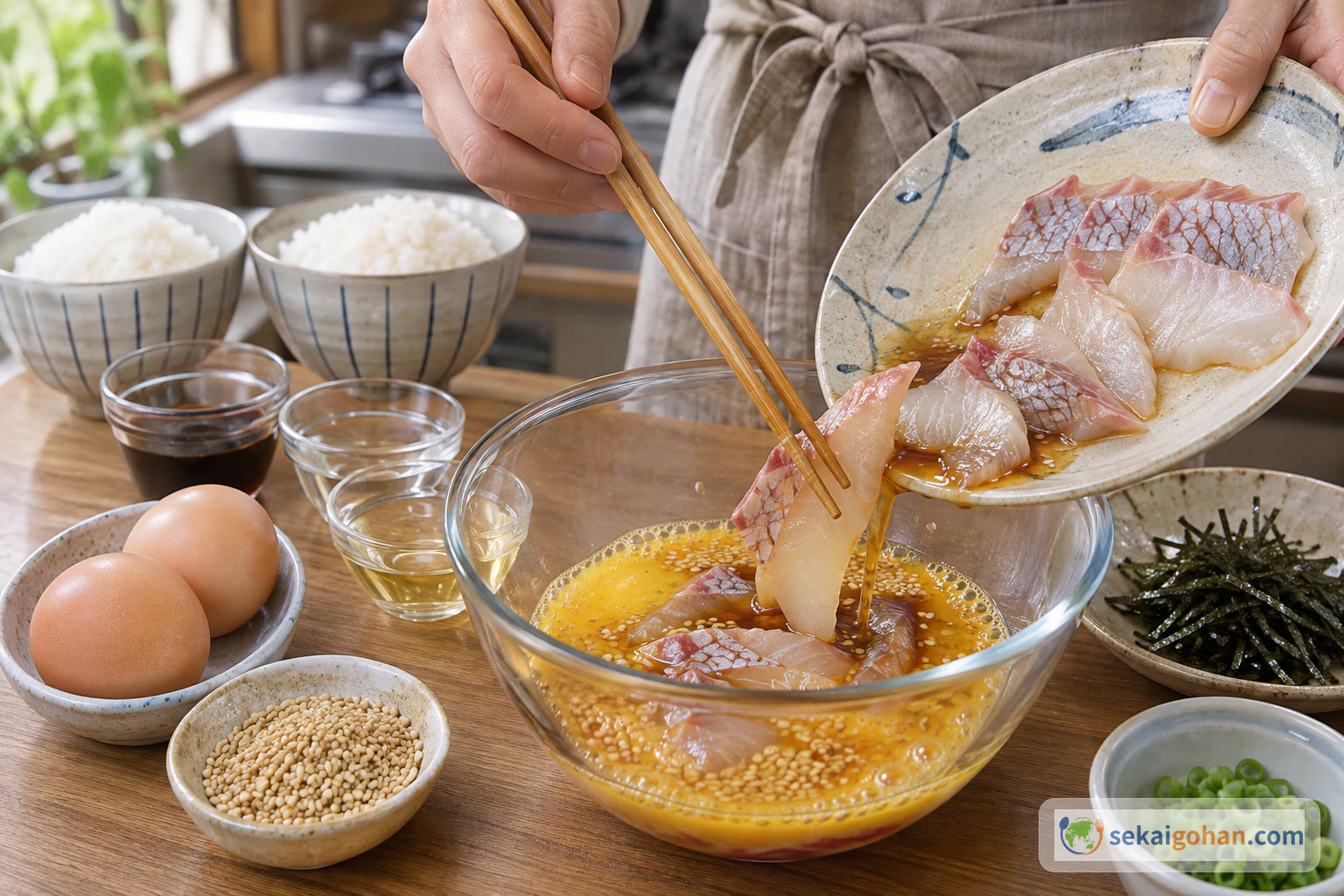
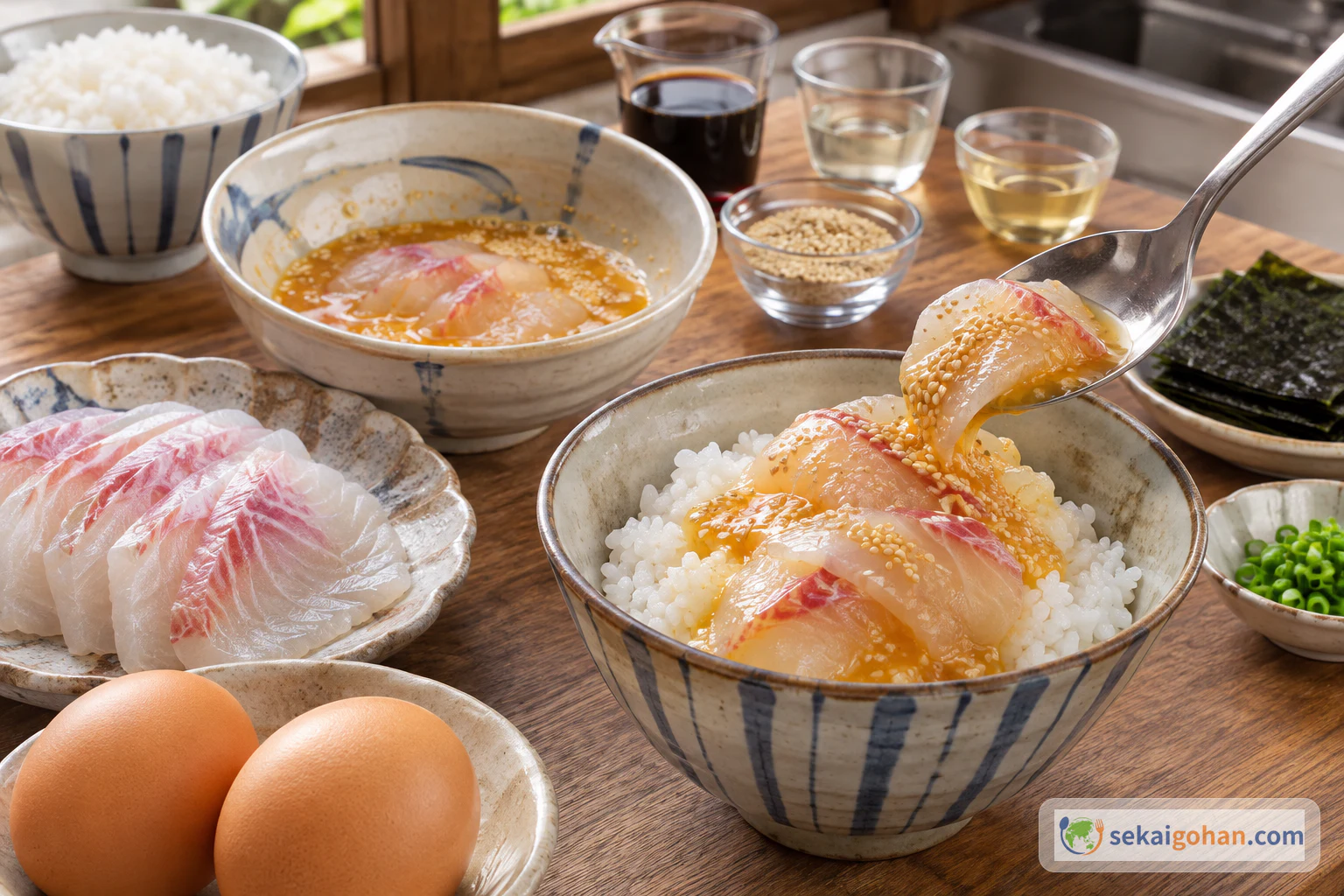
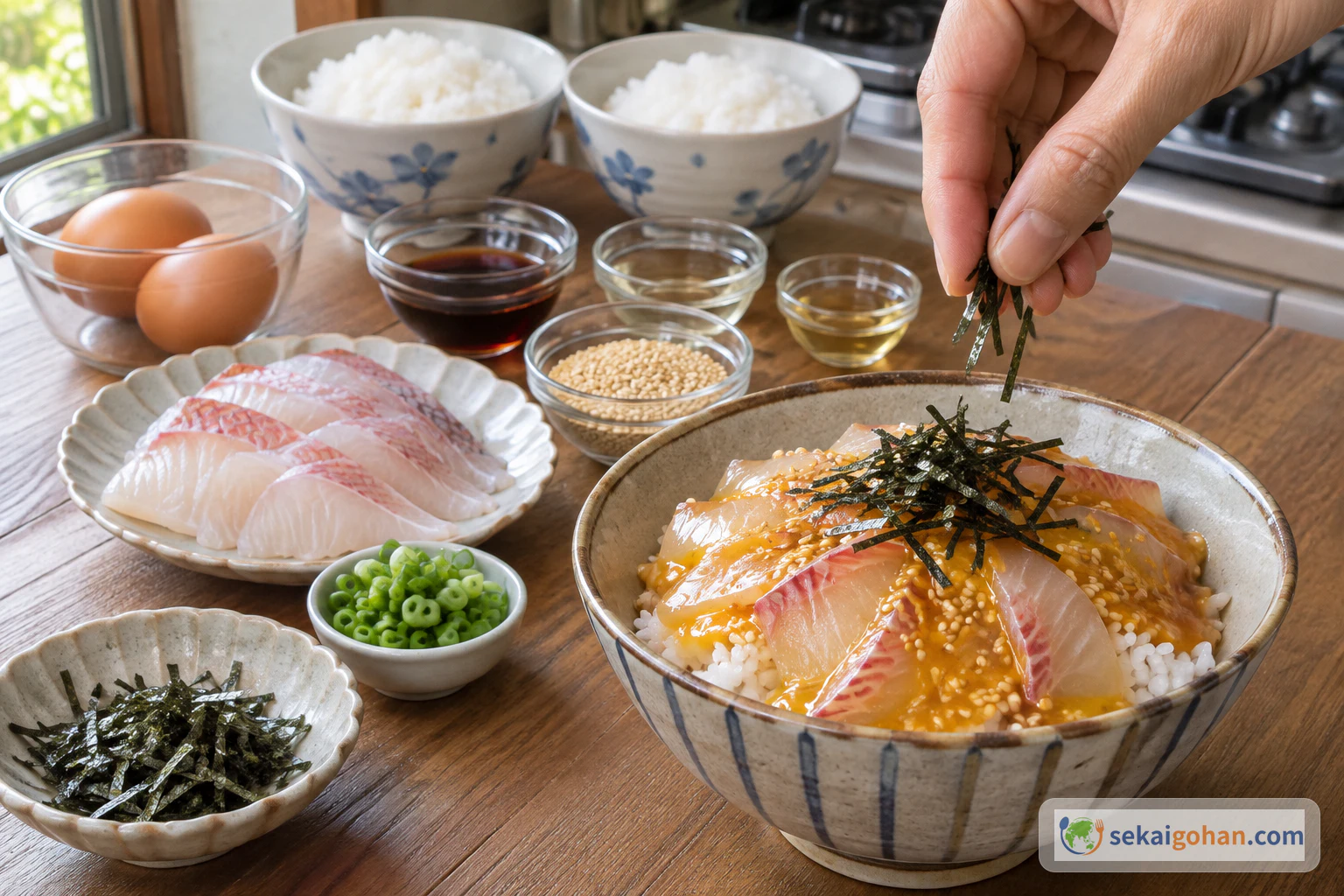
Slices of sashimi rest in soy sauce while, in another bowl, sake and mirin meet beaten egg and white sesame. The fish goes into that pale mixture, the whole thing is spooned over rice, and nori goes on top. This is ひゅうが飯 (漬け丼), a marinated-fish rice bowl from Nanyo, the southern part of Ehime, and the area around the Uwa Sea. It's one of many regional dishes you can explore among our recipes from Japan.
Hyugameshi in Southern Ehime
Apart from the rice, nothing in this bowl is cooked. The fish is marinated in soy sauce alone first, then folded into a separate mixture of sake, mirin, egg and sesame. That dressing links the fish to the rice, carrying the egg and sesame along with the soy sauce from the marinade. Both eggs are beaten into the mixture, so no separate yolk sits on top.
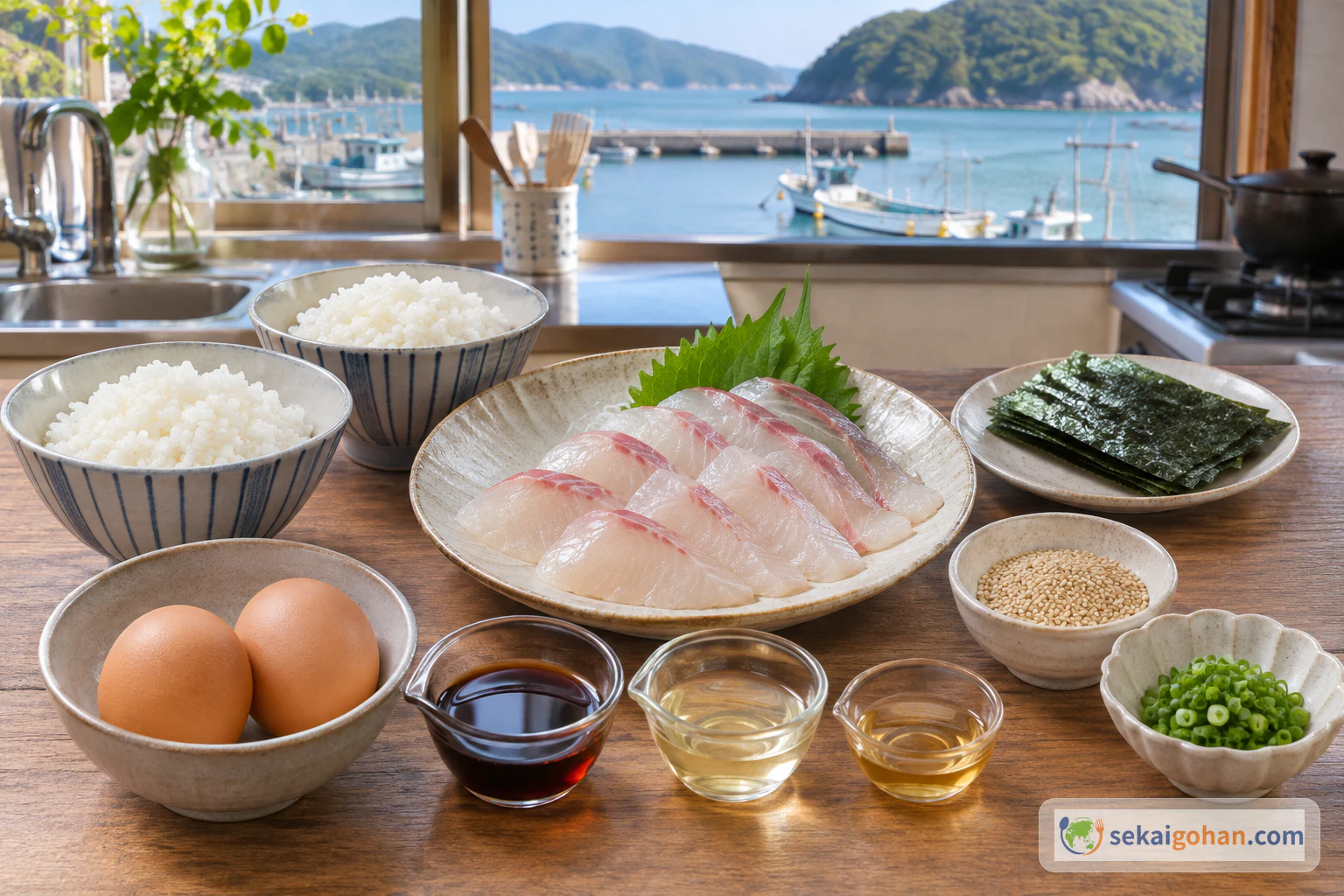
Hyugameshi is traditionally a fisherman's meal from Hiburi Island, though its origin has more than one explanation. The name is also linked to the old province of Hyuga.
The fish varies, too. Horse mackerel (aji) is a representative choice, while another version uses sea bream with its own proportions, including broth. Nanyo's local ingredients include raw fish and egg yolk, and the fish differs by region. What matters most is that the fish and eggs are fresh.
Two similar names can cause confusion. Hyuga-don from Tsukumi in Oita Prefecture is a different regional dish, known for tuna and a sweetish sesame sauce with egg yolk. Uwajima tai-meshi, also from Ehime, is a separate dish as well.
There is no heating stage, and the sake and mirin stay uncooked. Do not serve it to infants, young children or older adults. Soy sauce does not kill parasites, and freshness alone does not make fish safe to eat raw. Read the safety section before you shop.
Ingredients (2 Servings)
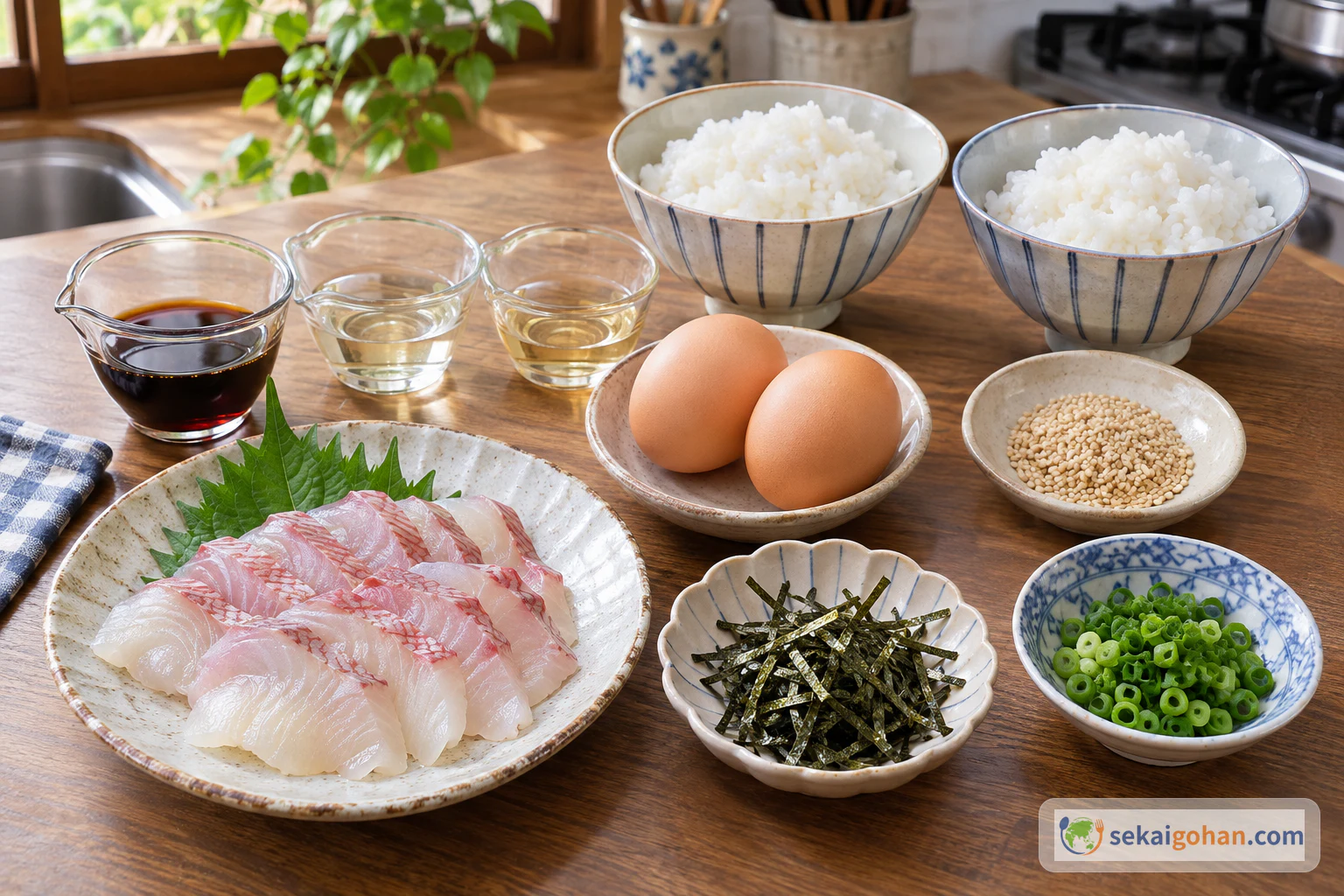
Use only sashimi sold for eating raw. Buy fresh eggs and keep them refrigerated. Follow the date and storage instructions on both labels.
Equipment
- Shallow food-safe container with a lid
- Clean mixing bowl
- Chopsticks for mixing
- Spoon for serving
- 2 serving bowls
- Small measures for the liquids and sesame
- Knife and cutting board, only if you need to slice anything
Choosing Fish, Eggs and Seasonings for Hyugameshi
Fish: Look for sashimi labelled for eating raw. In Japan, that means wording such as 刺身用 or 生食用. The type of fish is up to you; sea bream in the pictures is just one example. Whatever you choose, it still needs the checks in the safety section below.
Parasite control: Check the label or ask at the counter whether the sashimi has been frozen. If you plan to freeze it at home, see the conditions in the safety section.
Eggs: Choose fresh eggs, keep them cold, and check the date and storage instructions on the pack.
Soy sauce: Ordinary dark Japanese soy sauce (koikuchi) works. Pick your amount within the range in the ingredient list, to taste.
Sake: Cooking sake works here. It stays uncooked in this dish, though, so the alcohol advice below still applies.
Method: Marinate, Mix, Spoon over Rice
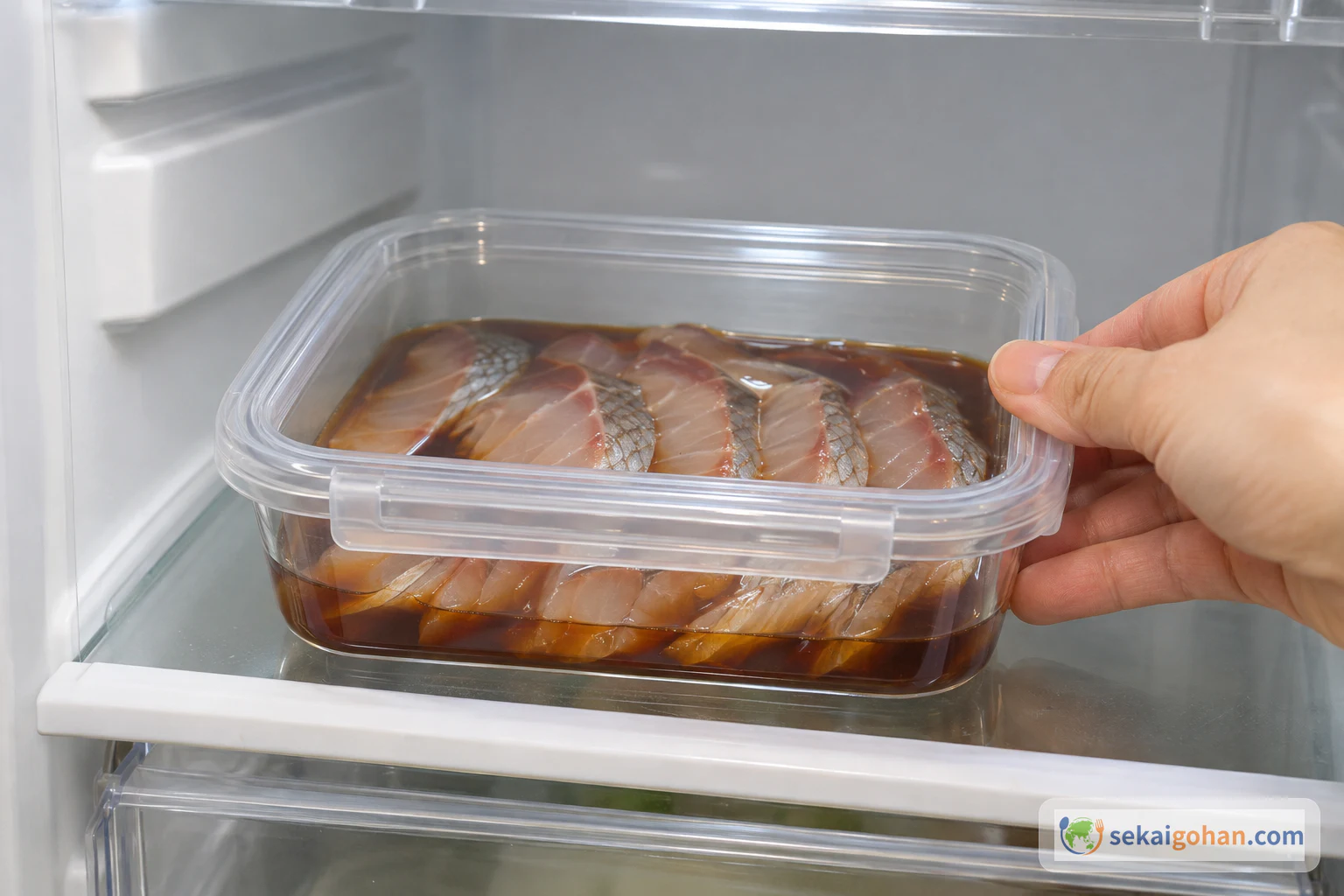
The soy marinade takes 10–20 minutes. Keep the fish covered in the refrigerator during that time.
Hyugameshi Safety and Troubleshooting
Buying the Fish and Controlling Parasites
Buy the right fish. Use only sashimi sold for eating raw. Fish without that labelling should be cooked instead, however fresh it looks.
Control parasites. Anisakis commonly comes from the sashimi of mackerel, horse mackerel, sardine, flounder, salmon, bonito and squid, among others, and fish not on this list can carry them too. Larvae are killed in either of these ways:
- Freezing at −20°C for at least 24 hours
- Heating to 140°F (60°C) at the center for at least 1 minute
If you freeze at home, make sure your freezer actually reaches −20°C. The −15°C that freezers are commonly set to is meant for storage, not for killing parasites.
Soy sauce, vinegar, salt and wasabi do not kill Anisakis larvae, so the 10–20 minute marinade does not protect against them. Fresh fish is not automatically safe to eat raw. Freezing and refrigeration do not make food sterile, and freezing the fish does nothing to make the egg safer.
Keeping Fish and Eggs Cold and Clean
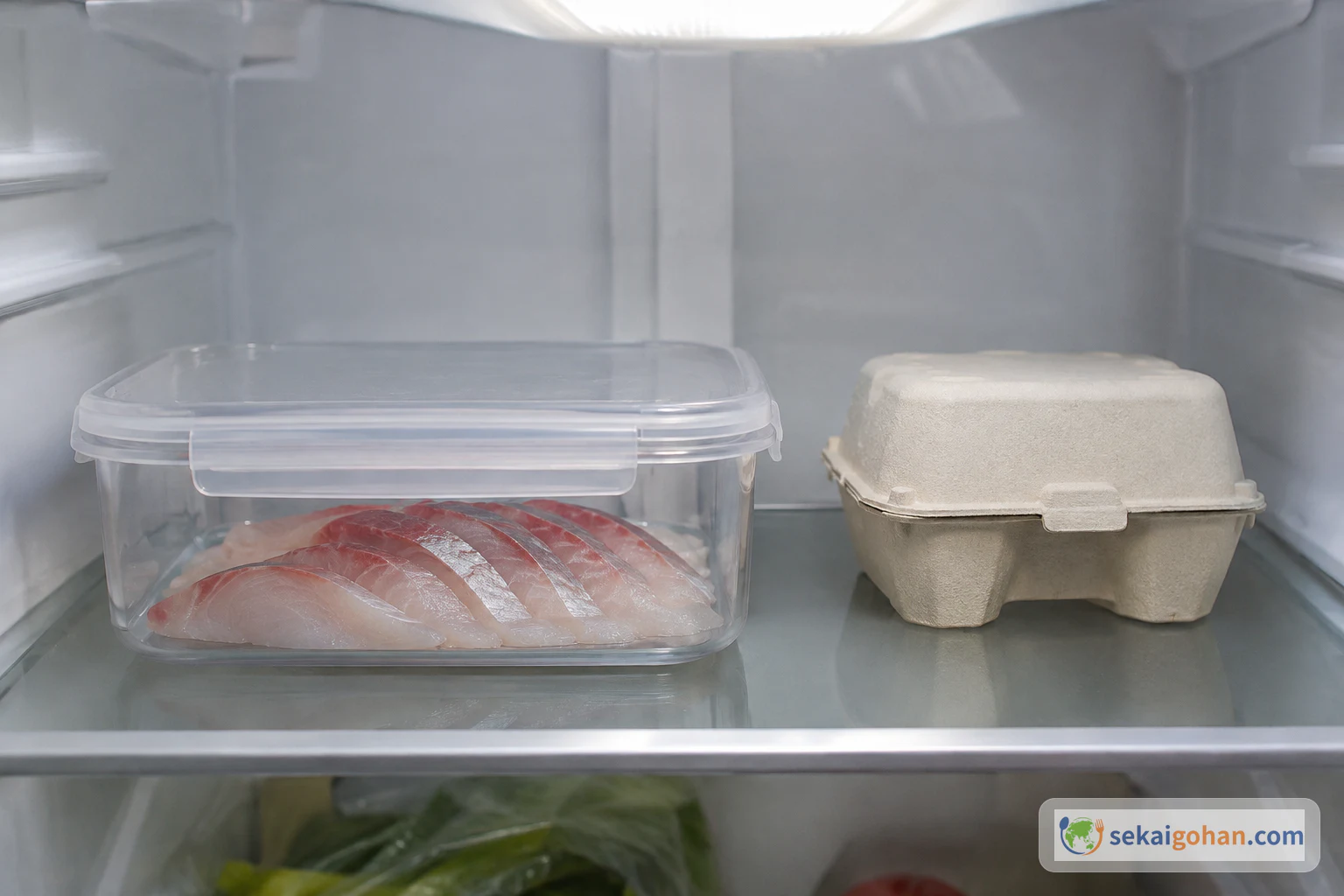
Refrigerate fish and eggs soon after buying. Keep your refrigerator at 50°F (10°C) or below, store the fish in a bag or container, and keep it covered in the refrigerator while it marinates.
Keep raw fish juices away from other foods. If you cut raw fish yourself, wash the knife and board and pour boiling water over them before using them again. Wash your hands often, including after touching eggs.
Who Should Avoid Hyugameshi
- Infants and older adults: Do not serve them undercooked egg or fish.
- Anyone with lower resistance to illness: Take particular care.
- Pregnant people and those with weakened immunity: Avoid this dish, or ask a doctor first.
- Children and anyone avoiding alcohol: Do not serve this dish. The sake and mirin are never heated, so the alcohol does not cook off.
Troubleshooting
| Problem | What to do |
|---|---|
| The fish is not labelled for eating raw | Do not use it raw. Cook it through and make the cooked alternative below |
| You cannot confirm the fish has been frozen | Check the label, ask at the counter, or freeze it at home if your freezer reaches −20°C. Otherwise, make the cooked alternative |
| You are unsure how much soy sauce or how long to marinate | Stay within 15–30 cc soy sauce and 10–20 minutes in the refrigerator. A longer marinade does not make the fish safer |
| The eggs were cracked too early | Crack them only when you are ready to mix and serve |
| Someone at the table cannot have raw food or alcohol | Make them the cooked alternative |
Serving, Storing and Varying Hyugameshi
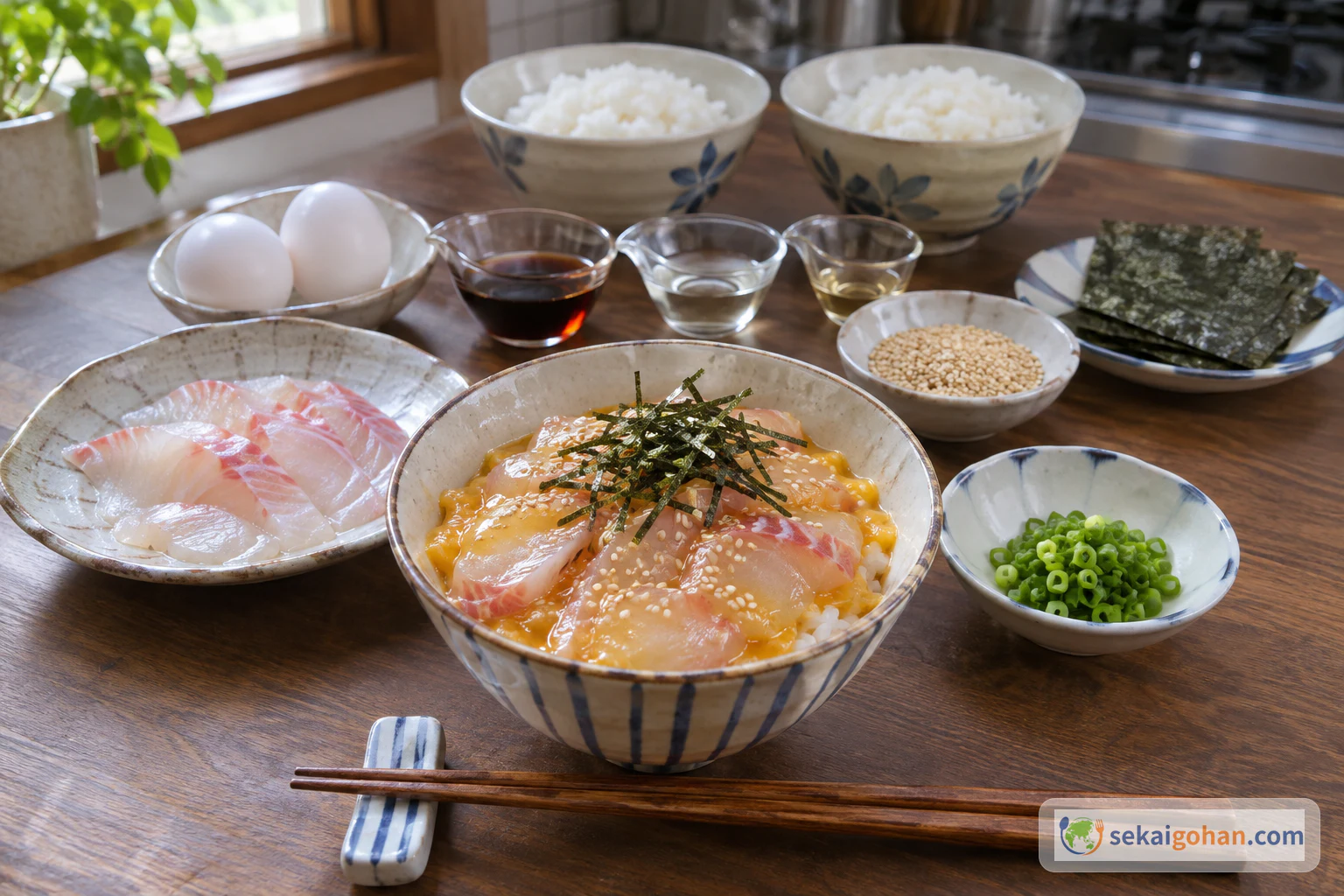
Hyugameshi is meant to be eaten the moment it's assembled, so make only as much as you'll eat at once. Don't prepare it ahead, and don't leave leftovers at room temperature. Scallion goes on the side in a small dish, so each person can add it or leave it out.
A different fish: Any sashimi sold for eating raw suits the method.
Citrus peel: A little mandarin or yuzu peel is an optional touch, if you like it.
A cooked alternative: Replace the sashimi with fish cooked through to at least 140°F (60°C) at the center for at least 1 minute, and use cooked egg or no egg at all. Change the seasoning rather than adding uncooked sake and mirin.
Frequently Asked Questions
Does marinating in soy sauce make the fish safe?
No. Soy sauce, vinegar, salt and wasabi do not kill Anisakis larvae. Only freezing or heating under the conditions in the safety section does.
If the fish is very fresh, is that enough?
No. Freshness alone does not tell you whether fish is safe to eat raw. Choose seafood labelled for eating raw, and cook anything else.
How much fish should I use, and which kind?
The recipe gives no species or amount, only "sashimi" as needed. Use sashimi sold for eating raw, enough for your 2 bowls of rice.