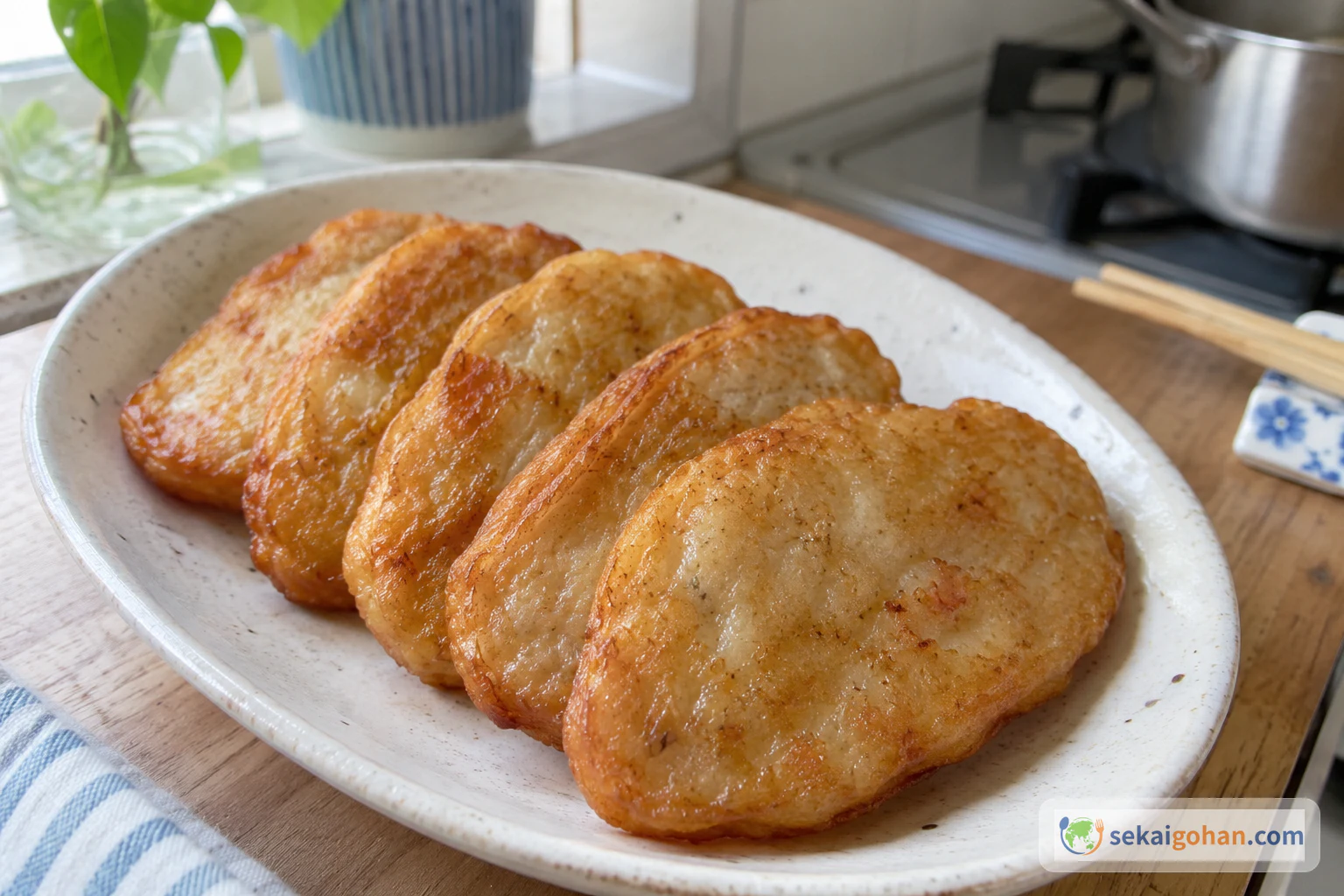
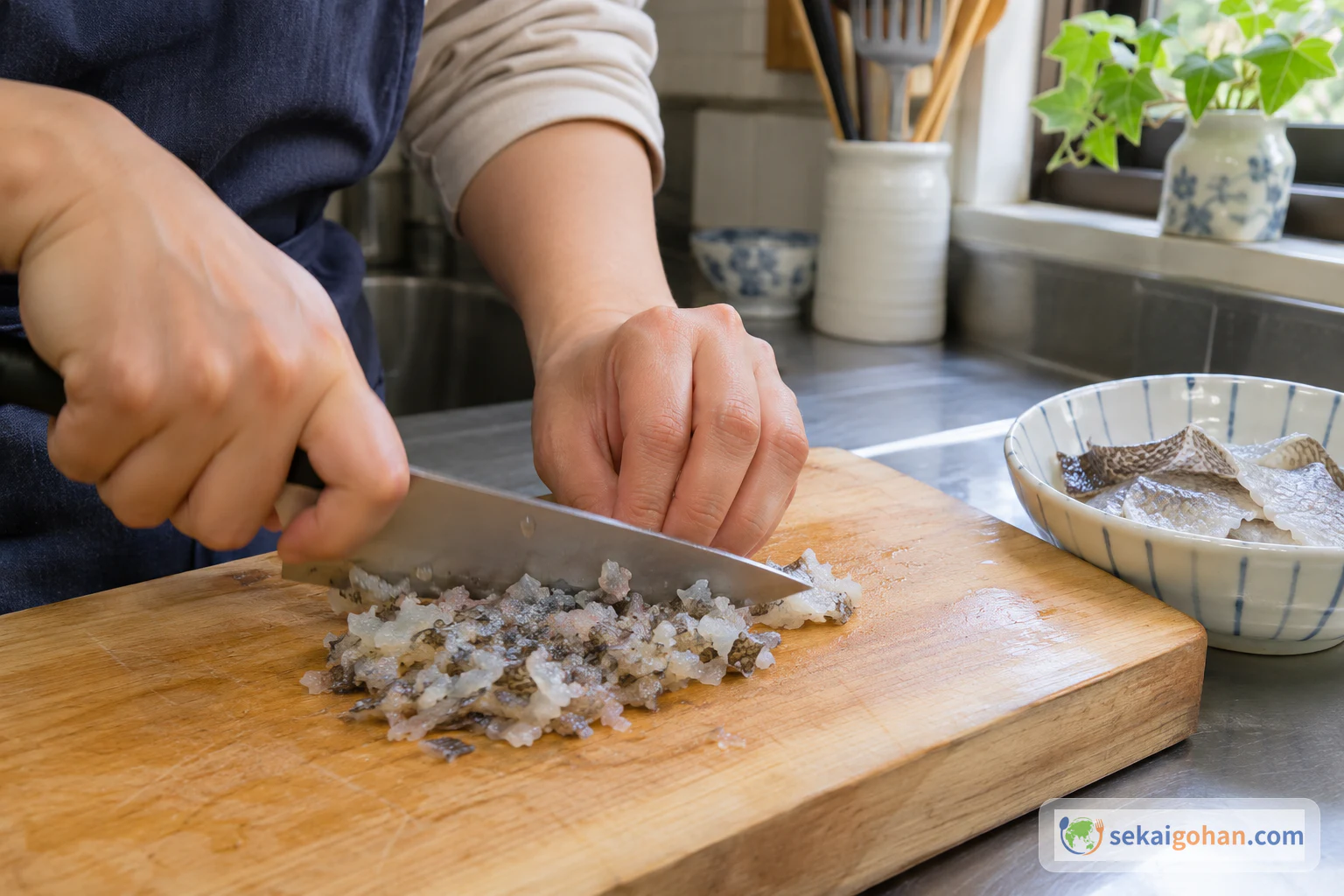
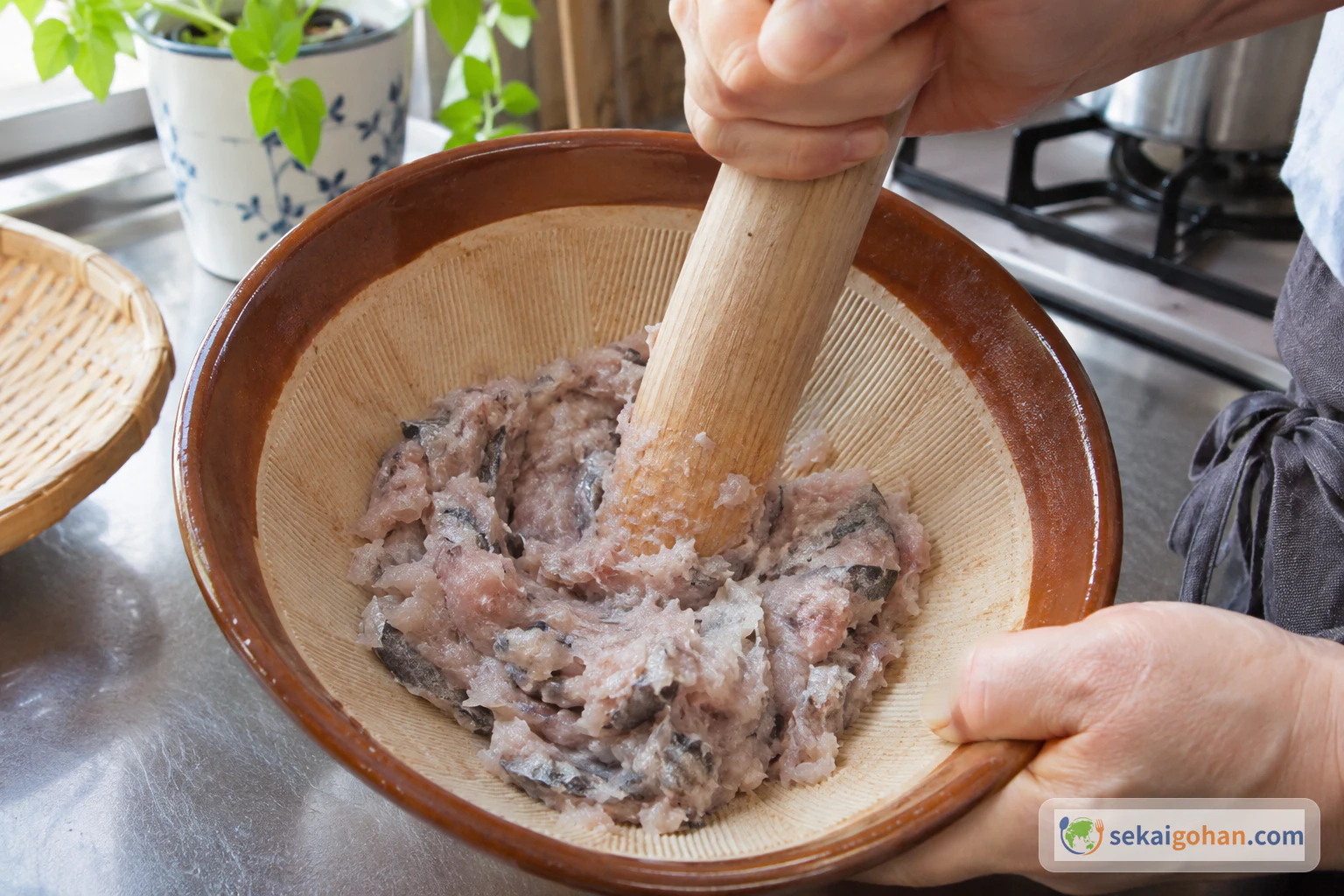
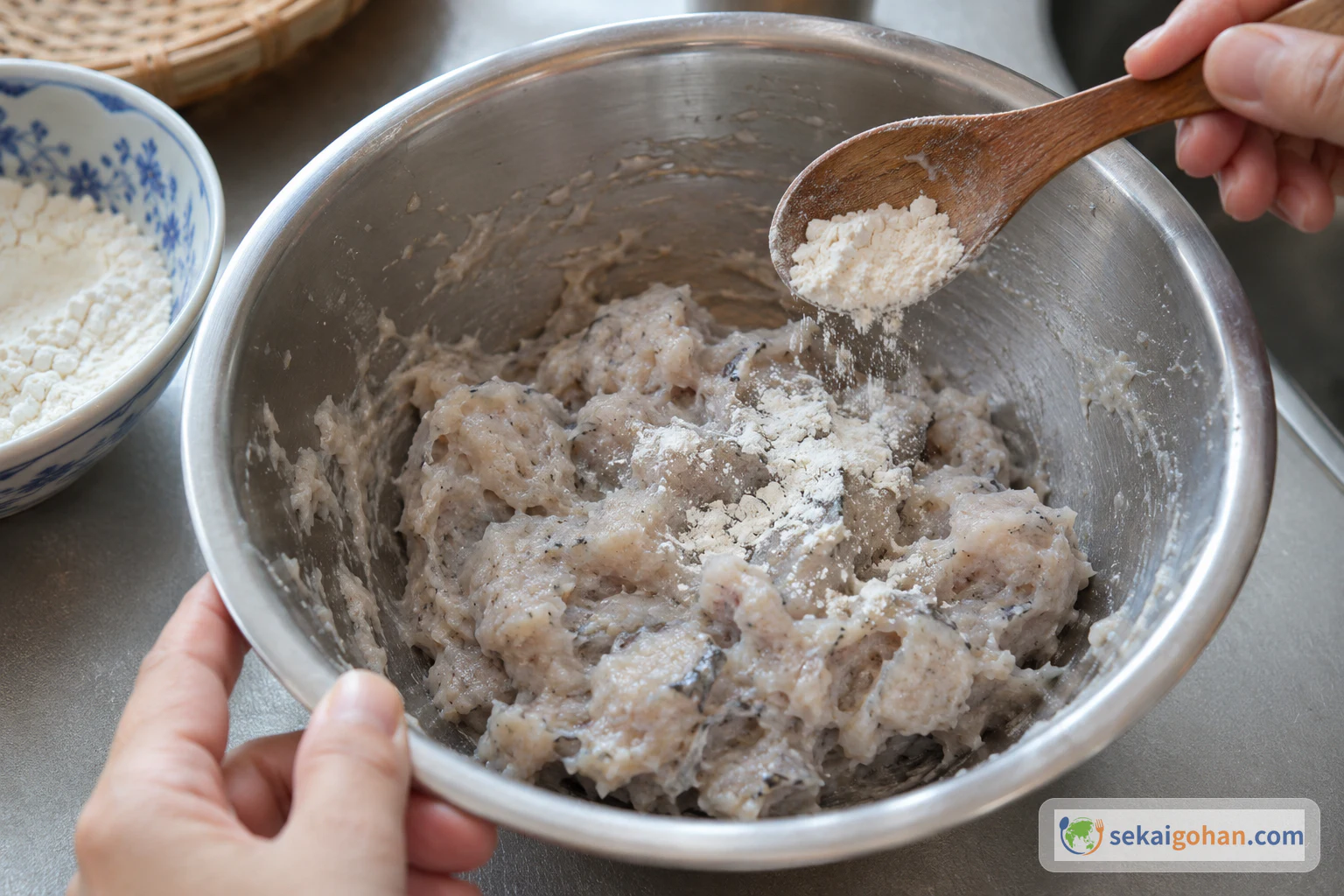
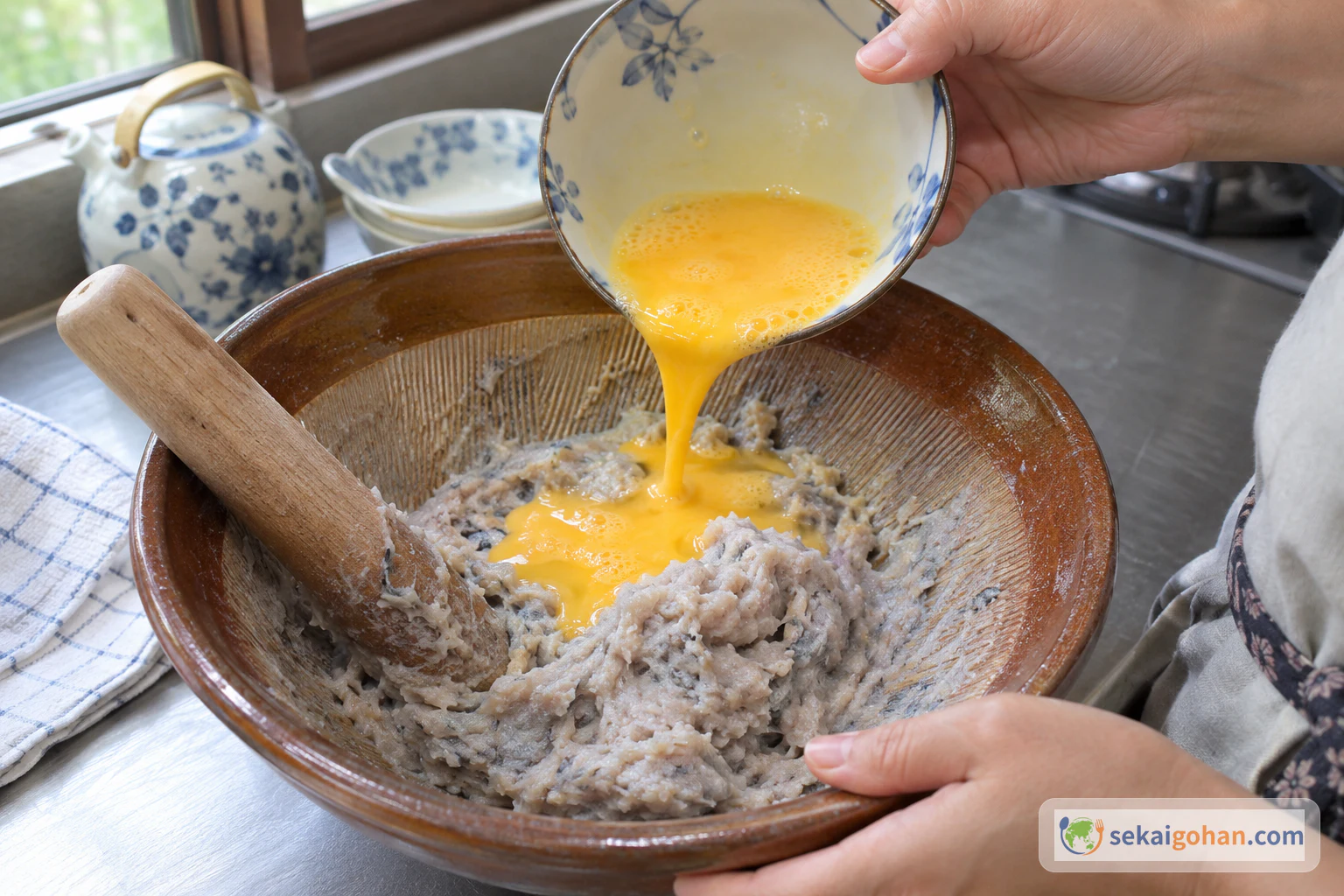
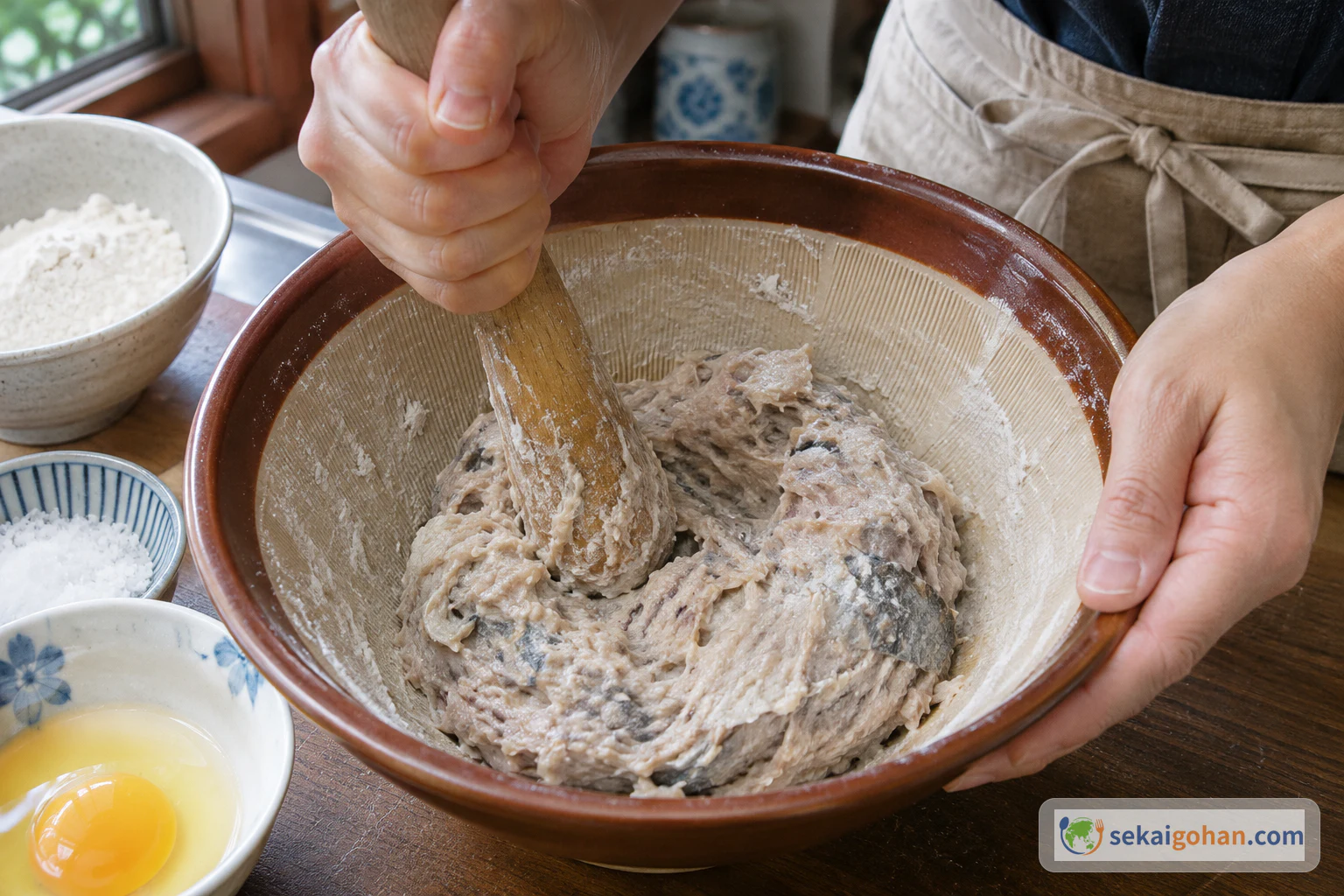
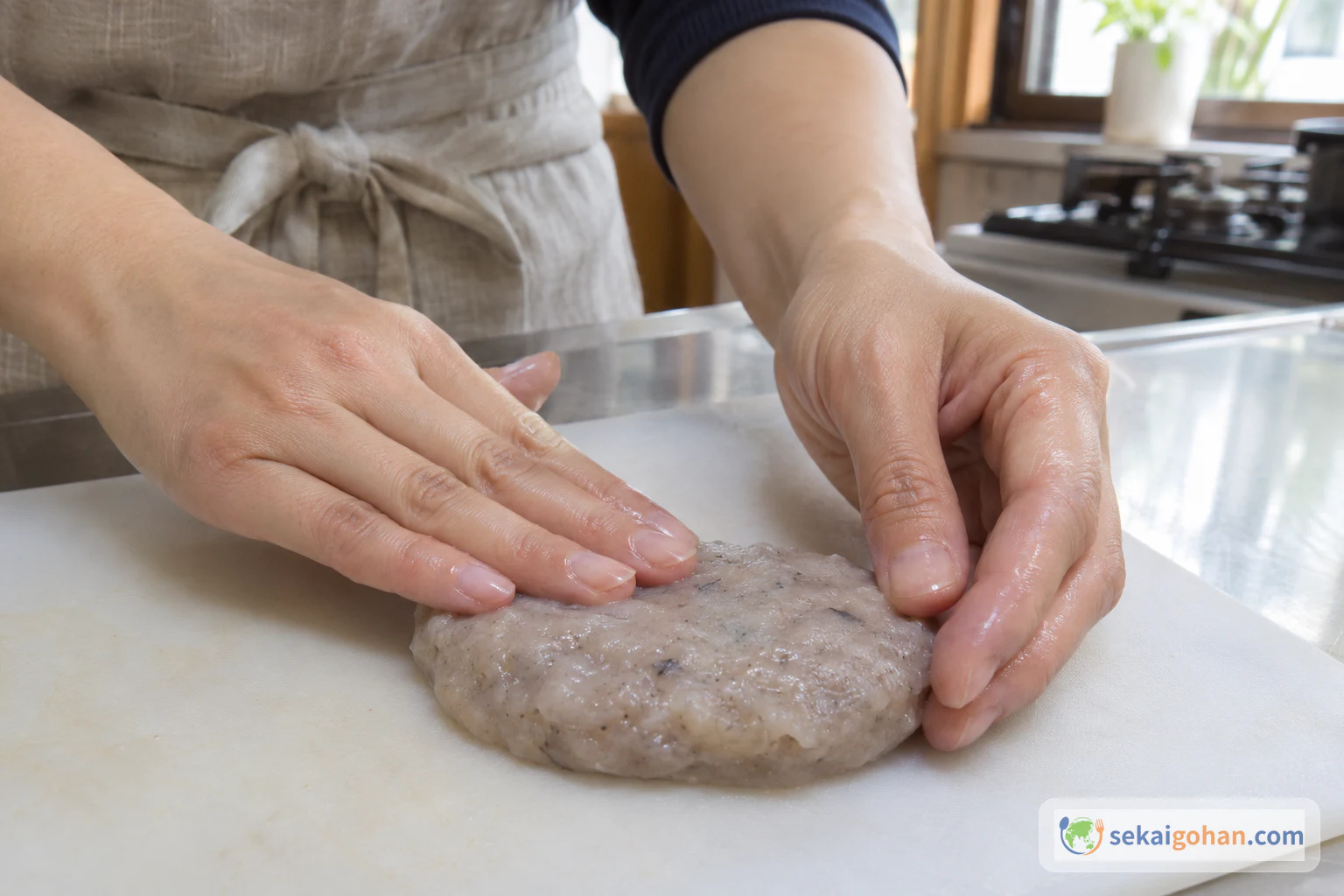
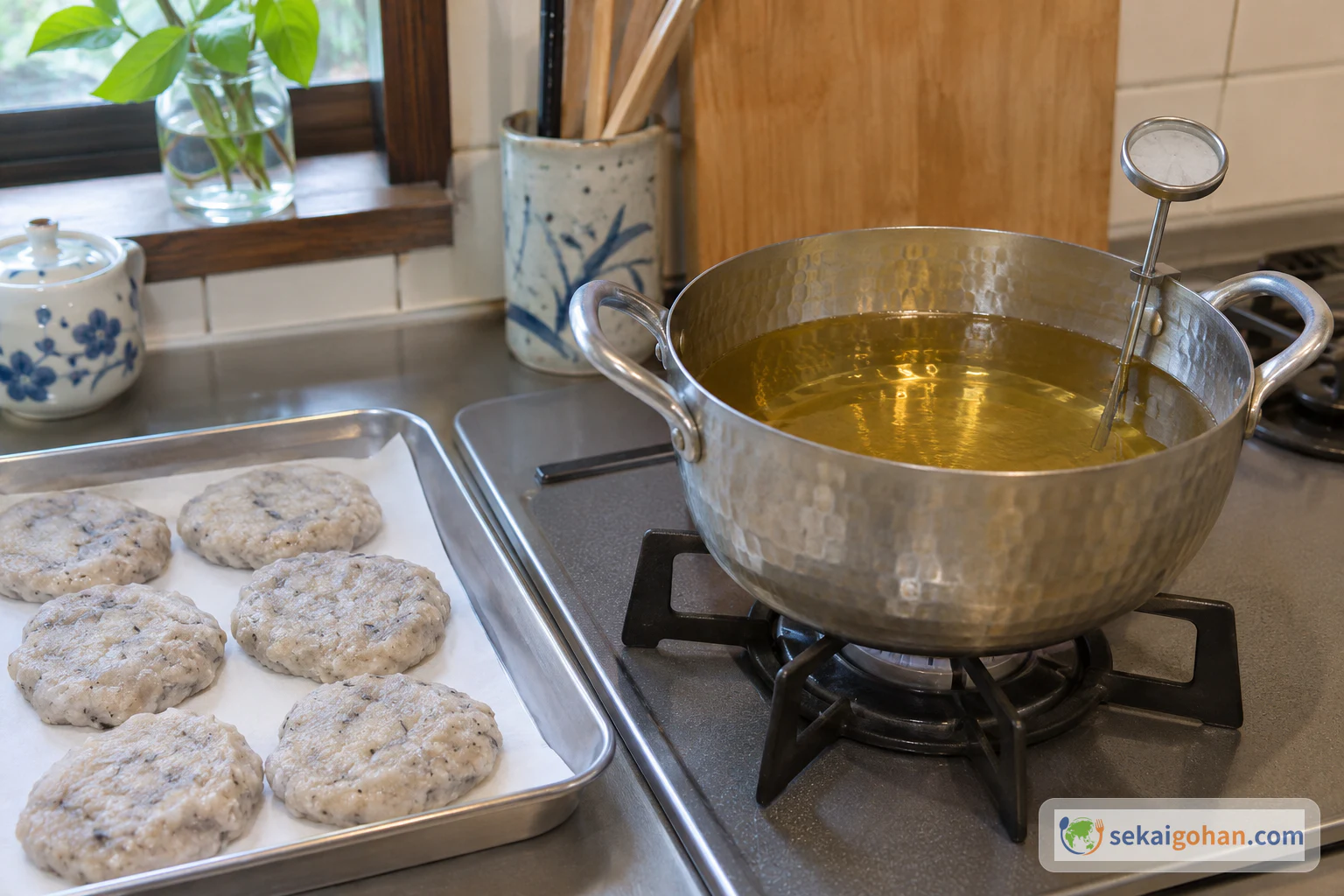
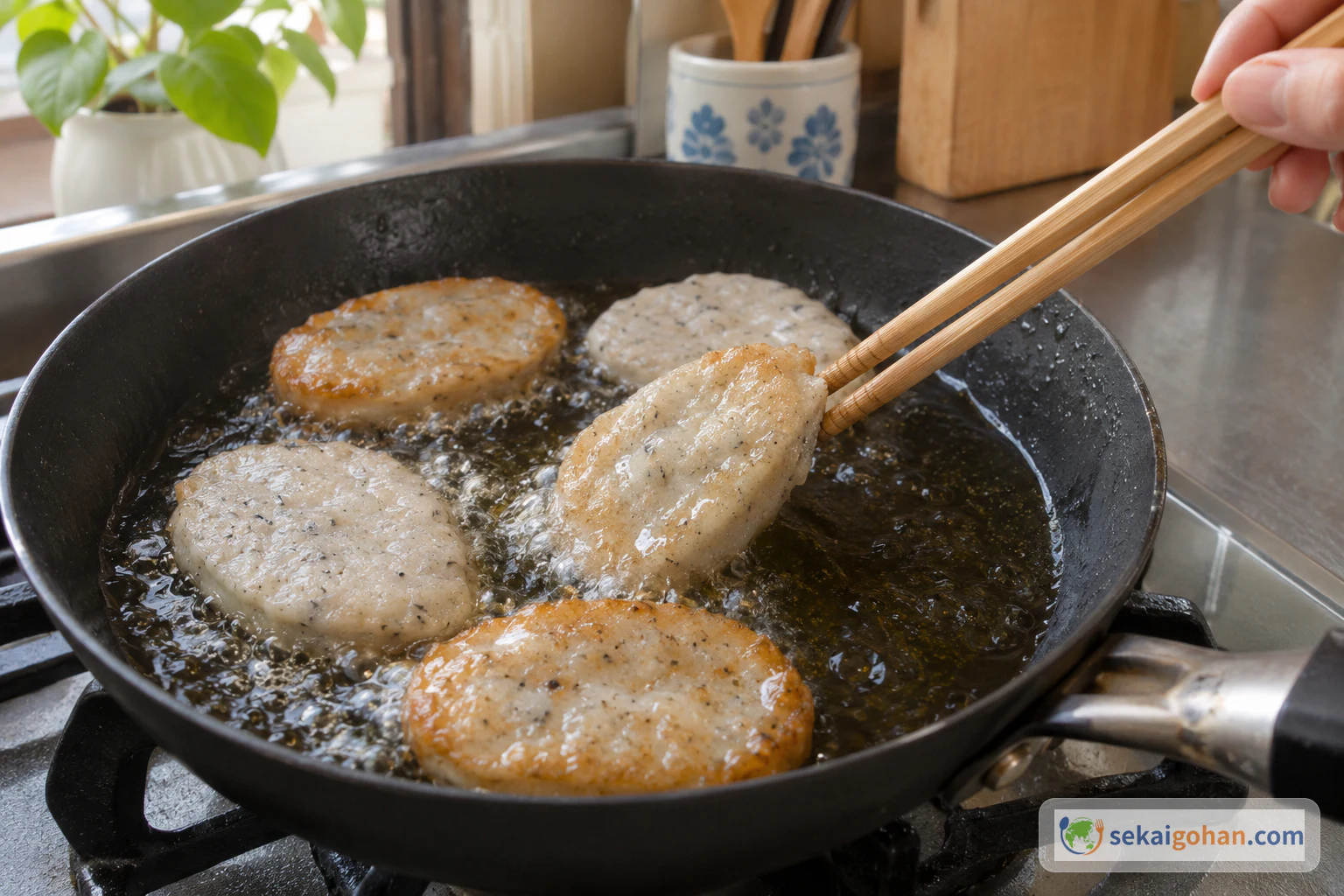
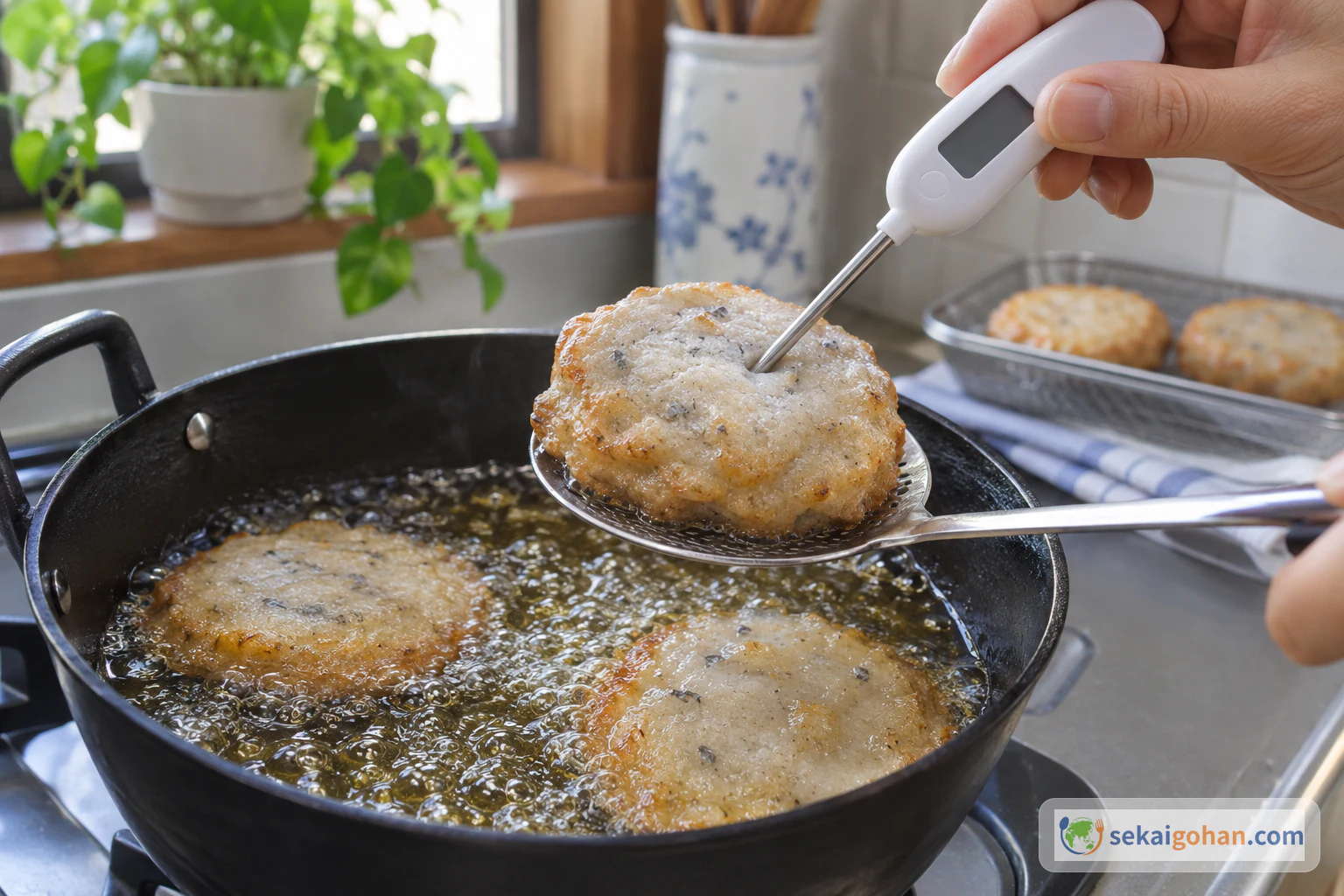
Along the Uwa Sea in southern Ehime, small fish have long been turned into fish cakes, and jakoten is the one people there reach for every day. The fish is ground into a paste with salt, wheat flour and egg, pressed into flat ovals and fried until golden. It turns up all year round as a side dish with rice or alongside a drink. This home version uses lizardfish skin and small horse-mackerel flesh. For more dishes from across the country, see Japanese recipes.
Jakoten in Uwajima and the Nanyo Region
Jakoten has been handed down mainly in the Nanyo region of southern Ehime Prefecture, where the towns of Yawatahama and Uwajima have a long history of fish processing. The paste is made from small fish ground with their skin, then shaped into flat ovals called koban and fried. Commercial jakoten often has a gritty, jari-jari mouthfeel that comes from grinding whole small fish.
There are two theories about the name. One says zako, a word for mixed small fish, became jako. The other traces it to harambo, also called hotaru-jako, a small fish used as a raw material. Tradition holds that in 1615, Date Hidemune, lord of the Uwajima domain, invited kamaboko (fish-cake) artisans from Sendai.
Each producer has its own method. One uses hotaru-jako as its main fish, together with other small fish from nearby waters, and adjusts the blend of species. It removes the heads and innards, grinds the fish with skin and bones, and works the paste in a stone mortar without rinsing it in water, then fries the ovals in rapeseed oil. Another removes the heads and innards, minces the fish with bones and skin, works in salt, shapes ovals and fries them at 350°F (180°C).
In Nanyo, finished jakoten also goes into everyday dishes such as Uwajima oden, udon and tempura curry.
Ingredients (Serves 4)
Use fish skin and flesh that are already cleaned and ready to cook, with no heads, innards or bones. Keep them refrigerated until you start.
This recipe contains fish, egg and wheat.
Equipment
- Kitchen knife
- Cutting board and tray used only for raw fish
- Suribachi (Japanese ridged mortar) and pestle
- Two small clean bowls for the egg
- Deep pot for frying, with plenty of room below the rim
- Frying thermometer
- Food thermometer with a probe
- Slotted spoon or mesh skimmer
- Wire rack or absorbent paper for draining
- Separate clean plates and utensils for the cooked cakes
A food processor can stand in for the mortar, though the texture comes out different.
Choosing the Fish, Flour and Oil for Jakoten
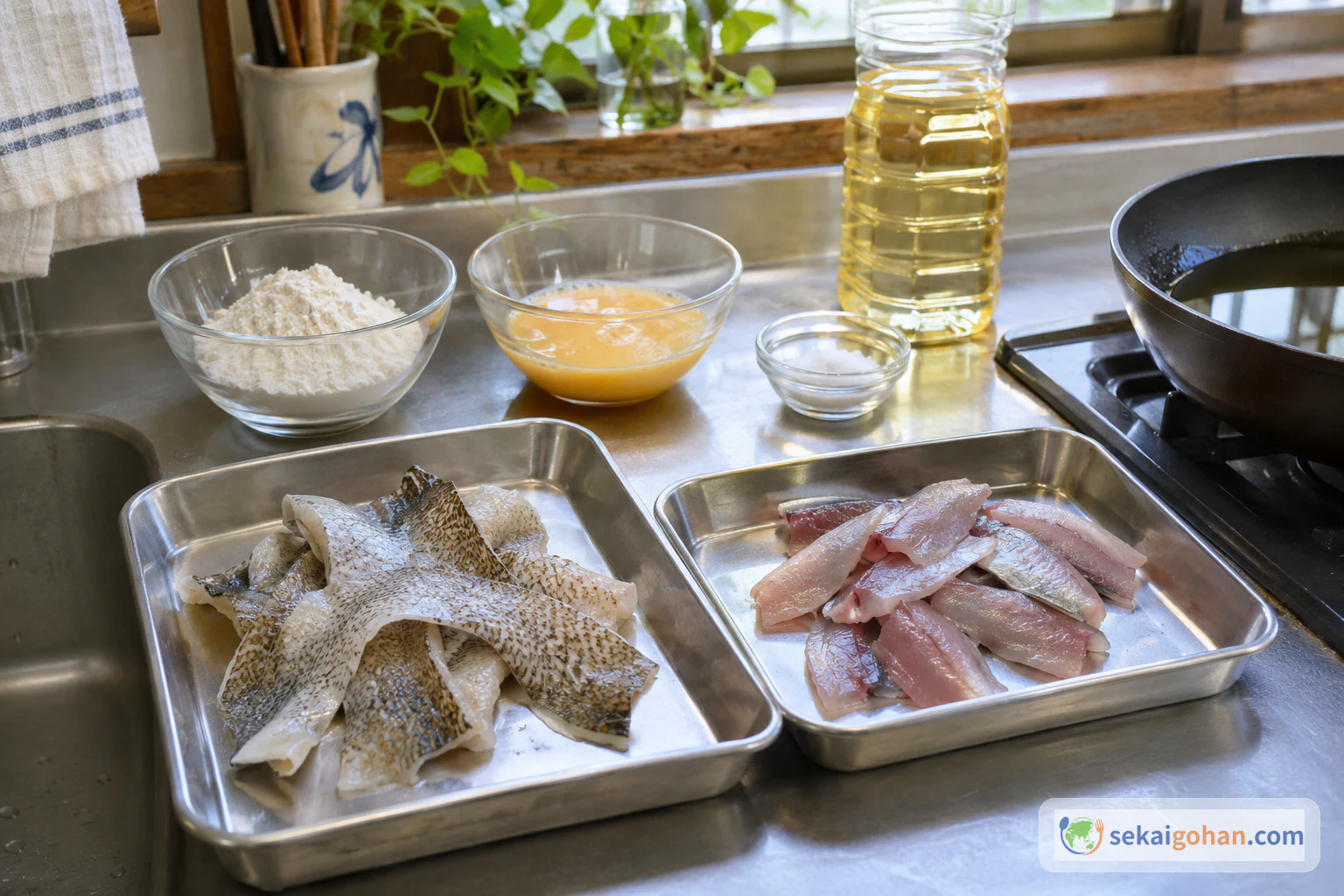
Lizardfish skin (eso) is hard to find in ordinary supermarkets, so a fishmonger is your best bet. Ask whether they can supply lizardfish skin and small horse-mackerel flesh (ko-aji), and whether they can separate the skin from the flesh for you. If the shop portions it, check that the skin and flesh together come to 7 oz (200g).
Other fish or store-bought surimi would make a different dish, and the same goes for Uwajima-style hotaru-jako.
Any ordinary wheat flour works; cake flour or a light flour such as Japanese hakurikiko is a good household option. Stick with wheat flour rather than potato starch. For frying, any oil suitable for deep-frying will do.
Method: Chop, Grind, Firm, Shape and Fry
The paste is ready when it holds a firm oval shape. The cakes are done when the center of the thickest one has reached 167°F (75°C) and been held there for at least 1 minute. Browning alone does not mean they are cooked through.
Keep raw fish, and everything it touches, away from cooked cakes and garnishes. Wash your hands after handling raw fish.
Jakoten Troubleshooting and Food Safety
| Problem | What to do |
|---|---|
| The paste is too soft to hold an oval | Add a little more flour and mix again until it holds its shape |
| The oil temperature drops a lot when cakes go in | Fry fewer at a time, covering no more than about half the oil surface |
| The cakes look brown, but you're not sure they're cooked | Check the center of the thickest cake with a thermometer. Color does not prove the center is cooked |
| The center has not reached 167°F (75°C) for 1 minute | Return the cake to the oil and check again. Next time, shape the cakes thinner |
| Cakes cook unevenly | Turn them partway through frying |
Keep the raw fish refrigerated until you use it. Use separate boards, trays and utensils for raw fish, keep them away from cooked cakes and garnishes, and eat only cakes that are fully cooked.
Serving and Storing Jakoten
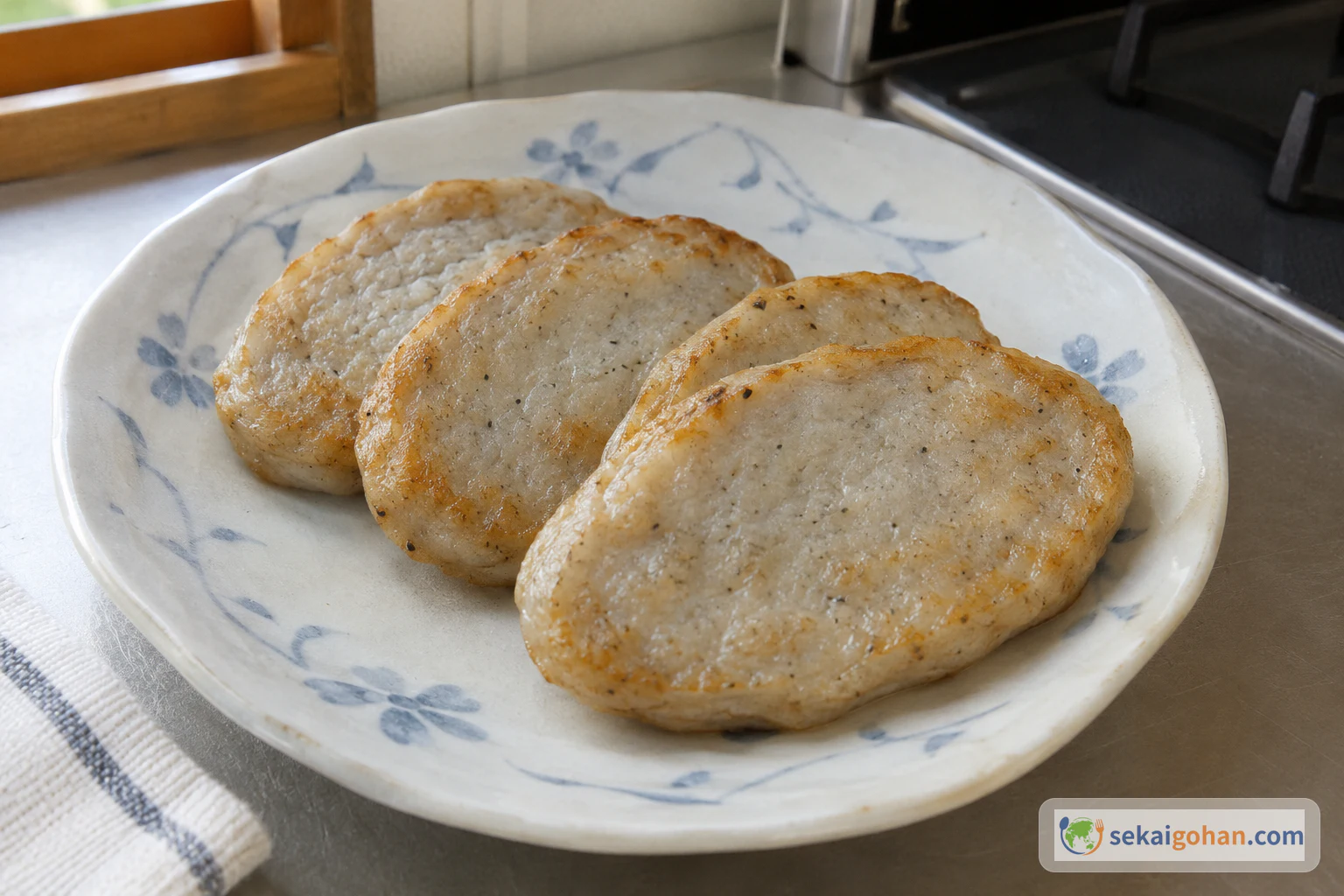
Jakoten is best freshly fried, eaten plain or with grated daikon, ginger and soy sauce. Grated daikon with ponzu, or ginger with soy sauce, works just as well. Serve the condiments on the side, and use clean utensils for them, separate from anything that touched raw fish.
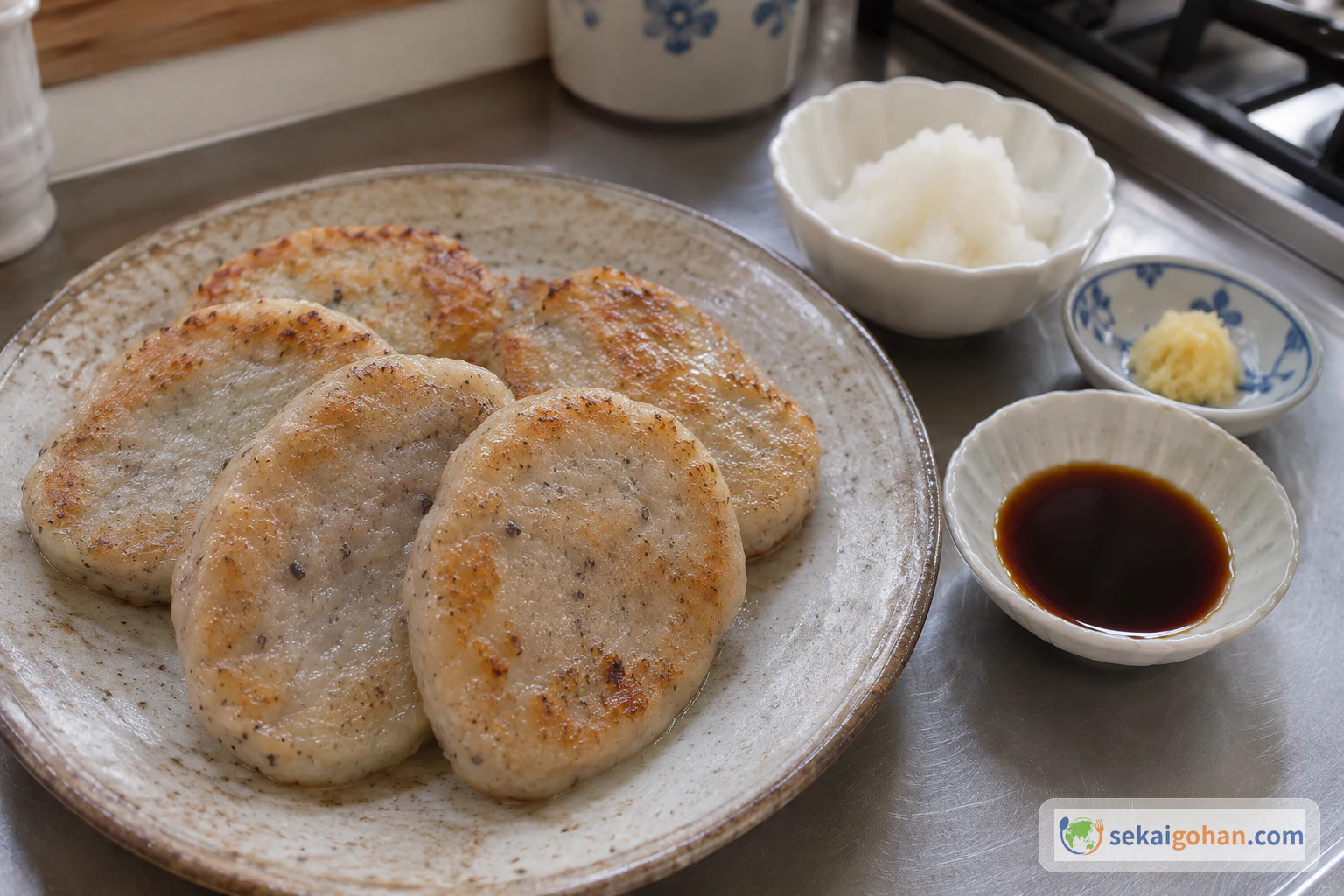
Cooked jakoten shouldn't sit at room temperature for long. Cool any leftovers quickly in a shallow container, then refrigerate them right away.
Frequently Asked Questions
Does jakoten contain fish bones?
Producers grind small fish with their bones, which gives commercial jakoten its gritty texture. This recipe uses only lizardfish skin and small horse-mackerel flesh, with no bones.
How long should I fry it?
There is no set frying time; it depends on how thick the cakes are and on your pot. Check the thickest cake: the center should reach 167°F (75°C) and hold for at least 1 minute.
Is homemade jakoten the same as "Uwajima jakoten"?
No. The local cooperative's guideline for "Uwajima jakoten" calls for fish from Uwajima as the main ingredient, with the paste and finished product both made in Uwajima.