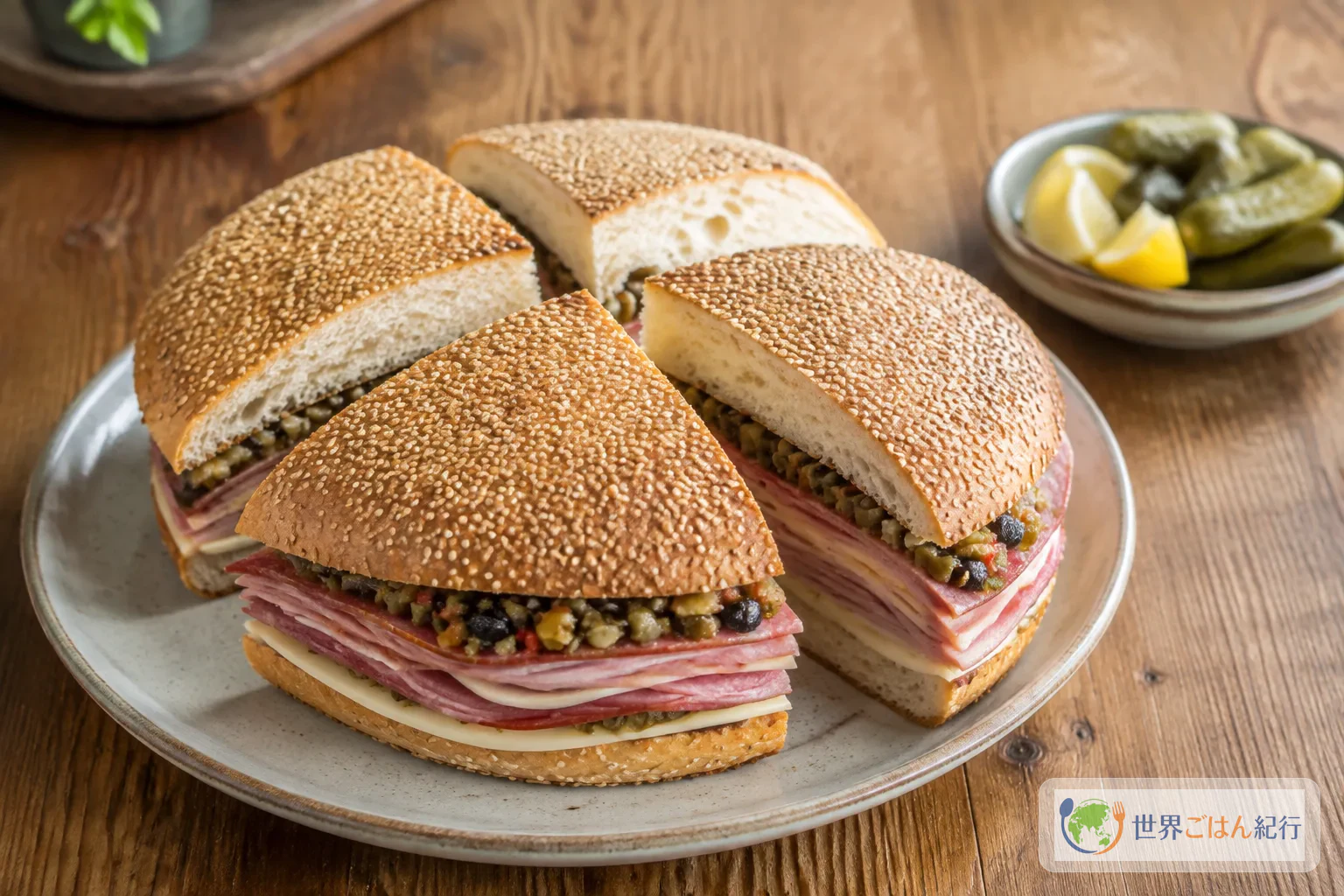
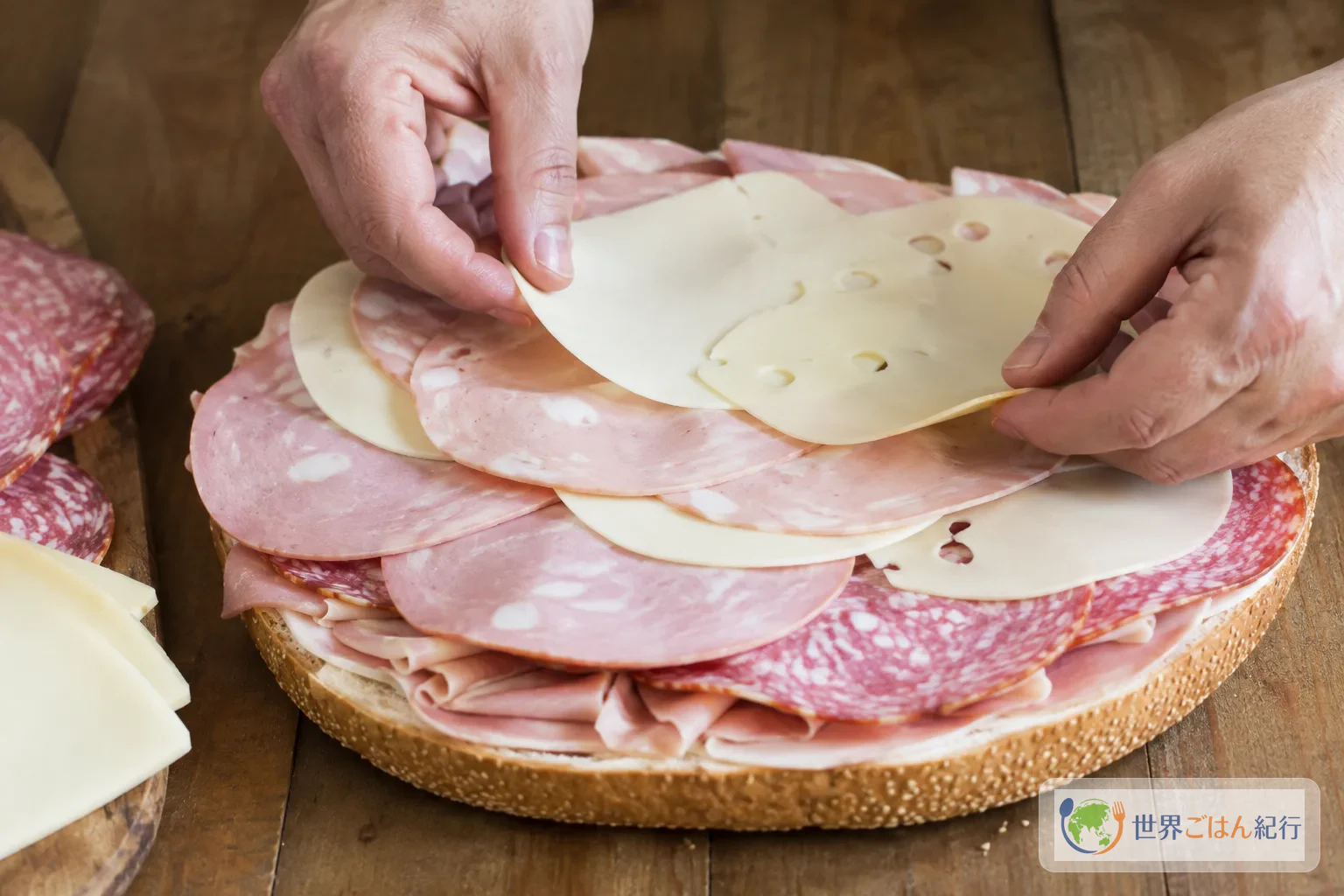
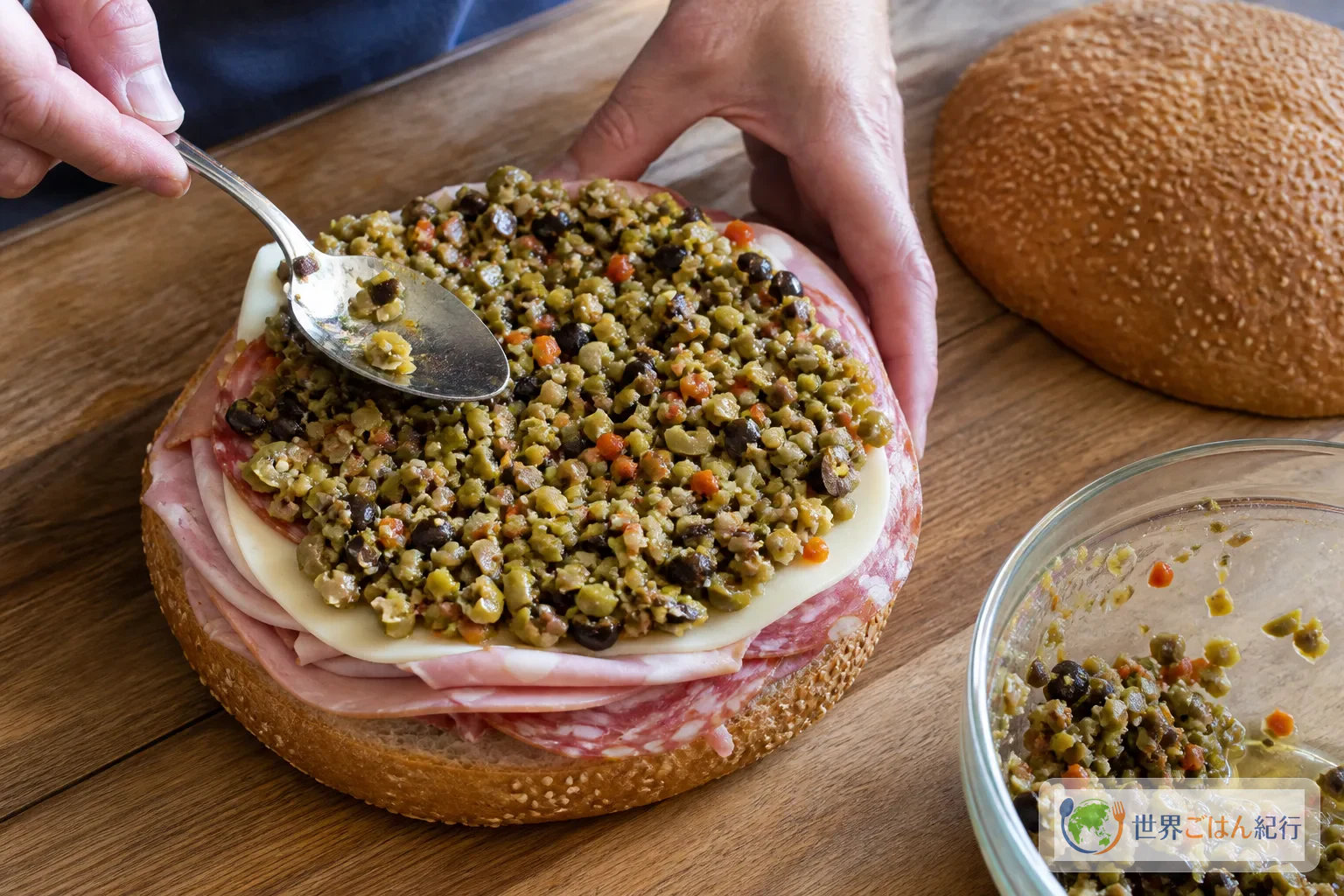
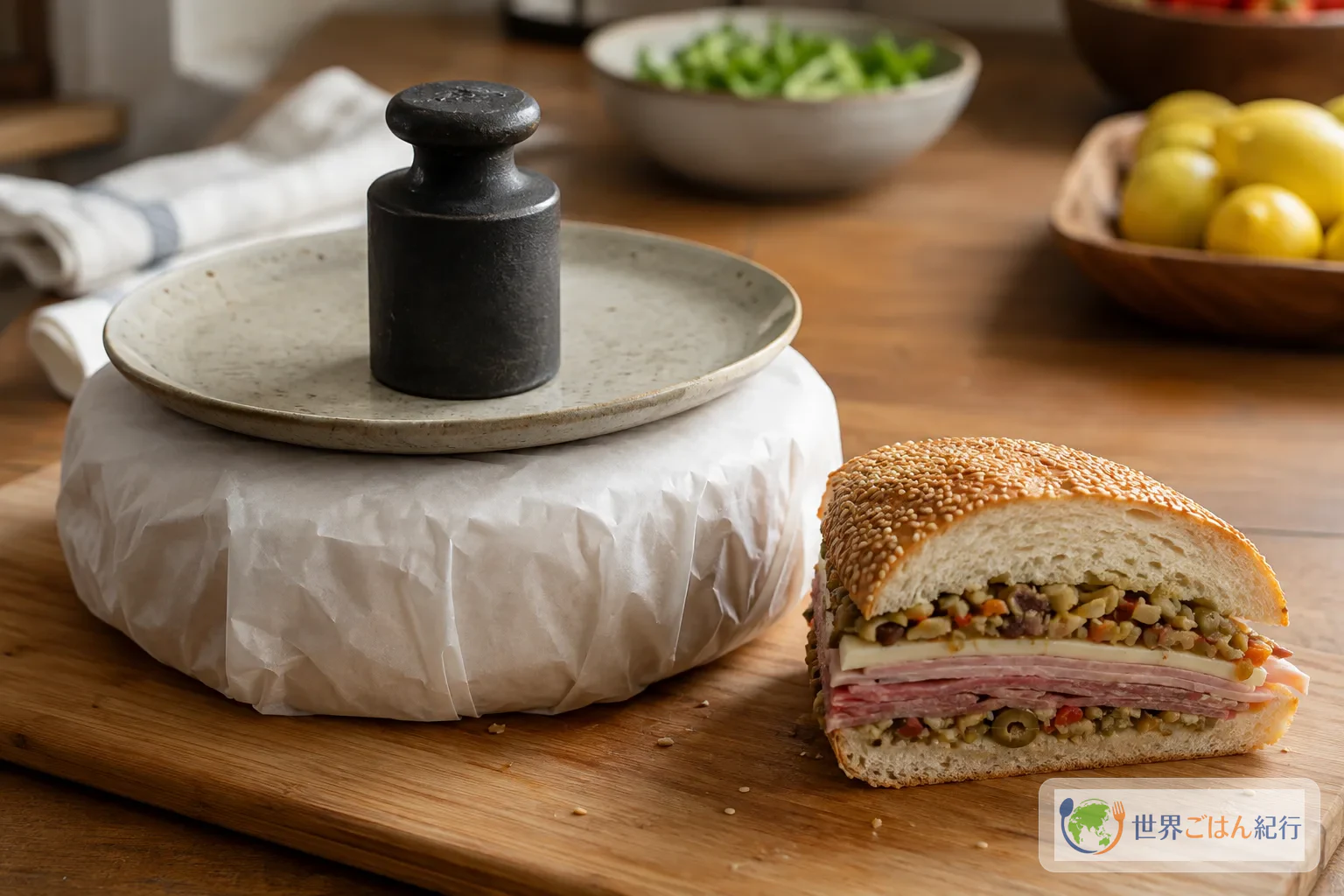
Cut a round sesame loaf into four like a pizza, one portion per person, and the cross-section shows its layers in order: the saltiness of olives, the fat of salami, the sweetness of ham and a thick band of cheese. Eat it cold, not warmed, and the filling settles and holds together in each slice. The muffuletta did not cross over from Italy as a finished regional sandwich. It was built in New Orleans' French Quarter as a lunch in shops that sold Sicilian-American bread and ingredients, and its flavor rests on an olive salad whose oil and vinegar soak right into the bread.
The Muffuletta in New Orleans
From Sicilian Loaf to French Quarter Lunch
The muffuletta grew out of the Sicilian-American community that settled in New Orleans from the late 19th to the early 20th century and the grocers around the French Market. Pasta factories, Sicilian bakeries, food importers and small grocers gathered around the market, where farmers, peddlers and workers on the docks bought their food.
The best-known origin story is Central Grocery, opened by Salvatore Lupo in 1906. Customers there had been buying bread, olives, cold cuts and cheese a little at a time, and Lupo is credited with suggesting they be put together in a round loaf.
In Sicily, "muffuletta" was originally the name of a bread, not a sandwich: a round loaf with a soft inside and a light crust. Some breads eaten on Sicilian feast days are topped with seeds such as sesame and fennel. In New Orleans, ham, salami, cheese and olive salad were layered into that bread, and the bread's name passed to the sandwich.
Collecting every authentic meat won't give you the taste of Italy. What makes the muffuletta interesting is how Sicilian bread and preserved foods were fitted to lunch in New Orleans: you can eat it in a shop with no table, wrap it and carry it, and share one round loaf among several people. The sandwich's shape still reflects those habits.
Muffuletta and the Po'boy
Both are portable city lunches, but the texture centers on different things. The po'boy puts fried shrimp or roast beef in a long French bread and is eaten for the freshness of its sauce and vegetables. The muffuletta layers preserved foods in a round sesame loaf and is eaten after the saltiness and oil of the olives have soaked into the bread.
How Shops Build It
A typical muffuletta is a round sesame loaf with ham, salami, mortadella, provolone, mozzarella and olive dressing. At Central Grocery, after it reopened, the standard combination includes provolone and Swiss cheese. No single lineup is the correct one; the cheese changes from shop to shop because the city's Italian grocers layered whatever meat and cheese they had on the same bread and olive salad.
The olive salad varies too. Some shops make the black olives deeper, some make the pepperoncini stronger, and some leave pickled cauliflower in large pieces. Central Grocery sells a regular and a hot type, as well as multi-jar sets.
Ingredients (one 8-inch (20 cm) loaf, serves 4)
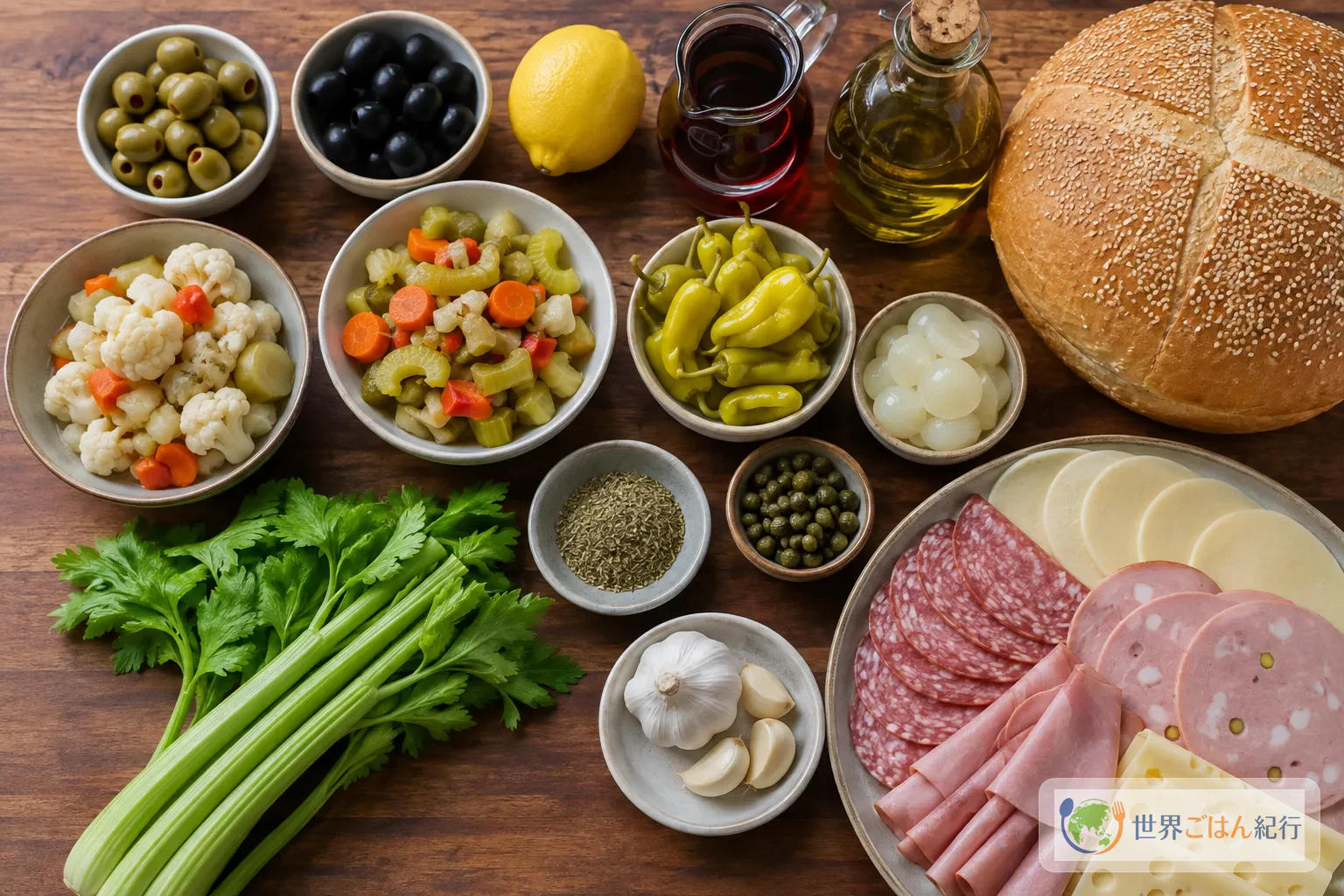
Rather than sandwiching one thick slice, layer thin slices a little at a time. When one serving's cross-section shows three meats and two cheeses, the balance of salt and fat doesn't collapse wherever you bite.
This recipe uses wheat, sesame, milk and pork. Check the labels on pickles, processed meats and cheese for soy, milk ingredients, wheat and other allergens before you buy. Use separate knives for cutting raw vegetables and cutting processed meat, or wash them between tasks. Refrigerate the meat and cheese as labeled, and keep the assembled sandwich in the refrigerator.
Choosing Ingredients and Substitutes for Muffuletta
You don't need every kind of meat and cheese to get close. Drain the olive salad, don't make the round loaf too hard, and press it while cold. Get these three right, and you can come close to the texture of a muffuletta without relying on a baguette or sandwich bread.
| Part of the flavor | The local basics | Decision when cooking elsewhere |
|---|---|---|
| Bread | A soft, flat round loaf topped with sesame | An 8-inch (20 cm) sesame loaf. If none, a round focaccia |
| Sourness and salt | Green and black olives, pickles, capers | Choose sour vegetable pickles, not sweet pickles |
| Meat | Genoa salami, ham, mortadella | Layer all three thinly. If all aren't possible, prioritize salami and ham |
| Cheese | Provolone as the core, with mozzarella or Swiss | Up to two firm, low-moisture cheeses |
| How it is eaten | Cold, whole or cut in quarters | Press it, then refrigerate to settle the filling before cutting |
The general rule for substitutes: keep each ingredient's role. Look for a round focaccia rather than switching to sandwich bread, keep real pieces of olive and pickle rather than adding more herbed olive oil, and aim for sourness and saltiness that cut the fat of the meat rather than chasing every Italian ingredient. If you swap in mozzarella, choose a low-moisture type; thick fresh mozzarella gives off water when cut and tends to make the bread soggy.
The Olive Salad
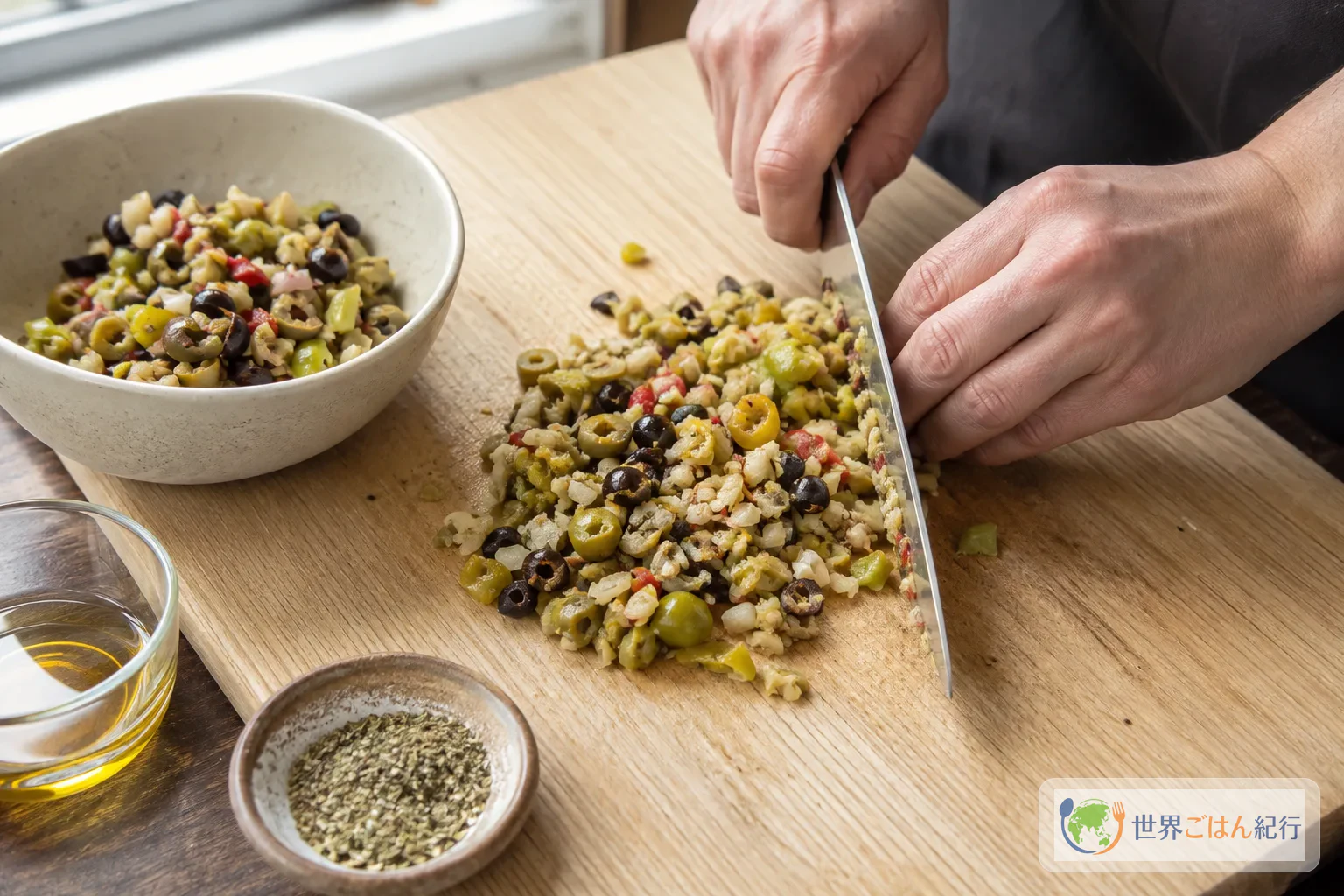
The olive salad does real work. Its oil soaks into the bread, vinegar and lemon cut the fat of the meat, and chopped celery and pickles keep a bite inside the soft loaf. Chop the olives too fine and they turn to paste and only the oil runs out. Leave pieces of 0.25 inch (5–7 mm) and rest the salad in the refrigerator for several hours, and the saltiness spreads between the vegetables and herbs instead of staying sharp.
Outside New Orleans, the Central Grocery jar is hard to find, so for your first loaf build the salad yourself from pickled vegetables, which makes the saltiness and heat easier to adjust. Dried oregano works well here; let it blend into the oil and its aroma still comes through. Buy a new jar if you also plan to use it in lemon-and-oil dishes like Greek saganaki and dakos; for a single muffuletta, the dried oregano you have is enough.
Knife or Food Processor
For one loaf, a knife is all you need, and it lets you stop and check the size of the pieces. Cut the olives to 0.25 inch (5–7 mm) on a cutting board and chop the celery and pickles separately. A food processor suits people who make several muffulettas or routinely mince pickles and onions in bulk.
If you use one, drain the ingredients first, then pulse in 1-second bursts a few times. Running it continuously separates water and oil from the olives and makes a paste too loose to spread on bread. When shopping for a small processor, check the capacity, the blade specification and whether it can handle ingredients containing liquid.
Method: Rest the Salad, Layer It Cold
Make the olive salad first and rest it in the refrigerator for at least 4 hours. If you are serving it at dinner, prepare it at midday or the day before and the work on the day you cut the bread will be lighter. Open the meat and cheese after checking the flavor of the salad, which prevents adding too much salt.
After resting in the refrigerator, a little water comes out of the vegetables. Before you put it in the bread, drain it in a sieve for 10 minutes until no liquid runs from the bottom when you scoop the ingredients with a spoon. If the oil has solidified, don't stir it in the sieve; leave it at room temperature for only 5 minutes and then loosen it gently.
Muffuletta Troubleshooting
A muffuletta goes wrong in one of three places: the salad's moisture, the strength of the bread or the time under the weight. Rather than adding seasoning to the finished sandwich, find the layer that caused the problem and correct it in the next loaf.
| Condition | Main cause | Fix on the spot, and what to decide next time |
|---|---|---|
| The bottom of the bread is soggy | The salad's liquid wasn't drained and there is a lot of oil | Separate top and bottom and press the liquid with paper. Next time leave it in a sieve for 10 minutes, and start with ¼ cup (60ml) of oil |
| Too salty | The salt of olives, capers, meat and cheese stacked up | Add 1–1.75 oz (30–50g) of unsalted celery or cauliflower. Next time rinse the olives and reduce the salami by 20g |
| Only the sourness is sharp | The liquid from the pickled vegetables went in | Add olive oil 1 tbsp at a time and leave for 10 minutes. Don't suddenly neutralize with sugar or baking soda |
| The taste seems weak | The salad marinated too briefly, or too little oregano | Add 1 more hour in the refrigerator before putting it in the bread, and add just a pinch of oregano |
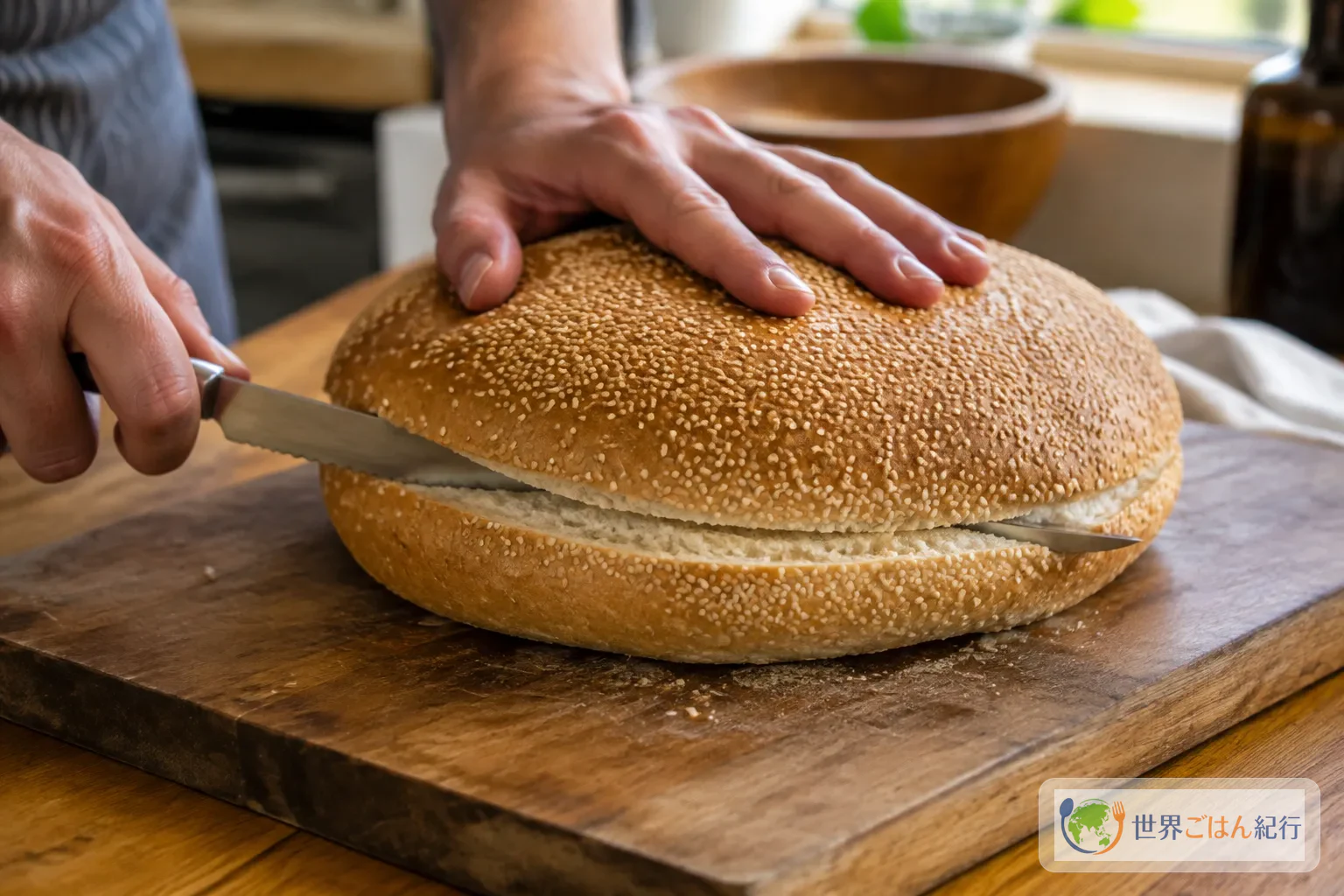
| The filling slides when cut | Too much salad, too little weight, or the bread is too soft | Rewrap and refrigerate for 30 minutes. Next time reduce the salad by 2 tablespoons and scoop out only 0.25 inch (5 mm) of crumb |
| The bread is hard and won't bite through | A baguette was used, or it was toasted too much | Switch to a round focaccia or sesame rolls. If you warm it, keep it within 2 minutes at 325°F (160°C) |
Saltiness is the hardest thing to fix once the olive salad is made, so hold off on salt early. Taste the salad alone before adding the meat, especially if you've changed the ham or cheese. A salad that's a little salty on its own will settle once the bread and vegetables are in, but if it lingers in your throat, dilute it with unsalted ingredients.
Serving, Storing and Varying a Muffuletta
Cut the loaf into quarters and set them on a large platter, so everyone can see the cross-section and take as much as they like. That makes it easy to share at a table where people differ on sourness and heat. Rather than packing leafy greens into the sandwich, put lettuce, pickles and tomato on a separate plate to freshen the mouth; this also protects the bread's moisture.
Refrigerate the finished sandwich still wrapped, and ideally finish it the same day. If you keep it to the next day, check the bread and filling first, and don't eat anything with an off smell, leakage or surface discoloration. Store olive salad separately in a clean airtight container in the refrigerator and use up homemade salad within 2 days. Don't freeze the finished sandwich; freezing changes the moisture of the pickles and the texture of the bread.
Heat is hard to set for a whole batch, so halve the pepperoncini and let each eater add hot sauce. To cut back on meat, try three layers of 3.5 oz (100g) salami, 3.5 oz (100g) ham and 3.5 oz (100g) roasted mushrooms; the olive salad's sourness still carries it, though that's a vegetable sandwich built on the muffuletta's flavors rather than the local standard. You can also use just one cheese, but keeping both the saltiness of provolone and the nutty aroma of Swiss keeps the cross-section from turning monotonous when there's less meat.
Frequently Asked Questions
I don't have a round sesame loaf. Can I use sandwich bread?
You can, but the outline of the dish changes. Instead of cutting quarters, stack two slices to make small individual sandwiches. For one large round sandwich, look for round focaccia first, then unsweetened sesame rolls, then soft round loaves; these are less likely to push out the filling.
I can't find giardiniera.
A mix of pickled cauliflower, carrot and celery can replace it. Use 3.5 oz (100g) of salty vegetable pickles and cut the hot pepperoncini from 1 oz (30g) to half. Sweet pickles or sweet relish push the olive salad toward a sweet side dish, so choose something with the sourness of vinegar.
How long should the olive salad marinate?
At least 4 hours, ideally overnight. It's edible after 30 minutes, but the vinegar and oil haven't blended into the ingredients yet, so you taste the saltiness of the olives and the sourness of the vinegar separately. Check the moisture before putting it in the bread, and if liquid has collected at the bottom, drain it in a sieve.
May I warm a muffuletta?
You can, but the sandwich presented as Central Grocery's standard is cold, and cold is when the oil and vinegar of the olive salad settle between the meat, cheese and bread. Warmed, it becomes more of a hot sandwich with the same fillings: melted cheese is fun, but the oil and sourness tend to run into the bread. Eat one slice cold first, then warm just a leftover quarter in a pan over low heat for a short time, stopping before the cheese runs out, and compare the two.
I don't have mortadella.
Ham and salami can stand in. Mortadella adds softness and fat to the meat layers, so add 1.75 oz (50g) ham and 1.75 oz (50g) salami, and if the salami is salty, reduce the capers in the olive salad to 15g. Don't use raw bacon; it is no substitute for cooked cold cuts.
Nutrition Information
Figures are for one quarter. They change with the size of the bread, the salami and cheese you use, and how much olive oil remains.
| Energy | Protein | Fat | Carbohydrate | Fiber | Salt equivalent (guide) |
|---|---|---|---|---|---|
| about 860 kcal | about 1.25 oz (37g) | about 2 oz (57g) | about 2 oz (59g) | about 5g | about 4.8g |