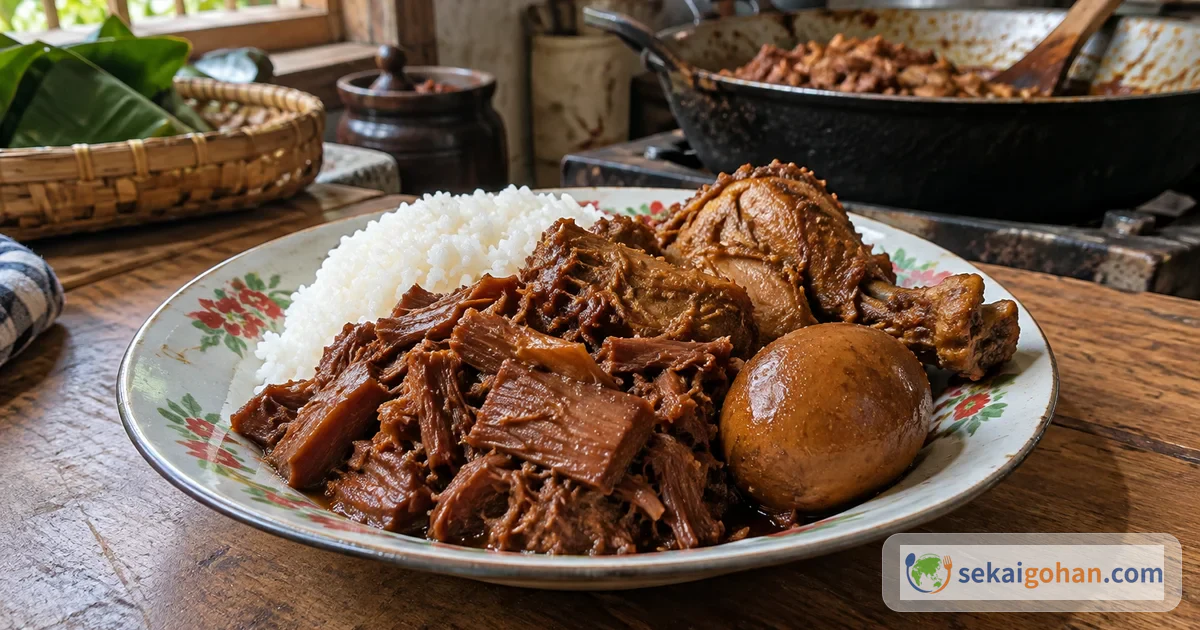
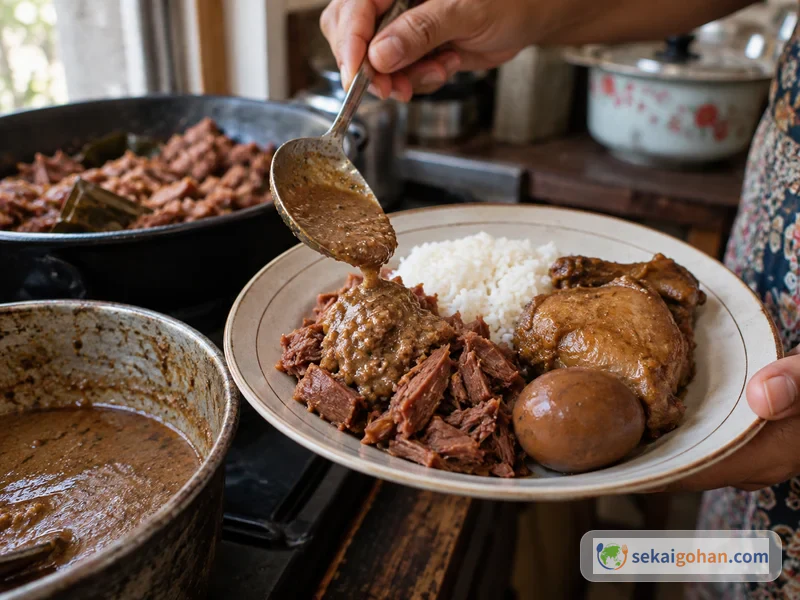
While it is still dark, a big clay pot murmurs over the hearth. Inside, shredded green jackfruit simmers in coconut milk and palm sugar until it takes on the color of teak leaves and glows a glossy reddish brown. This is gudeg, the specialty of Yogyakarta, the old city of Java. It's sweet, rich and deeply spiced, and it fills the streets near the royal palace with its aroma.
Gudeg in Yogyakarta
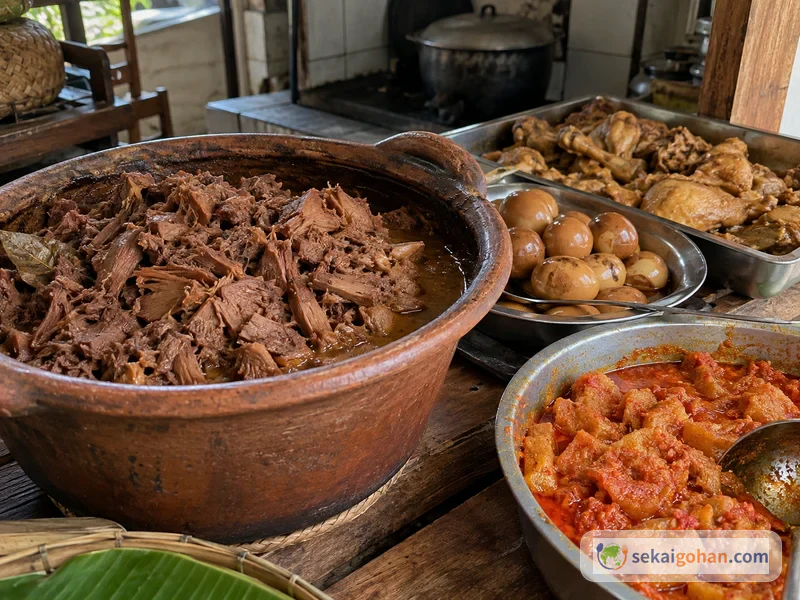
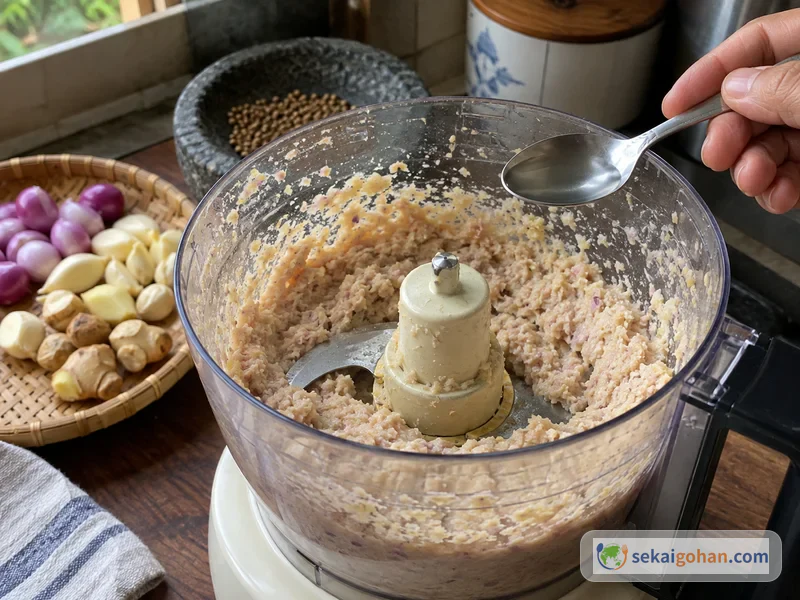
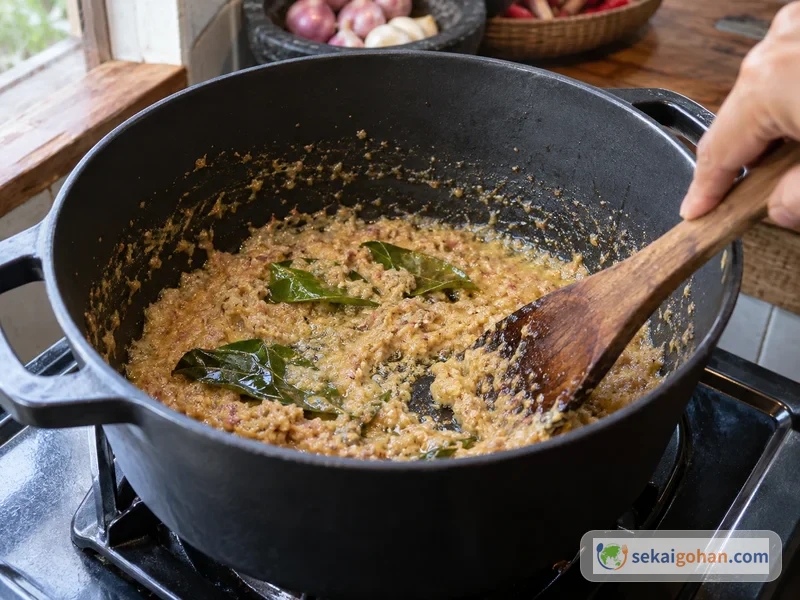
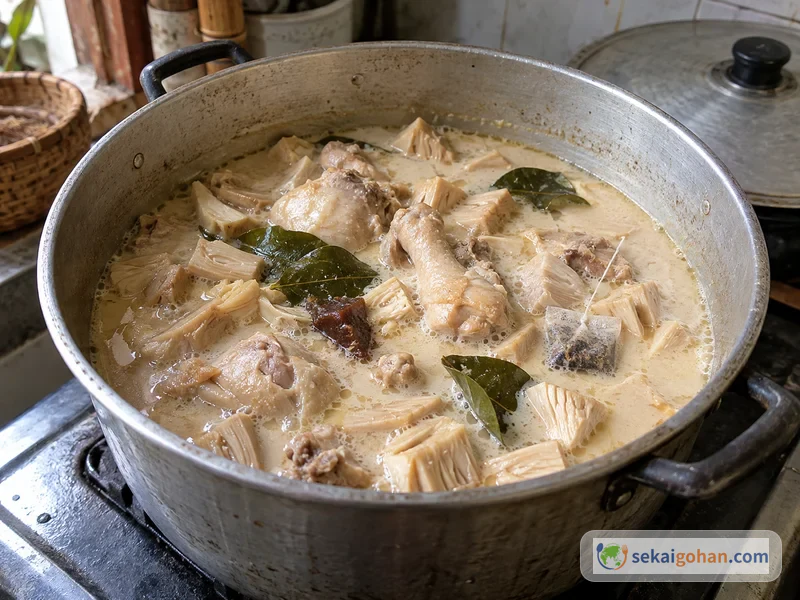
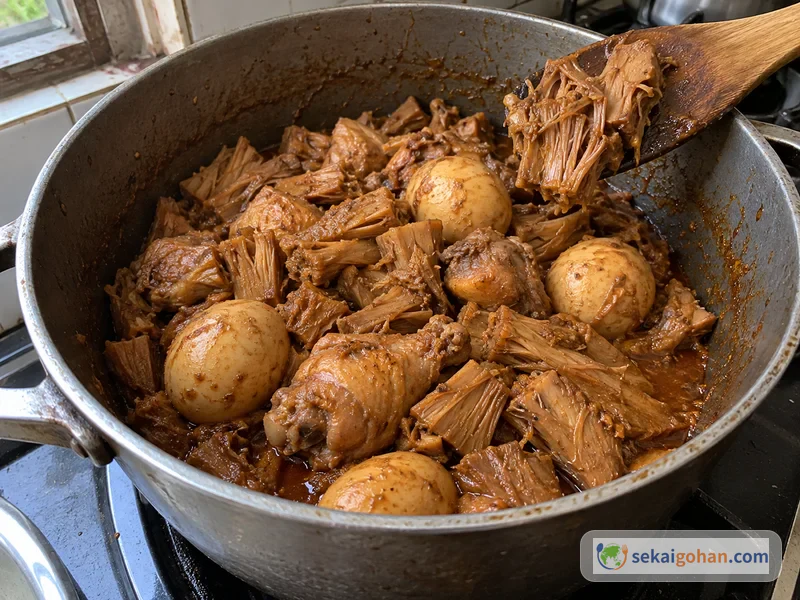
Gudeg starts with young, unripe jackfruit, called "gori" in Javanese. The green fruit is finely shredded and simmered for hours over low heat in coconut milk and palm sugar, with garlic, shallots, candlenuts, coriander seed, galangal and salam leaves for aroma. Teak leaves are what turn it reddish brown. The best gudeg is cooked in a clay pot over a wood or charcoal fire, and a perfect batch takes almost a whole day.
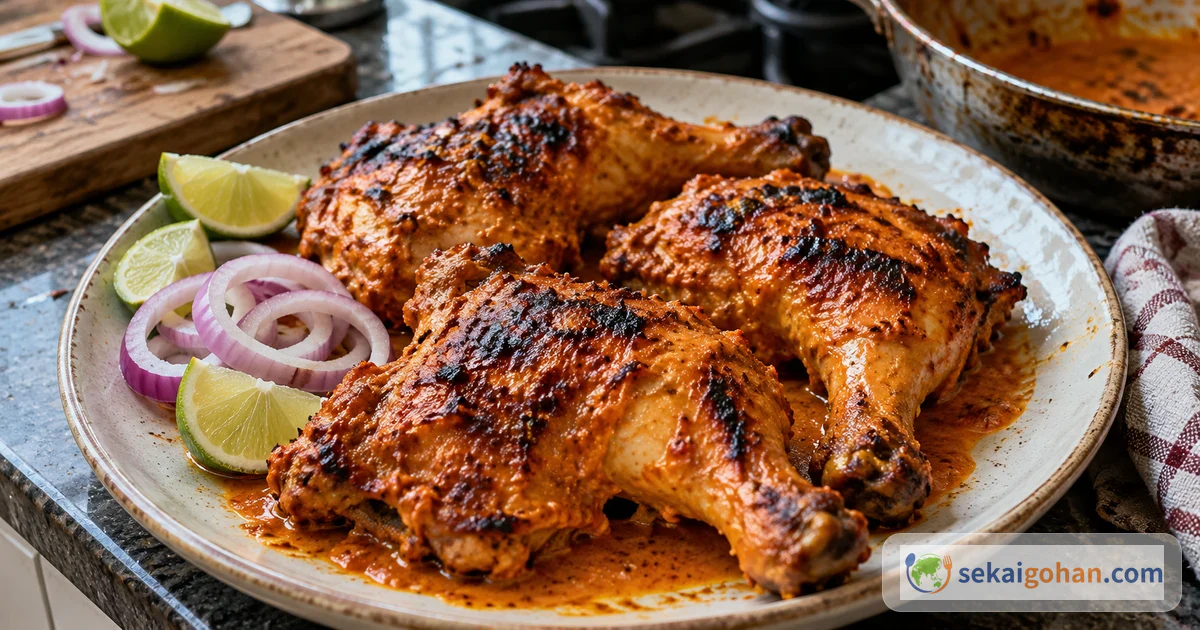
In Yogyakarta, gudeg goes over white rice with several accompaniments. There's opor ayam, chicken stewed in coconut milk; telur pindang, eggs stewed with spices; bacem, tofu or tempeh stewed sweet; and sambal goreng krecek, crisp fried cow skin cooked with chili and peanuts. Alternating sweet gudeg with spicy krecek is the true Yogyakarta taste.
Gudeg comes in two broad types. Wet gudeg keeps plenty of coconut milk and ends up saucy. Dry gudeg simmers longer, until the coconut milk cooks off and the jackfruit turns a deep, caramel-like brown; it's sweeter, and it keeps longer. Over in neighboring Solo, gudeg is soupier, and it's pale because no teak leaves go in.
The best-known gudeg shops in Yogyakarta gather on Jalan Wijilan near the royal palace, where more than 17 shops line up. The other center is the Barek district in the north of the city, near Gadjah Mada University. Takeaway gudeg is sold packed in bamboo-woven boxes or earthenware jars, and there are canned versions as well.
Ingredients (serves 4)
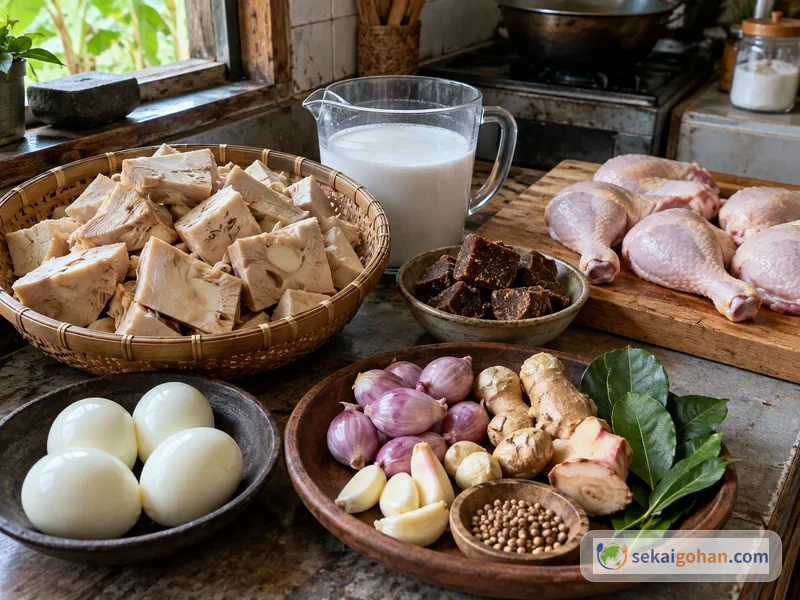
Candlenuts are a nut that cannot be eaten raw and must always be cooked. In this method they are made into a paste, fried in oil, and then simmered for a long time, so there is no concern. If you have a tree nut allergy, be careful with both candlenuts and macadamia nuts.
Choosing ingredients for gudeg
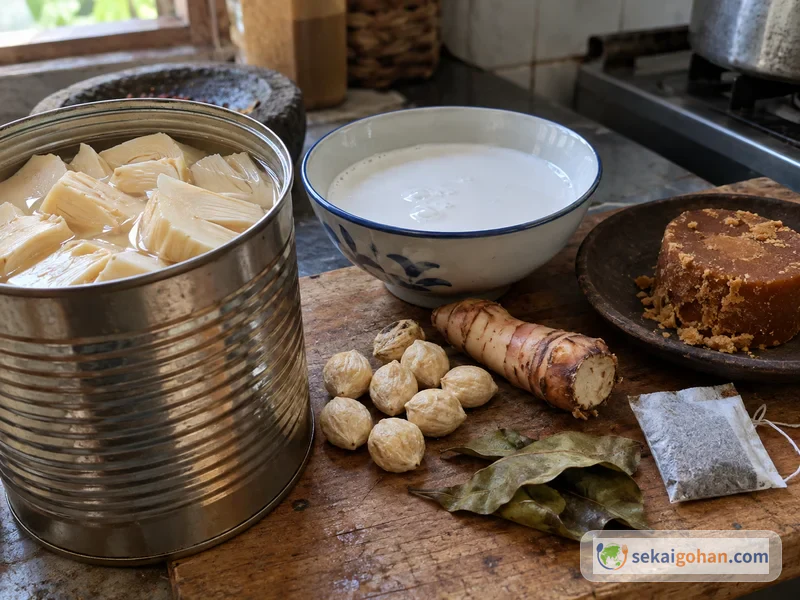
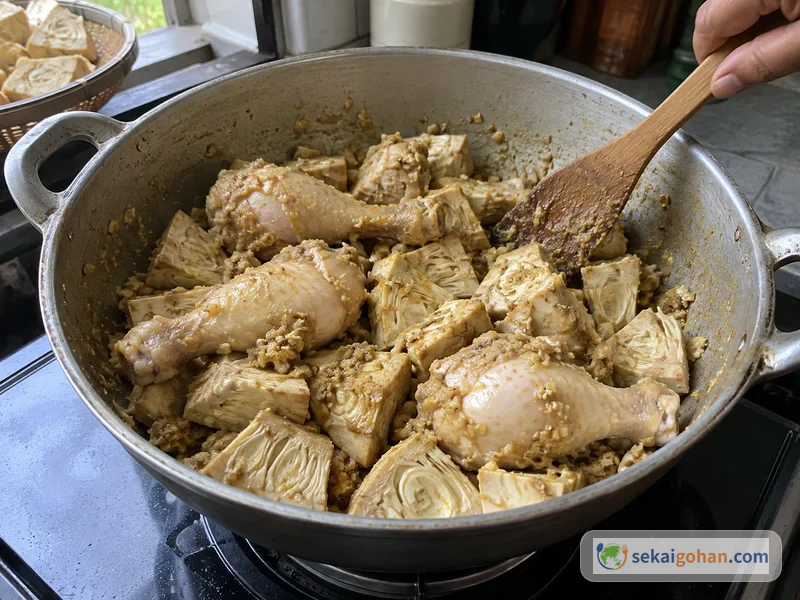
Fresh young jackfruit and teak leaves are almost impossible to find in many places, so this version uses canned young jackfruit and a black tea bag. The tea gives the reddish-brown color that teak leaves would. Since the chicken and boiled eggs simmer in the same pot, you get the gudeg and its accompaniments from one pot.
You can buy canned young jackfruit at Asian grocery stores and online. Be careful not to pick up canned ripe jackfruit in syrup, which is a different product. Look for cans labeled "young," "green," or "in brine." Candlenuts (kukui nuts) are sold at Indonesian grocery stores, and if you can't find them, macadamia nuts work instead.
Salam leaves are an aromatic leaf used in Indonesian cooking, from a different plant than bay leaf. If you can't get them, bay leaf can substitute, but it is stronger, so halve the count to 2 leaves.
Palm sugar is made by boiling down palm sap, and its rich sweetness is a lot like Japanese brown sugar (kokuto). Raw cane sugar or dark brown sugar can stand in for it, but if you use dark brown sugar, reduce the amount a little so the dish doesn't turn cloying.
How to make gudeg
The simmering takes about 2 hours, but during that time you only stir occasionally. Coconut milk scorches easily, so use a heavy pot.
To make it more like dry gudeg, after step 5 simmer another 30 minutes or so over low heat, stirring constantly so it doesn't scorch. Continue until the jackfruit is a deep caramel-like brown and almost no liquid remains on the bottom of the pot.
Cook bone-in chicken thoroughly to the center, heating it to 167°F (75°C) for at least 1 minute. A 2-hour simmer cooks it through, but split the thickest part along the bone to check that no pink remains.
Serving and varying gudeg
Gudeg with sambal
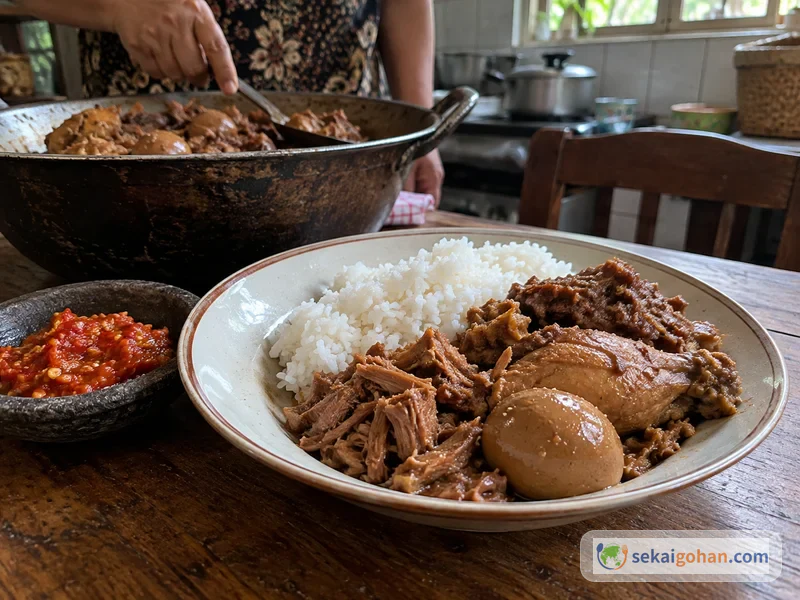
A lot of people are surprised the first time they try gudeg. They don't expect a side dish to be this sweet. That palm sugar sweetness is why we recommend always serving it with a spicy sambal. Go back and forth between the heat of the chili and the sweetness of the gudeg, and the rice just disappears.
Store-bought sambal oelek is fine. If you'd like to make your own, the raw Indonesian sambal Sambal matah is easy. Add another Javanese dish, such as Ayam goreng, the sweet-and-savory fried chicken, or the soup Soto ayam, and your table starts to look like an Indonesian eatery.
Variations
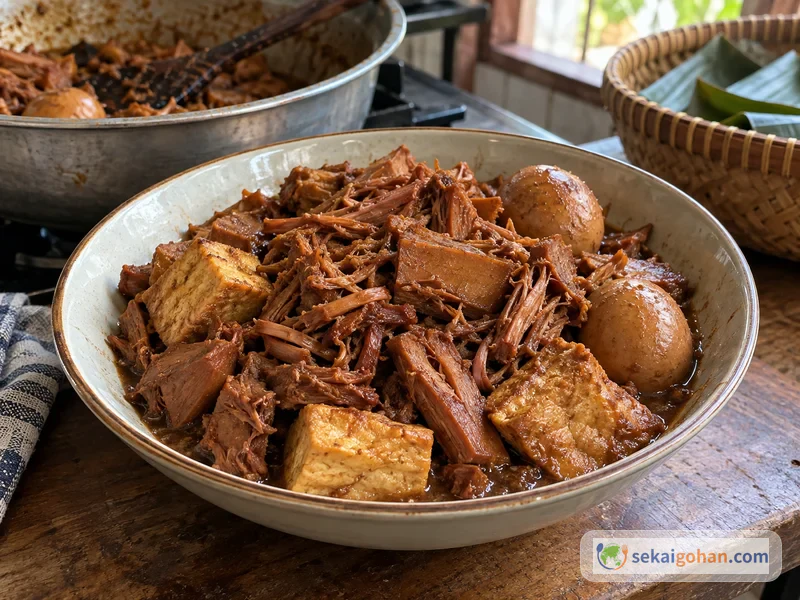
Leave out the chicken and use only jackfruit and boiled eggs, and the flavor of the gudeg itself comes through. Drop the eggs too and it becomes a vegetable-only dish. You can also cut thick fried tofu into 1 inch (2 cm) cubes and add it along with the eggs. It soaks up the sweet cooking liquid and ends up a lot like a Yogyakarta sweet stewed tofu.
For a substantial dish, add about half a cup of red kidney beans, soaked in water for 4 hours, together with the chicken. They turn soft and tender as they cook. With canned kidney beans, drain them and add them in step 5.
There are also gudeg without jackfruit, including one made from the coconut flower (mangar) called gudeg manggar. Though called a flower, it is the young flower cluster of the coconut palm, simmered, and has a crunchy texture unlike jackfruit.
FAQ
Will it taste of tea?
Hardly at all. The tea bag simmers for 1 hour and then comes out, so almost no tea aroma remains; it's there for color. If you leave it in too long it can turn astringent, so take it out when you add the eggs.
Can I make it ahead?
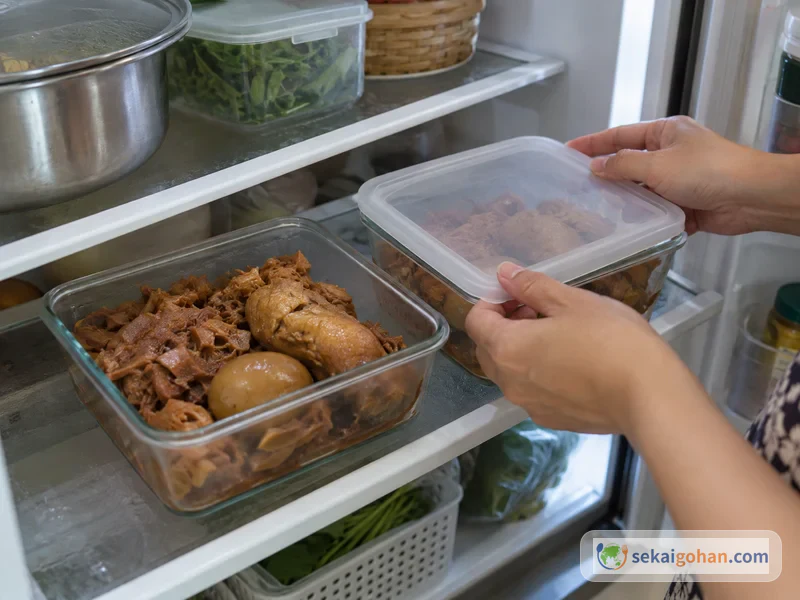
Yes. Let it cool, put it in a storage container, refrigerate it and eat it within 2 days. Dry gudeg, with the liquid cooked off, keeps about 24 hours in the refrigerator. To reheat, add a little water and warm it slowly over low heat.
The coconut milk separated.
During the long simmer, the oil in the coconut milk can separate and float on top. In gudeg that's a sign it's reducing, so nothing has gone wrong. Keep stirring from the bottom so it doesn't scorch.
Can I make it with ripe jackfruit?
No. Ripe jackfruit is a sweet fruit and falls apart when simmered, so gudeg needs the green fruit before it ripens.