Pancit Batil Patung: Tuguegarao Noodles with a Separate Egg Soup (Batil Patong)

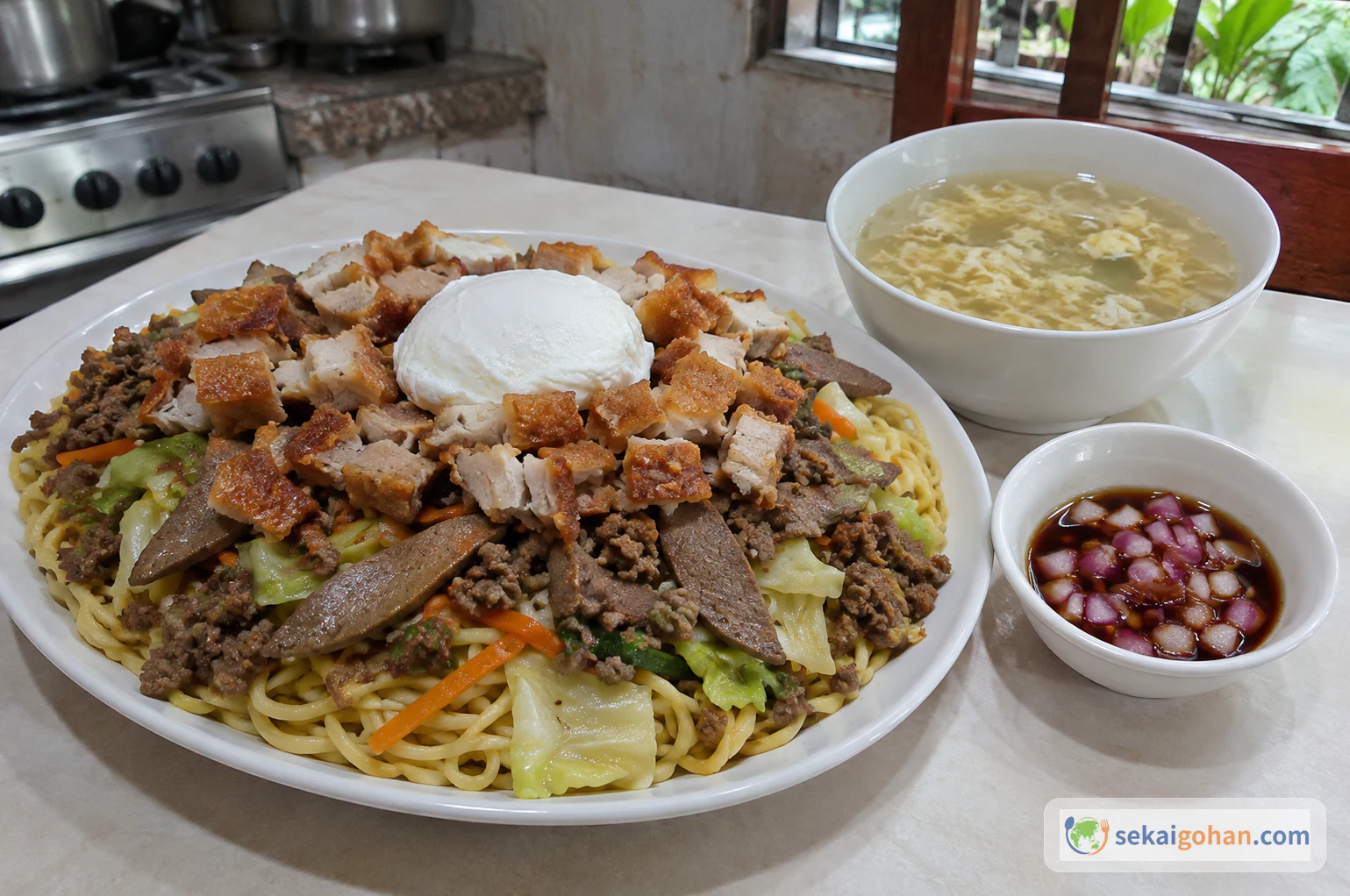
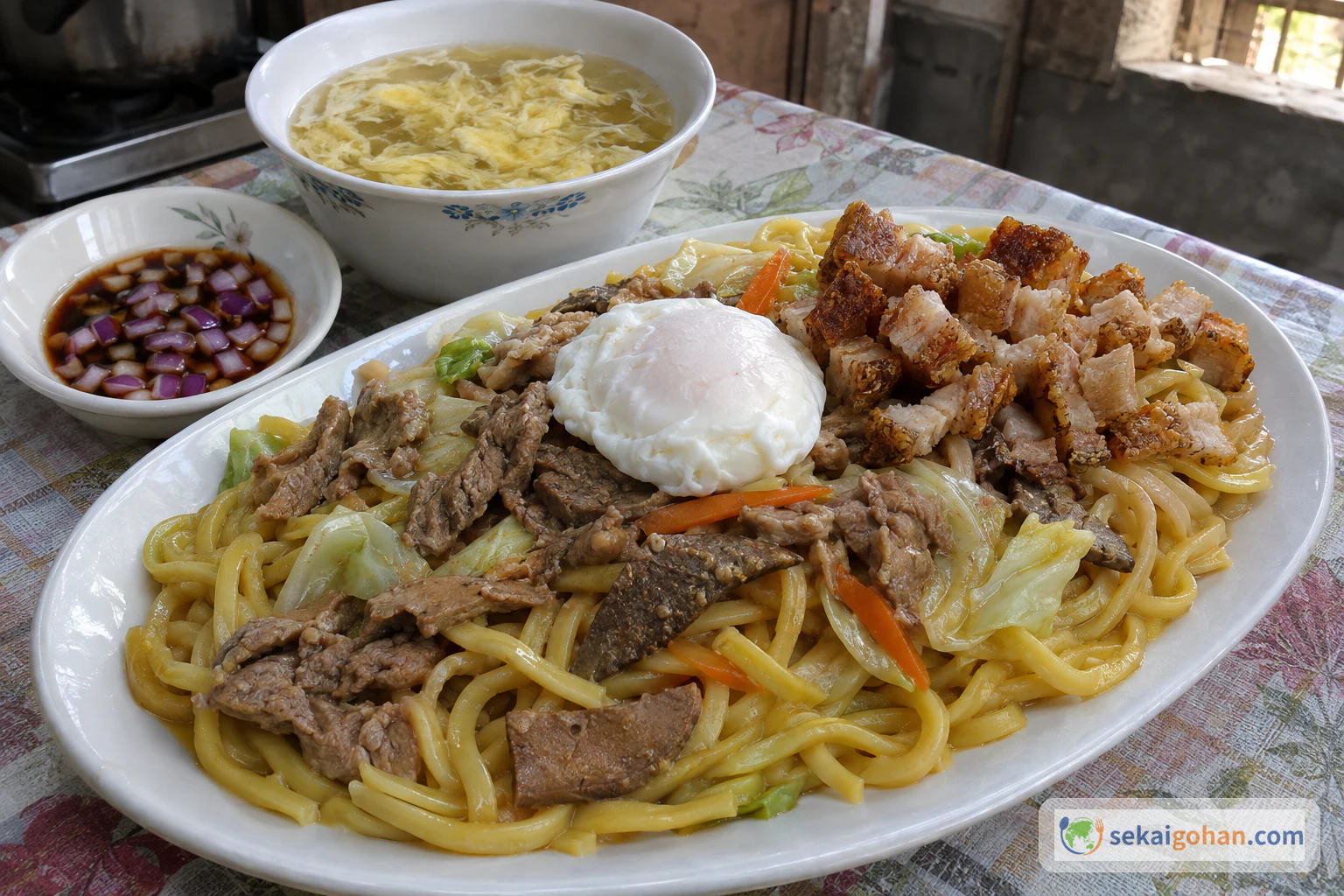
Pancit Batil Patung topped with a fully cooked egg, with a separate soup on the side
Serves
4 servings
Cuisine
Filipino

How to make Pancit Batil Patung (Batil Patong), the Tuguegarao dish of fresh miki noodles, sautéed beef, pork liver and vegetables, served with a separate egg soup and raw onion dip. This version follows Vanjo Merano's four-serving recipe, with a firm-cooked egg and thermometer checks.

Cooking flow

Cooking steps

STEP11 / 11

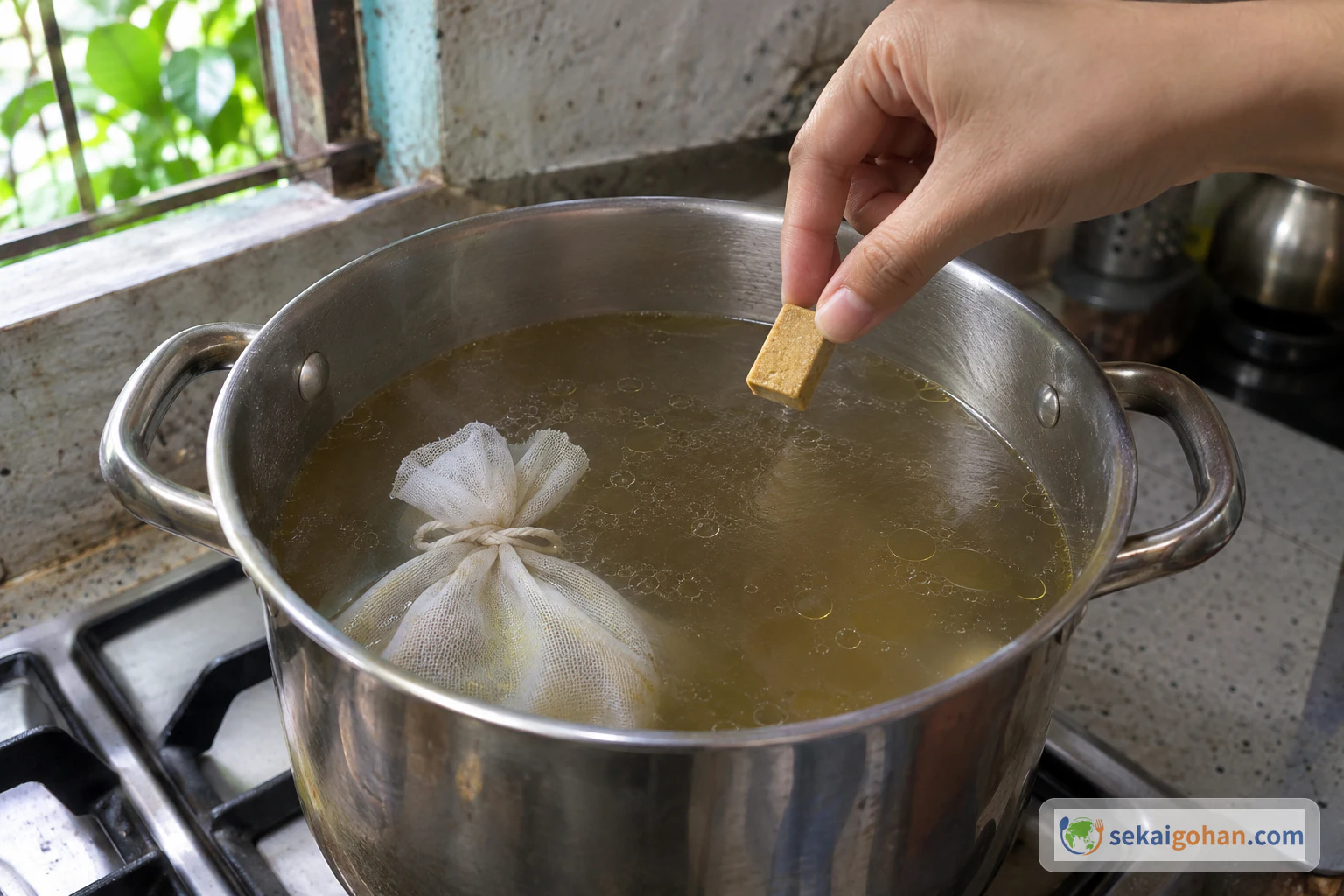
Boil the bones and add the vegetable bag

A beef bouillon cube going into the stockpot with the tied vegetable bag
The bag keeps the stock vegetables together

Bring the water to a boil in a stockpot. Add the beef bones and boil for 5 minutes. Tie the celery, medium carrot and small onion in cheesecloth and add the bag to the pot, then add the beef bouillon cube.

STEP22 / 11

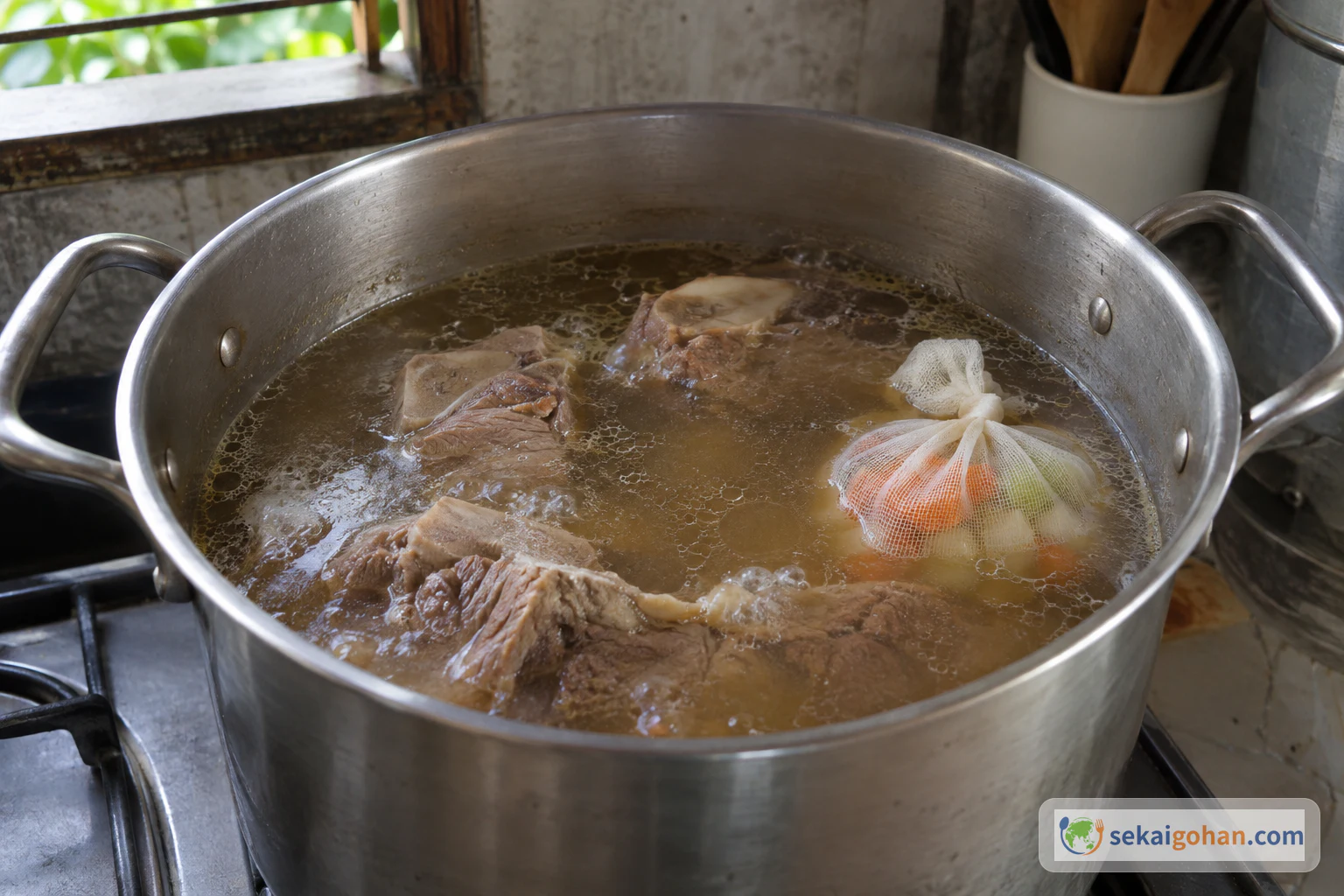
Simmer the stock

Beef bone and vegetable stock simmering gently over low heat
A gentle simmer with small bubbles

Lower the heat and simmer for 45 minutes, or until the meat on the bones is tender. Add hot water if needed so that you finish with at least 6 cups of stock. Lift the vegetable bag out whole and discard it. There is no need to strain the stock.

STEP33 / 11

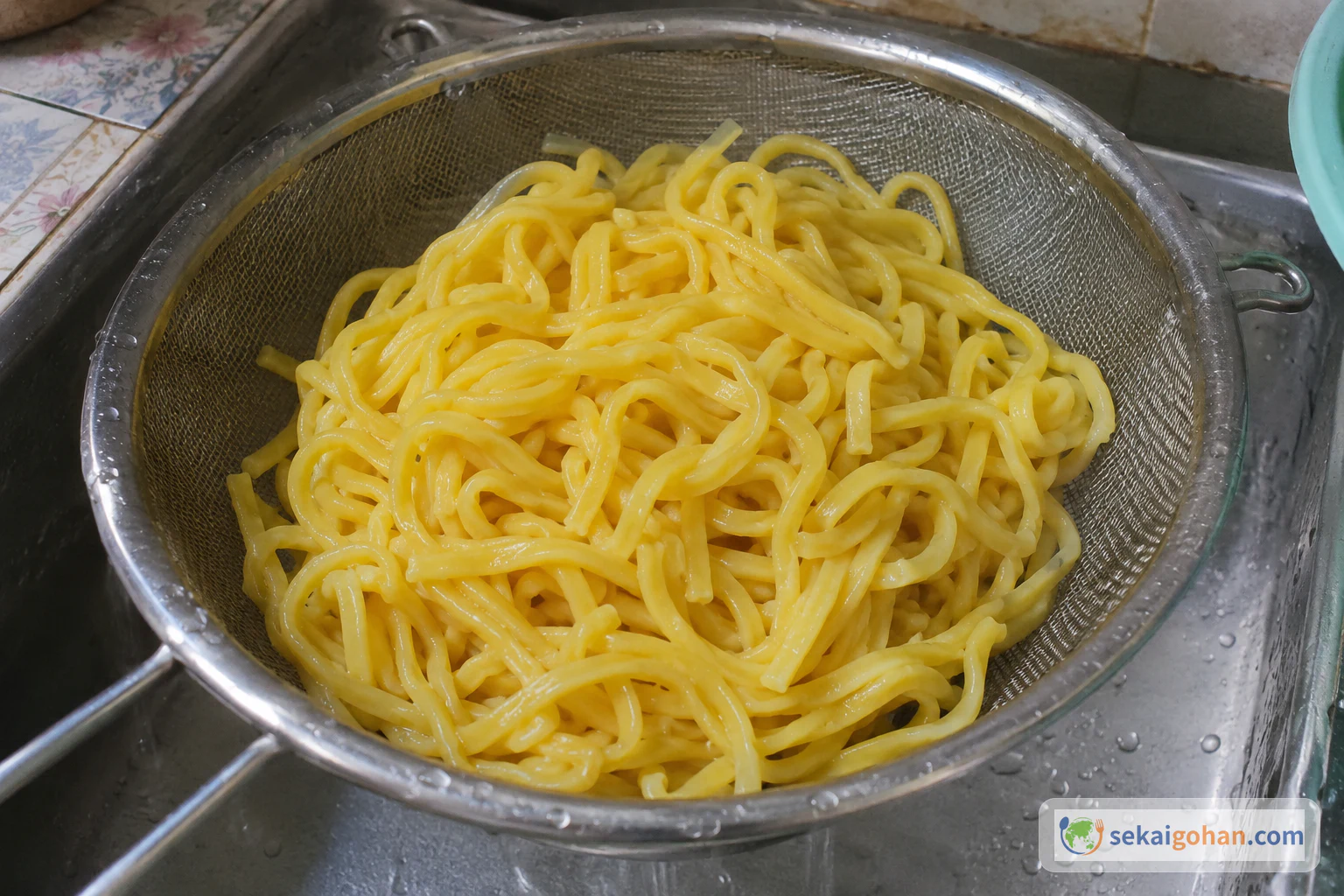
Rinse and drain the miki

Fresh miki noodles draining in a sieve
Let the noodles drain thoroughly

Put the fresh miki in a sieve and rinse it under running water. Turn off the water and let the noodles drain well in the sieve.

STEP44 / 11

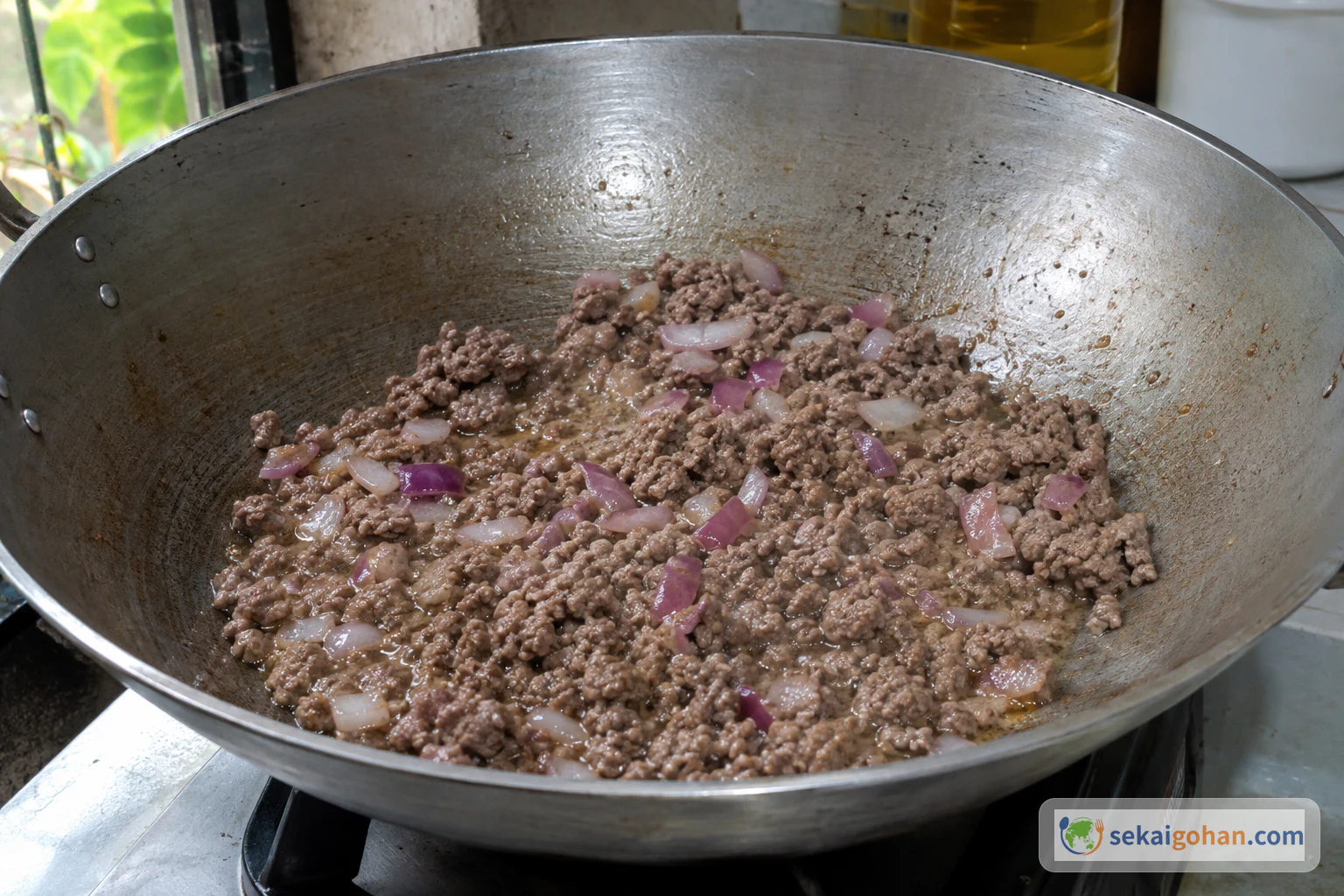
Sauté the onion and minced beef

Minced beef sautéing with red onion in a wide pan
Break up the beef as it cooks

Heat the 3 Tbsp oil in a wide pan. Add the cubed red onion and sauté until softened. Add the minced beef and sauté for 3–5 minutes.

STEP55 / 11

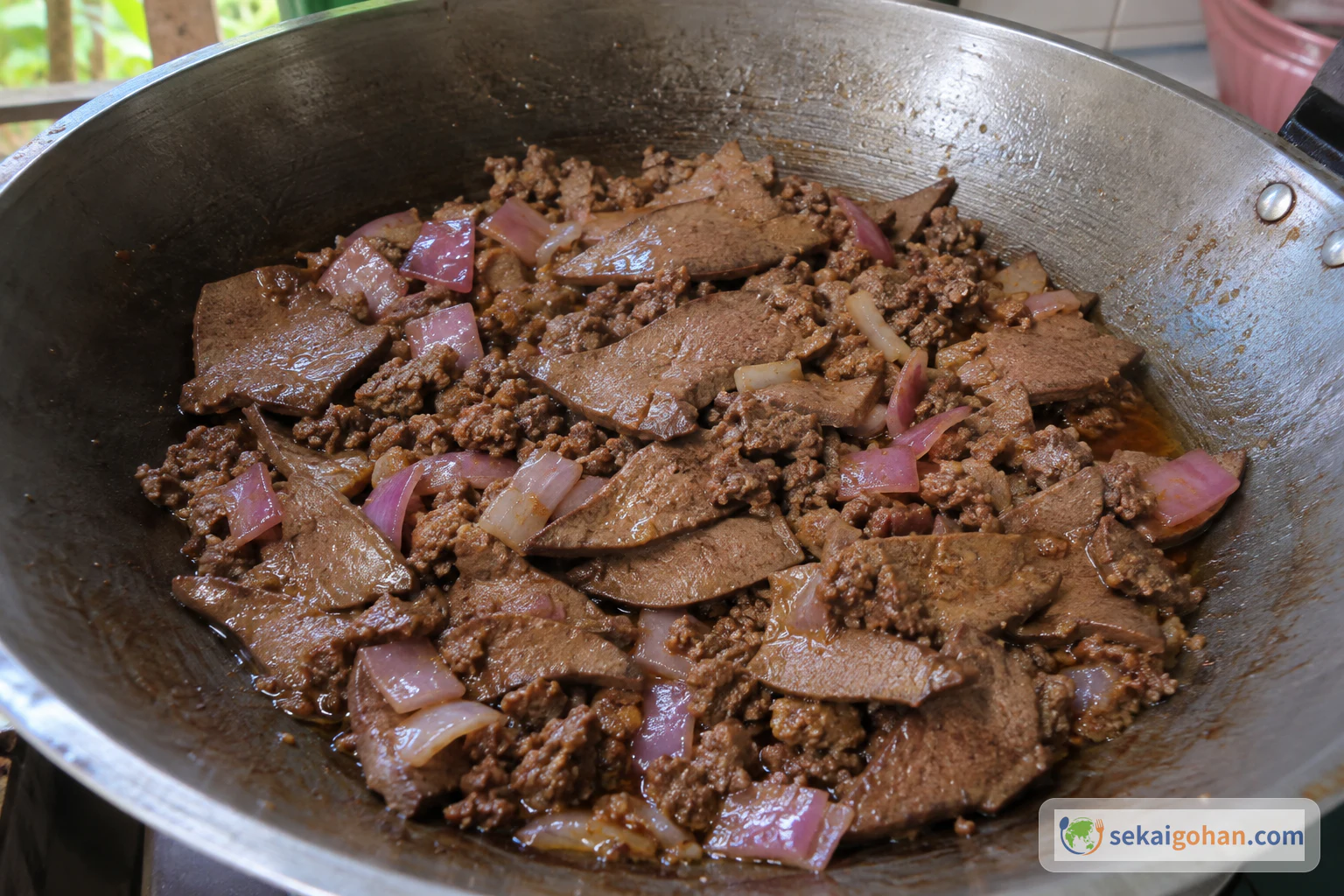
Stir-fry the liver and vegetables

Thin slices of pork liver stir-frying with minced beef and onion
Confirm doneness with a thermometer, not by color

Add the sliced liver and stir-fry for about 3 minutes. Use a food thermometer to confirm that the minced beef and the thickest liver slice reach 167°F (75°C) at the center and stay there for at least 1 minute. If they don't, keep cooking and check again. Wash the thermometer after each reading before it touches cooked food. Add the mung bean sprouts, green onions, cabbage and julienned carrot, and sauté for 2–3 minutes.

STEP66 / 11

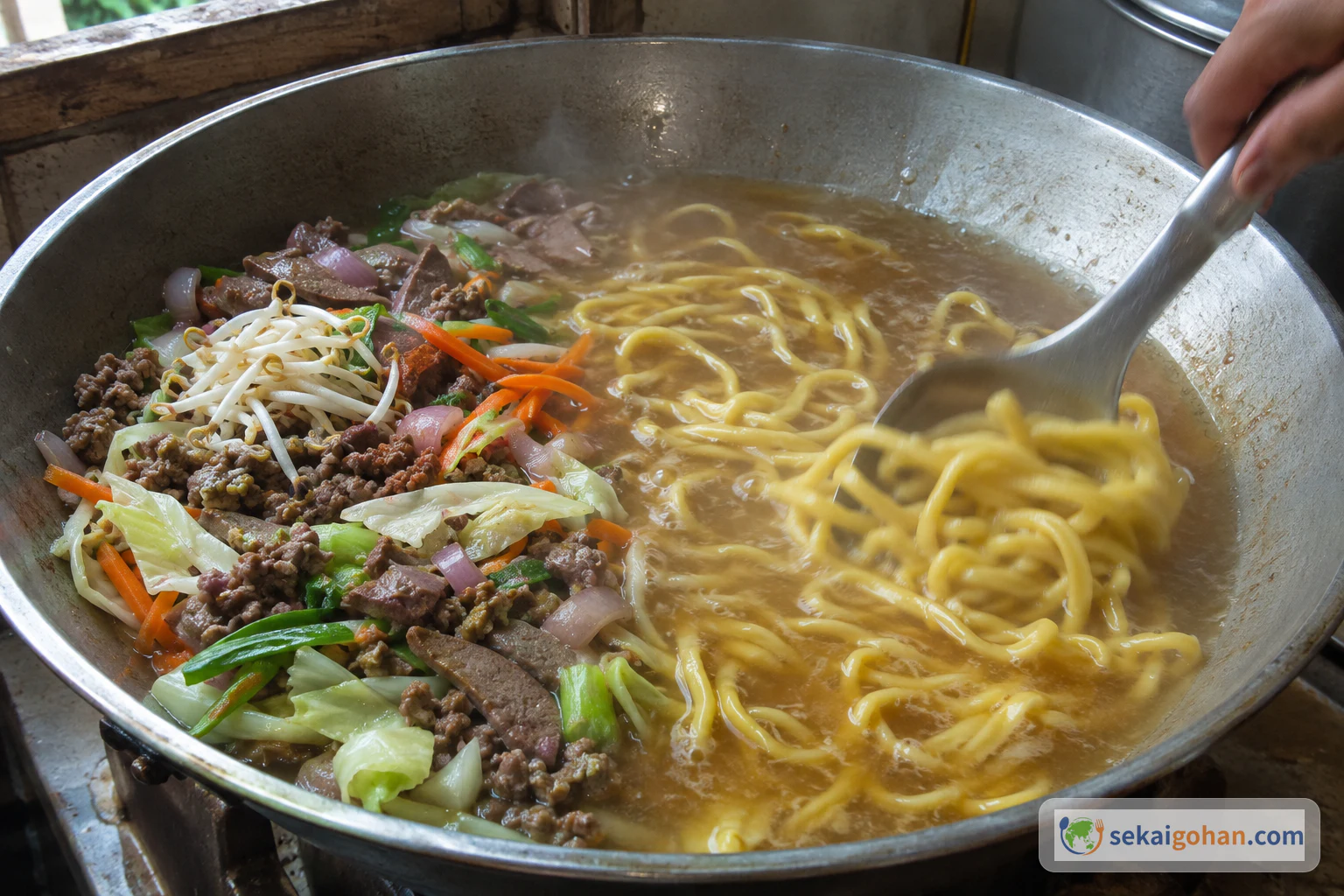
Cook and season the miki in the stock

Fresh miki being loosened in the stock on the open side of the pan
Loosen the strands so they cook evenly

Pour 4–5 cups of the beef stock into the wide pan and bring it to a boil. Move the meat and vegetables to one side of the pan, leaving open stock on the other side. Add the drained miki to the open side and toss to loosen the noodles while the meat and vegetables stay on their side. Add the 3 Tbsp soy sauce and ¼ tsp black pepper, then stir the noodles for 2–3 minutes, keeping them moist rather than frying them dry.

STEP77 / 11

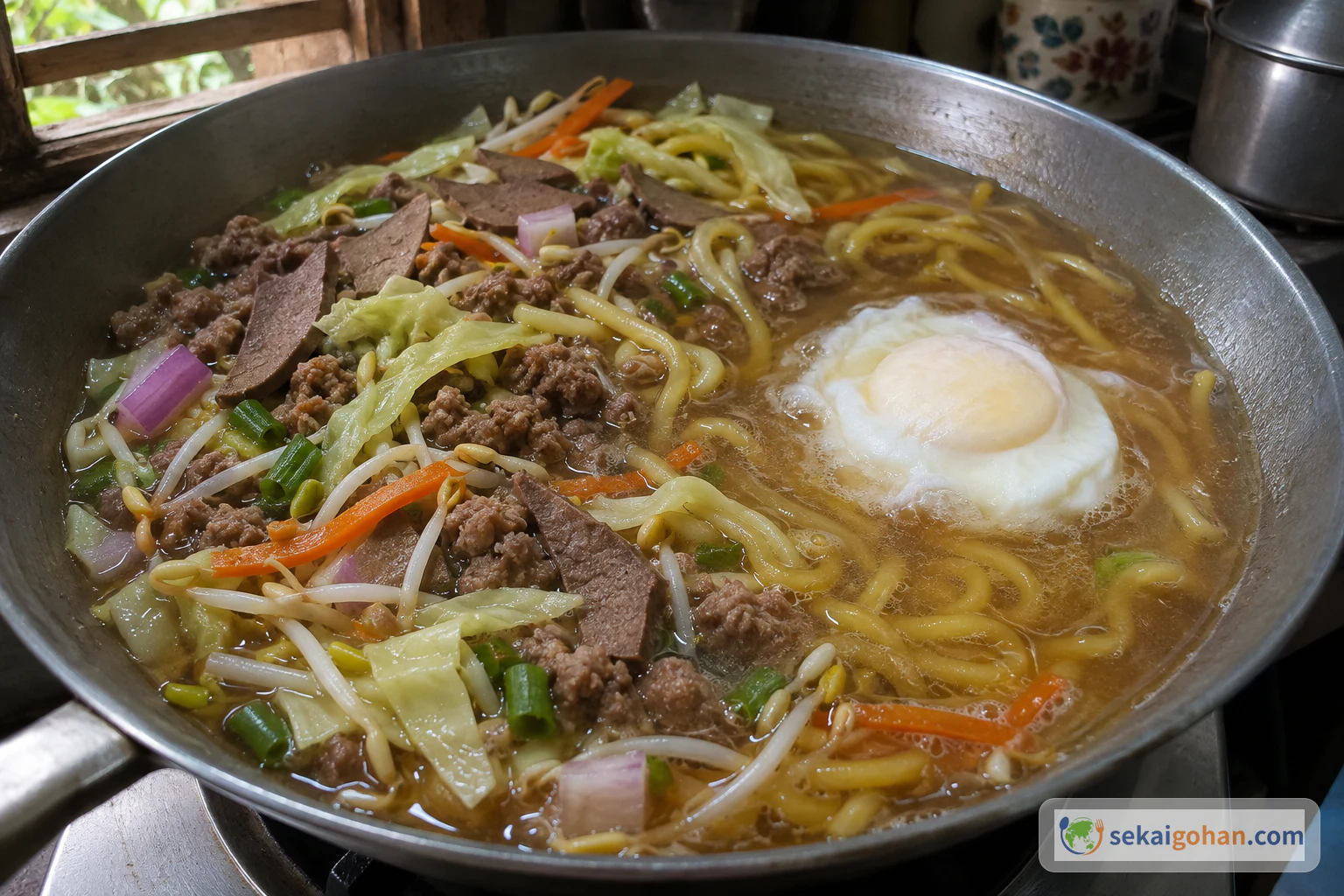
Poach one egg

One egg poaching in an open space in the pan
Only one egg goes in here

Make a calm, open space in the liquid. Crack in one egg and poach it until both yolk and white are fully firm. If any part is still soft, keep cooking. Use a clean slotted spoon to lift the firm egg onto a clean plate.

STEP88 / 11

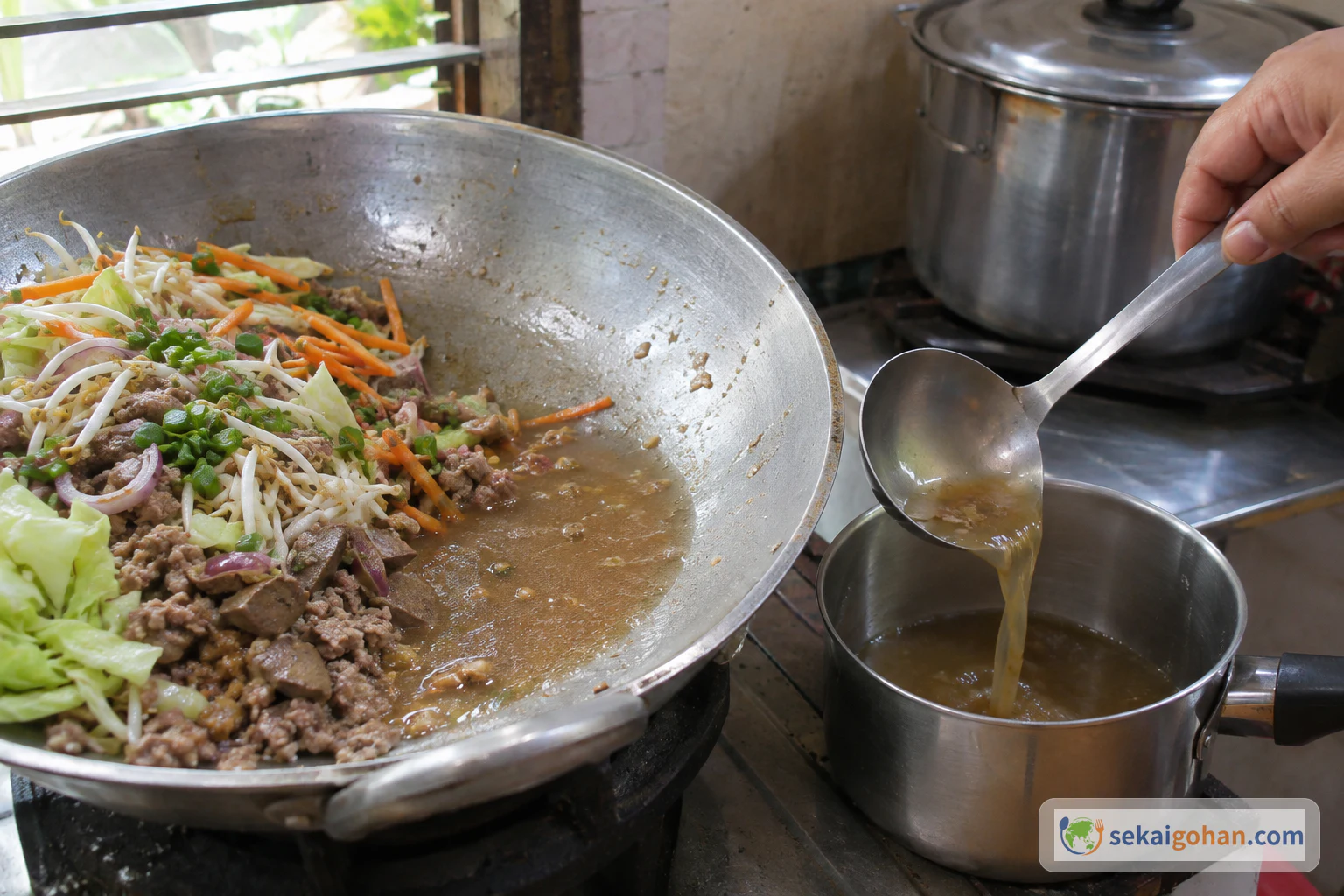
Separate the noodles, toppings and liquid

The liquid left in the noodle pan being ladled into a small saucepan
The liquid comes from the wide pan, not the stockpot

Lift the noodles out of the pan and onto a serving plate. Ladle the liquid left in the wide pan into a small saucepan, leaving the meat and vegetables behind. This seasoned liquid is the base of the batil, so don't use the unused stock from the stockpot in its place. Turn off the heat under the wide pan and transfer the meat and vegetables to a clean plate.

STEP99 / 11

Make the egg batil

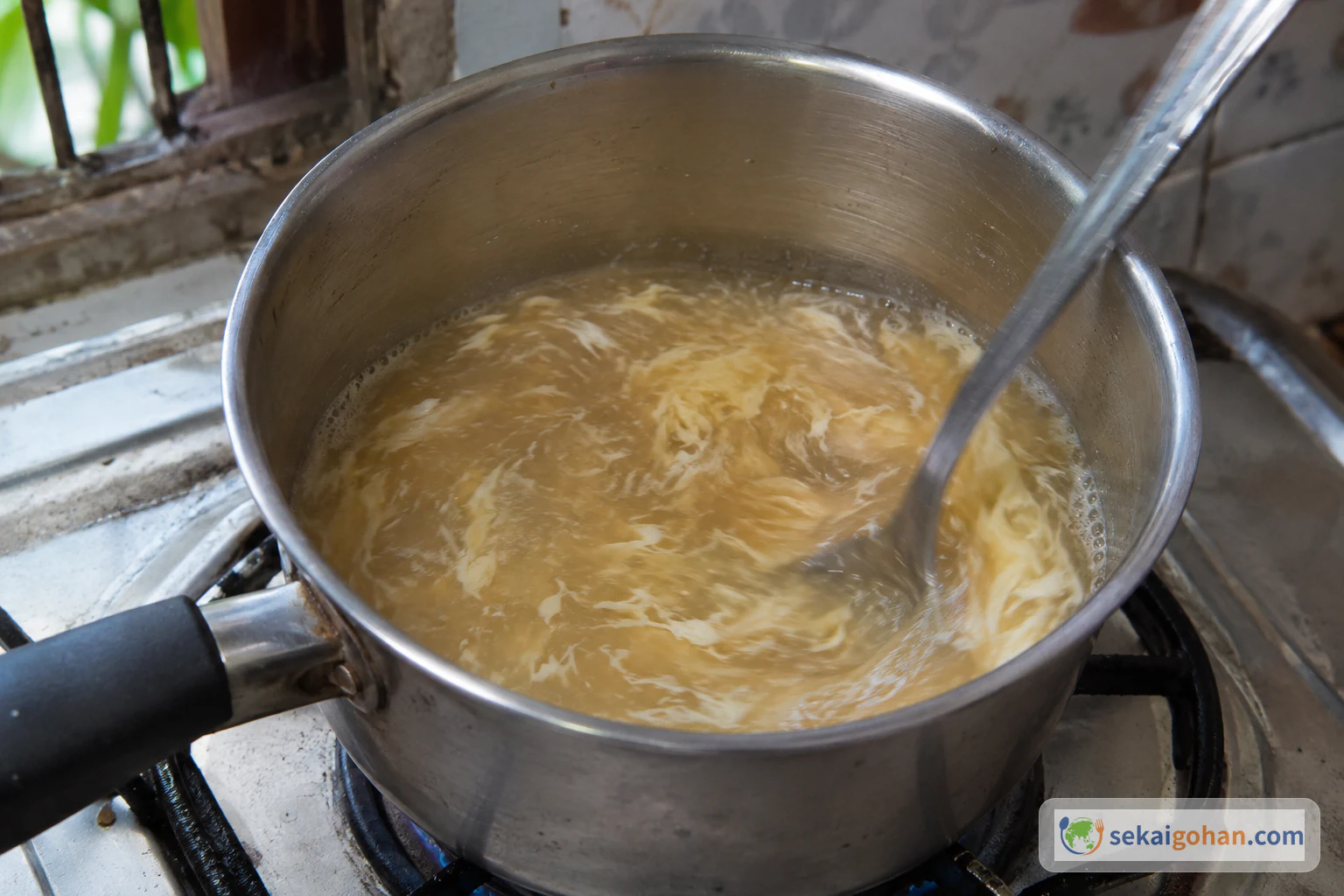
Stock being stirred constantly as fine egg strands form
Egg strands alone don't confirm doneness

Bring the liquid in the small saucepan back to a boil. Crack the remaining egg directly into the boiling liquid and stir constantly for 1–2 minutes. Use a food thermometer to confirm that the soup reaches 167°F (75°C) at the center and stays there for at least 1 minute. If it doesn't, keep heating and check again. Ladle the cooked egg soup into a separate soup bowl.

STEP1010 / 11

Assemble the noodles

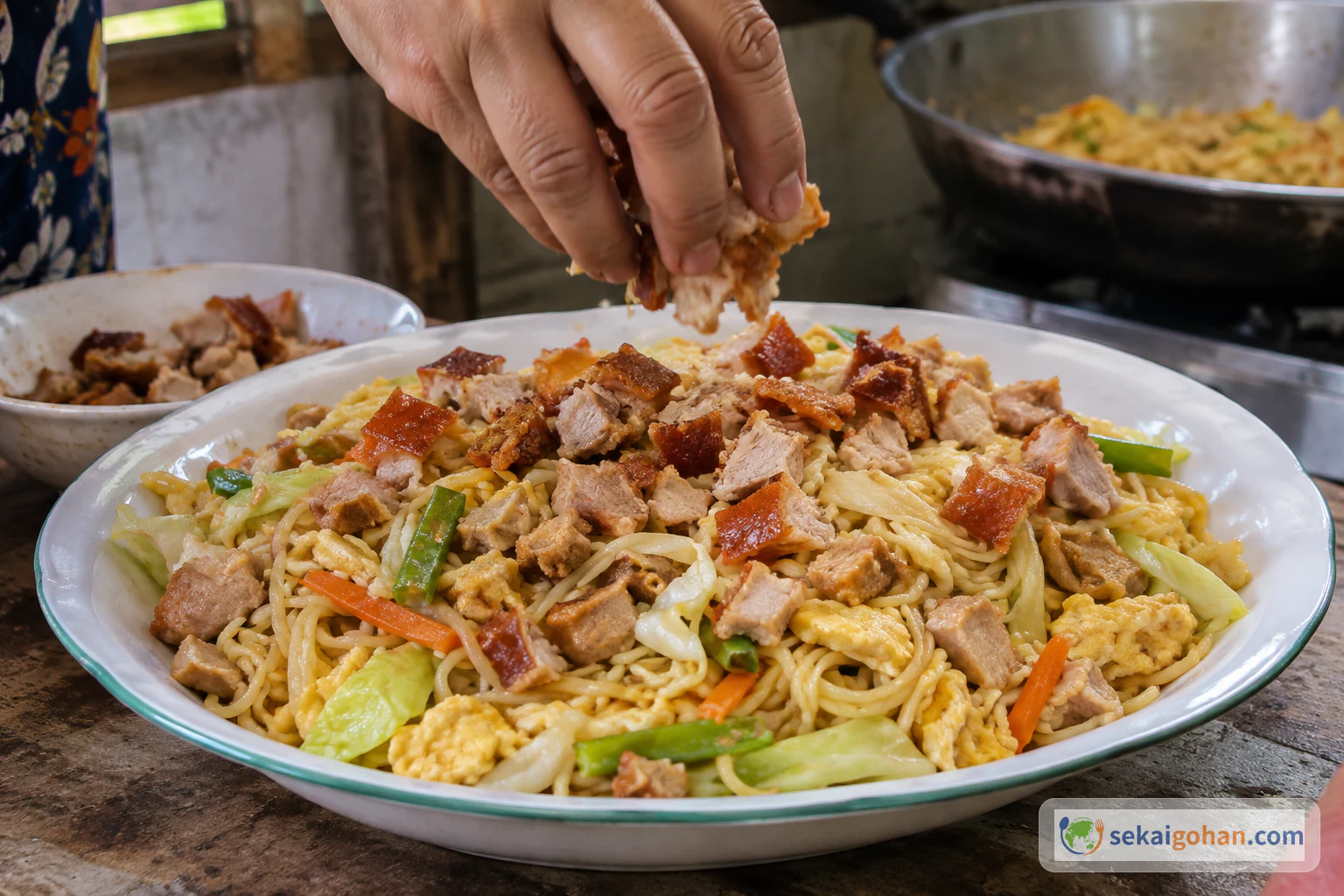
Chopped lechon carajay being scattered over the assembled noodles
The crisp pork goes on last

Set the firm poached egg on the plated noodles first. Spoon the cooked meat and vegetables over the noodles and egg. Scatter the chopped ready-to-eat lechon carajay over the top as the final layer.

STEP1111 / 11

Make the raw onion dip

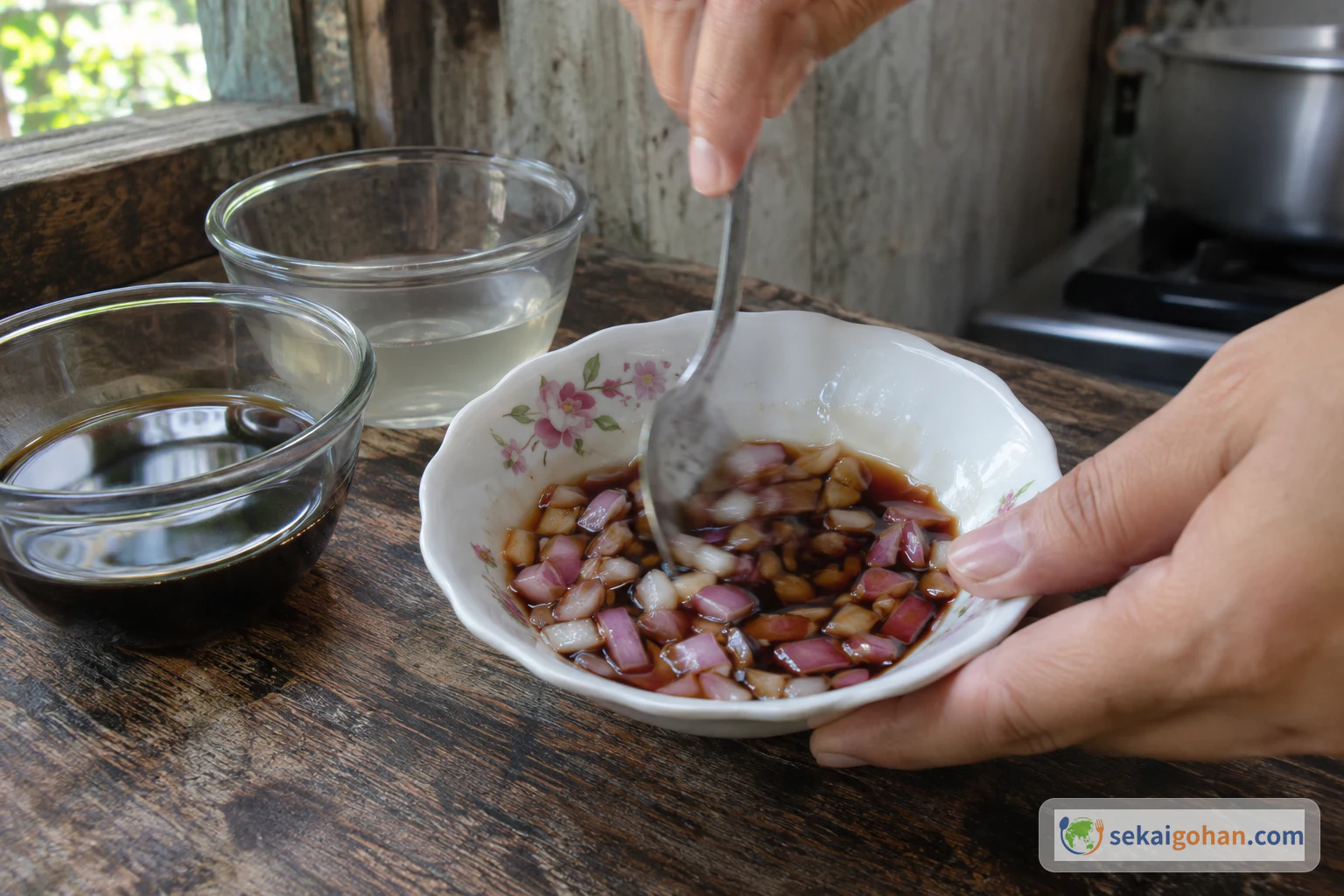
Chopped raw onion being stirred with soy sauce and vinegar in a small bowl
The dip stays in its own small bowl

Peel the separate dip onion and wash it well under running water. Chop it with a clean knife on a clean board, using tools that are freshly washed or have never touched the raw beef or liver. Combine the onion, soy sauce and vinegar in a small bowl to taste. The soy sauce and vinegar add flavor, but they do not sterilize the onion.

0 / 0
Ingredients

Ingredients

1 / 1

Ingredients

Ingredient Amount Role
Beef bones with meat 1 lb Body of the stock
Water 6–8 cups Stock
Hot water as needed Tops up the stock to at least 6 cups
Beef bouillon 1 cube Seasons the stock
Celery 1 stalk Stock vegetables, tied in a bag
Medium carrot 1 Stock vegetables, tied in a bag
Small onion 1 Stock vegetables, tied in a bag
Fresh miki (thick egg noodles) 12 oz The noodles
Minced beef 6 oz Topping
Pork liver, thinly sliced 3–4 oz (85–115 g) Topping
Medium red onion, cubed 1 Topping base
Mung bean sprouts 1½ cups Topping vegetable
Green onions, chopped ¾ cup Topping vegetable
Cabbage, shredded 1 cup Topping vegetable
Carrot, julienned 1 cup Topping vegetable
Soy sauce 3 Tbsp Seasons the noodles and the pan liquid
Ground black pepper ¼ tsp Seasons the noodles and the pan liquid
Cooking oil 3 Tbsp For sautéing
Egg 1 Poached, for the noodles
Egg 1 Stirred into the batil
Lechon carajay (fully cooked, ready-to-eat fried pork belly), chopped 6 oz Final topping
Red onion for the dip (a separate onion), peeled, washed well under running water, then chopped as needed Raw dip
Soy sauce for the dip to taste Raw dip
Vinegar to taste Raw dip

The recipe uses 2 eggs in total, one for each purpose. It does not use one egg per serving.

0 / 0

Picture a plate of thick, soft yellow noodles under sautéed beef, pork liver and vegetables, with crisp chopped pork scattered on top. Beside it sits a bowl of stock threaded with fine strands of egg, and a small dish of chopped raw onion in soy sauce and vinegar. This is Pancit Batil Patung (you'll also see it spelled Batil Patong), a signature noodle dish of Tuguegarao. It's savory and peppery, and the soup on the side already tastes of the noodles.

About Pancit Batil Patung

The stock comes first and carries through the whole meal. Part of it goes into a wide pan, where the noodles cook with soy sauce and black pepper. The liquid left in that pan becomes the batil, the egg soup. That's why the soup and the noodles taste like they belong together.

The plate is built on fresh miki, sautéed minced meat, pork liver, vegetables, a poached egg and crispy pork, with the beaten-egg soup served separately. Carabeef is the traditional meat in Cagayan. Where it's hard to find, beef works, and that's what this recipe uses. This is its own dish, separate from Pancit Cabagan and pancit canton. For more dishes from the same country, see our Philippines page.

Ingredients (Serves 4)
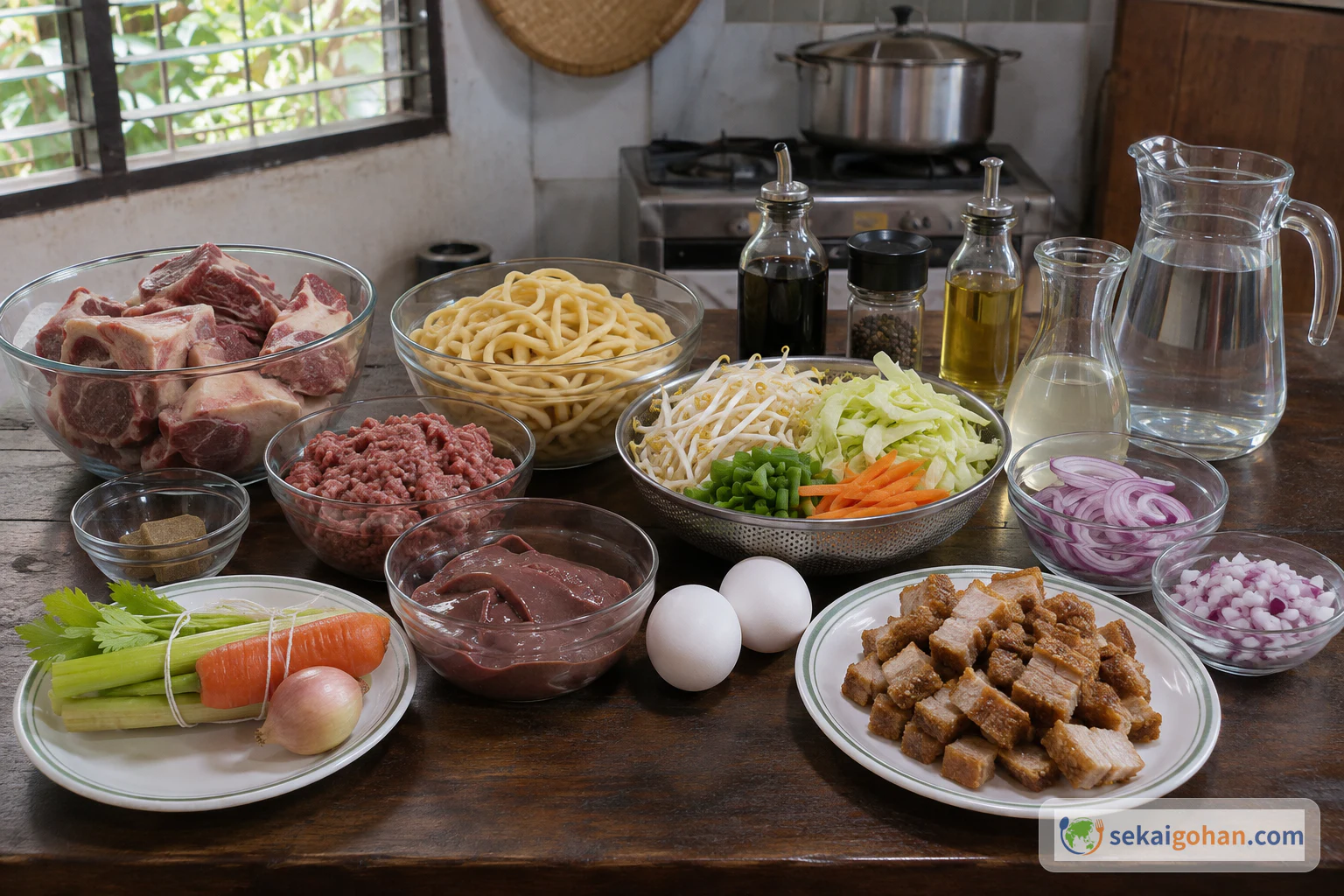
Ingredients for the stock, noodles, toppings, eggs and dip, set out by use
Raw meats sit apart from the ready-to-eat pork

Choosing Ingredients for Pancit Batil Patung

The recipe uses several onions and carrots, and each one has its own job:

  • Stock vegetables: the small onion, medium carrot and celery flavor the stock and leave the pot in their bag.
  • Topping vegetables: the cubed medium red onion and the julienned carrot stay in the dish.
  • Dip onion: this is a separate raw red onion. Don't take it from the topping onion.

Noodles: look for fresh miki, a thick, soft yellow egg noodle. White rice noodles would make a different dish.

Lechon carajay: buy fully cooked, ready-to-eat fried pork belly, and follow its label for refrigeration and reheating. Uncooked pork is not a substitute.

The dip: the soy-to-vinegar ratio is up to you. Vinegar and soy sauce don't sterilize the onion, so peel it, wash it well under running water, and keep it away from anything that touched raw beef or liver.

Equipment

  • Stockpot
  • Cheesecloth and string for the vegetable bag
  • Wide pan
  • Small saucepan
  • Sieve
  • Food thermometer
  • Slotted spoon and ladle
  • Clean plates for holding cooked food
  • Separate or freshly washed cutting board, knife and utensils for raw meat and for the dip onion
  • Small dip bowl and soup bowl

Method: From Stock to Noodles to Egg Soup

Keep raw and cooked apart

Wash your hands, cutting boards and utensils after they touch raw beef or liver, or use separate ones, before they touch cooked food, the raw dip onion or the dip. Keep raw meat juices away from the noodles, the lechon and the serving plates.

Common Problems and Fixes

Let a food thermometer decide when the minced beef, pork liver and egg soup are done. Each should reach 75°C at the center and stay there for at least 1 minute. Egg dishes should reach 160°F (71°C), so the 75°C check covers that too. The cooking times in the method are guides only, because color and steam don't tell you the food is safe.

Problem Likely cause What to do
Less than 6 cups of stock after simmering Too much liquid boiled off Add hot water until you have at least 6 cups
The thermometer reads below 75°C The food needs more heat, whatever the guide time says Keep cooking and check again, holding at least 75°C at the center for at least 1 minute
The poached egg yolk is still soft It has not cooked long enough Keep poaching until yolk and white are both firm
The noodles look dry in the pan Too little liquid for this moist style If you started with 4 cups, add more stock up to the 5-cup limit
The batil tastes plain Unused stockpot stock went in instead of the noodle pan liquid Next time, use the liquid from the wide pan, which carries the soy sauce and pepper
The vegetables taste of stock The cloth bag leaked or the vegetables went in loose Lift out any loose pieces and tie the bag more securely next time

Serving and Variations

Pancit Batil Patung served with separate batil and raw onion dip
Three parts on the table: noodles, egg soup and dip

Bring the noodle plate, the bowl of batil and the dip to the table together, and serve right away. Eat the noodles with the soup alongside, adding the dip as you like.

What changes This recipe If you change it
Meat Minced beef Carabeef is the traditional meat in Cagayan. If you use it, keep the same thermometer check
Crisp pork Ready-to-eat lechon carajay Frying your own pork belly needs a separate full recipe
Dip Onion, soy sauce and vinegar to taste Adjust the balance to your taste, but keep the washing and separation steps. Leaving it out changes how the dish is served

Frequently Asked Questions

Why are there only two eggs for four servings?

One egg is for poaching and one is for the batil. It isn't one egg per plate, so the total stays at 2.

Can the yolk stay runny?

No. Cook both yolk and white until fully firm. For raw or undercooked egg dishes, use pasteurized shell eggs or pasteurized egg products.

How do I eat the batil?

Pour a little over the noodles, or sip it on its own. Either way, it comes to the table in its own bowl.

Is the leftover stock in the pot the same as batil?

No. Batil is made from the liquid left in the wide noodle pan. The stock left in the stockpot never cooked with the noodles or their seasoning.

What about the meat and cartilage on the bones?

You can eat them on their own if you like. They aren't part of the noodle topping.

Can I keep leftovers?

Egg dishes are best served right away. If you refrigerate a cooked egg dish, reheat it thoroughly to 165°F (74°C). Follow the product label for the lechon.

Sources