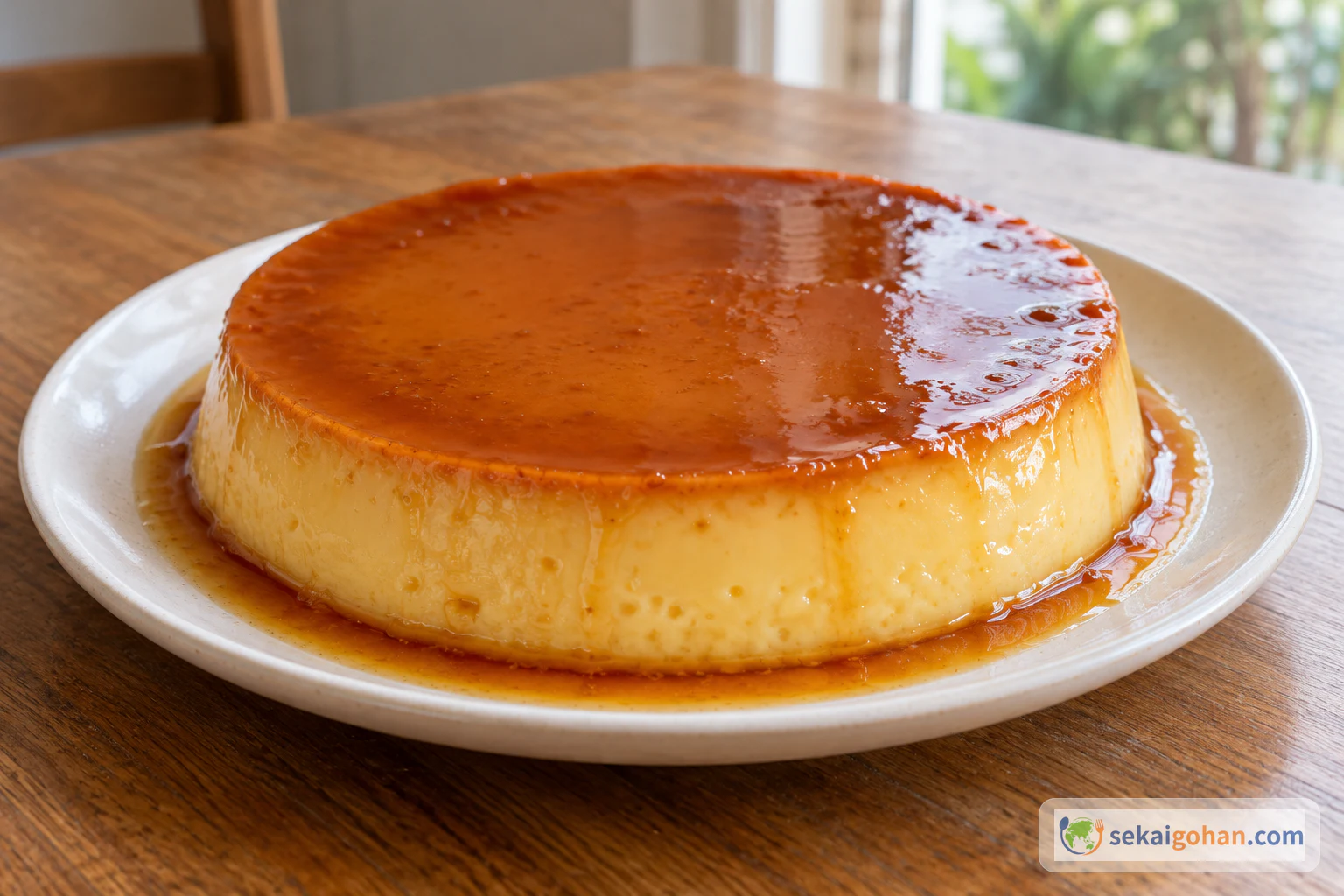
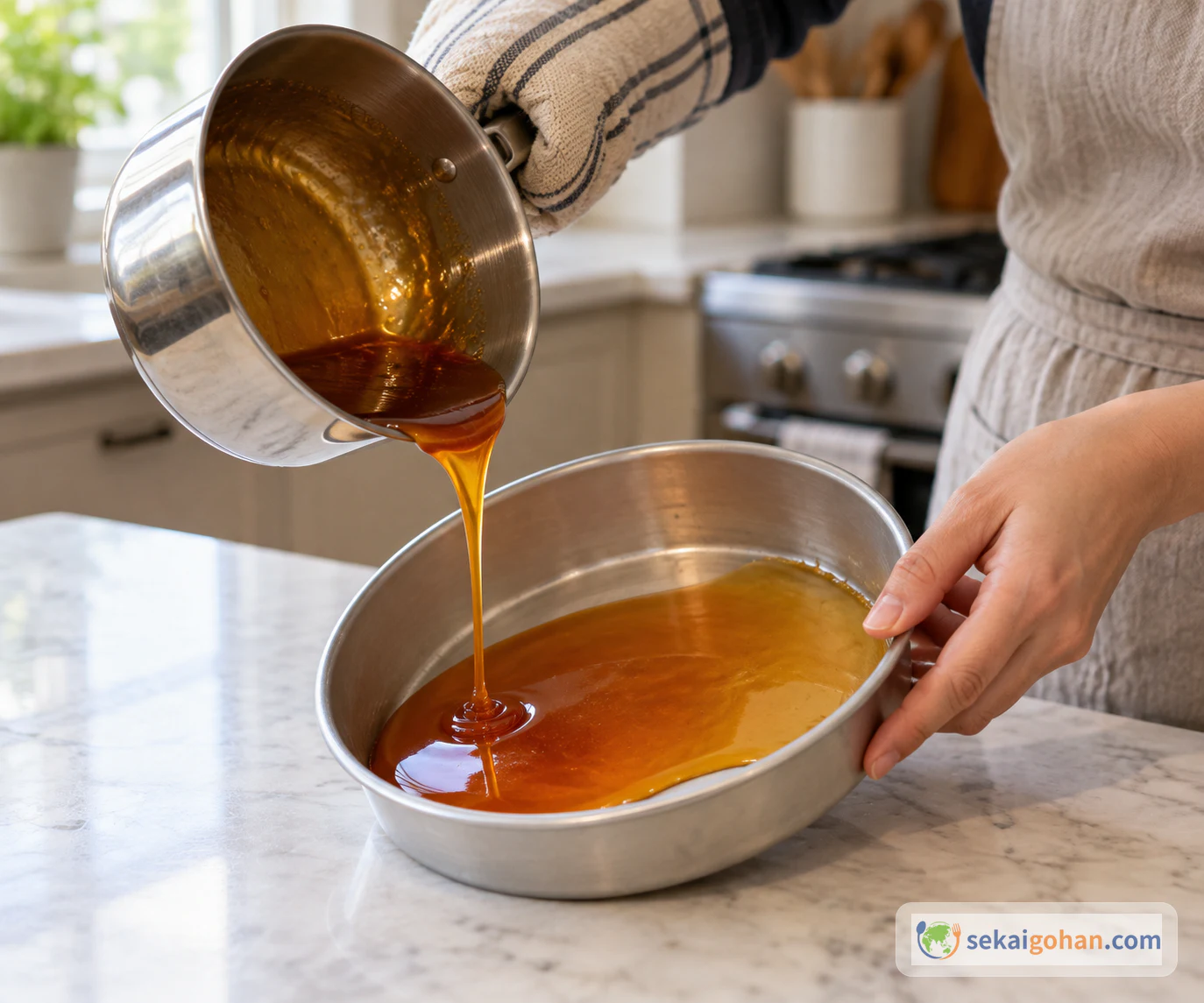
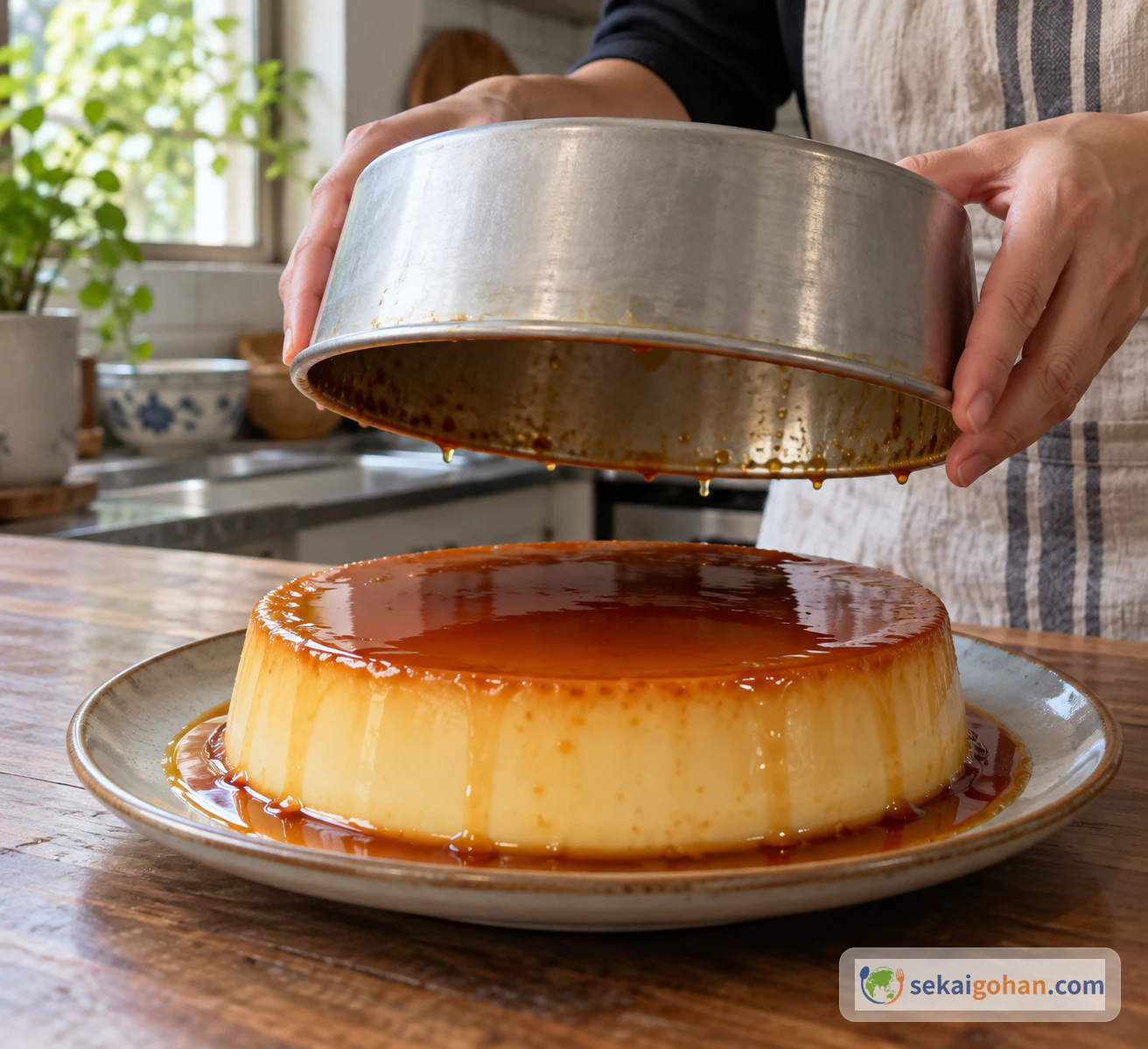
The custard has chilled for hours in its mold. You run a thin knife around the edge, set a plate on top and turn the whole thing over, and when you lift the mold away, the caramel that had hardened on the bottom has melted into a thin amber sauce that runs down the pale sides and pools on the plate.
That is bánh flan, Vietnam's caramel custard: soft, sweet and gently eggy, with a caramel taken only to light amber. It is good just as it is, cold from the refrigerator. A little strong coffee on the side brings bitterness to meet the sweet custard and caramel. For more dishes from the same country, see Vietnam.
About Bánh Flan
Bánh flan is a soft custard set over a layer of caramel, then turned out so the caramel becomes its sauce. It is Vietnamese crème caramel, closely related to the French dish, and you will also see it called caramen or kem flan.
There is no single fixed formula. Home cooks build the custard in clearly different ways, and each version has its own balance of dairy and its own way of cooking:
| Version | Custard base | How it is cooked |
|---|---|---|
| This recipe | Whole eggs, sugar, and milk made from half evaporated milk and half whole milk | One mold of about 7 inches, baked in a water bath |
| Cream and milk version | Cream and milk, with whole eggs plus extra yolks | Individual ramekins in a hot-water bath in the oven |
| Home recipe | Whole eggs plus extra yolks, unsweetened fresh milk and sweetened condensed milk | Steamed in small molds |
| Coffee version | Cream, condensed milk, milk, eggs and yolks, with a coffee caramel | Baked in a bain-marie; a large batch |
Not every Vietnamese home cook bakes flan. Some steam the custard in small molds at 80–90°C for 15–20 minutes, then chill it for about 2–3 hours. It is often eaten alongside tea and coffee; in Phan Thiết, a stall in front of a garden served dessert, tea and coffee together.
Ingredients for One 7-Inch Flan (Serves 8)
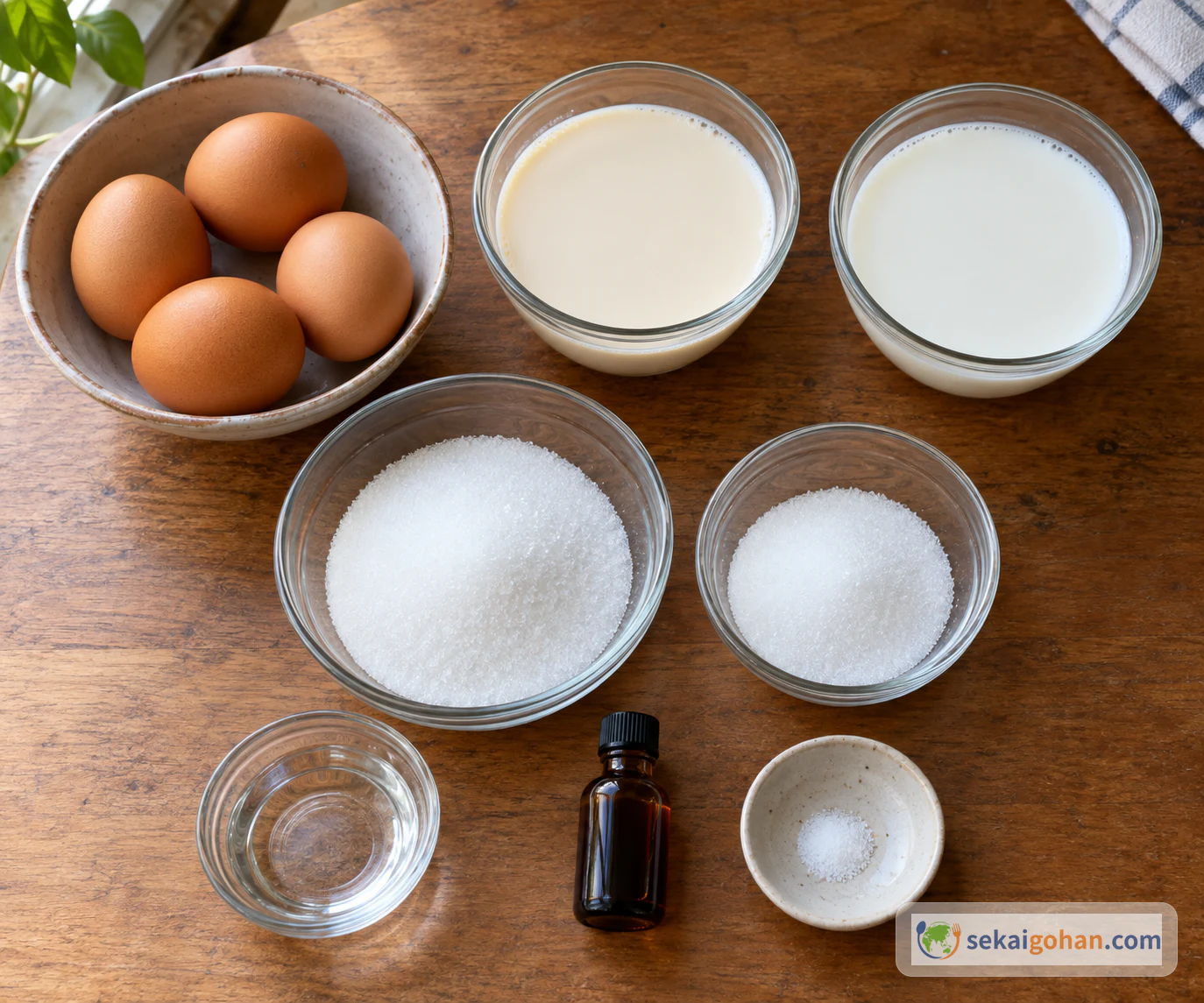
These amounts are for one round mold of about 7 inches in diameter.
The flan contains eggs and milk.
Equipment
- A round heatproof flan mold, about 7 inches in diameter and about 2 inches tall
- A small saucepan for the caramel
- Oven mitts
- A medium mixing bowl and a whisk
- A fine-mesh strainer
- A larger, deep roasting pan for the water bath
- A thin knife
- A serving plate wider than the mold
The 2 inches is the height of the mold, not the depth of the custard. The finished flan is broad and fairly shallow, and the custard does not need to fill the mold to the rim.
Choosing the Milk, Vanilla and Measures for Bánh Flan
The milk here is half unsweetened evaporated milk and half whole milk, which gives the custard its body without making it heavy. Sweetened condensed milk, cream, coconut milk and extra yolks belong to the other versions in the table above, so keep them out of this one. Cutting the sugar changes the recipe too.
For flavor, use vanilla extract; other vanilla products differ in strength. Measure with US cups, or weigh the sugar and water using the gram weights given.
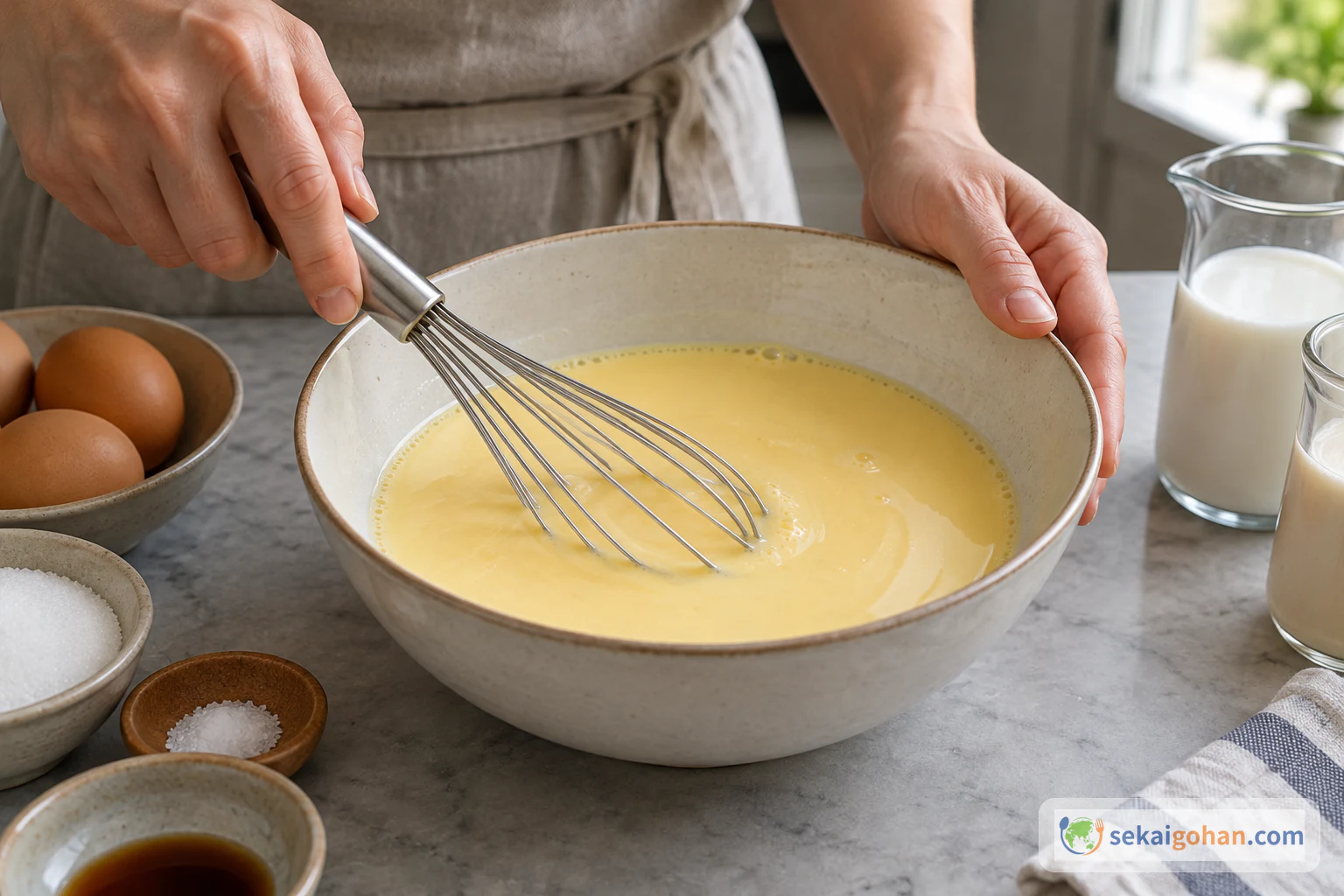
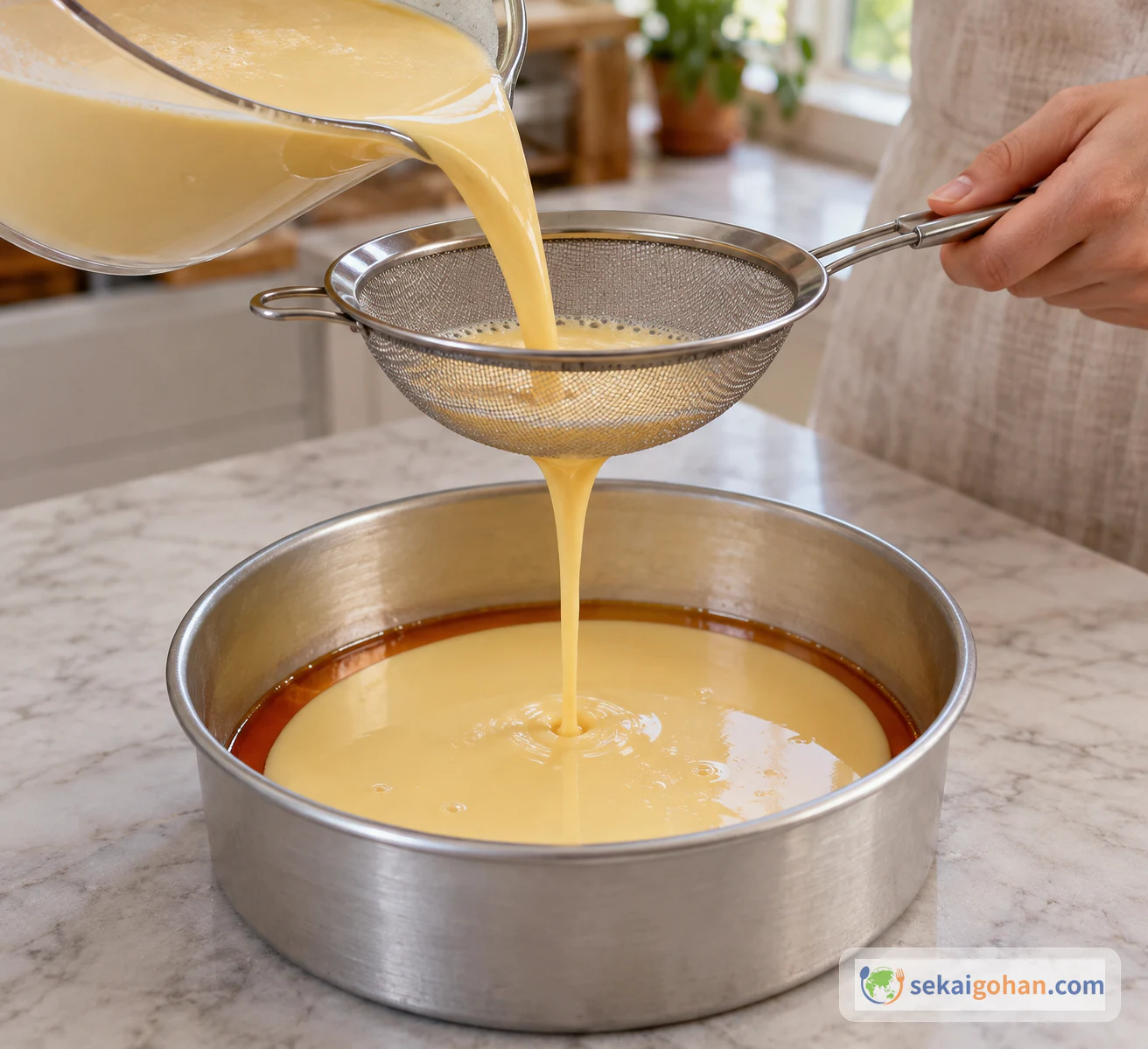
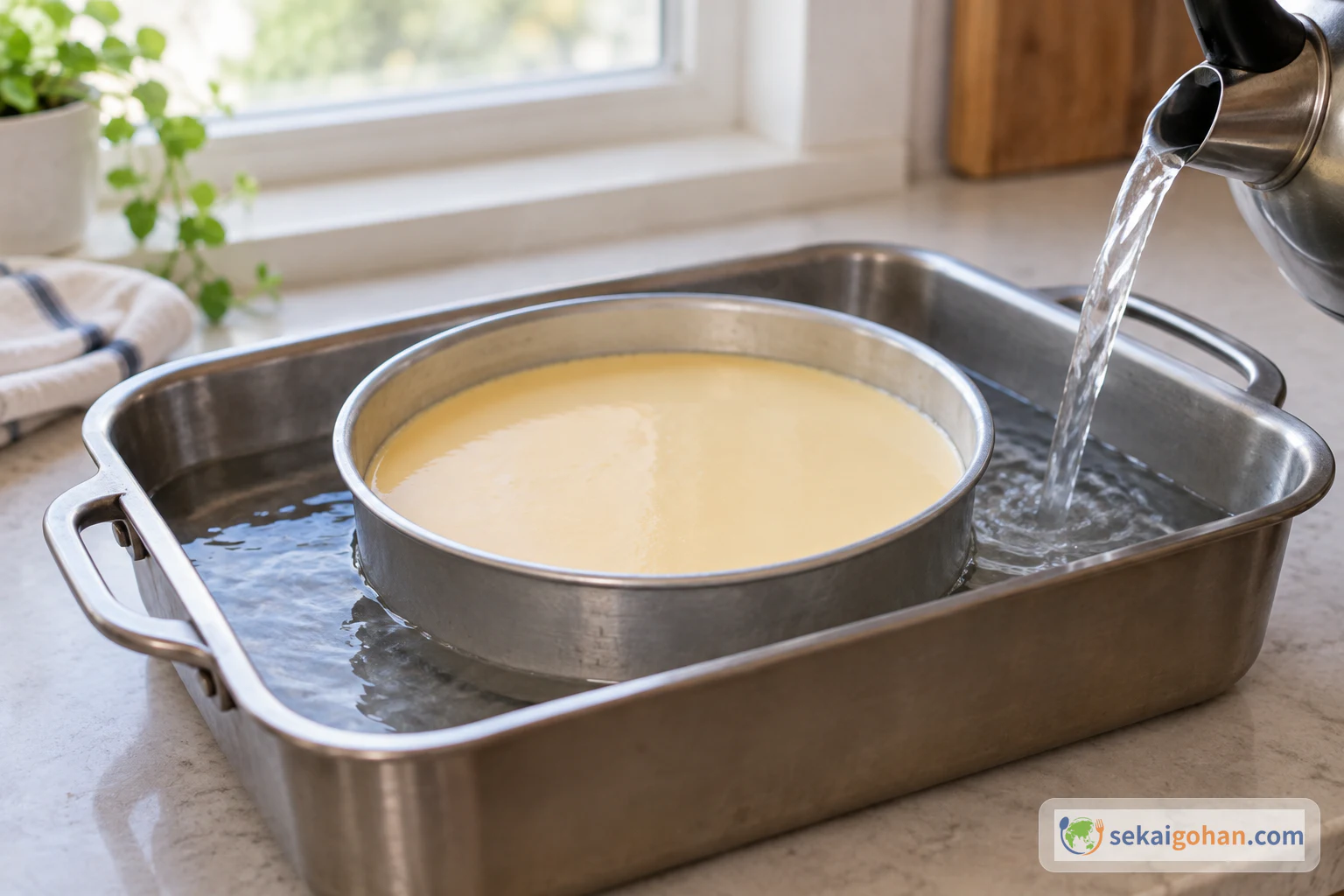
Method: Caramel, Custard, Water Bath, Chill
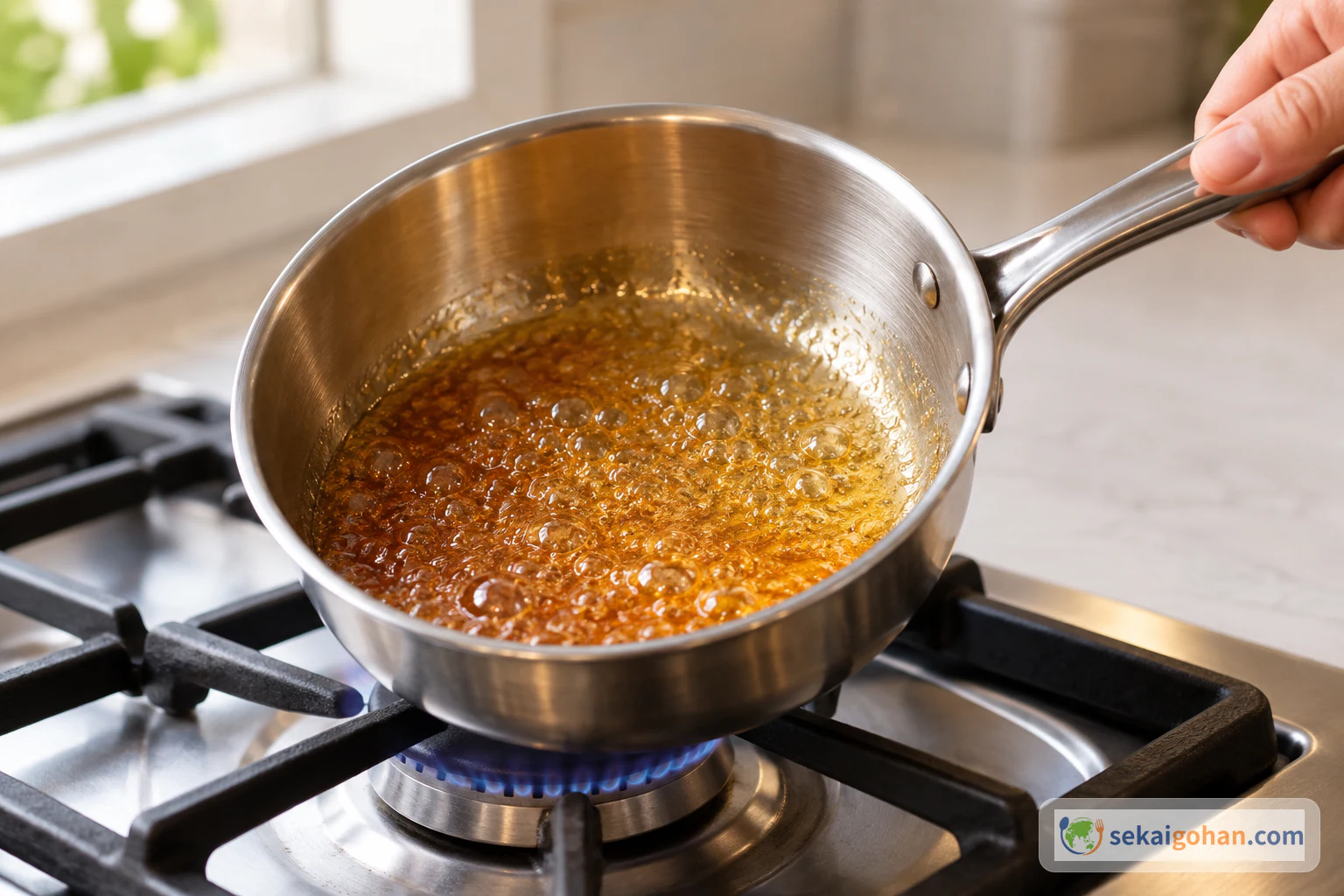
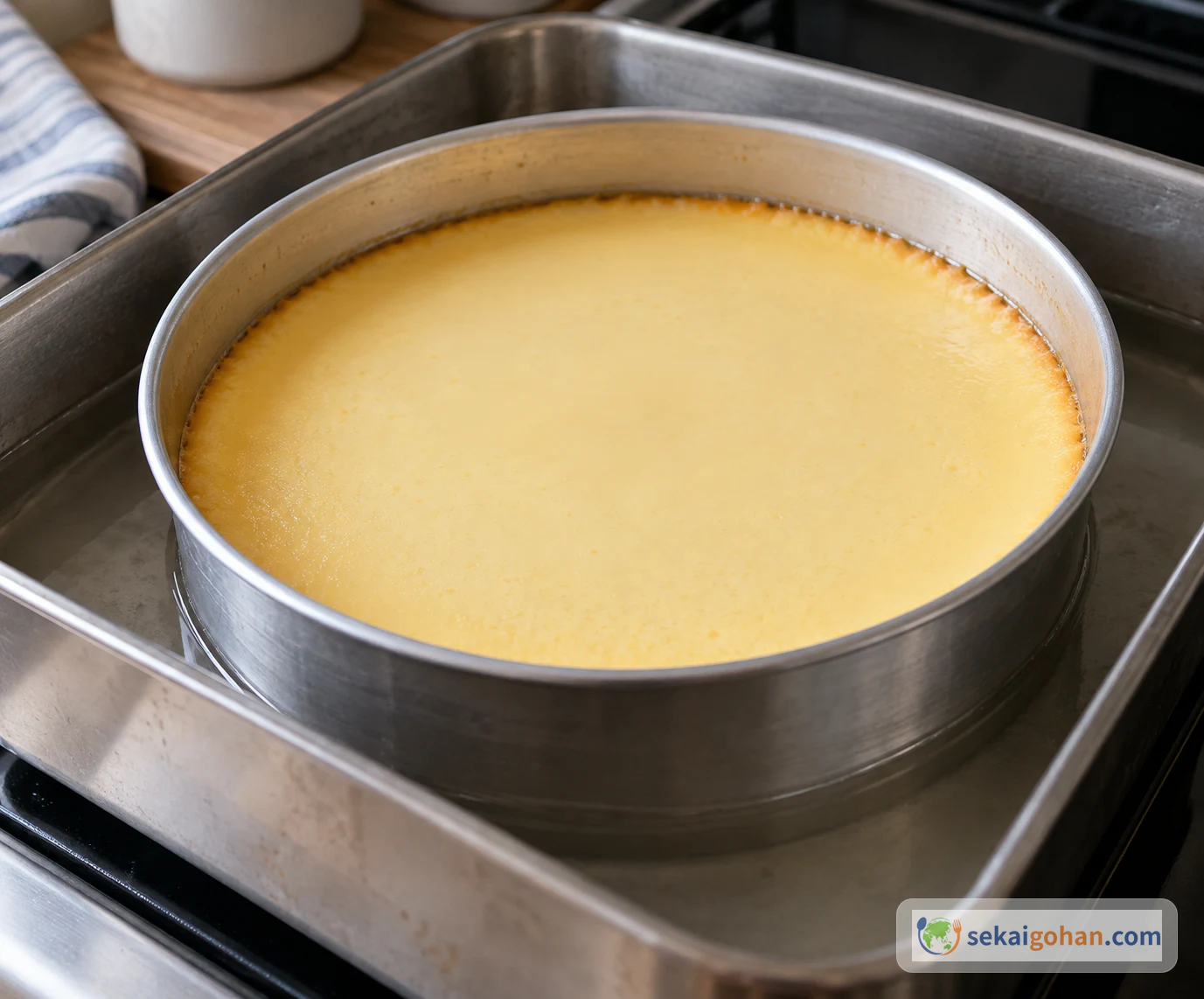
Stop the caramel by its color, and take the flan out by its edges and center. Ovens and molds vary, so trust the color and the wobble, not the clock.
Fixing Common Bánh Flan Problems
| What went wrong | Likely cause | What to do |
|---|---|---|
| The caramel tastes bitter | It was taken too dark | Stop at light amber to golden. A darker caramel brings more bitterness against the custard. If it turns black or smokes, start the caramel again |
| The caramel cracked as it hardened | Normal cooling | Nothing to fix; it melts back into a sauce under the chilled custard |
| The custard has bubbles or a rough surface | It was whisked too hard, or not strained | Mix gently, strain it, and skim off bubbles before baking |
| Water got into the custard | The water was too high, or it splashed while carrying the pan | Keep the water about halfway up the outside of the mold and move the pan slowly |
| The center is still liquid after about 1 hour | Ovens and molds vary | Keep baking and check again; take it out when the edges are set and the center jiggles only slightly |
| The flan will not release | It was not chilled long enough, or the edge was not loosened | Chill at least 3 hours, then run a thin knife all the way around before inverting |
The water bath is what keeps the custard smooth, so always bake the mold in one rather than setting it directly over boiling water or putting it in the oven bare.
Serving and Storing Bánh Flan
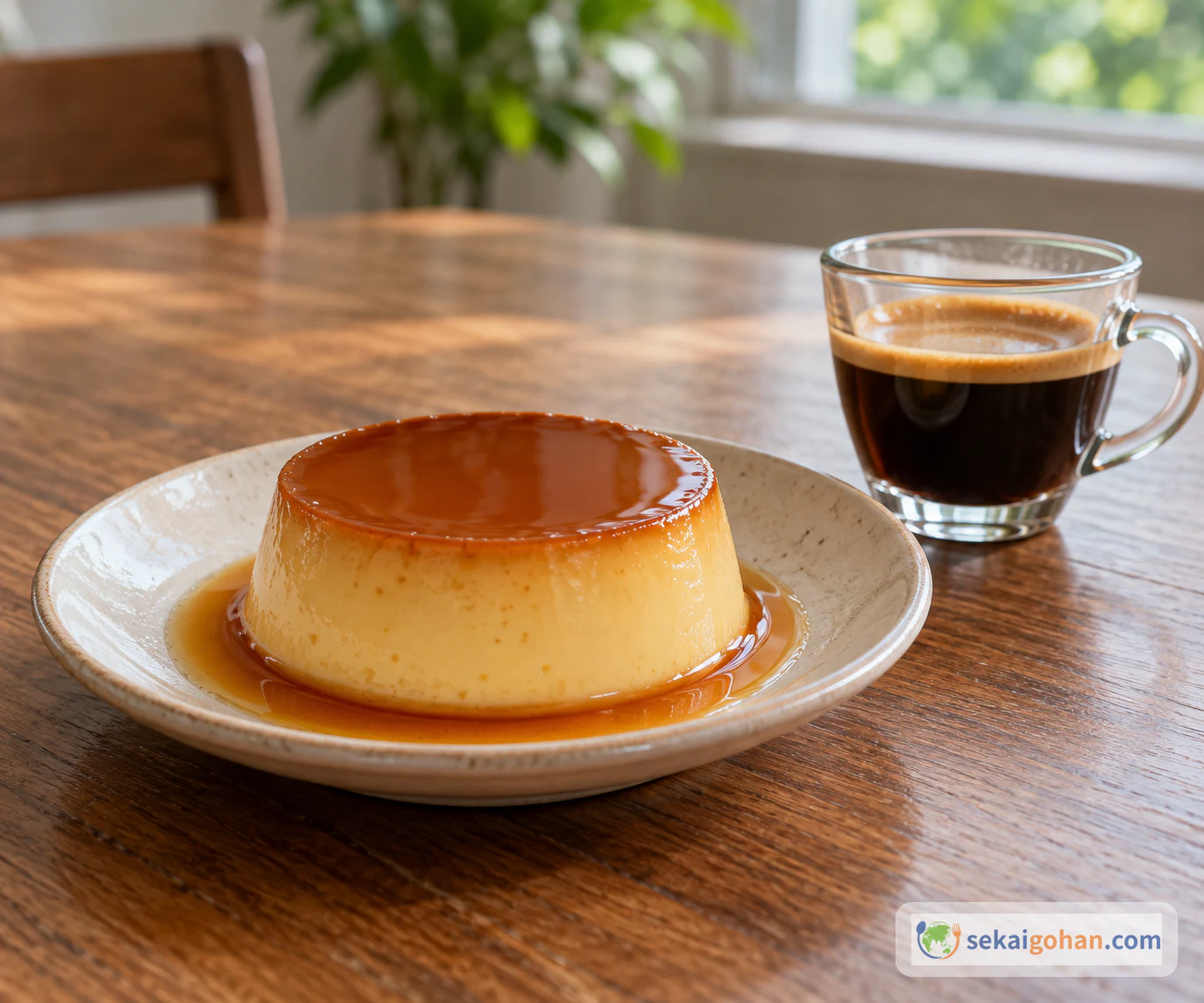
Serve the flan cold, with espresso in a separate small cup so each person can pour as much or as little as they like over the top. The bitterness of the coffee meets the sweet custard and caramel, and nothing else is needed: no ice, no condensed milk, no garnish. Keep the coffee out of the custard mixture itself.
Keep the flan refrigerated rather than leaving it out at room temperature.
The following comes from United States government guidance (USDA Food Safety and Inspection Service and FoodSafety.gov). It is not a Japanese or other national regulation.
- Chill egg dishes promptly and keep them refrigerated.
- Refrigerate foods containing eggs within 2 hours of cooking, or within 1 hour if the surrounding temperature is above 90°F.
- Use refrigerated custards within 3–4 days.
- Egg dishes without meat or poultry should reach 160°F. Judge doneness by set edges and a slightly jiggling center.
Bánh flan contains eggs and milk. Check the labels of the evaporated milk and vanilla extract you buy as well.
Frequently Asked Questions
Can I make it with sweetened condensed milk?
Condensed-milk versions exist, including the coffee version, but they use different proportions. There are no amounts for swapping it into this formula, so treat a condensed-milk flan as a separate recipe.
Can I make it in a steamer?
Yes, some Vietnamese home cooks steam flan, but that uses small molds, a different formula and different heating. The water-bath baking time here does not transfer to steaming, so use a recipe written for the steamer.
Is the coffee required?
No. It is an optional accompaniment, served separately and added at the table.