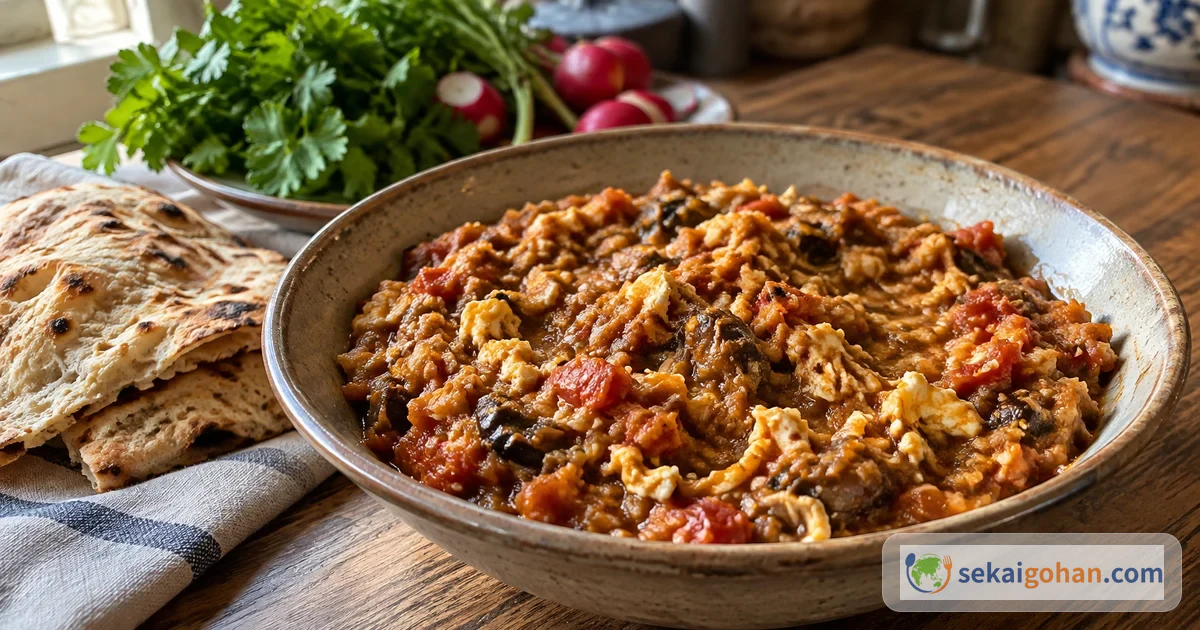
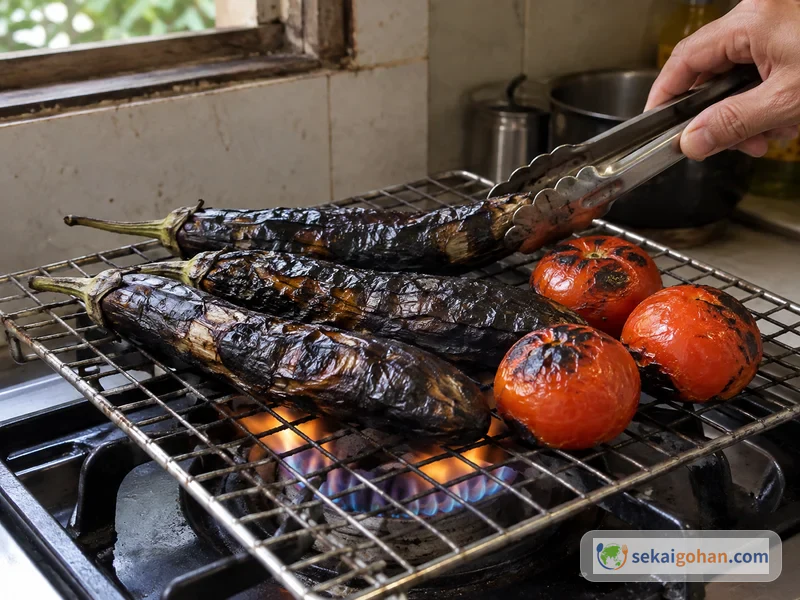
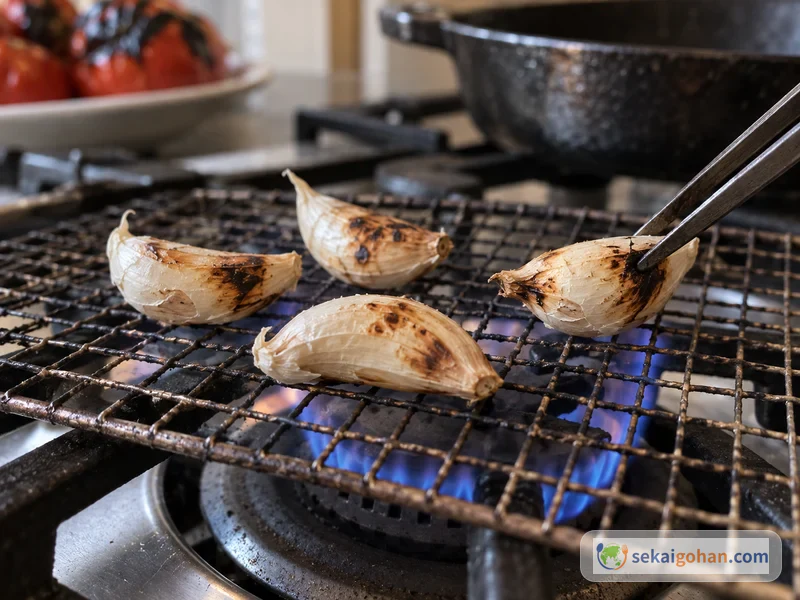
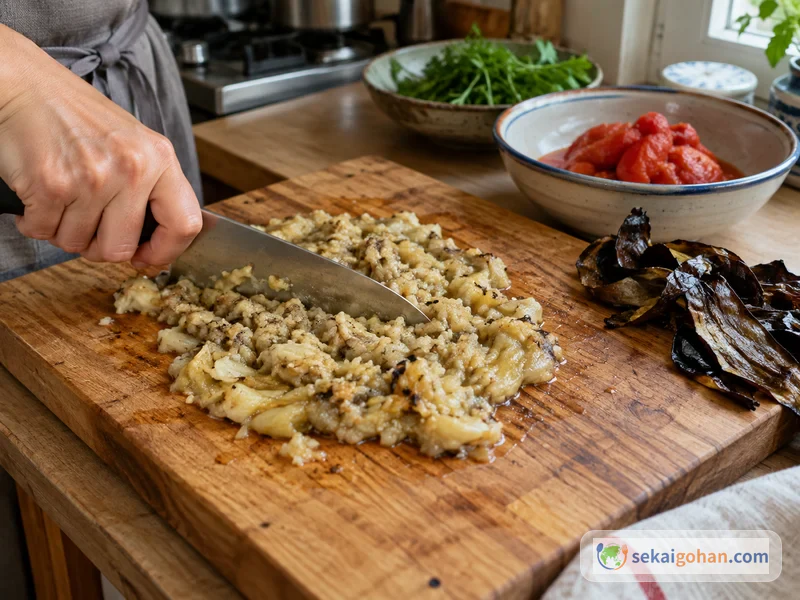
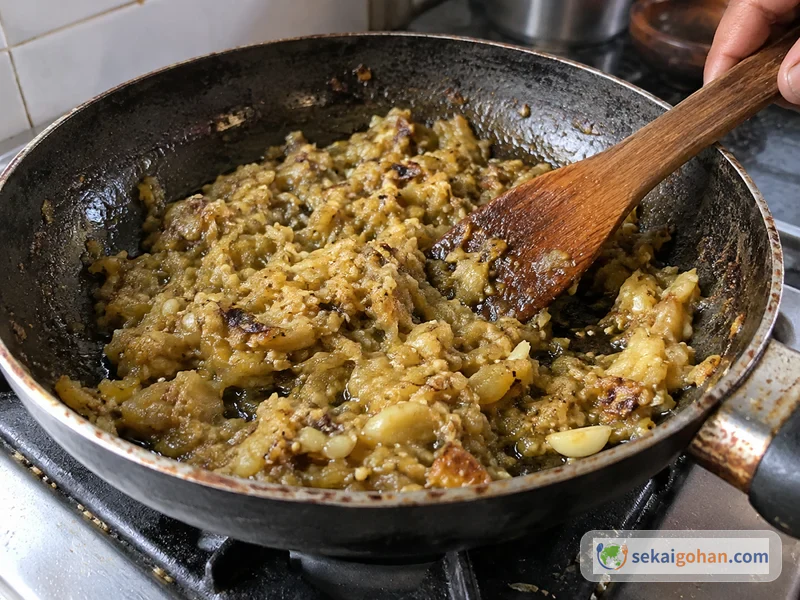
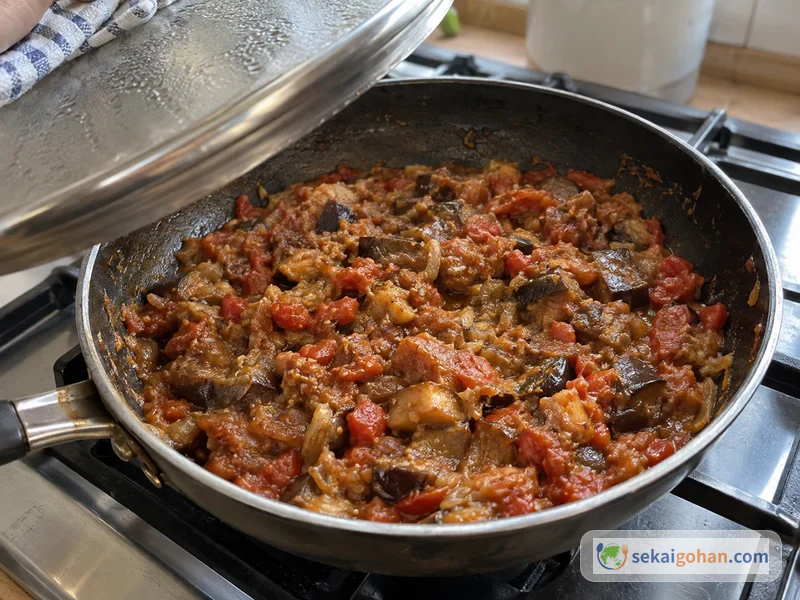
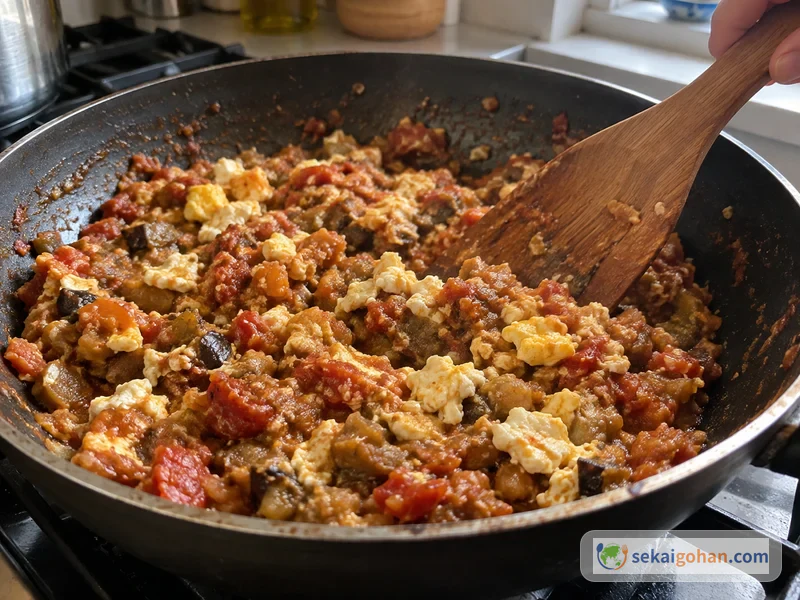
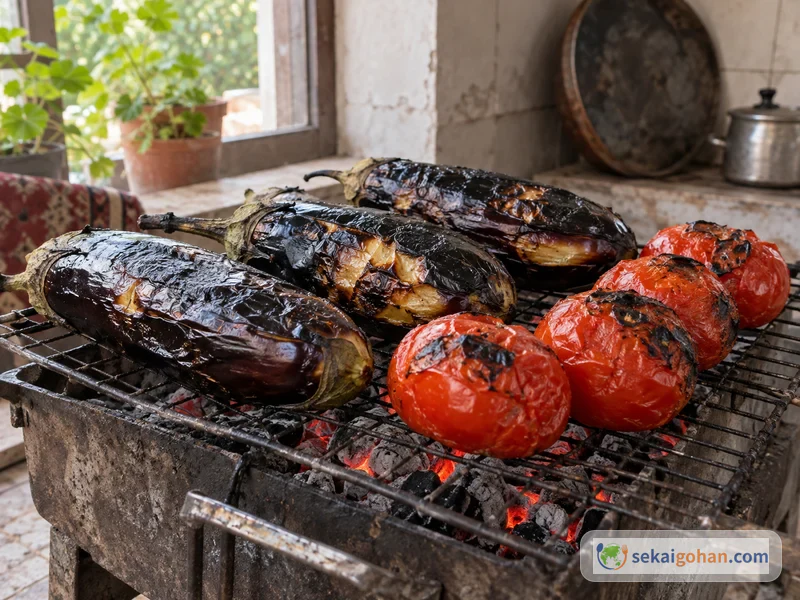
Over charcoal, the eggplant skins crackle and shrivel black. Beside them the tomato skins burst and the unpeeled garlic turns golden, and the smoky scent of charred vegetables fills the kitchen. Mirza ghasemi (میرزا قاسمی) is what happens next: the vegetables are peeled, chopped and cooked together in a pan, with eggs cracked in at the end. It comes from Gilan province in northern Iran, on the Caspian Sea, and anyone who knows grilled eggplant will recognize the source of that aroma at once.
Mirza ghasemi and the cooking of Gilan
Gilan is quite different from the usual image of Iran as a land of dry plateau. It is a green region squeezed between the Caspian Sea and the mountains, and its cooking is called Gilaki cuisine. Mirza ghasemi is one of its best-known dishes, and it is now loved across Iran and beyond. Because it uses no meat, it is also welcome as a vegetarian dish.
The ingredients are surprisingly few: eggplant, tomato, egg and garlic, with only oil, salt and pepper added. The flavor stays deep because the vegetables are charred in their skins to carry in the smoke. That char aroma decides the taste of mirza ghasemi.
The governor of Rasht
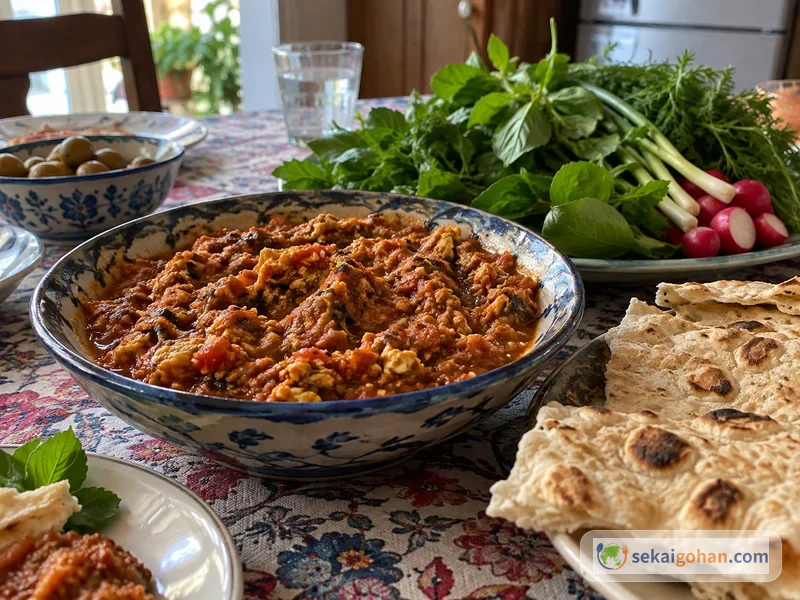
The dish is named after a person. During the Qajar era in the 19th century, Mohammad Ghasem Khan, governor of Rasht, the capital of Gilan, is said to have devised it. The story is widely told, though there is little solid record behind it.
Mirza ghasemi is a dish made for parties and weddings, often served as an appetizer at family gatherings and celebrations. Plain as it is, it belongs to special days.
Ingredients (serves 4)
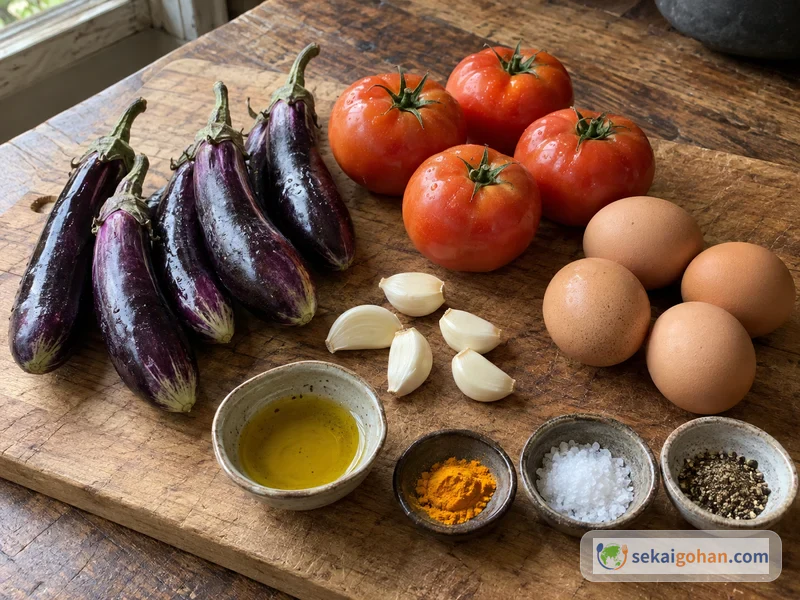
All the ingredients are available at an ordinary supermarket. Eggplants with taut, glossy skin and sharp spines on the calyx are fresh. For the tomatoes, choose well-ripened ones that are sweeter than sour, and a sweet aroma rises when you char them.
Before charring, pierce the skin of the eggplant in a few places with a skewer or fork. It keeps the skin from bursting as the moisture inside expands.
Choosing eggplant and charring for mirza ghasemi
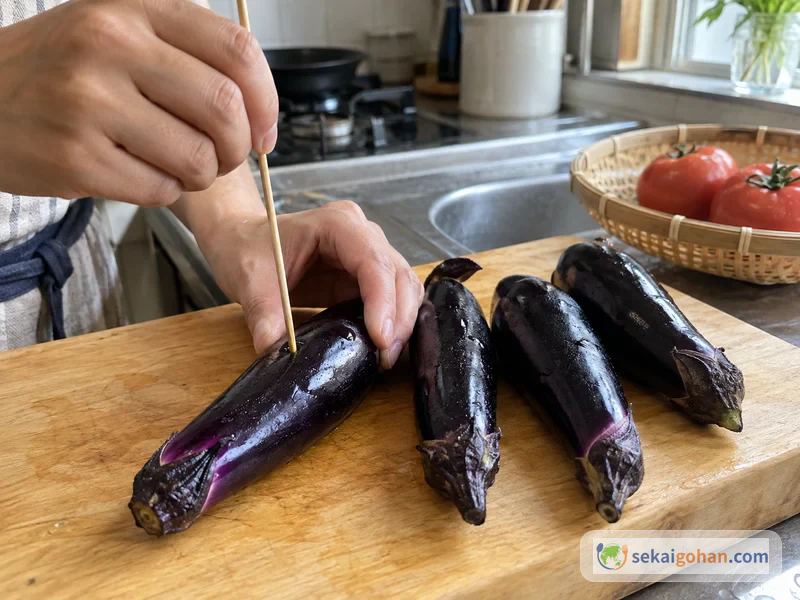
Medium-long eggplants, the kind often seen at markets, are just the right size; four or five small ones serve 4 people. With so few ingredients, the care you take in charring shows directly in the taste. Over wood charcoal, roll the eggplants so the fire touches every side.
At home, a grill rack set over a gas burner gives the most mirza-ghasemi-like smoky aroma. A broiler works if you can't use a direct flame. An oven or toaster oven cooks the eggplants through too, but the aroma of scorched skin is weaker.
The other ingredients get the same treatment. Tomatoes charred whole alongside the eggplant pick up a sweetness and toasty flavor that raw tomatoes lack, and garlic lightly charred in its skin loses its sharpness and blends into the smoke. A little turmeric deepens the color and aroma.
When charring vegetables over direct flame, do not place anything flammable around the grill rack. Pieces of burnt eggplant skin can fall from the rack, so check the burner's drip tray often. The charred vegetables are extremely hot inside, so let them cool thoroughly before peeling.
Put the charred eggplant in a bowl, cover with plastic wrap and steam for about 5 minutes, and the skin peels off smoothly. A few small bits of burnt skin left behind become part of the toasty flavor, so there is no need to worry much.
The point once the eggs go in is to raise the heat and stir quickly. Over low heat the egg takes on moisture and turns soggy, and the toasty flavor of the eggplant and tomato blurs.
Serving mirza ghasemi with rice and flatbread
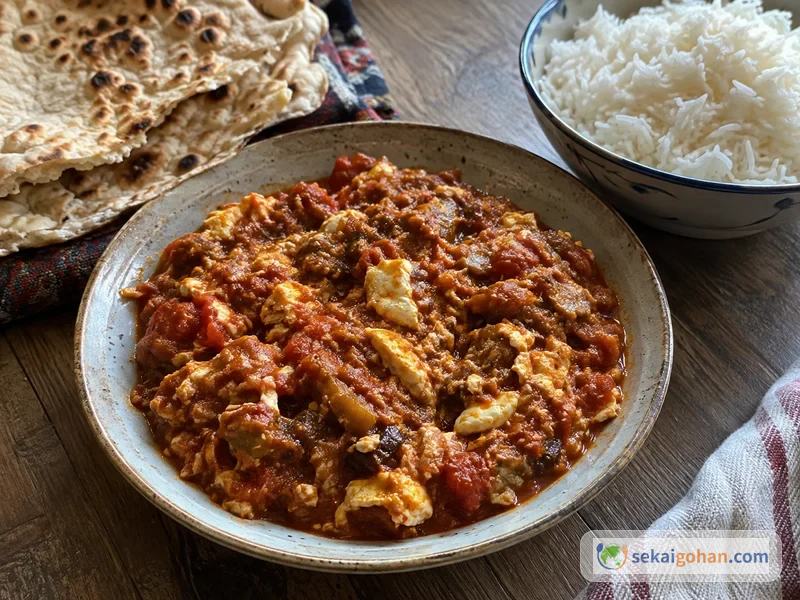
In Iran the traditional pairing is rice cooked the simple way called kateh, though everyday white rice is enough. Eaten over rice, the toasty charred eggplant and sweet tomato soak right into the grains. It's also good scooped up with flatbread, and fresh herbs or pickles on the side make it feel like an Iranian home table. As an appetizer, serve it in a small dish alongside other dishes.
For contrast, try it next to kashk-e bademjan, another Iranian dish that pairs charred eggplant with whey. Add the herb-rich egg dish kuku sabzi and tahdig, rice with a crisp bottom, and you have a whole Persian table.
Frequently asked questions
Can I make it without eggs?
Yes. With only charred eggplant, tomato and garlic, it becomes a paste-like appetizer. The egg adds mildness and richness, though, so the basic form includes it.
What do I do if I want it spicy?
Mirza ghasemi is a mild dish. For heat, put chili flakes or pickled green chilies on the table so each person can add them without changing the original flavor.
Can I make it ahead?
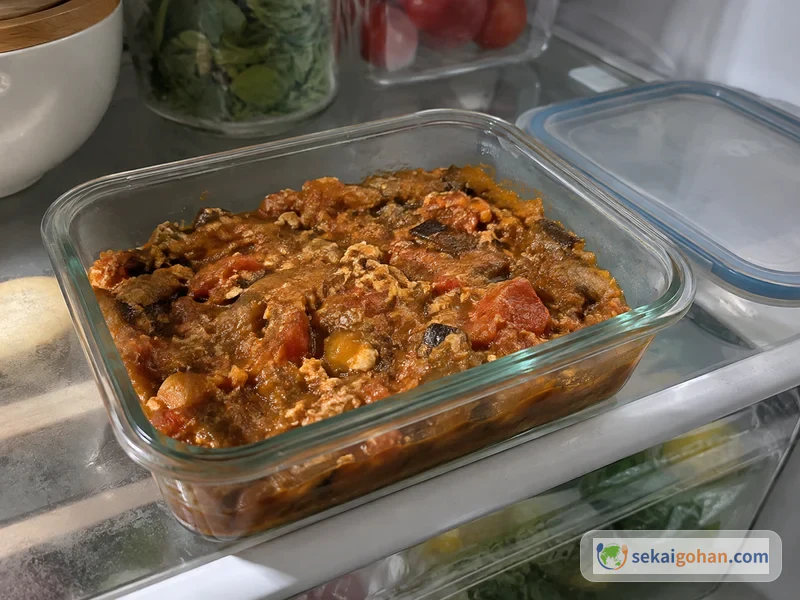
Once it has cooled slightly, put it in a container, refrigerate it and eat it soon. Reheat it in a skillet until warmed through. Because it contains egg, don't leave it long at room temperature.
Doesn't the eggplant skin get too burnt and bitter?
Only the skin burns; the flesh inside stays sweet once the skin is peeled. Too many black bits left behind will bring bitterness, so remove at least the large pieces.