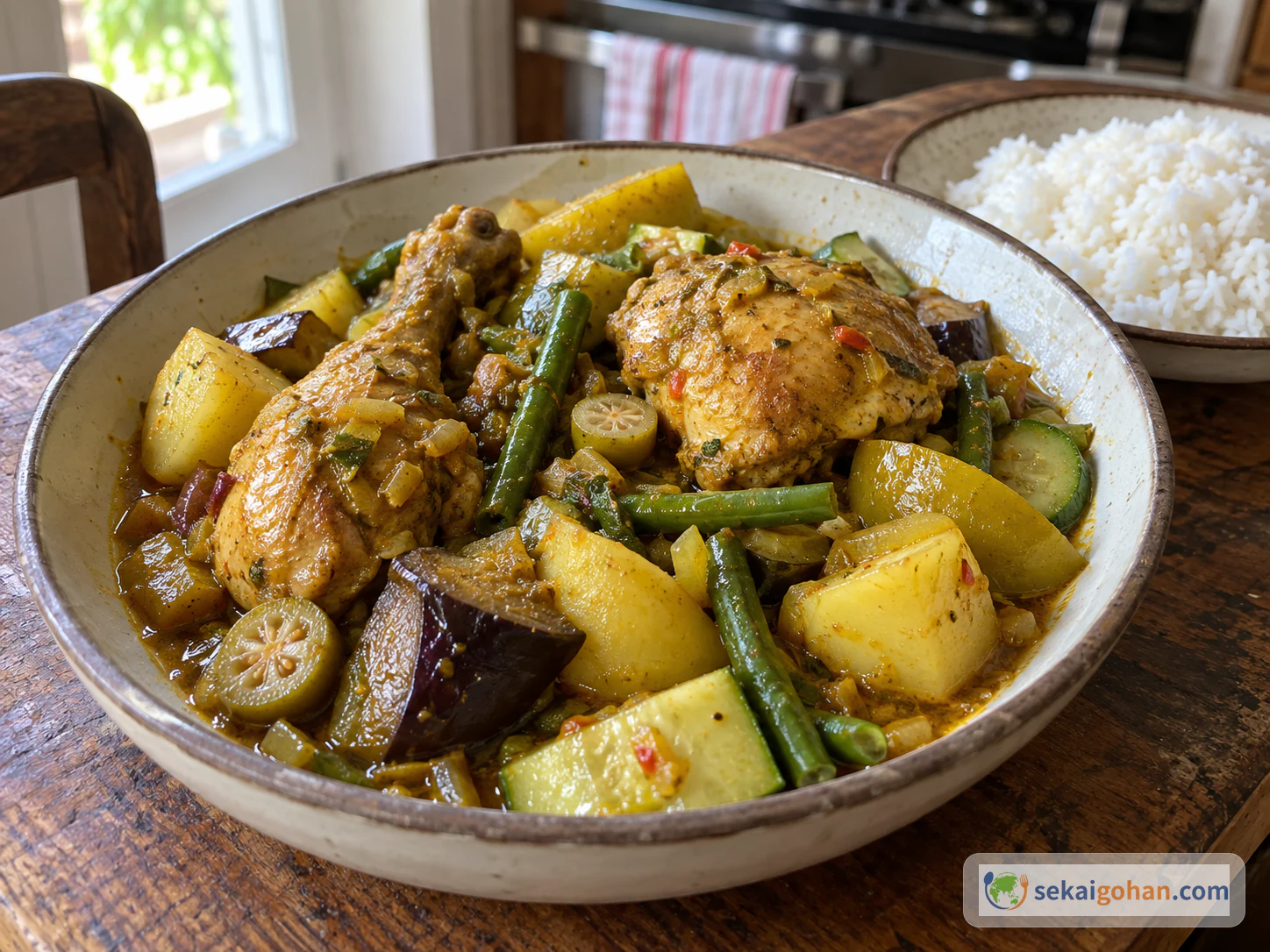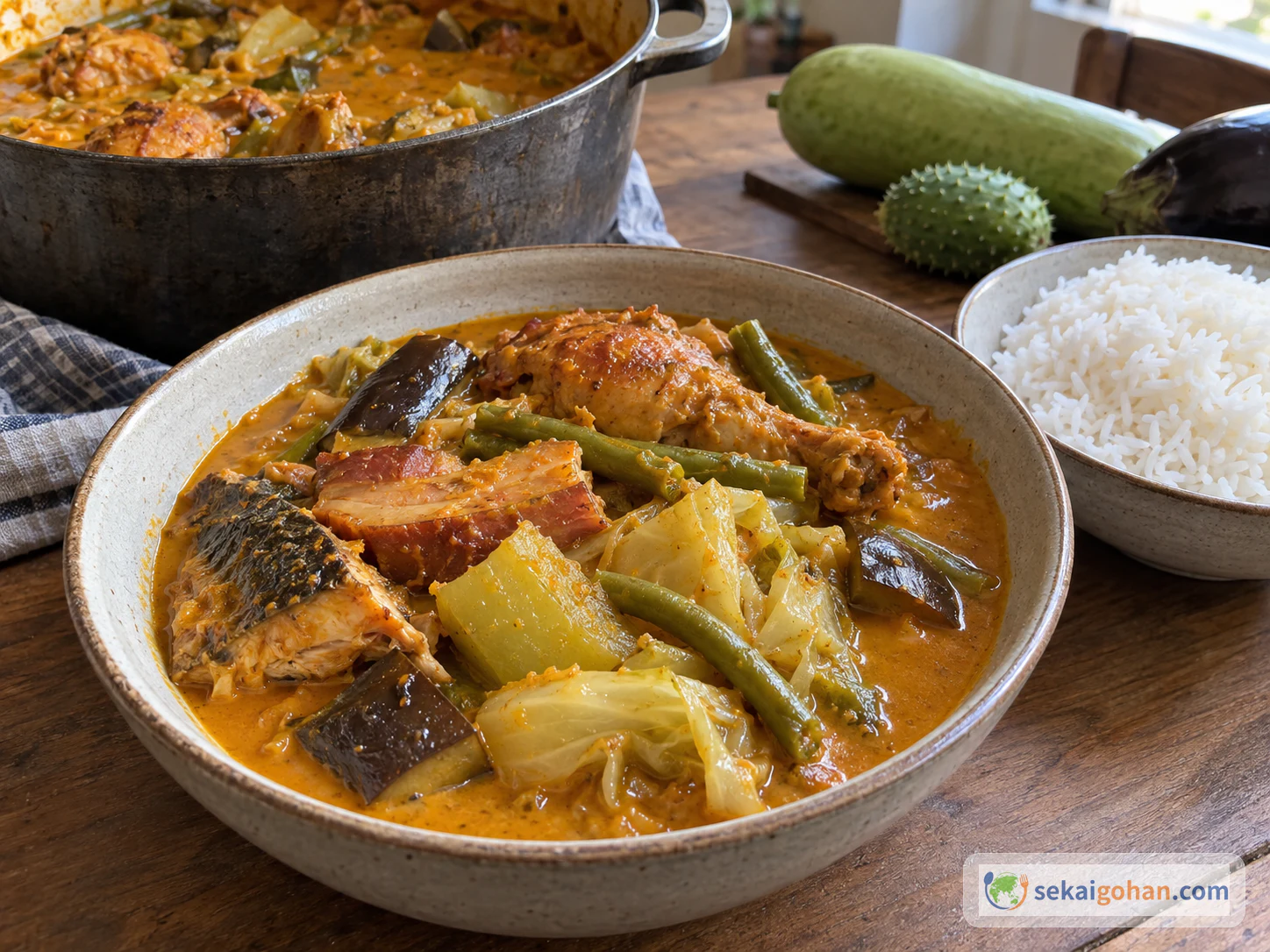
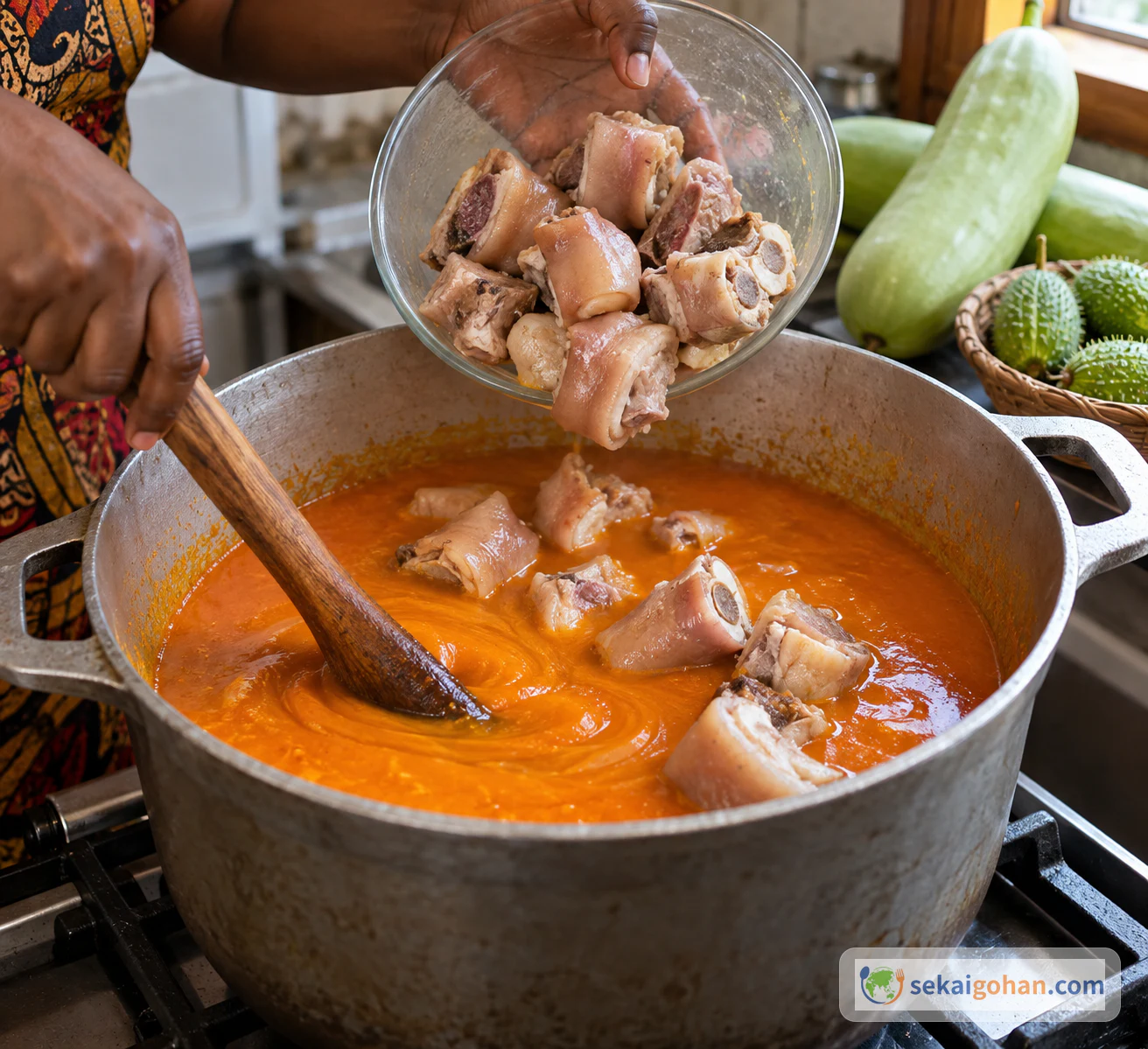
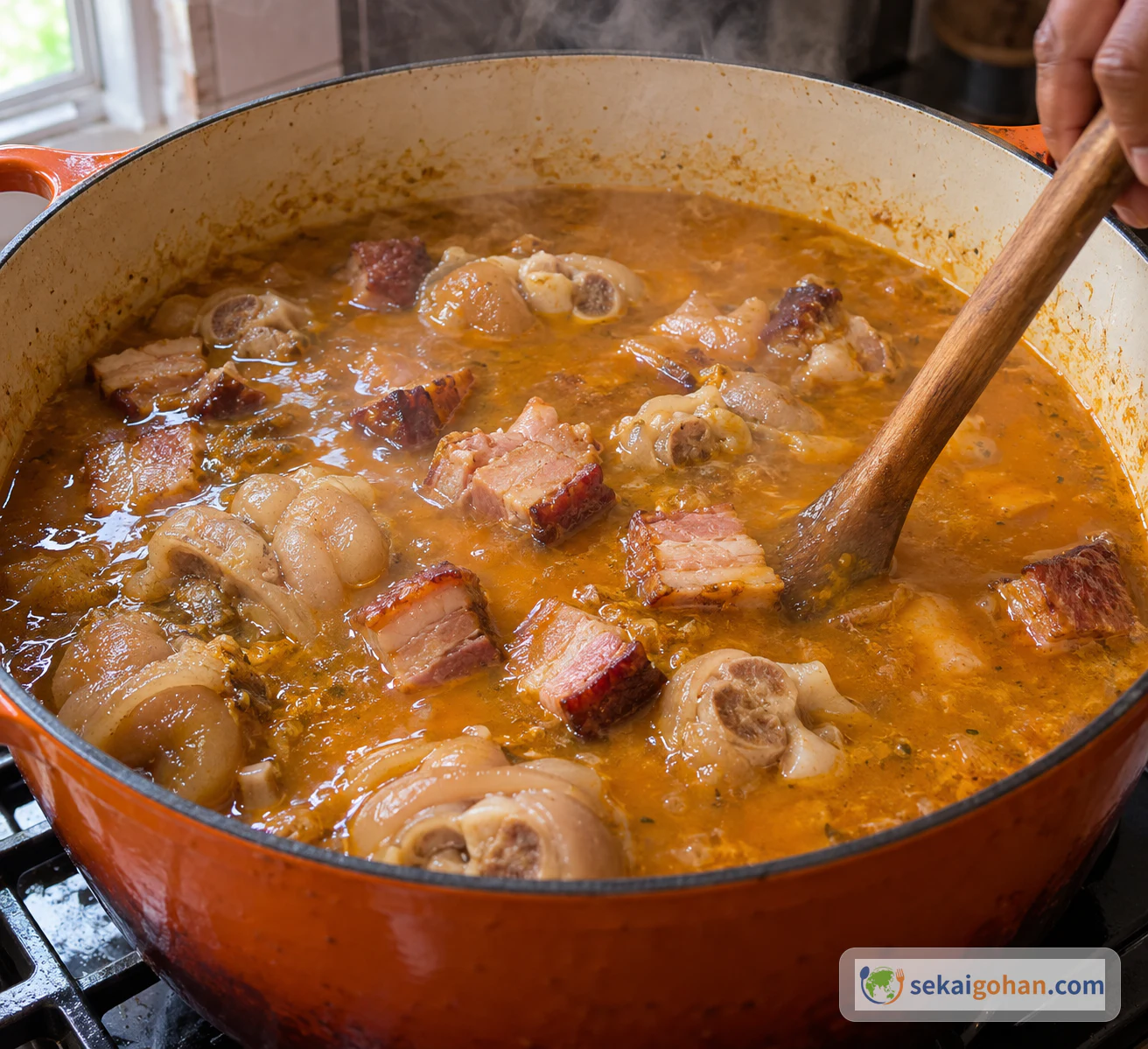
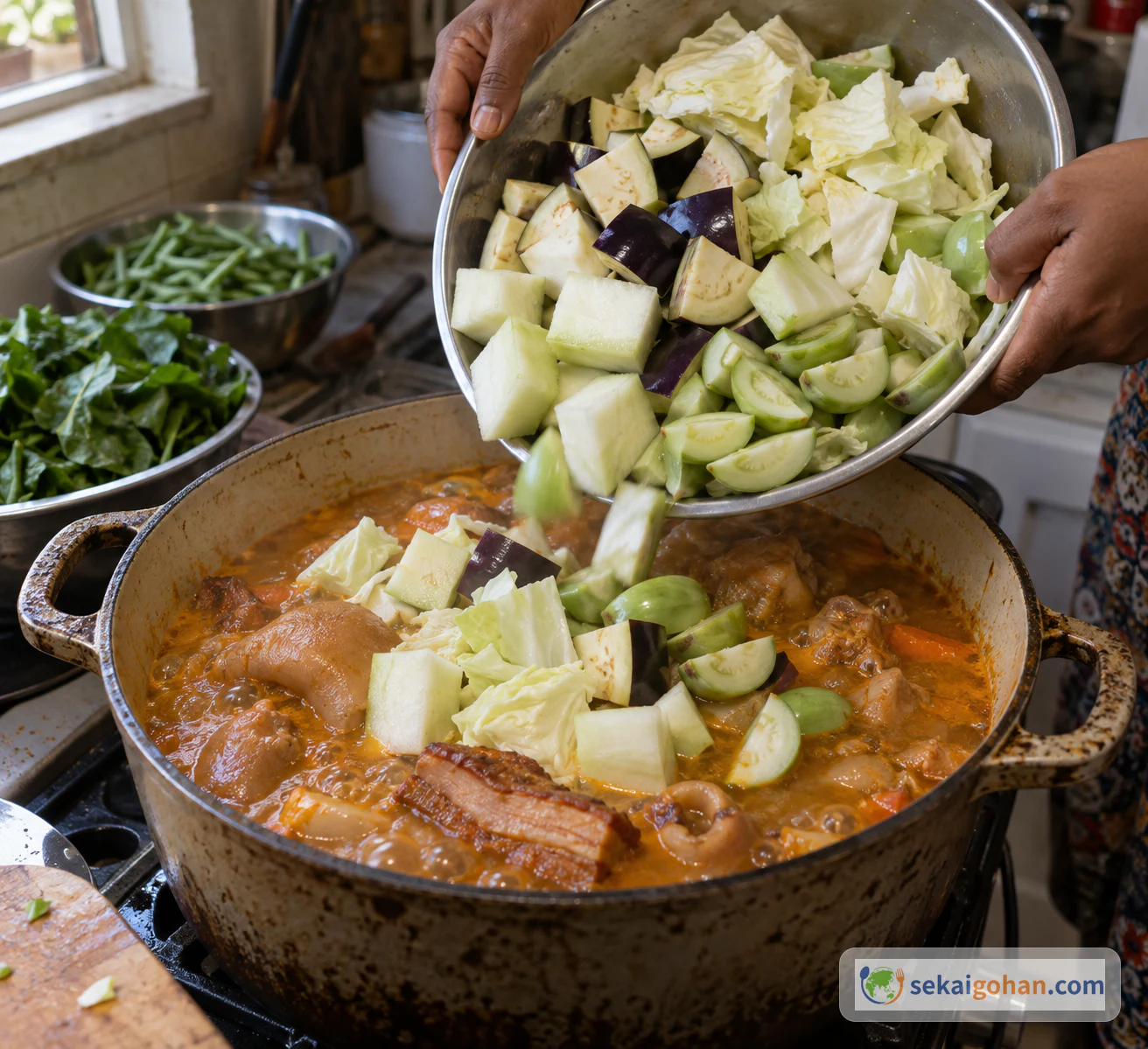
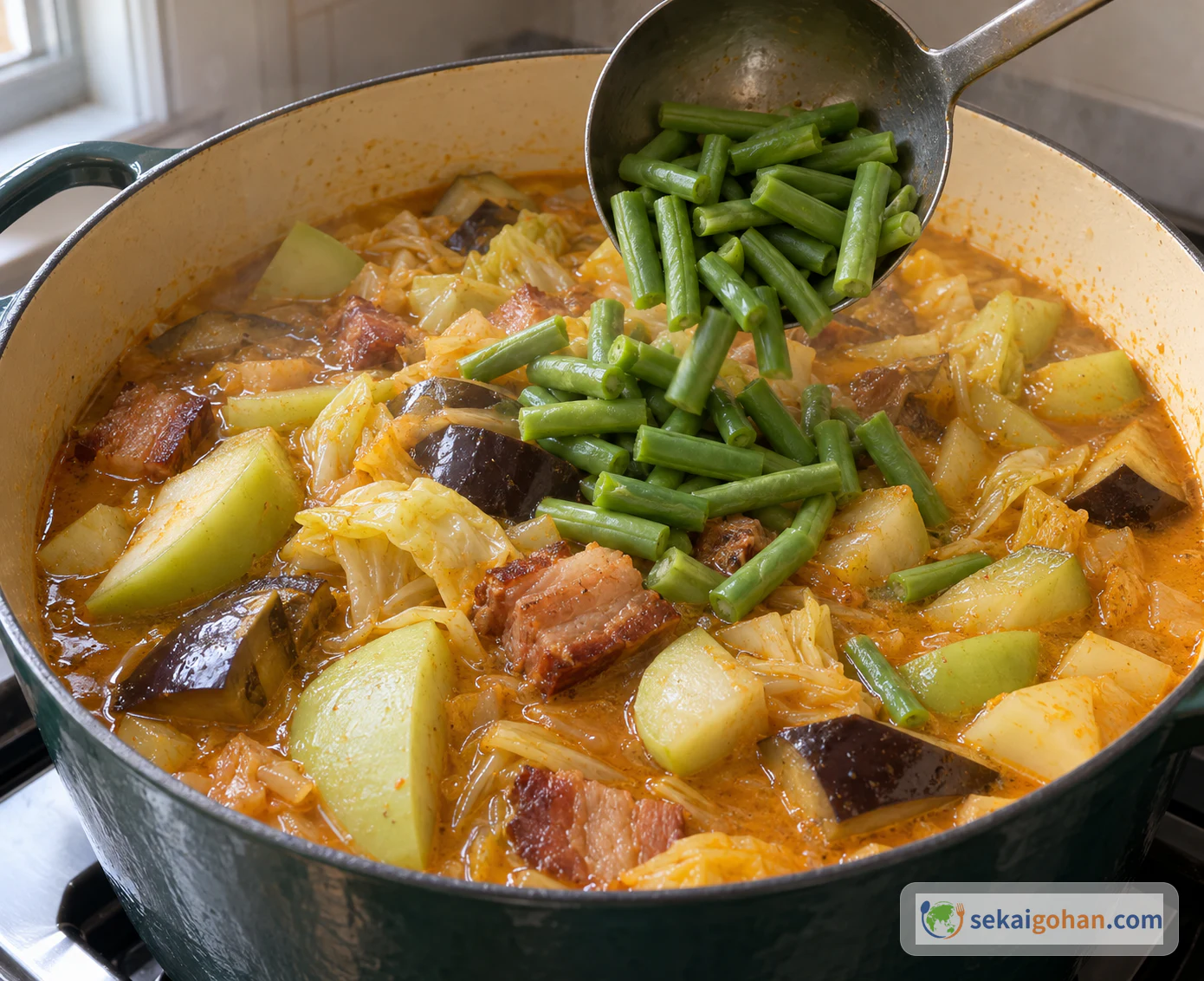
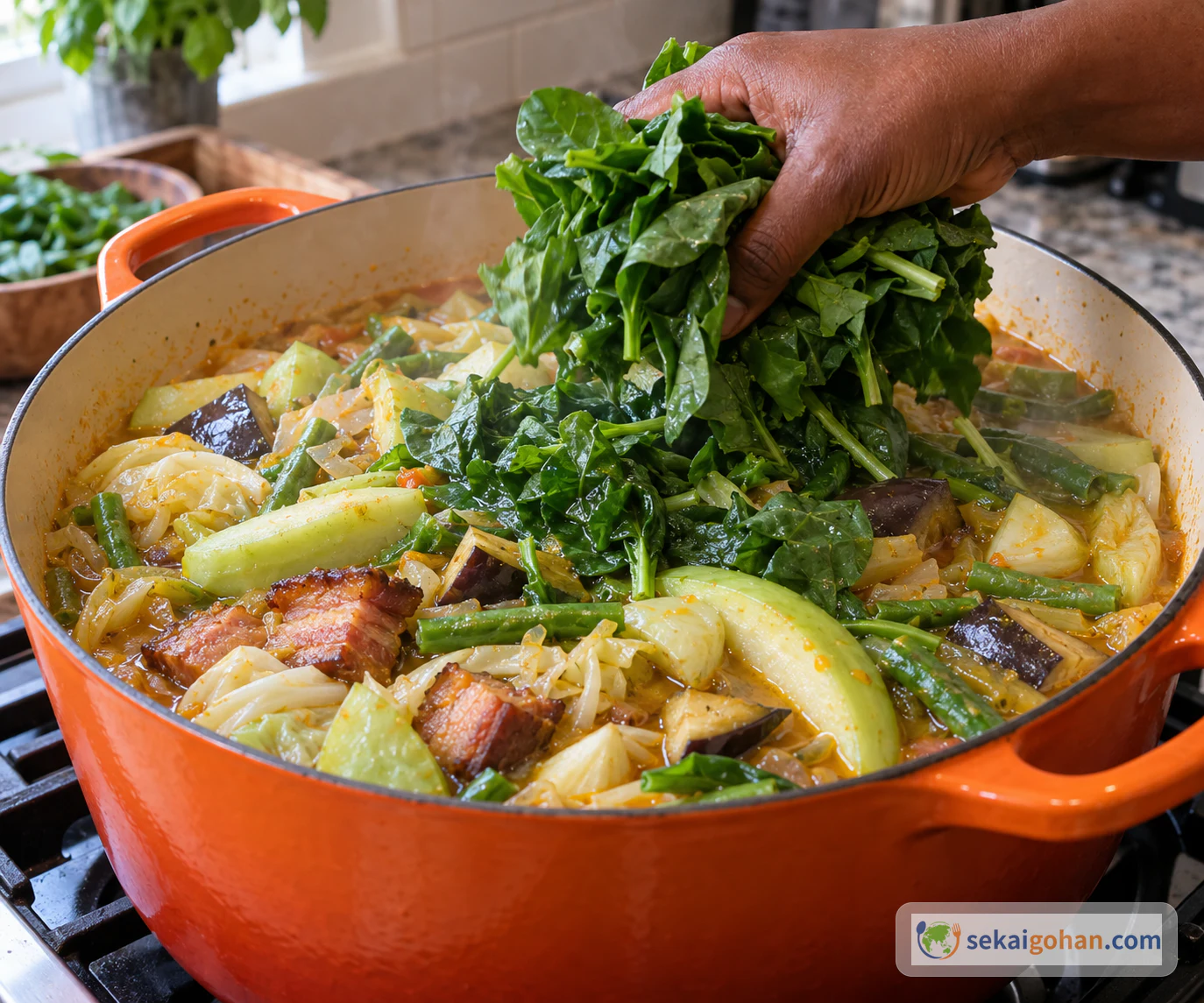
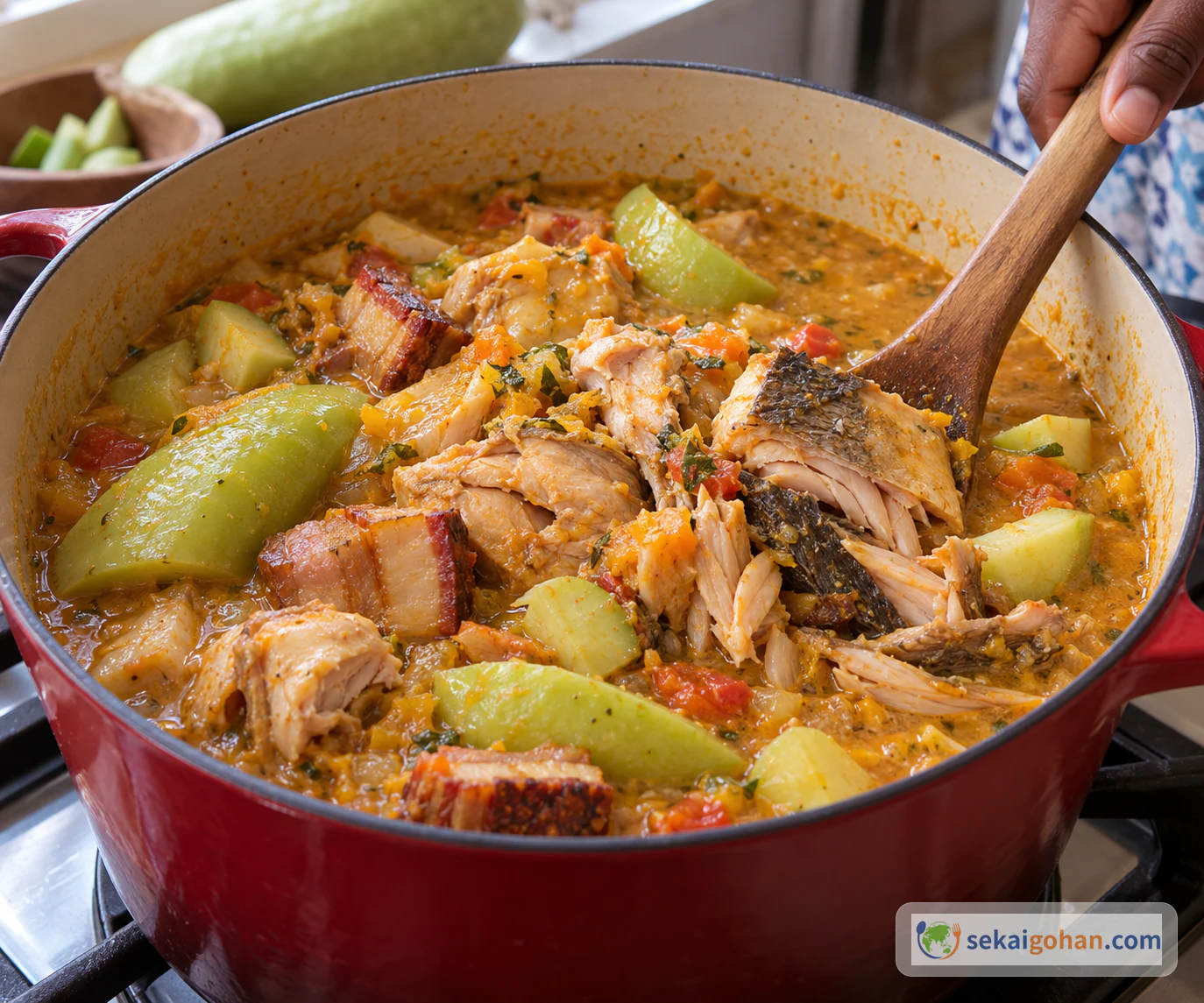
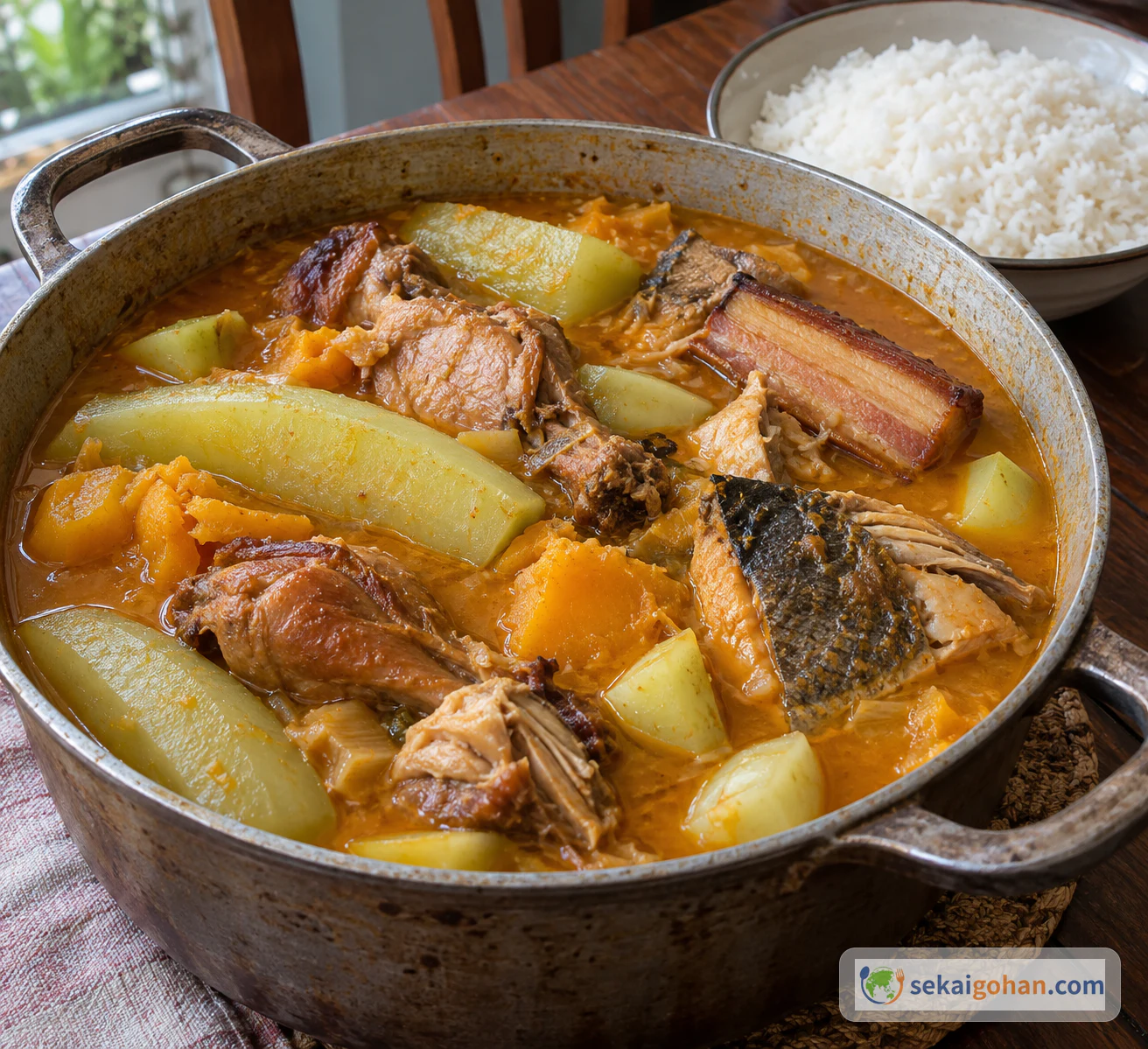
At Easter, the pot simmers overnight over a wood fire, deep orange with the juice drawn from freshly gathered awara fruit. In the morning the smoked meats go in, shellfish cooks in a separate pot, and at midday the whole family sits down to eat together. This is bouillon d'awara, or bouyon wara in the local Creole: French Guiana's Easter stew of awara palm fruit, a great many vegetables, and salted and smoked meats, all cooked slowly for a long time. It needs time, a big pot and people to share it.
About Bouillon d'Awara
Awara is the local name for the awara palm, Astrocaryum vulgare. Its ripe fruit is orange, and the pulp is eaten raw or used in bouillon d'awara, one of the Creole dishes made with awara fruit. The pulp gives the stew its deep orange color, and the salted and smoked meats give it its savor.
The dish is made around Easter, and it brings families and whole communities together. It belongs to a table where rice and fresh, salted or smoked meat and fish are everyday foods, in a cuisine shaped by influences from several continents. Today the awara paste may be bought or handed down from family, and the pot usually cooks on an ordinary home stove rather than over a wood fire overnight.
Every ingredient goes into the pot at its own moment, so the order matters as much as the amounts. If you'd like to compare it with other pots from the Guianas, try metemgee from Guyana and the festive pom from Suriname.
Ingredients for One Large Pot
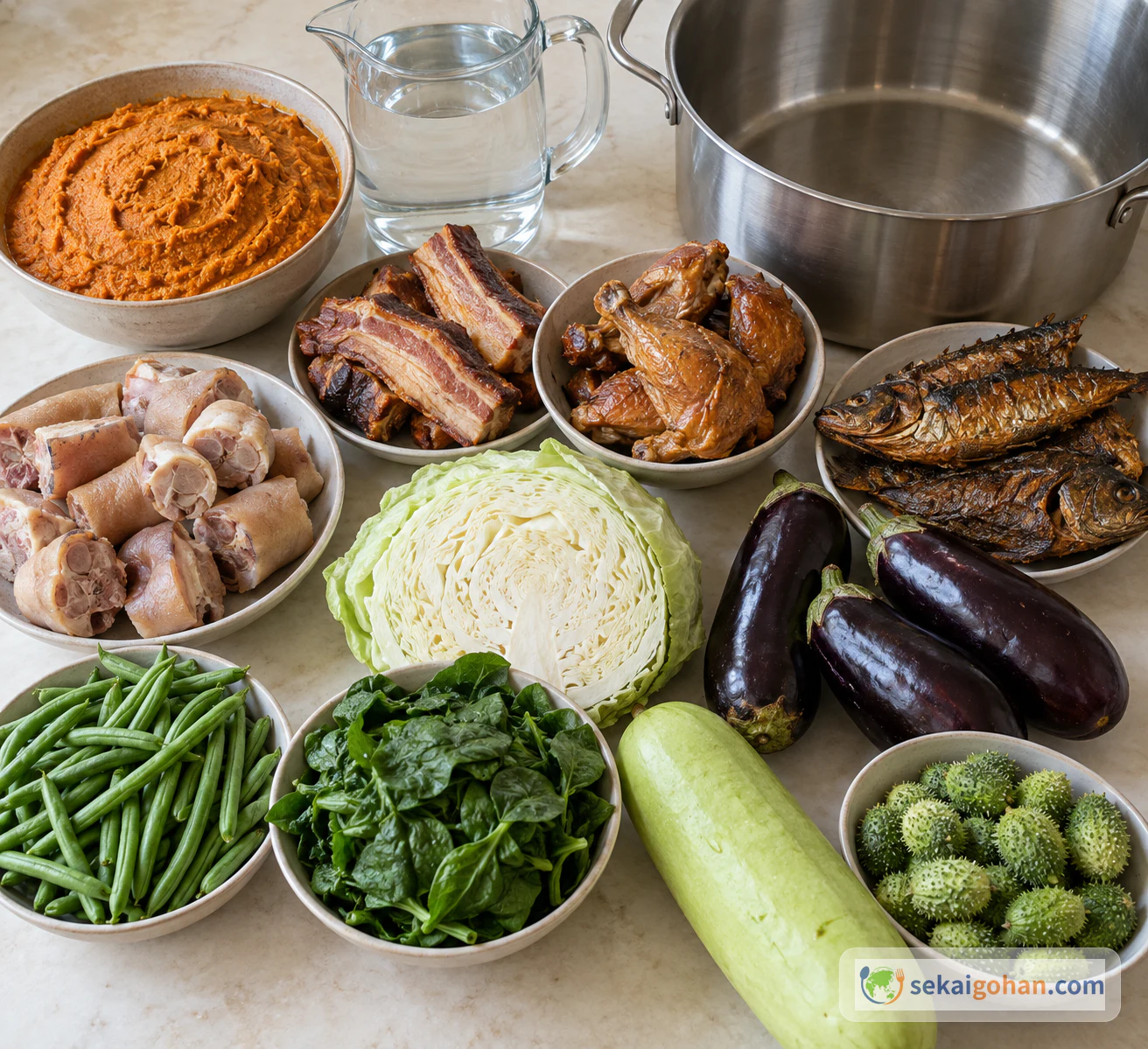
Treat these amounts as one batch for a large pot. Salt, pepper, herbs and shellfish are not part of this recipe and are not added.
Choosing the Gourds, Paste and Smoked Meats
The two "cucumbers" are not ordinary cucumbers. The names concombre piquant and concombre longe look like "spicy cucumber" and "long cucumber," but neither reading is right. Ordinary slicing cucumber would give you a different pot.
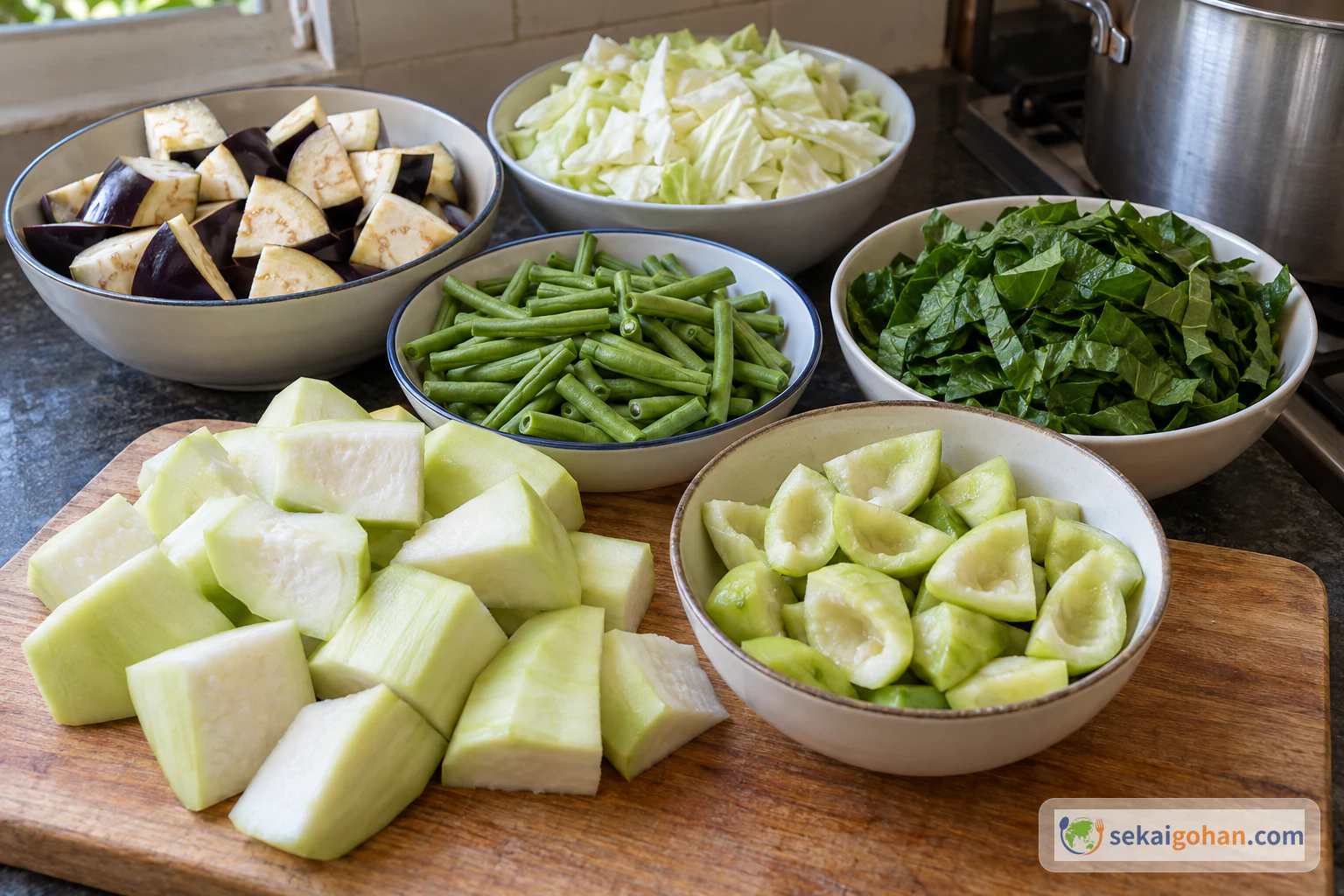
- Concombre piquant is Cucumis anguria, a small fruit covered in prickles. "Piquant" refers to those prickles, not to heat; it is not a chili. Scrape the prickles off with a knife, quarter the fruit, remove the seeds and rinse.
- Concombre longe is Lagenaria siceraria, bottle gourd. Use an edible long bottle gourd; local varieties can differ in texture. Peel it and remove the seeds.
- Spinach (épinards) provides the greens.
Awara paste has no substitute. It carries both the flavor and the color, so if you can't find it, wait until you can.
Boucané means smoked, so smoked chicken is what you want here, not roast chicken. You can leave out the optional 1 lb (500 g) boucané pork belly, but the 7 oz (200 g) smoked pork belly in step 3 is a separate ingredient, and the recipe needs it. Whatever fish you buy, check the label for allergens and for whether it must be cooked before eating.
Equipment
- A large, heavy-bottomed pot with enough room for all the paste, meat, fish and vegetables, plus room to stir
- A wooden spoon or heat-resistant spatula that reaches the bottom of the pot
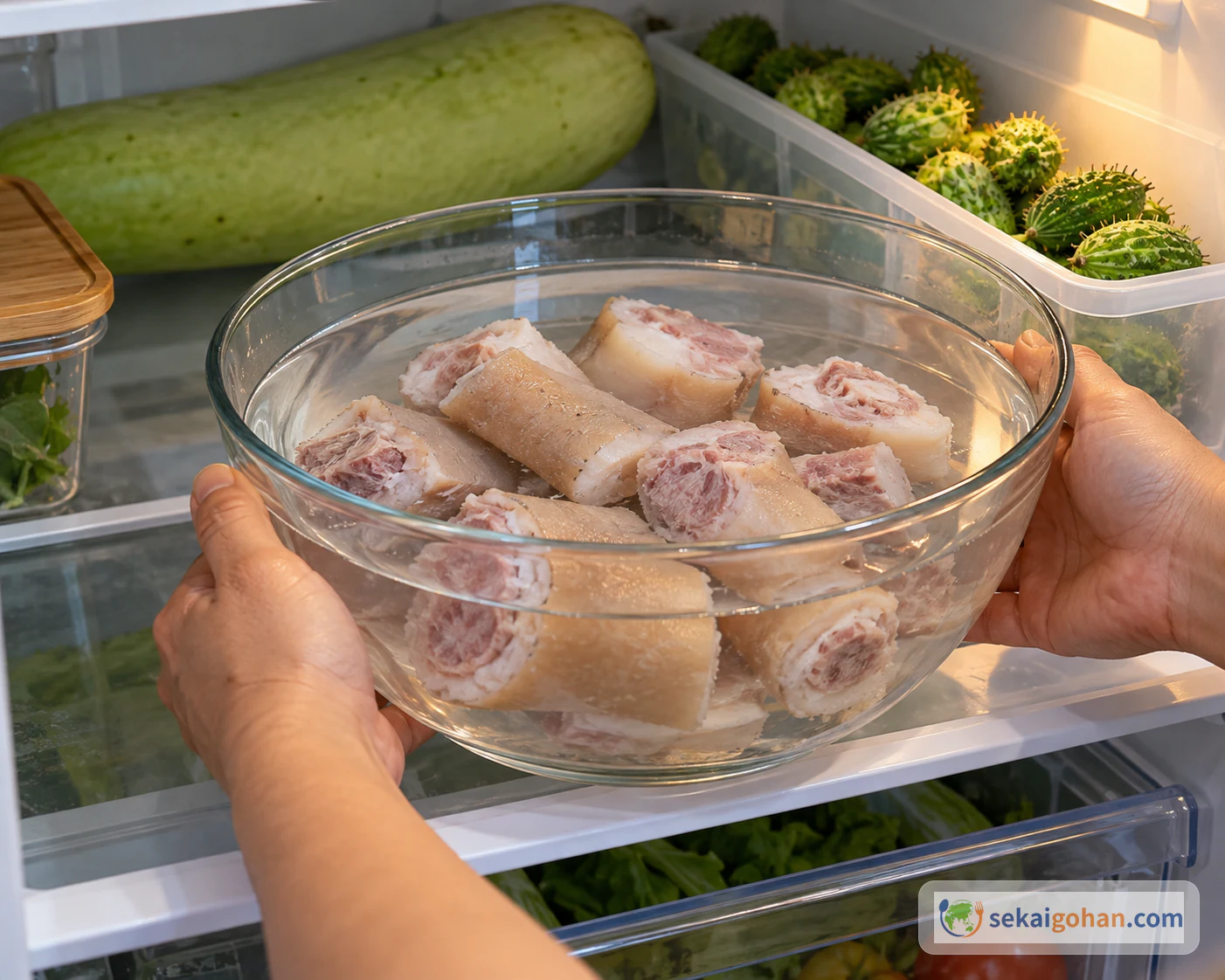
- A bowl for soaking the pig tail overnight
- A knife and cutting board
This recipe is cooked in an open pot, not a pressure cooker.
Method: Building the Pot in Layers
Allow 40 minutes of preparation and 3.5 hours of cooking. The step times below add up to 3 hours 20–30 minutes. Start the overnight desalting the evening before; it is separate from the 40 minutes of preparation. Heat levels are medium or low.
This recipe contains fish and pork. The main version has no crustaceans, but check the labels of smoked and processed products for allergens and shared-facility statements.
Smoked does not mean safe to eat without cooking. Follow each product's label, including any instruction to cook it. Heat food until the center reaches 167°F (75°C) for at least 1 minute. The 20 minutes in step 8 does not guarantee that temperature, so check it.
Desalting and long simmering do not make the dish keep longer. Following the same general guidance, divide leftovers into shallow containers, cool them quickly, refrigerate them, and reheat them thoroughly (about 167°F (75°C) or above) before eating. No dish-specific storage period is given here.
Troubleshooting Bouillon d'Awara
| Problem | Likely cause | What to do |
|---|---|---|
| The bottom is catching or scorching | Thick paste resting on the base of the pot | Stir from the bottom from time to time throughout the long simmer |
| The stew tastes too salty | Pig tail not desalted long enough | Soak it overnight in the refrigerator in water that covers it, then discard the water and rinse. Don't add more salt |
| The vegetables are still firm | Not yet cooked long enough | Judge by texture: the aubergine, the gourds and the greens should be fully soft before step 8 |
| The fish breaks apart | Stirred too hard after it went in | Fold it in gently and keep the heat low |
| Unsure whether the smoked meat is cooked | Products differ | Follow the label; if it requires cooking, heat it through to the center |
Frequently Asked Questions
What is awara?
It's the fruit of the awara palm, Astrocaryum vulgare. The ripe fruit is orange, and its pulp is what goes into the bouillon, here in the form of awara paste.
How many people does it serve?
Treat the amounts as one batch for a large pot.
How long does it take?
Allow 40 minutes of preparation and 3.5 hours of cooking. The individual steps (about 1 hour 30 minutes, then about 30, 30, 30–40 and about 20 minutes) come to 3 hours 20–30 minutes. Desalt the pig tail the night before.
Is concombre piquant spicy?
No. "Piquant" refers to the prickles on the small Cucumis anguria fruit, and you scrape them off before cooking.
Can I keep leftovers?
Yes. Divide leftovers into shallow containers, cool them quickly and refrigerate them. Reheat them thoroughly before eating.