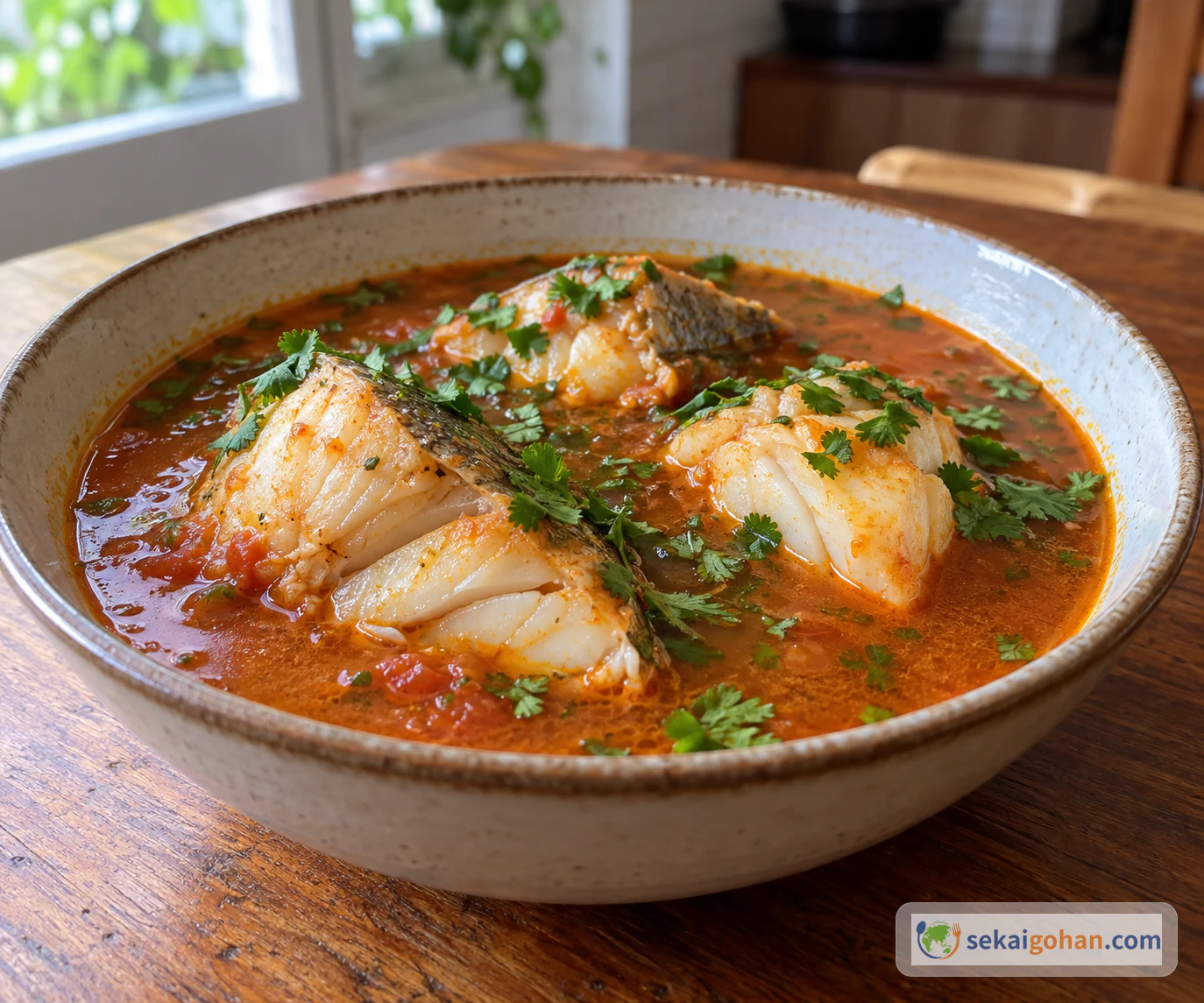
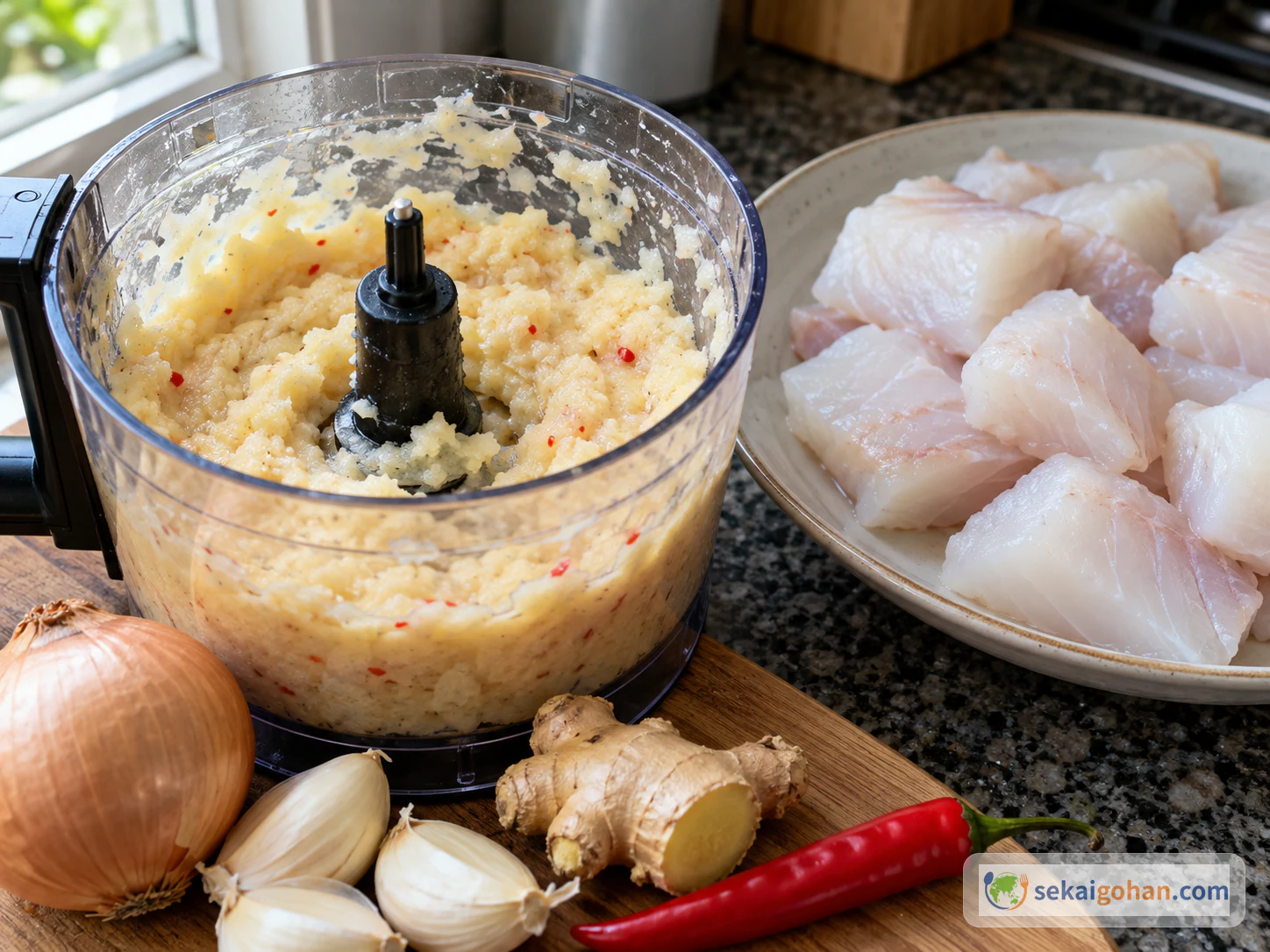
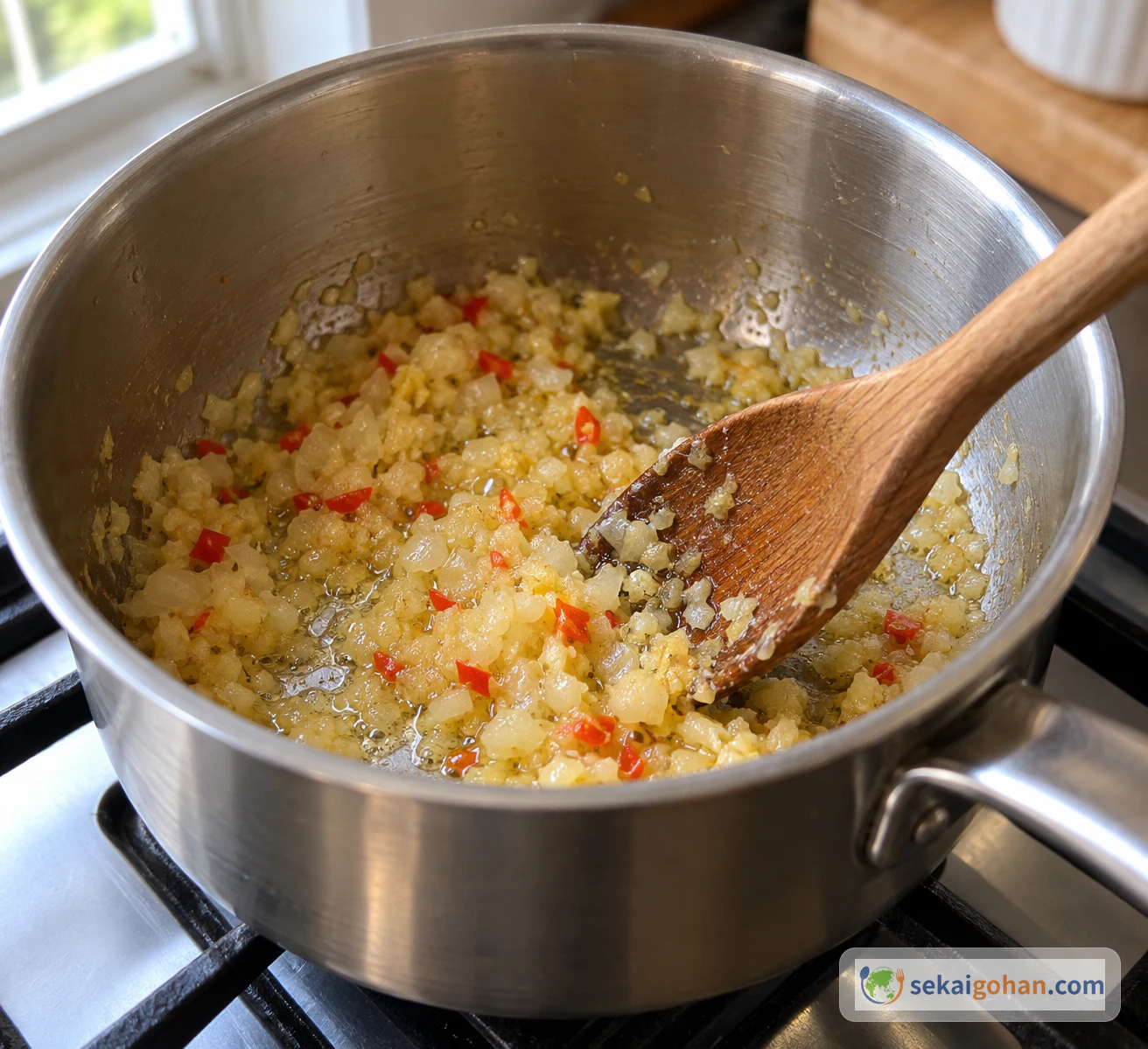
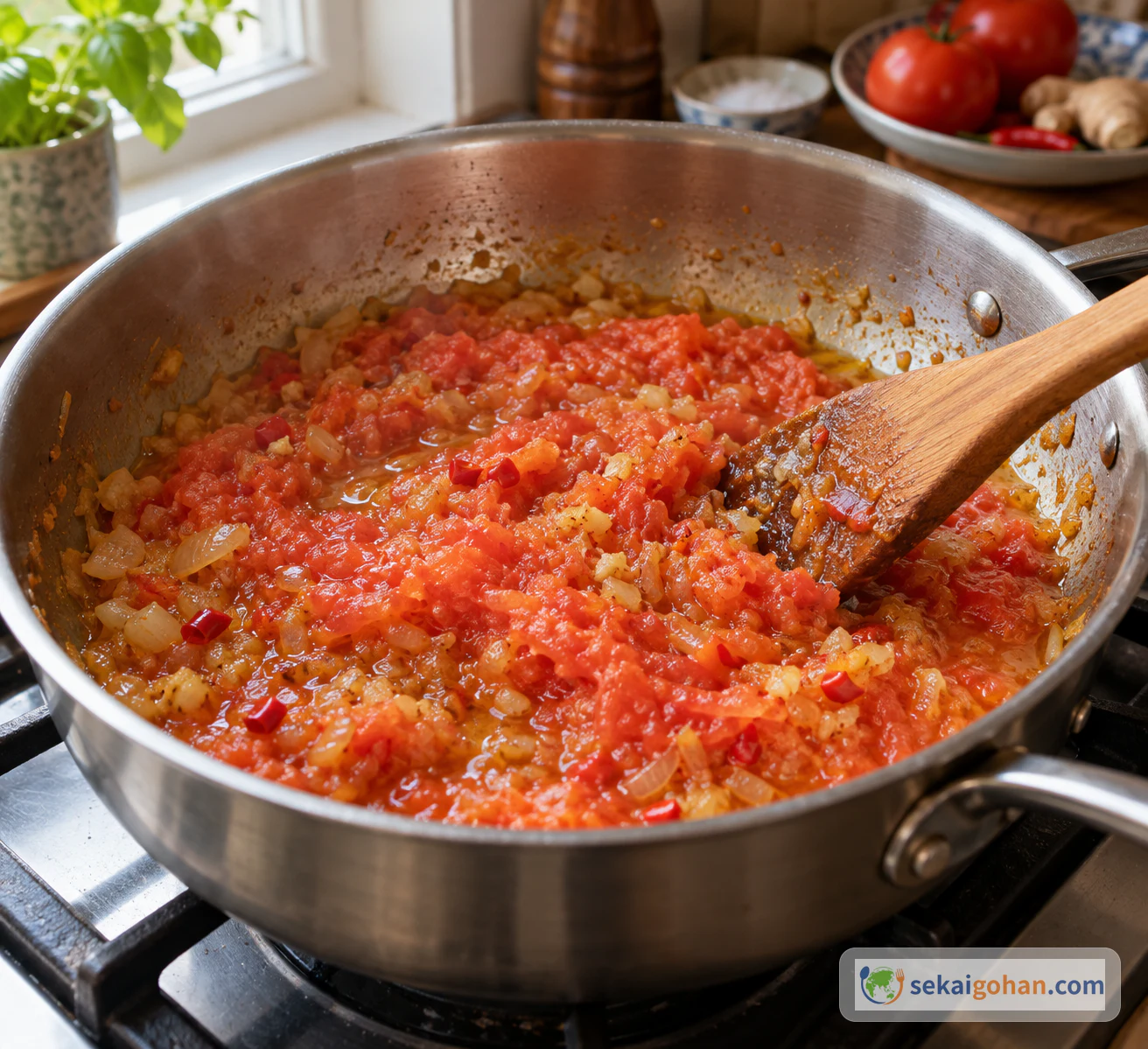
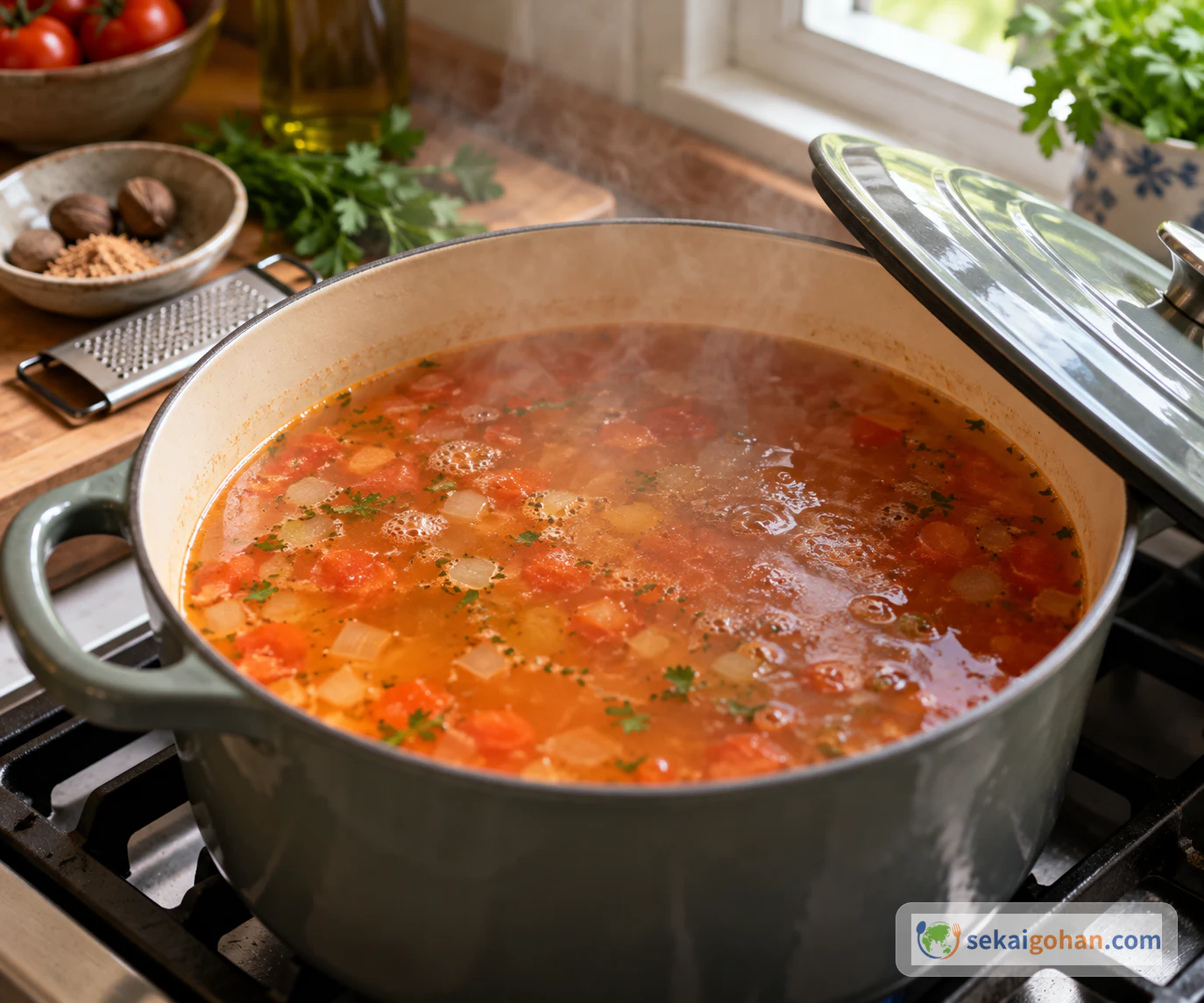
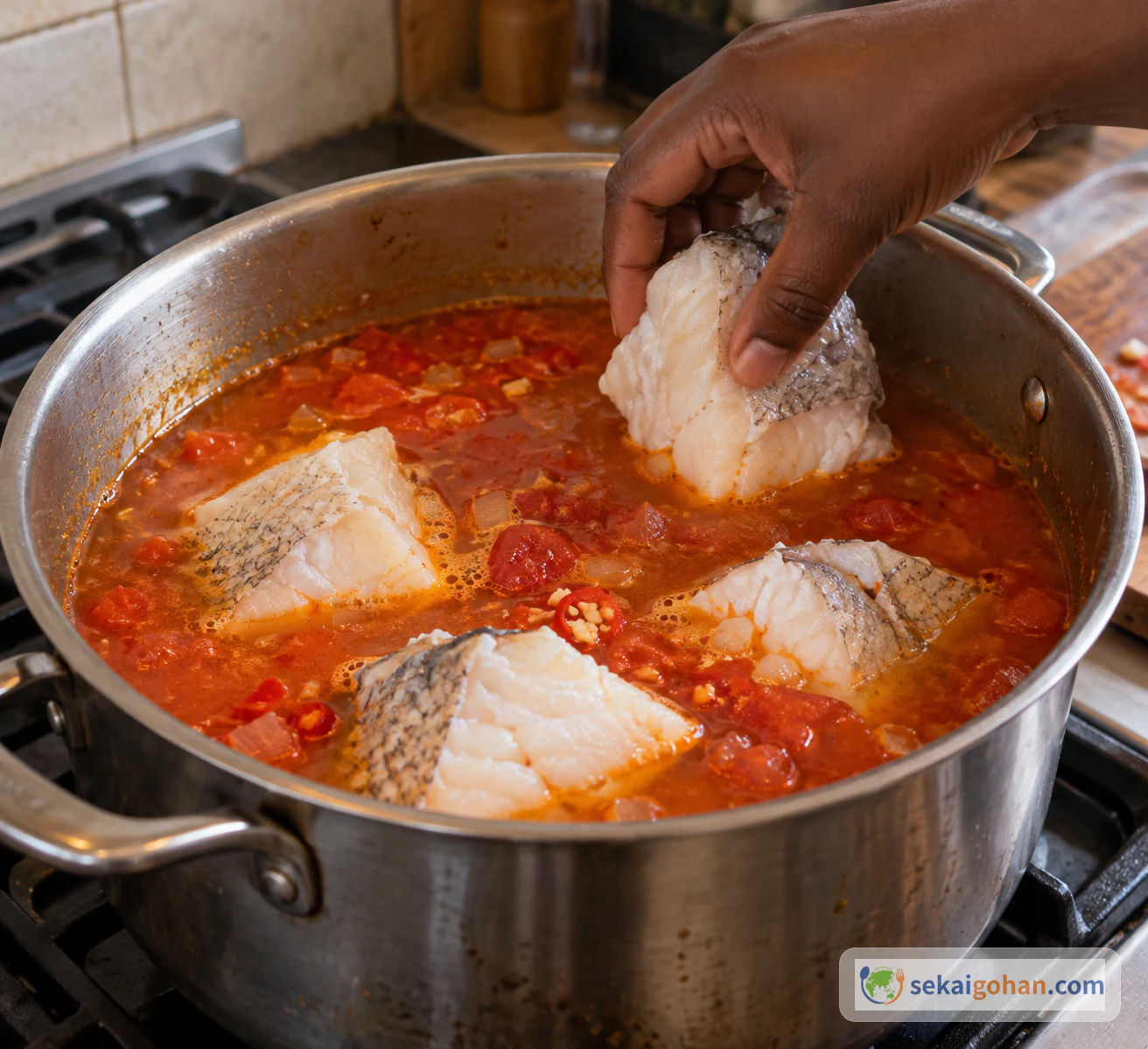
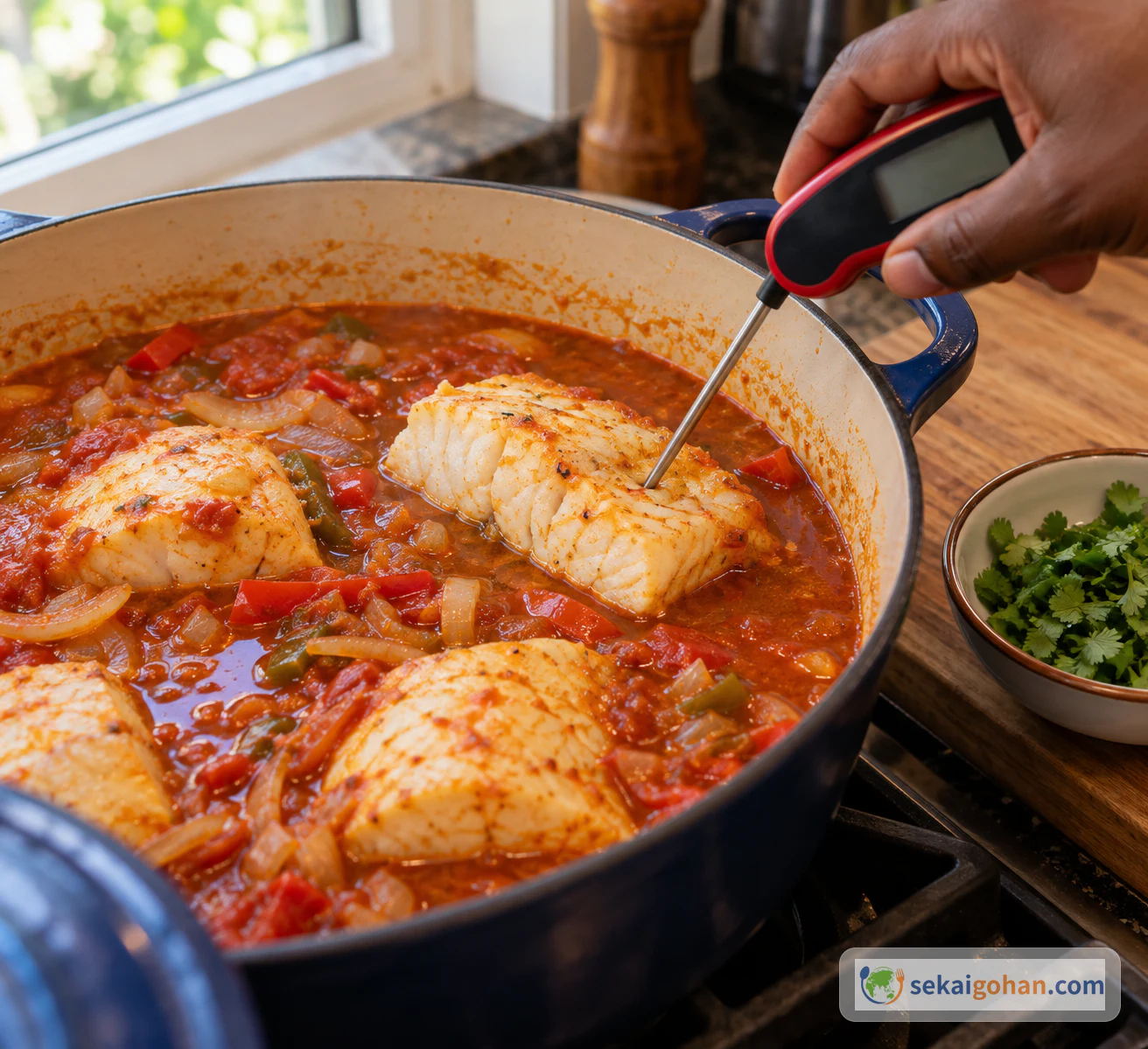
Onion, garlic, fresh ginger and chili are blended into a smooth paste and warmed in a little olive oil, and grated ripe tomato turns it soft and red. Fish stock goes in with nutmeg, salt and black pepper, the broth simmers under a lid, and large pieces of firm white fish are lowered in at the end to cook at a quiet simmer until they turn opaque. A scattering of chopped cilantro finishes the bowl. This is pepesup, the spicy fish soup of Equatorial Guinea: a clear, peppery broth with the warmth of ginger and the sweetness of tomato.
Pepesup in Equatorial Guinea
Equatorial Guinean cooking is shaped by both African and European influences, and fish matters a great deal in it. Pepesup is one of the cuisine's basic dishes, and it is usually eaten with rice or plantain. The name is an adaptation of "pepper soup" (sopa de pimienta in Spanish).
The name covers more than one way of cooking. Broadly, pepesup is a spicy fish soup or stew with pepper, ginger, garlic and vegetables, and the vegetables change with the region and season. A simpler home version, called "pepe-soup," uses fish, whole tomatoes, onion, stock and salt, with a teaspoon of oil and optional oregano, simmered for 20–25 minutes. Dorada or chicharro are the preferred fish.
Other soups from the region are built on very different foundations. Ghana's groundnut soup relies on peanuts, while Nigeria's banga soup and egusi soup are made with palm nuts and melon seeds. Pepesup, by contrast, keeps its broth clear and lets the fish and spice carry it.
Ingredients (Serves 4)
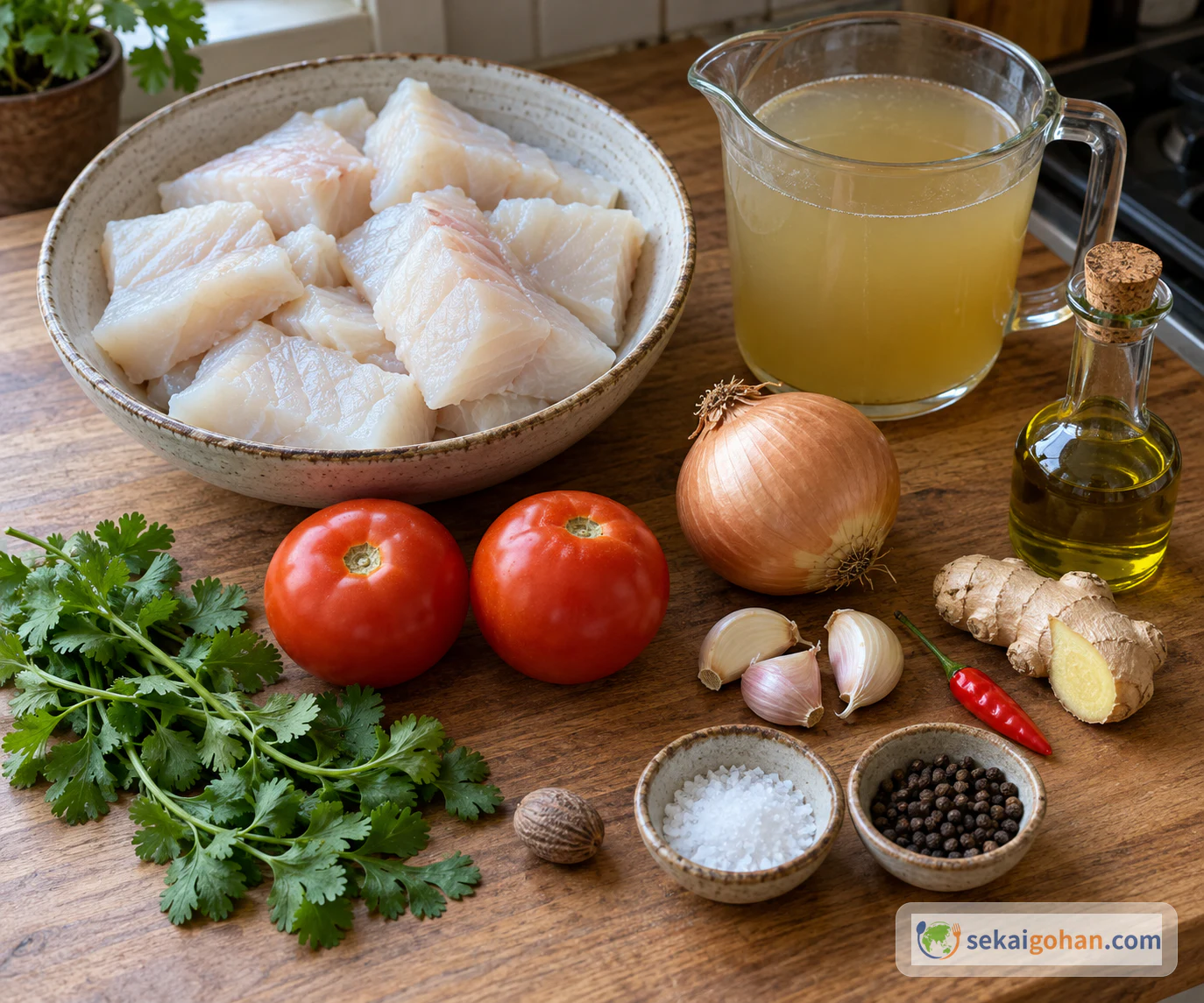
The onion, garlic, ginger and chili become one paste. The tomatoes are grated. The fish goes in last.
This soup contains fish, and fish stock is also made from fish. If you use a store-bought stock, check its ingredients and allergen labeling, and watch for cross-contact with other seafood. Keep the cutting board, knife and plates used for raw fish separate from other ingredients. Do not taste the fish raw. Thaw frozen fish in the refrigerator, not at room temperature.
Equipment
- Food processor or blender, for the aromatic paste
- Grater, for the tomatoes
- Saucepan with a lid
- Wooden spoon
- Knife and cutting board, kept for the raw fish
- Instant-read food thermometer (optional, for checking the fish)
Choosing Fish, Chili and Stock for Pepesup
Fish. Look for a boneless, firm white fish that holds together in the pot. Cod is a practical substitute at home, though each fish gives a slightly different texture.
Chili. Habanero is one choice, and other chilis that are easier to find will change both the heat and the aroma. If you are unsure, start with a smaller amount and note which chili you used and how much, so you can adjust the next pot. Leave the chili out entirely and you have a different soup.
Stock. Filtered water can stand in for fish stock, though the broth will taste less savory. With granulated or concentrated stock, dilute it according to the product label, and since salt levels differ between products, leave the final salting until the end.
Cilantro. Fresh leaves give the soup its finishing aroma, and only fresh ones will do it. If you can't find any, leave it out and accept a less fragrant bowl.
Method: Paste, Tomato, Broth, Then Fish
The paste is cooked first, then the tomato, then the broth. The fish goes in only after the broth has simmered. Once the fish is in, keep the heat low.
Pepesup Problems and Fixes
Keep the aromatic paste pale and fragrant, not browned. Let the broth simmer before the fish goes in. Cook the fish gently so the pieces stay whole.
Cooking the paste and then the tomato before the broth goes in, as in steps 1–3, keeps the aromatics from tasting raw and gives the broth its color before the fish is added. The timed stages add up to roughly 33–35 minutes of cooking, shorter than the 45 minutes listed, so judge doneness by the state of the pot and the fish rather than the clock.
| Problem | Likely cause | What to do |
|---|---|---|
| The paste smells scorched | Heat too high, or not stirred enough | Keep the heat at medium and stir constantly. The paste should stay pale |
| The fish breaks apart | The broth boiled hard, or the pot was stirred hard after the fish went in | Keep only small bubbles once the fish is in, and move the pot gently instead of stirring |
| The broth tastes too salty | Salty store-bought stock | Season mostly at the end, after tasting the finished broth |
| The broth tastes thin | Water used instead of fish stock | Expect a lighter result with water. Adjust salt and pepper at the end |
| Too hot for some eaters | A strong chili, or too much of it | Next time use less chili in the pot and offer extra heat at the table |
| The fish center is still translucent | The pieces are thick | Keep simmering gently and check again until the thickest part reaches 145°F (63°C) or the flesh flakes easily |
Serving Pepesup
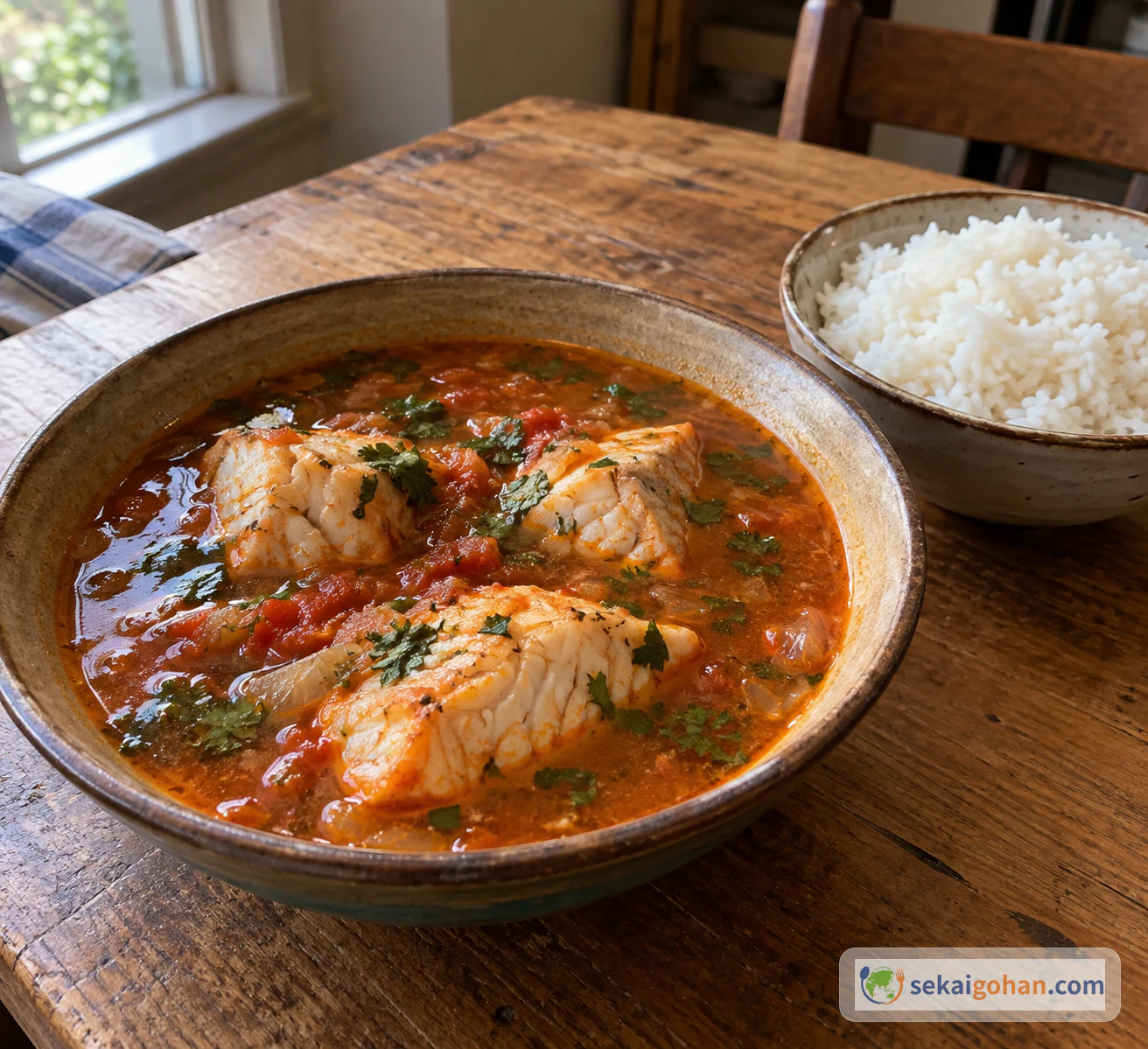
White rice on the side is the classic partner, and plantain is just as common. Boiled cassava and fried plantain work well too. If you're cooking for people with different tolerances for heat, keep the pot milder and set extra chili on the table so everyone can adjust their own bowl.
Frequently Asked Questions
What kind of fish should I use?
Firm white fish. Dorada or chicharro are the preferred fish, and at home a boneless white fish that holds together, such as cod, is a practical substitute.
How do I know the fish is cooked?
Cook fish to an internal temperature of 145°F (63°C). Without a thermometer, check that the flesh is opaque and flakes easily with a fork.