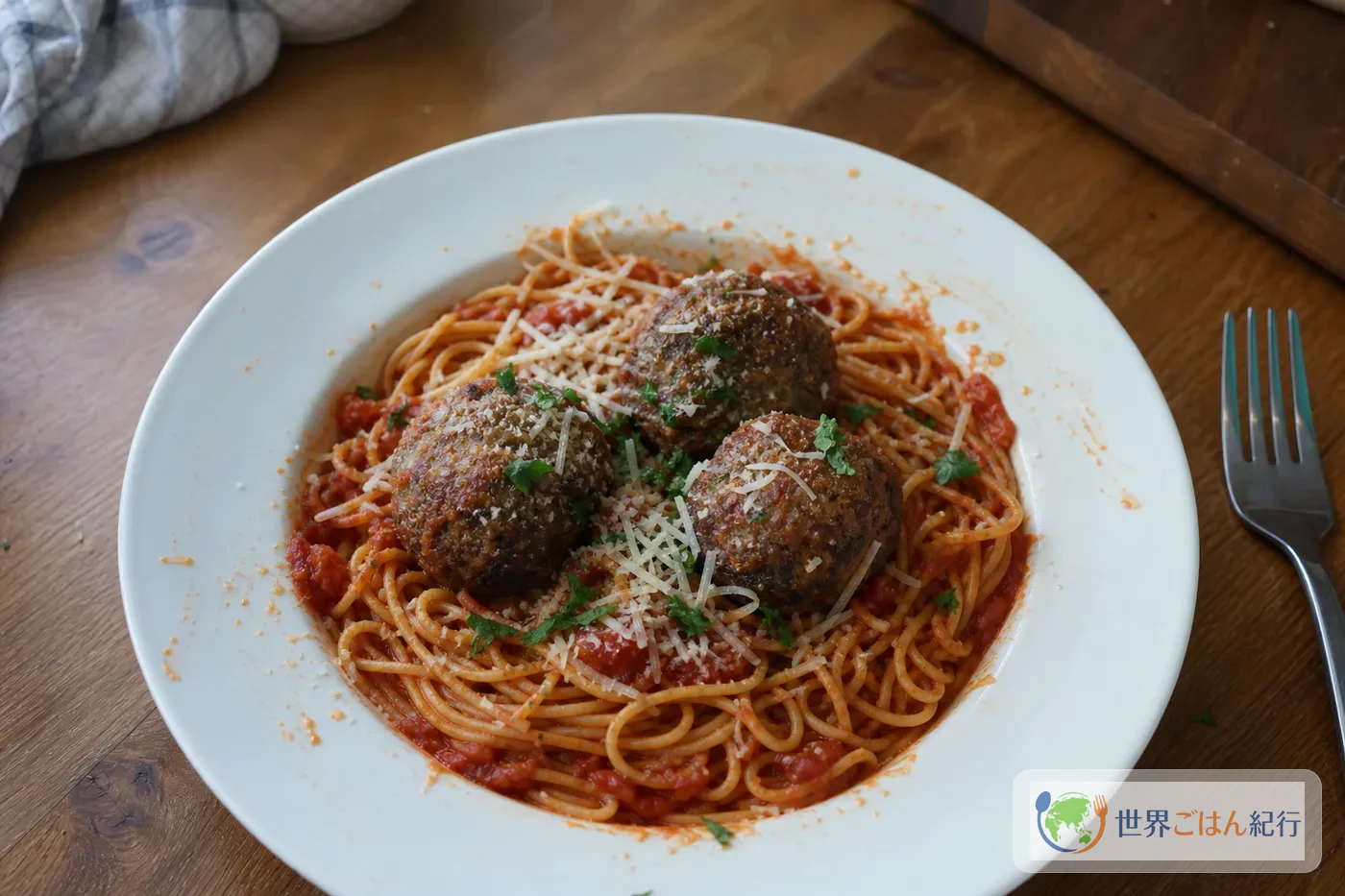
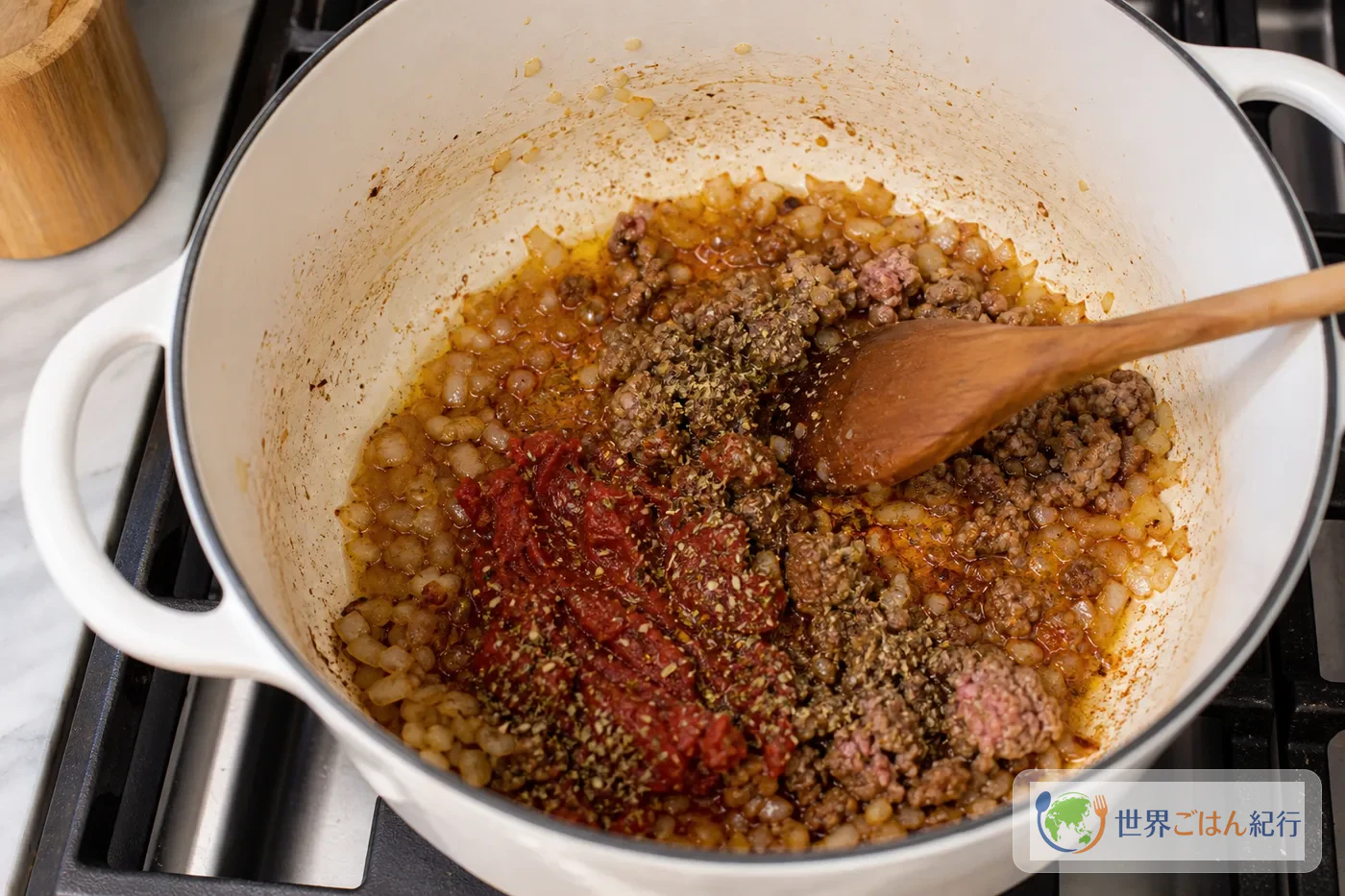
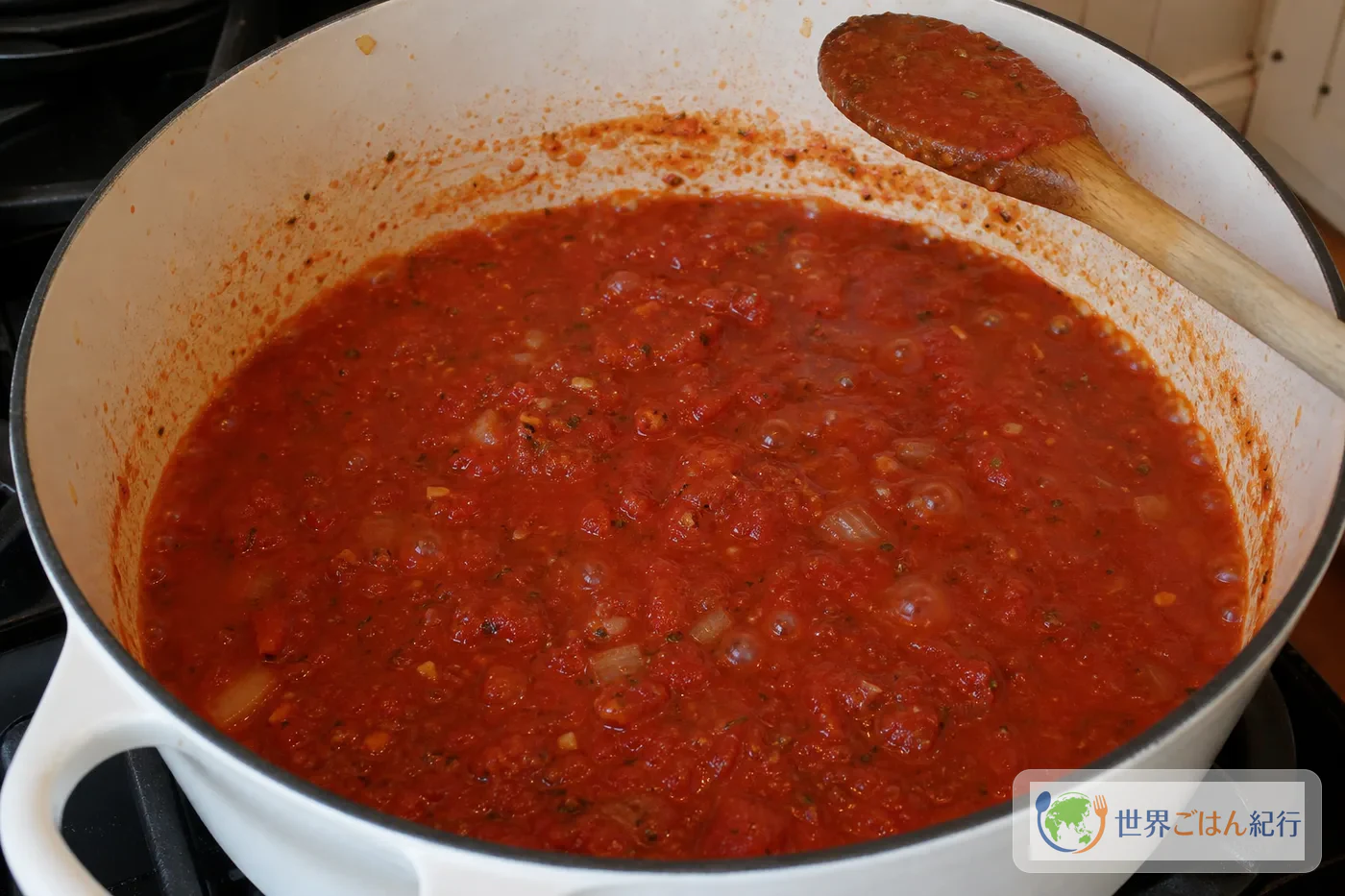
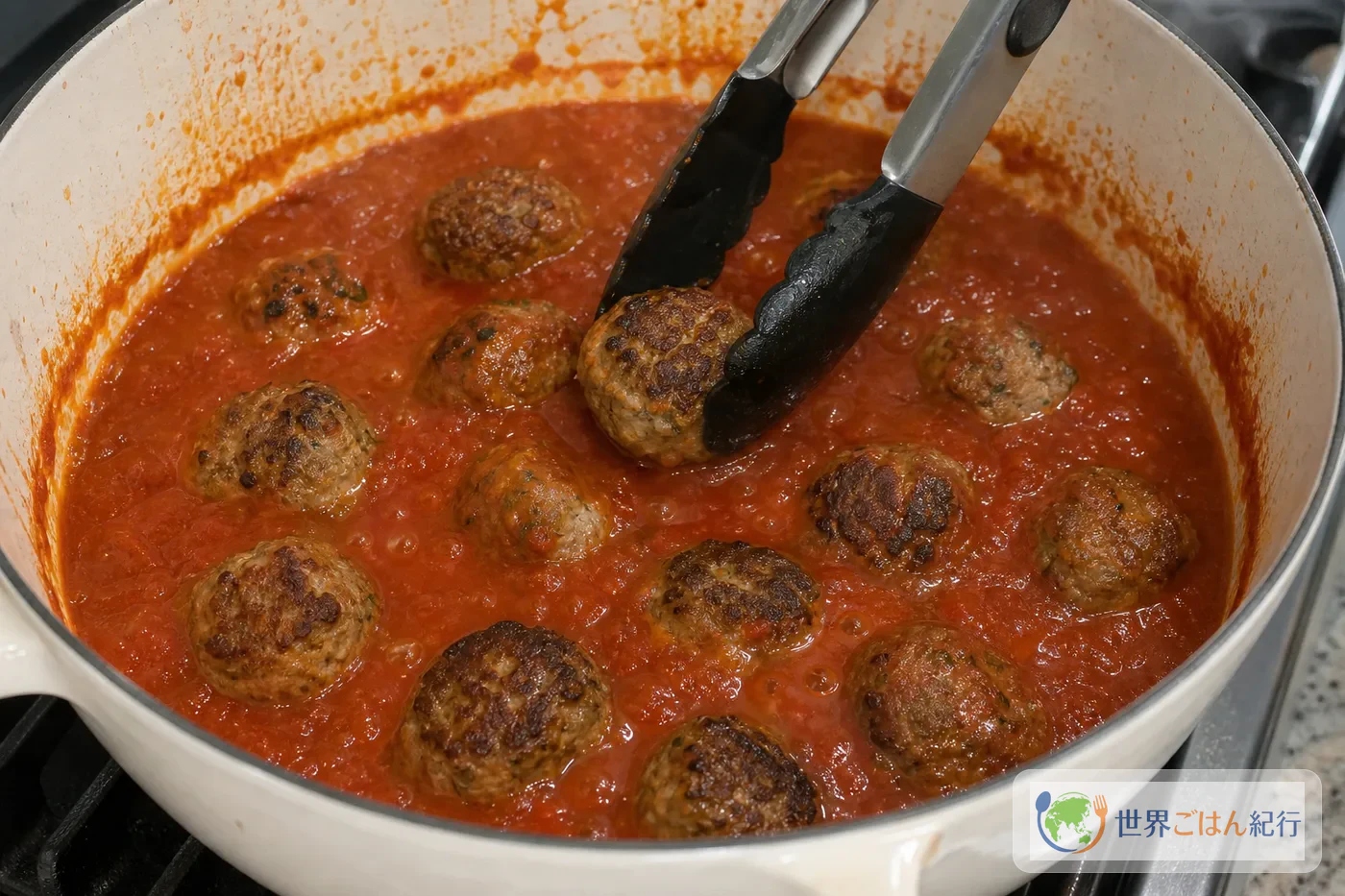
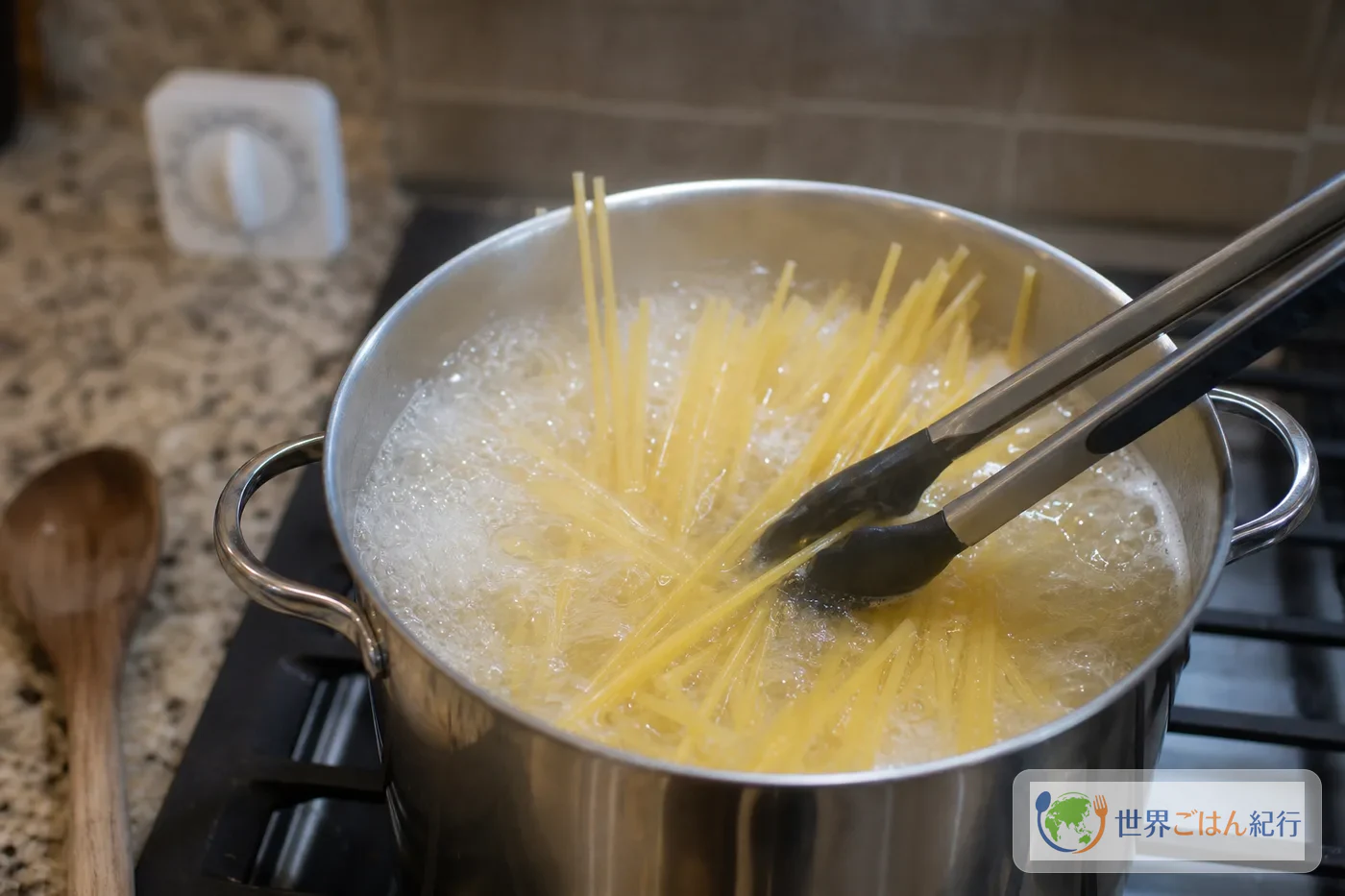
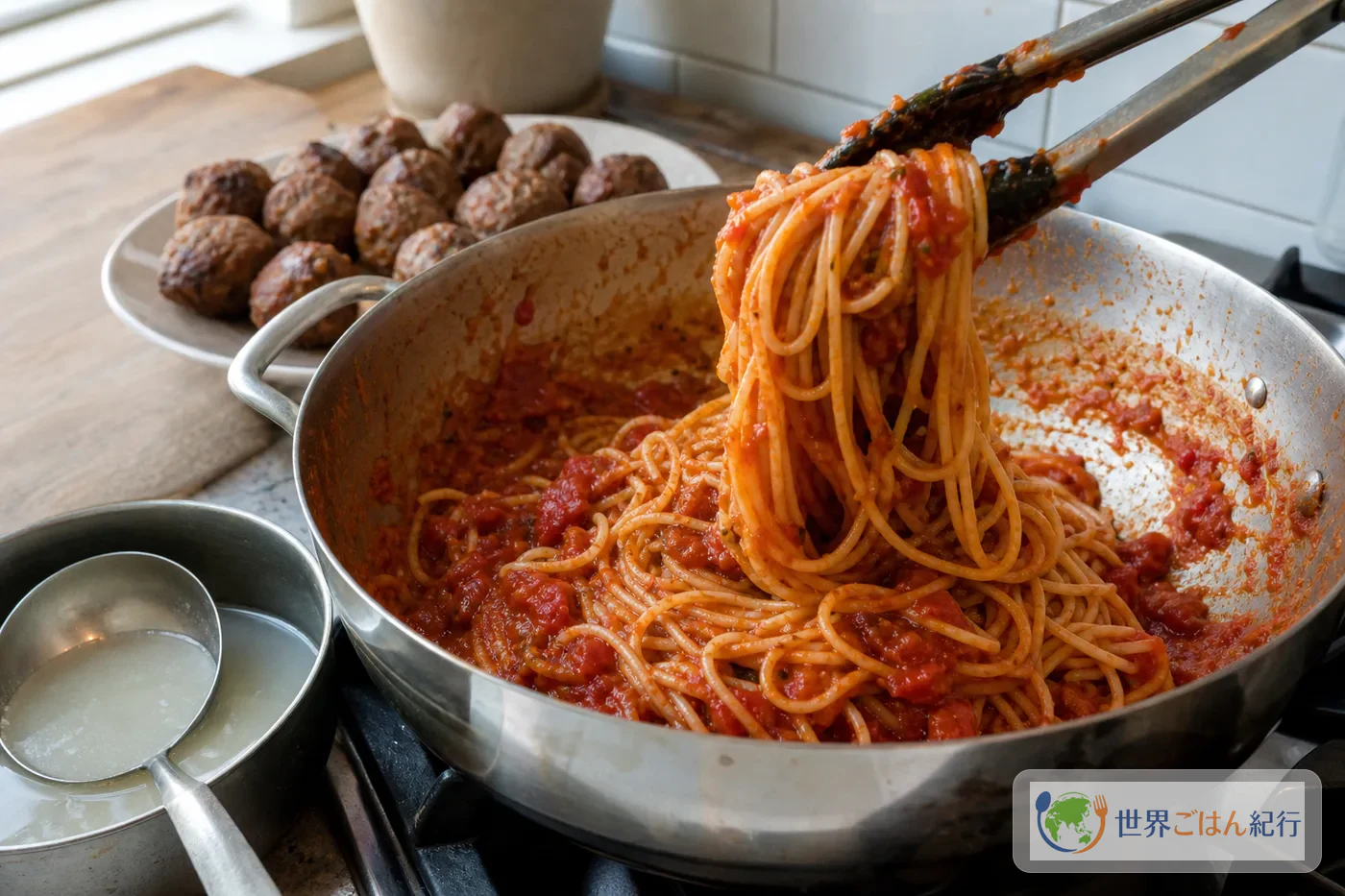
Crush canned tomatoes into the pot, and their sweet acidity fills the kitchen. In go onion, garlic, oregano and the juices from the meatballs you browned beforehand. Spaghetti and meatballs is the home plate of Italian immigrants in the northeastern United States: a tart, rounded red sauce that tastes of meat, soft meatballs, and noodles that carry the sauce. It looks like nothing more than pasta with meatballs on top. The flavor comes from three things: don't simmer the meatballs too long, get the aroma of meat into the sauce, and toss the pasta with the sauce in the pot rather than on the plate.
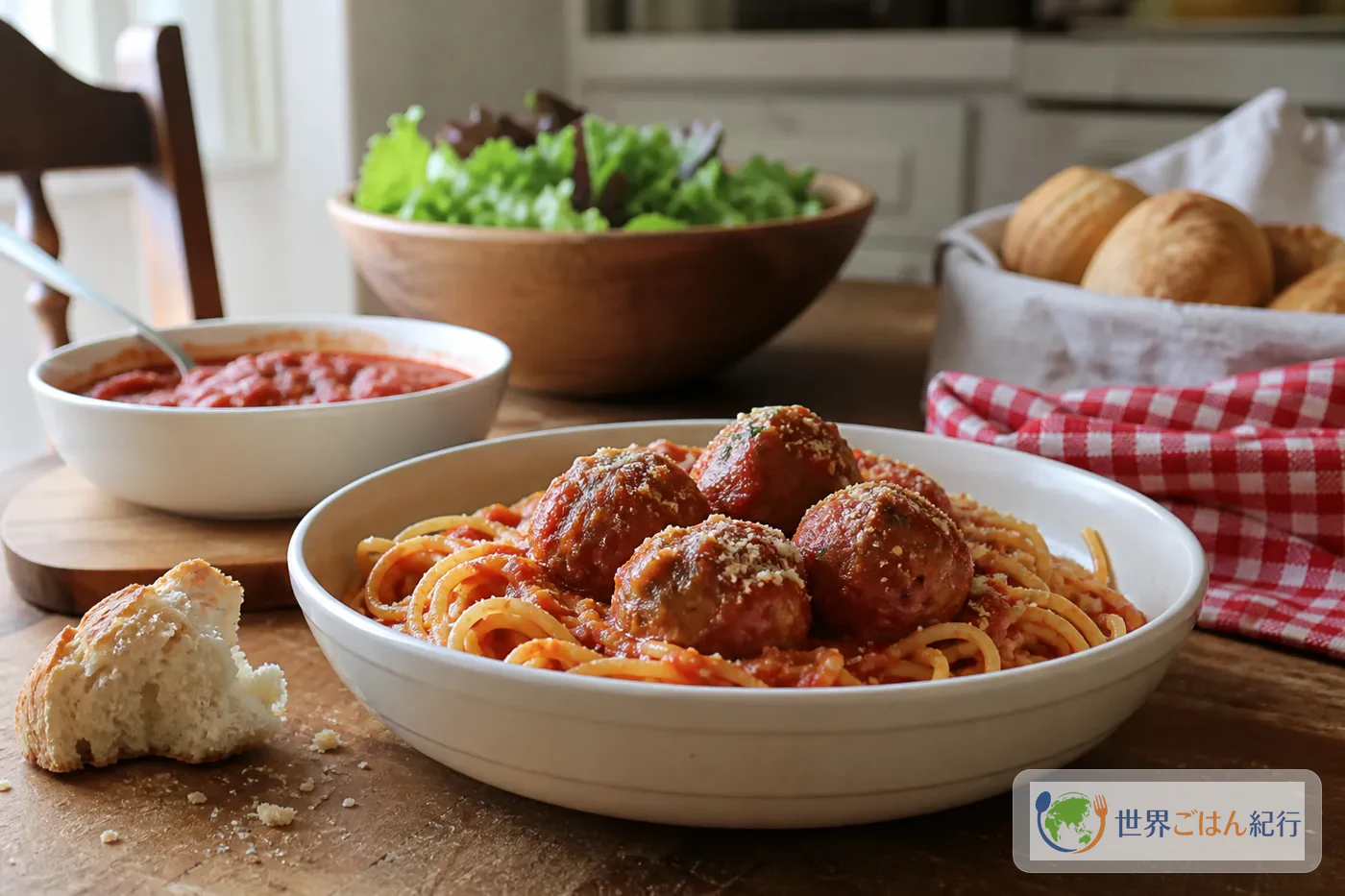
Spaghetti and meatballs in Italian-American kitchens
Spaghetti and meatballs grew big on the tables of Italian immigrants in the northeastern United States, which is why Italian-American is the more accurate name for it. Immigrants from southern Italy brought memories of tomato sauce, dried pasta and braised meat. In New York, New Jersey, Philadelphia and Boston, those memories met meat that had become easy to get, and big plates.
In Italy, small polpette are often eaten on their own, or only the sauce the meat cooked in is tossed with the pasta. The giant meatballs set on top of spaghetti took shape on the American side. The appeal is the feeling of people gathering around one home pot: the Sunday red sauce, the red-and-white checkered tablecloth of the restaurant, the piled-up platter in the movies. Those symbols are strong, but making it good at home is a practical matter.
Ingredients and shopping
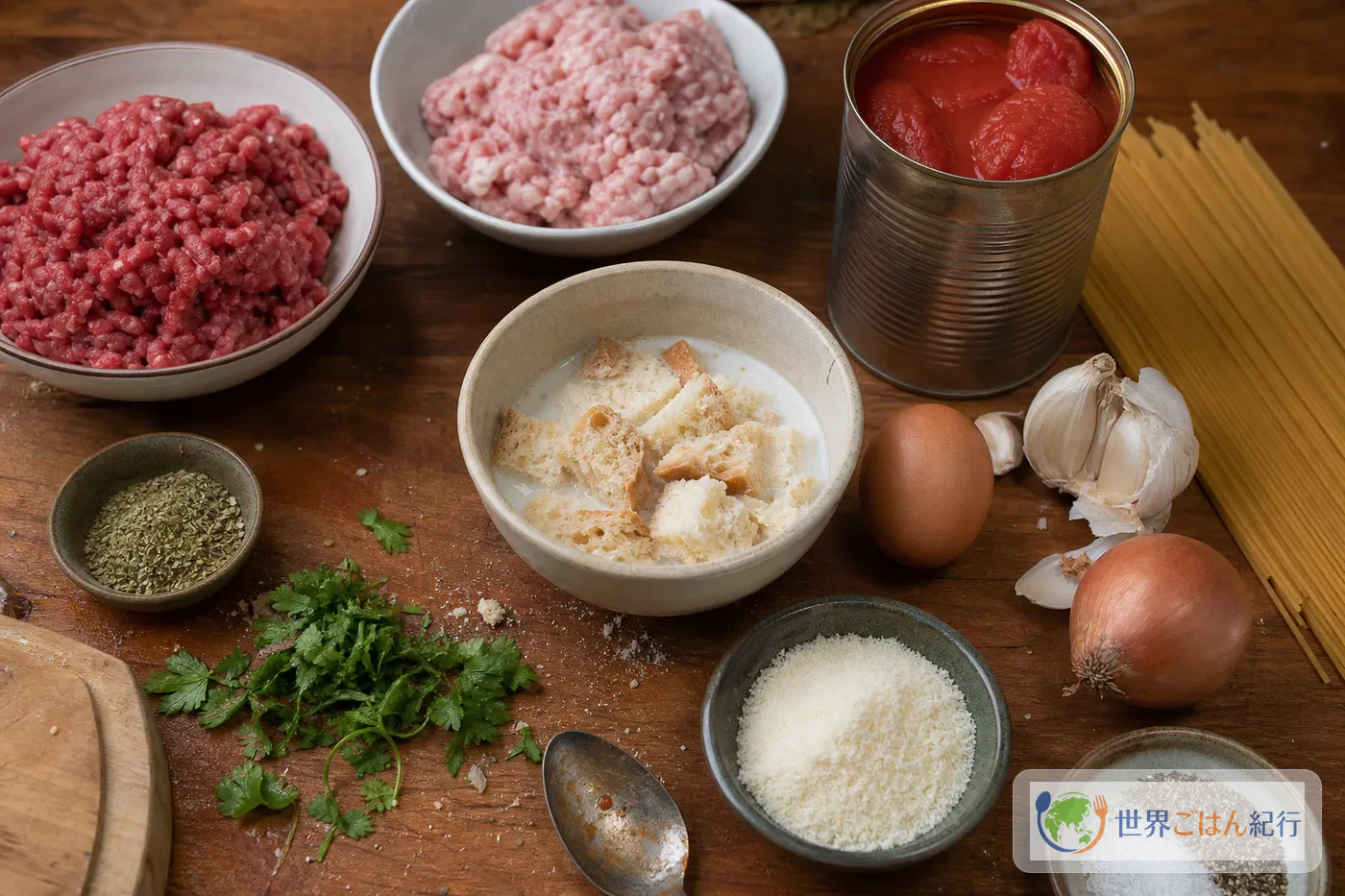
This amount is for 4 people eating spaghetti as the staple. On days you serve bread and salad, 11.5 oz (320 g) of noodles is enough. The meatballs are made large, but to cook through to the center, make them about 1.5 inches (4 cm) across.
This recipe uses wheat, dairy, egg, beef and pork. If you have a food allergy, check the labels of the bread, milk, grated cheese and egg. Meatballs are a ground-meat dish, so check the core temperature when cooking them through.
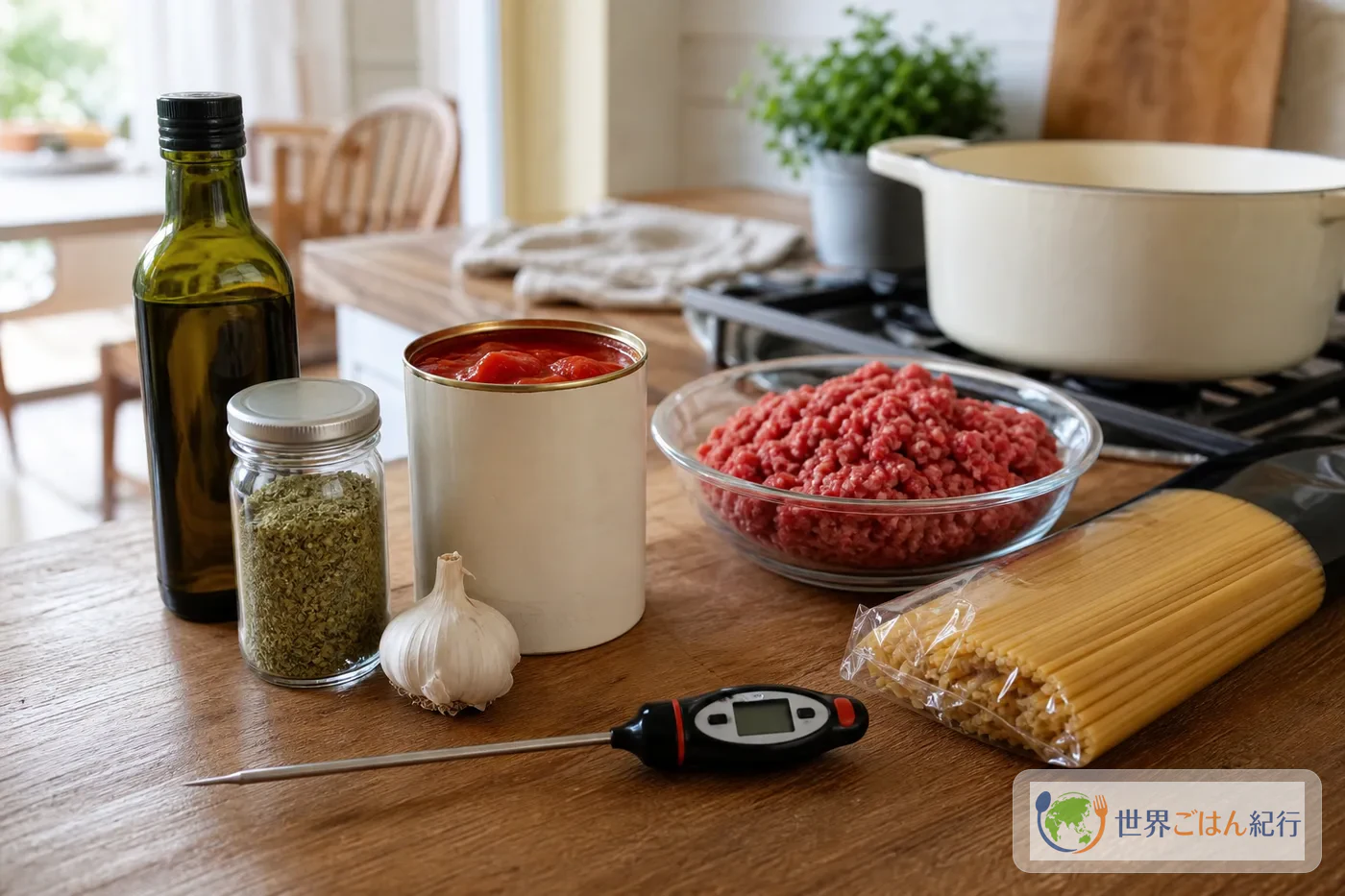
Most of this is easy to find at any nearby supermarket: ground meat, onion, garlic, bread and eggs. If you buy extras, get these first: canned whole tomatoes, which build the outline of the sauce; oregano, whose aroma tends to fade in an old jar; and a thermometer to check that the ground meat is cooked through.
Use canned whole tomatoes. They keep their acidity and fruit flavor as the sauce reduces, rather than making it sweet from the start. Diced tomatoes also work, but crushing whole ones by hand leaves both coarse and smooth bits in the sauce.
Even a small amount of oregano moves a tomato sauce from plain Western-style flavor toward an Italian-American red sauce. If the jar at home is old and the aroma is faint, buy a new one for this alone.
Meatballs are hard to judge by color alone. Especially with a beef and pork mix, check that the center reaches around 71 degrees. That helps you avoid both undercooking and overcooking.
| What to decide | What to protect | Practical solution in a home kitchen |
|---|---|---|
| Meat blend | Do not use beef alone | About 6 parts beef to 4 parts pork balances fat and aroma |
| Binder | Do not rely only on dry breadcrumbs | Soften sandwich bread or baguette in milk |
| Tomato | Do not make a sweet ketchup flavor | Reduce whole tomatoes, and keep sugar to 1 tsp |
| Herbs | Do not lean on basil alone | Add a little oregano for the aroma of a red sauce |
| Cooking | Do not assume that longer simmering makes them tender | Brown them, and cook through in the sauce only at the end |
Choosing meat, bread and herbs for meatballs
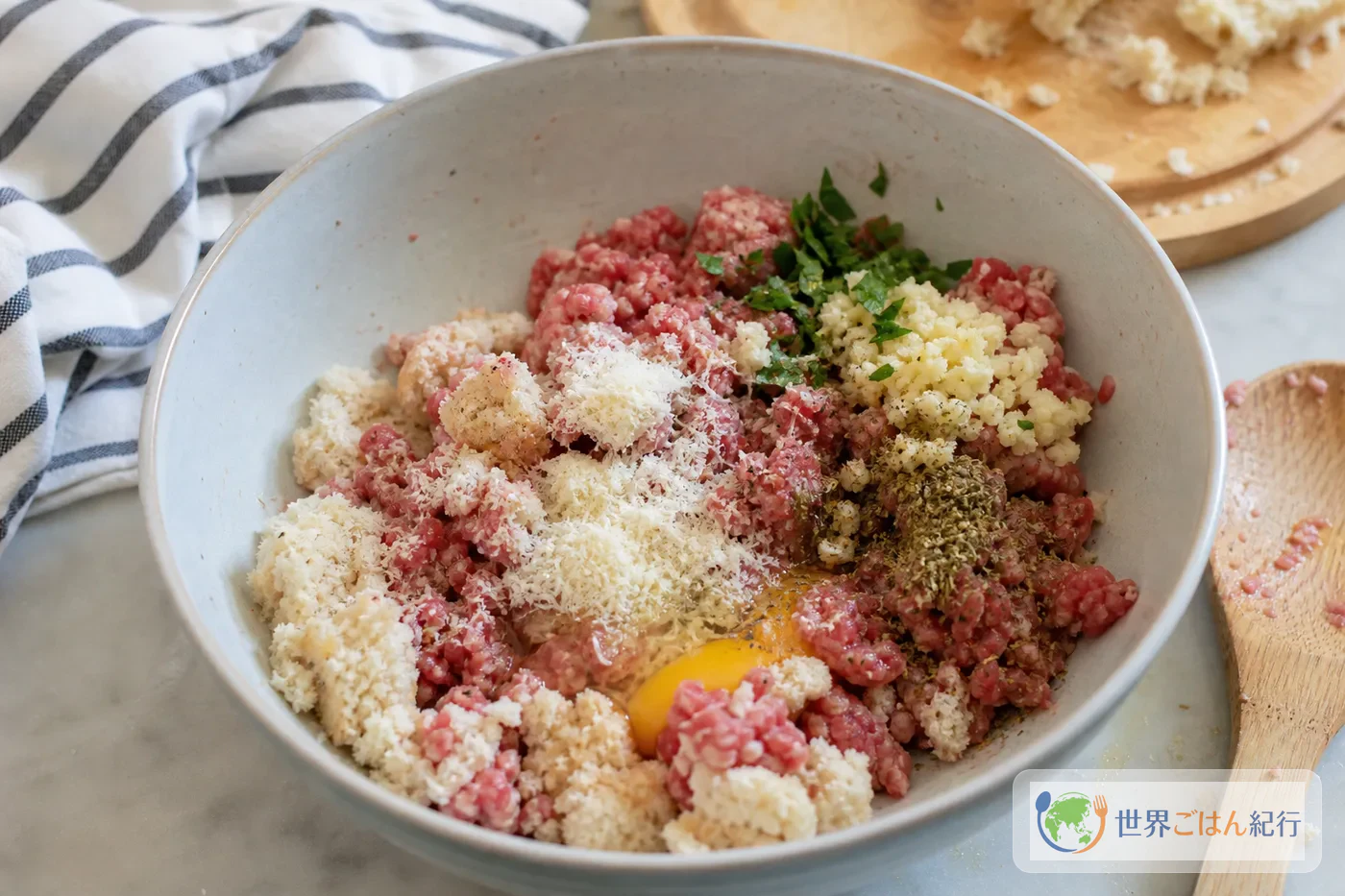
Mix beef and pork for the meatballs, and soak bread in milk so they hold their moisture. The kind of cheese, the ratio of meats and some of the herbs can change from kitchen to kitchen. What matters is the acidic tomato, the green aroma of oregano and meatballs softened with bread.
How to make it
Don't simmer everything together in one pot for a long time. Treat the meatballs, the sauce and the noodles as three separate steps. Use only part of the meatball mixture as the base of the sauce, and return the meatballs at the end.
Common problems with spaghetti and meatballs
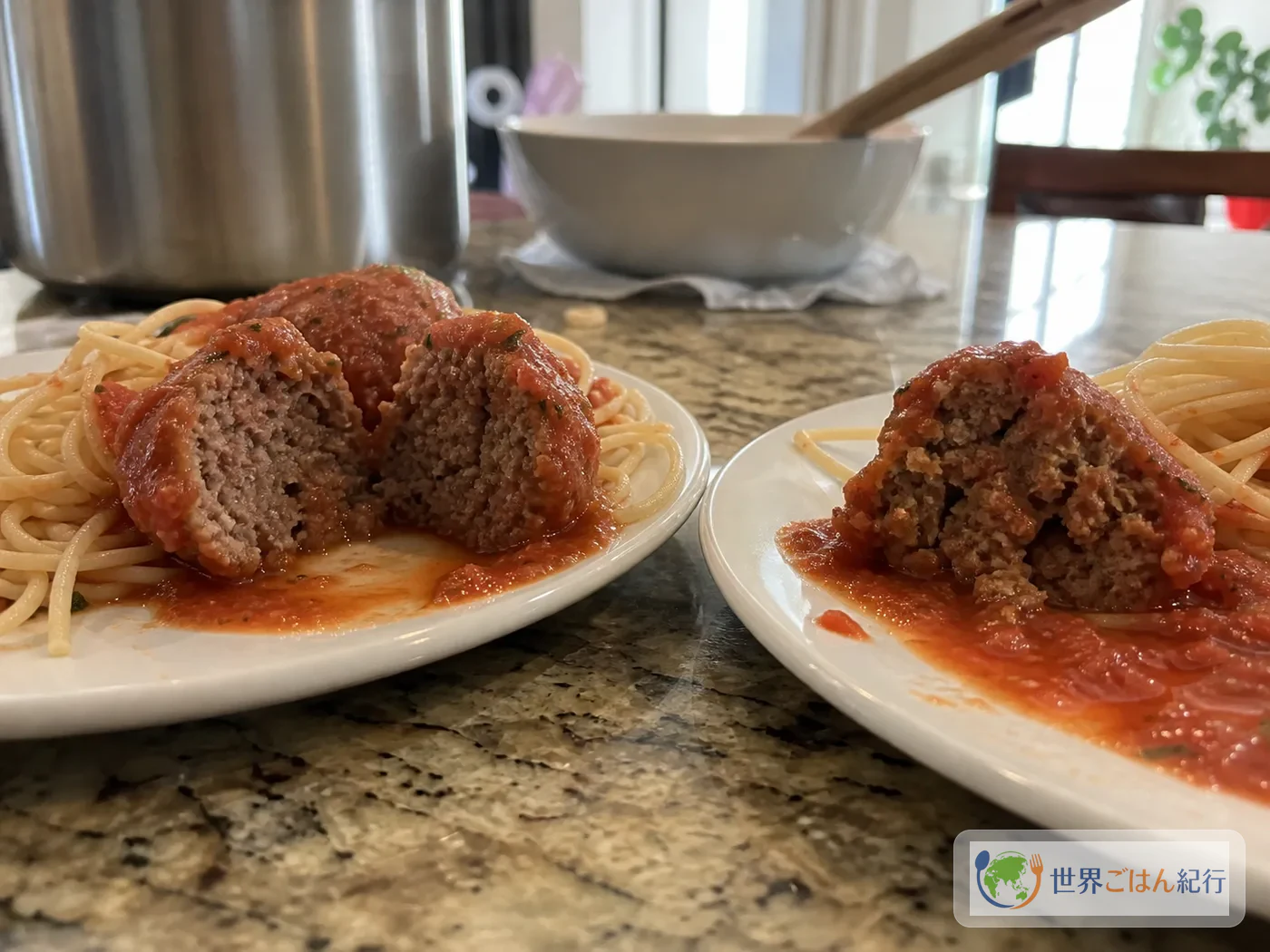
The goal is a sauce that tastes of meat and meatballs that stay moist. Break part of the meatball mixture up into the sauce, and put the meatballs back only at the end. If you keep them submerged in the sauce from the start, they tend to get tough, homey as they look.
| What happened | Cause | Fix |
|---|---|---|
| Meatballs are tough | Overmixed, too little moisture from the bread, simmered too long | Soften the bread in milk, stop mixing at 2 minutes and shorten the time in the sauce |
| Sauce is watery | Returned the meatballs before reducing the tomato | In step 4, simmer without the lid until the trail of the spoon remains |
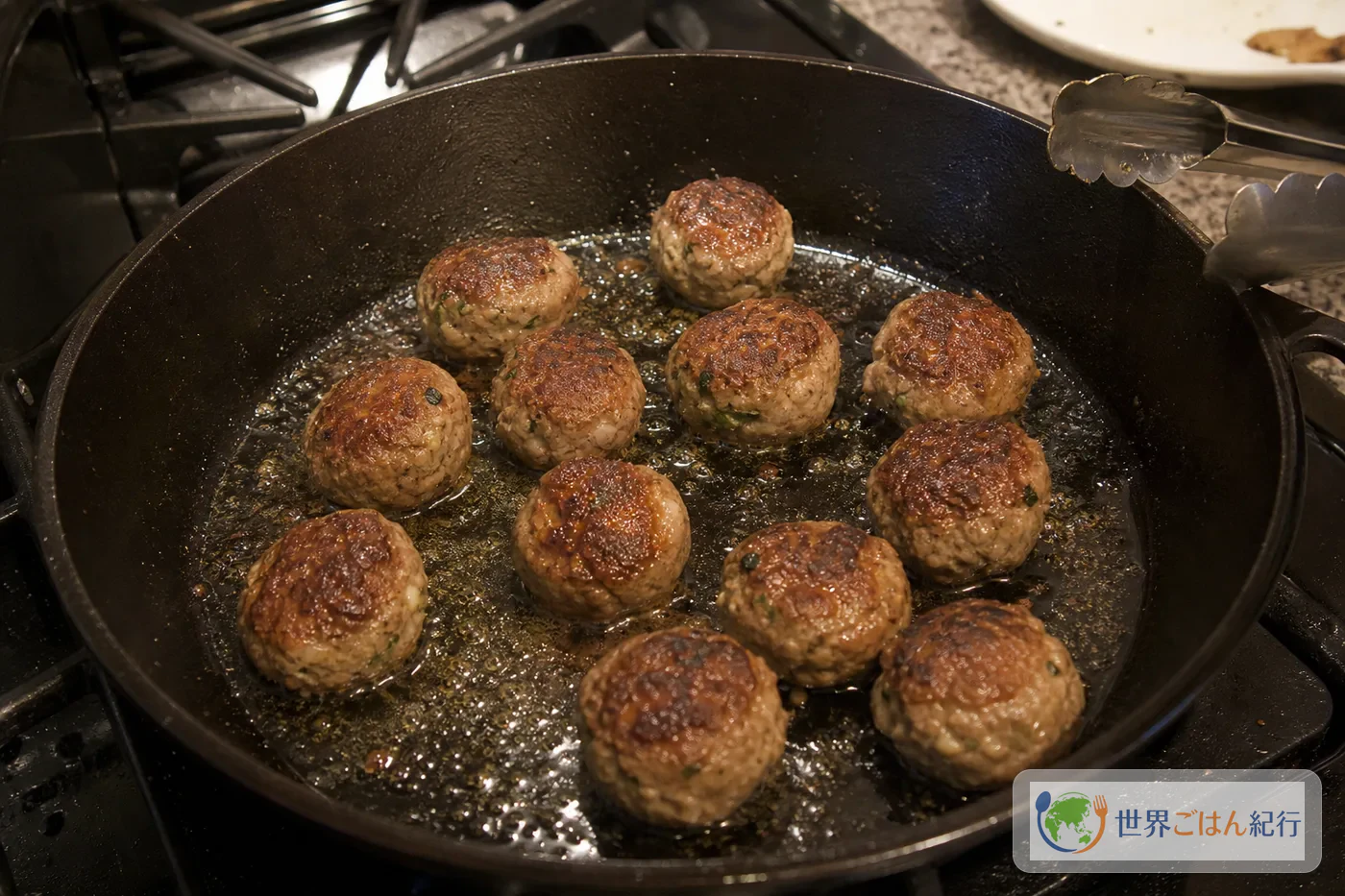
| Meatballs break apart | Moved right after rolling, weak browning | Set the surface by browning first and turn them less often |
| Tastes like a Western-style meat sauce | Oregano is weak, noodles and sauce were combined on the plate | Add the oregano and toss the noodles with the sauce in the pot |
| Too salty | Both the cheese and the salt are strong | Stop the salt in the mixture at 1 tsp and adjust with the finishing cheese |
Good red sauce never tastes like sweet ketchup. The tomato's acidity is reduced and rounded, then carried by the aroma of meat and oregano. If it still tastes sharp, reduce for another 10 minutes first, and only then add 1 tsp sugar.
Storing and serving spaghetti and meatballs
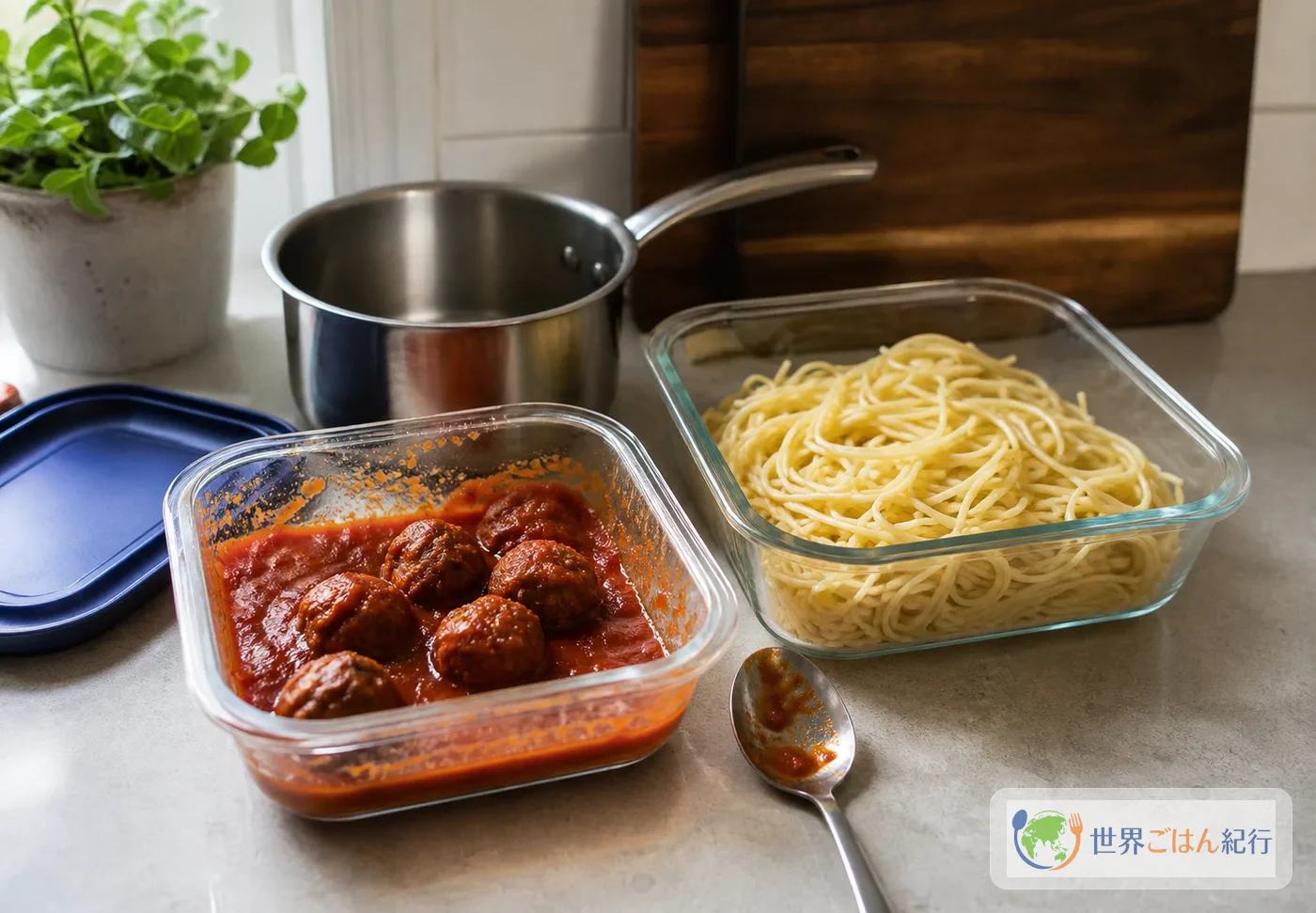
Store leftovers with the sauce, meatballs and noodles kept apart. Let them cool a little, put them in a shallow container, and eat within 2 days in the refrigerator. To reheat, warm the sauce and meatballs in a small pot with 2 tbsp water over low heat until it bubbles. Loosen the noodles separately with hot water and add them to the sauce at the end so they don't turn sticky.
For the freezer, freeze only the sauce with meatballs; noodles lose their texture, so boil them fresh that day. Frozen sauce keeps within 1 month. Thaw it half a day in the refrigerator and warm it in a pot from low heat, turning off the heat as soon as it is warm, since a long boil toughens the meatballs.
For other American red sauces and meat dishes, compare Louisiana's shrimp creole and jambalaya and see how each handles tomato, aromatic vegetables, and rice or noodles. For the thickness of a pot dish, make gumbo; for meat and rice stir-fried together, dirty rice is the closer match. And to see how differently mainland Italy handles meat, cheese and flour, try the stuffed pasta tortellini.
Frequently asked questions
Can I make it with ground beef alone?
Yes, but the texture tends to be a little tighter. With beef alone, increase the bread to 3.25 oz (90 g) and the milk to ½ cup (100 ml), and mix for less time. If the ground meat is lean, add 2 tsp olive oil to the mixture to soften it.
Can I substitute breadcrumbs?
Yes. Pour ½ cup (90 ml) milk over 1.5 oz (45 g) dry breadcrumbs, leave 5 minutes and then use. They are not as moist as fresh bread, but much more reliable than crumbs added dry, which soak up too much of the meat juices and leave the meatballs dry.
Can I fry the meatballs?
You can, but at home it takes more oil, and the dish tends to feel heavy once combined with the sauce. That is why this recipe browns only the surface in a skillet and finishes the meatballs briefly in the sauce. If you fry them, color them about 3 minutes at 170 degrees, then finish in the sauce and check the core temperature.
Can I shorten the tomato sauce with a store-bought one?
You can, but a sauce with strong sweetness or garlic can clash with the meatball juices. Choose a plain tomato pasta sauce: take 1 lb (500 g), add 14 oz (400 g) canned whole tomatoes, and reduce it. It comes together nicely as a home version.
Can I mix the pasta and meatballs from the start?
Yes, if you are about to eat. If you plan to store it, keep them apart, because the noodles keep absorbing the sauce and turn too soft by the next day. At the table, the easiest way is to toss the noodles with the sauce and set the meatballs on top.