
Recipes (40)
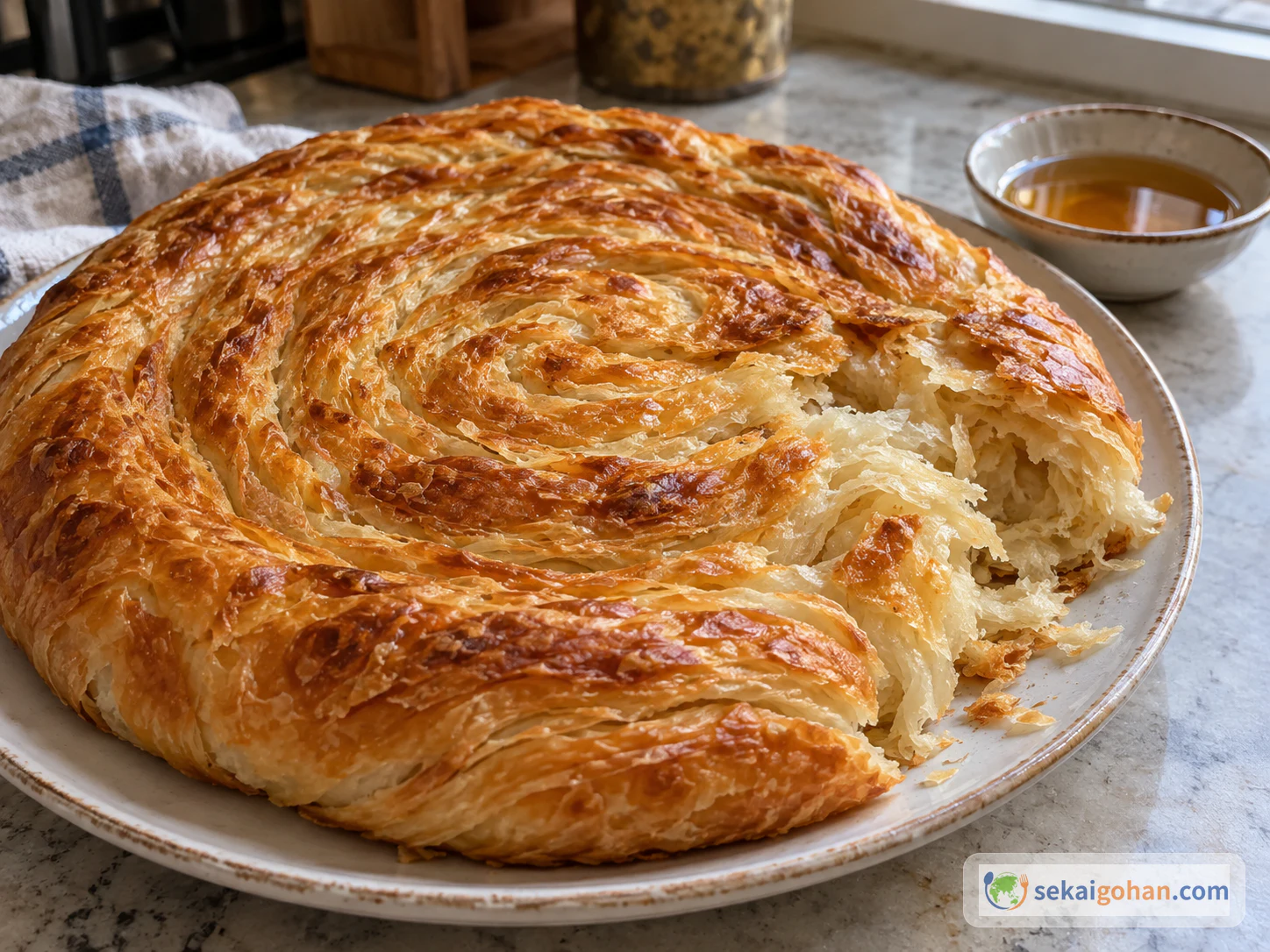
Fiteer Meshaltet: Egyptian Spiral-Layered Butter Pastry (فطير مشلتت)
How to make fiteer meshaltet (feteer meshaltet), the Egyptian round of unleavened dough layered with butter, rolled, coiled into a spiral and baked on a hot tray. Follows one Egyptian cook's home recipe exactly, explains clarified butter versus regular butter, how it differs from street-style flying feteer, and how to eat it with honey, salty cheese or molasses on the side.
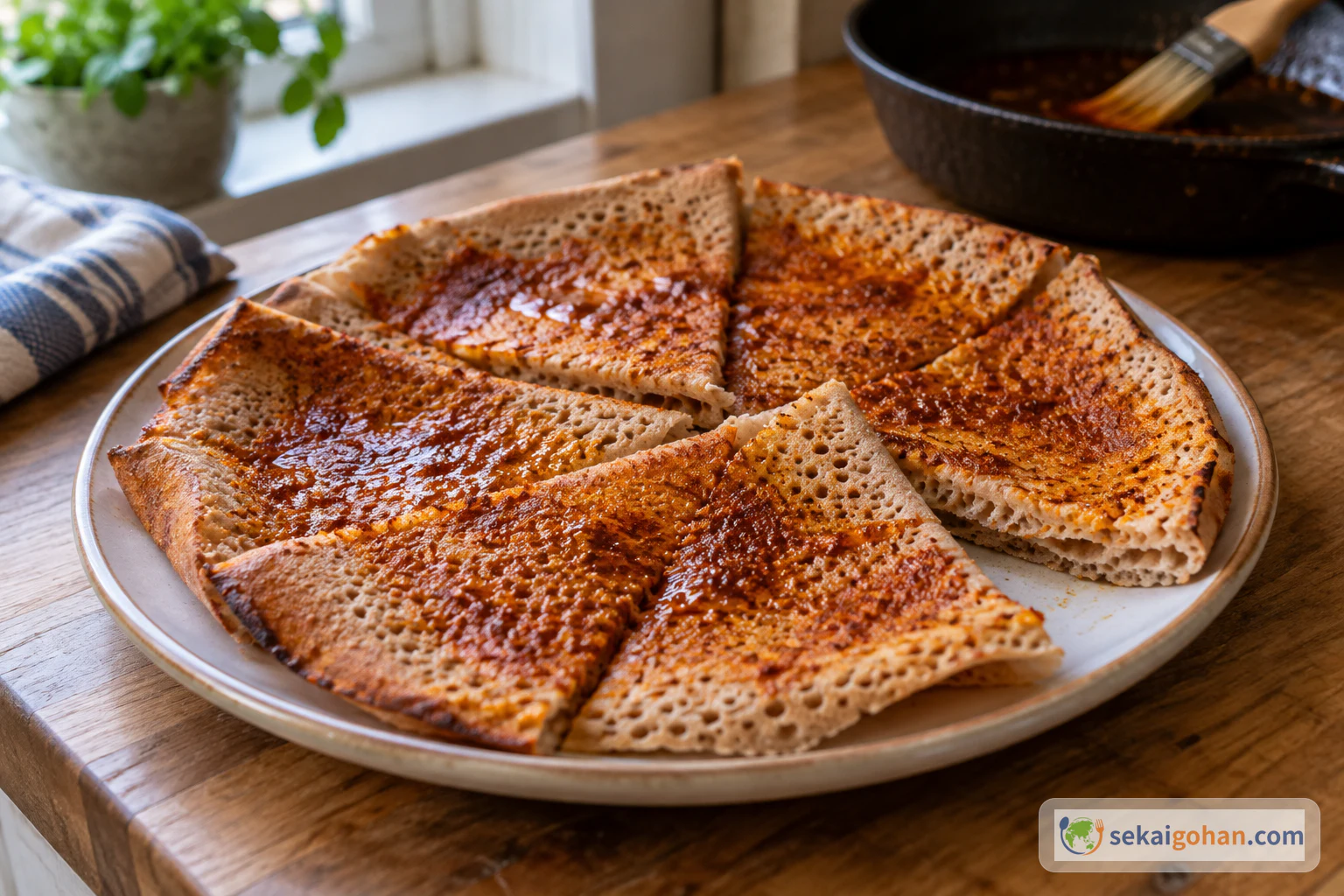
Kategna: Toasted Injera Brushed with Berbere Spiced Butter (Qategna)
How to make kategna (Qategna), a simple snack of lightly toasted injera brushed with niter kibbeh spiced clarified butter mixed with berbere. One-injera amounts, how to toast without burning, the order for melting and mixing the butter, adjusting the heat of berbere, and what the available Ethiopian-context sources do and do not confirm about this dish cataloged here under Eritrea.
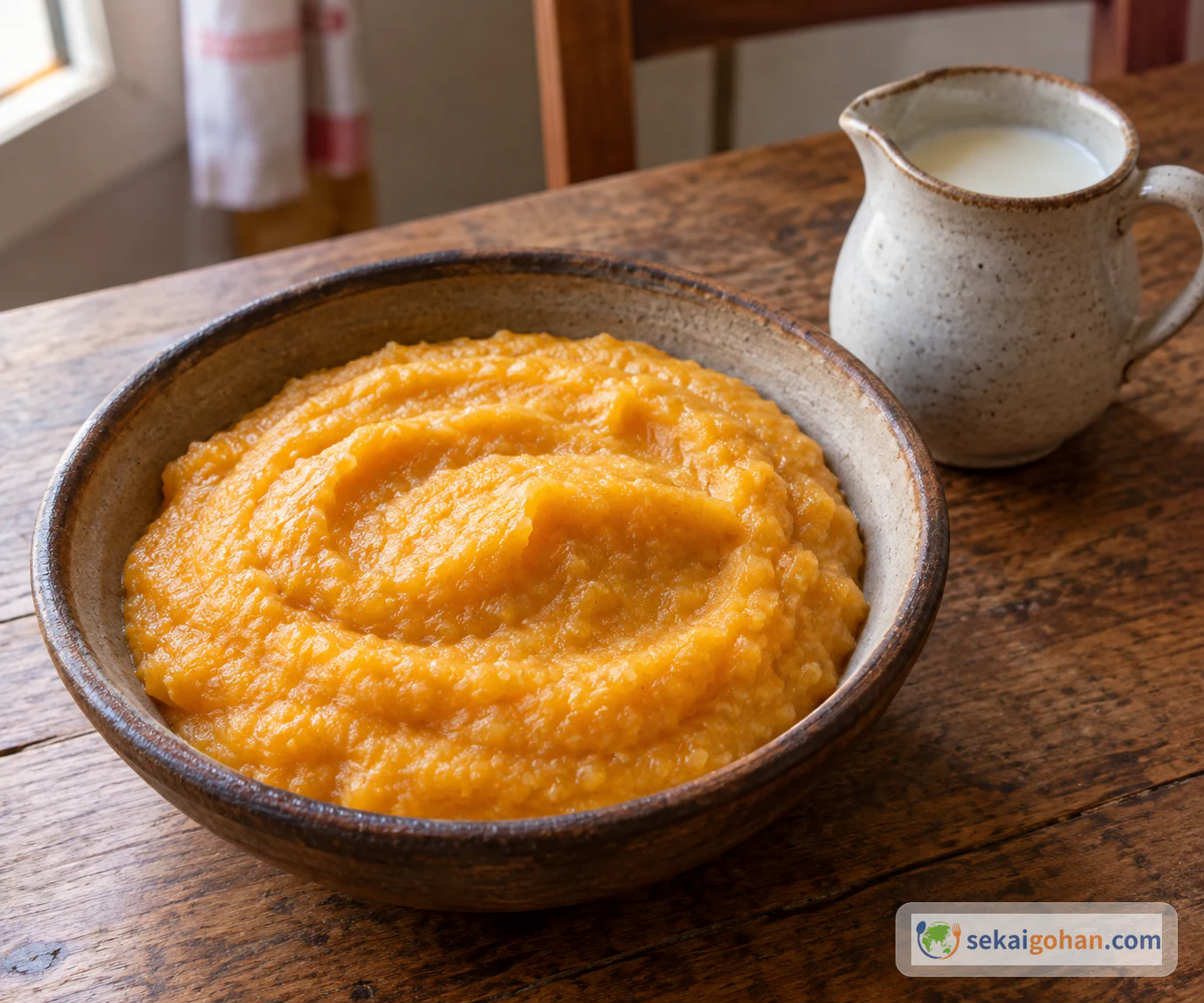
Sidvudvu: Eswatini Pumpkin and Maize Meal Porridge
How to make sidvudvu, the Eswatini dish of pumpkin cooked soft, mashed smooth and thickened with mealie meal. Follows a recipe published by Eswatini's agricultural information service, with guidance on adding the meal without lumps, choosing pumpkin and maize meal elsewhere, and serving it with sugar and milk on the side.
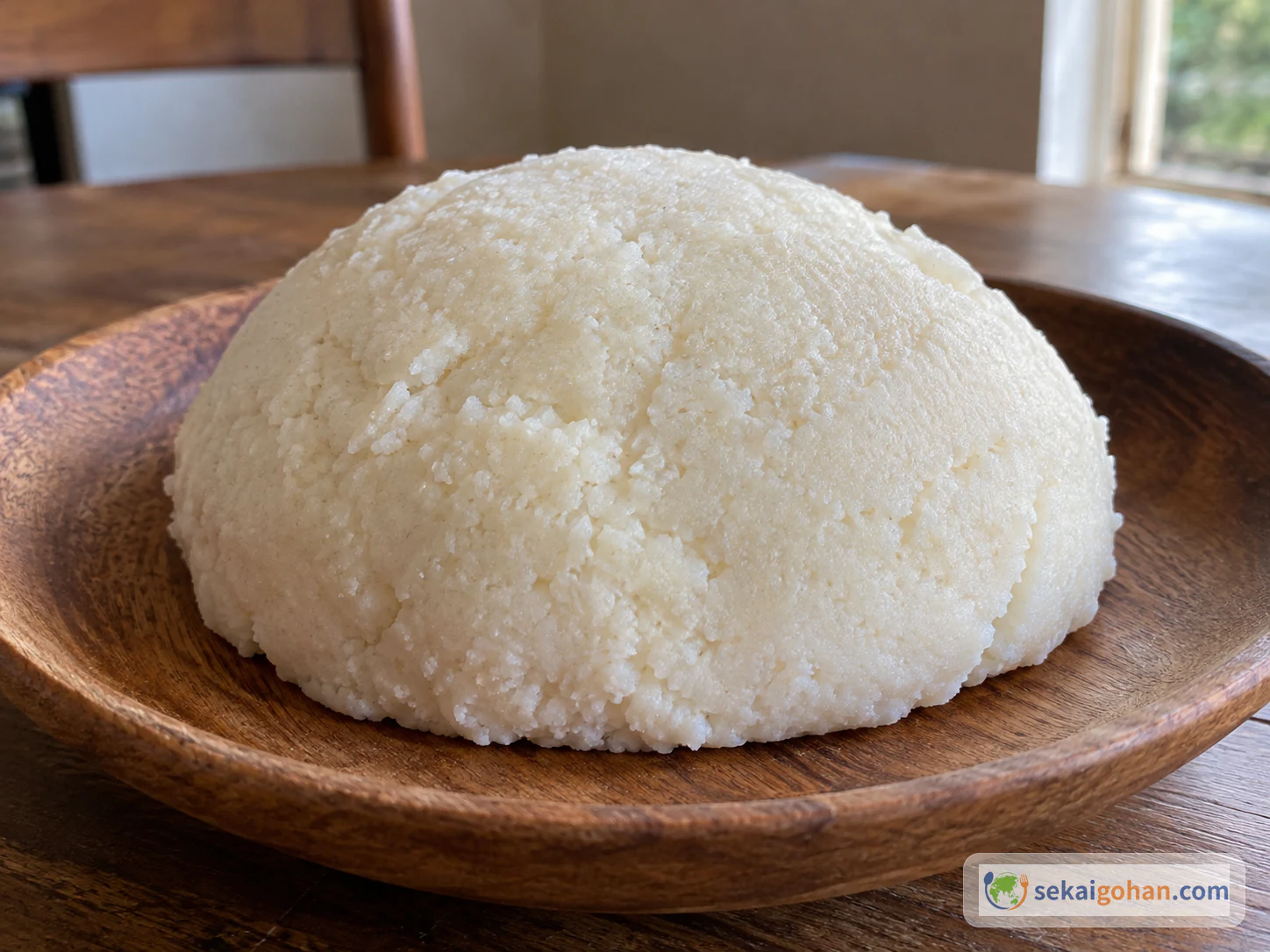
Nsima: How to Make Malawi's Maize-Flour Staple
How to make nsima, Malawi's staple of maize flour and water: cook a loose porridge, simmer it covered, then work in the remaining flour until it turns thick and smooth. Covers eating it with ndiwo, how flour grind affects the result, fixing lumps, and how nsima relates to similar maize porridges.
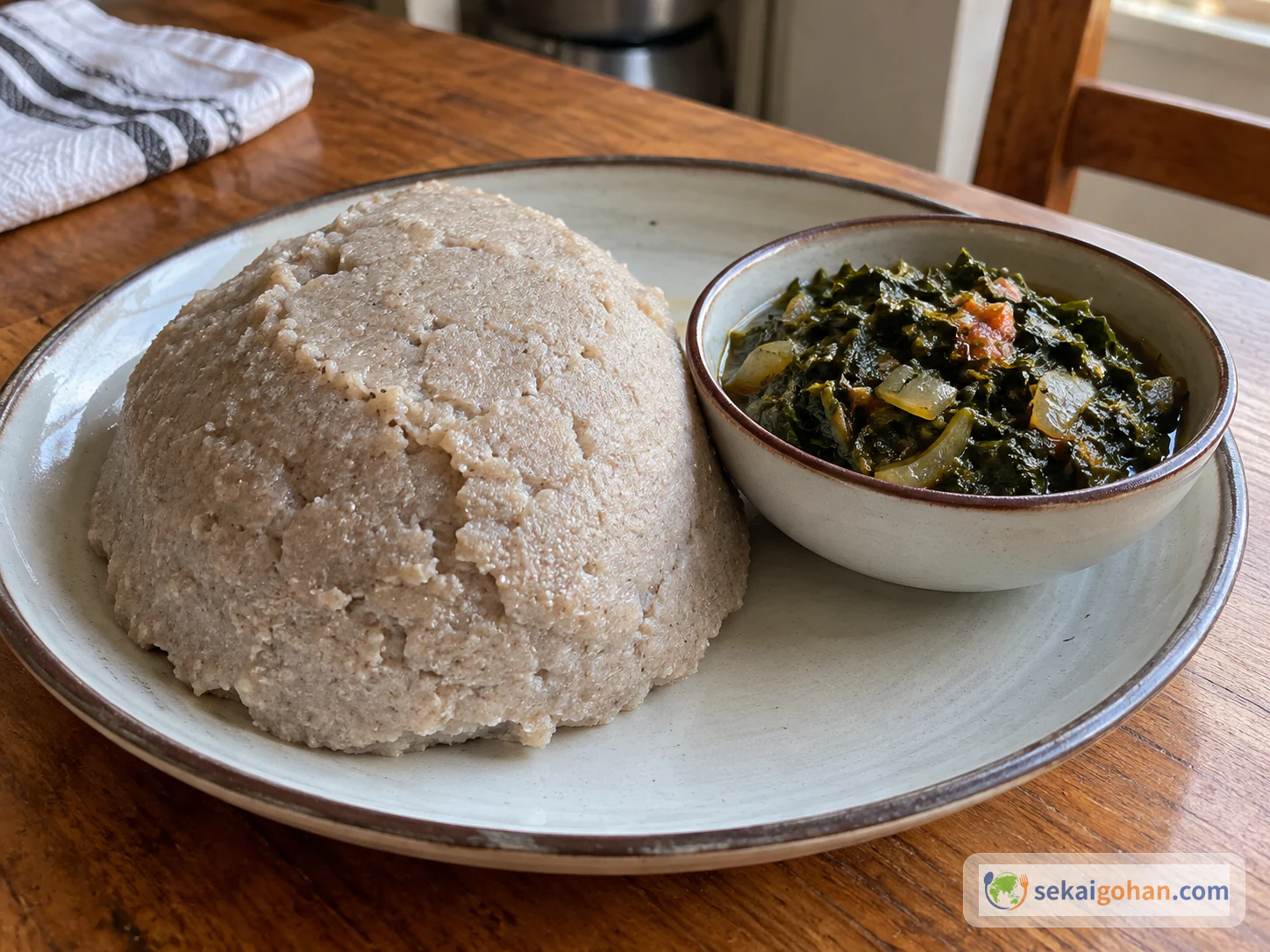
Oshifima: Namibian Stiff Porridge with Mahangu Flour (Oshifimá)
How to make oshifima (Oshifimá), the stiff pearl millet porridge eaten daily in the Oshikwanyama-speaking north of Namibia, in a two-serving home version that combines mahangu flour and fine maize meal. Covers when to add each flour, how to work the porridge against the pot, eating it by hand with sauce, and how it differs from the unsalted all-millet method and maize-only mielie pap.
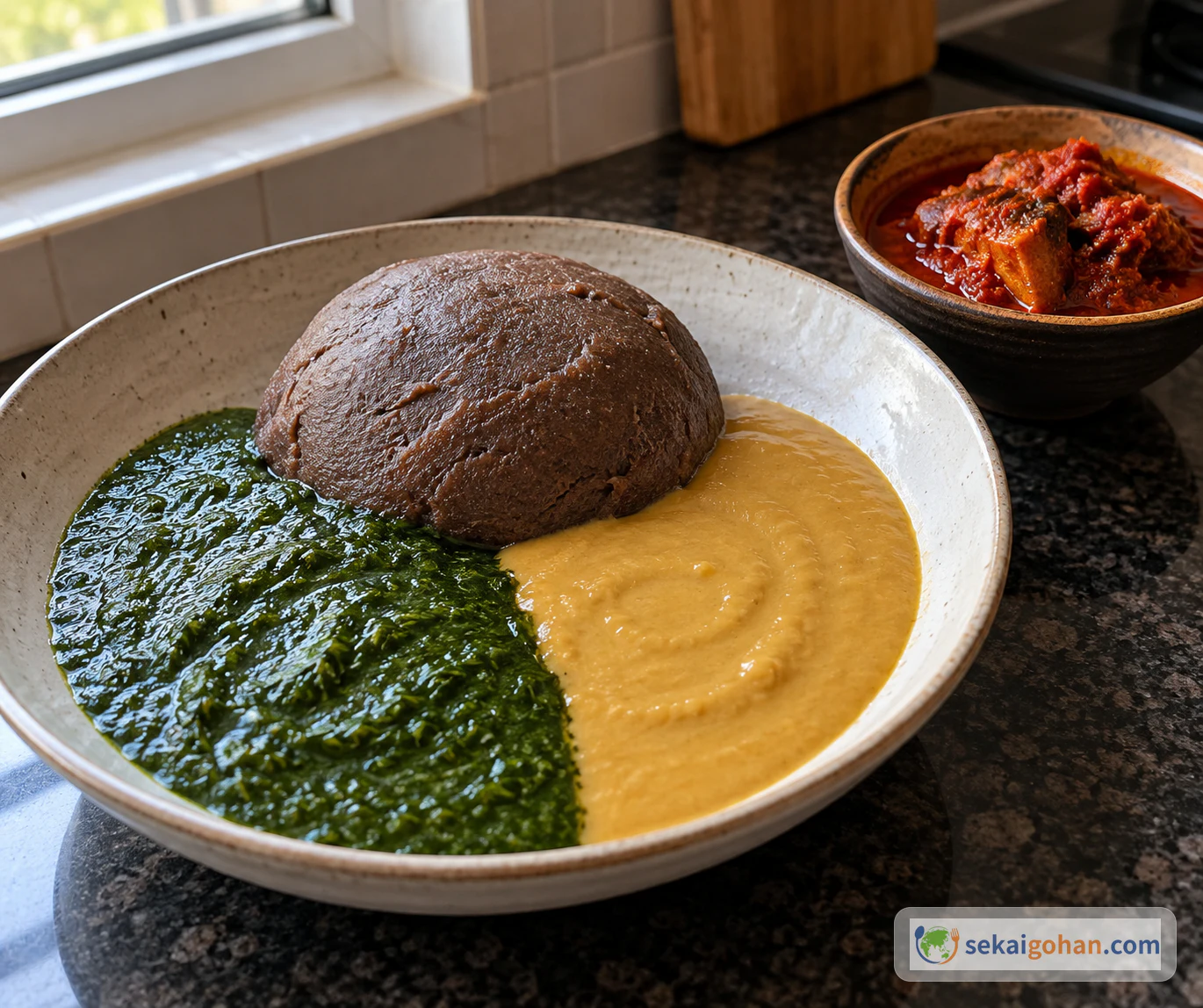
Amala, Gbegiri and Ewedu: Yam Flour Amala with Bean and Jute Leaf Soups from South West Nigeria
How to make amala, gbegiri and ewedu, the South West Nigerian plate that sets dark yam flour amala beside a smooth bean soup and a slippery jute leaf soup. Covers the source recipe's amounts, what to look for when shopping for elubo and ewedu leaves, the order for cooking all three, how to judge each texture, and where substitutions change the dish.
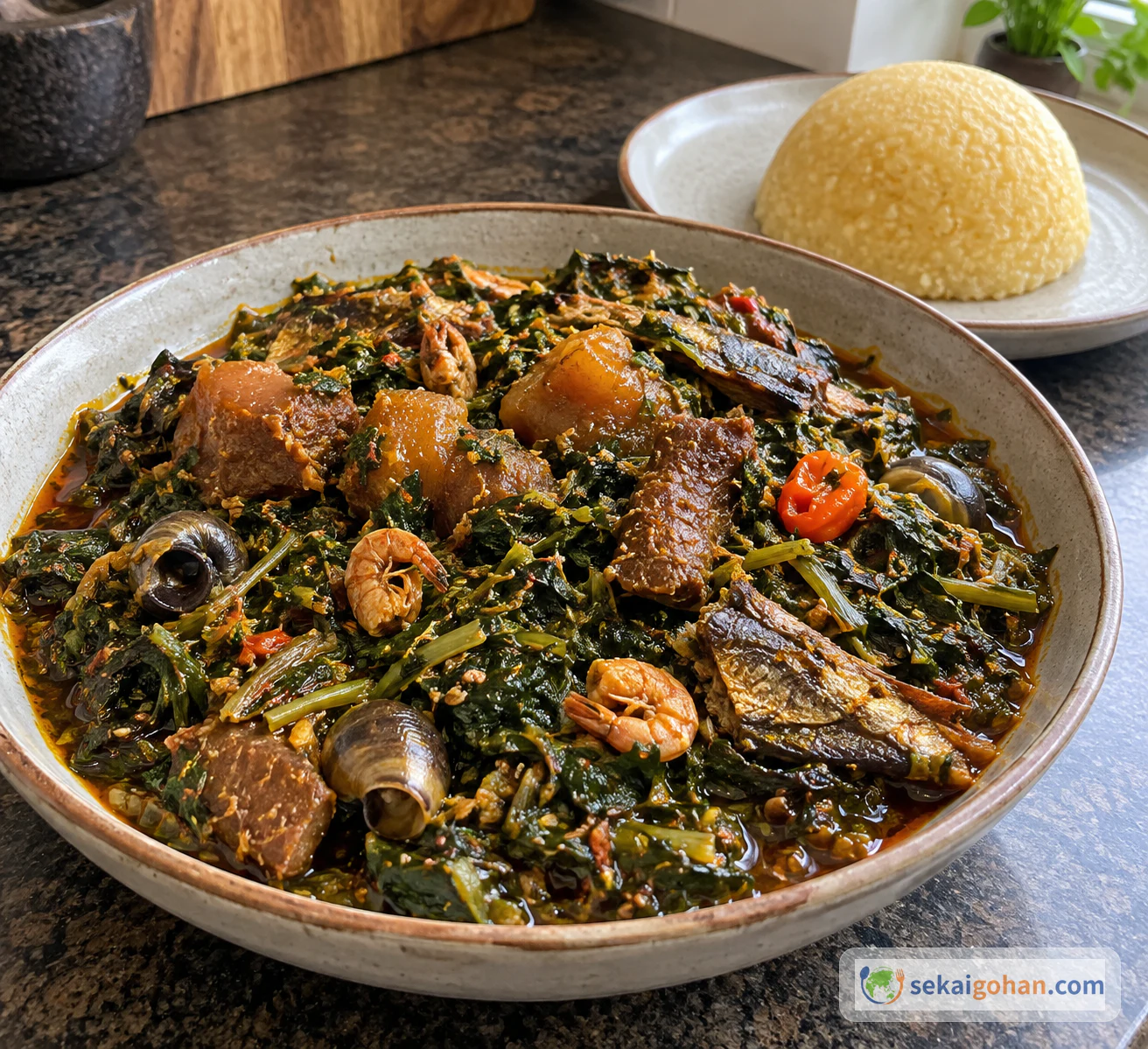
Edikang Ikong: Nigerian Leafy Soup with Ugu and Waterleaf
How to make Edikang Ikong, a thick leafy soup tied to the Efik and Ibibio peoples of southern Nigeria, in which ugu and waterleaf are added in order and bound with red palm oil, meat, dried fish and seafood. Covers the source recipe's amounts, why the leaves go in separately, kale and spinach substitutes, fixing a watery pot, and serving it with eba or pounded yam.

Nigerian Pancake (Diet): Thin, Lightly Sweet Pancakes with a Touch of Cayenne
How to make Nigerian pancake, also called Diet: a thin, unleavened batter of flour, eggs, water and evaporated milk, seasoned with sugar, salt and dry ground cayenne. Covers adding the water in stages, avoiding lumps, pouring thin in a lightly oiled pan, turning once the surface sets, optional onion and habanero, how it is served, and how it differs from masa and akara.
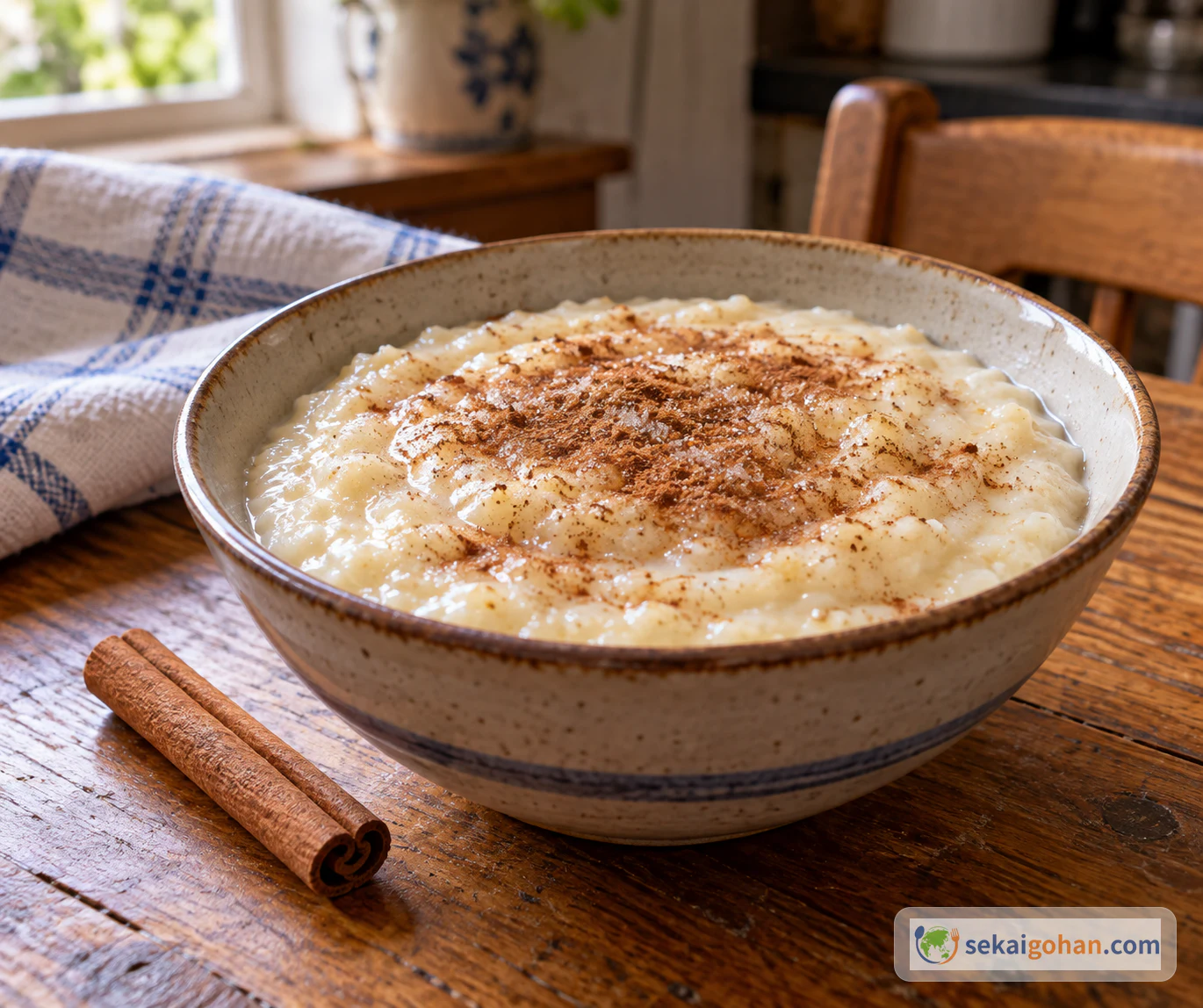
Melkkos: South African Milk Cooked with Buttery Frummels and Cinnamon Sugar
How to make melkkos, a traditional South African dish of warm milk thickened with frummels, small crumbs of flour rubbed with butter, and finished with cinnamon sugar. Covers the ingredients for 4–6 servings, how to make and add the frummels without lumps, smooth versus crumbly finishes, how melkkos differs from melktert, and fixes for common problems.
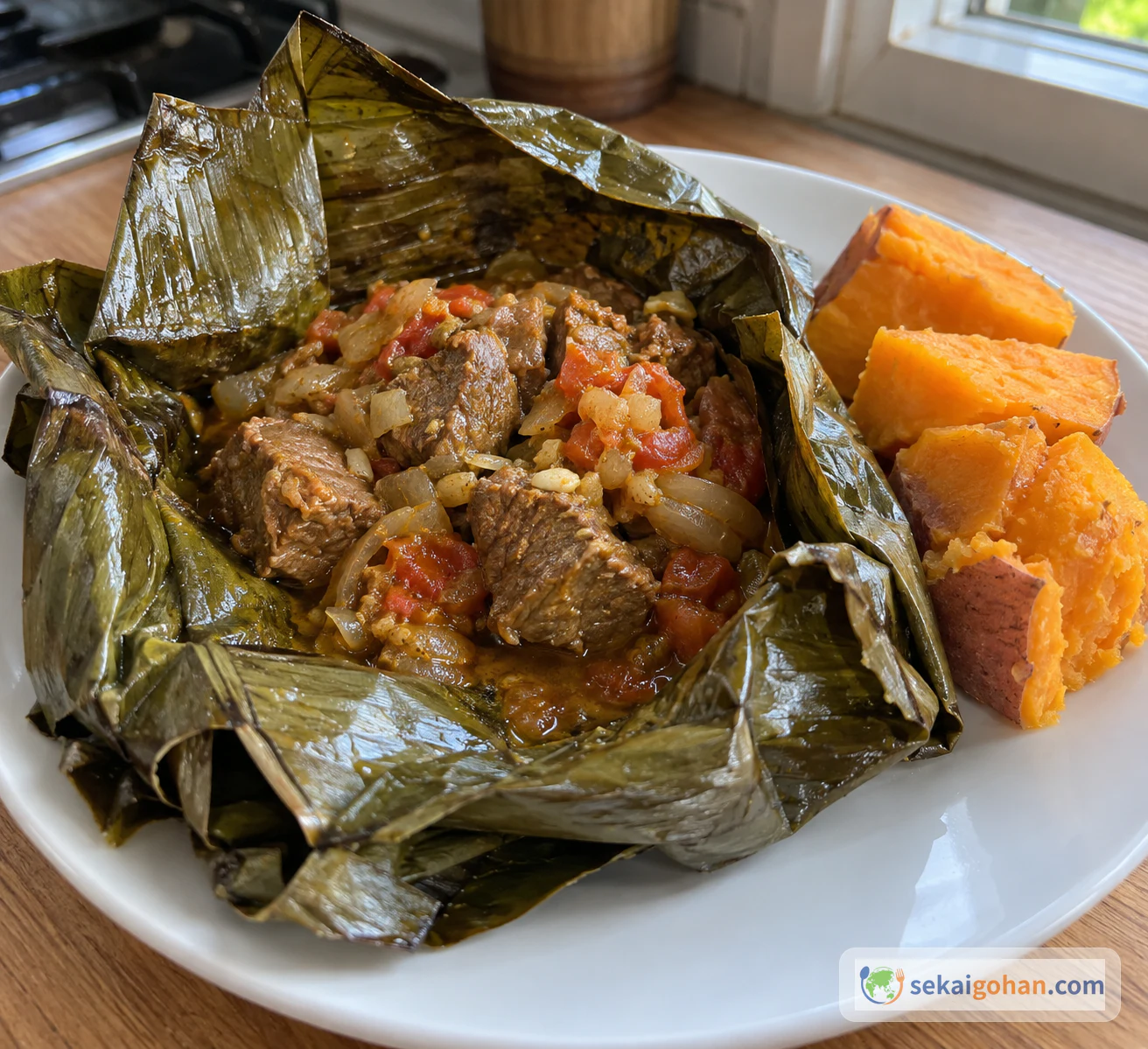
Beef Luwombo: Ugandan Beef Steamed in Banana-Leaf Parcels (Luwombo lwe Nyama)
How to make beef luwombo, the Buganda dish of beef roasted dry, cubed, wrapped with tomato, onion, garlic and curry powder in young banana leaves, and steamed for about an hour. Covers softening the leaves, building a steaming platform from the leaf stalks, reading the source amounts honestly, checking doneness safely, and serving with steamed sweet potato.
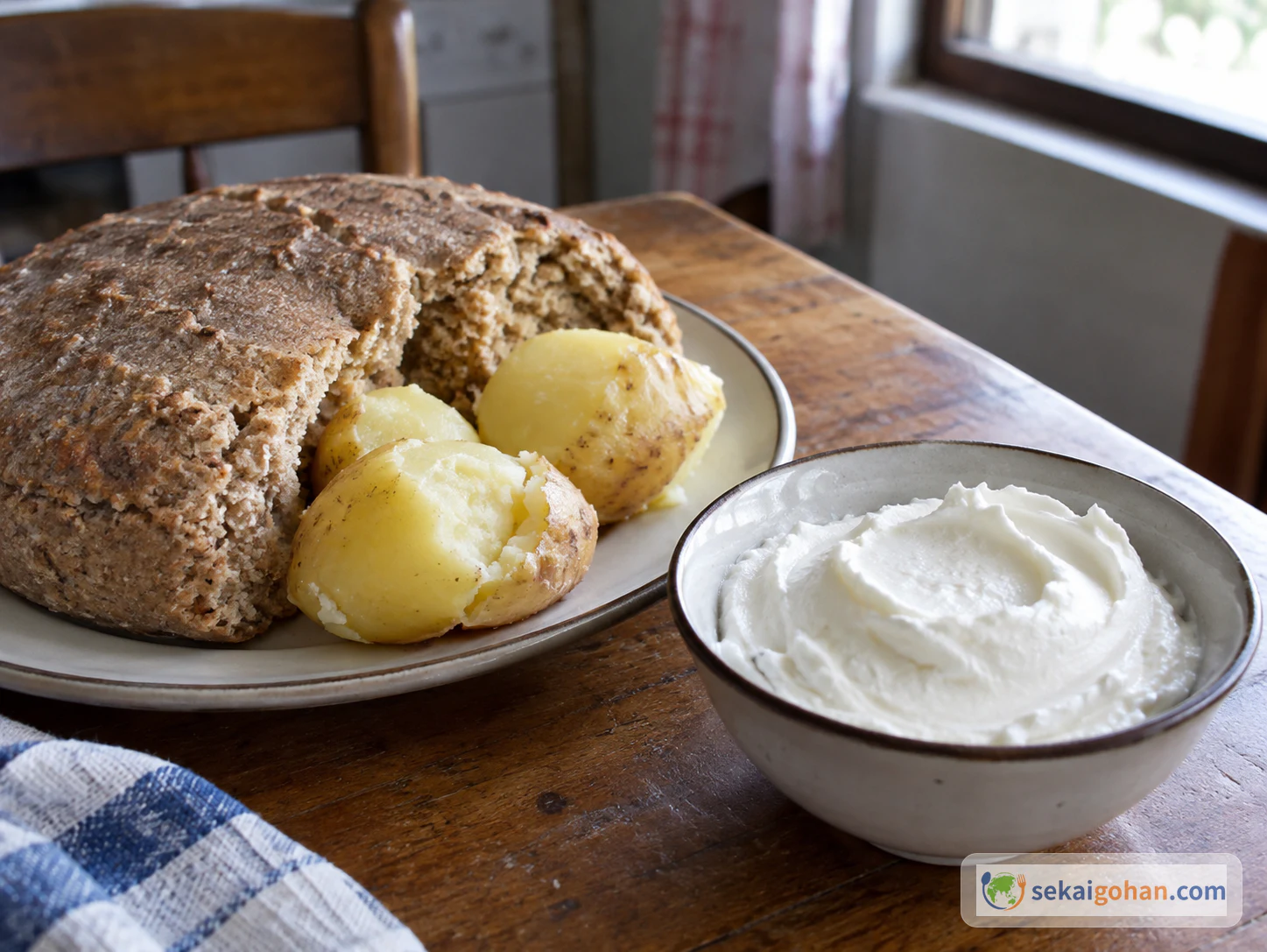
Eshabwe: Uganda's Cold Whipped Ghee Sauce from Ankole
How to make eshabwe, the cold ghee sauce of Ankole in western Uganda, by stirring ghee with salted water a spoonful at a time until it turns white, thick and roughly doubles in volume. Covers the four ingredients, why ordinary butter is not a like-for-like swap, fixing a sauce that looks separated, and what eshabwe is served with: millet bread, matooke and boiled potatoes.

Mandazi: Ugandan Fried Dough with Lemon Zest
How to make Ugandan mandazi, the fried dough snack, from a Ugandan home recipe scented with lemon zest. Covers the original cup-and-spoon amounts, a firm dough brought together with cold water, the 10-minute rest, judging the golden color in the oil, and how mandazi differs from coastal mahamri.
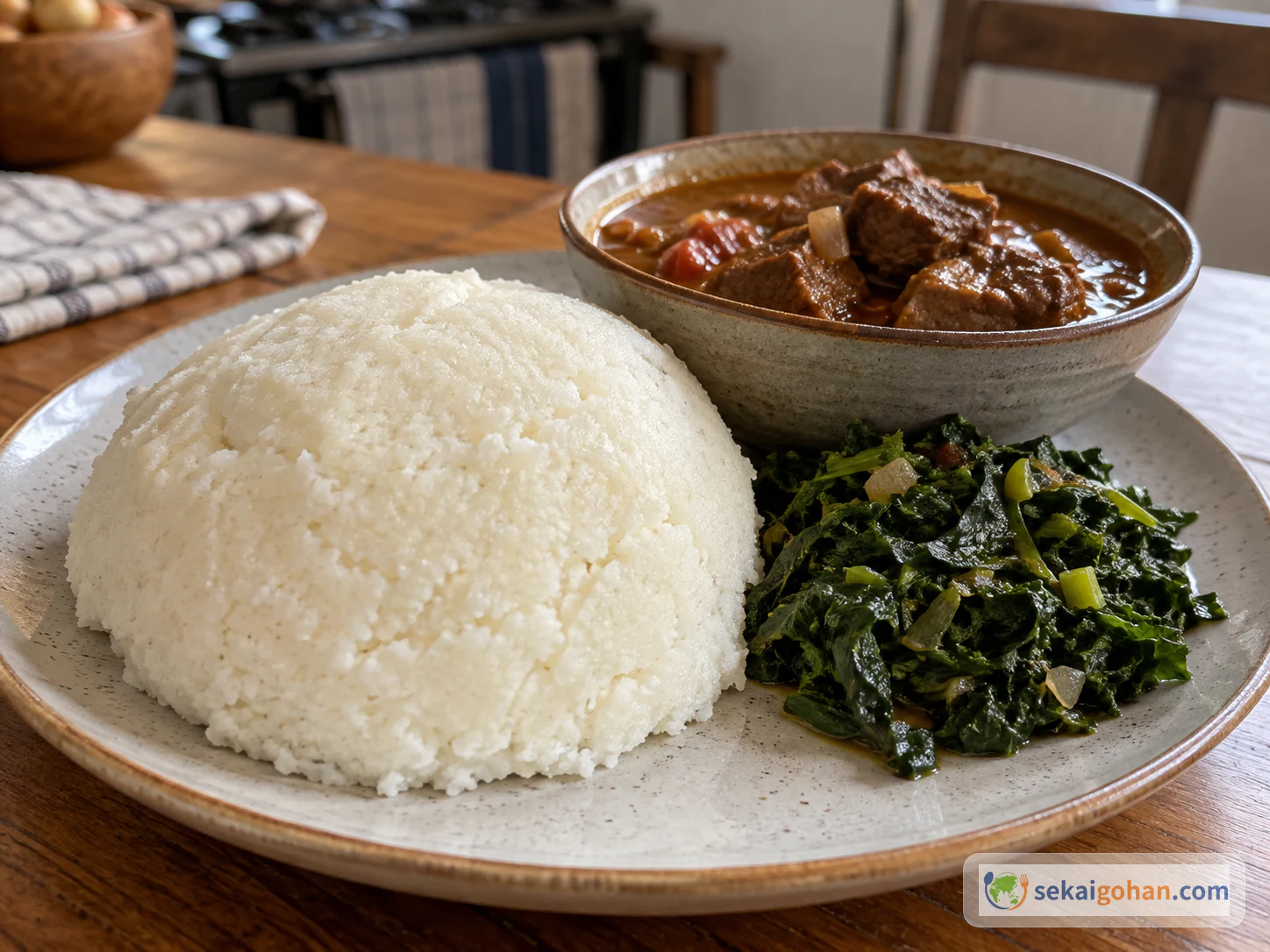
Sadza: How to Make Zimbabwe's Firm White Maize Meal Staple
Sadza is Zimbabwe's white maize meal staple. Method with a 250 ml cup: start with a paste, add the rest of the meal, and choose maize meal outside Zimbabwe.
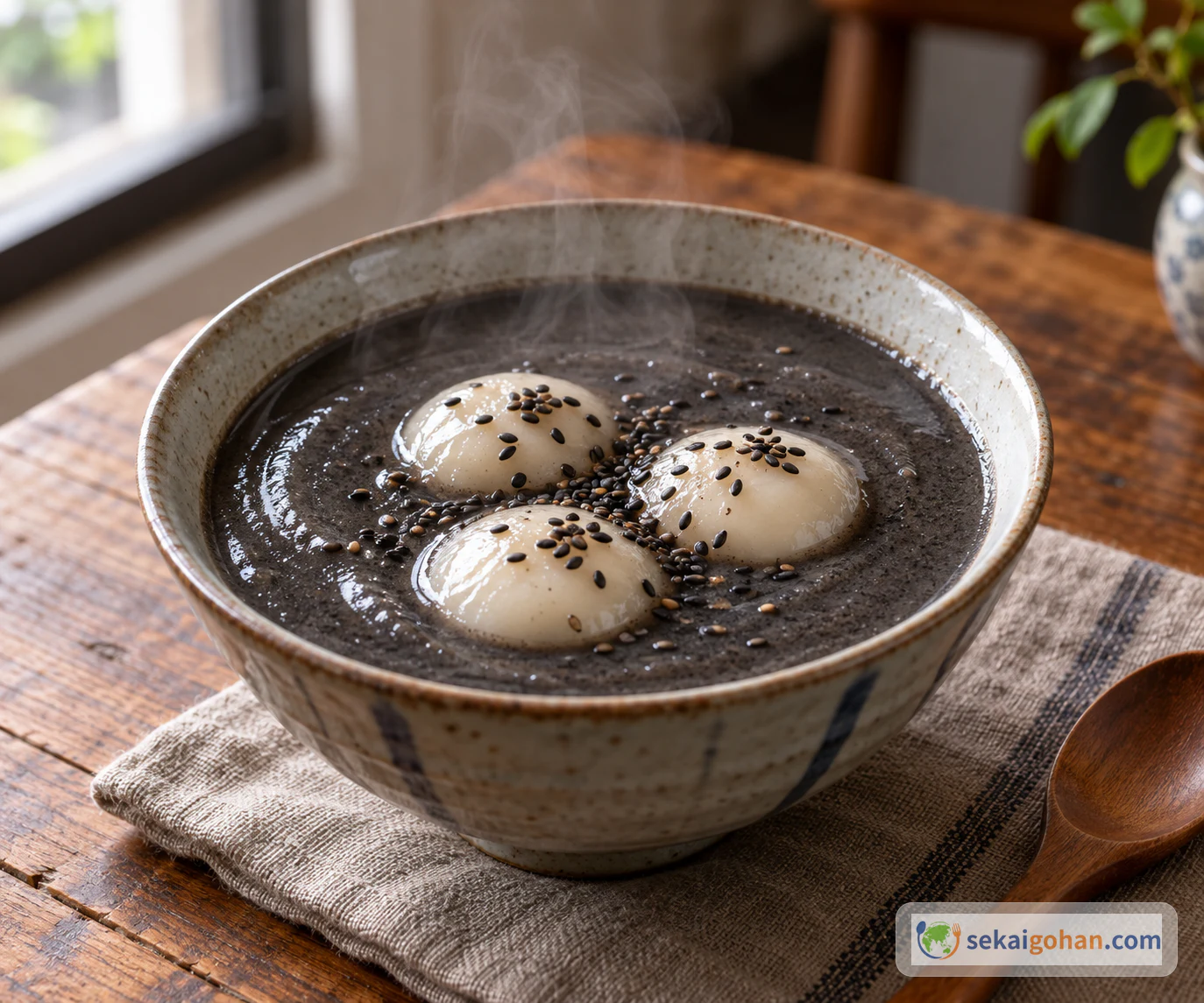
Black Sesame Soup (Zhima Hu, 芝麻糊): A Hong Kong-Style Sweet Soup with Tangyuan
How to make black sesame soup (zhima hu, 芝麻糊), the warm, thick sweet soup loved in Hong Kong dessert shops. Toast raw black sesame with glutinous rice flour, blend it smooth, whisk it thick in the pot, and serve it with plain tangyuan. Includes how to avoid bitterness and lumps, adjust thickness and sweetness, choose the flour, and handle leftovers.
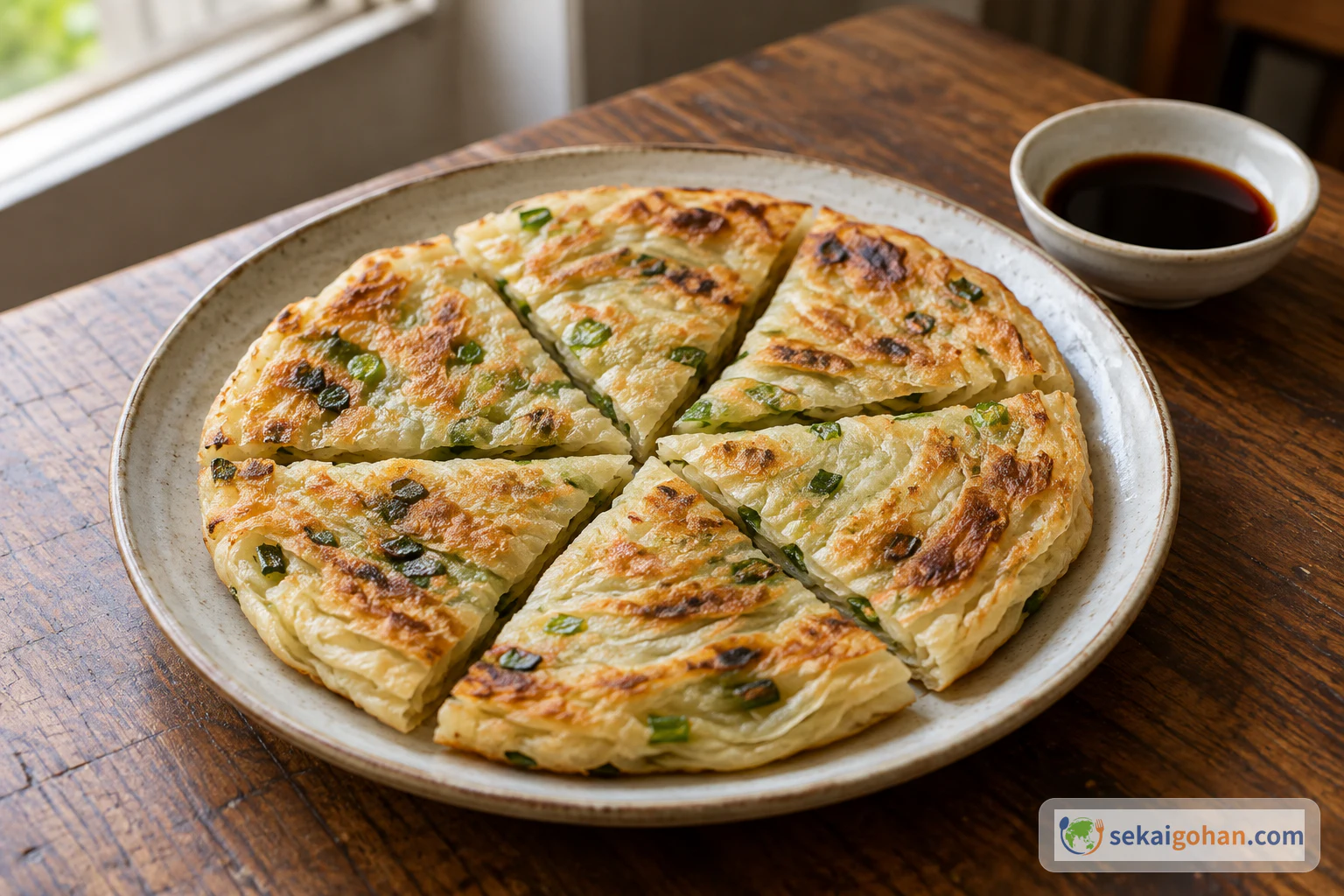
Cong You Bing: Chinese Scallion Pancakes (葱油饼)
How to make cong you bing, Chinese scallion pancakes (葱油饼), following Maggie Zhu's Omnivore's Cookbook version: a hand-kneaded dough mixed with boiling water and then cool water, a flour-and-peanut-oil paste, scallions laid in an L, a tube-and-coil shape, and a covered-then-uncovered pan-fry. Makes 6 pancakes (12 servings), with an optional soy and Chinkiang vinegar dip.
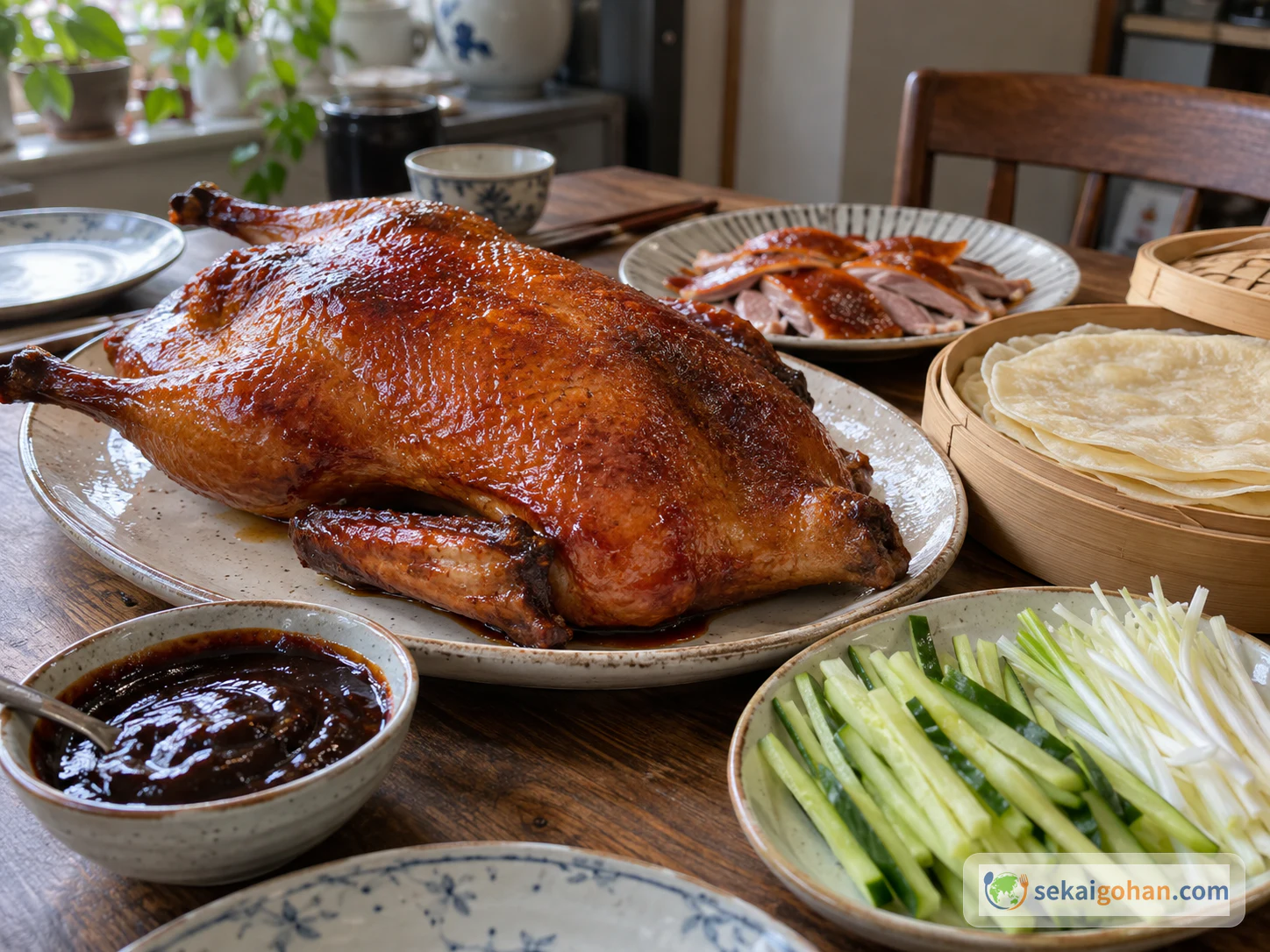
Peking Duck (Běijīng Kǎoyā): A Home-Oven Recipe with Dried, Glazed Skin
How to make Peking duck (北京烤鸭, Běijīng kǎoyā) in a home oven: an approximately 2.5 kg whole duck, a thin maltose glaze, 24 hours of uncovered refrigerator drying, and a high-then-lower roast checked with a thermometer at three points. Covers the sweet bean sauce and pancake wrap, substitutions, troubleshooting, and how a home oven differs from Beijing's hanging ovens and Bianyifang's enclosed menlu.
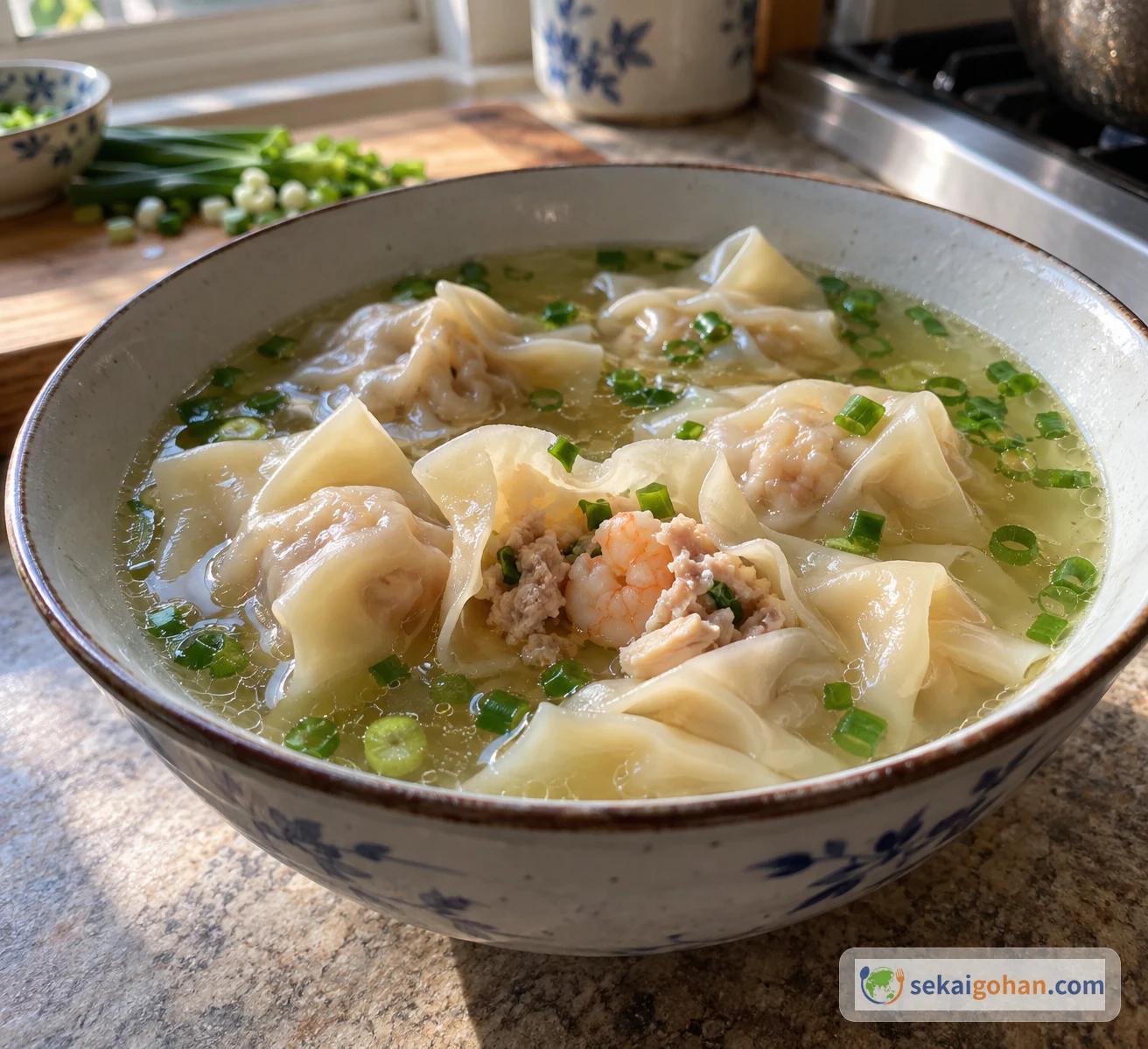
Wonton (Húntun): Chinese San Xian Wontons with Shrimp, Pork and Chicken in Broth
How to make Chinese húntun (馄饨) with a san xian filling of shrimp, pork and chicken, served in warm chicken broth. Covers mixing the filling, folding square wrappers, test-cooking two wontons, checking doneness with a thermometer, building the bowl, and how Shanghai, Cantonese and Sichuan wontons differ.
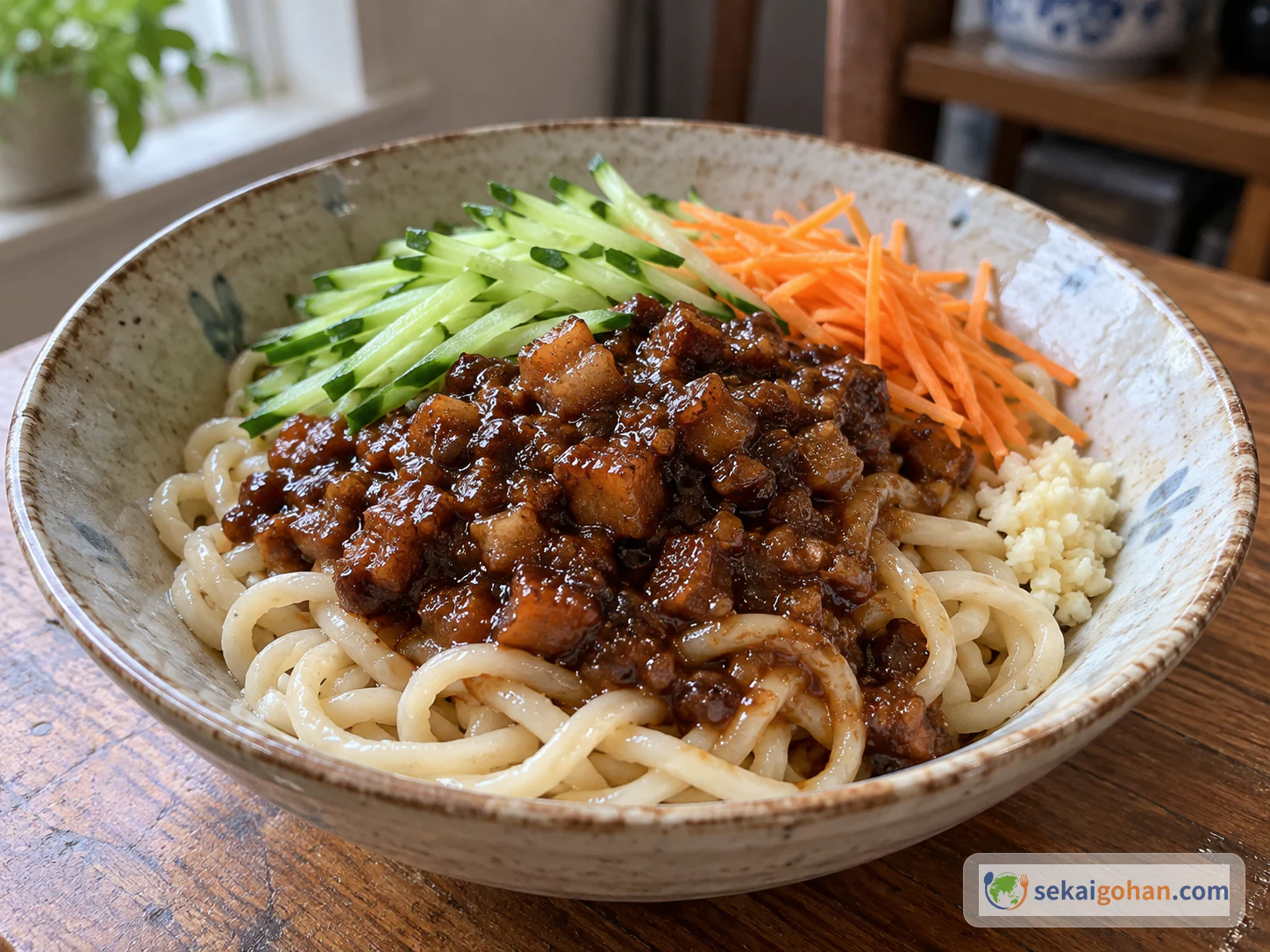
Zhajiangmian: Beijing Fried Sauce Noodles with Pork Belly and Two Bean Pastes (炸酱面)
How to make Beijing-style zhajiangmian (炸酱面), thick wheat noodles tossed with a dark pork belly sauce built on ground bean sauce and tianmianjiang, topped with julienned cucumber and carrot. Covers the aromatic oil, rendering the pork, how far to reduce the sauce, why the sauce makes more than the noodles need, how to choose the pastes, pork safety and storage, and how it differs from Korean jajangmyeon.
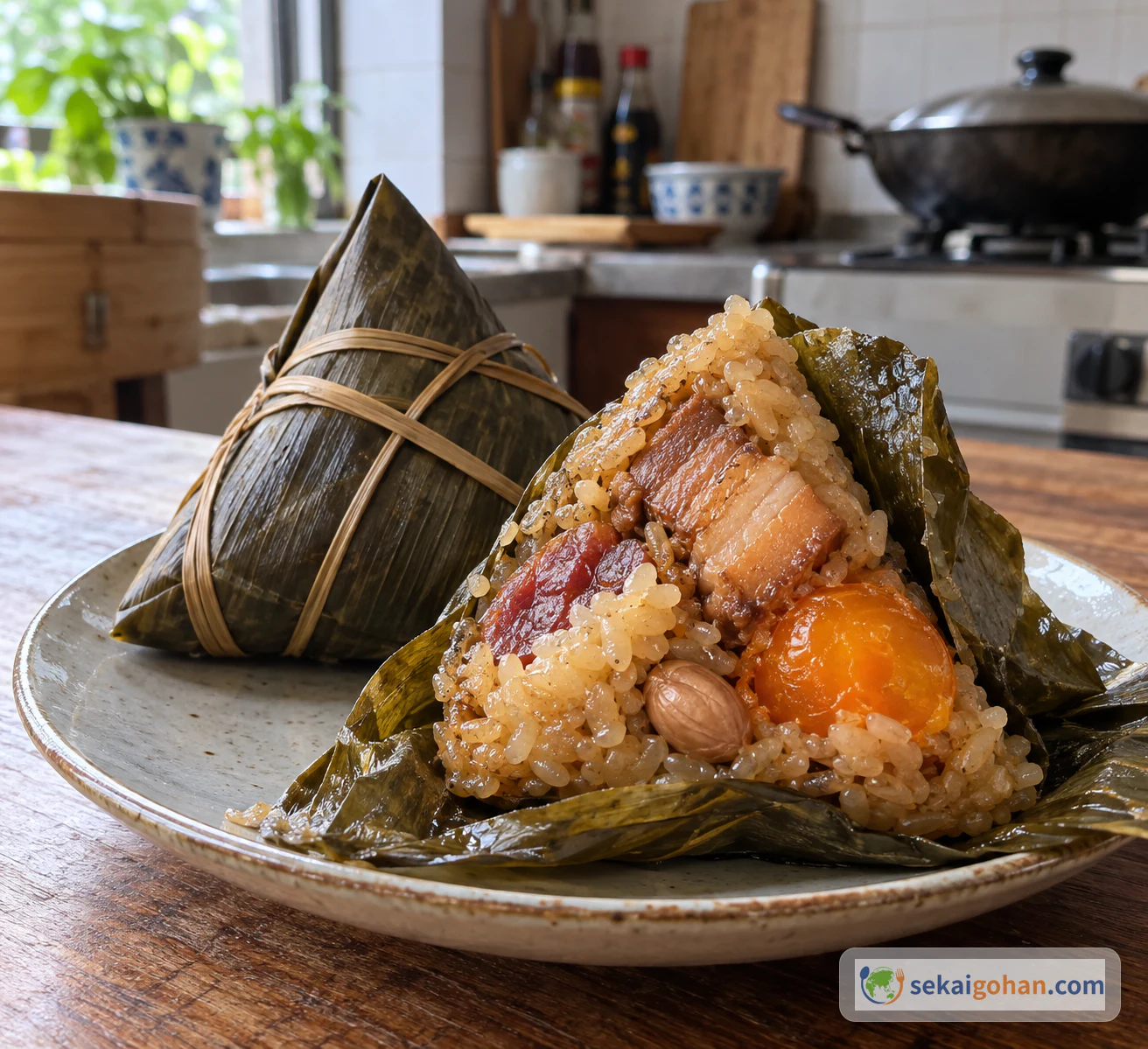
Zongzi: Cantonese-Style Savory Sticky Rice Wrapped in Bamboo Leaves (粽子)
How to make Cantonese-style zongzi (粽子, joong): glutinous rice, pork belly, peanuts, salted duck egg yolk and Chinese sausage wrapped in bamboo leaves and simmered for hours. Covers the overnight preparation, folding a leak-resistant cone, keeping the bundles underwater over gentle heat, pork safety, freezing and reheating, and the place of zongzi at the Dragon Boat Festival and in regional styles.
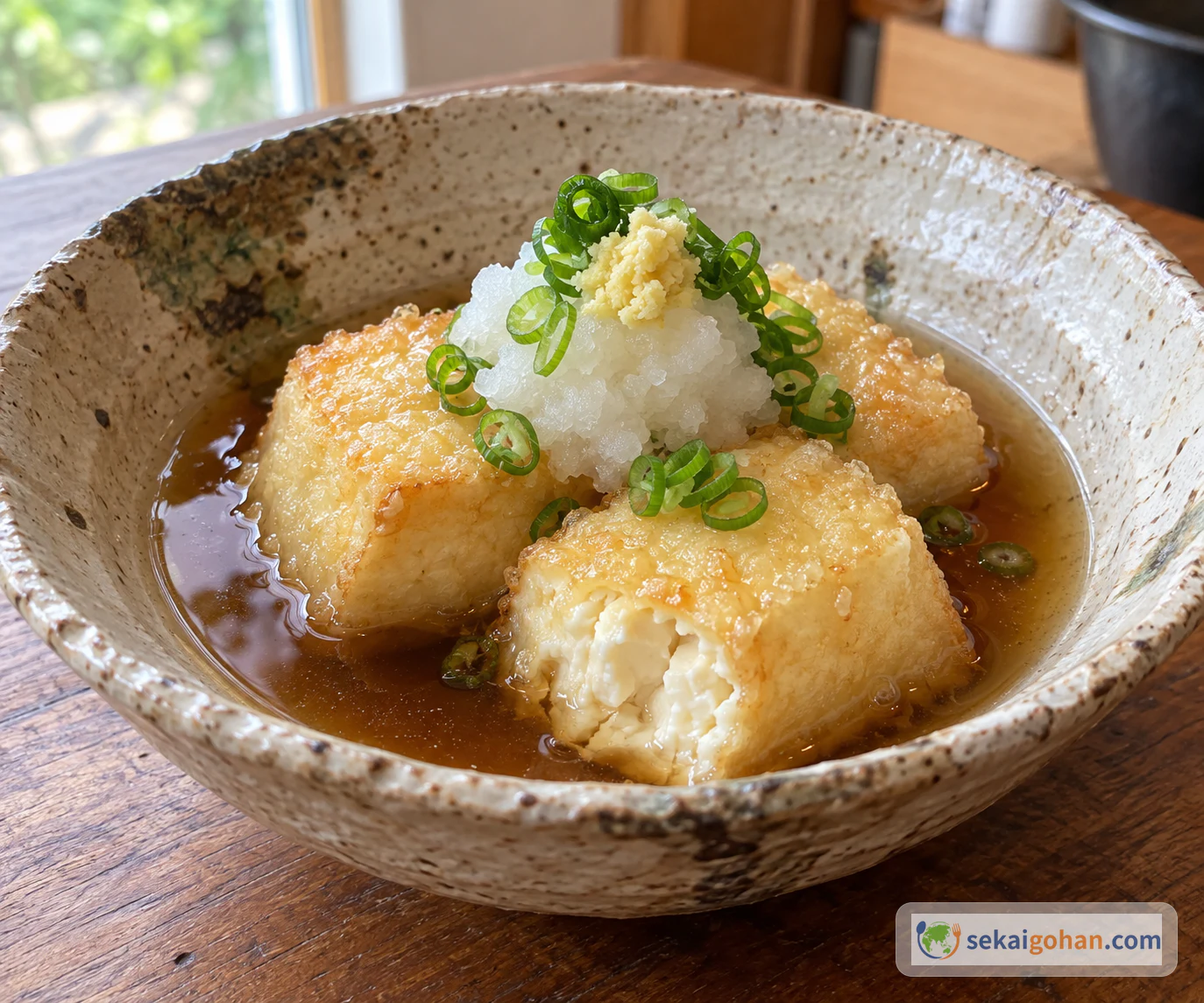
Agedashi Tofu: Lightly Coated Fried Tofu in Hot Dashi Sauce (Agedashi Dōfu)
How to make agedashi tofu (agedashi dōfu) at home: momen tofu cut into six, drained, dusted with potato starch, fried at 175°C and served in hot dashi sauce with grated daikon, ginger and scallion. Covers getting the sauce ready first, keeping the coating from peeling, allergens, variations and the limits of what is known about the dish's history.
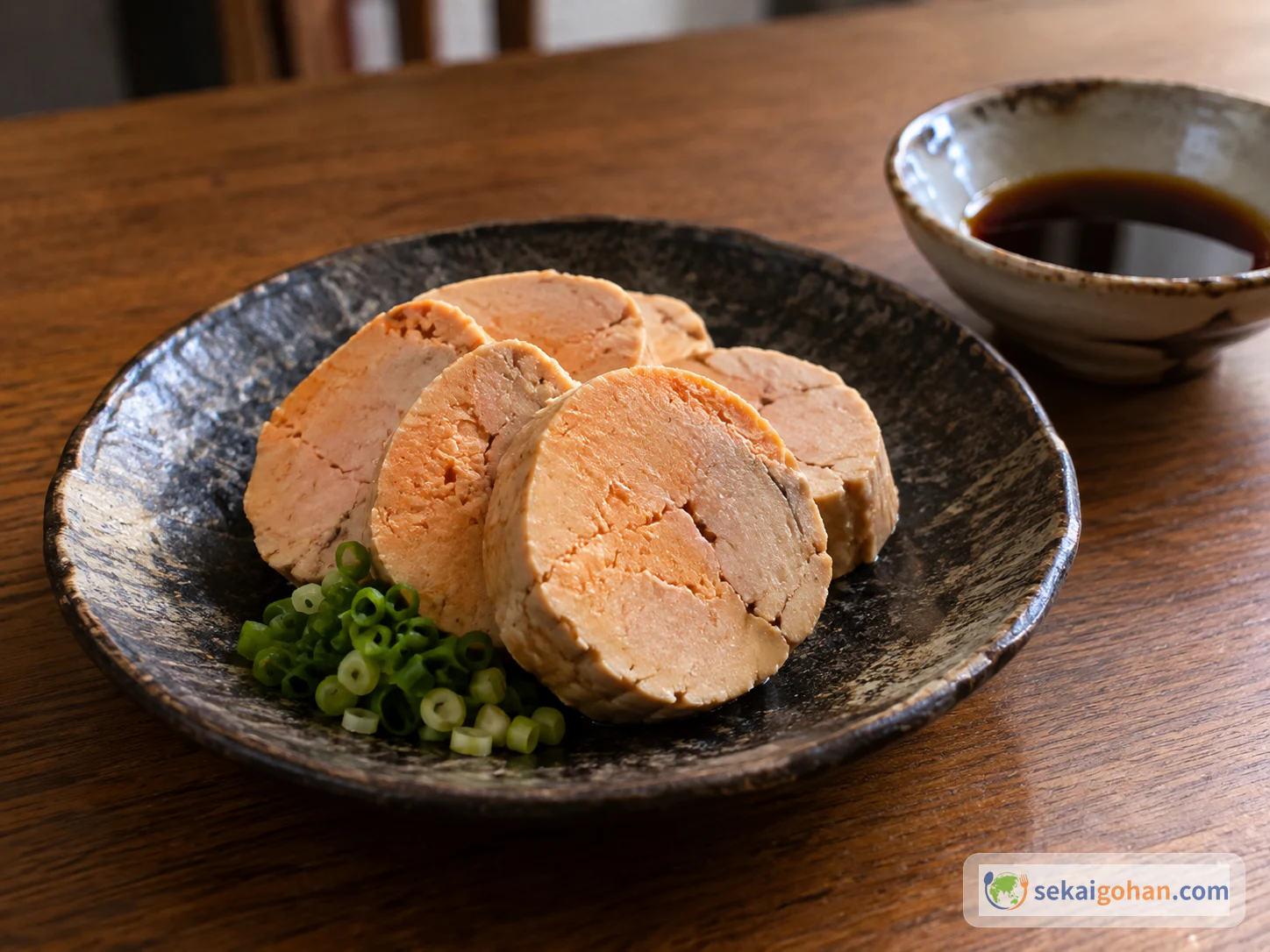
Ankimo: Sake-Steamed Monkfish Liver with Ponzu (あん肝)
How to make ankimo (あん肝), Japanese steamed monkfish liver, at home: trimming the blood vessels and membrane, a chilled soak in water, cooking sake and salt, rolling in foil, steaming over medium heat, and chilling before slicing 1 cm thick. Covers safe heating of monkfish liver, serving with ponzu and scallion, and how ankimo differs from Ibaraki's monkfish hotpot and dobu-jiru.
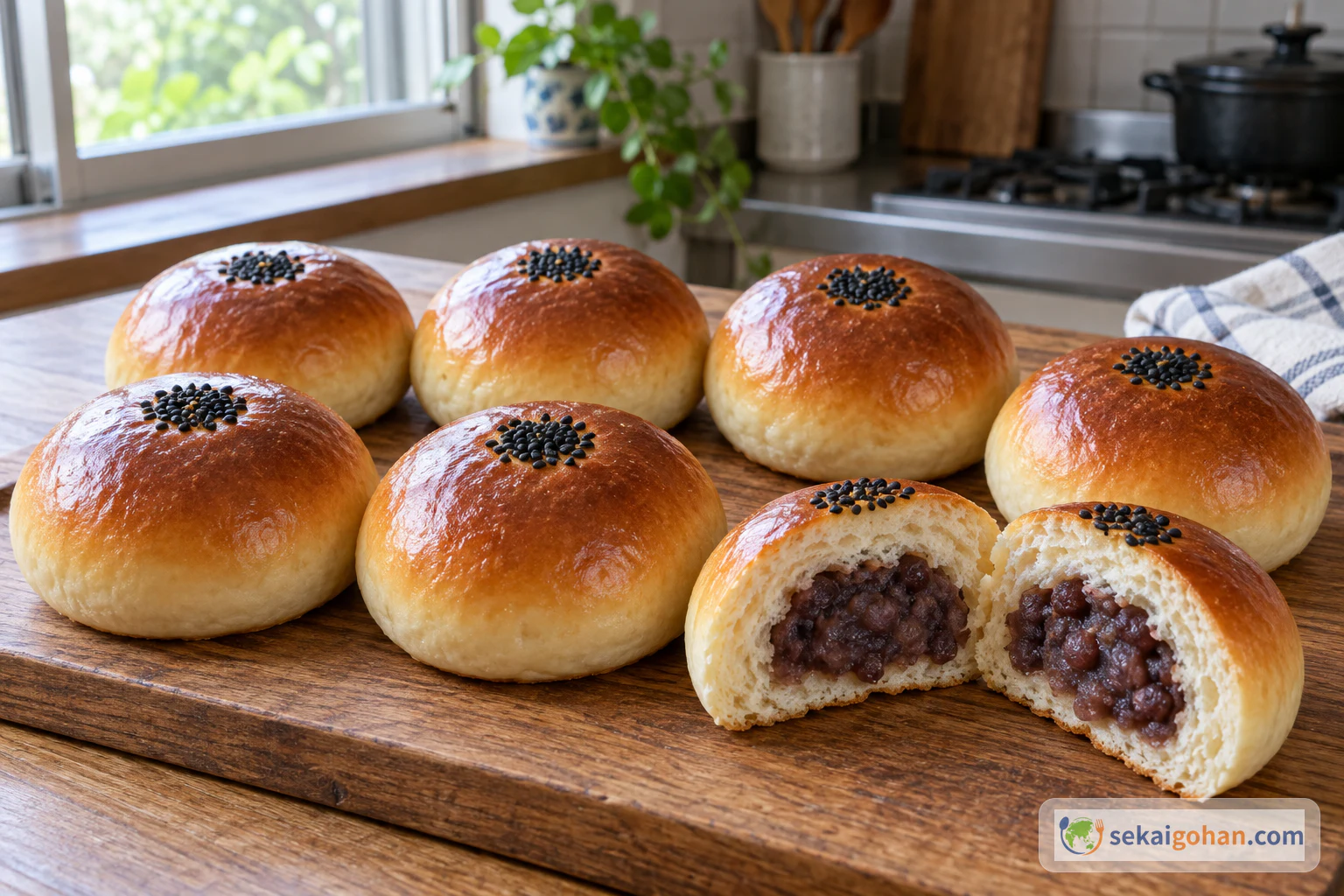
Anpan: Soft Japanese Sweet Red Bean Buns (あんぱん)
How to make anpan, the Japanese sweet bread filled with azuki bean paste, as 8 home-style buns with instant yeast. Covers mixing and kneading to the windowpane stage, judging the first and second rise by volume and a finger dent, wrapping 35 g of paste per bun, egg wash and black sesame, and baking at 200°C. Also explains how this home version differs from Kimuraya's traditional sakadane anpan, and how to choose between tsubuan and koshian.
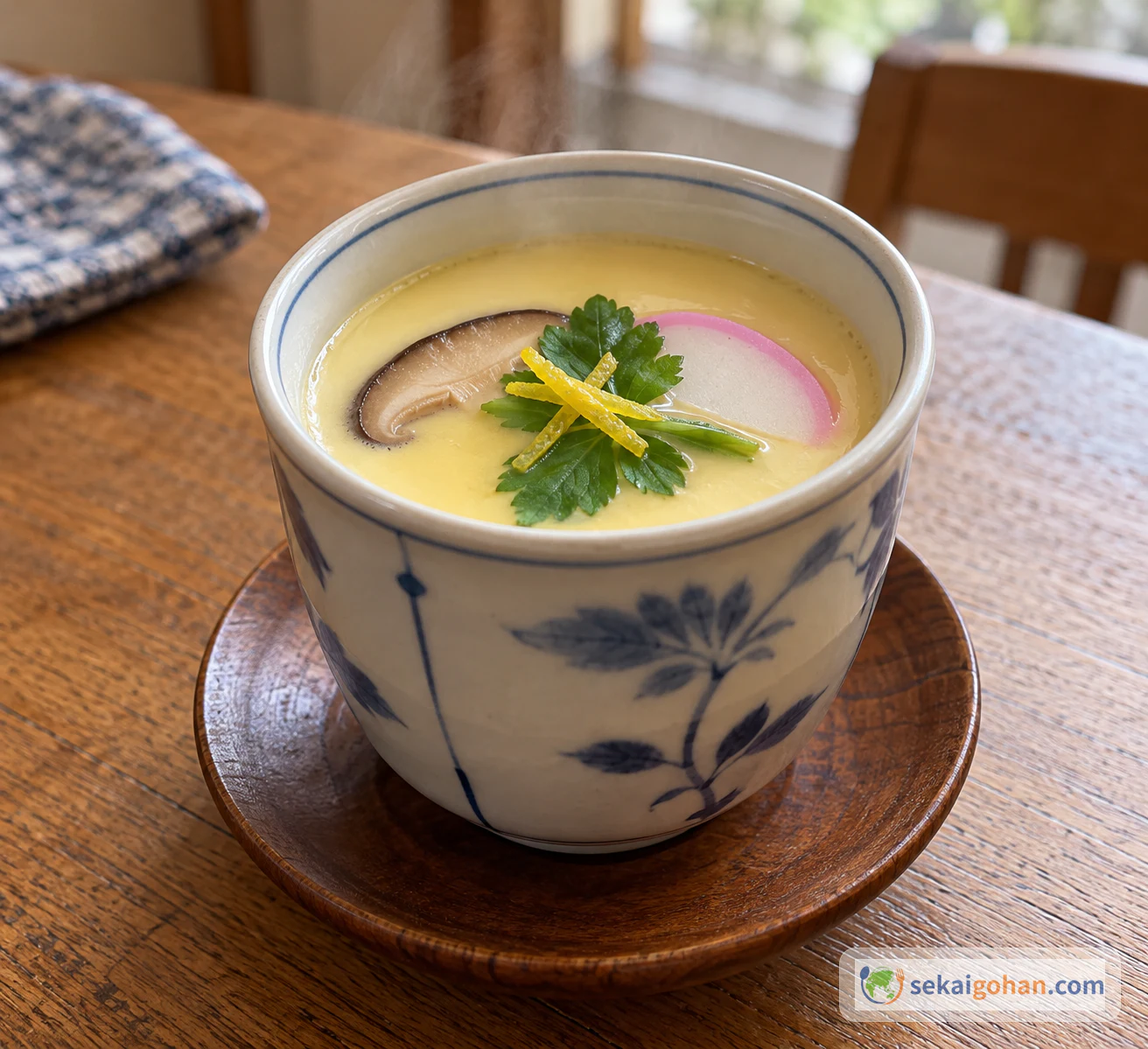
Chawanmushi: Japanese Steamed Egg Custard with Dashi and Chicken
How to make chawanmushi, the Japanese savory custard of egg and dashi, steamed in a single pot. Based on a home recipe by Makiko Oda for Kikkoman Home Cooking: 2 eggs to 300 mL kombu-and-bonito dashi, chicken thigh inside, and shiitake and kamaboko added partway through steaming, finished with mitsuba and yuzu peel.
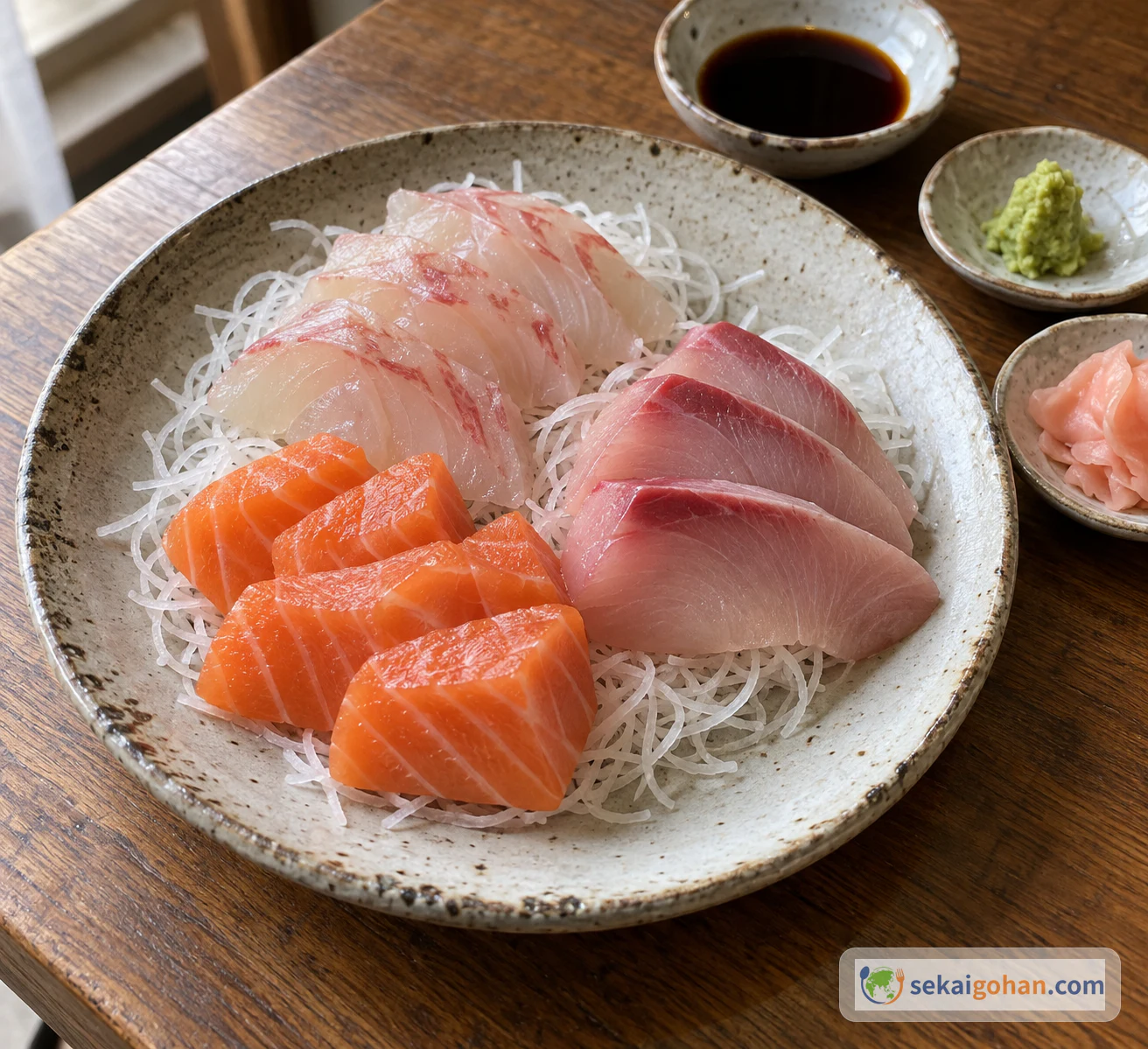
Sashimi: A Three-Fish Platter, Cut Fish by Fish (Sashimi / 刺身)
How to make a home sashimi platter for three with salmon, a white fish and a richer fish, 100g each, on shredded daikon with wasabi, sushi ginger and soy sauce. Covers how to read raw-eating labels, keeping fish cold, why salmon and white fish are cut at different blade angles, what wasabi and soy sauce cannot do against parasites, and how sashimi differs from sushi.