Wasawasa Recipe: Steamed Flour Granules from Northern Ghana

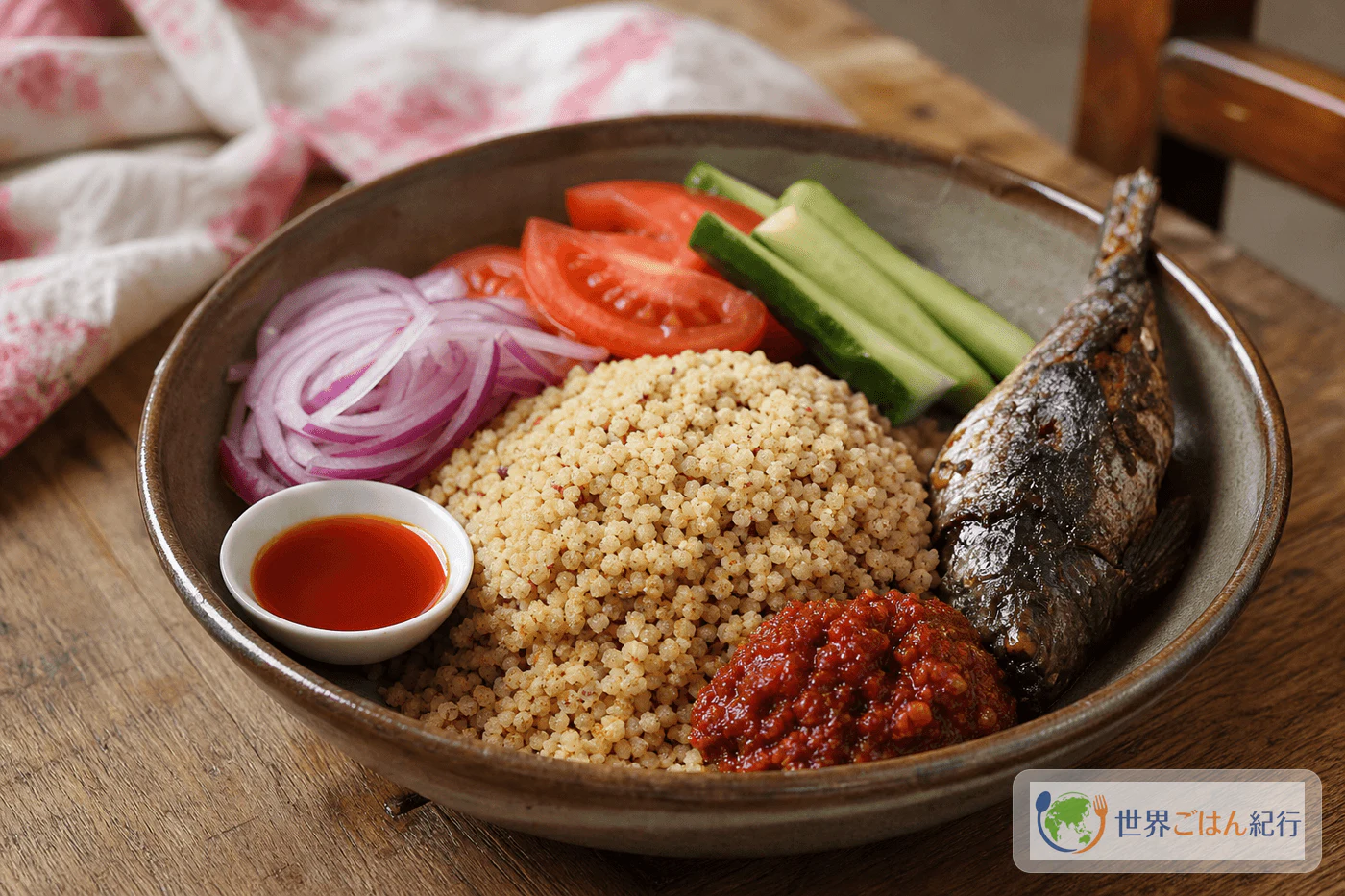
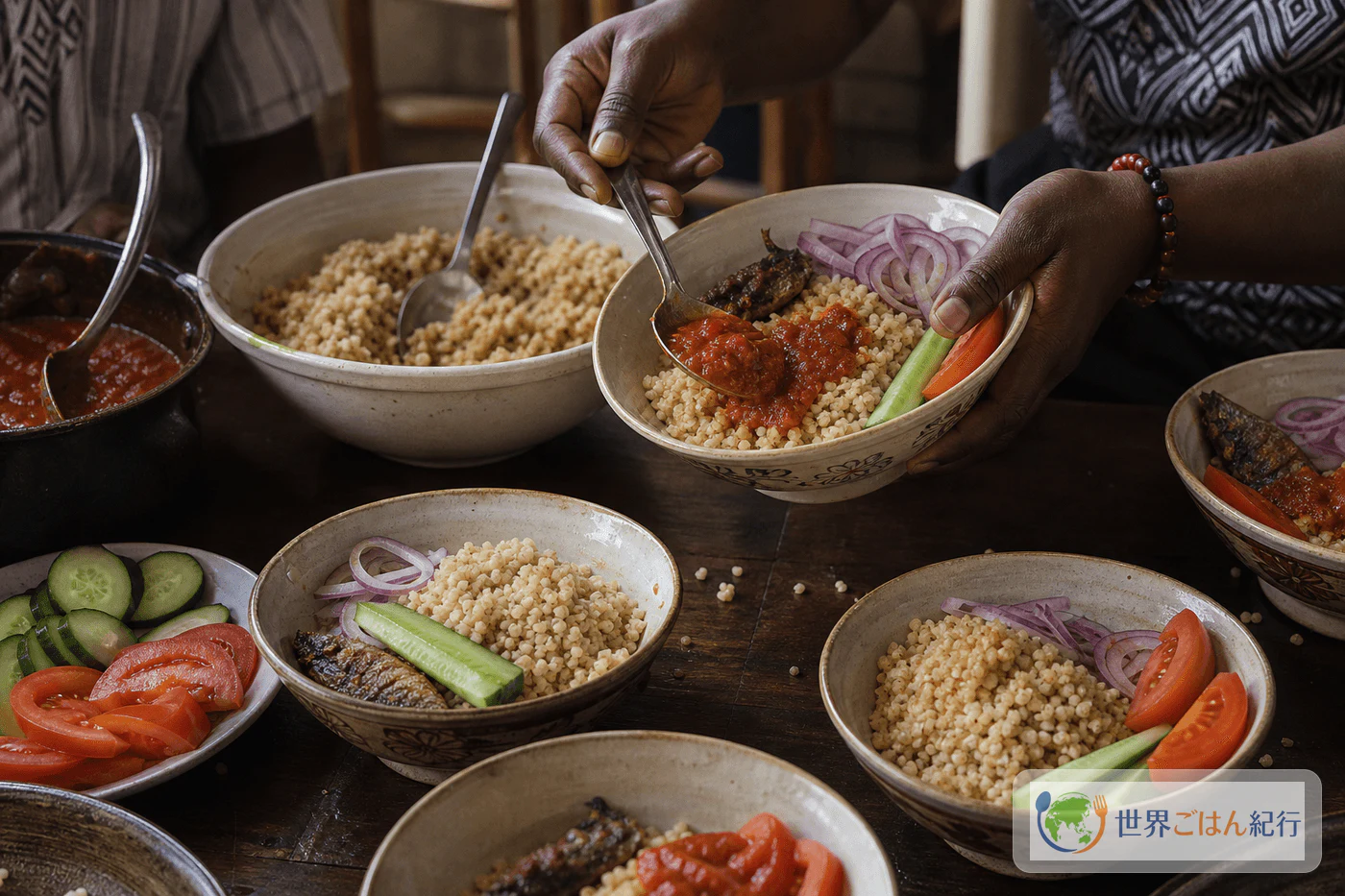
A table in northern Ghana set with wasawasa, red sauce, fish, onion and cucumber
Prep
25 min
Cook
40 min
Total
1 hr 5 min
Serves
4 servings
Level
Intermediate
Cuisine
Ghanaian

A home recipe for northern Ghana's wasawasa that keeps the idea of yam flour while using cassava flour and cornflour that are easier to find. How to sprinkle in the water, steaming times, loosening the granules, the red sauce, serving with fish and vegetables, storage, reheating the next day, flour substitutions and why it goes wrong.

Cooking flow

Cooking steps

STEP11 / 6

Sprinkle water into the flour

8 min

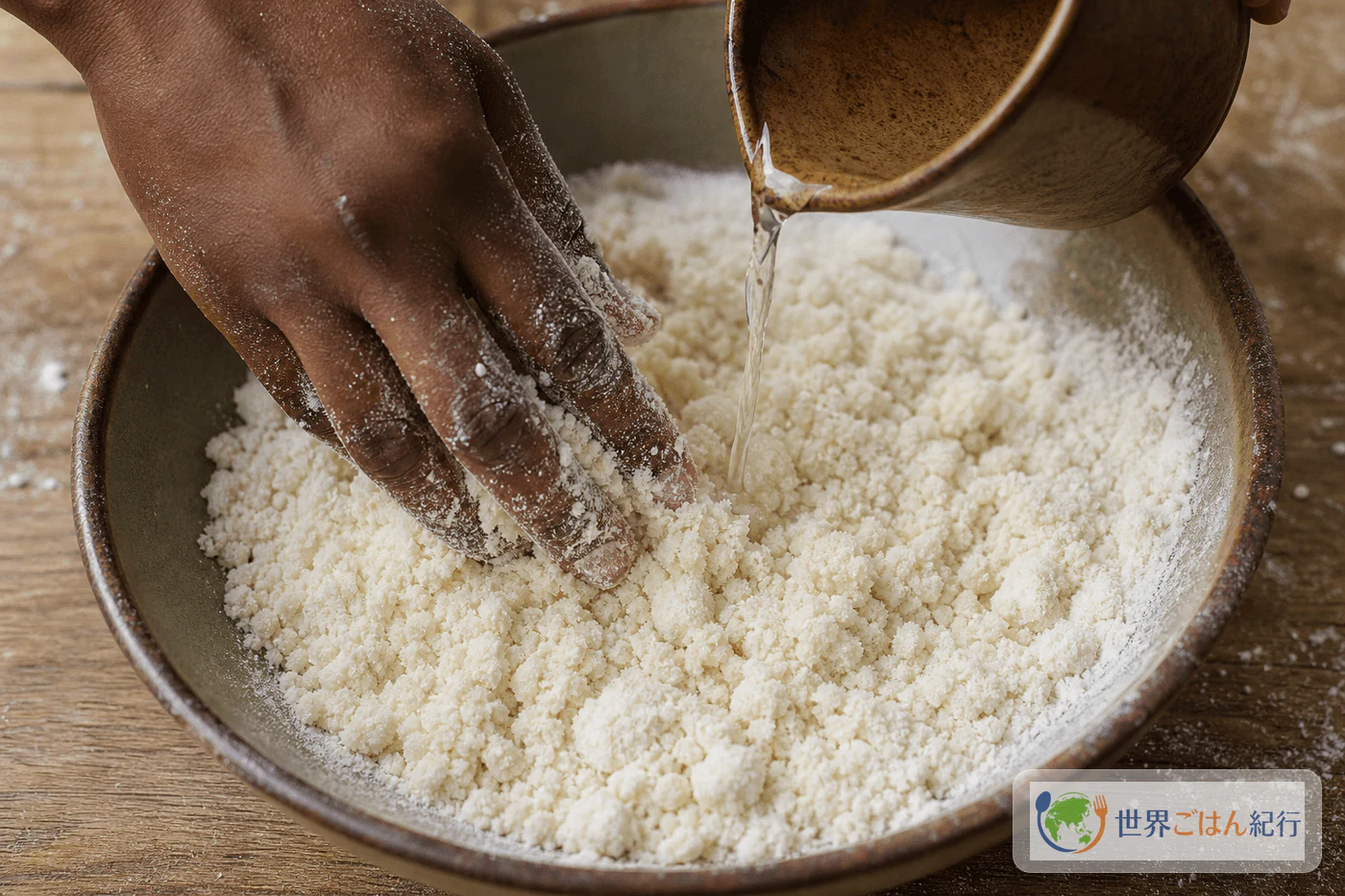
Adding lukewarm water a little at a time to the flour and making wasawasa grains with the fingertips
Don't add the water all at once. Rub with your fingertips into small grains, about like damp breadcrumbs

No heat needed. Put 5.5 oz (160 g) cassava flour, 2.75 oz (80 g) cornflour and 1/2 tsp salt in a bowl. Drizzle in lukewarm water of about 104°F (40 °C), 1 tbsp at a time. Rub the flour between your fingertips until no dry flour remains and you have small grains of 2–4 mm (1/8 in), like damp breadcrumbs. Adding all the water at once makes it clay-like, so stop at the first ½ cup (100 ml). It should hold together when squeezed in your hand and crumble when touched lightly.

STEP22 / 6

Even out the grains with a sieve

7 min

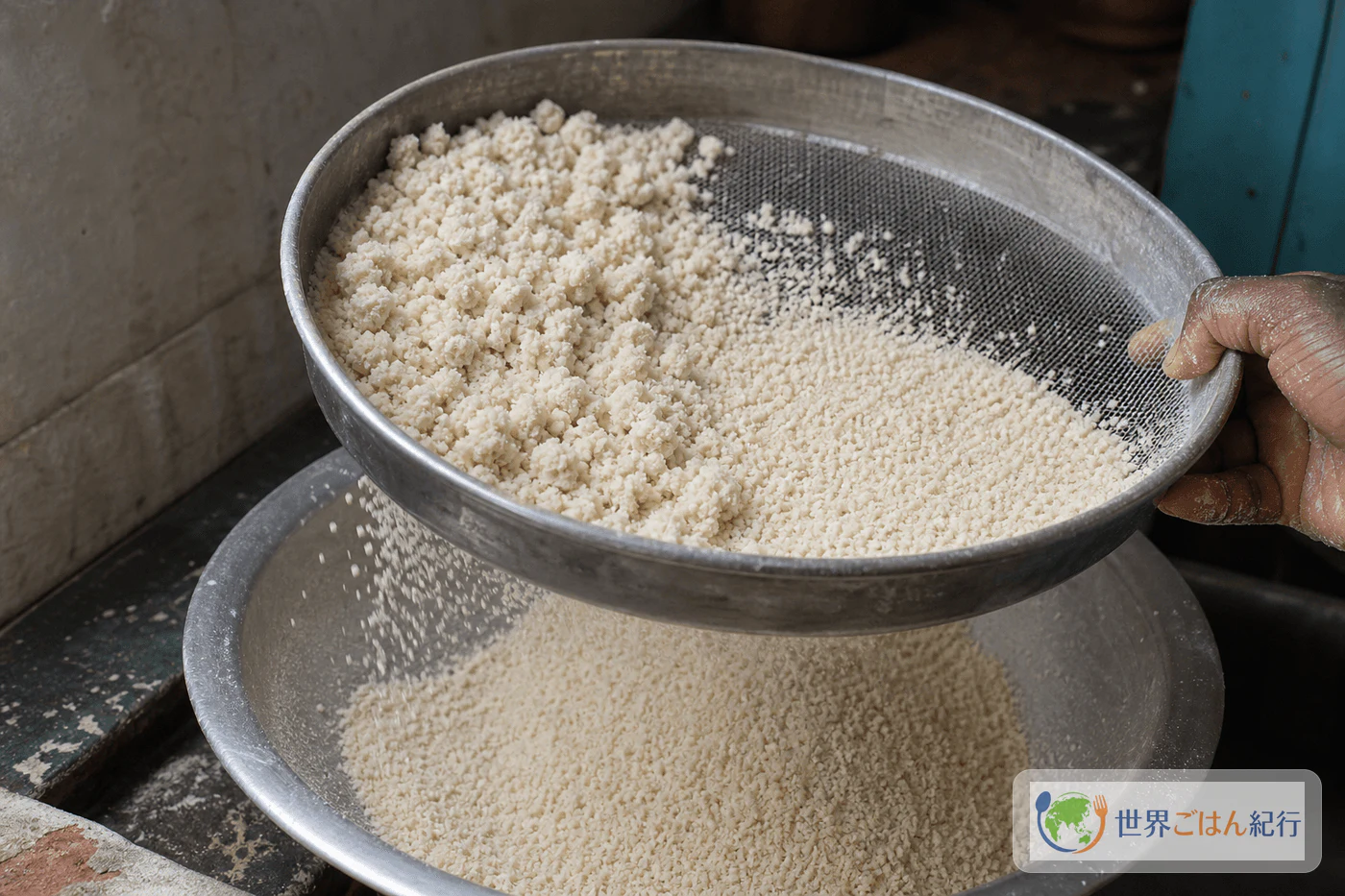
Sifting the dampened wasawasa flour to even out the grains
Evening out the grains in a sieve keeps them from clumping when steamed

No heat needed. Put the dampened flour in a coarse sieve and shake it over a bowl. Use the fine grains that fall through. Break big clumps with your fingers to 0.125 inch (2–3 mm) and pass them through again. Evenly sized grains keep large lumps and powdery patches out of the finished dish. Don't force hard lumps through the sieve. Crumble them by hand until the grains look even.

STEP33 / 6

First steaming

15 min

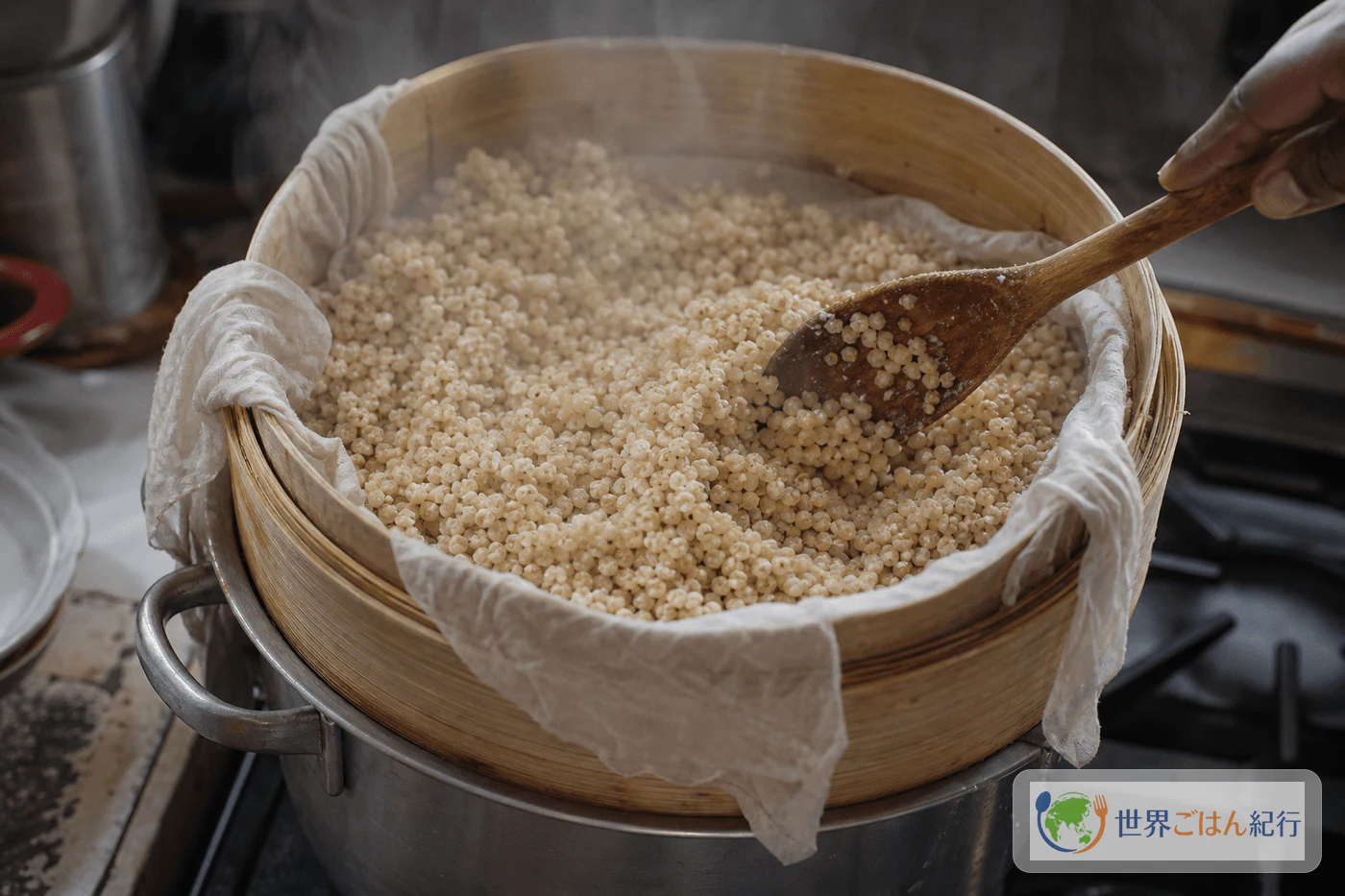
Spreading wasawasa grains in the steamer and steaming them the first time
Fifteen minutes in a cloth-lined steamer. If the steam stops, a powdery feel remains

Bring 1 quart (1 L) of water to a boil in a pot over medium-high heat and line a steamer with a damp, wrung-out cloth. Spread the grains no more than 1 inch (2 cm) deep, cover, and steam over medium heat for 15 minutes. You want a steady stream of steam, grains with a translucent surface, and no powdery feel when you pinch one. If the water runs low, add boiling water so the steam never stops.

STEP44 / 6

Sprinkle with water and loosen

10 min

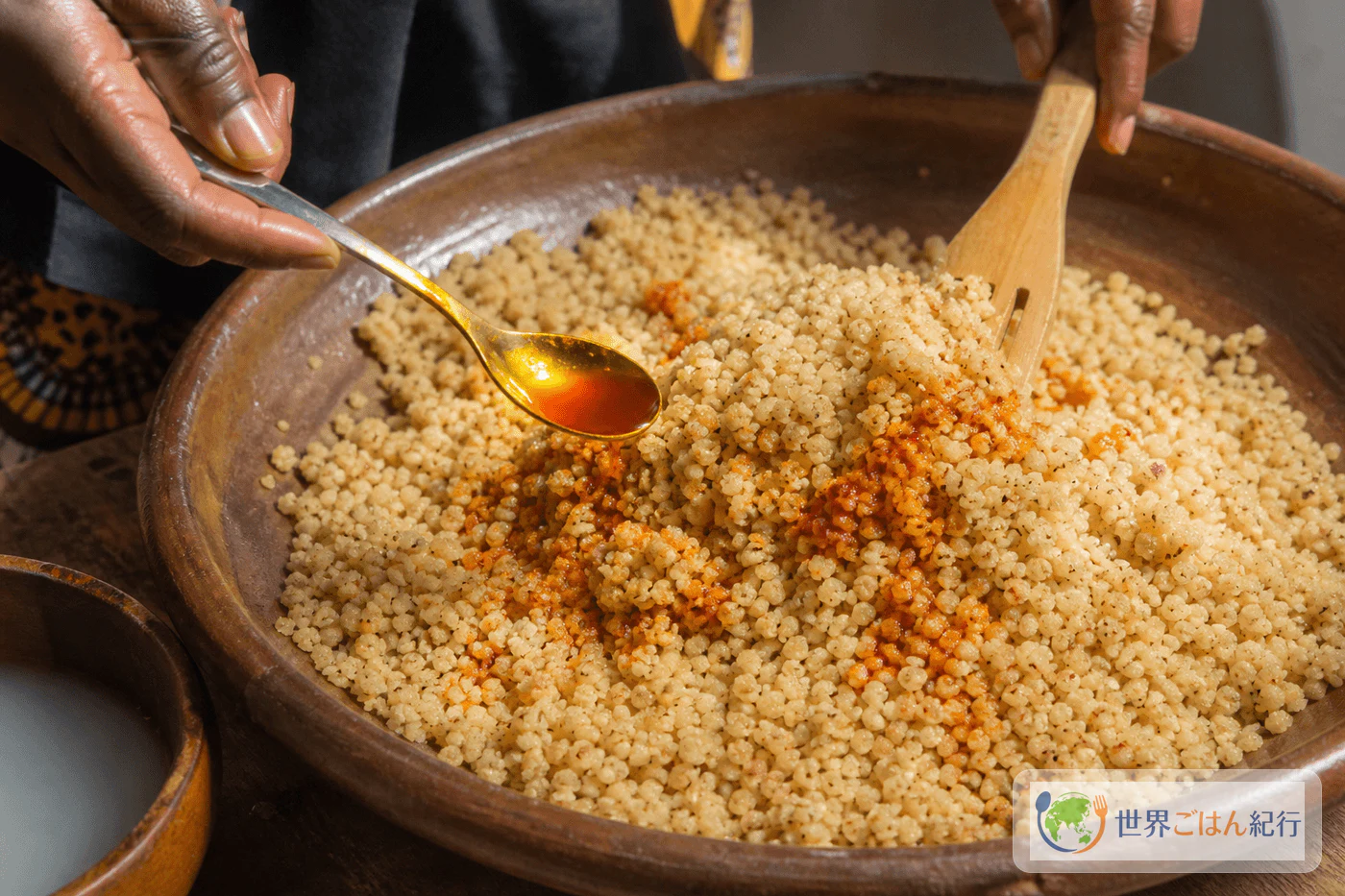
Adding oil and salted water to steamed wasawasa and loosening it with a wooden spoon
Add a little oil and salted water and loosen before the second steaming. Stop before the grains get heavy

Move the steamed grains to a bowl and, while still hot, drizzle over 2 tbsp (30 ml) lukewarm water, 1 tbsp red palm oil or peanut oil and 1/4 tsp salt. Lift from the bottom gently with a wooden spoon or fork, loosening large clumps to 0.5 inches (1 cm) or smaller. Return the grains to the steamer and steam 8 minutes over medium heat. They are ready when steam is rising, the grains are crumbly, and they fall off lightly when lifted with a wooden spoon.

STEP55 / 6

Make the red sauce

12 min

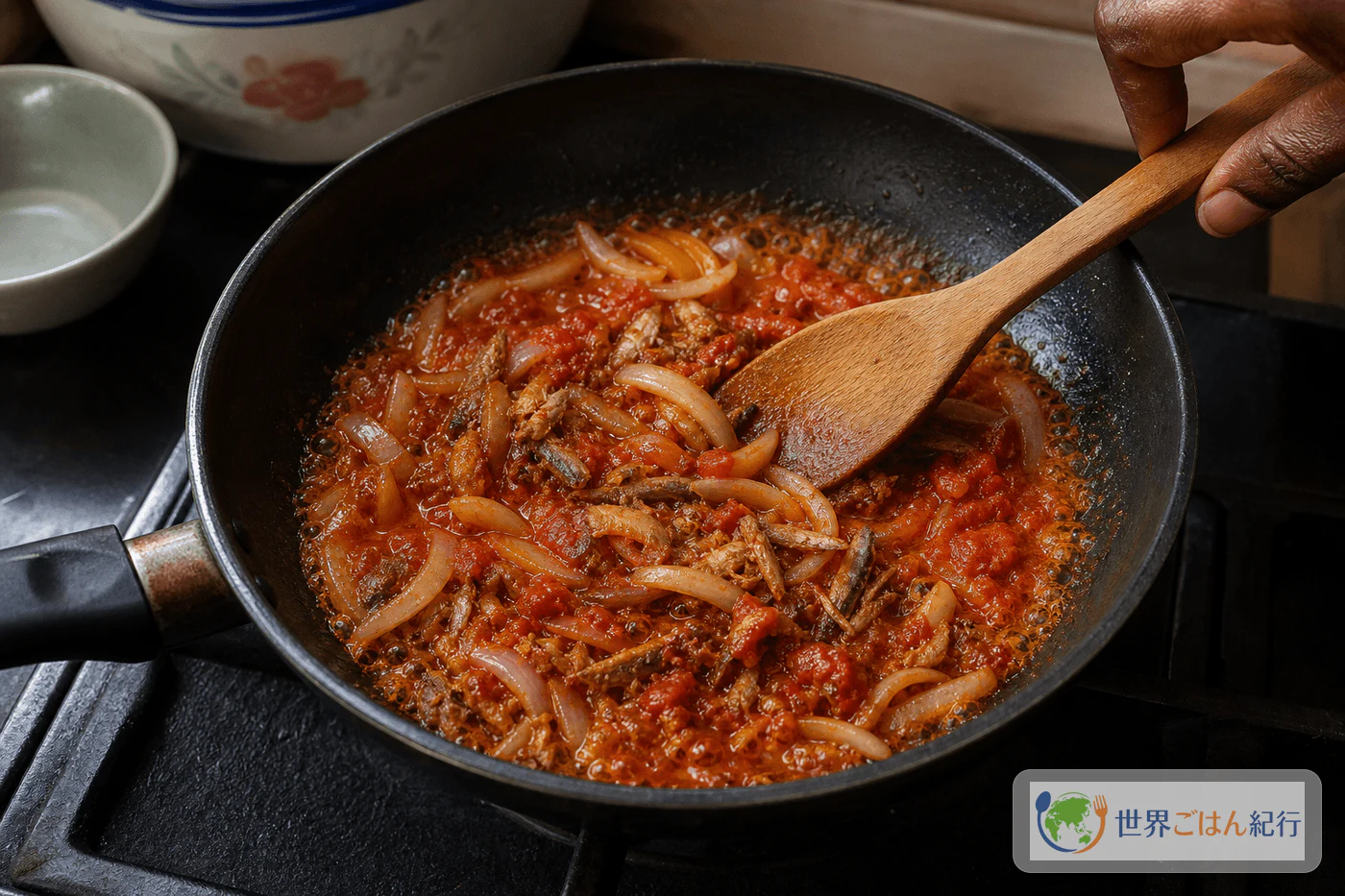
Cooking onion, tomato, chili and dried fish in red palm oil to make the sauce
Make the sauce over medium-low heat without scorching the oil. It is done when red oil floats

Put 2 tsp red palm oil in a small frying pan and cook 2.75 oz (80 g) thinly sliced onion over medium-low heat for 3 minutes. When the edges turn translucent, add the garlic, ginger, chili powder and dried shrimp and cook 1 minute. Add the chopped tomato, ¼ cup (80 ml) water and 1/3 tsp salt, and simmer over medium heat for 6–8 minutes. Turn off the heat when the surface bubbles, red oil floats on top, and dragging a wooden spoon across the bottom briefly leaves a line.

STEP66 / 6

Plate and combine at the table

5 min

Finished wasawasa plated in a dish with red sauce, fish and vegetables
Mix the sauce in a little at a time at the table. Keeping the grains light is the wasawasa way

No heat is needed. Mound the wasawasa about 1 inch (3 cm) high in the center of a dish and spoon on 2–3 tbsp of red sauce. Add 1.75 oz (50 g) flaked fish, the cucumber cut 0.25 inch (5 mm) thick, tomato wedges and the raw onion you set aside. Mixing in all the sauce at the start makes the grains heavy, so combine a little at a time at the table. If it feels dry, drizzle on just 2 tsp warm water and loosen it.

0 / 0
Ingredients

Ingredients

1 / 2

The wasawasa

Ingredient Amount Substitutes & notes
Cassava flour 5.5 oz (160 g) If you have yam flour, replace with 8.5 oz (240 g). If gari is coarse, grind it finer in a grinder
Cornflour 2.75 oz (80 g) Finely ground corn flour. Coarse corn grits alone leave hard grains
Lukewarm water ½ cup (120 ml) About 104°F (40 °C). Adjust by about 2 tsp (10 ml) depending on how dry the flour is
Salt 1/2 tsp Add another 1/4 tsp after steaming
Red palm oil or peanut oil 1 tbsp For finishing. Rice bran or other neutral oil if you want a lighter aroma
2 / 2

Red sauce and accompaniments

Ingredient Amount Substitutes & notes
Onion 1/2 (about 3.5 oz / 100 g) Set a little aside, thinly sliced, to serve raw
Tomato 1 (about 5.5 oz / 150 g) If you have no fully ripe tomato, use 3.5 oz (100 g) canned diced tomatoes
Garlic 1 clove Finely chopped
Ginger 8 g Finely chopped
Chili powder 1/2 tsp 1/4 tsp if you don't like heat
Dried shrimp or dried small fish powder 1 tbsp Brings the umami of the local seafood. Omit if you leave out fish
Water ¼ cup (80 ml) To loosen the sauce
Salt 1/3 tsp Adjust for the saltiness of the fish
Grilled fish or tuna 7 oz (200 g) Ordinary fish; grilled mackerel or salmon works too
Cucumber 1 Cut on the diagonal, 0.25 inch (5 mm) thick
Tomato 1 Cut into wedges
0 / 0

Making wasawasa is quiet work. You sprinkle water into the flour a little at a time, rub it between your fingertips, and sort the grains through a sieve. Most dishes simmer in a pot. With this one, you're raising small grains by hand. What you get is a crumbly steamed staple from northern Ghana with a texture like couscous, meant to be eaten with red sauce, fish and oil.

Wasawasa from northern Ghana

Wasawasa (Wasa wasa) is a traditional dish from northern Ghana, especially Dagbon. Dried yam peel is ground to flour, then steamed into small grains or pellets. In Dagbon, one plate brings together yam grown in dry country and the way it is processed, fish and spicy oil, and sides shared at the table.

Even among Ghanaian dishes, the texture stands apart. It's different from waakye, cooked beans and rice; from banku, which binds fermented corn; and from tuo zaafi, where flour is stirred into a paste. Wasawasa isn't really for soaking up broth. You coat the grains with sauce and oil as you eat.
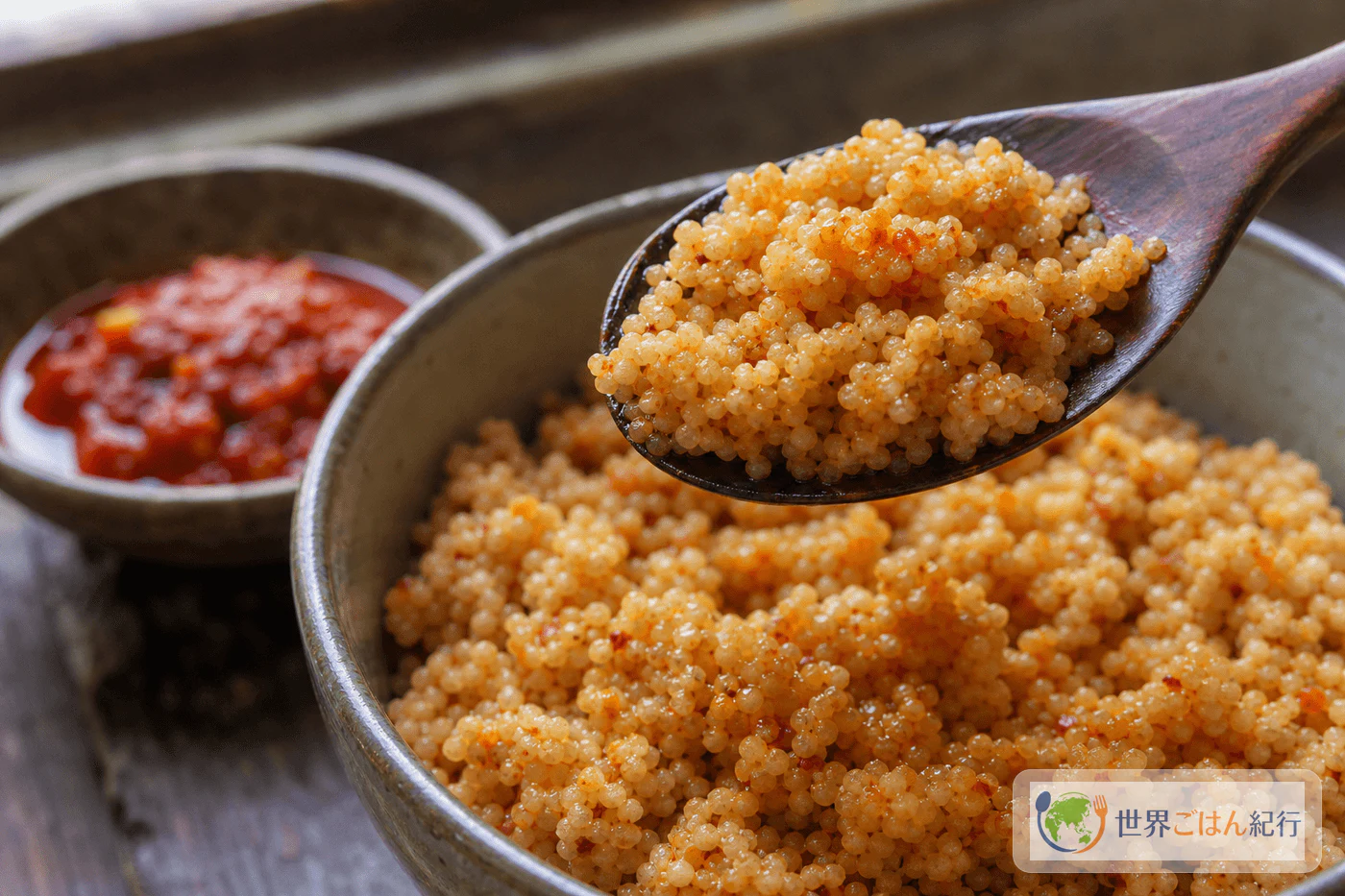
Scooping wasawasa grains with a wooden spatula and setting them beside red sauce to check the texture
Wasawasa is not porridge; keep the grains crumbly. Break up big clumps before and after steaming

Ingredients (serves 4) and substitutes
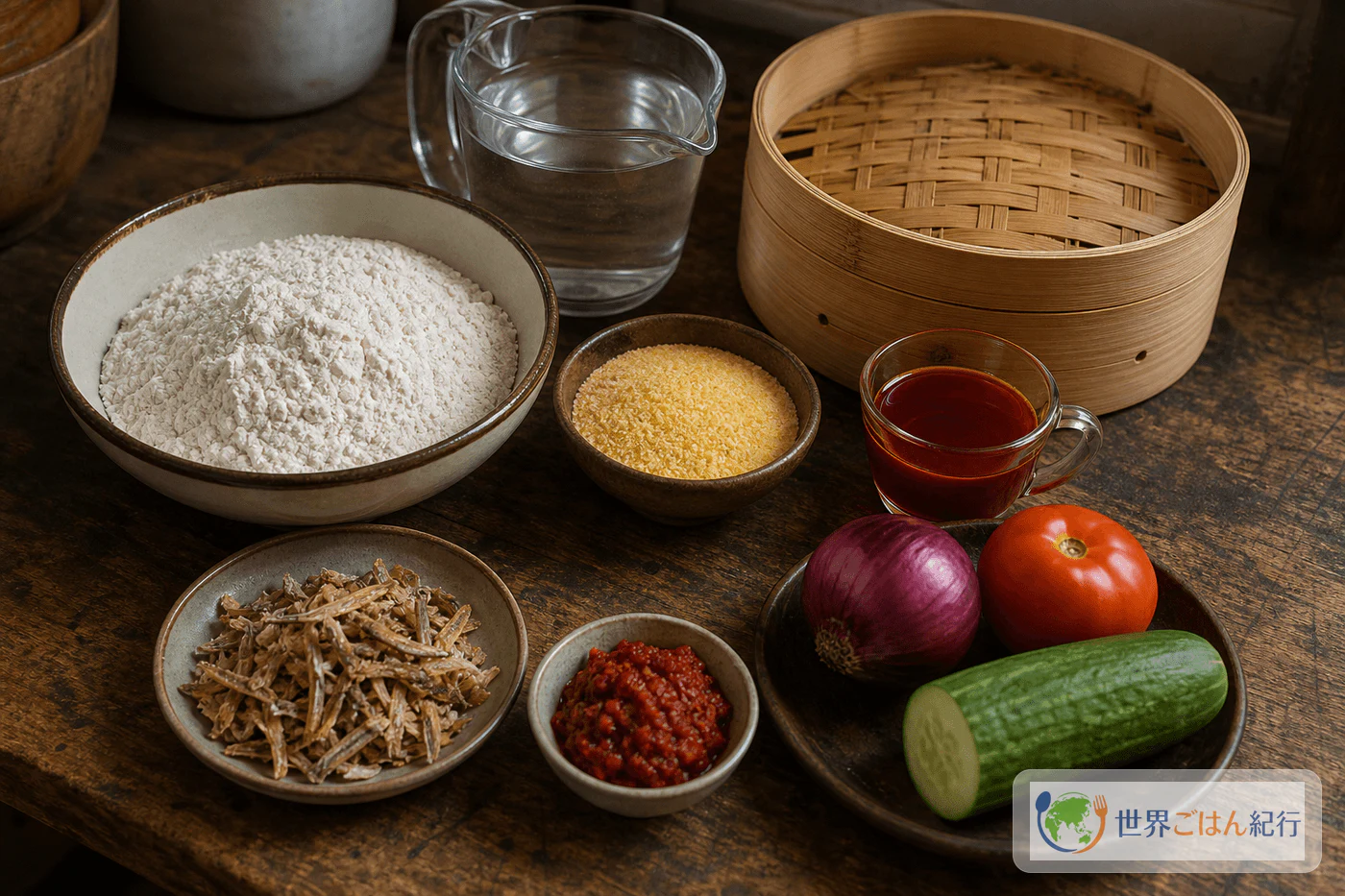
Flours, red palm oil, fish, vegetables and a steamer laid out in the kitchen for wasawasa
Sorting the flours, steamer, oil and hot-sauce ingredients first makes it less confusing
Allergy and heat notes

This recipe contains dried shrimp, fish, and peanuts if you use peanut oil. If you use dried shrimp, watch for shellfish allergy. Let people add chili at the table, so children and anyone who dislikes heat can share the dish.

What you need for this dish

The hard-to-find items are the flours and the West African-style oil, not the fish and vegetables. When you can't get yam flour, mix cassava flour with cornflour for lighter grains.

Choosing flour for wasawasa

The hard part at home is getting yam flour. Instant yam flour from an African grocer or online is the shortcut. With pantry ingredients, a mix of cassava flour and cornflour works, and the method stays the same: sprinkle in water a little at a time, even out the grains, steam, then loosen.

If you can get yam flour

If you can get yam flour or instant pounded yam flour, replace the cassava flour and cornflour in the ingredient list with 8.5 oz (240 g) yam flour. Each product absorbs water differently, so start with ½ cup (100 ml) of water and add 2 tsp at a time until the grains look like damp breadcrumbs.

Wasawasa in Ghana has a slightly earthy aroma from the yam peel and the drying process, and the substitute won't fully match it. Scorching the flour won't fake it either. Keep the flour a little coarse instead, and let the red sauce and fish bring the umami. That's what holds the dish together on the table.


Wasawasa troubleshooting: water and grain size

With so few ingredients, the way you add the water becomes the flavor. Flours absorb water differently, so go by how the grains look and feel rather than tipping in all the water in the recipe.

Problem Cause Fix
Heavy like clay Added the water all at once; didn't sift the grains Add 1 tbsp dry cornflour and loosen by hand to 0.125 inch (2–4 mm)
Powdery Too little water; weak steam Sprinkle on 2 tsp lukewarm water and steam 5 more minutes over medium heat
Big clumps remain Didn't pass through the sieve Break with a fork while hot and steam for 3 more minutes
Oily Too much finishing oil Use less sauce and serve with extra cucumber and tomato
Strong bitterness Type of flour, burnt oil, old flour Switch to fresh flour and add ingredients before the oil smokes

Handle the grains lightly. Fufu is kneaded for its springiness, but kneading wasawasa turns steamed flour into dumplings. Make the grains, steam, loosen. That's the whole rhythm.


Serving and storing wasawasa

Eat wasawasa hot, mixing in the hot sauce, fish, vegetables and oil a little at a time. Set red sauce, fish, thinly sliced onion and cucumber beside it rather than serving the white staple alone. At home, flaked grilled fish over the top, plus cucumber and tomato for moisture, makes it easier to eat.

It also plays well with other Ghanaian dishes. A small portion of black-eyed pea stew such as red red makes a satisfying plate of flour and beans. On days when you want a peanut aroma, make groundnut soup as the broth and scoop up small amounts of wasawasa so it doesn't feel heavy. For the feel of a spicy street stall, add a little kelewele, fried plantain.
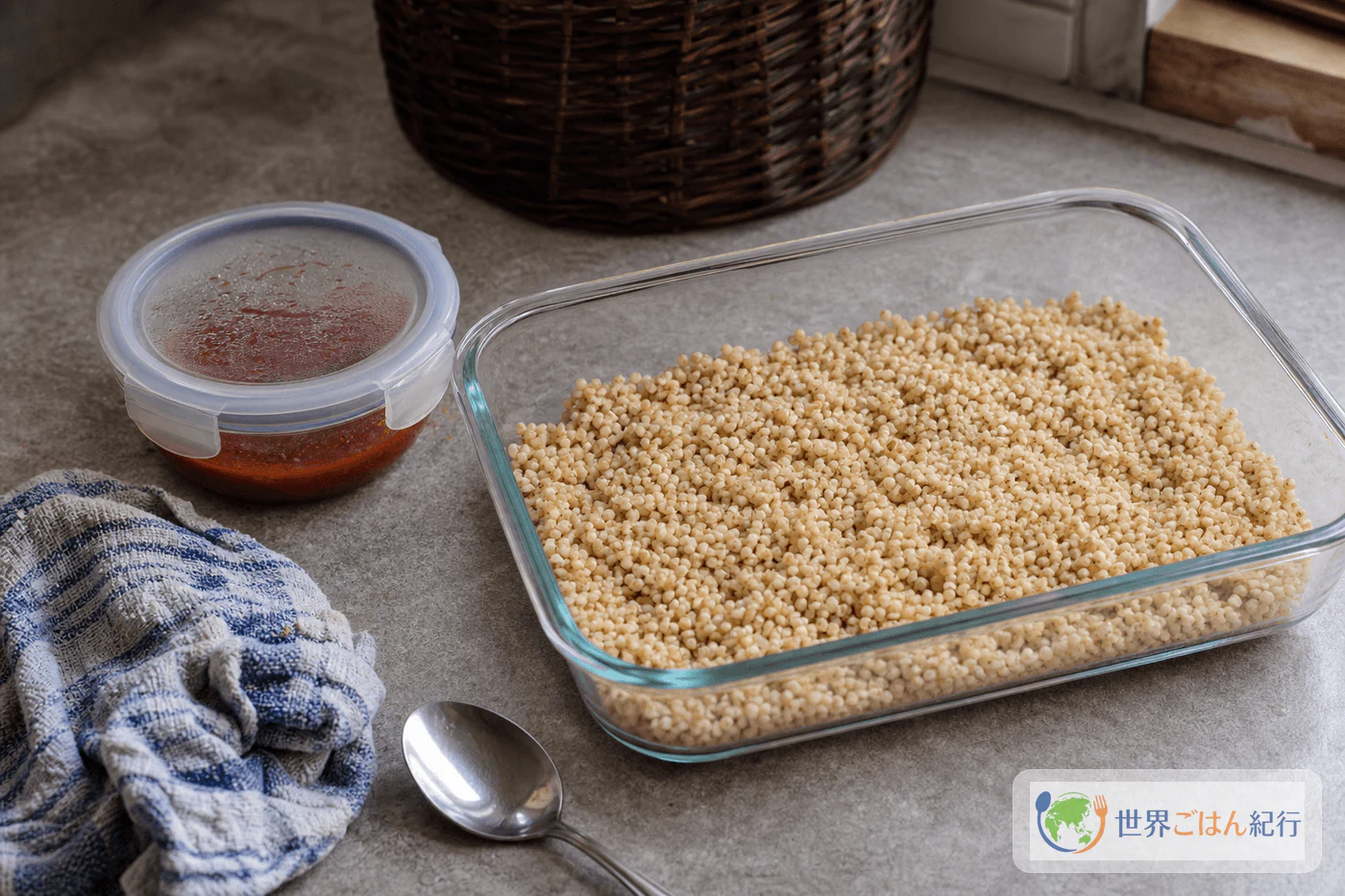
Leftover wasawasa spread in a shallow container to cool, separate from the red sauce
Store the grains and the sauce separately. Spread shallow, they cool faster and are easier to loosen the next day

Store the wasawasa and sauce separately. Spread the grains in a shallow container, cover once cool, and refrigerate until the next day; they'll be firmer than when fresh. Refrigerate the sauce in its own container and finish it within 2 days. Fish left mixed in starts to smell, so add it just before eating.

To reheat, microwave at 600 W for 1 minute, drizzle with 2 tsp lukewarm water, loosen with a fork, and heat 30 seconds more. Or re-steam in a pot for 5 minutes over medium heat. Add water only by the teaspoon, since too much turns it porridge-like.


Frequently asked questions

Q1. I don't have yam flour. Can I make it with cassava flour alone?

Yes, but cassava flour alone turns chewy and the grains get heavy. For a first try, use 5.5 oz (160 g) cassava flour with 2.75 oz (80 g) cornflour for crumblier grains after steaming.

Q2. Can I use gari instead?

Fine gari works. Coarse gari leaves hard grains, so grind it finer in a grinder first. Gari has a sour note from fermentation, so the texture comes close to wasawasa, but the aroma differs from yam flour.

Q3. Is red palm oil essential?

No. In Ghana, it is also eaten with shea butter oil, peanut oil or vegetable oil. Red palm oil adds the color and aroma of West African cooking, but too much hides the flavor of the flour, so use 1 tbsp or less. If you dislike it, finish lightly with peanut oil or a neutral oil.

Q4. How spicy is authentic?

Wasawasa is often served with hot sauce, but the heat can sit on the side. The amounts here give a gentle heat. For more, add chili powder or shito at the table, and keep the base sauce mild for family meals.
Sources