
Recipes (38)
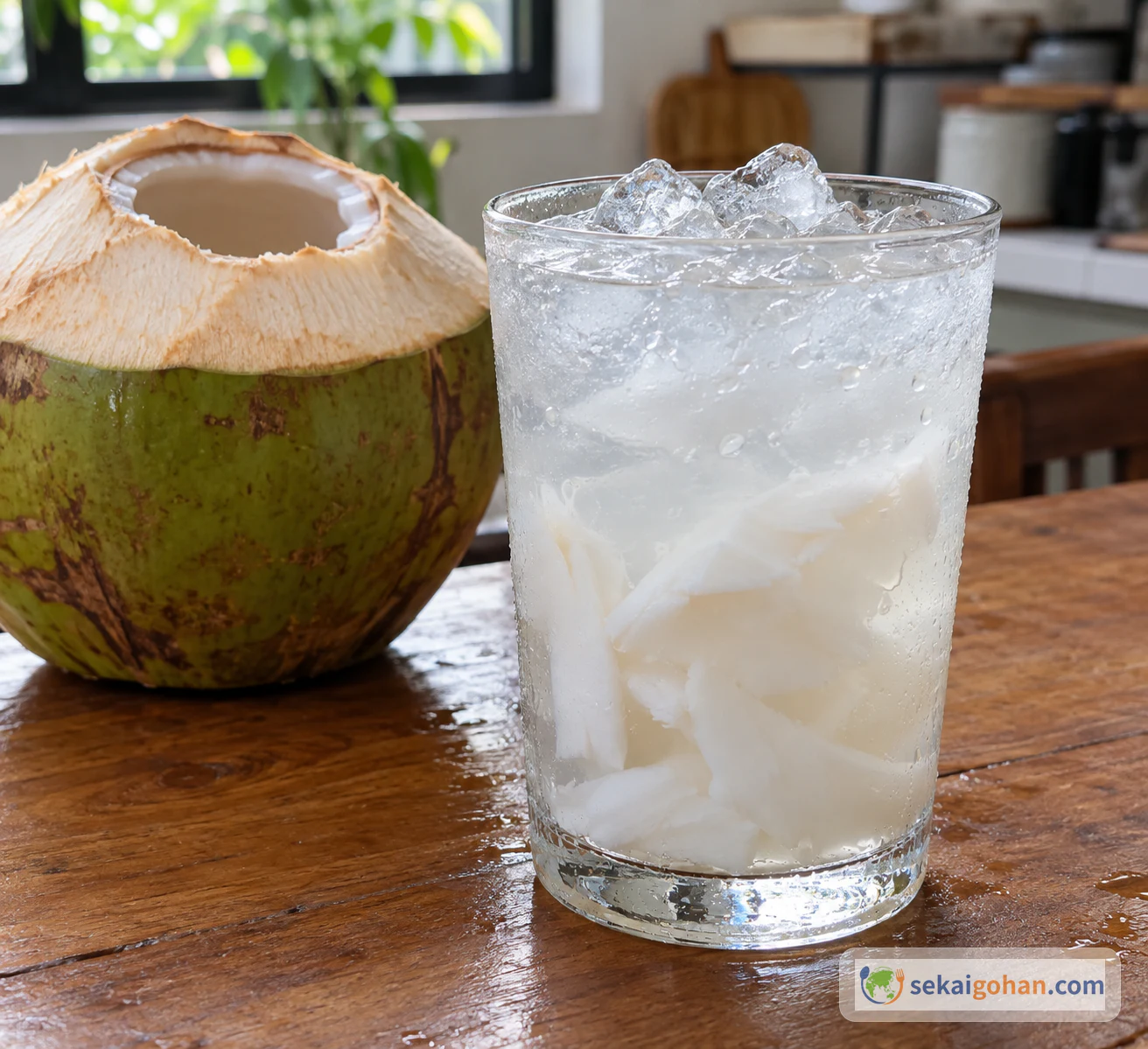
Es Kelapa Muda: Indonesian Young Coconut Drink with Syrup and Ice
How to make es kelapa muda, the cold Indonesian drink of young coconut water and soft coconut flesh with a spoonful of simple syrup and shaved or crushed ice. Covers straining and chilling the coconut water, rinsing and trimming the flesh, how to shop for a young coconut you don't have to open yourself, the name Es Degan, and how other published versions differ.
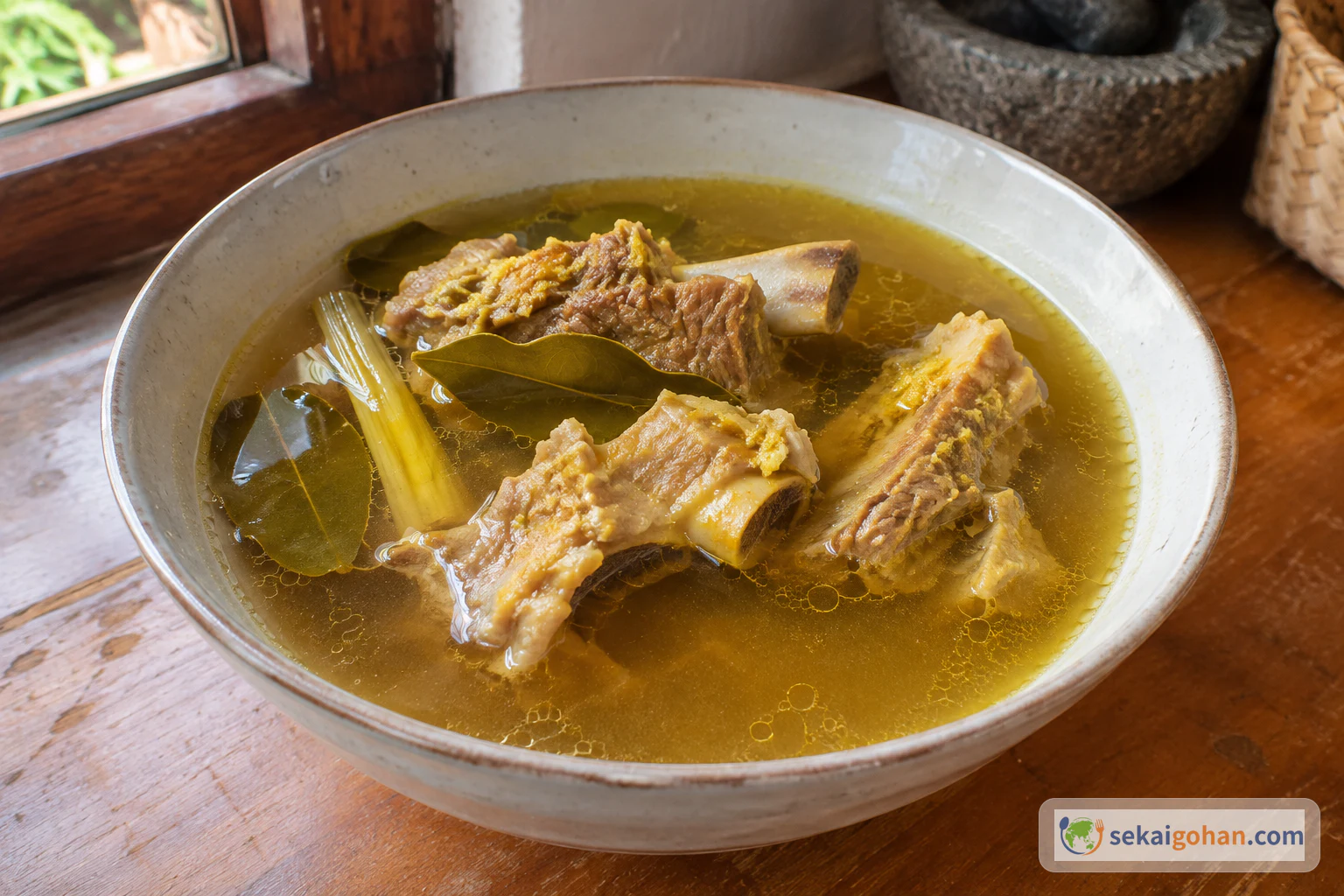
Kuah Balung: Balinese Pork-Rib Soup with Lime Leaves and Lemongrass (Iga Babi)
How to make Kuah Balung, a Balinese pork-rib soup, from a measured recipe in a 2019 Gianyar culinary book. Covers pork ribs simmered with daun jeruk, daun salam and lemongrass, a freshly ground paste of shallots, garlic, turmeric, galangal, chili and ginger, honest notes on the Indonesian leaves and roots, a thermometer-based safety check, and how this soup differs from roasted and glazed Iga Babi.
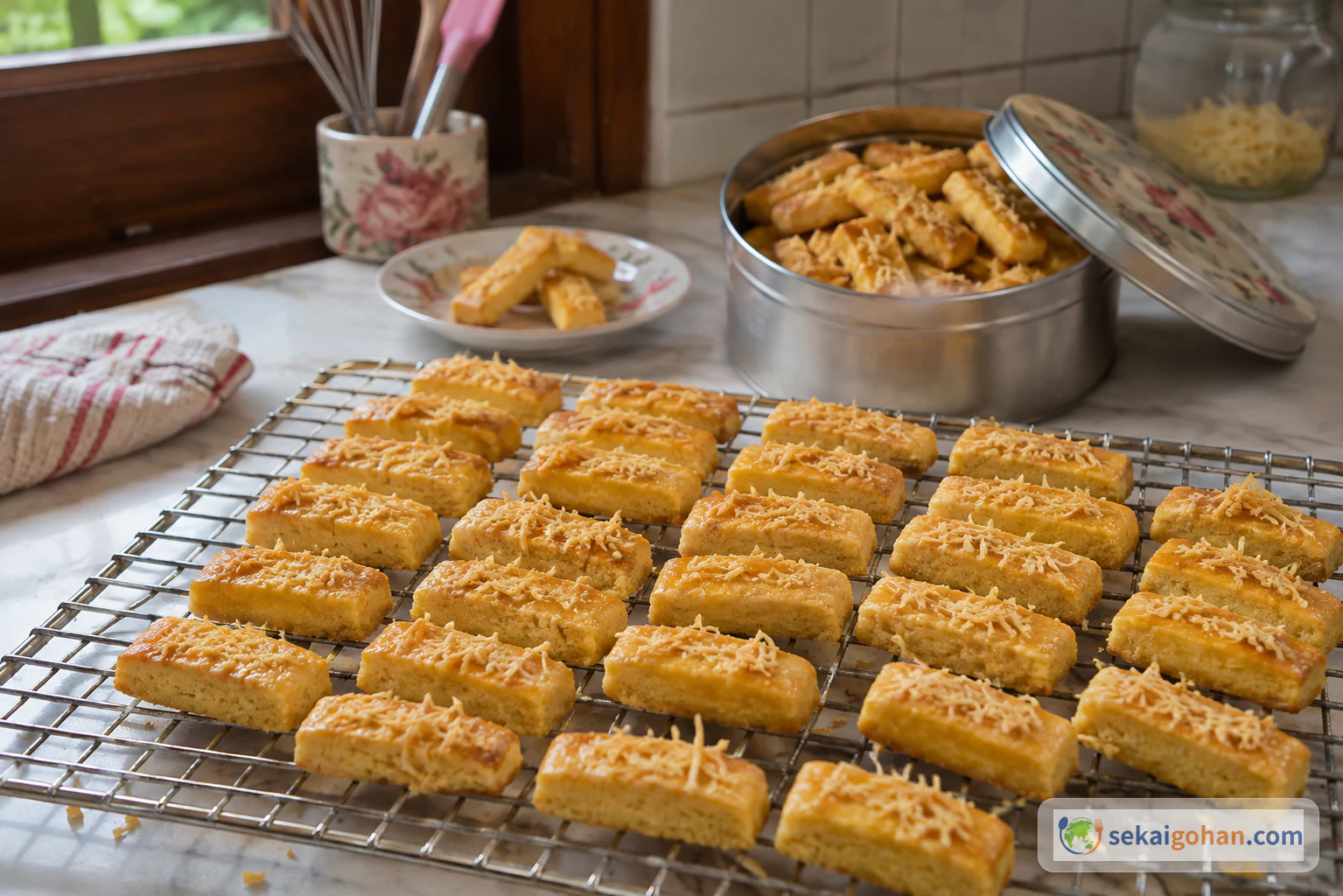
Kaasstengels: Indonesian Kastengel Cheese Cookies with Edam and Cheddar
How to make Indonesian kastengel (kaasstengels), slender baked cheese cookies with grated Edam worked into the dough and coarse Cheddar on top. Covers the Dutch-derived name, the cookie's place in Lebaran cookie jars, how to grate and air-dry the Edam, rolling to 1 cm, cutting 1 × 5 cm sticks, the yolk-and-milk wash, and baking at 130°C until golden.
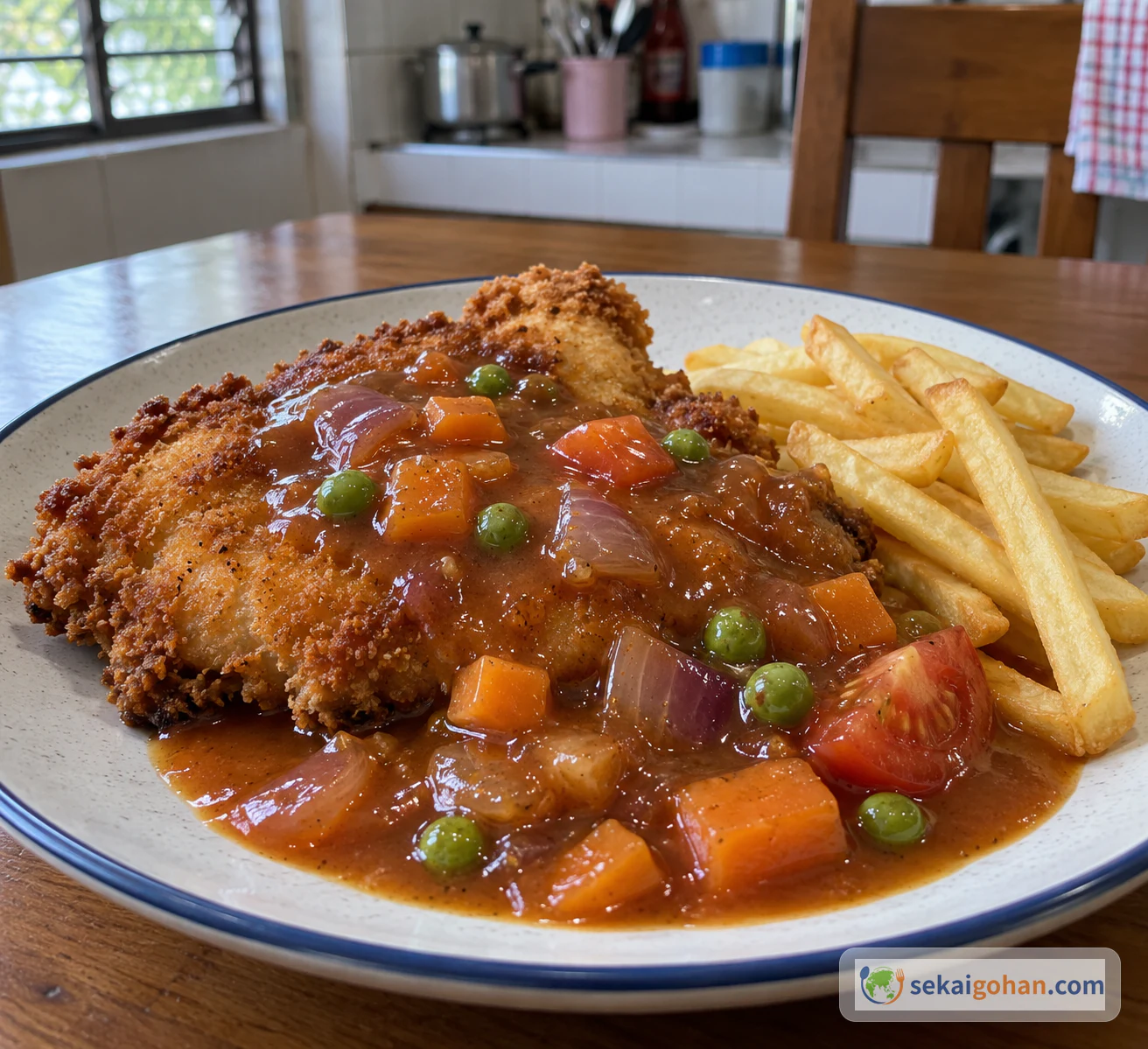
Malaysian Chicken Chop: Breaded Chicken with Tomato Vegetable Gravy and Fries
How to make Malaysian Hainanese chicken chop, a kopitiam Western-stall classic: boneless chicken chops marinated with garlic, soy sauce, sesame oil and oyster sauce, coated in flour, egg and breadcrumbs, fried until golden, then topped with a tomato gravy with carrot, red onion and peas and served with French fries. Covers the Hainanese cooks behind the dish, how it differs from Hainanese chicken rice, other Malaysian versions, allergens and safe leftovers.
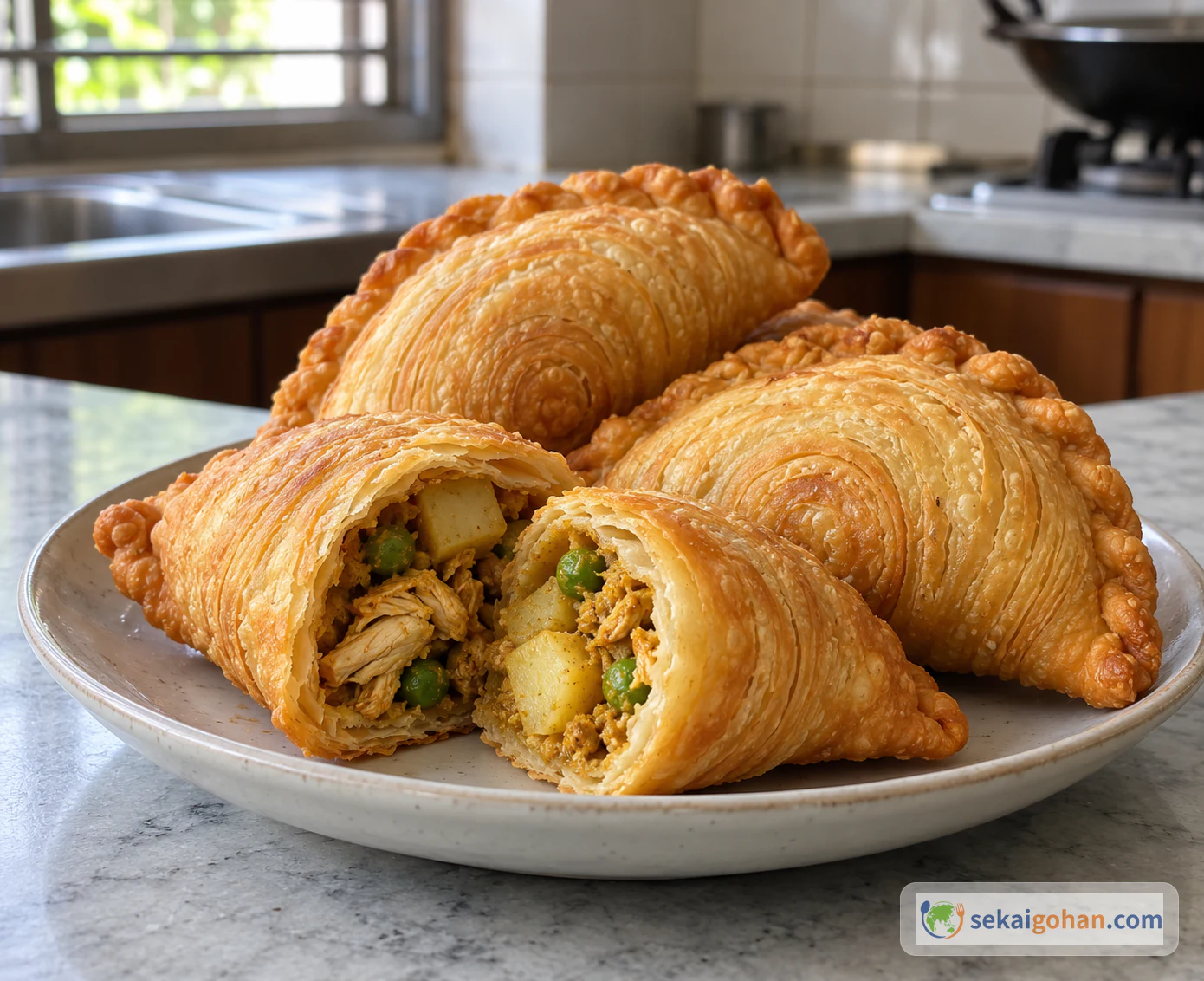
Malaysian Curry Puffs (Karipap Pusing): Spiral Pastry with Chicken and Potato, 20 Pieces
How to make 20 Malaysian spiral curry puffs (Karipap Pusing): a chicken and potato curry filling, separate water and oil doughs given three book folds, shaping in a 10 cm curry puff mold, and frying at 180°C until golden. Covers the first chill and the later firmness checks, and notes which amounts are not fixed.
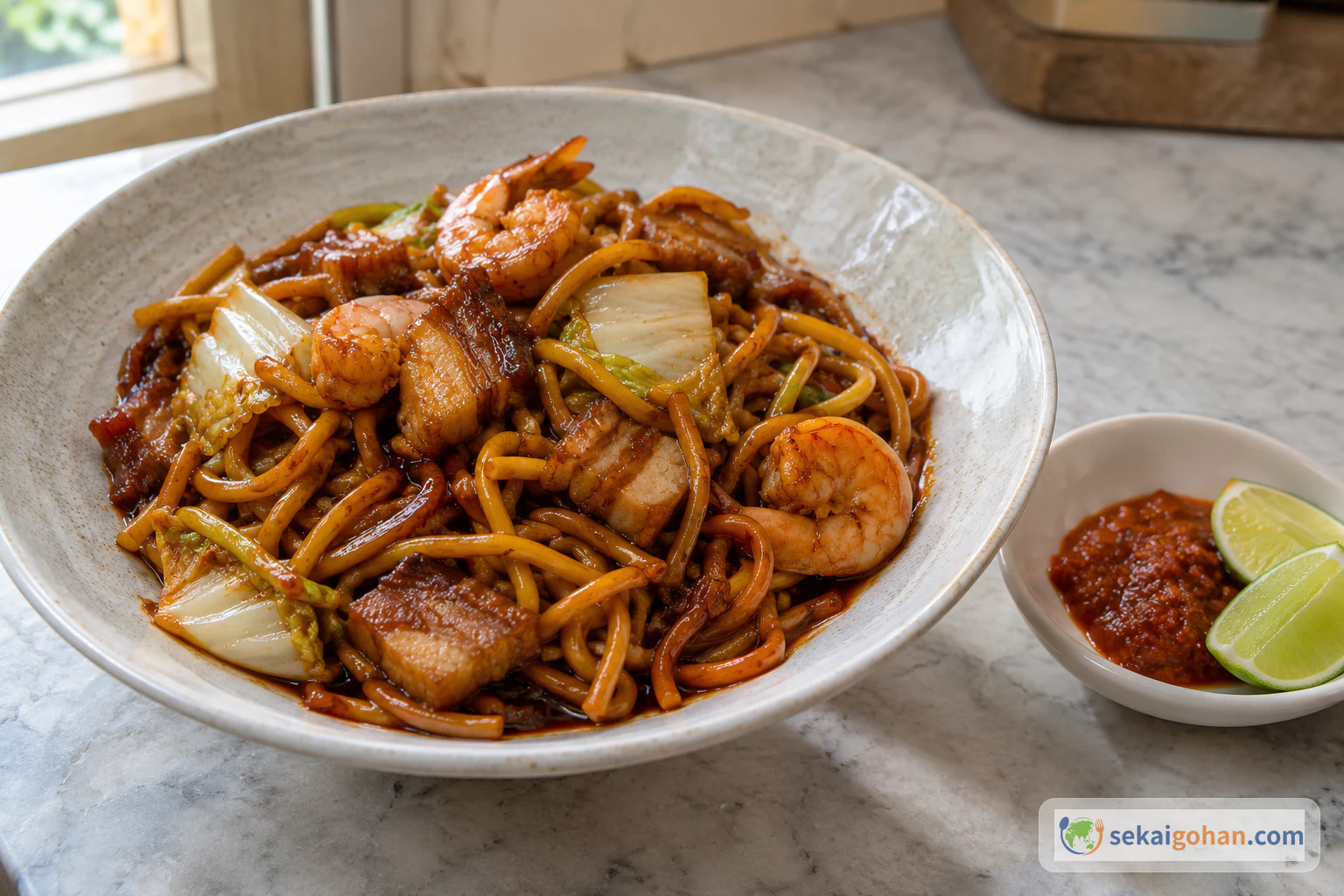
KL Hokkien Mee: Kuala Lumpur-Style Noodles Braised in a Dark Caramel Sauce
How to make KL Hokkien mee, the Kuala Lumpur version of the dish: render pork fatback into lard, brown pork belly with garlic, prawns and wombok, then braise thick yellow Hokkien noodles in a dark sauce of chicken stock, cooking caramel and soy sauce. Served with sambal belacan and lime. Includes how it differs from Penang's soup-style hae mee and what the recipe leaves open.
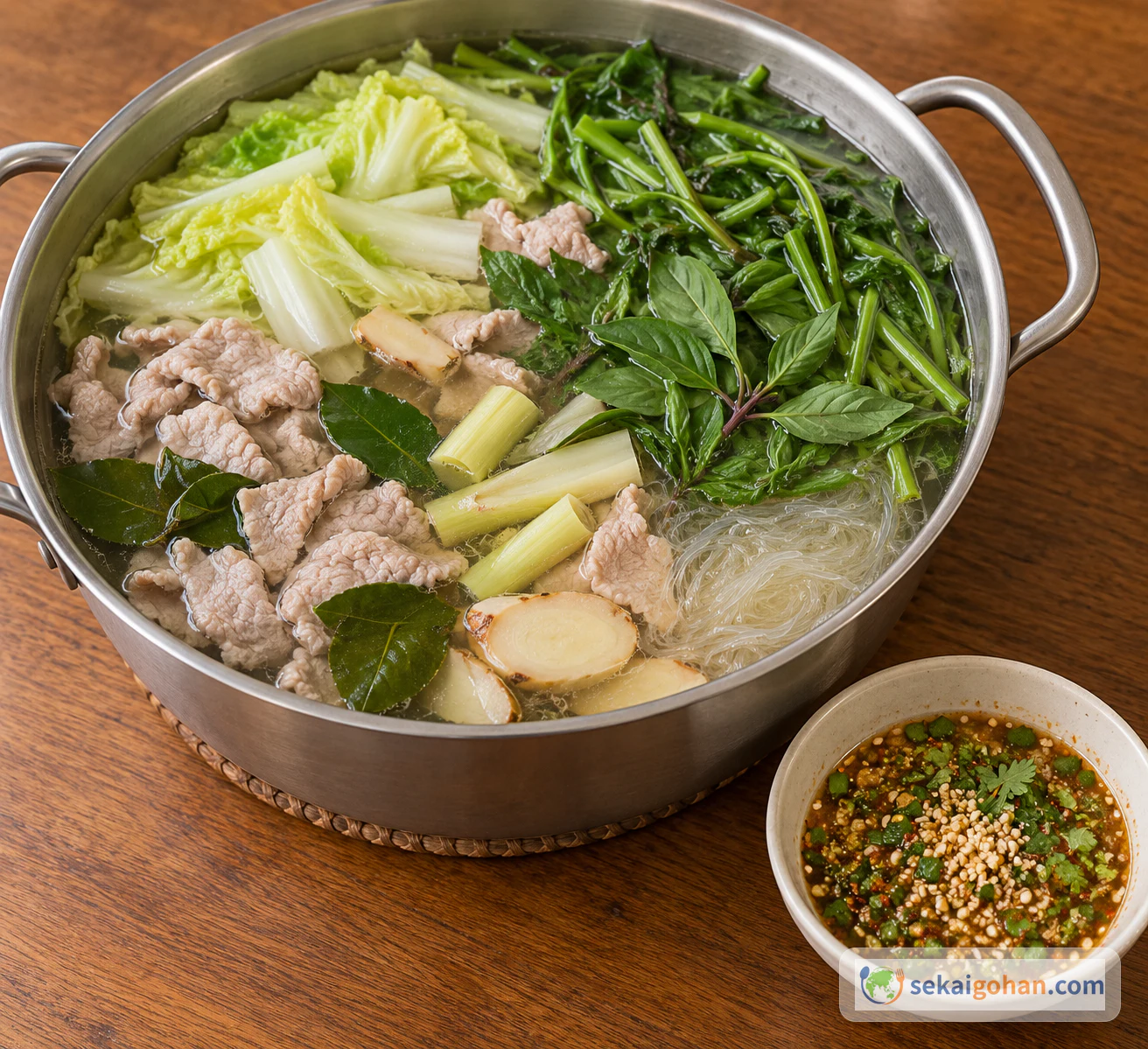
Chim Chum (Jim Jum): Thai Herb-Broth Hot Pot with Pork and Toasted Rice Dip
How to make chim chum (Jim Jum, จิ้มจุ่ม), a Thai hot pot of plain unsalted pork stock infused with lemongrass, kaffir lime leaves and galangal. Marinated pork, napa cabbage, water spinach, Thai basil and glass noodles are cooked at the table and dipped into a tamarind-lime sauce finished with toasted rice powder. This version is based on Pailin Chongchitnant's written recipe and scaled for two. It also explains how the names Chim Chum and Jaew Hon are used differently across sources, and how to keep raw pork away from the dip.
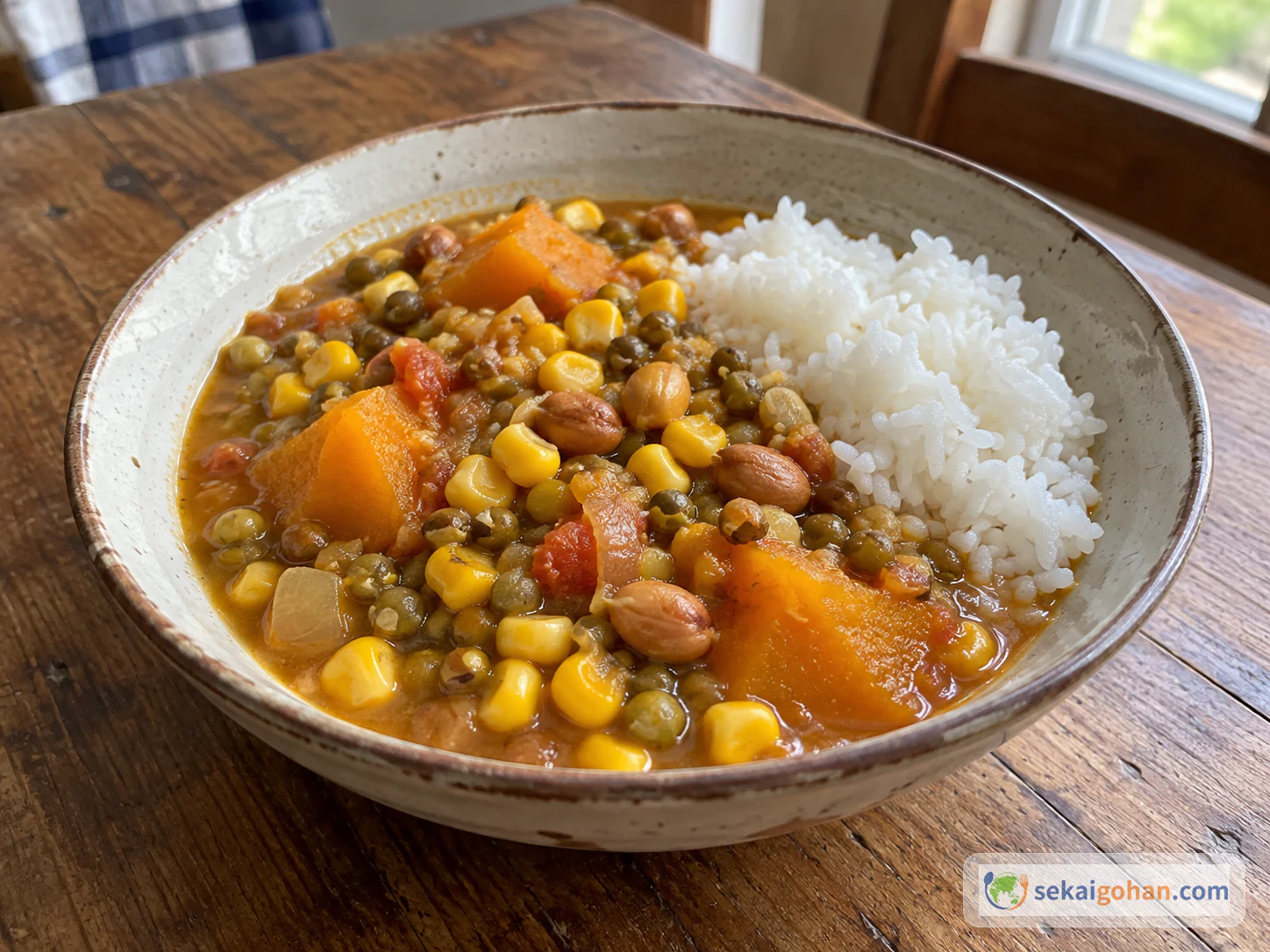
Batar Daan: Timor-Leste Corn, Mung Bean and Pumpkin Stew (Batar da’an ho lakeru)
How to make batar daan (Batar da’an ho lakeru), the Timor-Leste stew of corn, beans and pumpkin, following the SBS Food recipe by Adam Liaw. Covers dried mung beans and raw peanuts, Australian spoon measures, overnight soaking, a 25-minute simmer, how to judge substitutions, and how the dish differs from katemak.
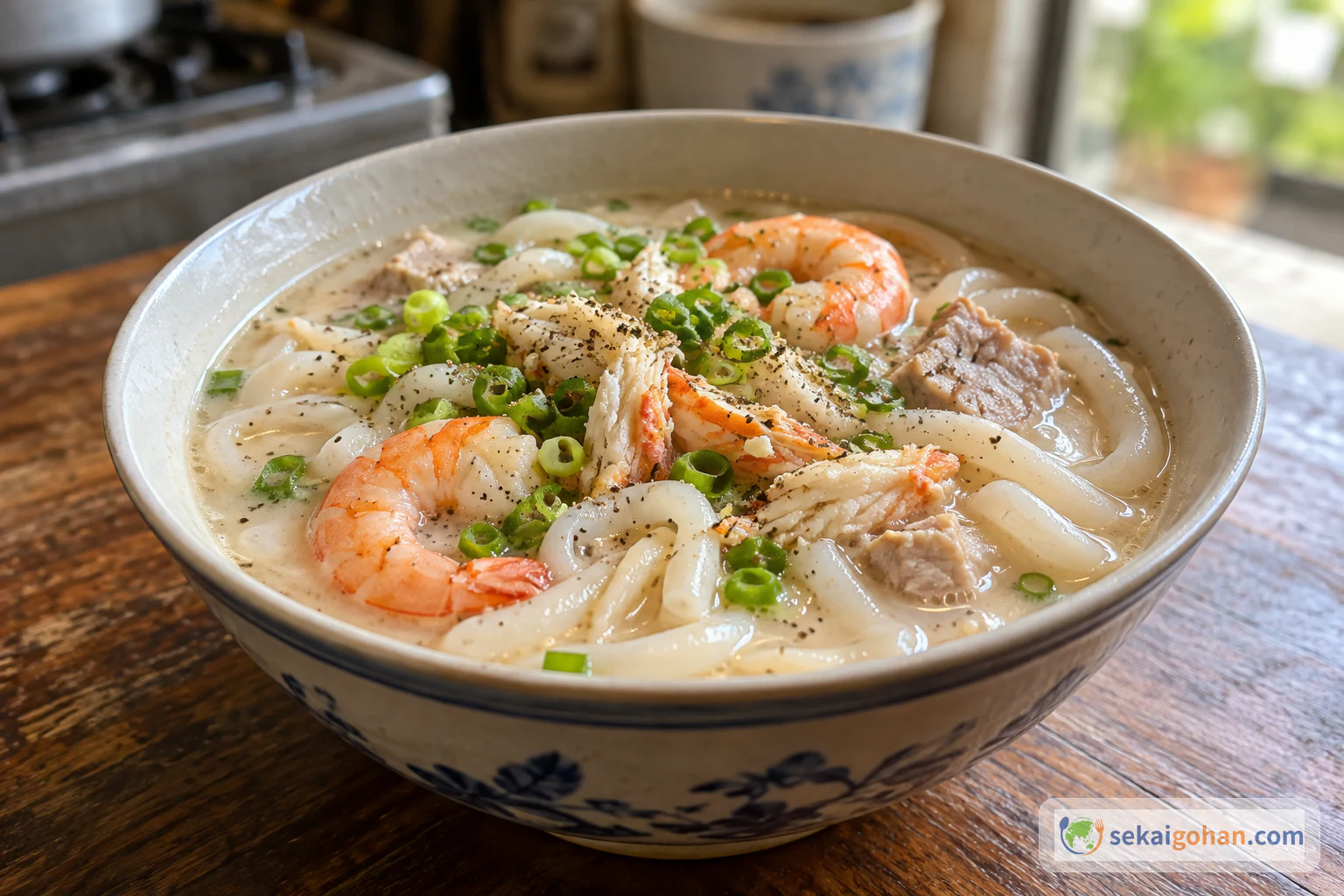
Bánh Canh Tôm Cua: Vietnamese Tapioca Noodle Soup with Crab and Shrimp
How to make bánh canh tôm cua, a Mekong Delta noodle soup of thick handmade rice-flour and tapioca noodles with crab, shrimp, pork and coconut milk. Covers the dough, the one-pot method, how this version differs from Saigon crab bánh canh and the clear pork broth of Trảng Bàng, and what to know before substituting ingredients.
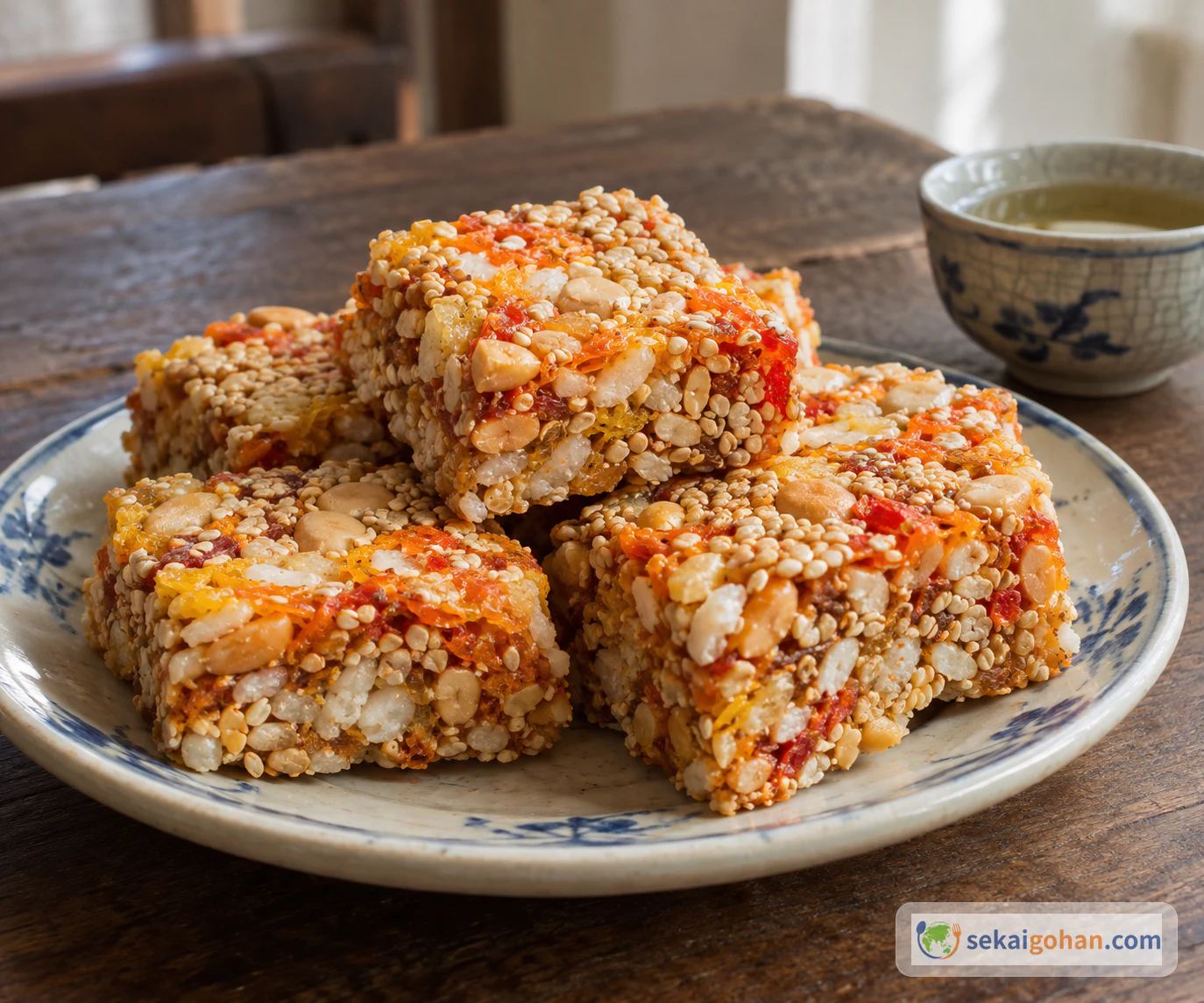
Bánh Cáy: Thái Bình's Pressed Sticky-Rice Sweet with Gấc, Gardenia, Peanuts and Sesame
How bánh cáy, the pressed sticky-rice sweet of Nguyễn village in Thái Bình, northern Vietnam, is made: rice colored red with gấc and yellow with gardenia, pounded, dried and fried, then bound with sugarcane molasses, peanuts and sesame in a wooden mold. Also covers the name story, its place in Tết offerings, gifts and family tea, and how to choose ingredients.
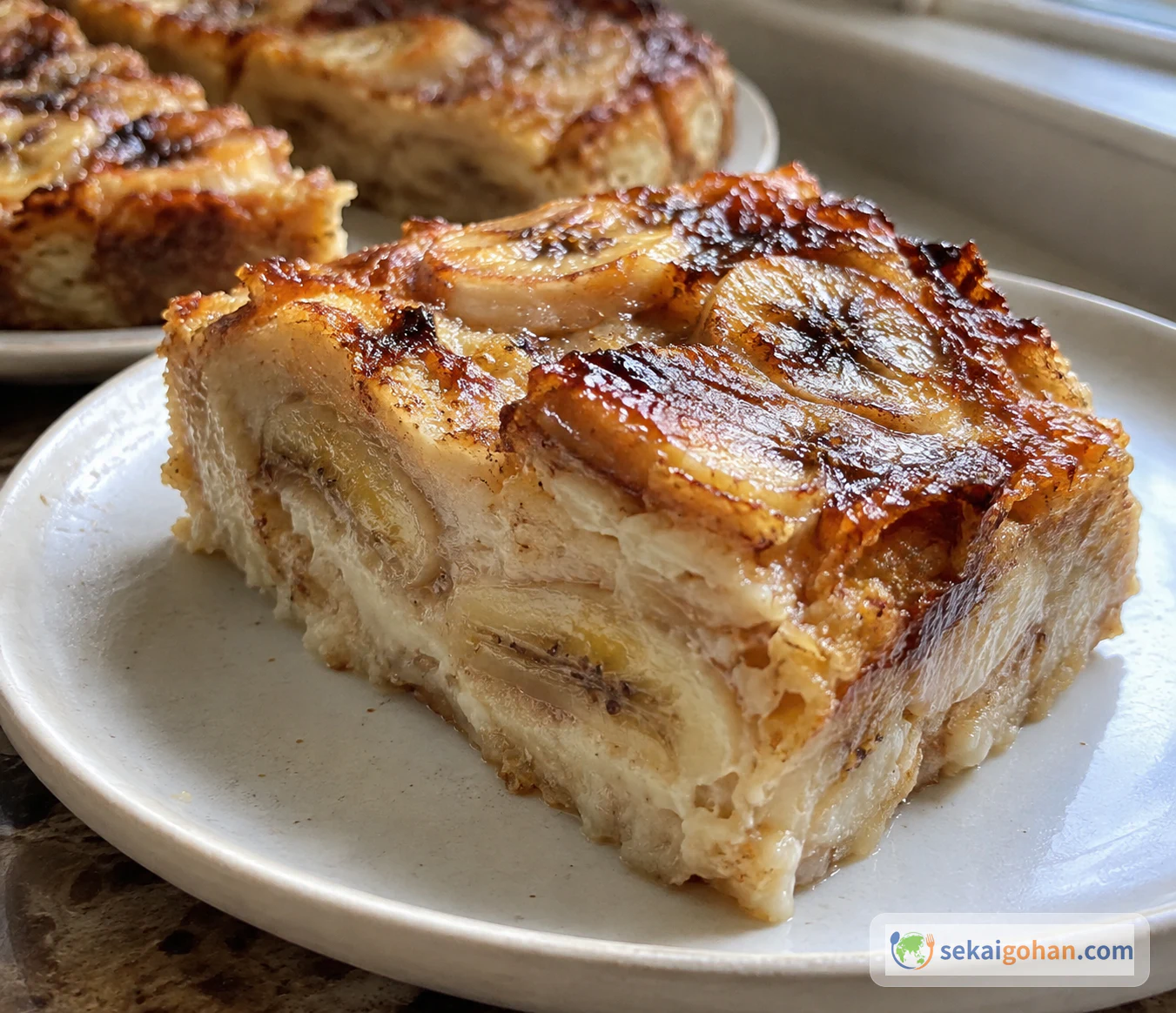
Bánh Chuối Nướng: Vietnamese Baked Banana Bread Pudding
How to make bánh chuối nướng, the Vietnamese baked banana dessert in which crustless sandwich bread soaks up coconut milk and sweetened condensed milk, then bakes under a layer of sugared bananas. Covers how it differs from steamed bánh chuối hấp, how to read the two oven stages, and why it is chilled before slicing.
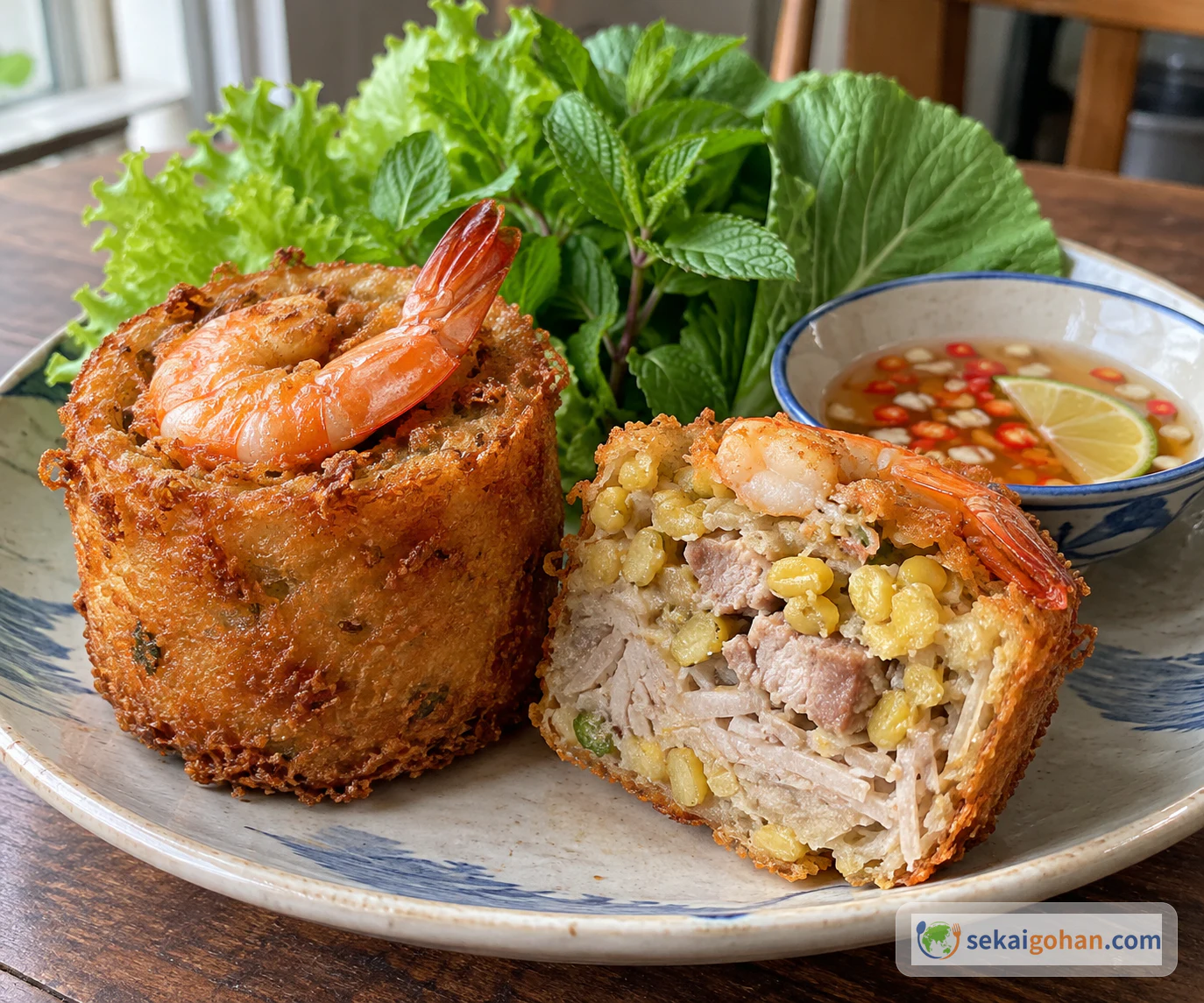
Bánh Cống (Banh Cong): Sóc Trăng Fried Shrimp Cake Recipe
Banh cong recipe: turmeric rice-flour batter layered with pork, mung beans, taro and a shell-on shrimp, fried in a deep mold and eaten in lettuce and herbs.
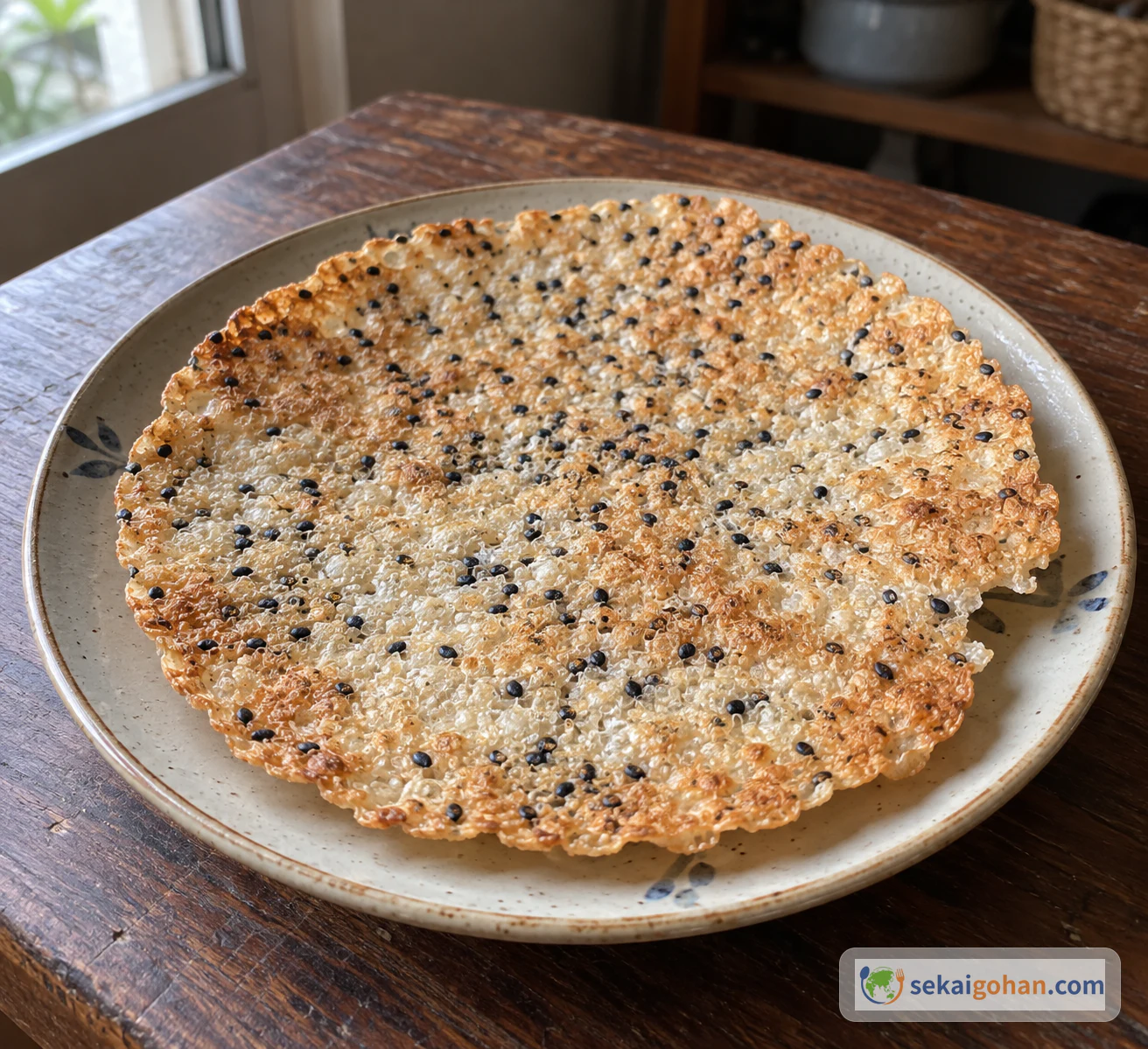
Bánh Đa Nướng: Vietnamese Black Sesame Rice Crackers, Dried and Toasted
How to make bánh đa nướng, the Vietnamese rice cracker that is cooked as a thin sheet, dried, then toasted again. A black sesame and coconut milk home version for 4, with sun and low-heat drying routes, how to judge dryness, regional styles from Kẻ Sặt, Quảng Lộc and Vĩnh Đức, and how it differs from Dalat's topped bánh tráng nướng.
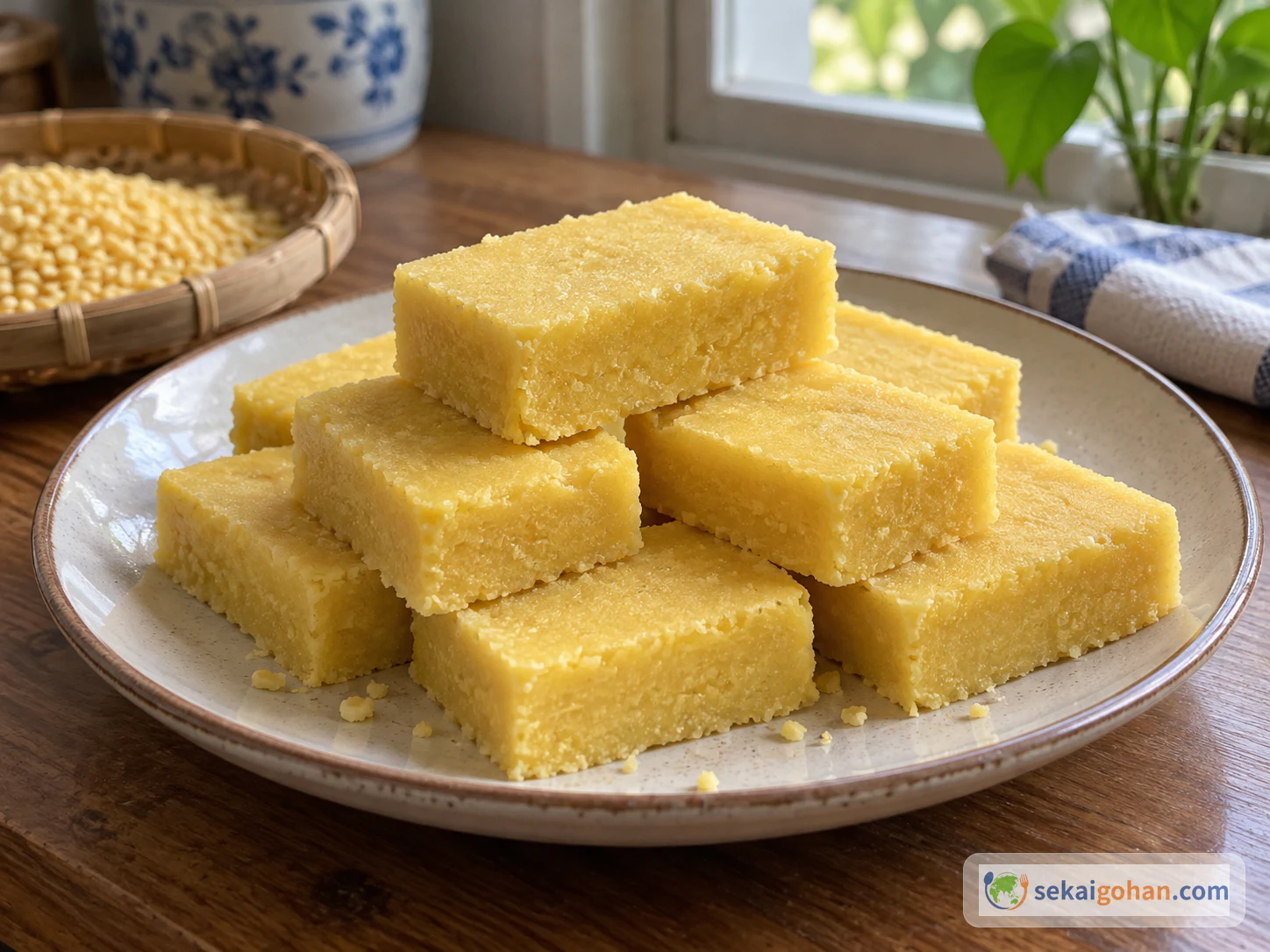
Bánh Đậu Xanh: Vietnamese Pressed Mung Bean Cakes (Steamed Home Version)
How to make bánh đậu xanh, the small yellow Vietnamese mung bean cakes served with green tea and given as gifts from Hải Dương. This home version steams peeled split mung beans, cooks them with sugar, binds them with cooked glutinous rice flour (koh fun) and oil, and presses them into a plain mold. Covers choosing ingredients, the two-stage pan cook, troubleshooting, and how it differs from workshop-made cakes.
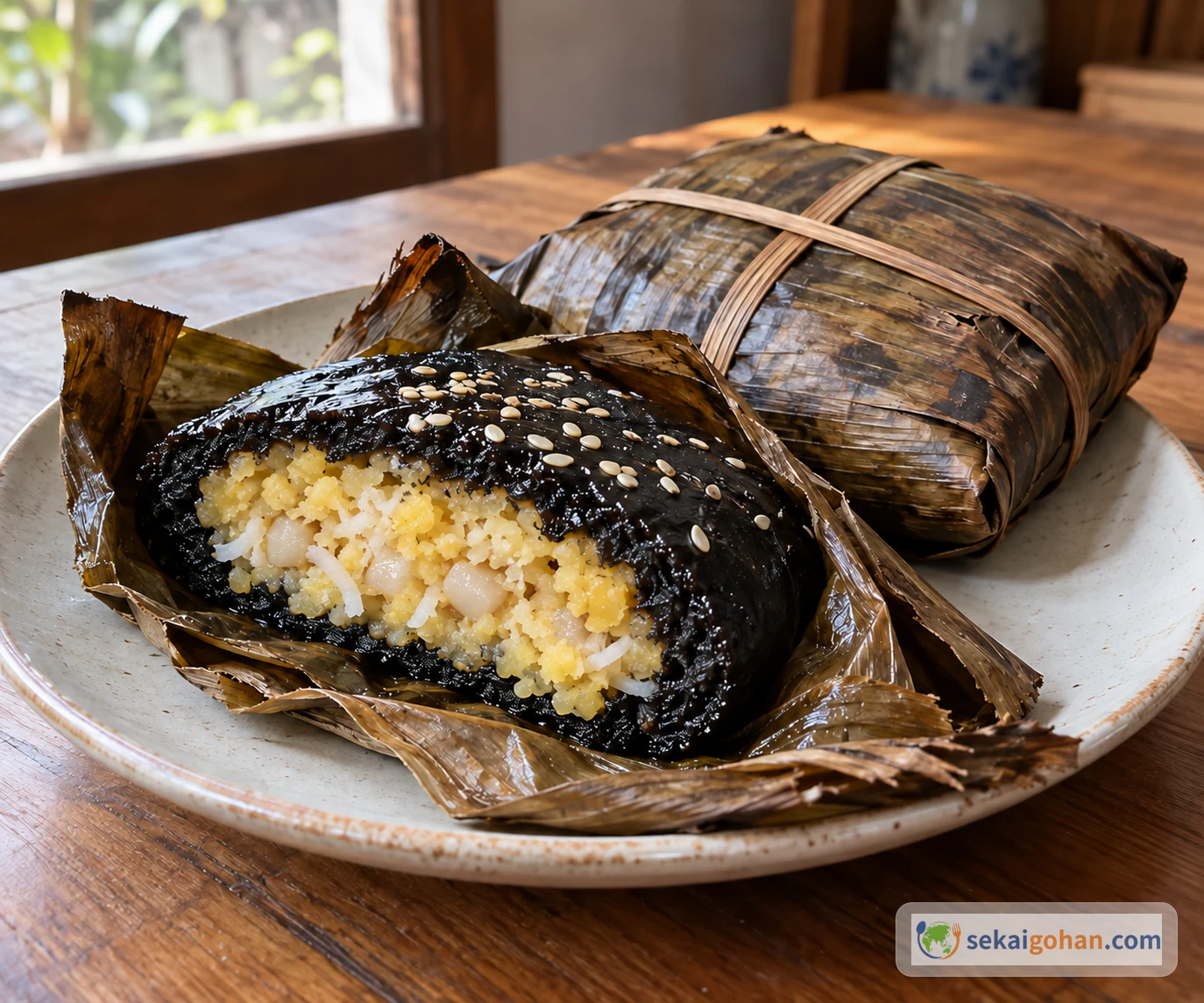
Bánh Gai: Northern Vietnamese Ramie-Leaf Cakes with Mung Bean Filling
How to make bánh gai, the dark, chewy steamed cake of northern Vietnam: ramie leaves (lá gai) boiled and pounded into glutinous rice dough, wrapped around mung bean, coconut and pork back-fat filling, folded into dried banana-leaf squares and steamed. Covers leaf preparation, splitting the sugar between wrapper and filling, wrapping, regional styles, and how to judge ingredients you may find abroad.
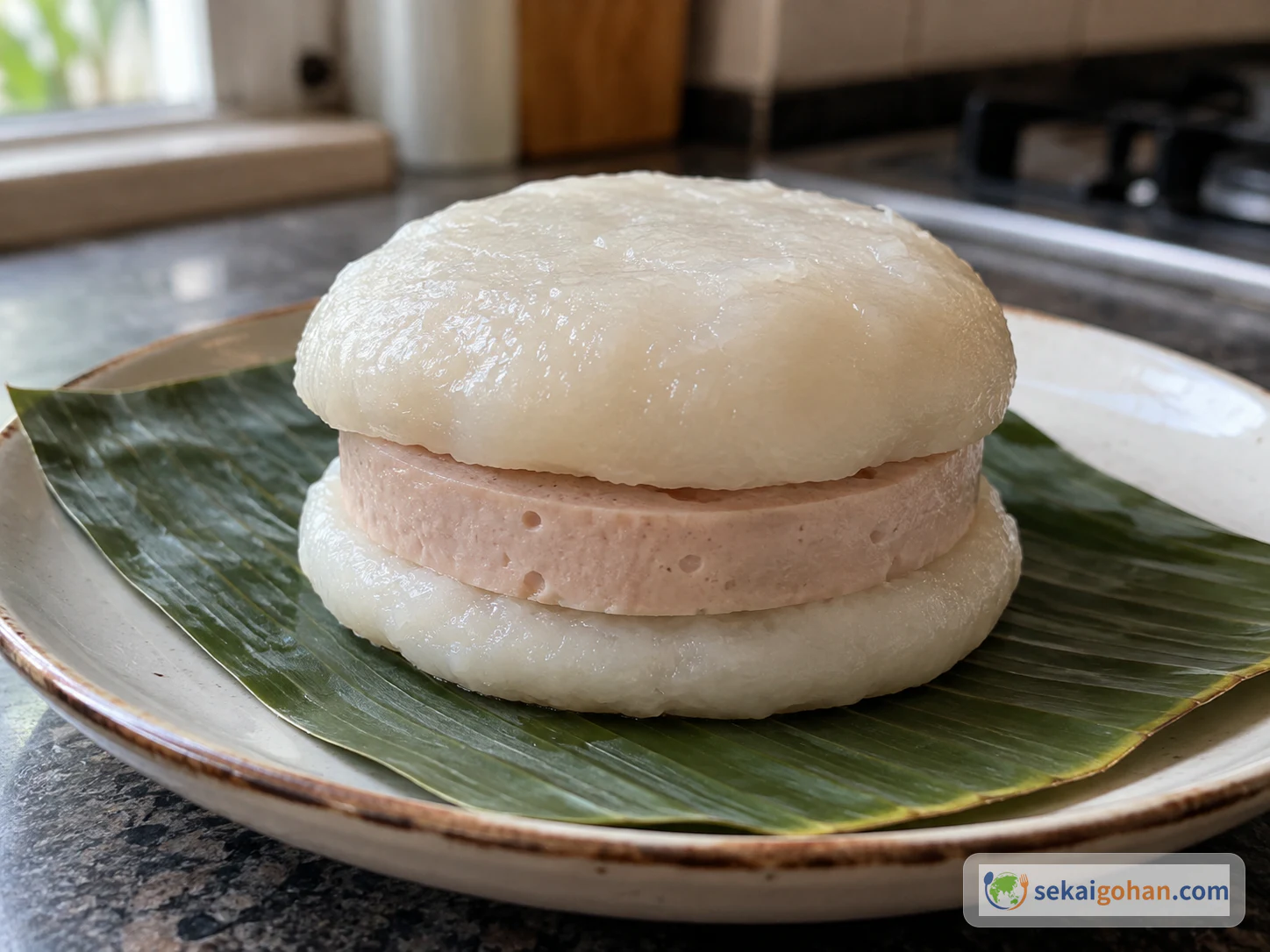
Bánh Giầy: Vietnamese Steamed Glutinous Rice Cakes with Giò Lụa
How to make bánh giầy (also spelled bánh giày or bánh dày), the round white steamed glutinous rice cakes of Vietnam, with a home rice-flour dough sandwiched around giò lụa. Covers the flour blend, adding warm water gradually, steaming on oiled banana-leaf squares, fixing dough and steaming problems, and how this flour version differs from the traditional method of pounding hot cooked glutinous rice.
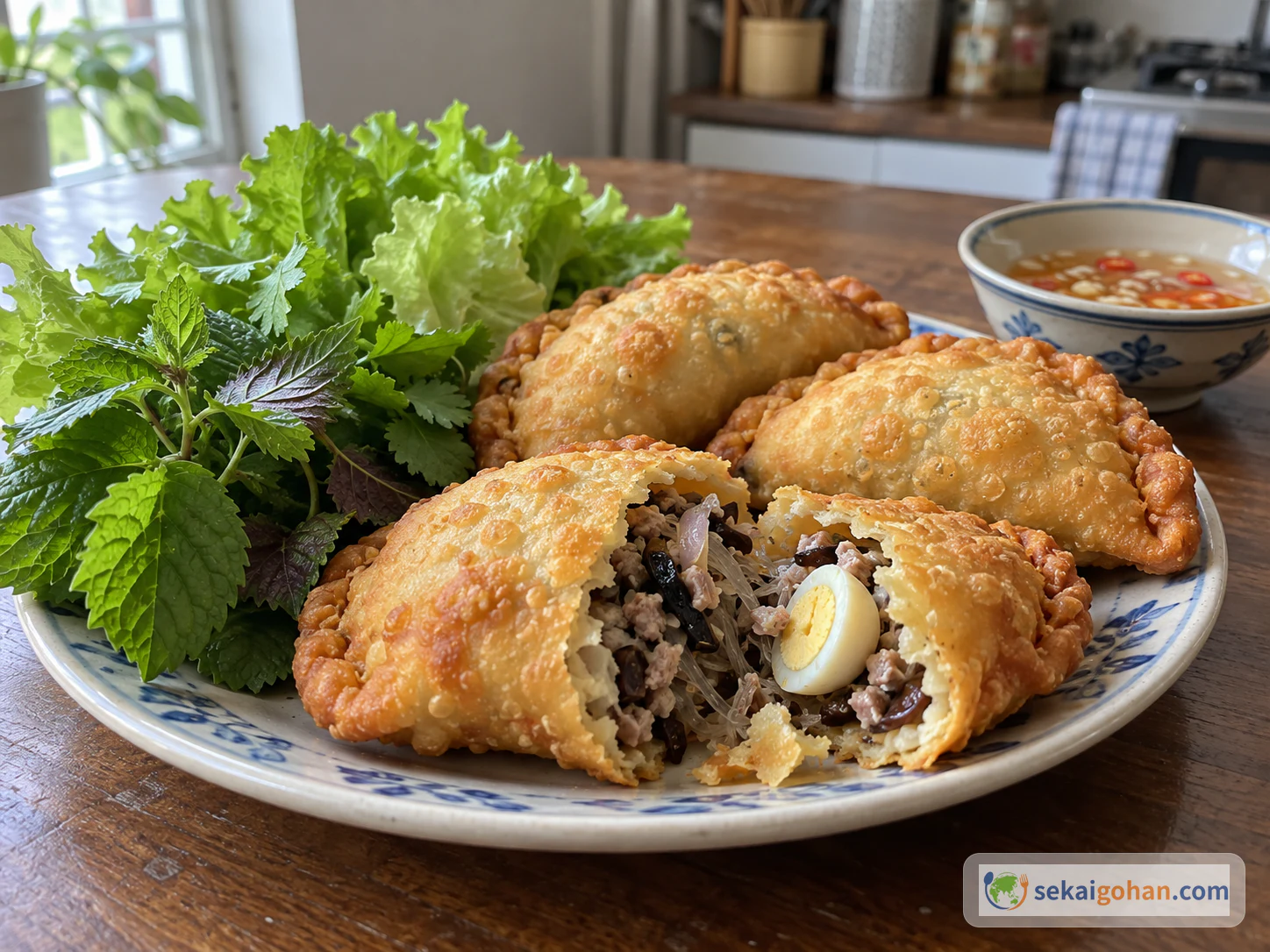
Bánh Gối: Hanoi's Golden Half-Moon Fried Pastries, Made at Home
How to make bánh gối, the Hanoi afternoon snack of pork, wood ear mushroom and glass noodles wrapped in a wheat and glutinous-rice dough and fried golden. Follows one published Vietnamese recipe for the dough, filling, folding and frying, with the sweet-sour fish sauce dip, troubleshooting, variations, and how it differs from bánh giò, bánh xèo and spring rolls.
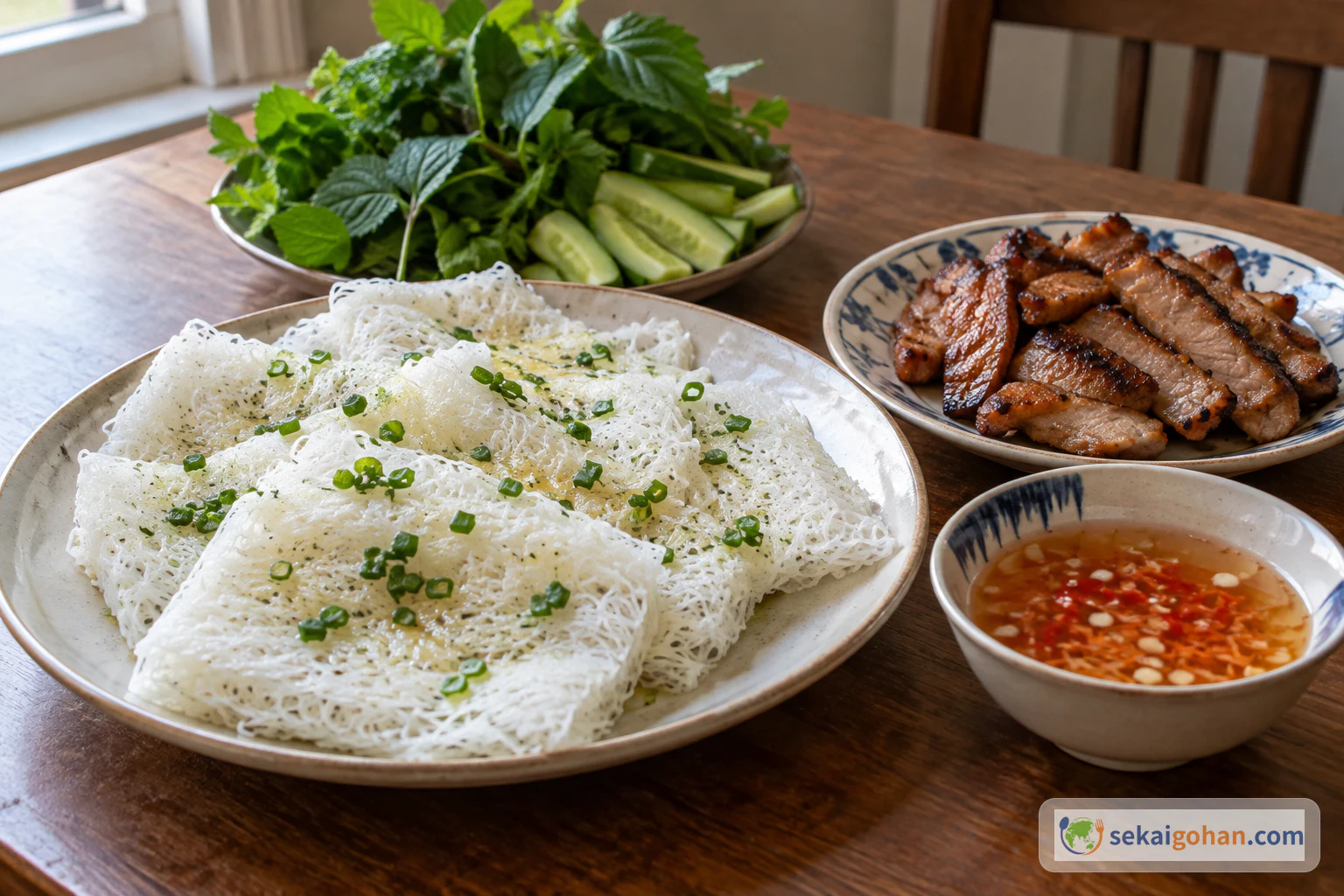
Bánh Hỏi: Vietnamese Woven Rice Vermicelli Mats with Scallion Oil
How to make bánh hỏi, the fine Vietnamese rice vermicelli gathered into soft woven mats, from a dried pack with scallion oil for 4 servings. Covers boiling by the package, shaping warm mats, eating them with grilled pork, herbs and nước chấm, and how the garlic-chive oil of Bình Định differs from the scallion version.
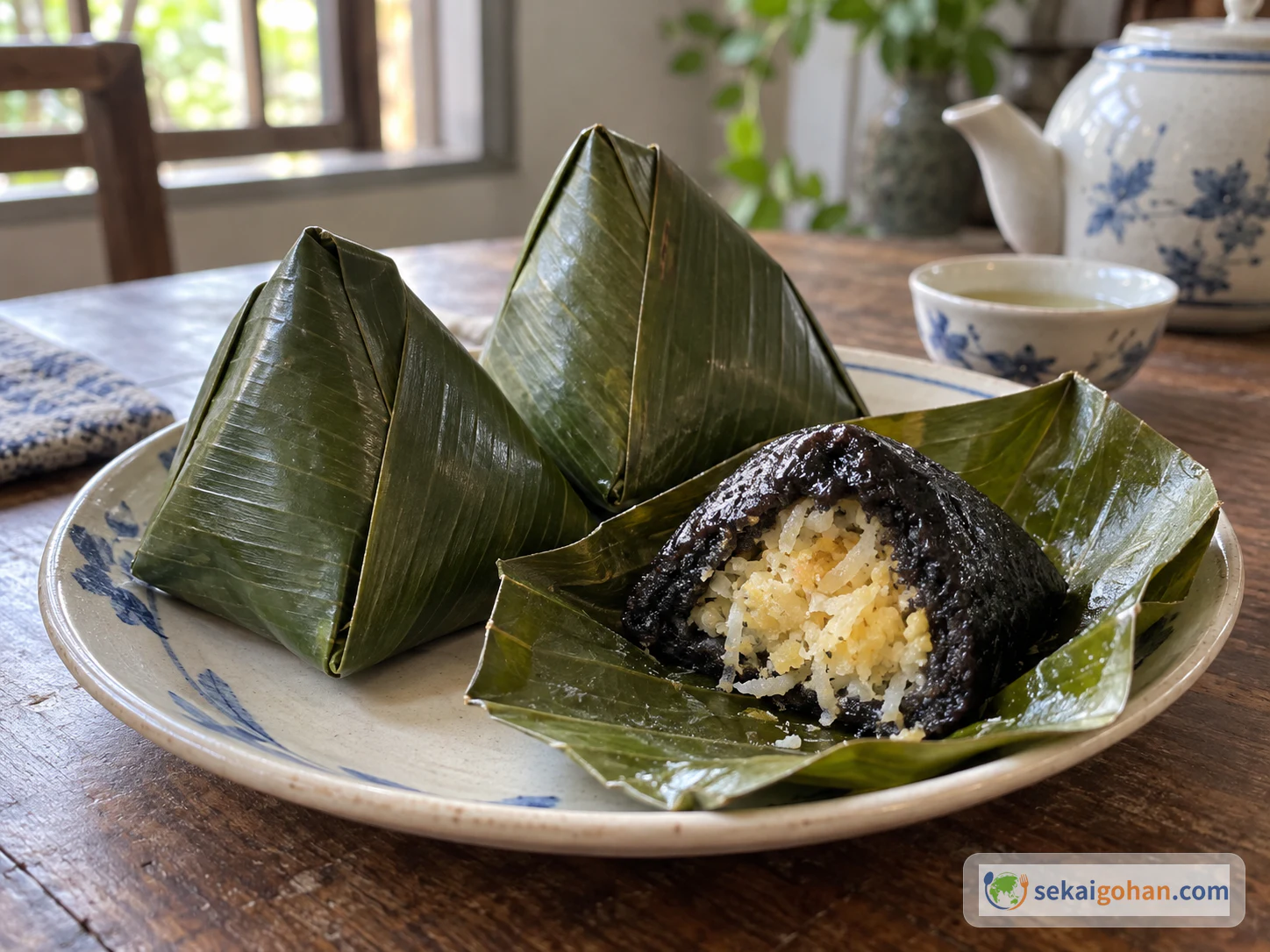
Bánh Ít Lá Gai: Bình Định's Dark Ramie-Leaf Sweet Wrapped in Banana Leaf (Bánh ít)
How to make bánh ít lá gai, the Bình Định sweet of glutinous rice dough darkened with ramie leaves (lá gai), filled with mung bean and mature coconut, wrapped in banana leaf and steamed. Covers how to tell it apart from bánh ít trần, how to handle the leaves, the mung bean and coconut filling, wrapping the tapered parcels, steaming, and honest notes on hard-to-find ingredients.
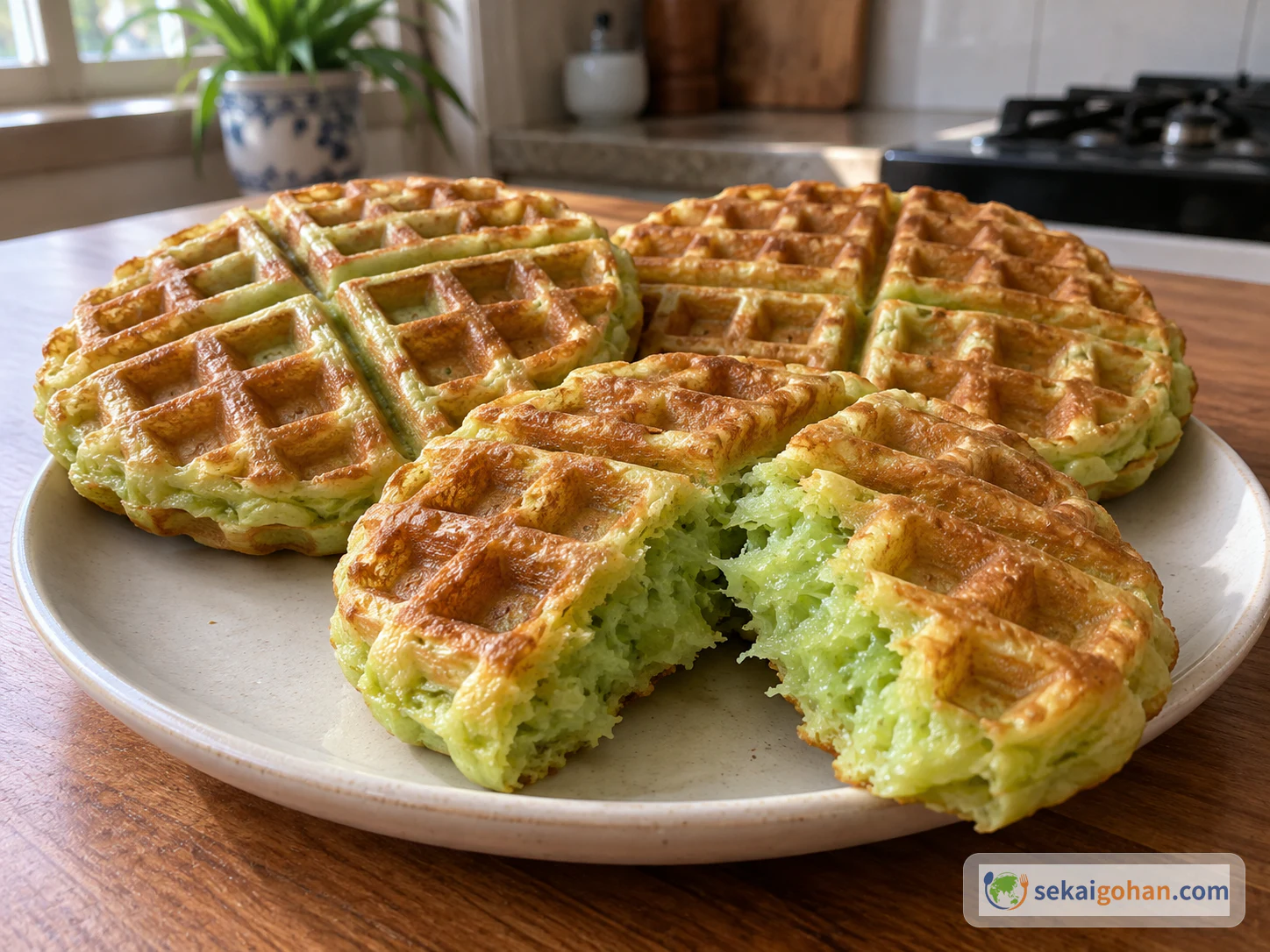
Bánh Kẹp Lá Dứa: Vietnamese Pandan Coconut Waffles
How to make bánh kẹp lá dứa, the Southern Vietnamese-style pandan and coconut waffle, as three 20 cm waffles. Covers whisking the egg, coconut milk and pandan extract batter, the 15-minute rest, cooking to golden brown in a buttered waffle maker, choosing ingredients, and serving warm.
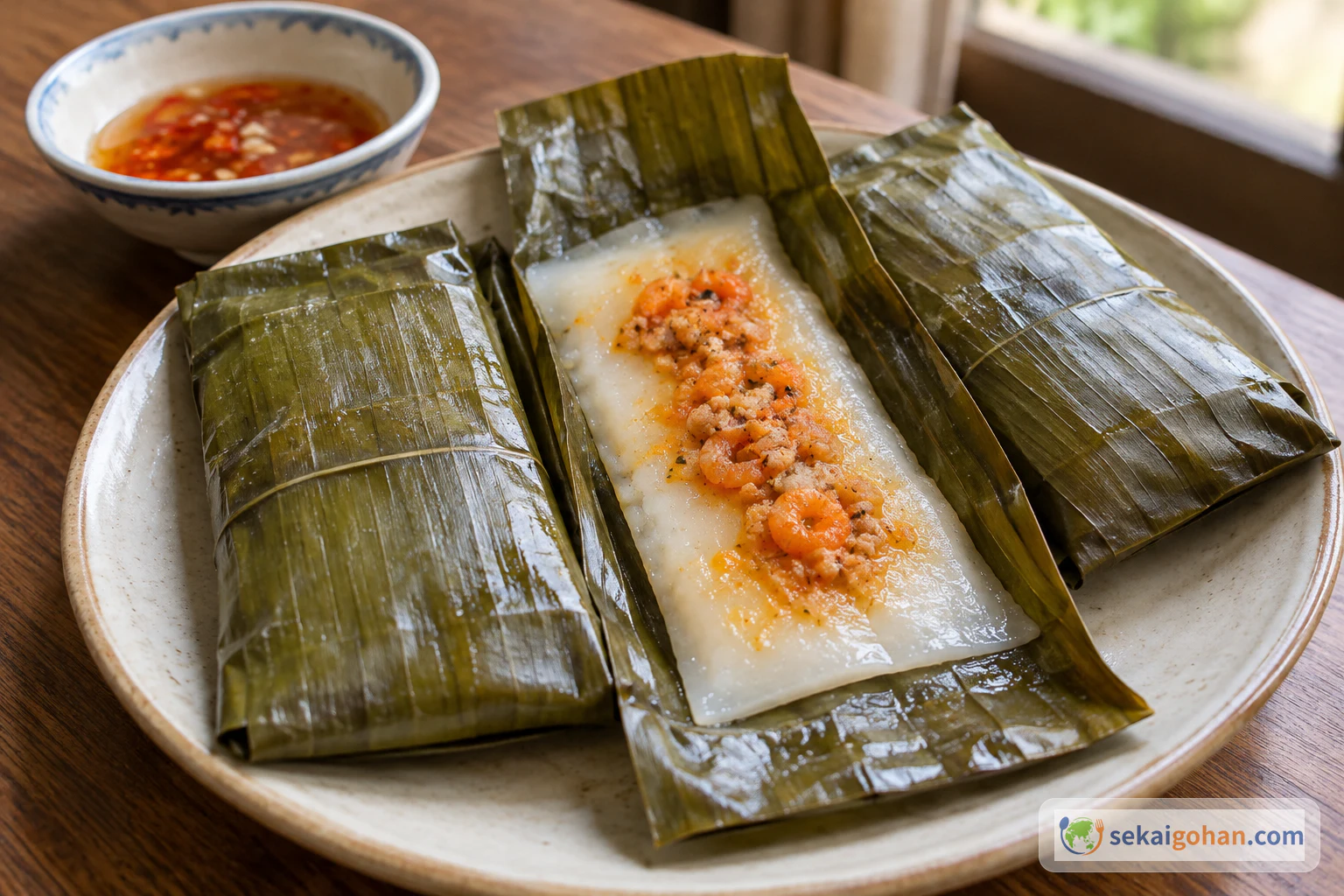
Bánh Nậm: Huế's Flat Banana-Leaf Rice Parcels with Shrimp and Pork
How to make bánh nậm, the flat steamed rice parcels of Huế in central Vietnam: a thin rice-flour and tapioca batter, a dry shrimp-and-pork filling colored with annatto oil, and banana leaves folded flat. Covers why the batter is half-cooked first, how to soften the leaves, steaming and resting, fixing mistakes, storage and reheating.
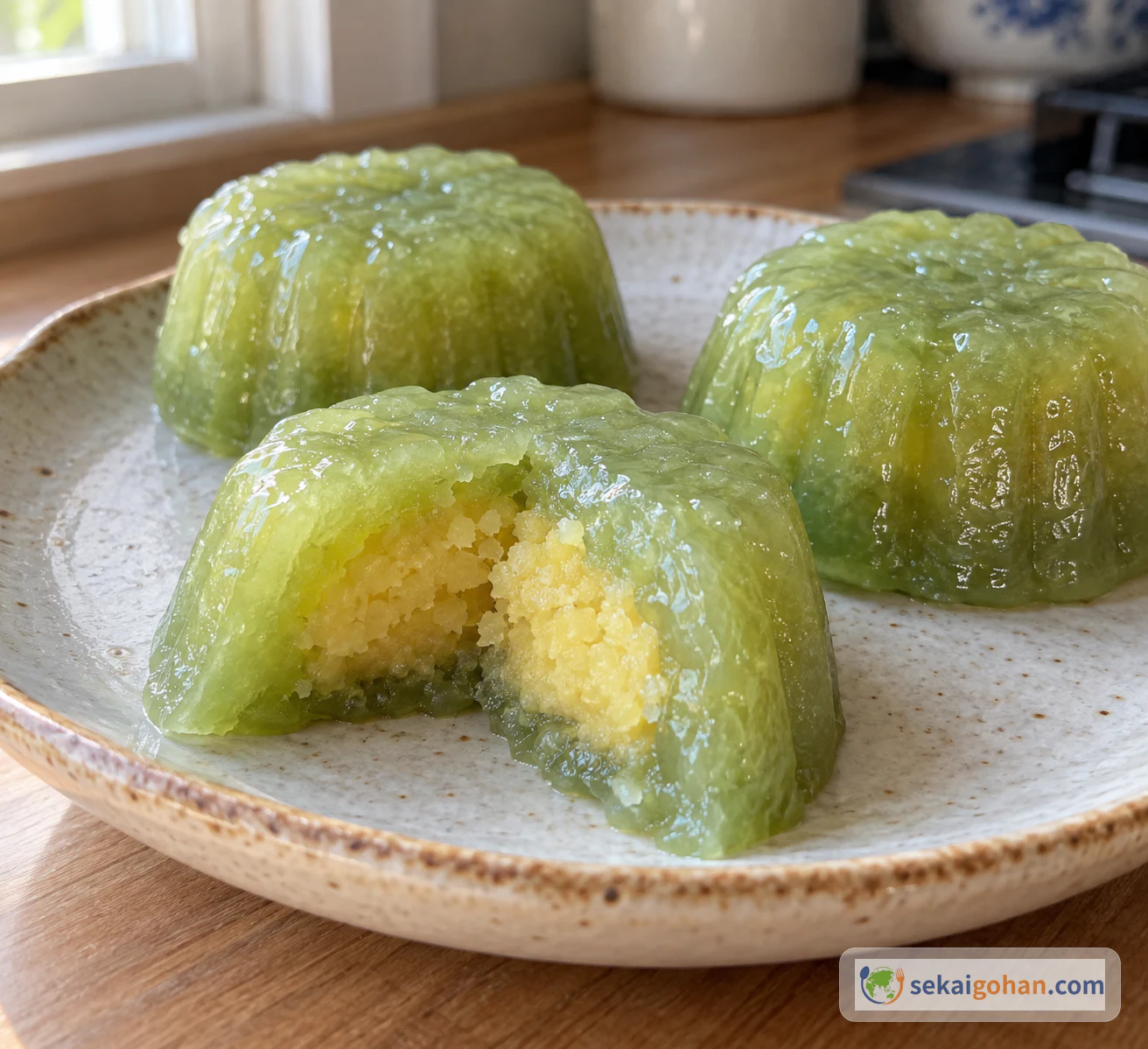
Bánh Phu Thê: Vietnamese Pandan Tapioca Cakes with Mung Bean Filling
How to make bánh phu thê, the Vietnamese cake with a translucent, chewy pandan-green tapioca skin around a sweet mung bean filling. A molded, steamed home version from Hà Nội, with its other name bánh xu xê and its background as a wedding gift.
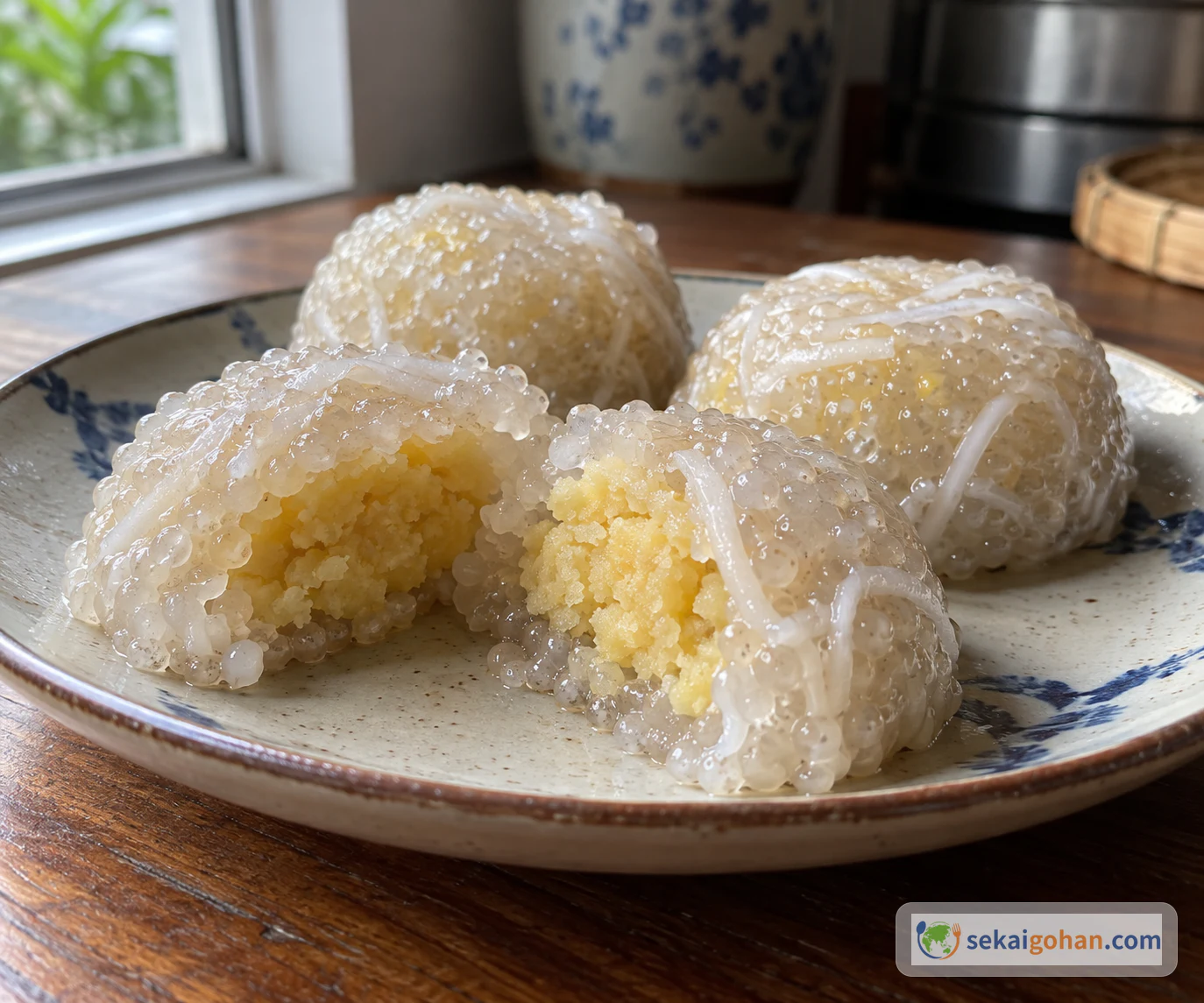
Bánh Phu Thê Bột Bán: Vietnamese Husband and Wife Cakes with Tapioca Pearls
How to make bánh phu thê bột bán, small Vietnamese steamed cakes with a chewy tapioca pearl and coconut shell around a sweet mung bean filling. Covers the home recipe's amounts, soaking the pearls, cooking and dividing the filling, filling the molds, and judging doneness by translucency, with how this version differs from the traditional Đình Bảng cake.
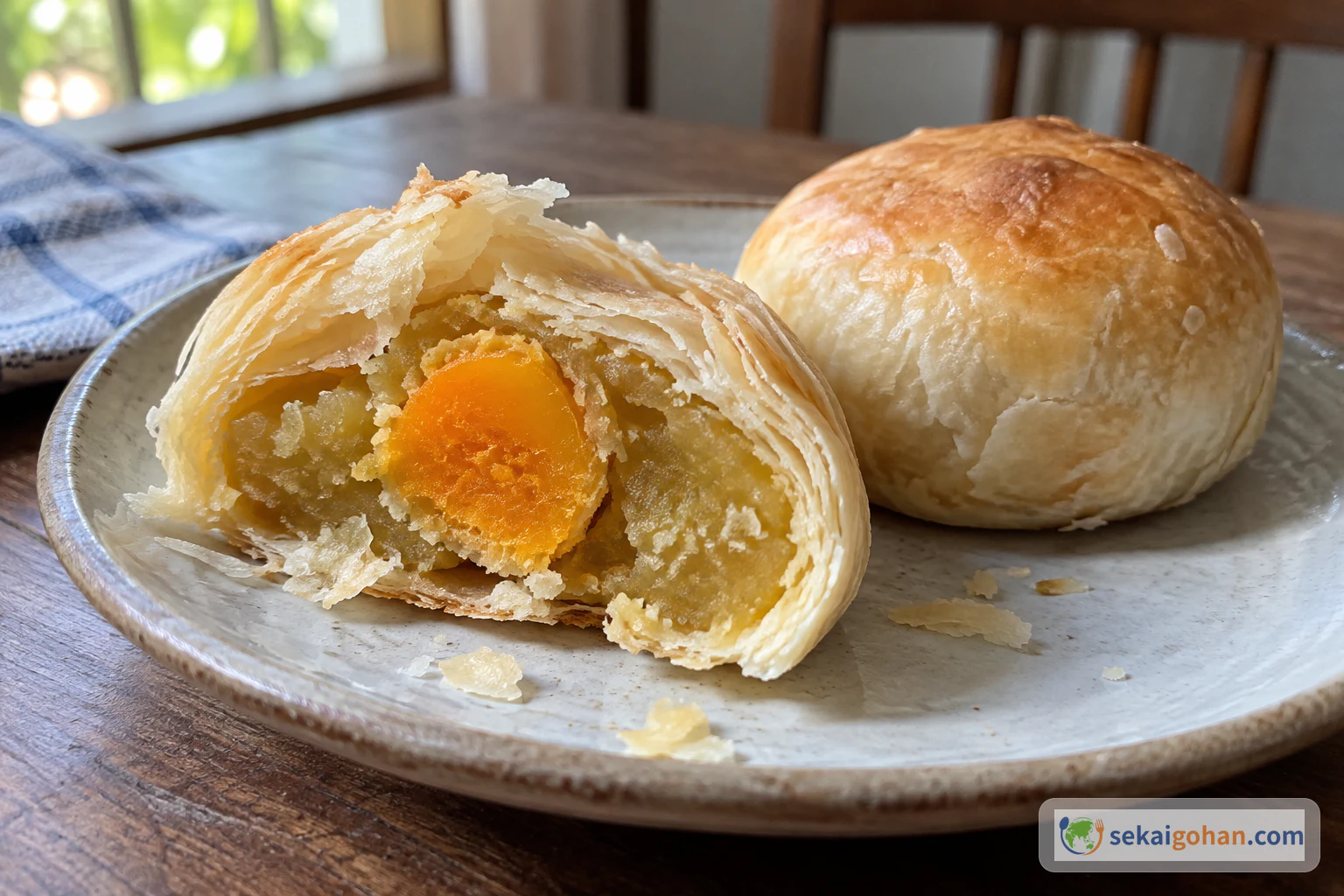
Bánh Pía: Sóc Trăng Layered Pastry with Mung Bean, Durian and Salted Egg Yolk
How to make bánh pía, the flaky layered pastry of Sóc Trăng in southern Vietnam, filled with mung bean, durian and a salted duck egg yolk. Covers the water dough and oil dough, rolling and coiling twice without crushing the layers, a two-stage bake at 220°C, ingredient choices, fixing common problems, and the pastry's Teochew roots and gift-giving customs.