
Recipes (32)
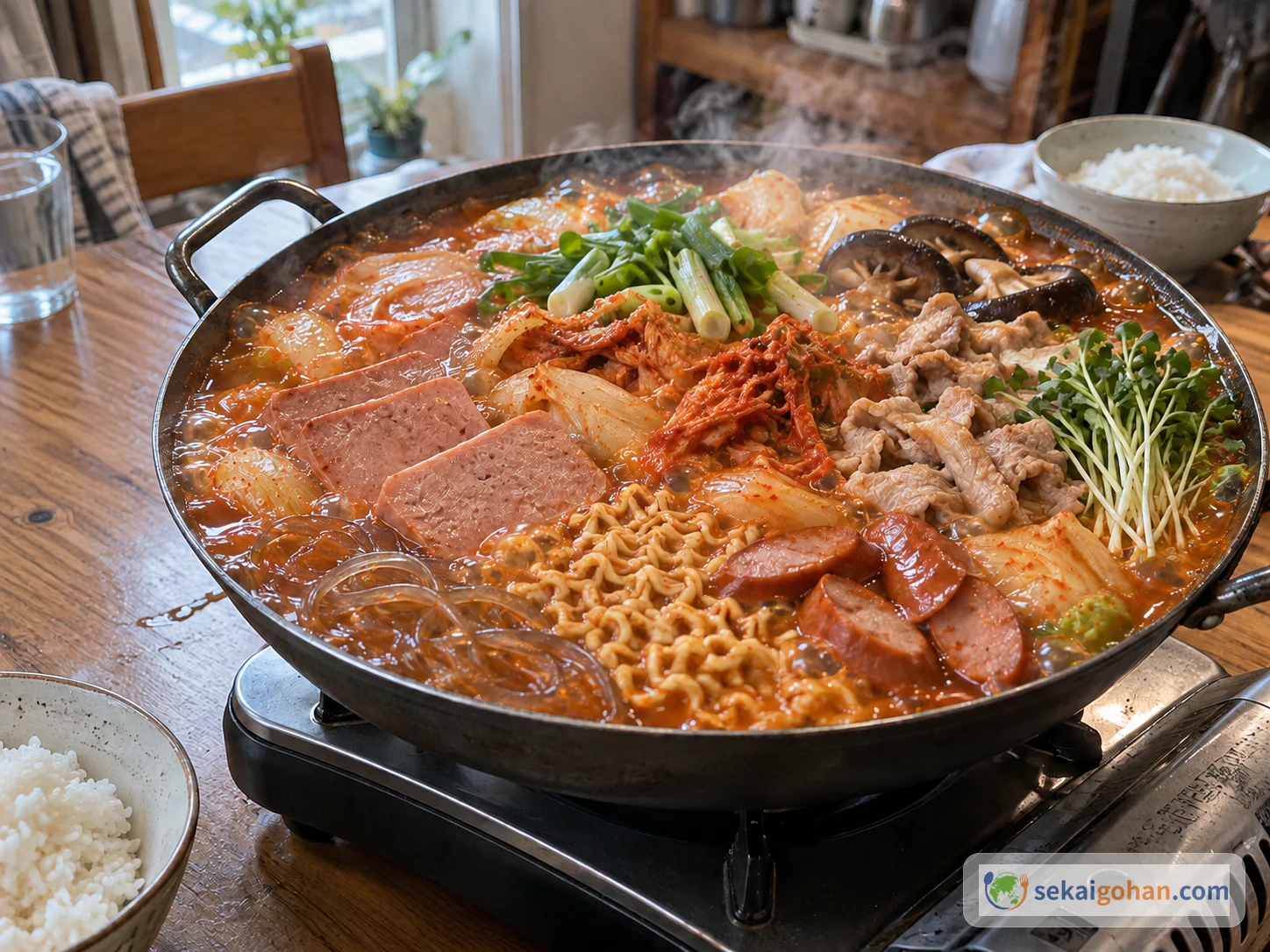
Budae-jjigae: Korean Army Base Stew with Spam, Sausage and Kimchi (부대찌개)
How to make budae-jjigae (부대찌개), the Korean stew that brings kimchi and a gochujang-gochugaru paste together with Spam, sausage, ramyeon and sweet potato starch noodles in one shallow pot. Built on Maangchi's four-serving recipe, with an anchovy, kelp and shiitake stock, the order for arranging the pot, when to eat the noodles, how to choose Korean ingredients, and the dish's links to Uijeongbu and other base towns.
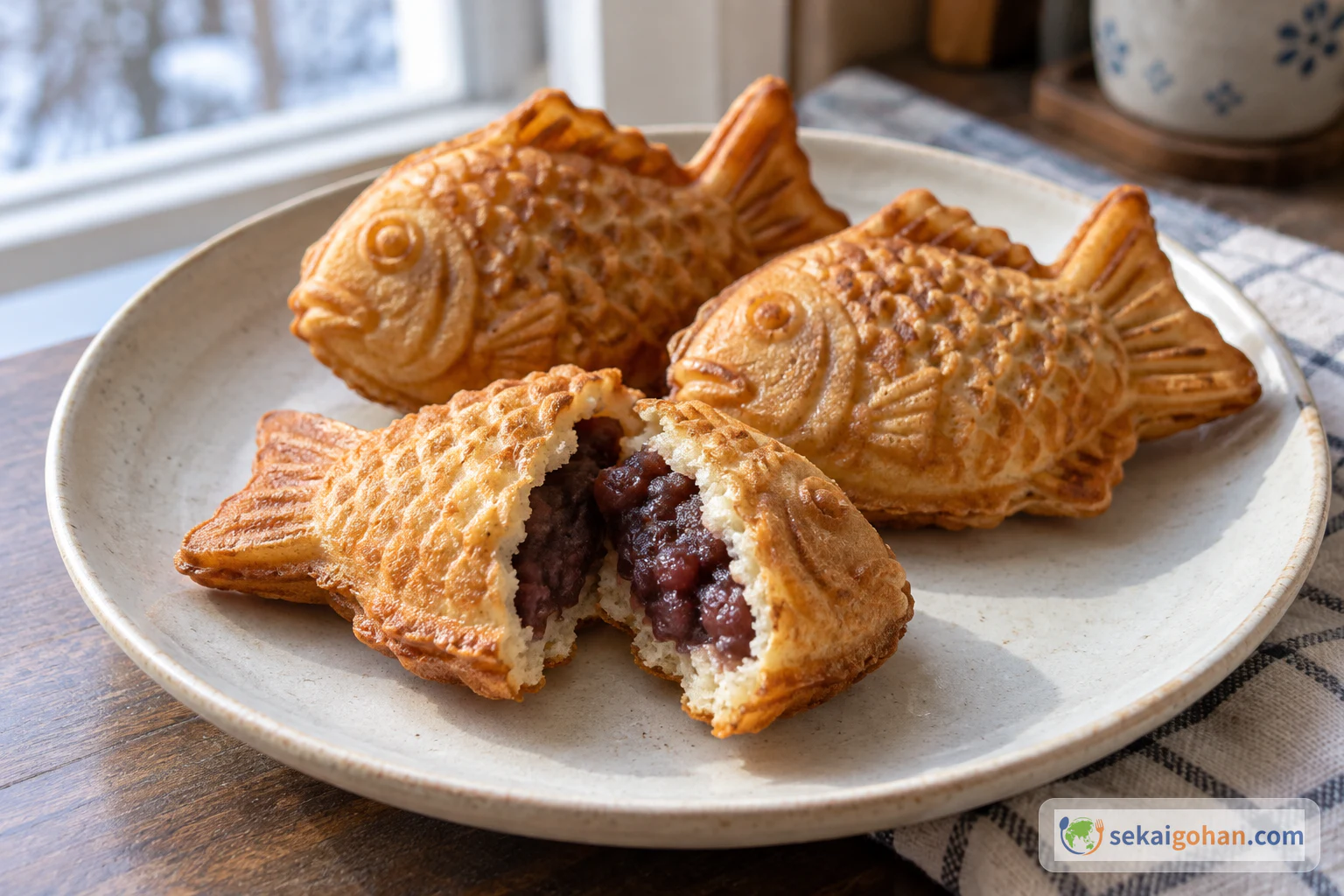
Bungeoppang: Korean Fish-Shaped Pastry with Sweet Red Bean Filling (붕어빵)
How to make bungeoppang (붕어빵), the Korean fish-shaped pastry filled with sweet red beans, using a six-piece batter of flour, water, sugar, salt and baking soda. Covers straining the batter, greasing the mold, placing the filling, turning the pan over low heat, troubleshooting, newer fillings, and how it compares with Japanese taiyaki.
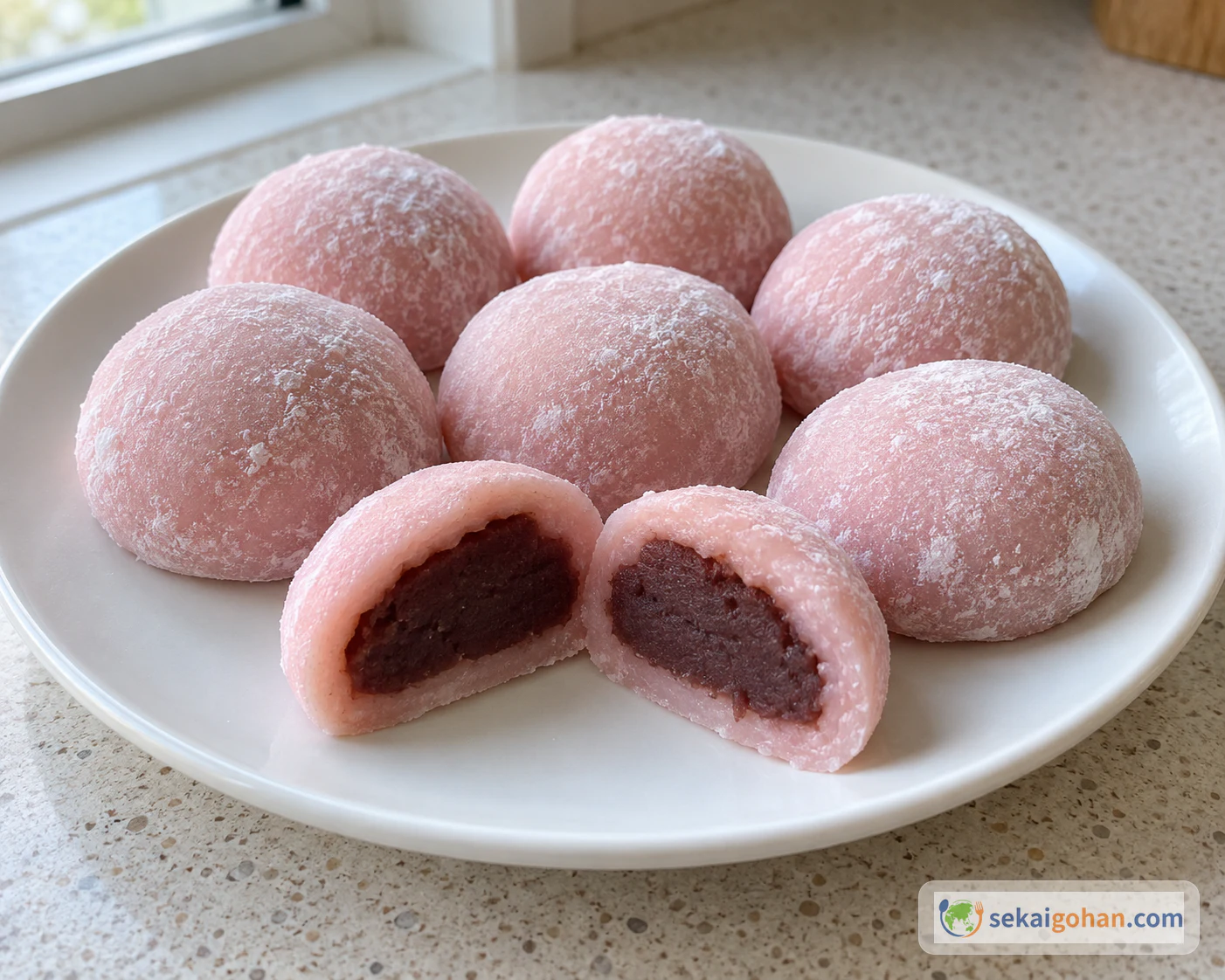
Chapssaltteok: Korean Sweet Rice Cakes with Red Bean Paste (찹쌀떡)
How to make chapssaltteok (찹쌀떡), soft pale-pink Korean rice cakes made from dry sweet rice flour and wrapped around homemade azuki bean paste. Covers choosing glutinous rice flour, cooking the beans into a sweet paste, the microwave sequence for the dough, shaping eight cakes, and how this dish differs from daifuku and other Korean rice cakes.
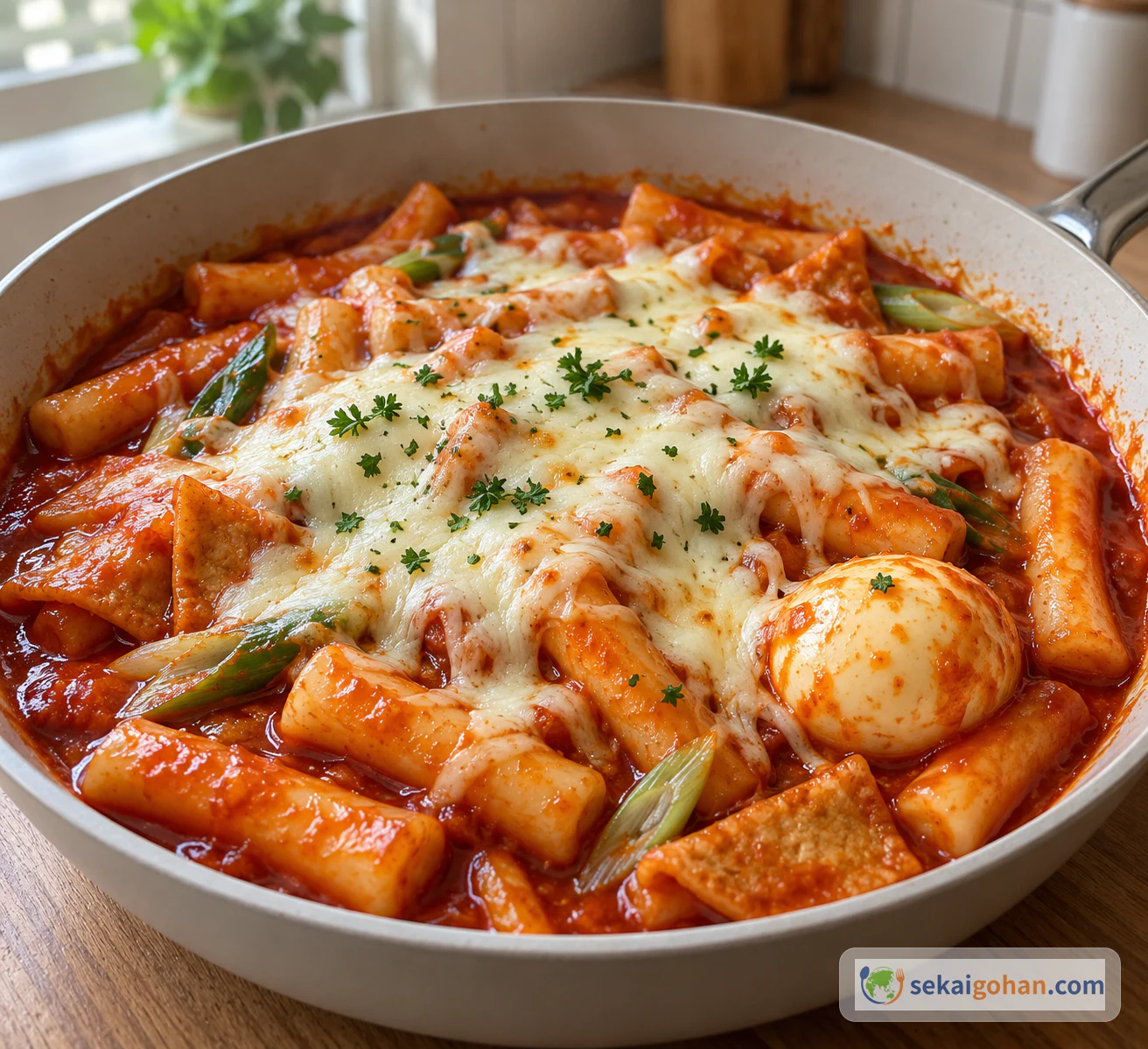
Cheese Tteokbokki: Korean Rice Cakes in Red Sauce Under Melted Mozzarella (치즈 떡볶이)
How to make cheese tteokbokki (치즈 떡볶이), the Korean dish of chewy rice cakes simmered in a sweet-spicy gochujang sauce and finished with mozzarella melted under a lid. Follows one published recipe step by step, from the cold-water soak to the parsley garnish. Also covers how to judge each stage by the state of the sauce and cheese, what to look for when shopping, and where the cheese version sits in Korean street-food culture.
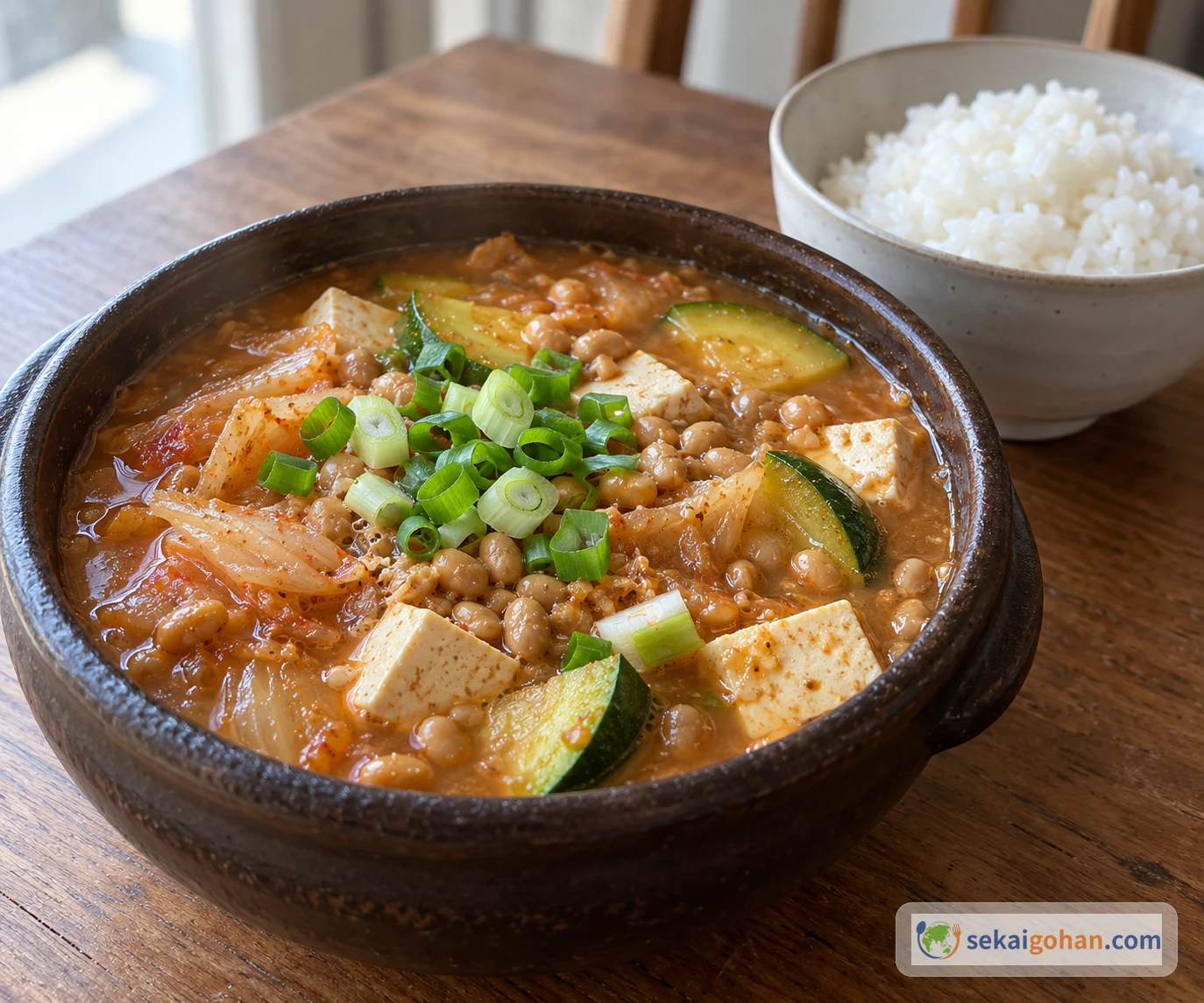
Cheonggukjang Jjigae: Korean Fermented Soybean Paste Stew with Kimchi and Tofu (청국장찌개)
How to make cheonggukjang jjigae (청국장찌개), the Korean stew built on store-bought cheonggukjang, a fermented soybean paste, with kimchi, zucchini, tofu and an anchovy broth. Covers how to tell the paste from the stew that shares its name, how to find the paste by its Hangul label, six steps from the covered simmer to serving with rice, and other documented versions of the stew.
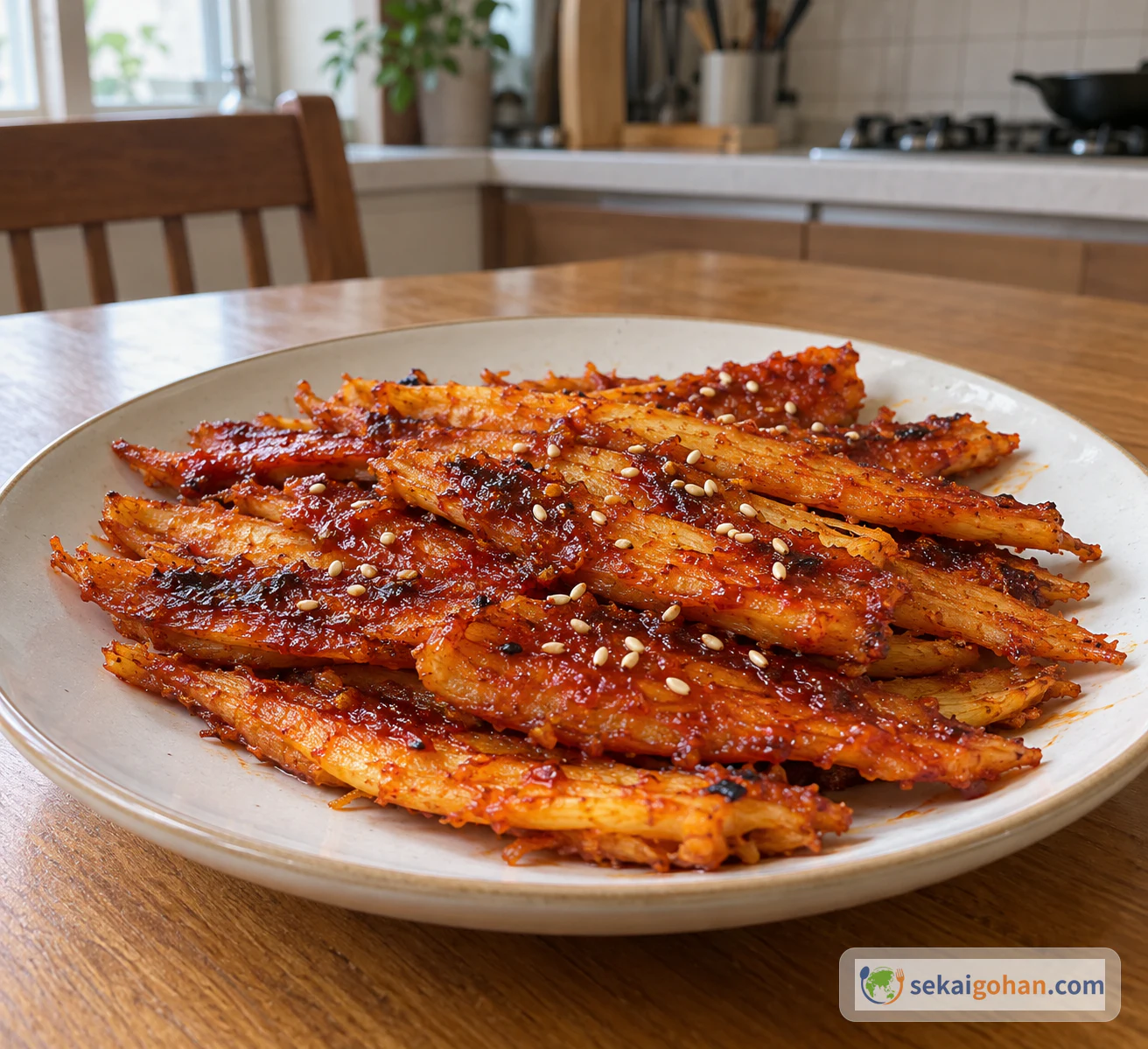
Deodeok Gui: Korean Pan-Roasted Deodeok Root with Gochujang Sauce (더덕구이)
How to make deodeok gui (더덕구이), Korean pan-roasted deodeok root. Blanch, peel, pound and salt-soak 300 g of trimmed root, roast it first with a sesame-and-perilla yujang, then toss it in a gochujang sauce and roast it again. This follows one Korean home cook's full recipe and keeps each stage's amounts separate, with notes on the details the recipe leaves open.
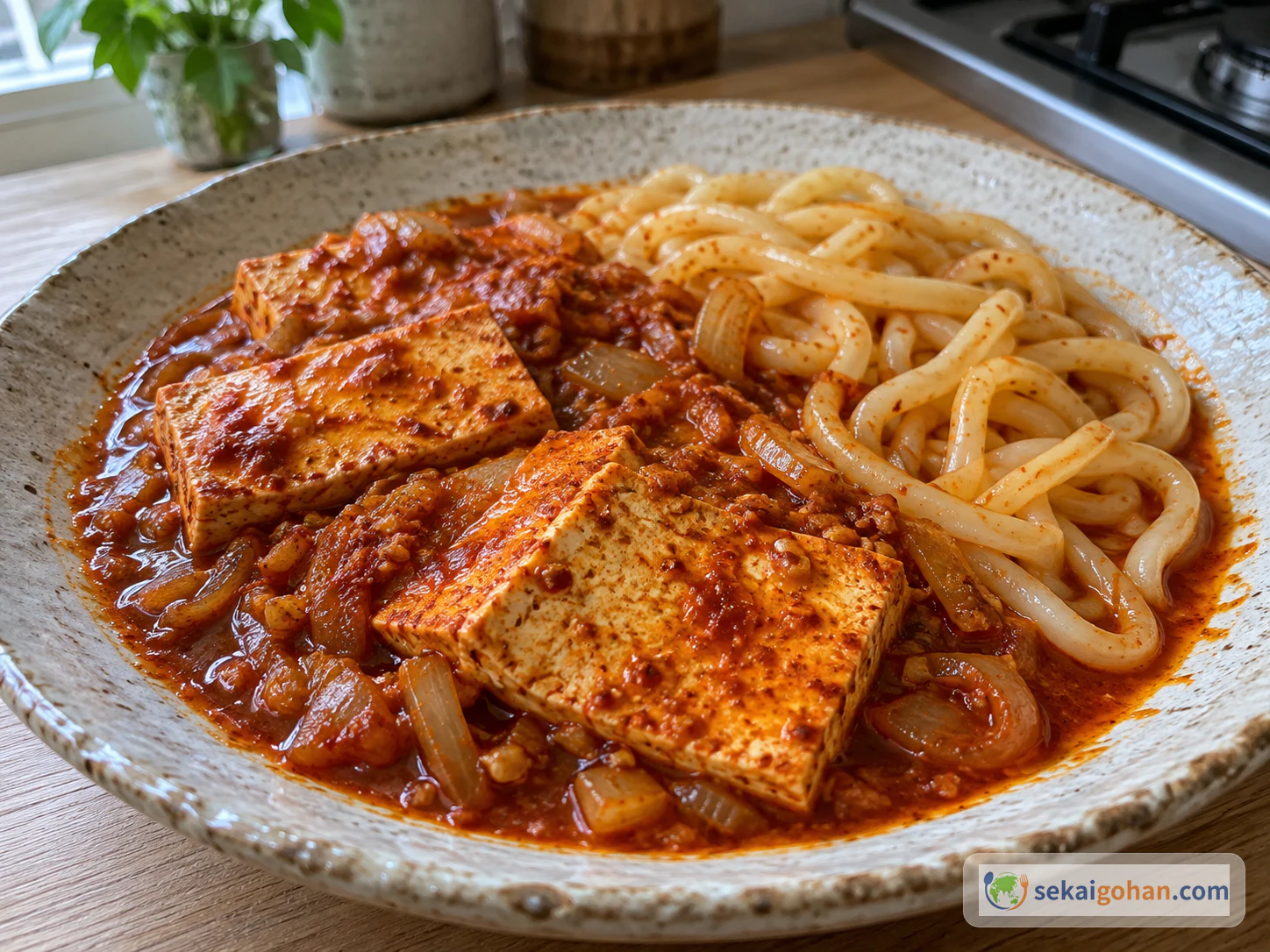
Dubu-duruchigi: Daejeon Spicy Tofu Simmered Without Stirring (두부두루치기)
How to make dubu-duruchigi (두부두루치기), the spicy tofu dish Daejeon named one of its signature tastes in 2026, from Lee Jeong-woong's 2-serving home version. Radish and kelp stock, 500g tofu, 8 tbsp gochugaru and matganjang, why the tofu is not stirred, and which details the recipe leaves open.
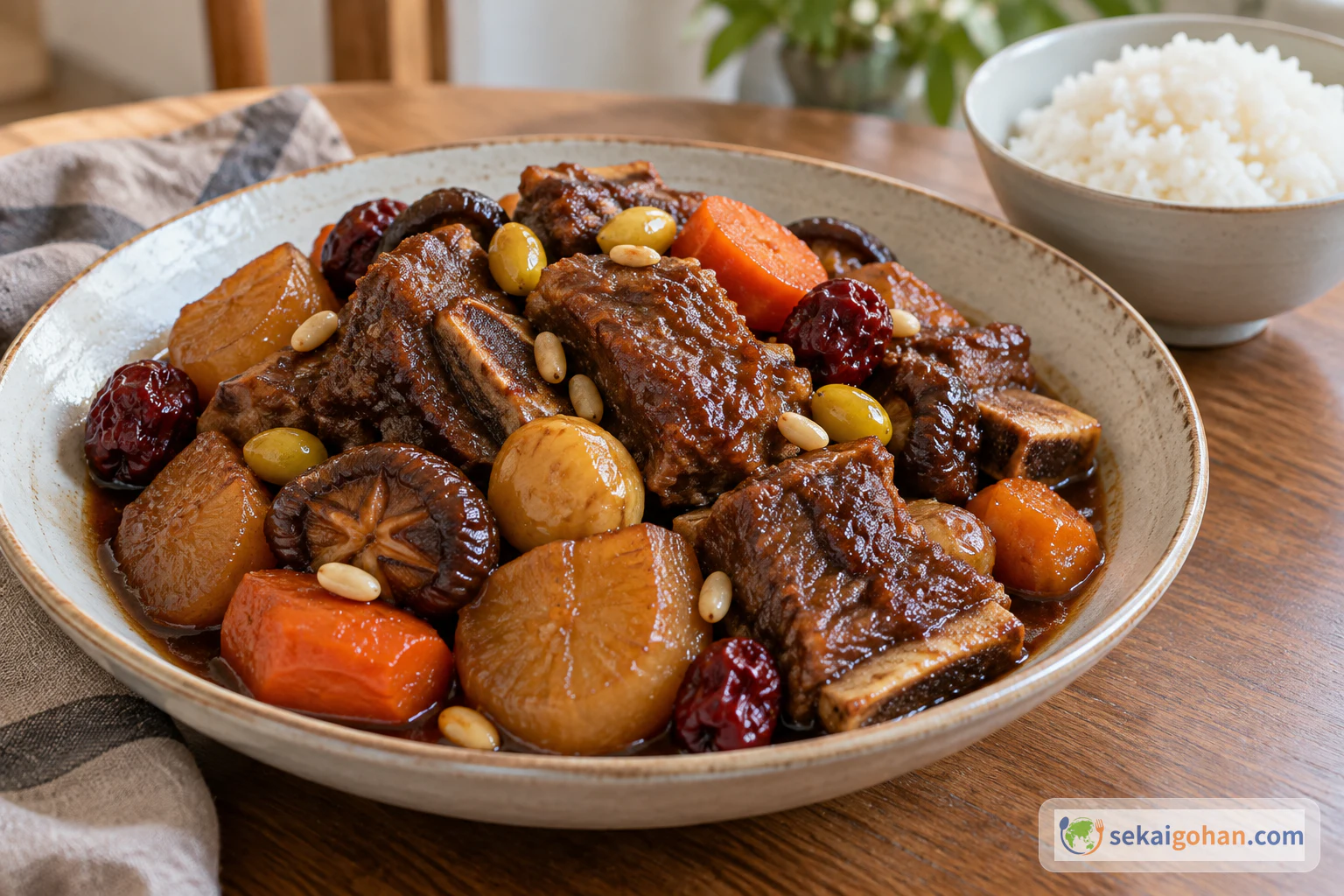
Galbi-jjim: Korean Braised Beef Short Ribs (갈비찜)
How to make galbi-jjim (갈비찜), Korean braised beef short ribs, following Maangchi's written stovetop recipe: soaking and blanching the ribs, a sauce built on shiitake soaking liquid, soy sauce and mirim, rounded radish and carrots, and a final glaze. Covers the long soaking stages, tenderness checks, optional chestnuts, jujubes and garnishes, food-safety notes, and the dish's place at Korean holiday tables.
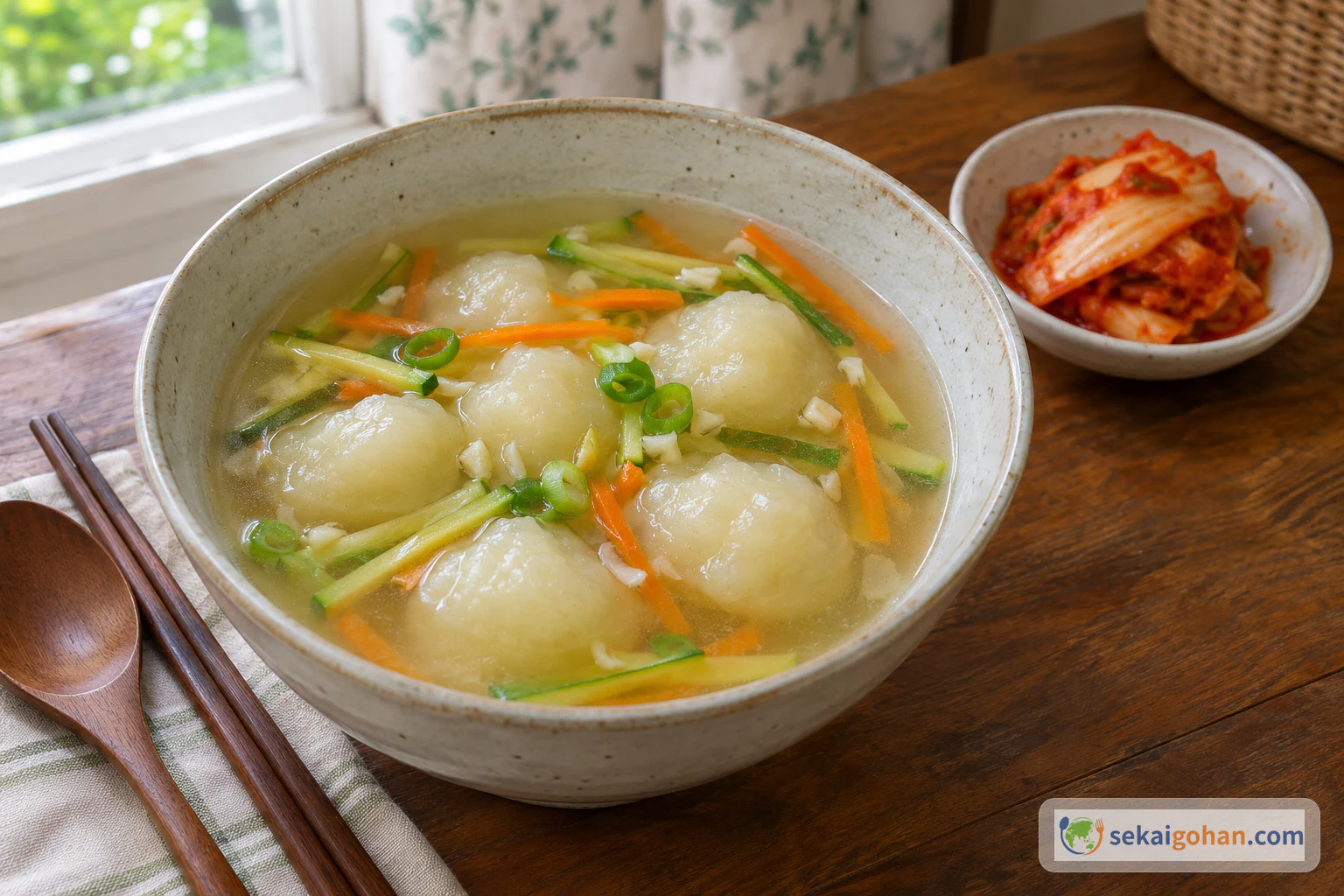
Gamja-ongsimi: Korean Potato Dumpling Soup (감자옹심이)
How to make gamja-ongsimi, the Korean soup of grated-potato dumplings, following Maangchi's anchovy-kelp stock version with its amounts and steps. Covers squeezing the grated potato in cloth, letting the starch settle, returning that starch to the dough, cooking the dumplings until they float, and how encyclopedia, regional and tourism sources describe the dish in Gangwon.
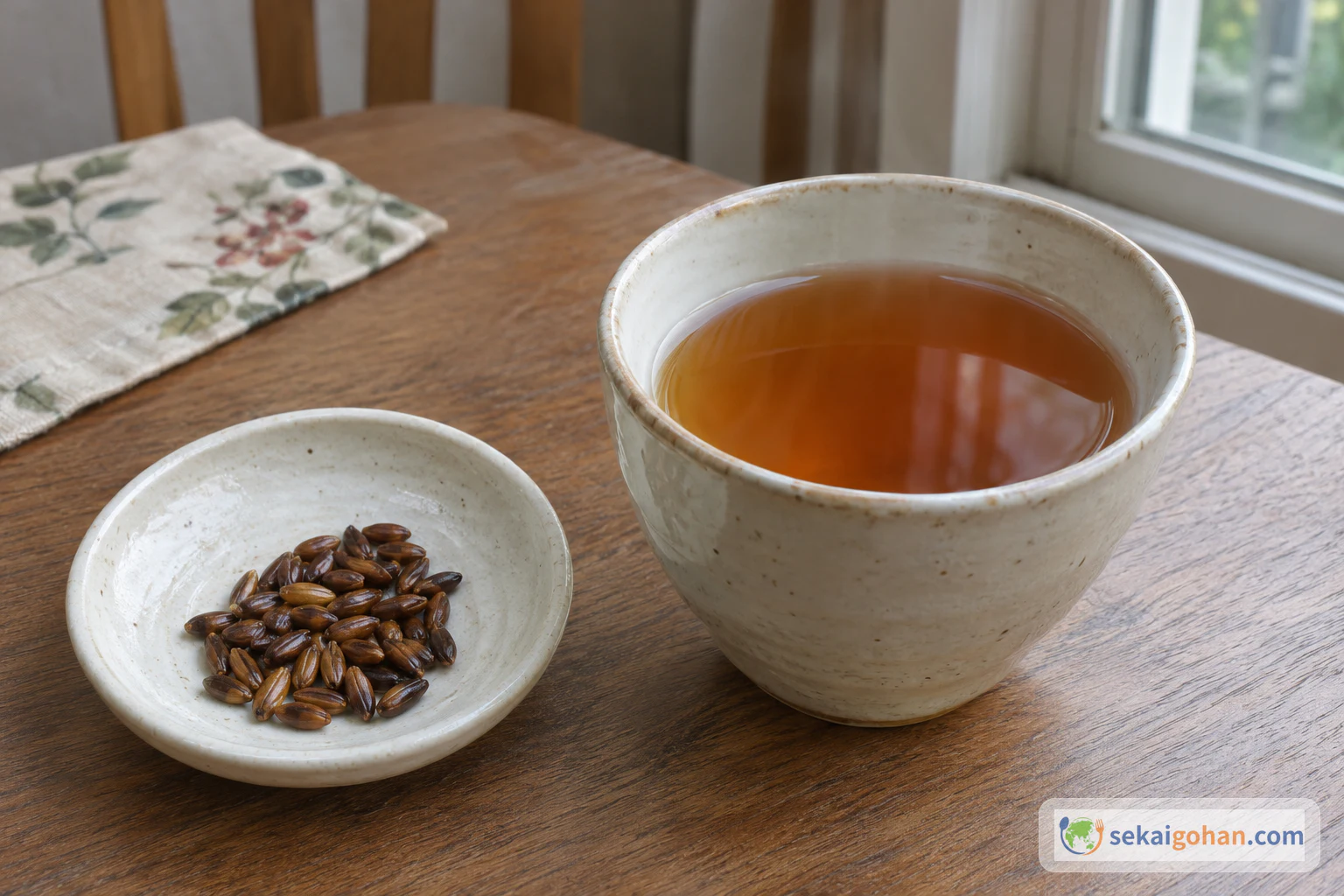
Gyeolmyeongja-cha: Korean Roasted Cassia Seed Tea (결명자차)
How to make gyeolmyeongja-cha (결명자차), the Korean tea of roasted cassia seeds brewed in boiling water. Covers how to tell the seeds apart from cinnamon "cassia," how to wash and roast them over medium heat until they pop, a short simmer, drinking the tea warm or cooled, and how other published methods differ.
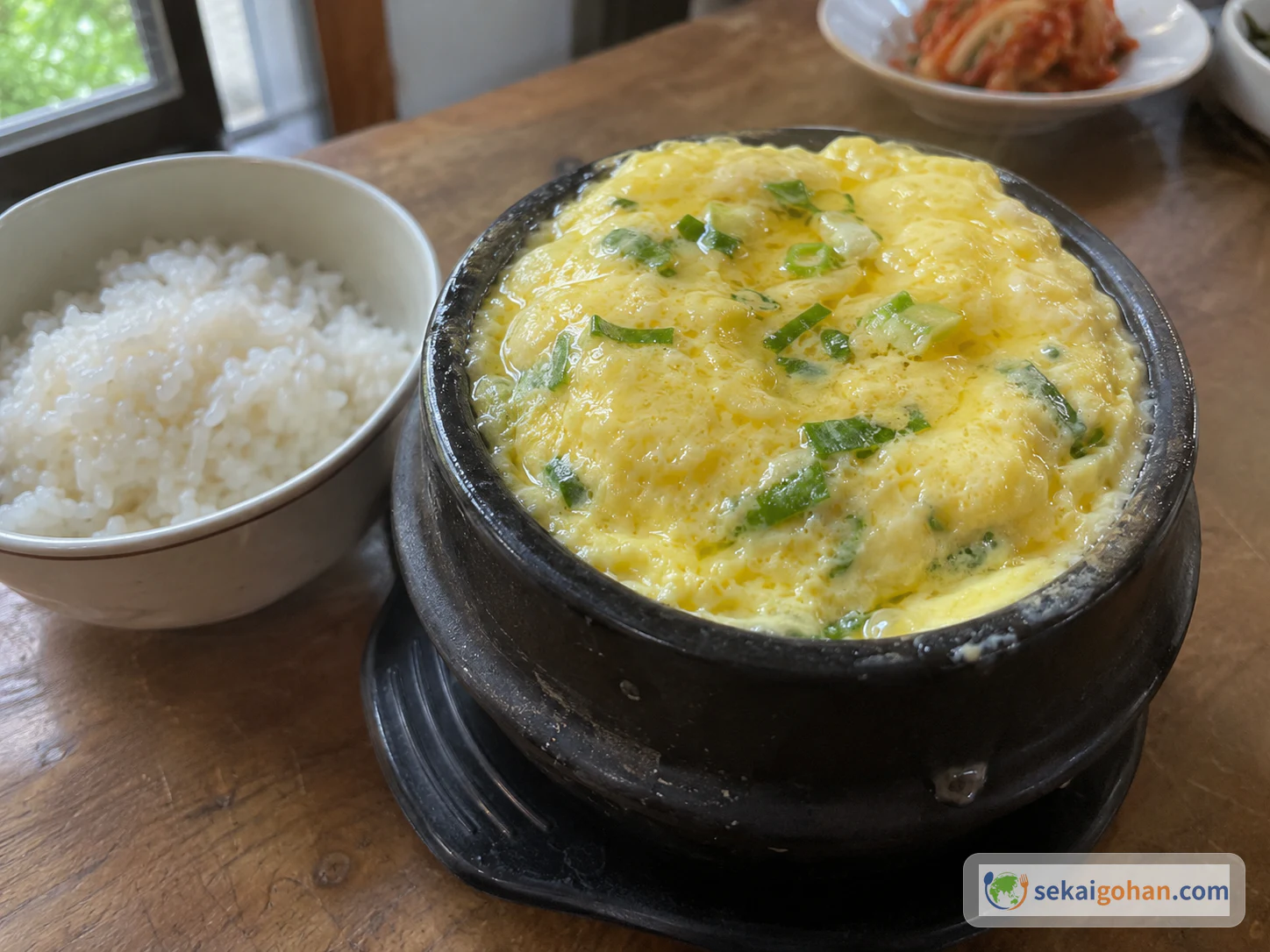
Gyeran jjim: Korean Steamed Egg in an Earthenware Pot (계란찜)
How to make gyeran jjim (계란찜), the soft, savory Korean steamed egg, in a small ttukbaegi earthenware pot: 4 large eggs, 1 cup water and 4 teaspoons fish sauce, cooked covered over medium-low heat and finished with toasted sesame oil. Covers the recipe's steam and aroma cues, public egg-safety guidance, other versions, and how the dish differs from Japanese chawanmushi.
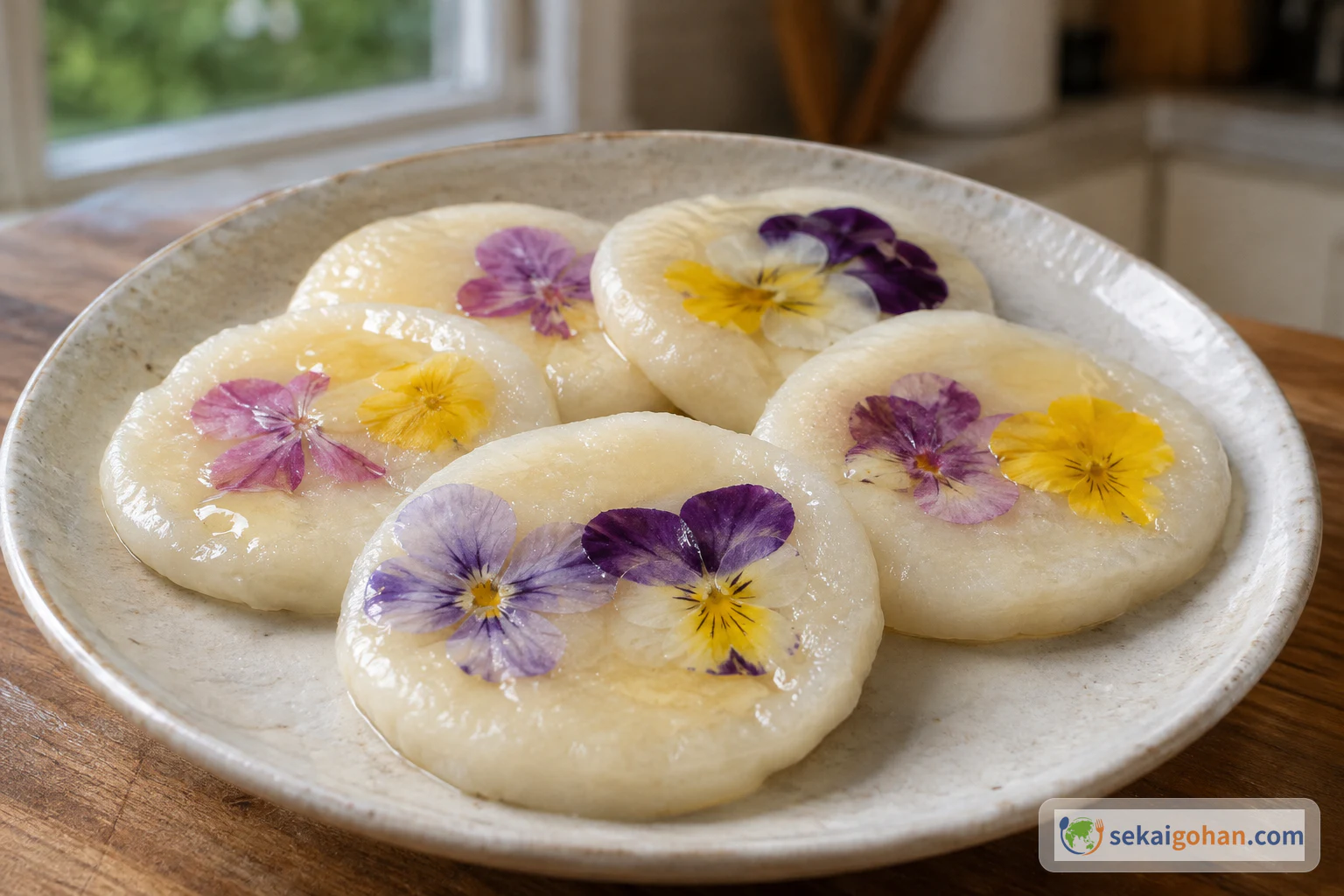
Hwajeon: Korean Pan-Fried Sweet Rice Cakes with Edible Flowers (화전)
How to make hwajeon (화전), small Korean pan-fried glutinous rice cakes topped with edible flowers. Ten white discs cooked over low heat, flowers pressed on for one second, finished with honey. Covers choosing food-grade flowers, the spring flower custom behind the dish, regional styles, and a honey safety note for babies.
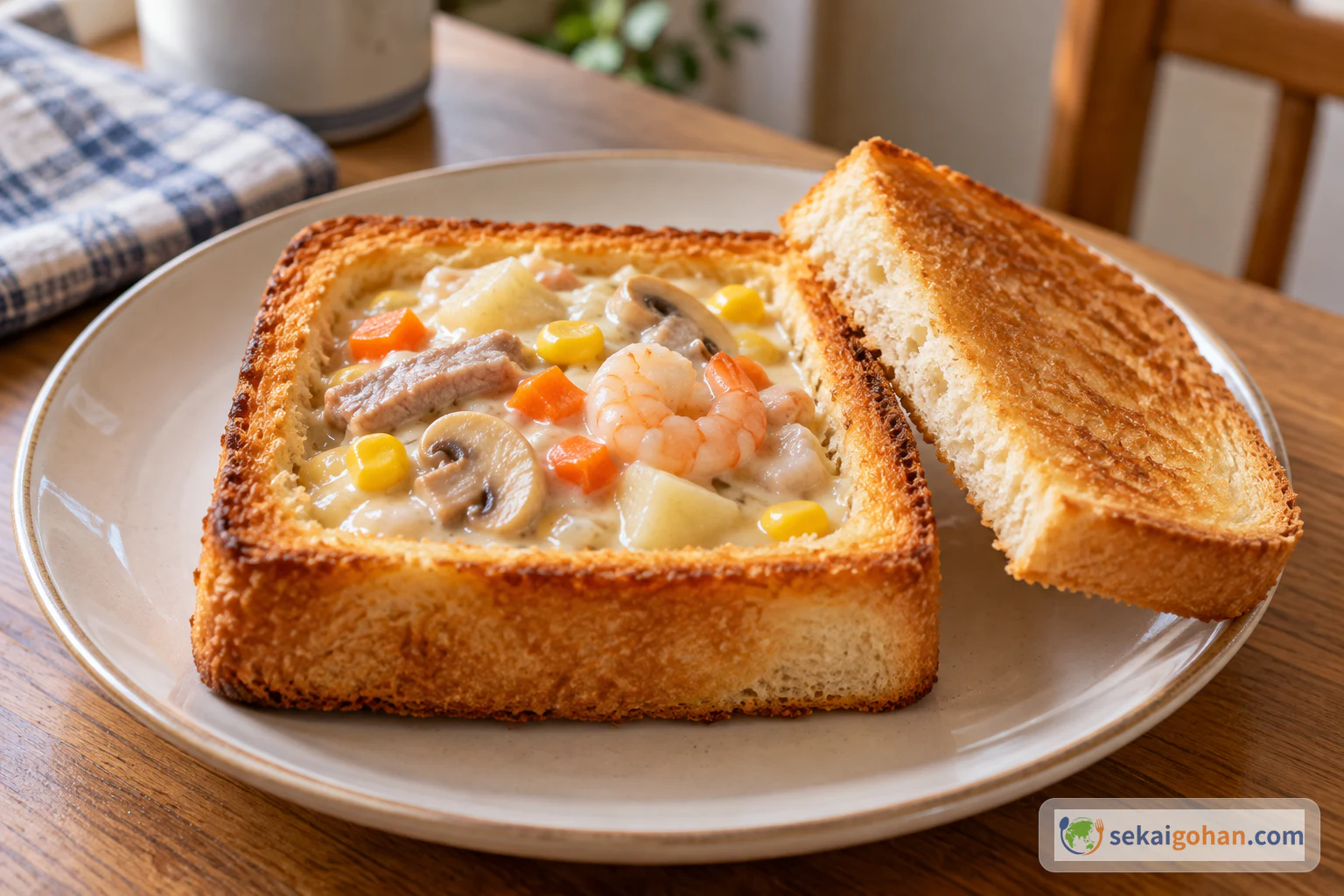
Coffin Bread (棺材板): 安木白 Amber's Home-Oven Version with Pork and Shrimp
How to make coffin bread (棺材板), the lidded toast dish presented as Tainan food, in Amber's (安木白) home-oven version: butter-brushed thick toast baked at 200°C, a lid cut from the top, and a creamy pork-and-shrimp filling with mushrooms and vegetables in stock and milk. Covers the two separate butter portions, how this version differs from fried and other oven versions, and the origin story told about the name.
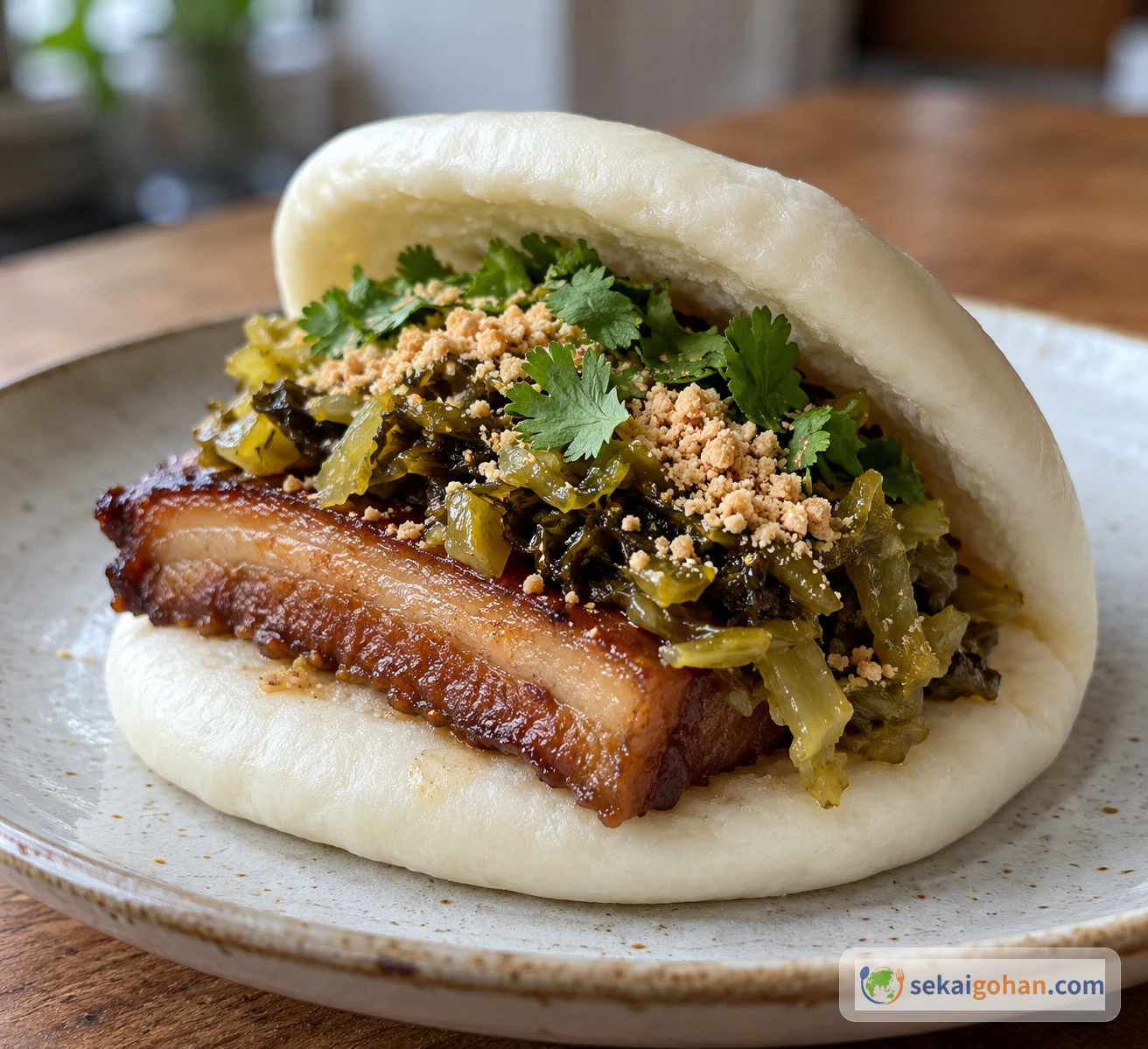
Gua Bao: Taiwanese Folded Steamed Buns with Braised Pork Belly (刈包)
How to make gua bao (刈包, kuah-pau), the Taiwanese folded steamed bun filled with soy-braised pork belly, stir-fried pickled mustard greens, sweet ground peanut and cilantro. It follows one complete 8-bun recipe from Taiwanese cooking teacher Ivy Chen, from yeast dough and folding through braising and assembly. It also covers how gua bao differs from closed baozi and Western-style pork buns, its story from year-end feasts to street snack, and how to choose ingredients outside Taiwan.
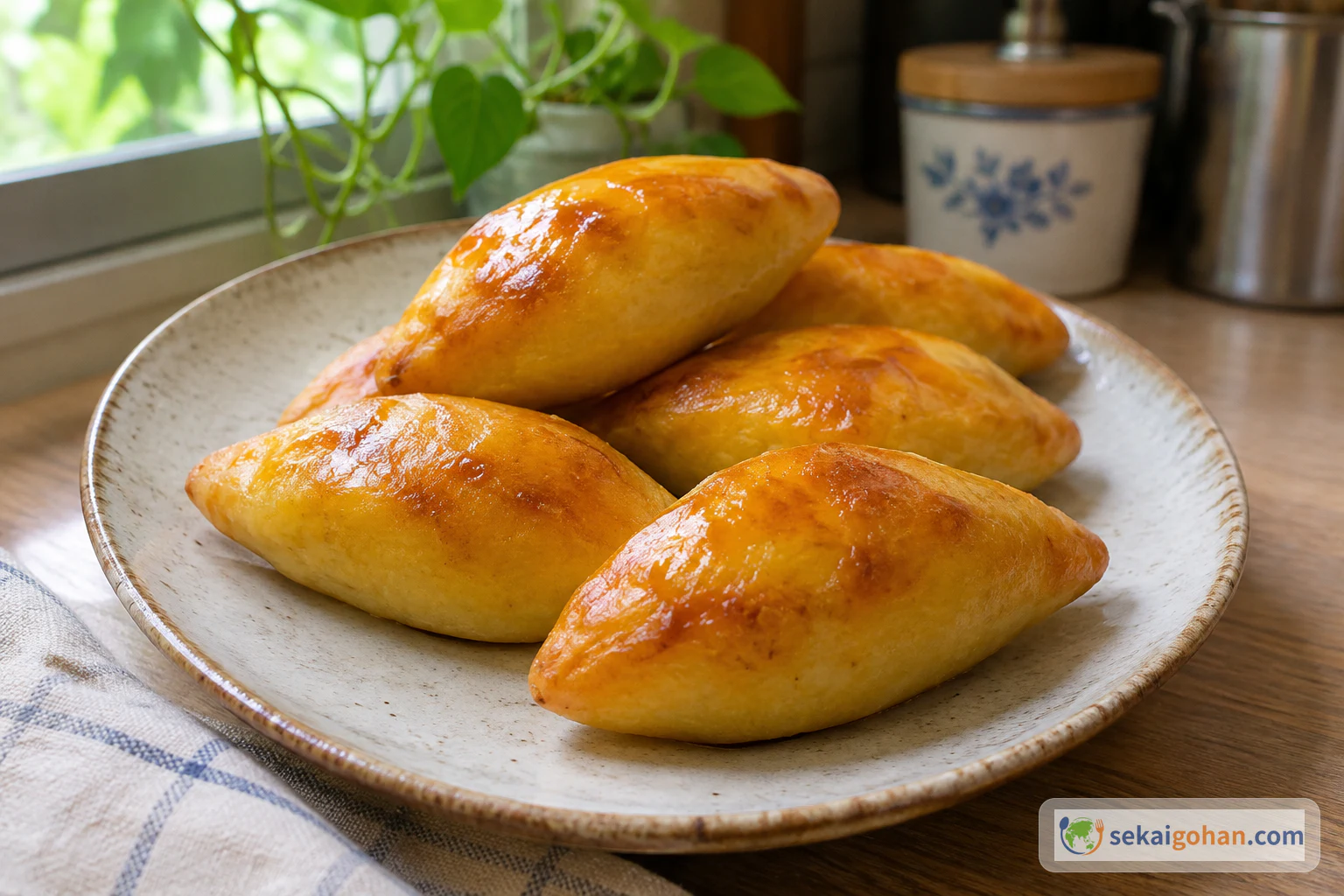
Hualien Sweet Potato (花蓮藷): Taiwanese Egg-Washed Sweet Potato Bars
How to make Hualien sweet potato (花蓮藷), a regional sweet from Hualien, Taiwan: sweet potato mash and unsweetened white bean paste mixed into one dough, shaped into 40 little sweet-potato bars, brushed twice with egg and baked until golden. Covers the two ways the mash is used, the egg's two jobs, why this version bakes at 250°C, and how it differs from the wrapped pastry that shares its name.
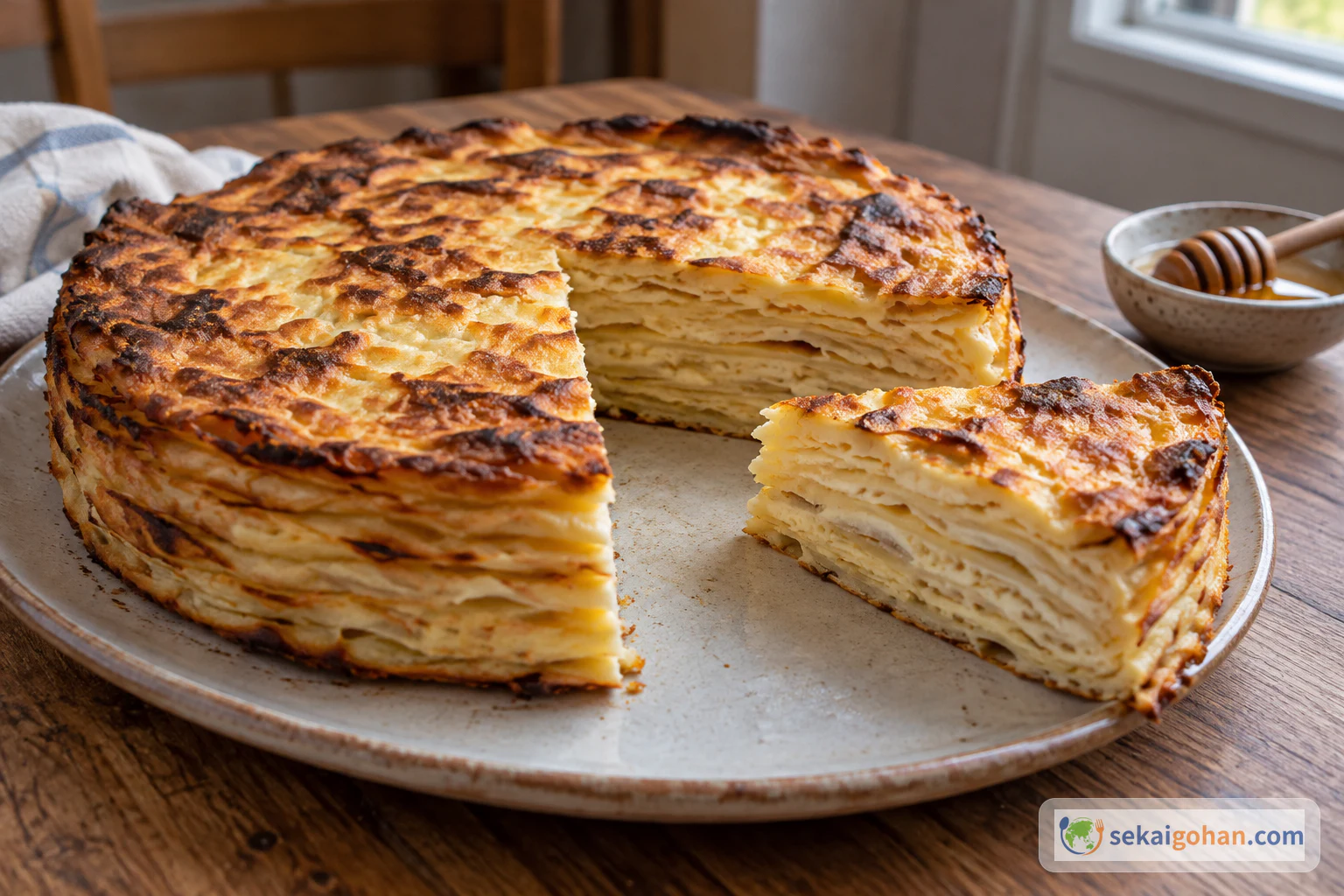
Flija (Fli): How to Make Albania and Kosovo's Layered Bake
How to make fli (flija, flia) at home under a broiler: egg-and-milk batter, a sour cream, kefir and butter layer, and building and browning each thin layer.
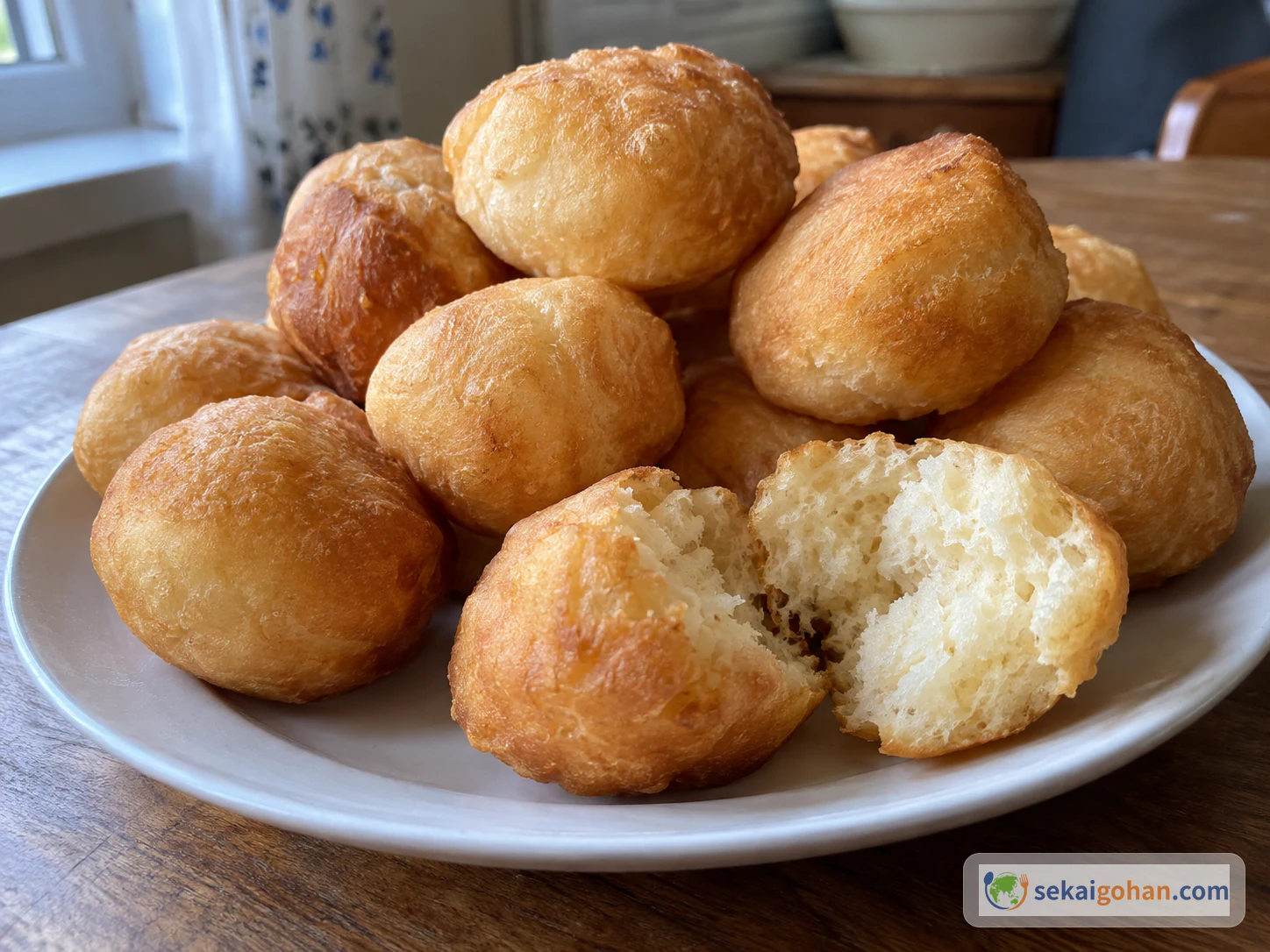
Bauyrsak: Kazakh Fried Yeast Dough Rounds (Бауырсақ)
How to make bauyrsak (бауырсақ, also written baursak), the small fried dough rounds of Kazakhstan, from a milk-and-yeast dough cut into circles. Covers the starter, two rises, rolling and cutting, frying in batches until golden, how bauyrsak sits on the Kazakh table with tea and meat dishes, and what this recipe does and does not tell you.

Boorsok: Kyrgyz Fried Bread Squares (Боорсок)
How to make boorsok (боорсок), the small Kyrgyz fried bread cut into squares or diamonds and served on a shared platter. A simple water-based yeast dough, proofed, rolled 8–10 mm thick and fried at 170–175°C in small batches, with notes on reading the yeast foam and the rise, managing oil temperature, serving with tea or alongside main dishes, and how home versions differ.
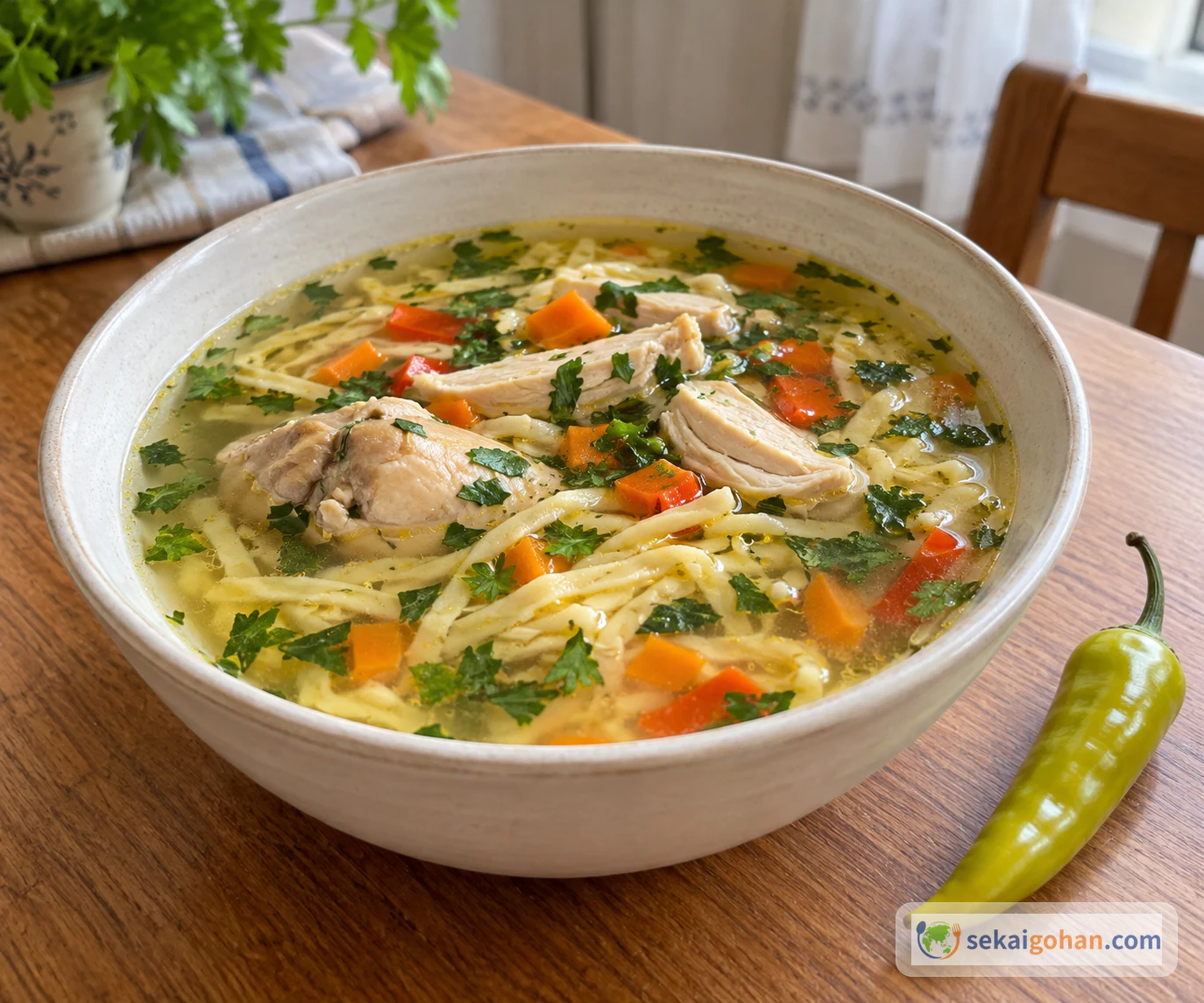
Zeamă: Moldovan Chicken and Homemade Noodle Soup Soured with Borș
How to make zeamă, the Moldovan soup of chicken, vegetables and homemade noodles finished with borș, a pale fermented wheat-bran liquid. Covers the difference between borș and red beet borscht, lovage (leuștean) and celeriac, the optional potato version, regional variations, and what the home recipe leaves for you to judge.
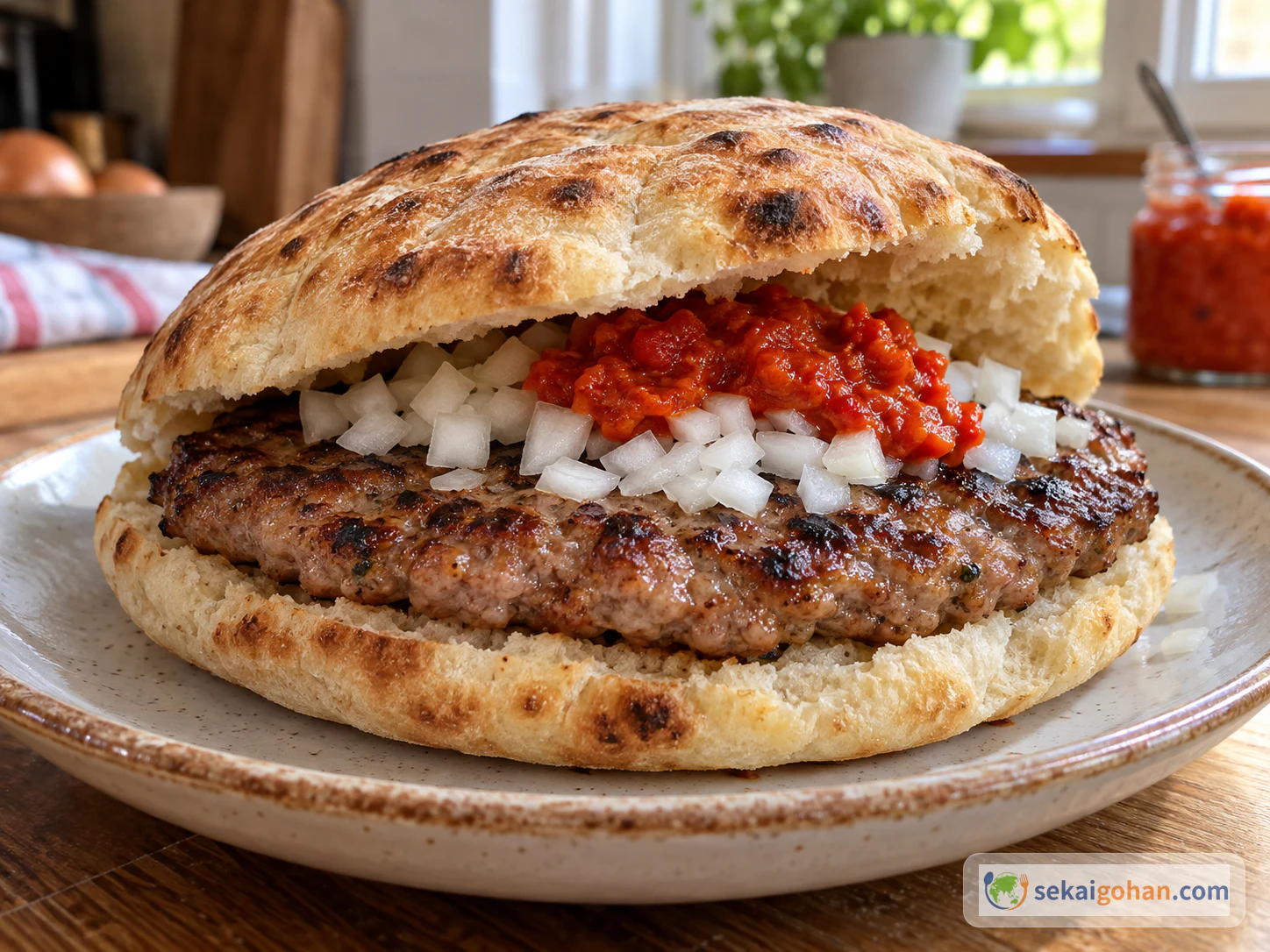
Pljeskavica: Serbian Flat Grilled Patty (Пљескавица)
How to make pljeskavica (пљескавица), the broad, flat grilled patty of Serbia, from a home-style beef-and-pork recipe. Covers its place on the kafana table with ajvar, lepinja and kajmak, how it differs from ćevapi, grilling on charcoal or in a skillet, and checking that the center reaches 75°C for at least 1 minute.
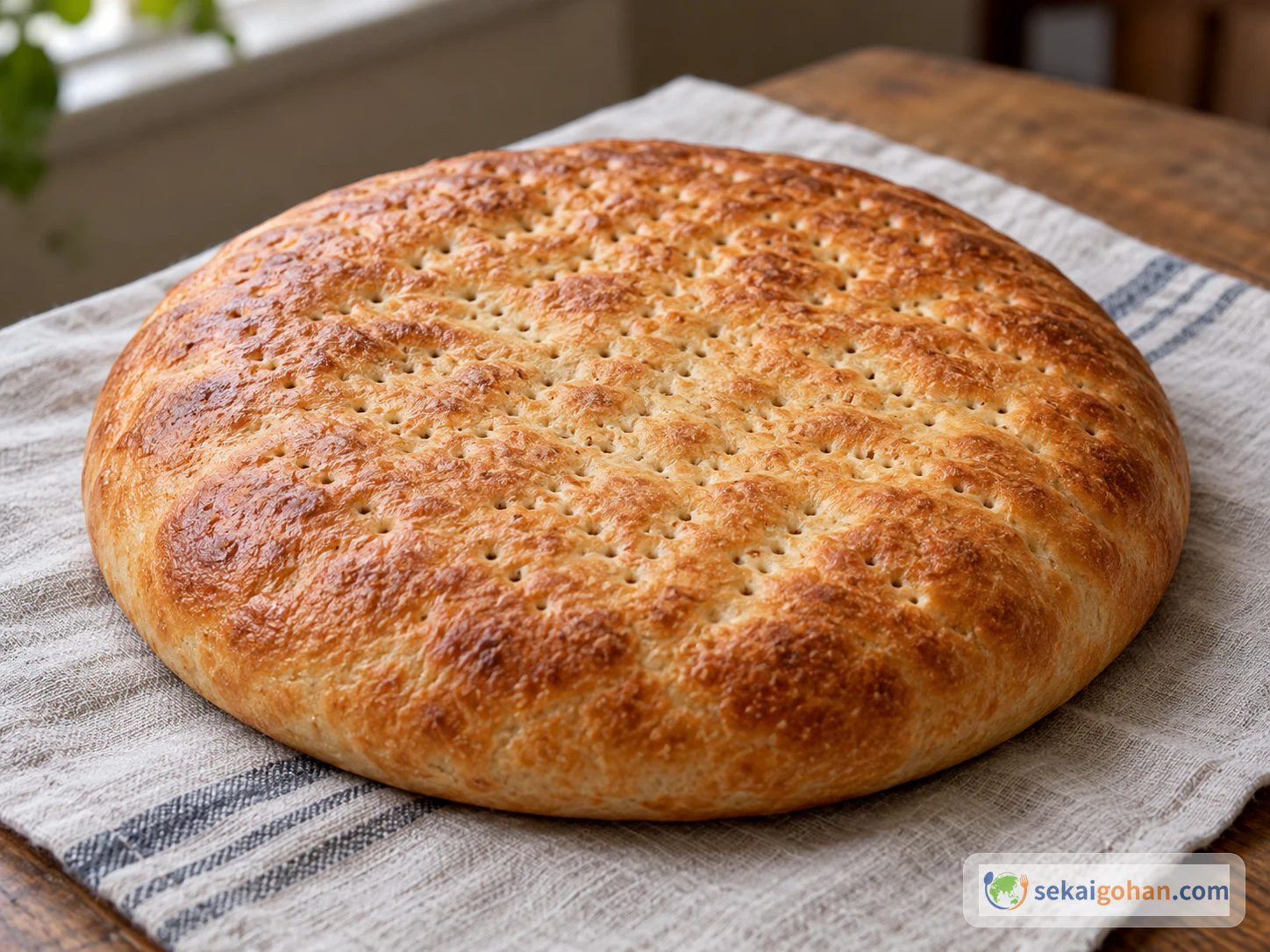
Chorek: Turkmen Round Bread (Çörek)
How to make chorek (çörek), the plain round yeast bread of Turkmenistan, from just four ingredients: 1 kg flour, 1 tablespoon salt, 20 g yeast and 600 ml warm water. This is not a sweet or braided bread. The recipe makes two fork-pricked rounds baked at 250°C (482°F). The article also covers the clay-oven tradition, how to judge each rise by eye, and what the recipe leaves open.
Holubtsi: Small Zakarpattian Cabbage Rolls with Pork and Rice (Голубці)
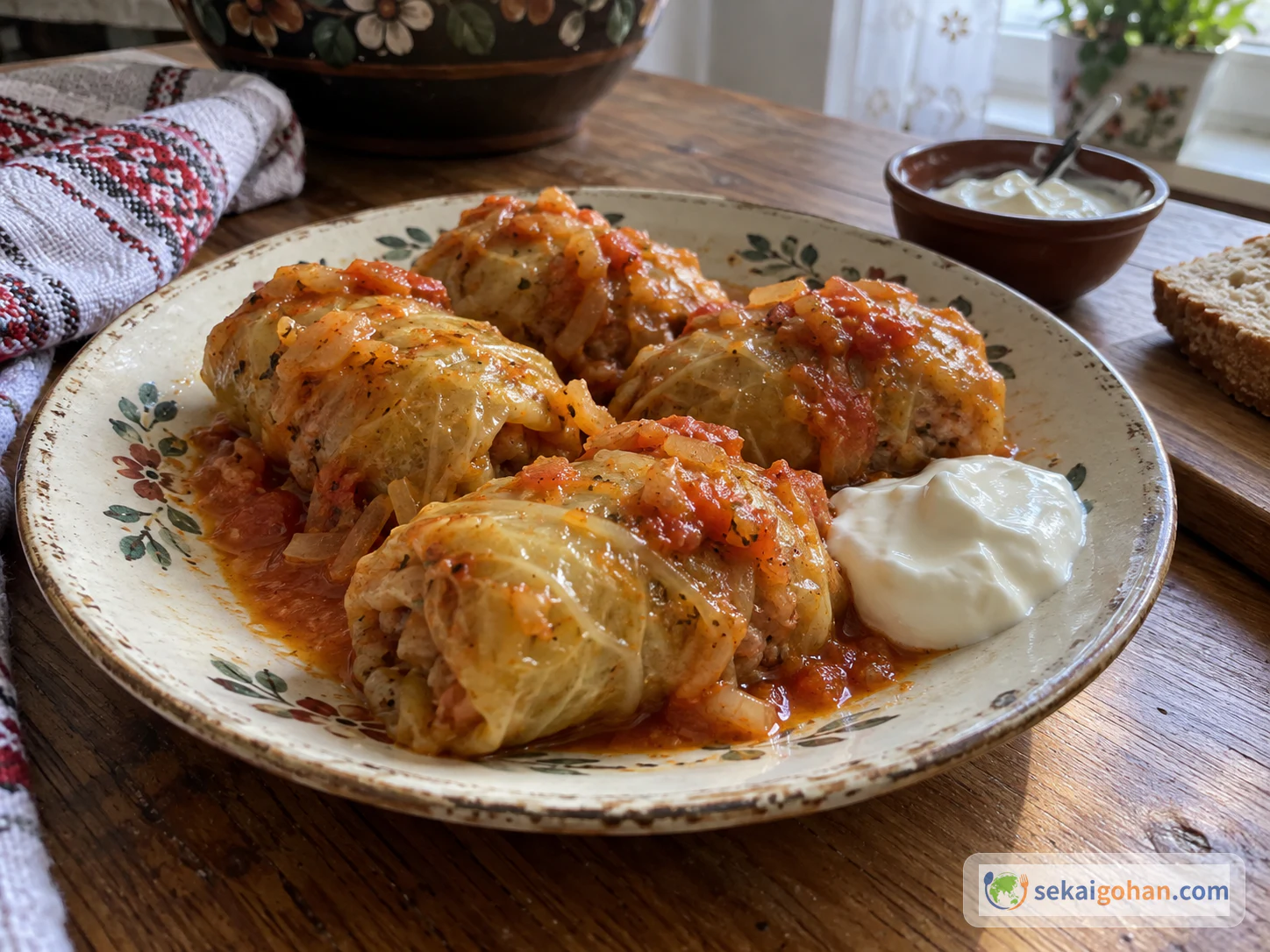
How to make holubtsi (голубці), Ukrainian cabbage rolls, in the small Zakarpattian style with pork and raw rice. Covers why the rice goes in uncooked, how to roll leaves without tearing them, simmering in tomato water, checking that the pork is cooked through, and how the dish changes across Ukraine, including the potato-filled Lenten tradition.
Åland Black Bread: A Sweet, Dense Rye Loaf for the Home Oven (Åländskt svartbröd)
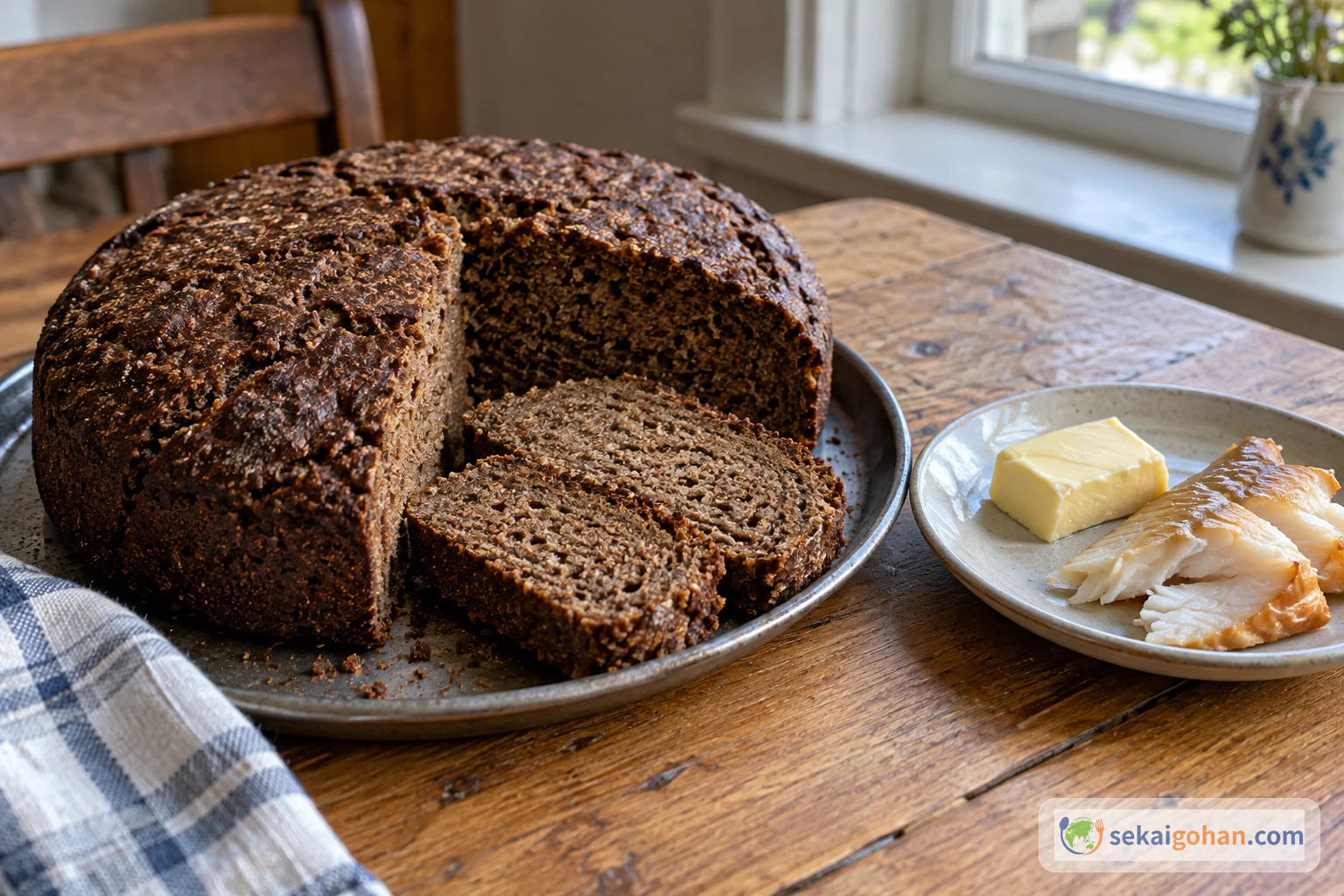
How to bake Åland black bread (Åländskt svartbröd), the compact, sweet rye loaf of the Åland Islands, from one published home recipe made with cultured milk, coarse rye flour, malt and dark syrup. Covers the sticky dough, the one-hour proof, the two-stage bake with a coffee-honey glaze, choosing ingredients outside Scandinavia, and serving it with butter and fish.
Åland Pancake (Ålandspannkaka): Cardamom Semolina Bake with Prune Cream
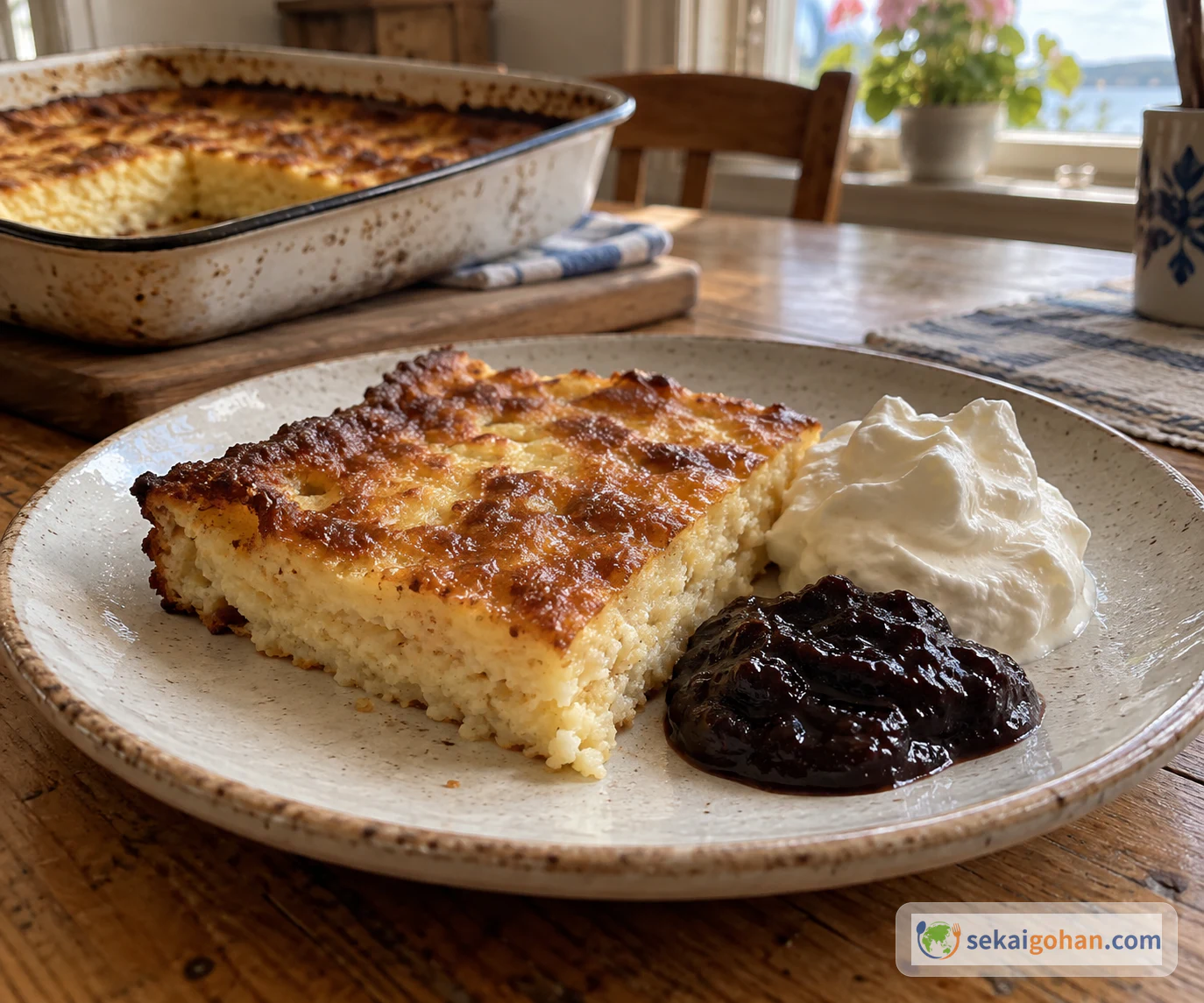
How to make Ålandspannkaka, the thick, cardamom-scented baked pancake of the Åland Islands, following Visit Åland's semolina-porridge recipe. Covers the porridge base, baking at 200°C until golden, the traditional prune cream with whipped cream, the rice version, and how to judge doneness by color and a set center.