
Recipes (42)

Papanași: Romanian Fried Cheese Doughnuts with Sour Cream and Jam
How to make papanași, the Romanian fried cheese doughnuts shaped into rings and served warm with sour cream and jam. Covers choosing and draining fresh cottage cheese, mixing the dough in the right order, shaping the ring, checking that the dough is cooked throughout as well as golden, and how the fried and boiled versions differ.
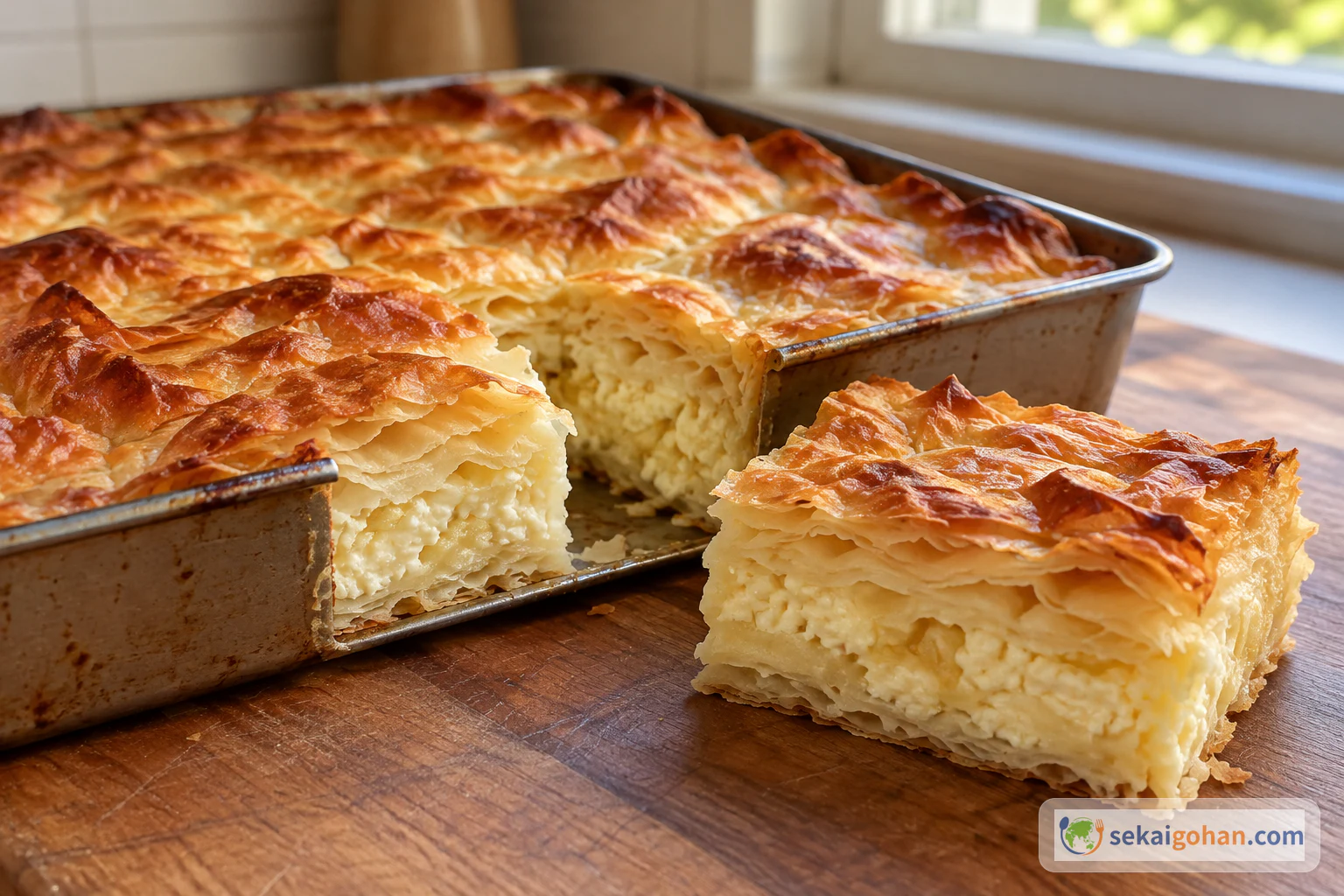
Gibanica: Serbian Cheese Pie of Layered Filo and Feta
How to make gibanica, the Serbian cheese pie of filo, feta, eggs and sour cream, from a Serbian community cookbook. Covers choosing filo and feta, building the layers, telling when the center has set, and how this version differs from regional gibanica such as Vojvodina's.
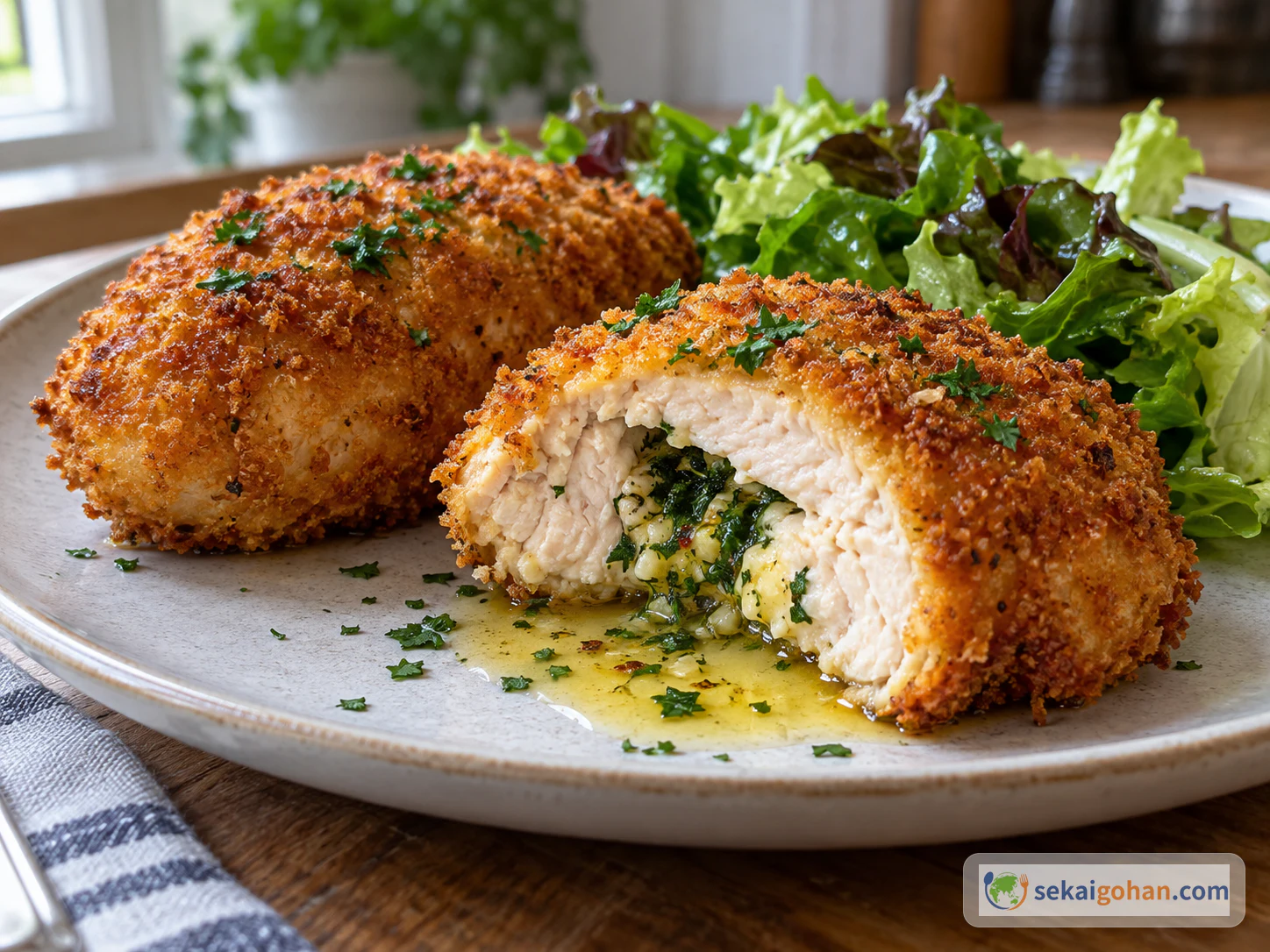
Chicken Kyiv: Herb-Butter-Filled Chicken with a Crisp Panko Coat (Котлета по-київськи)
How to make Chicken Kyiv, the breaded chicken breast filled with parsley, garlic and cayenne butter. Covers filling a pocket without piercing the meat, a single flour-egg-panko coat, browning in a pan and finishing in the oven, and checking the thickest part of the meat with a thermometer. Also explains the Kyiv and Kiev spellings and the dish's uncertain origins.
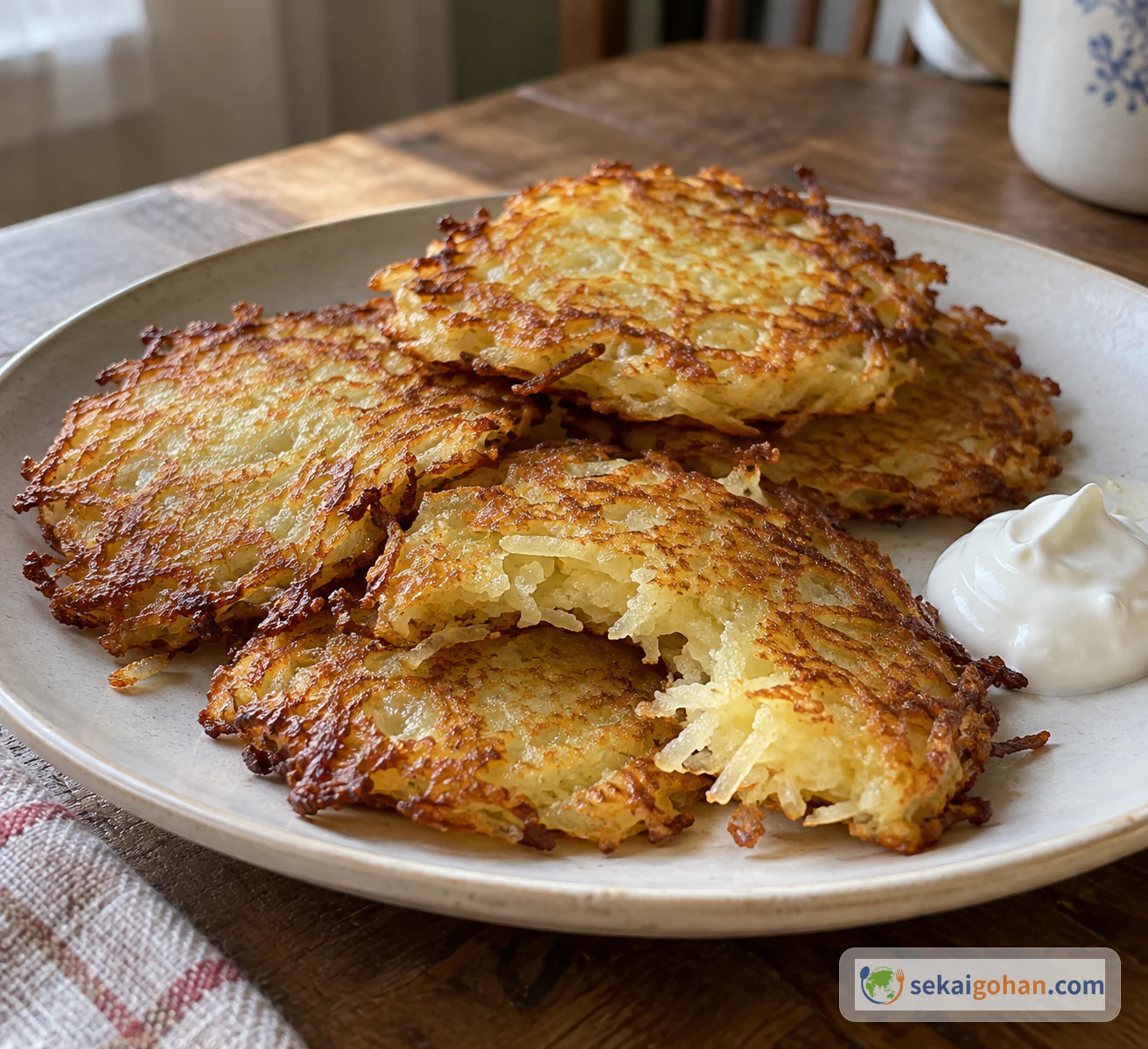
Deruny: Ukrainian Grated Potato Pancakes (Деруни)
How to make deruny (деруни), the Ukrainian pancakes of finely grated raw potato and onion, from one family recipe followed as published: keeping the settled starch, mixing a spoonable batter, browning both sides over medium heat, and serving warm with sour cream. Includes grating safety, doneness, storage, family and regional differences, and sources.
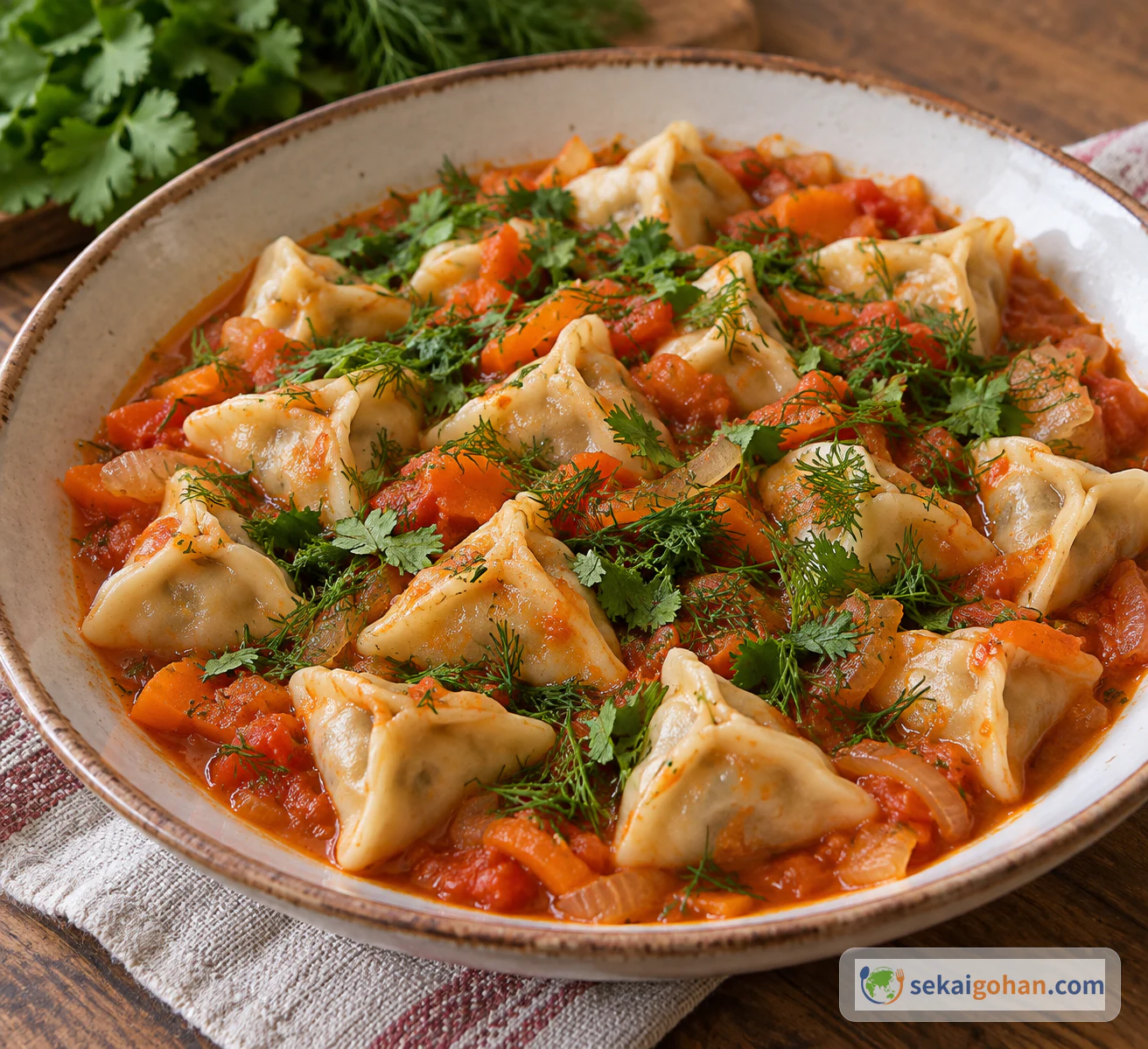
Chuchvara: Small Lamb Dumplings Cooked in Tomato-Vegetable Sauce
How to make chuchvara as Tatyana Semina presents it on Povar.ru: hand-chopped boneless lamb with onion, ground coriander and cumin, folded into small triangular dumplings and cooked directly in a sauce of onion, carrot and tomato. Covers the dough, filling, sauce, shaping, serving with fresh herbs, and the points the original recipe leaves open.
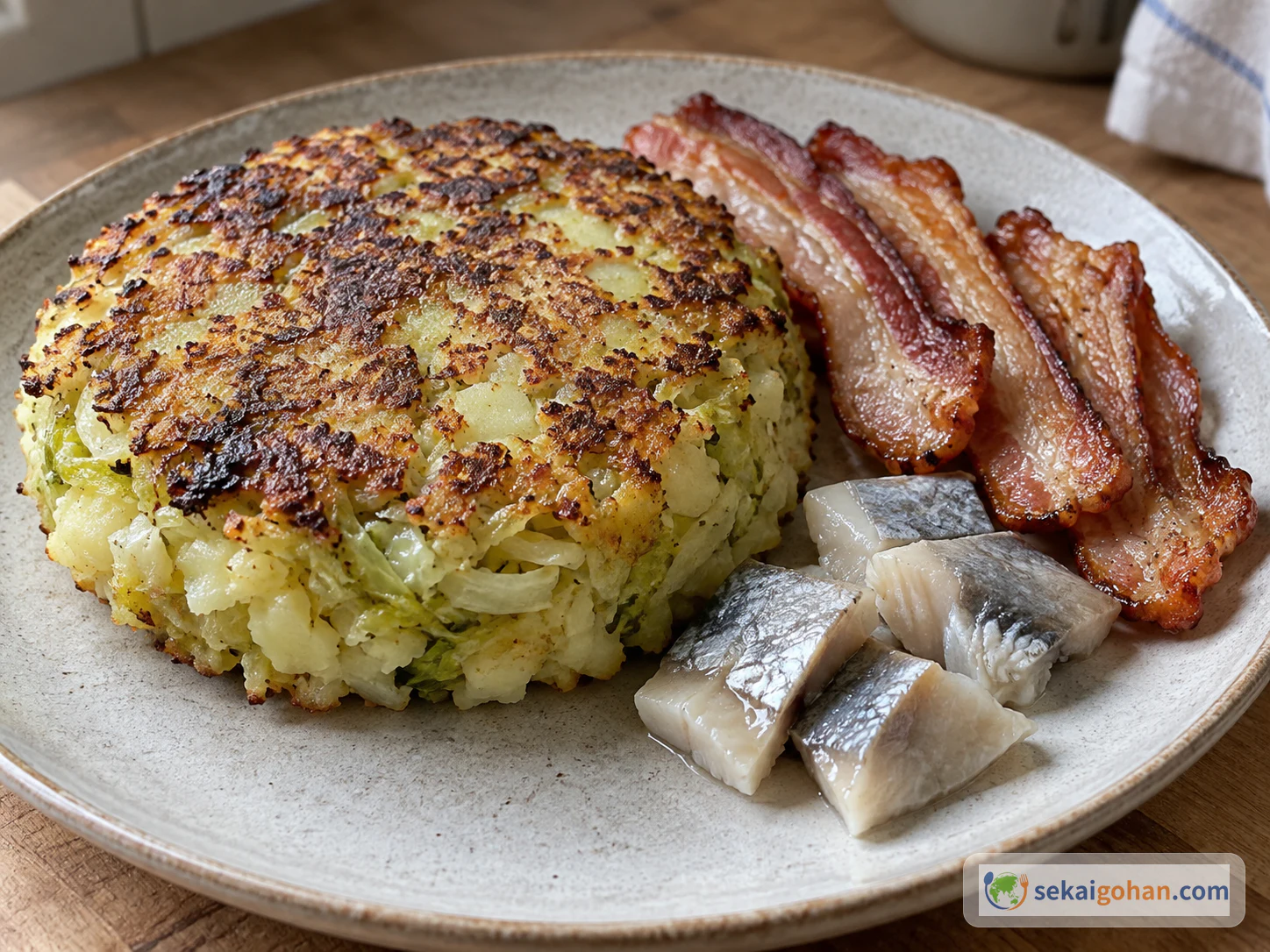
Trinxat: Andorra's Winter Cabbage and Potato Cake (Trinxat amb rosta)
How to make trinxat, the Pyrenean dish of winter cabbage and potatoes boiled, crushed, bound with garlic oil and bacon fat, and browned into a round cake. Based on Andorra's official tourism recipe, with desalted pickled herring on the side. Covers draining, shaping and turning, choosing cabbage, bacon and herring, and how a Cerdanya version differs.
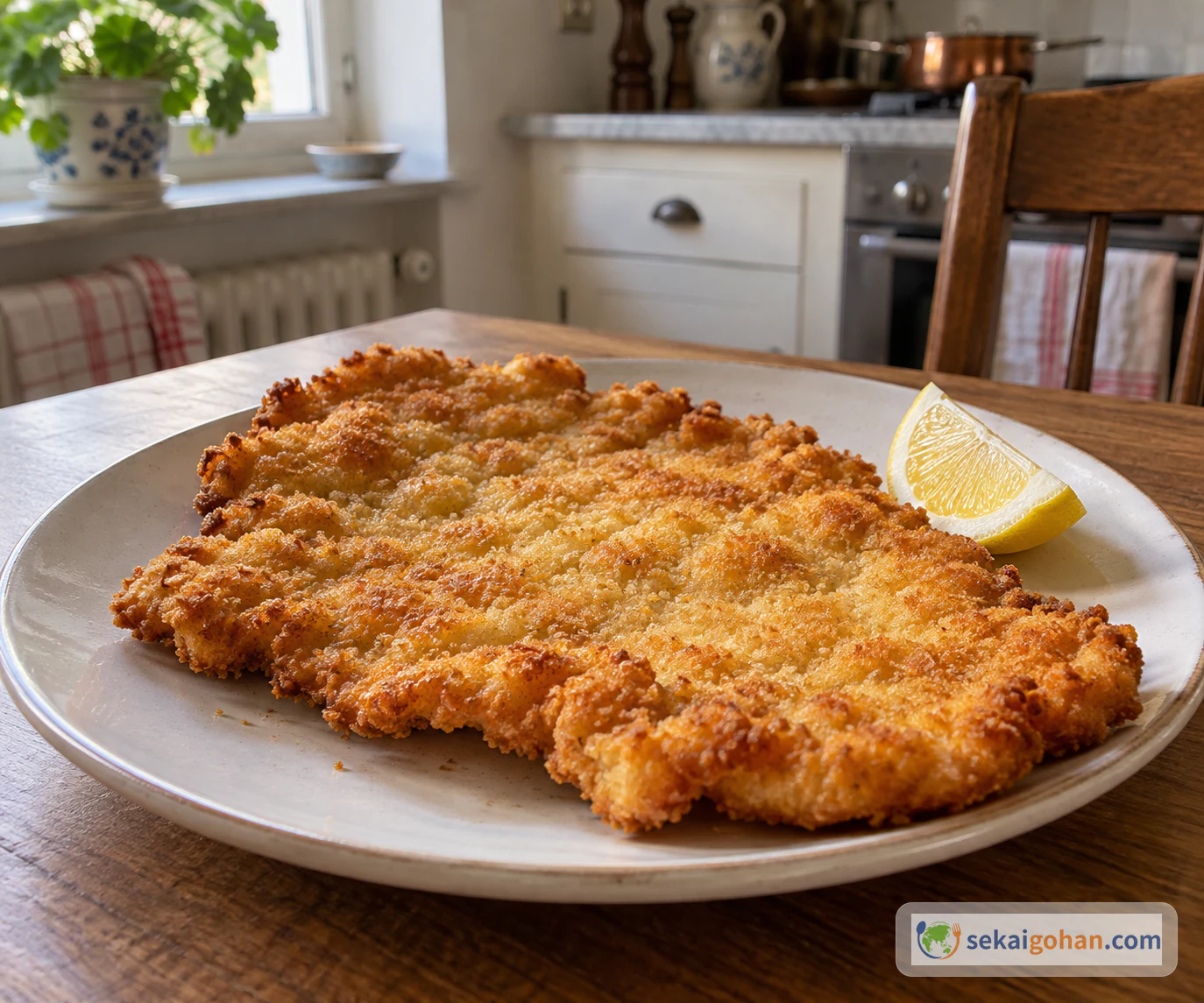
Wiener Schnitzel: Vienna's Thin, Golden Veal Cutlet
How to make Wiener Schnitzel the Viennese way: veal pounded to about 6 mm, coated in flour, egg and fine breadcrumbs, and shallow-fried in 2–3 cm of hot fat, served with lemon. Covers the recipe for 4, the difference from pork 'Wiener Art' versions, the 1798 and 1831 records, the Radetzky legend, and safe-cooking checks.
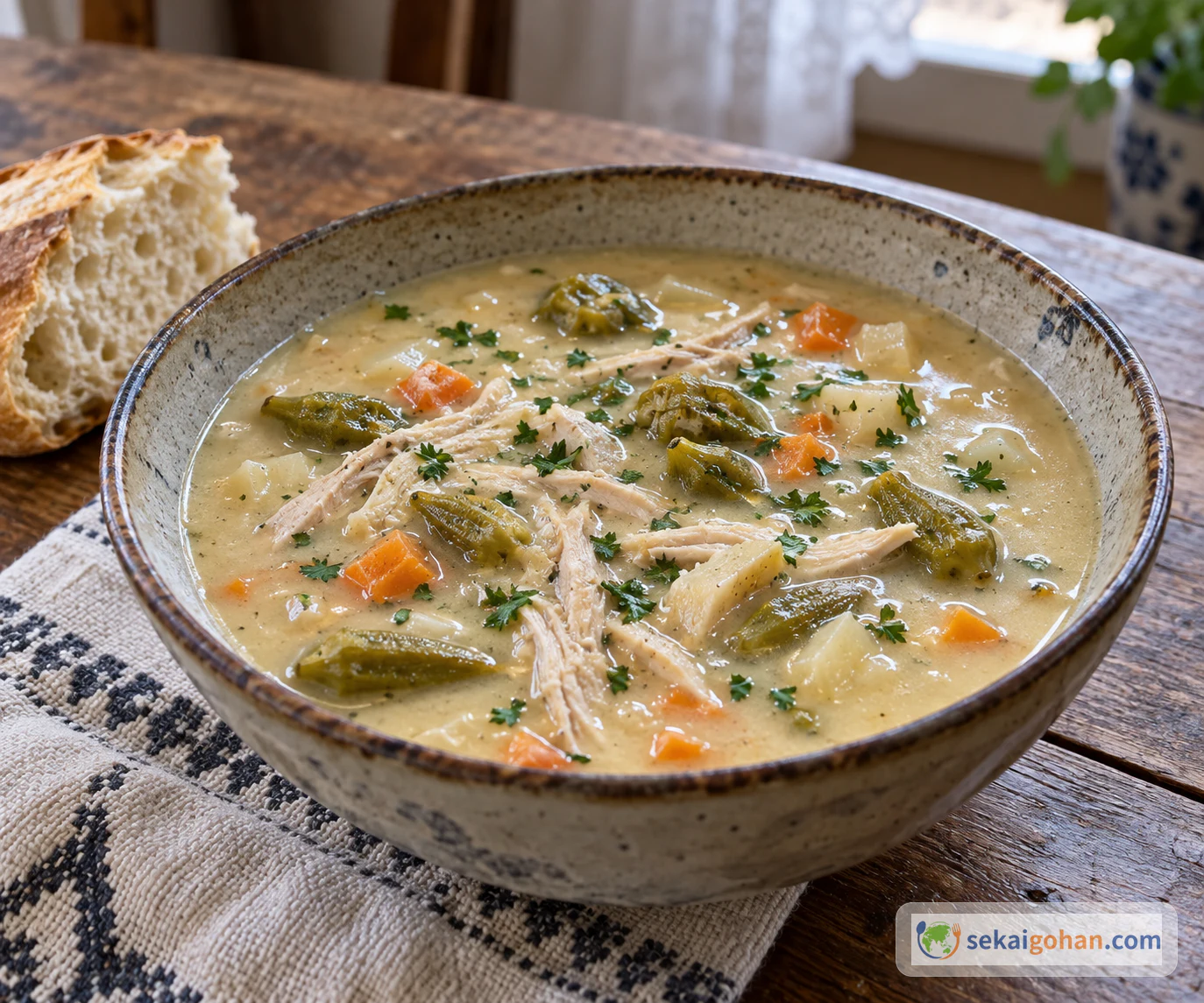
Begova čorba: Bosnian Chicken Soup with Dried Okra (Bey's Soup)
How to make Begova čorba, the Bosnian soup of bone-in chicken, dried okra (bamija) and root vegetables, bound with a pale roux and a tempered sour cream and egg yolk finish. Covers pre-boiling threaded dried okra, building the broth, keeping the cream smooth, safe heating, variations and where the dish appears on Bosnian tables.
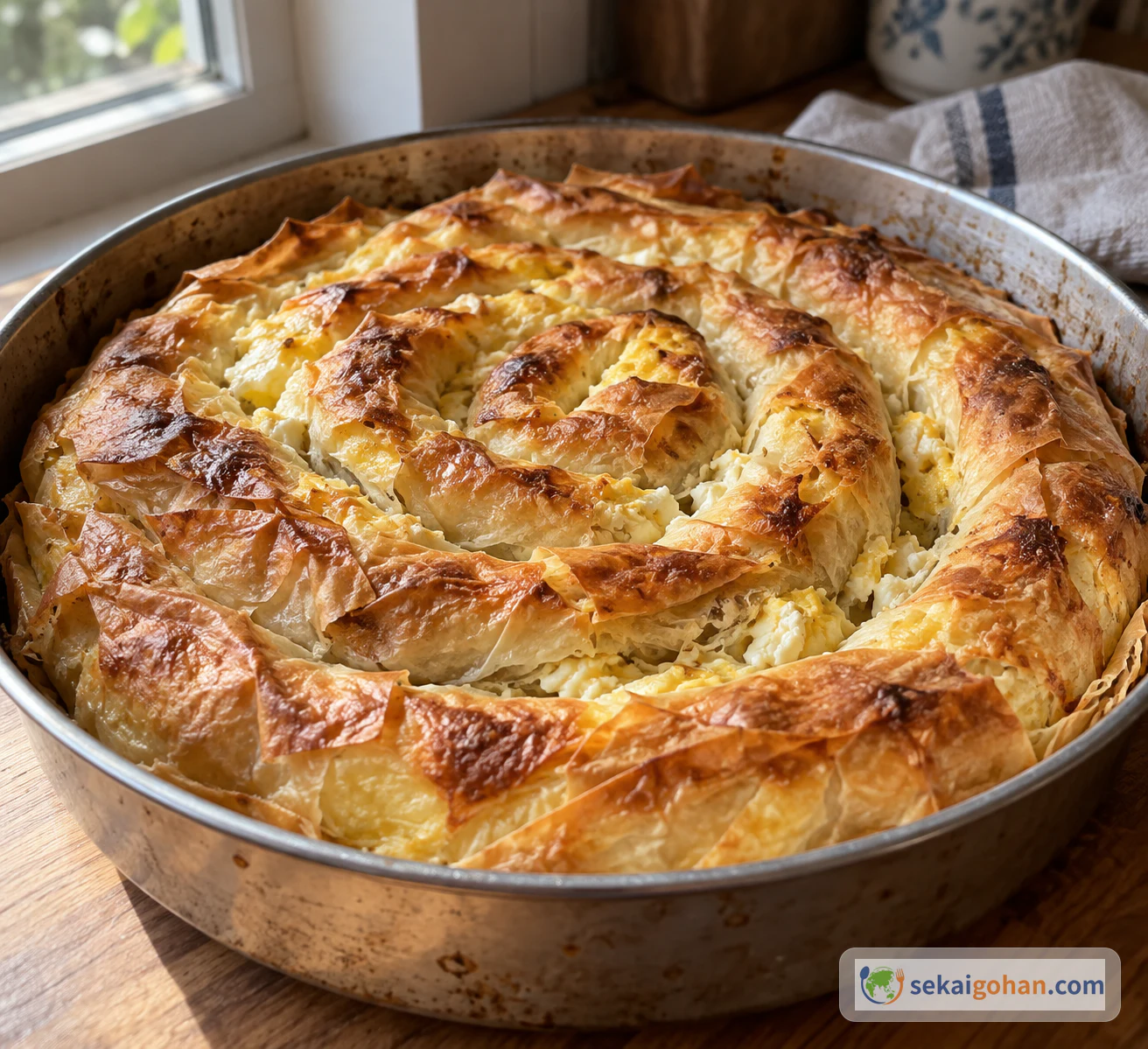
Banitsa: Bulgarian Rolled Phyllo Pie with White Cheese (Баница)
How to make banitsa (баница), Bulgaria's well-known breakfast pastry, as a rolled home version: 400g of thin phyllo, each sheet spread with a yogurt, egg and white-cheese filling, rolled and baked. Covers choosing sirene versus feta, handling phyllo, keeping back filling for the top, checking that the egg filling is fully cooked, and how banitsa fits the Bulgarian breakfast table.
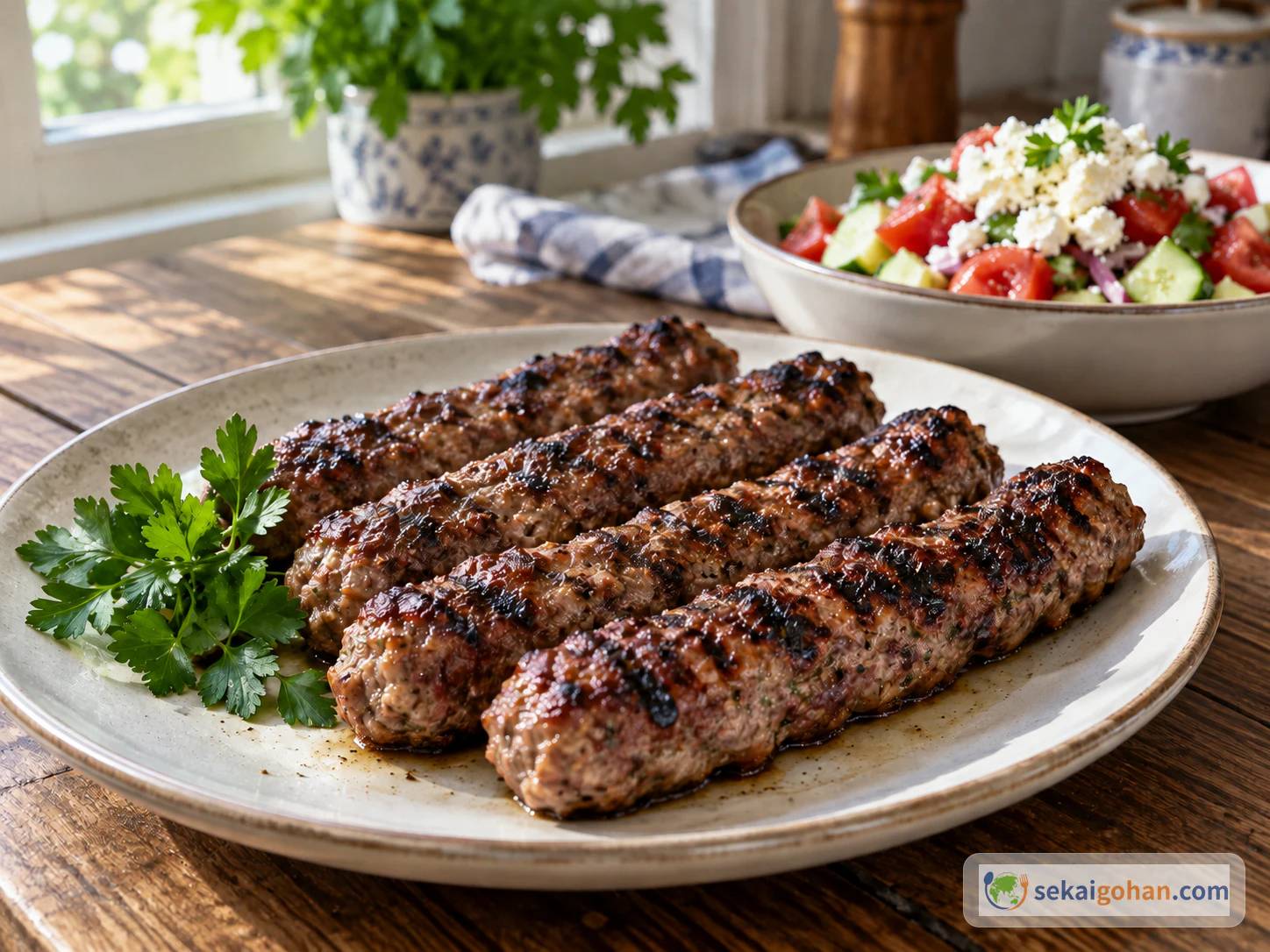
Kebapche: Bulgarian Grilled Minced-Meat Fingers with Cumin (Кебапче)
How to make kebapche (кебапче), the oblong grilled minced-meat dish popular in Bulgaria, following the Bulgarian tourism brochure's recipe: about 500 g of pork and veal mince, a teaspoon of cumin, salt and pepper to taste, a rest of a few hours, and pieces about 15 cm long. Covers shaping, grilling with regular turning, checking the center with a thermometer, substitutions, and serving with parsley and Shopska salad.
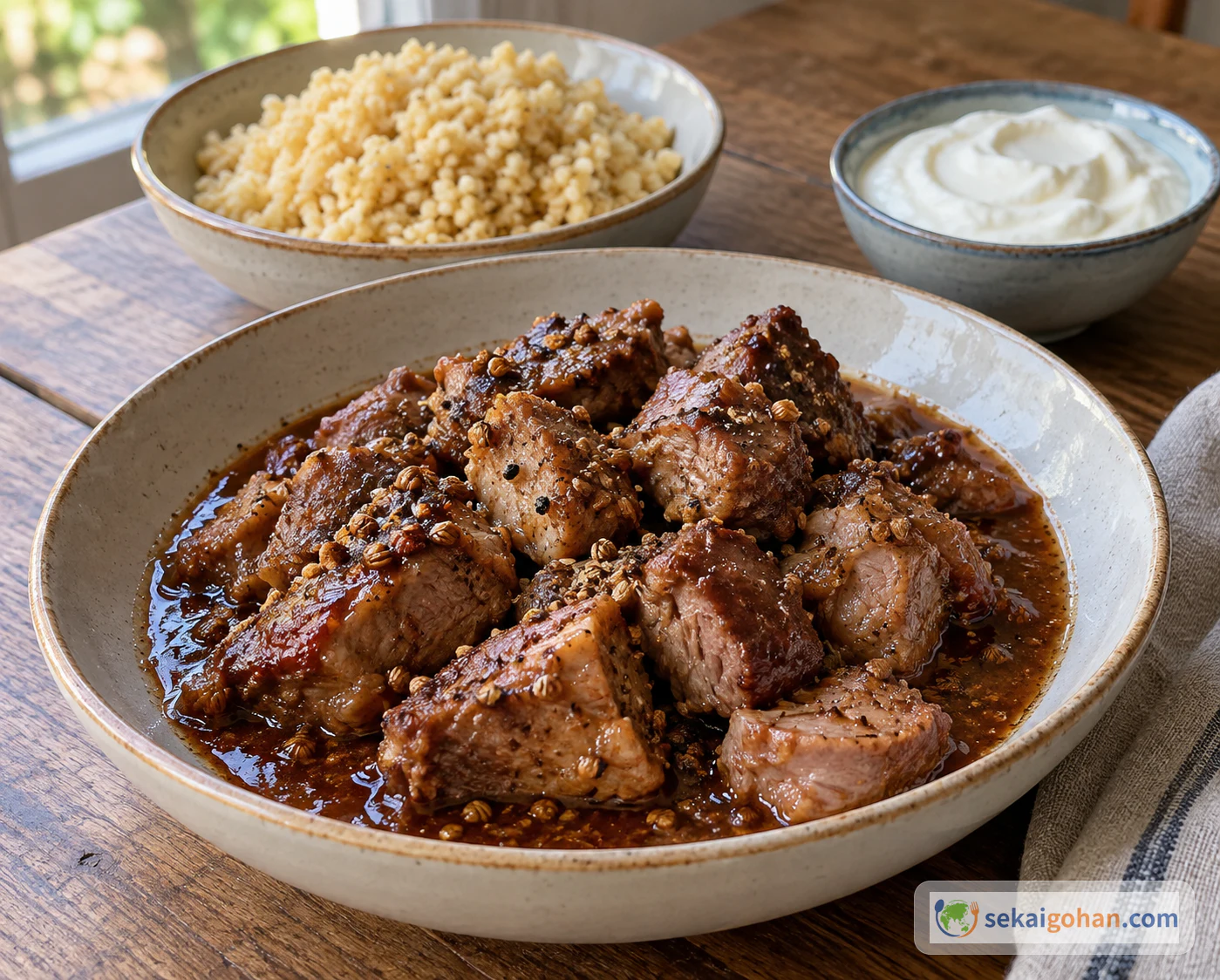
Afelia: Cypriot Pork Braised in Red Wine and Coriander (Αφέλια)
How to make afelia, the Cypriot dish of pork cooked with red wine and coriander, following the 2026 Republic of Cyprus published recipe: an overnight marinade with lightly crushed coriander seeds, gentle browning, and a covered low simmer. Covers ingredients, safe cooking checks, serving with bulgur pilaf and strained yogurt, and the household differences recorded in Cypriot sources.

Pain au Chocolat: Laminated French Chocolate Pastry (Chocolatine)
How to make French pain au chocolat at home from a yeasted dough laminated with butter. Covers choosing flour and butter, three letter folds with chilling, judging the final proof by volume and jiggle, and baking to a deep golden brown, with the chocolatine name question, breakfast and goûter culture, and how to fix butter that cracks or leaks.

Quiche Lorraine: Smoked Bacon, Eggs and Crème Fraîche in a Shortcrust Tart
How to make quiche lorraine, the savory tart of Lorraine in northeastern France, from a 4-serving, 26 cm recipe published by Larousse: ready-rolled pâte brisée, smoked lardons, whole eggs and yolks, and crème fraîche, baked at 210°C and then 180°C. Covers why the classic version has no cheese, how to choose substitutes, fixing a runny or soggy quiche, and safe storage and reheating.
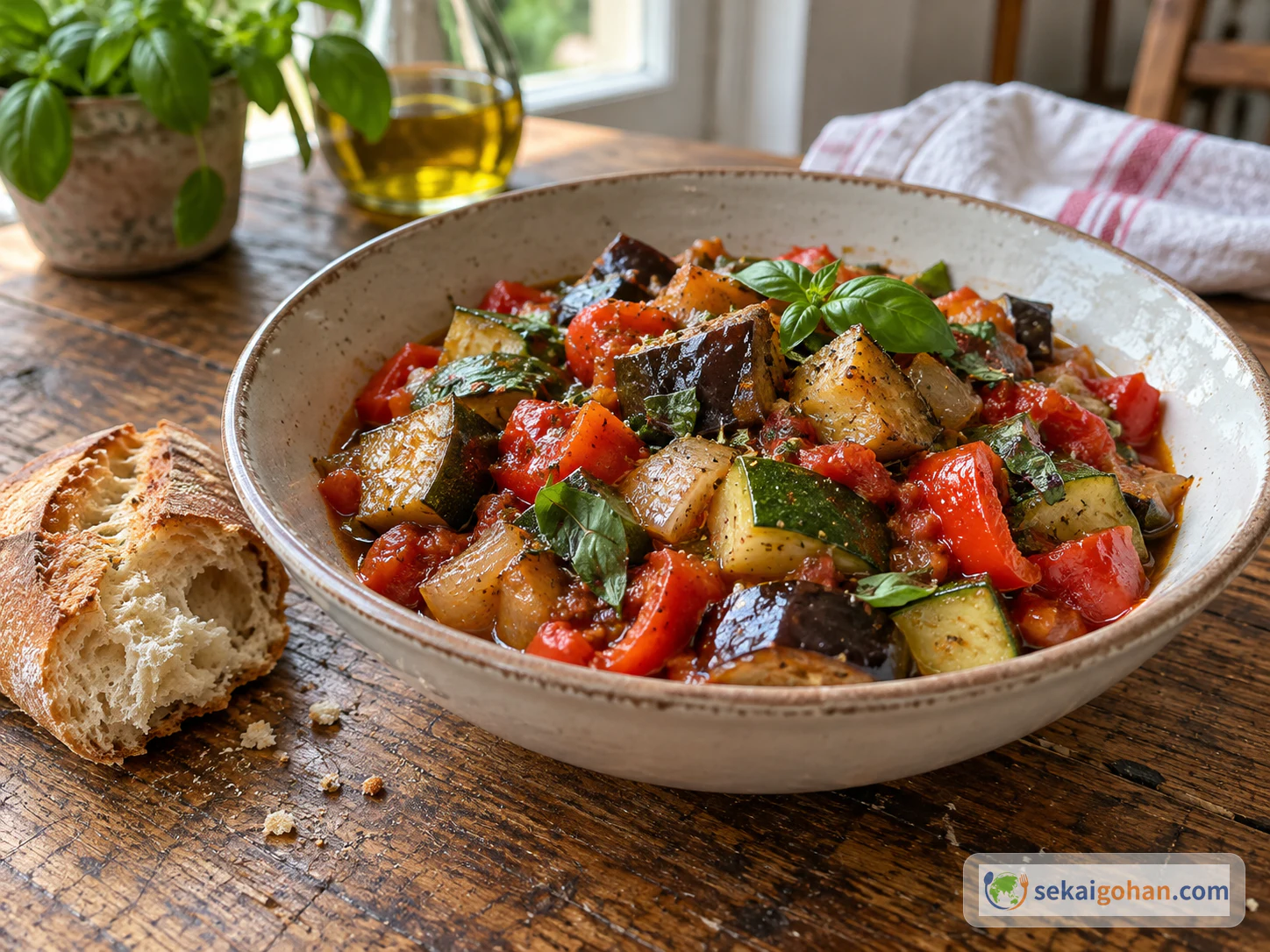
Ratatouille: A Provençal Vegetable Stew Where Every Vegetable Keeps Its Shape
How to make ratatouille, the vegetable stew of Provence and Nice, from the James Beard recipe for 6 servings: cutting eggplant, zucchini, pepper and tomato, cooking garlic and onion without browning, adding the tomatoes last, and judging the finish by texture rather than the clock. Also covers substitutions, the separate-pan method, and how it differs from the thinly sliced confit byaldi.
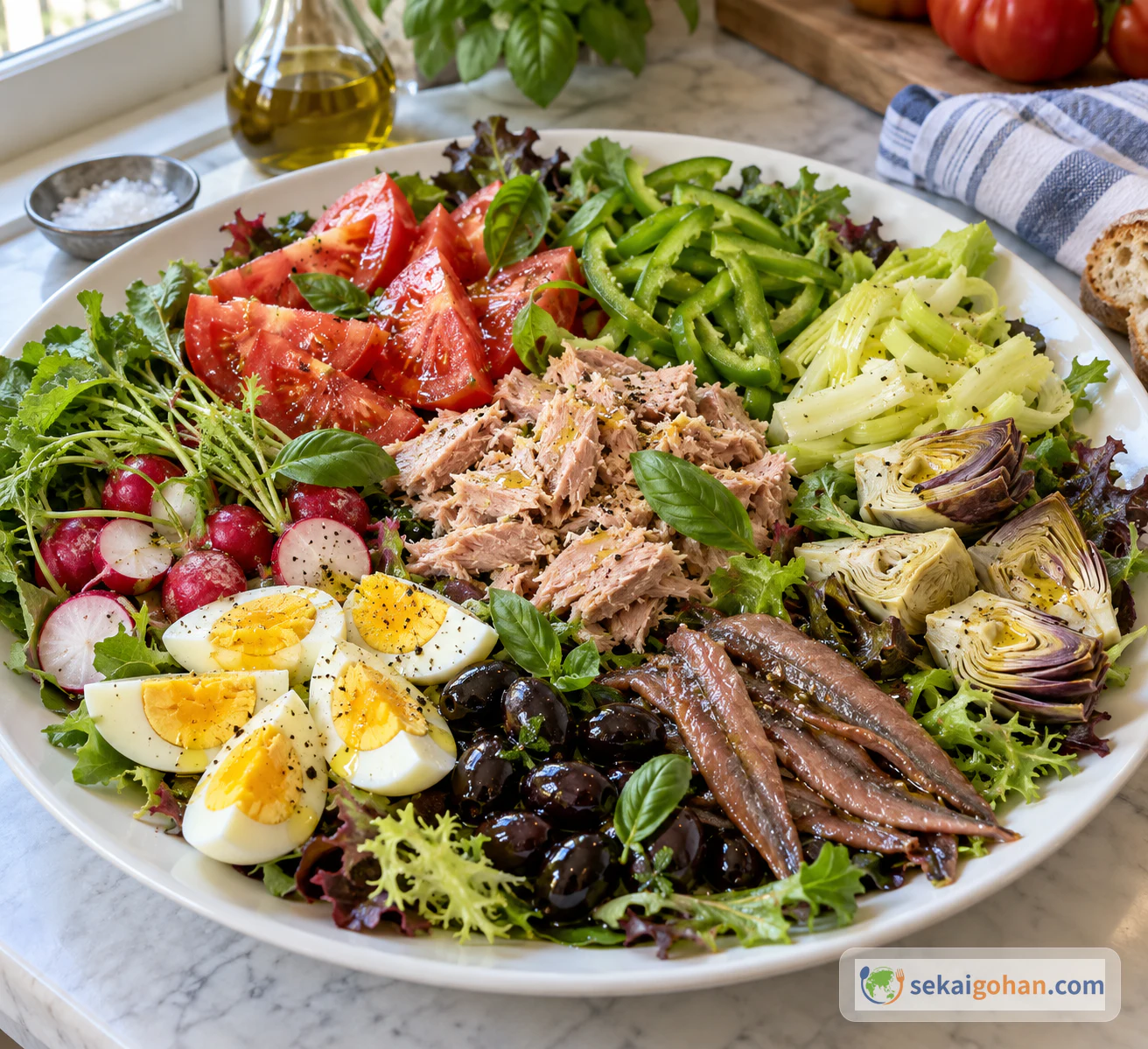
Salade Niçoise: The City of Nice's Composed Summer Salad (La Salada Nissarda)
How to make salade niçoise (La Salada Nissarda) from the City of Nice's official recipe for 8: raw summer vegetables, olive-oil tuna, salted anchovies, black olives and hard-boiled eggs arranged on a garlic-rubbed platter, dressed with olive oil and pepper, and mixed at the table. Covers substitutions, fixing watery or salty results, and how the Nice version differs from the potato-and-green-bean salads served internationally.
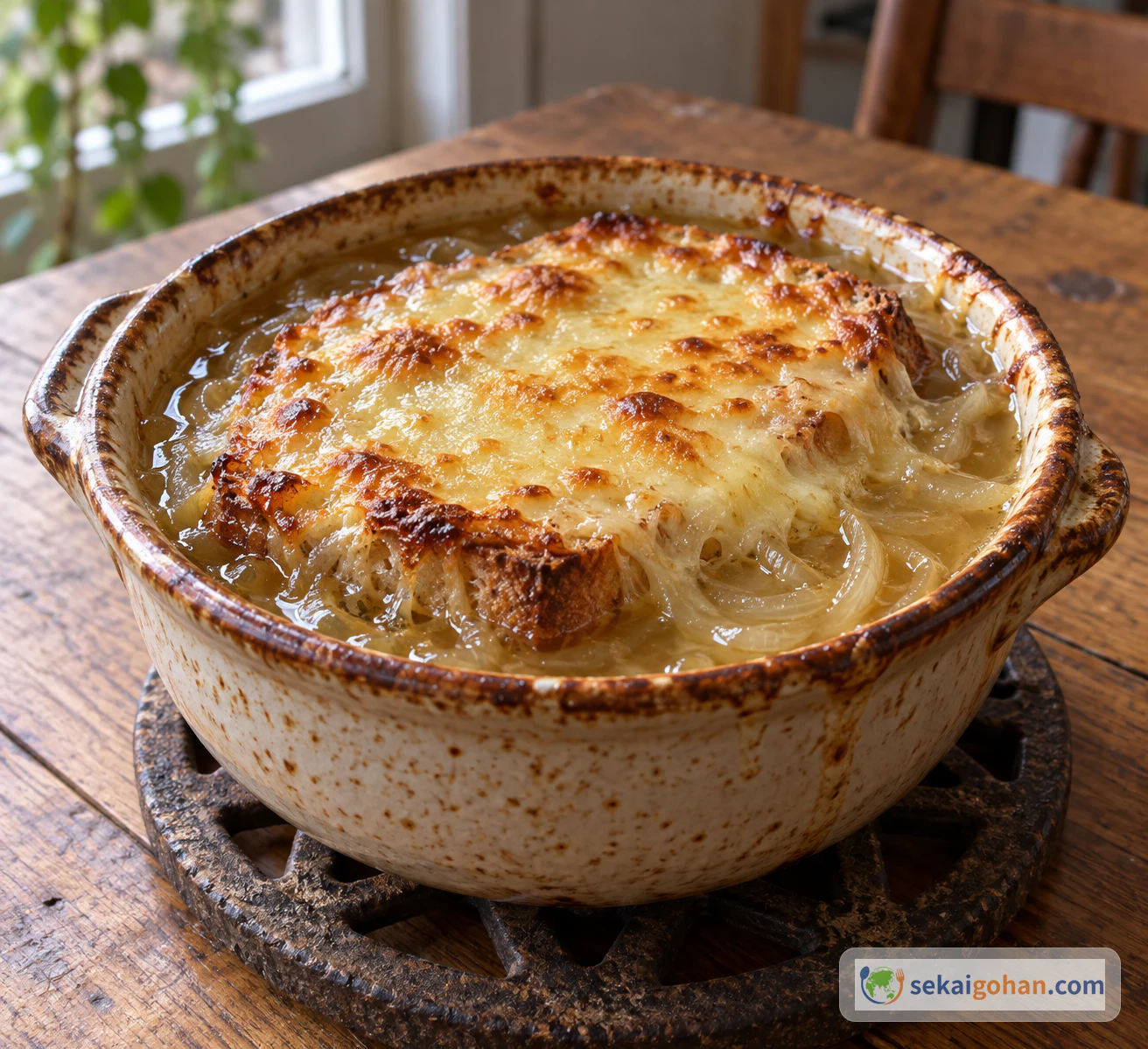
Soupe à l'oignon: Paris Halles-Style Onion Soup Gratinée
How to make soupe à l'oignon gratinée in the style of the Paris Halles: yellow onions gently stewed in butter and water under a lid, a light water-based broth, and a slice of country bread under Comté browned in individual grill-safe bowls. Covers the market history behind the dish, choosing liquid, bread and cheese, keeping the bread from sinking, safe bowls, and fixing common problems, for 4 servings.
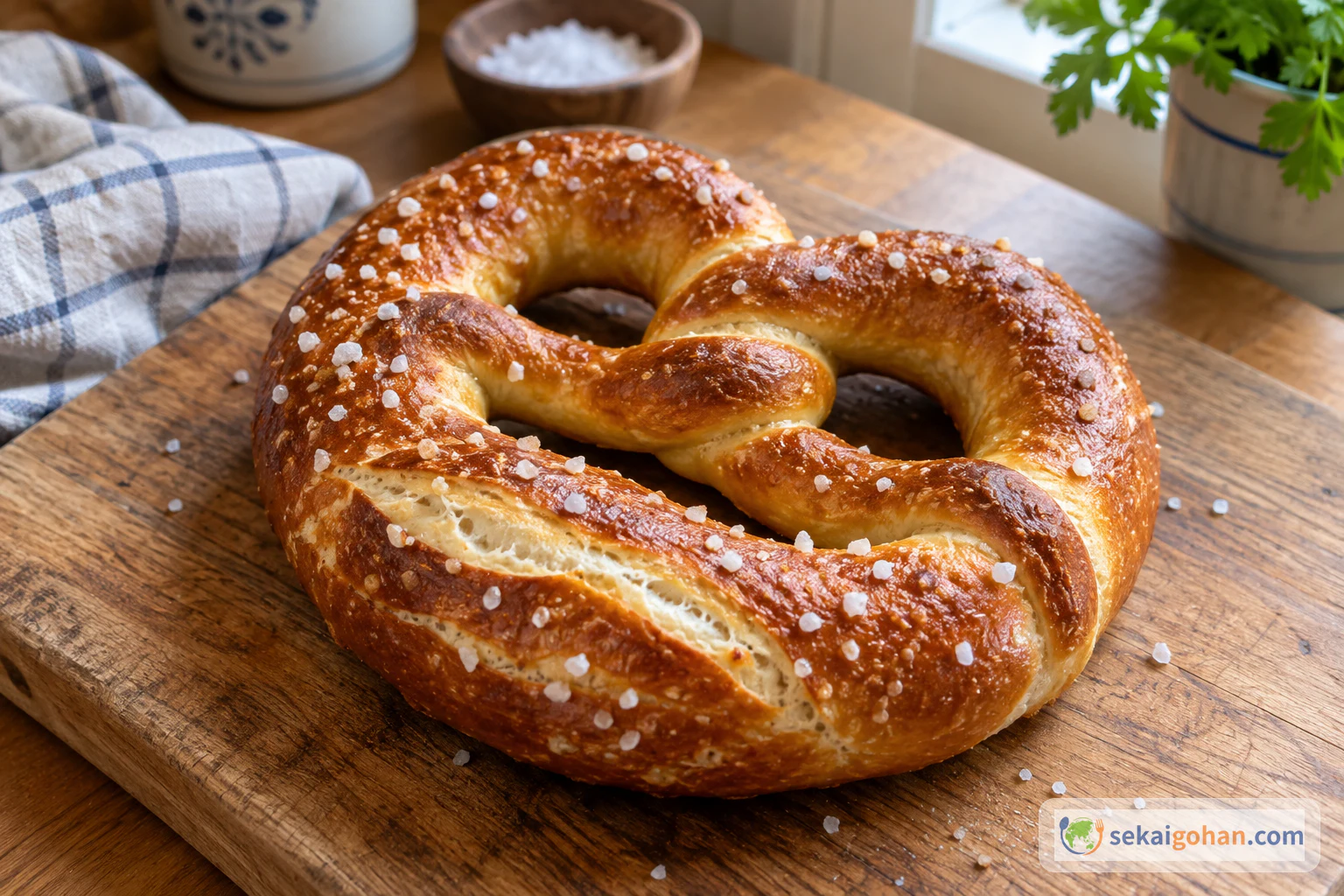
German-Style Pretzels: A Laugenbrezel-Style Knot Baked After a Baking Soda Bath
How to make German-style pretzels at home: a bread-flour dough shaped into knots, chilled, dipped in a boiling baking soda bath and baked at 450°F until deeply browned. Covers kneading, folding, shaping, the difference between a baking soda bath and the lye used for true Laugenbrezel, the Bavarian and Swabian shapes, and eating them warm with butter and chives.
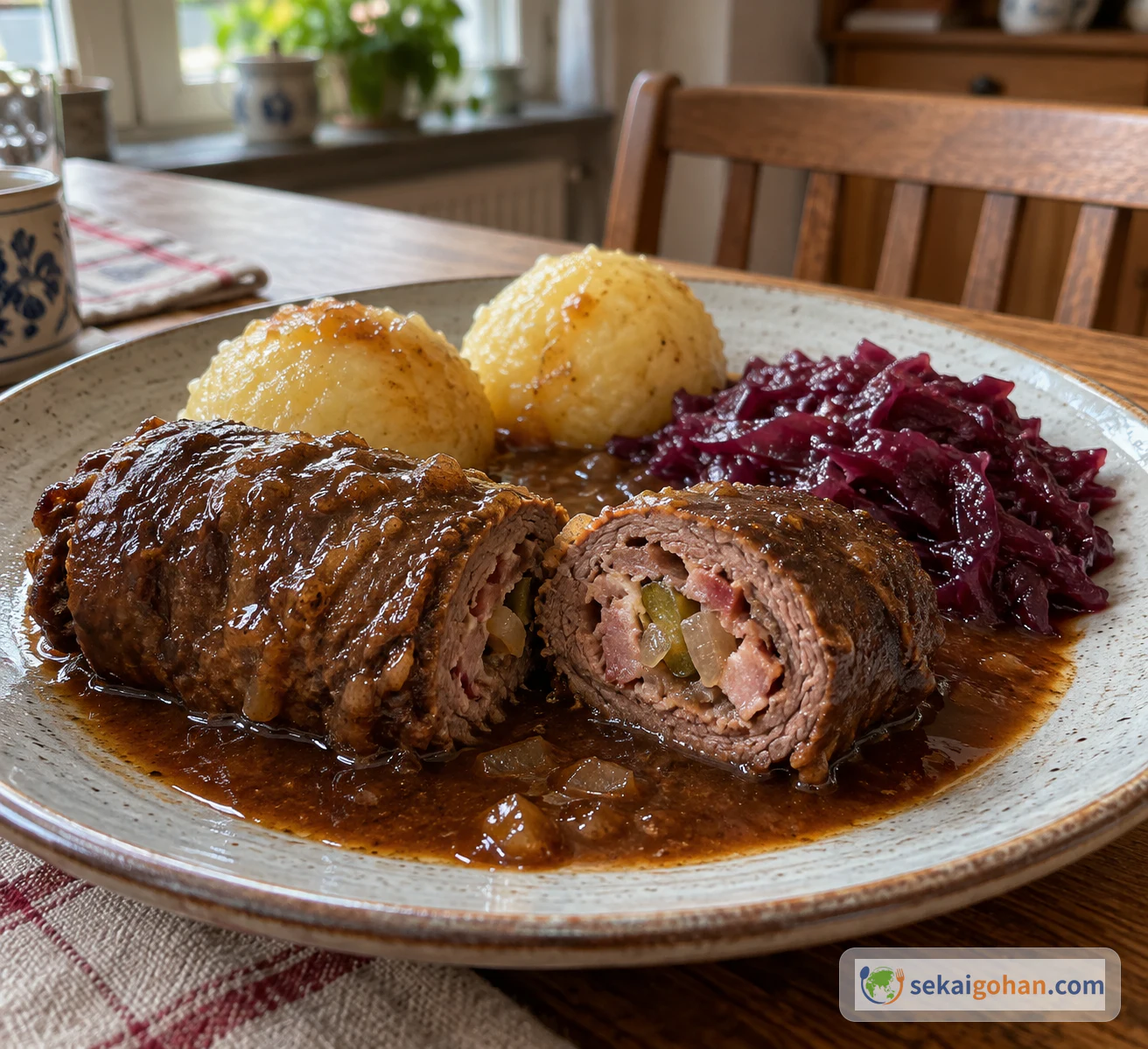
Rinderroulade: German Braised Beef Rolls with Bacon and Pickles (Rinderrouladen)
How to make Rinderroulade, the German beef roll filled with mustard, bacon, onion and cornichons and braised covered in the oven. Includes a 4-serving recipe, choosing the beef cut, rolling and pinning, judging tenderness with a skewer, finishing the sauce, Franconian and Saxon serving examples, substitutions, and storage guidance.
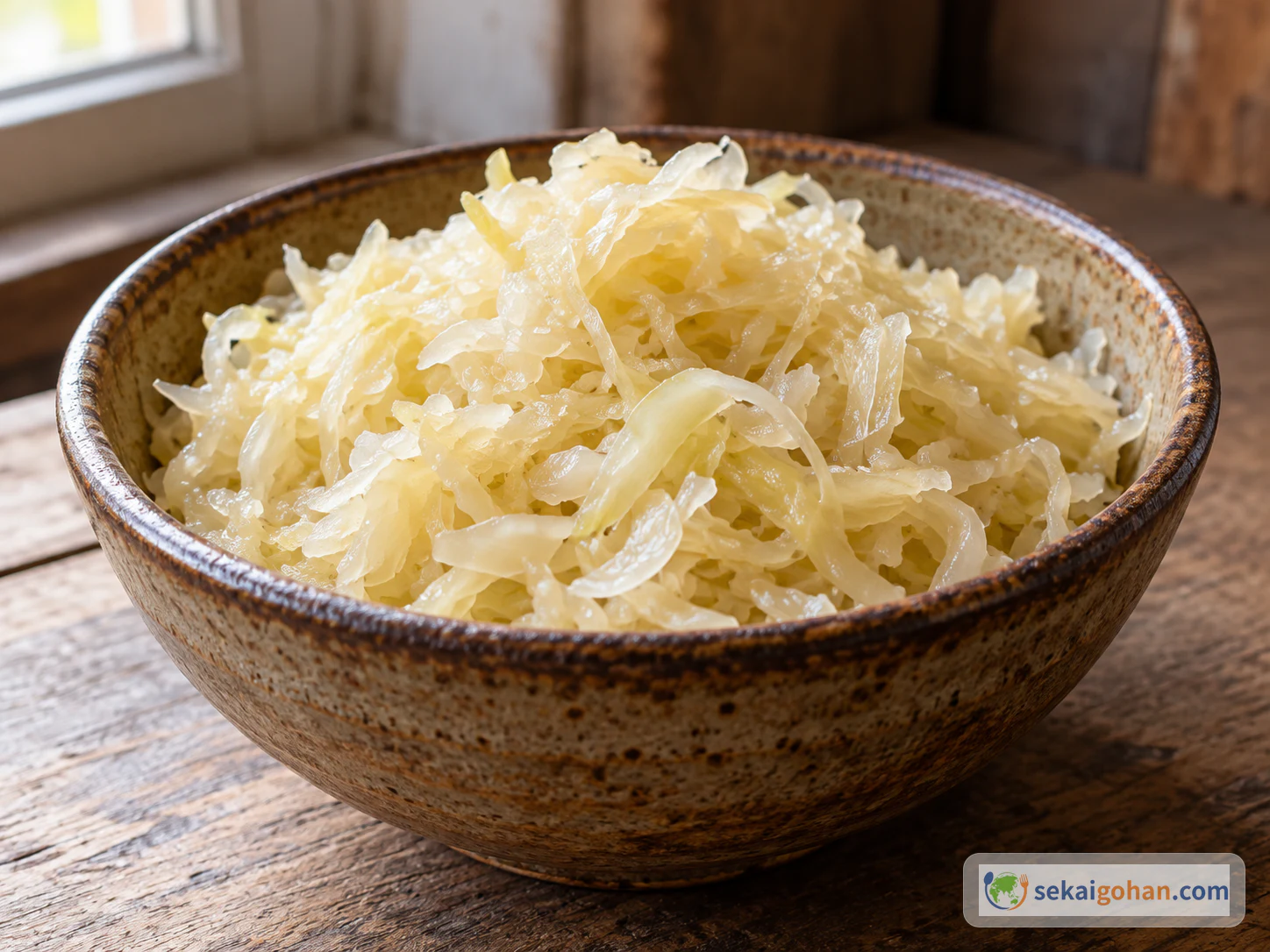
Sauerkraut: Homemade Fermented Cabbage with Just White Cabbage and Salt
How to make sauerkraut, the fermented white cabbage of the German-speaking world, from just cabbage and salt. Learn how to match the salt to the shredded cabbage weight, keep the cabbage under its brine, and read temperature, time, pH and bubbling together without relying on the calendar alone. Also covers storage, serving ideas and the dish's uncertain origins.
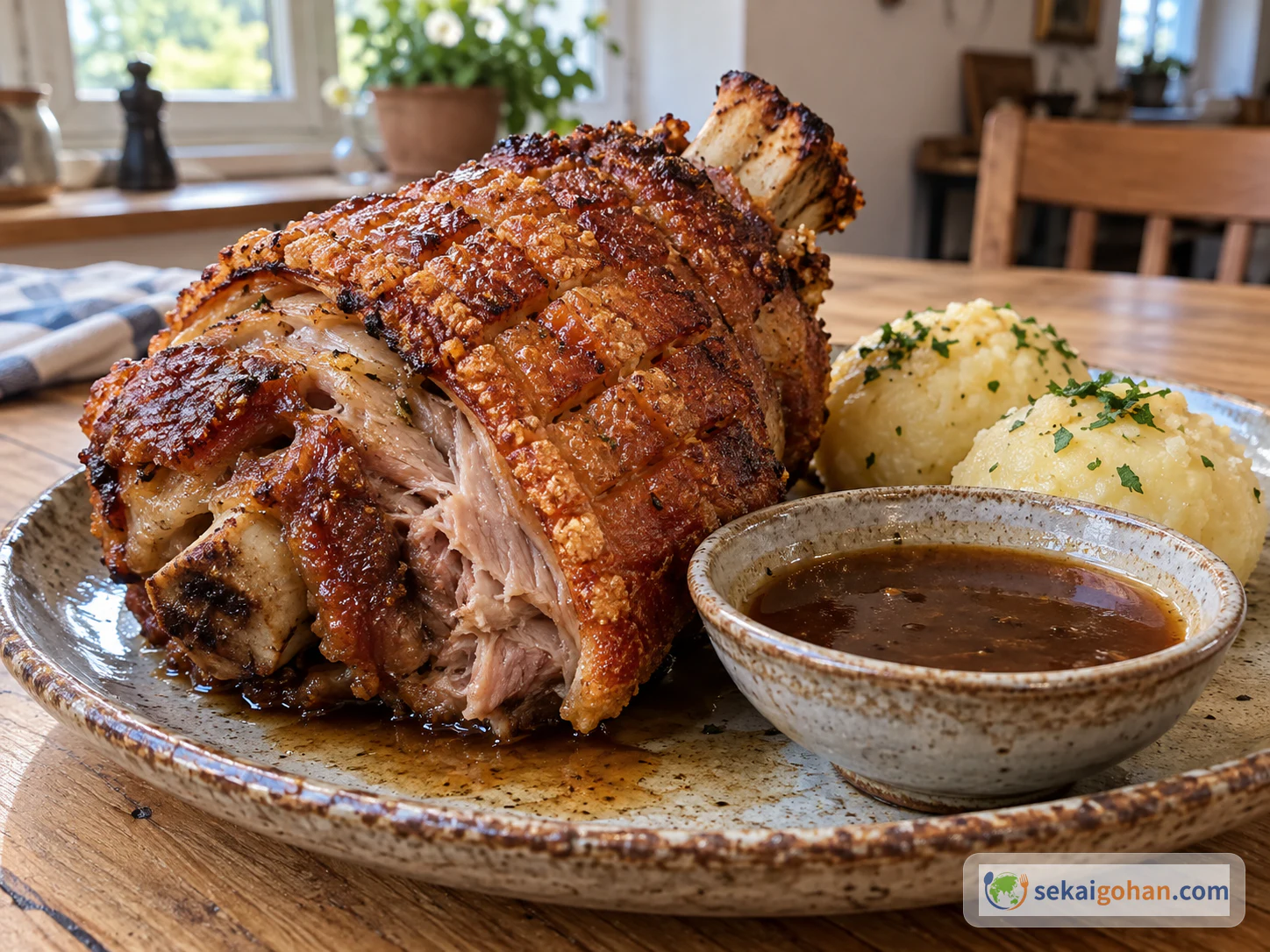
Schweinshaxe: Bavarian Roast Pork Knuckle with Crisp Rind and Dark Beer Sauce
How to make Schweinshaxe, the Bavarian oven-roasted pork knuckle: a slow roast at 150°C, dark lager and water in the pan, a hot 200°C finish for crisp rind, and a blended sauce from the pan juices. Covers finding skin-on, bone-in uncured knuckles, caraway versus cumin, the source's beer measurement mismatch, core-temperature safety, and how Schweinshaxe differs from cured Surhaxe and Franconian Bierhaxe.
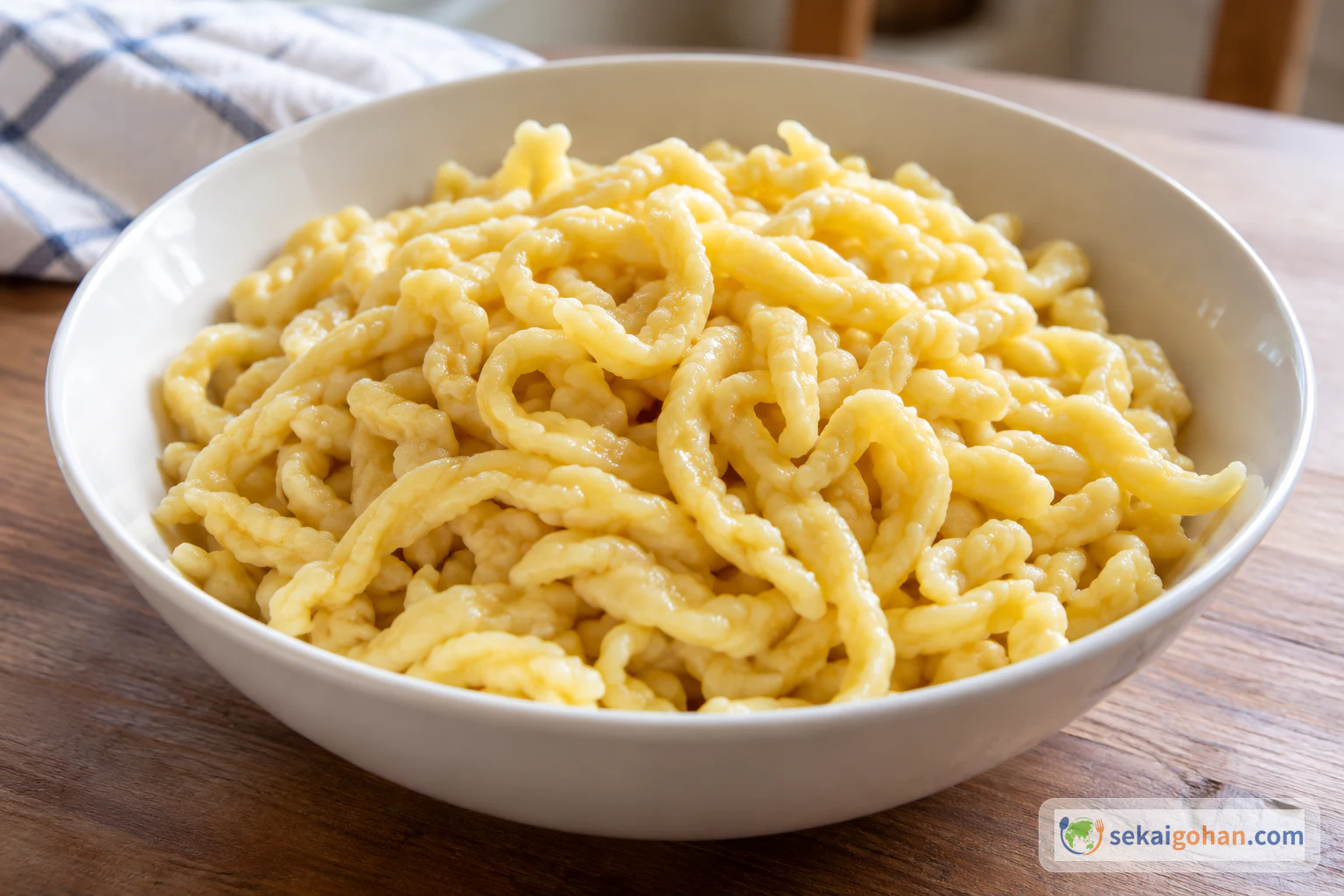
Spätzle: Swabian Egg Noodles Pressed into Boiling Water
How to make spätzle, the Swabian egg noodles of southern Germany, from a four-serving base of flour, eggs, water and a pinch of salt. Covers adding the water in stages, pressing the dough into boiling water, lifting the noodles once they float, finishing with butter, and serving with rich meat sauces or lentils and sausage. Also explains Knöpfle, hand-scraped spätzle, the protected name Schwäbische Spätzle, and safe handling of leftovers.
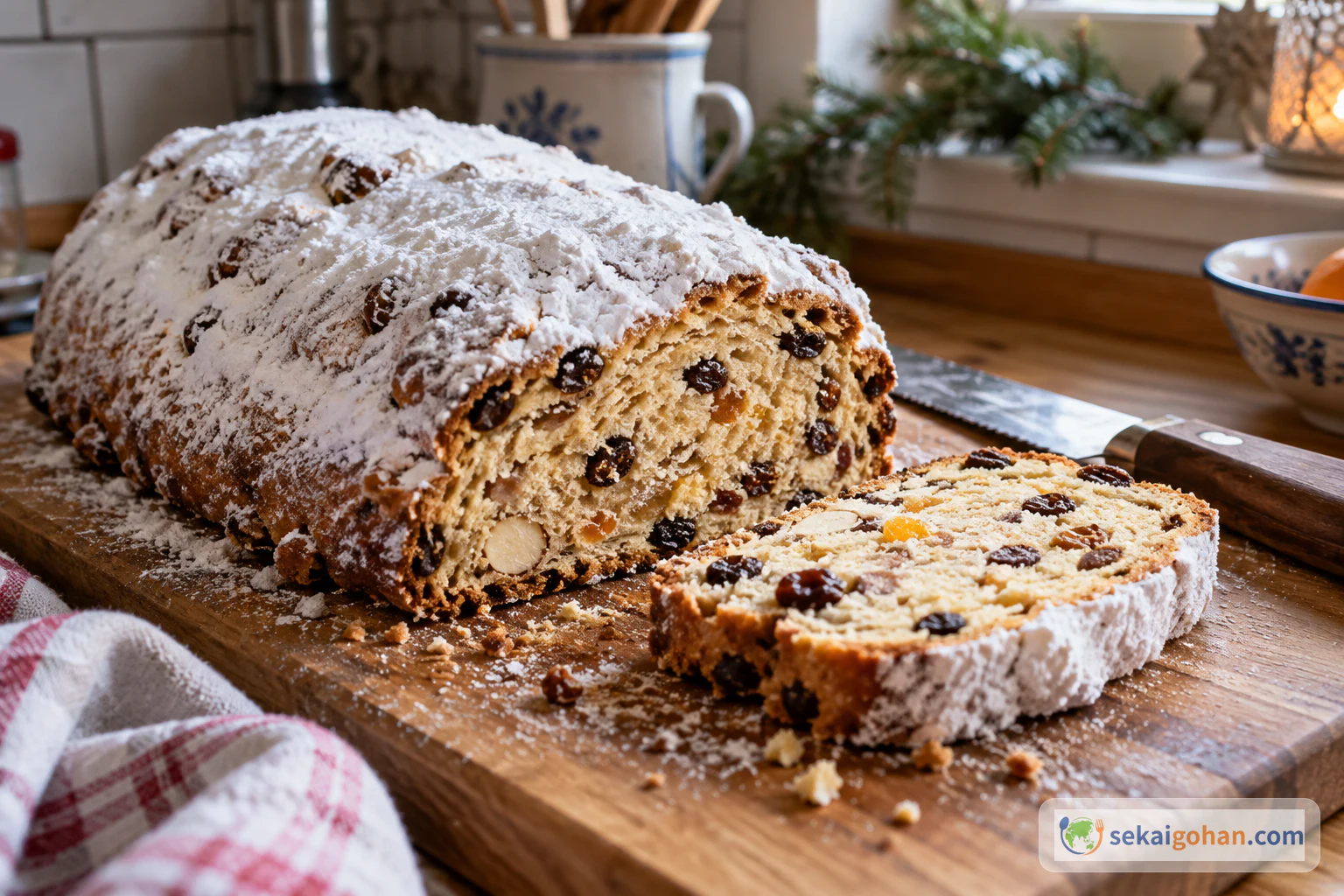
Stollen: German Christmas Yeast Loaf with Rum-Soaked Raisins, Candied Peel and Almonds
How to bake a German-style Stollen at home from a published Dresden-style recipe: rum-soaked raisins, candied citrus peel, almonds and mace in a rich butter dough, baked as one large loaf and finished with butter and two sugars. Covers the protected name Dresdner Christstollen, the history from 1474, ingredient choices, oven cues and the traditional resting period.
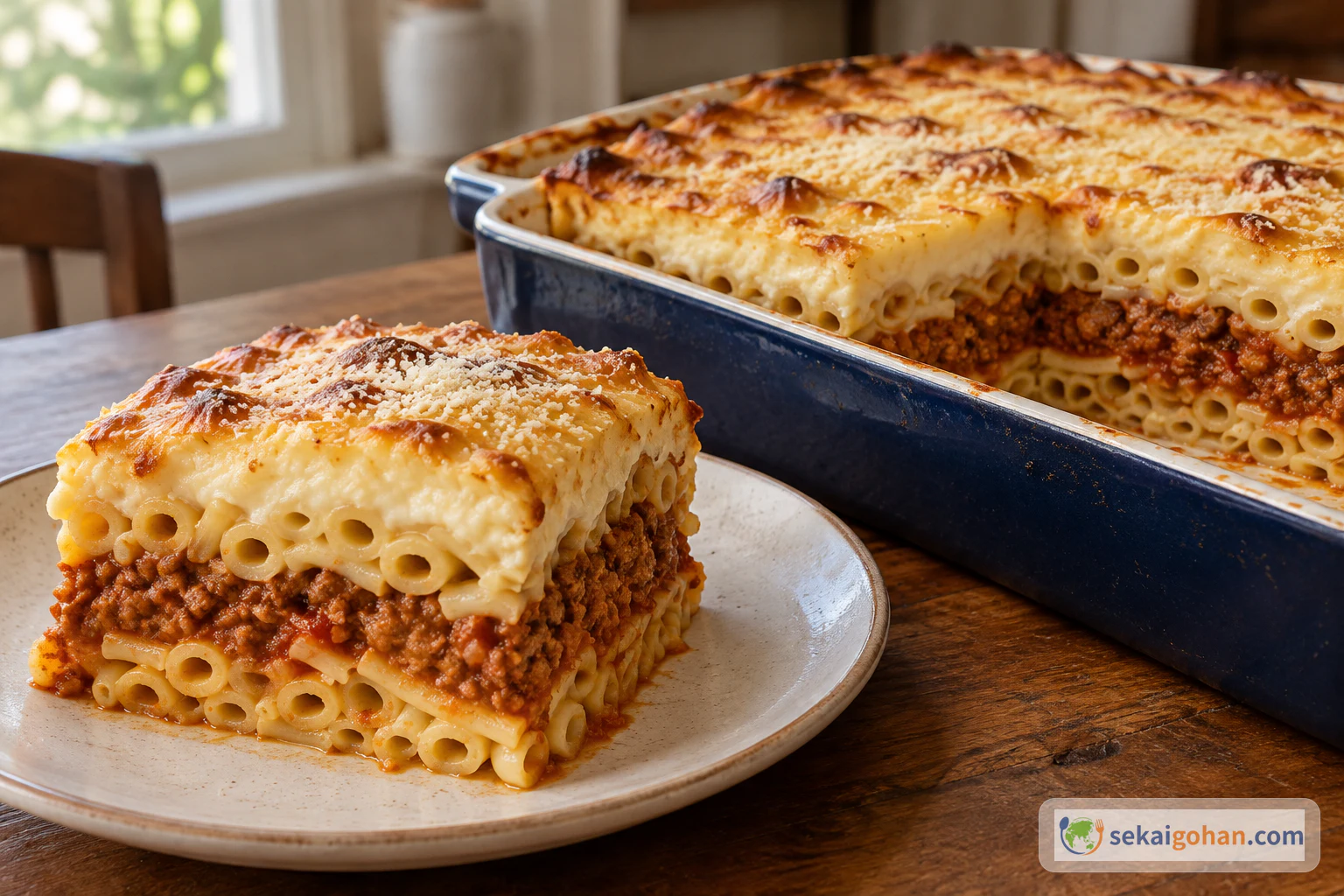
Pastitsio: Greek Baked Pasta with Meat Sauce and Béchamel
How to make pastitsio, the Greek oven-baked dish of thick tubular pasta, a tomato meat sauce with beef and sausage, and an egg-yolk béchamel, following the 10-portion recipe published by the Greek pasta maker MISKO. Covers the order of layering, how to boil the pasta short, what is unclear in the cheese amounts, choosing pasta and cheese outside Greece, and how pastitsio differs from pastitsada.
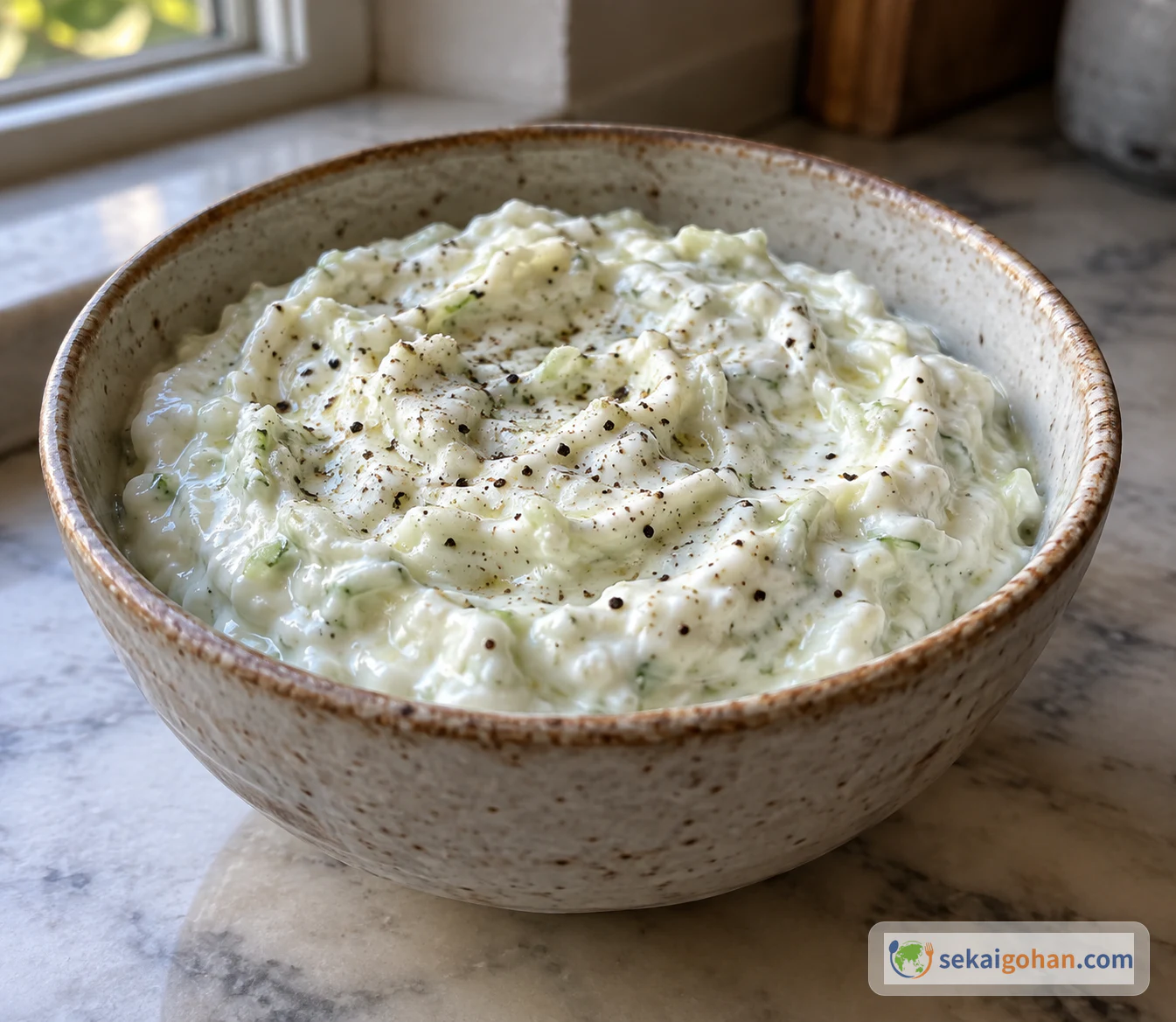
Tzatziki: Greek Yogurt, Cucumber and Garlic Dip (τζατζίκι)
How to make Greek tzatziki (τζατζίκι) with strained Greek yogurt, cucumber, garlic, olive oil and red wine vinegar. Covers why the cucumber is salted and squeezed, how to adjust thickness, garlic and acidity, what to use if you can't find strained yogurt, and how tzatziki sits beside souvlaki on Greek tables.