
Recipes (29)
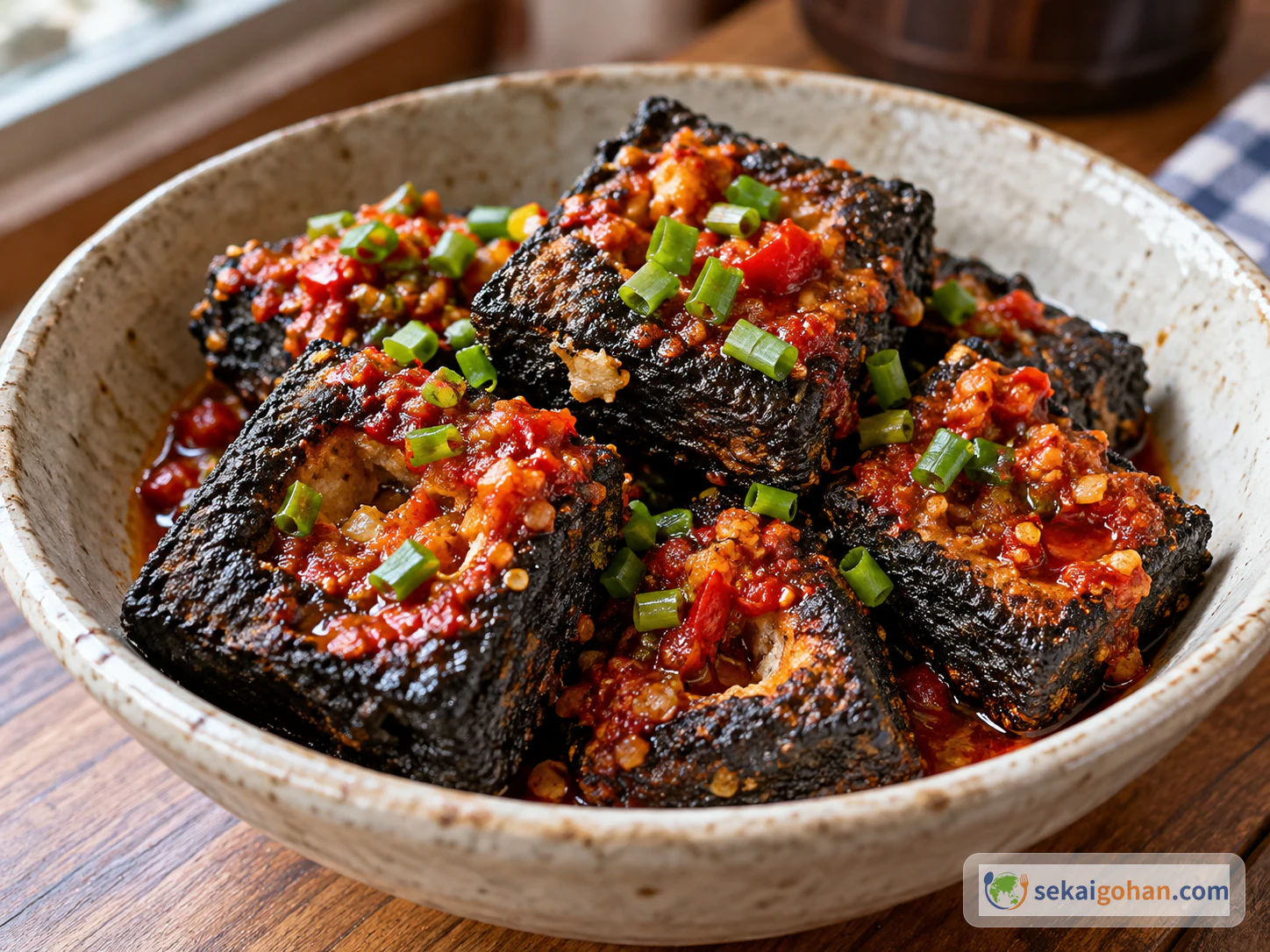
Changsha Stinky Tofu: Black Tofu Fried Twice and Served in a Chili Sauce (长沙臭豆腐)
How to make Changsha stinky tofu at home from 20 prepared black fresh blanks: a gentle rinse, a first fry until the pieces puff and float, a hotter second fry until the surface is firm, then a sauce of small chilies, thin celery, scallion whites and chili-coated fermented tofu, finished with scallion greens and chopped chili paste. Also covers buying sealed, labeled blanks and why plain tofu cannot stand in.
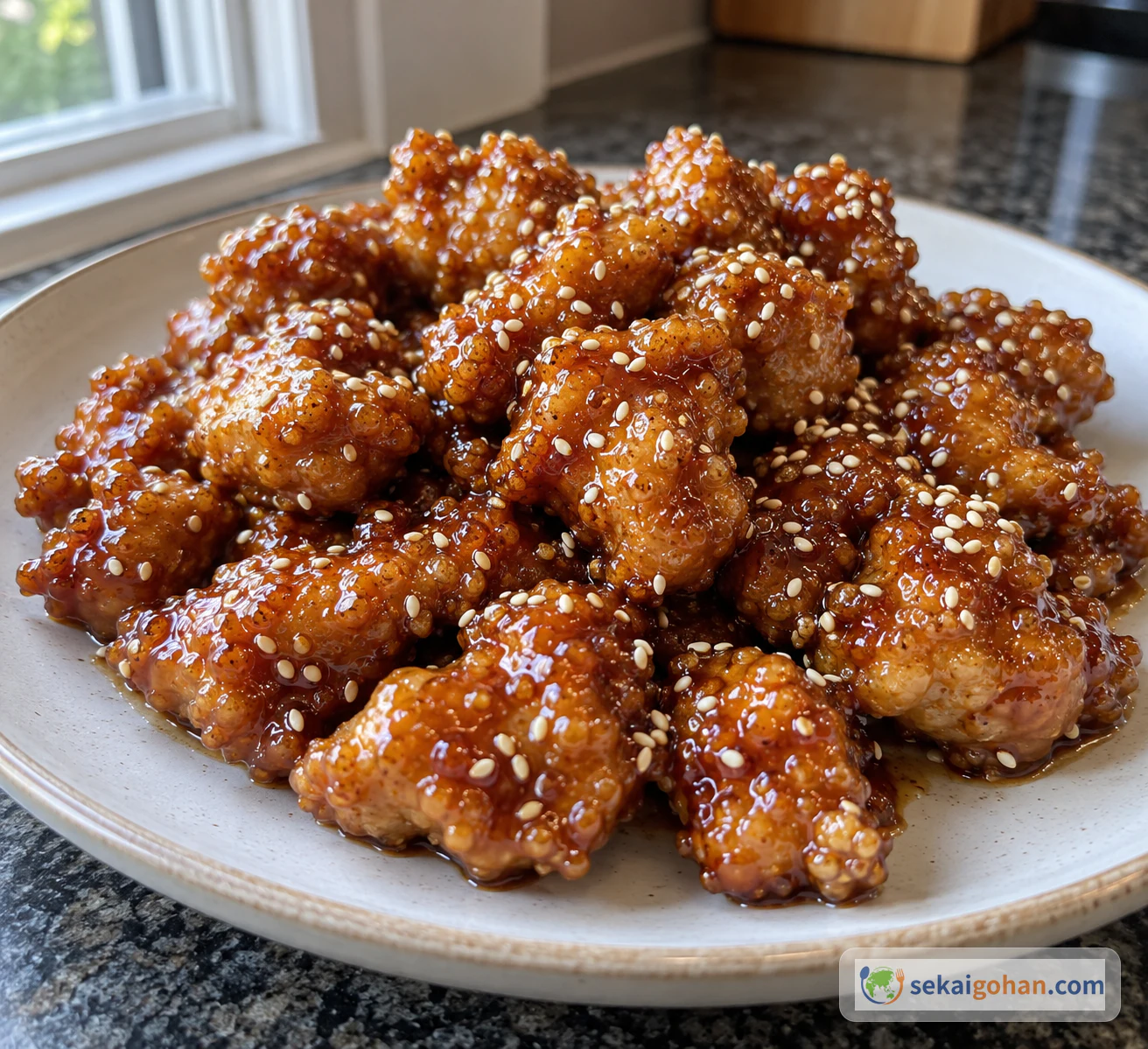
Sesame Chicken: Chinese-American Takeout Favorite, Double-Fried with a Sweet-Savory Glaze
How to make Chinese-American sesame chicken from Bill Leung's four-serving recipe at The Woks of Life: a water-and-Shaoxing marinade, a cornstarch-and-flour batter, two fries at 335°F/170°C, and a sweet, vinegar-balanced sauce finished with toasted sesame seeds. Includes ingredient choices, fixing common problems, and how to check that the chicken is safely cooked.
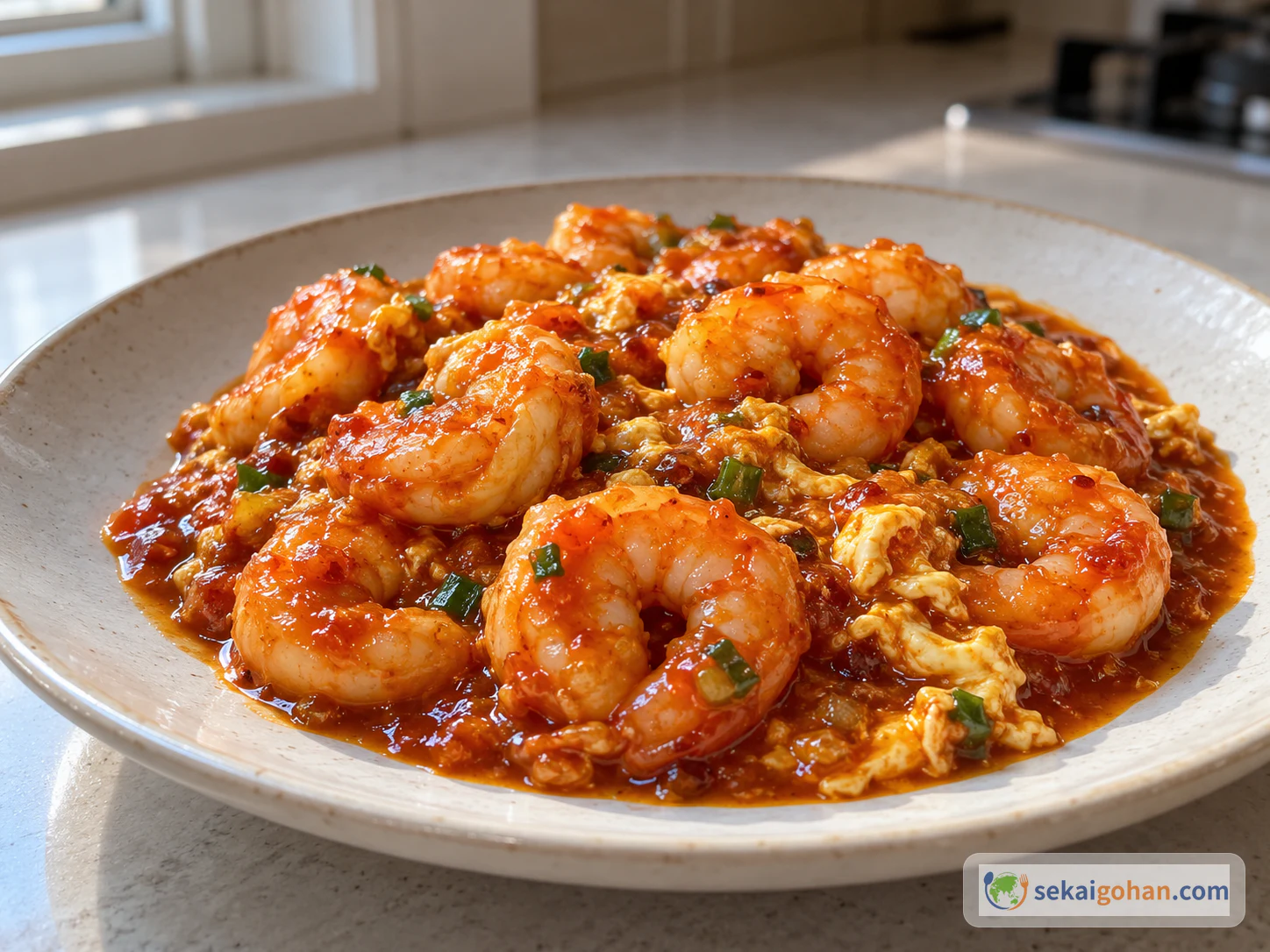
Chili Shrimp (Ebi Chili): Shrimp Simmered in Doubanjiang, Ketchup and Chicken Stock
How to make chili shrimp, the Chinese-style dish known in Japan as ebi chili, from one home recipe for 4: season and coat shell-on black tiger shrimp with egg white and potato starch, part-cook them in shallow oil, then finish them in a doubanjiang, ketchup and chicken stock sauce with green onion, egg and vinegar. Includes why the shrimp leave the pan and come back, how to tell they are cooked through, safe handling of raw shrimp, and how the dish's names overlap.
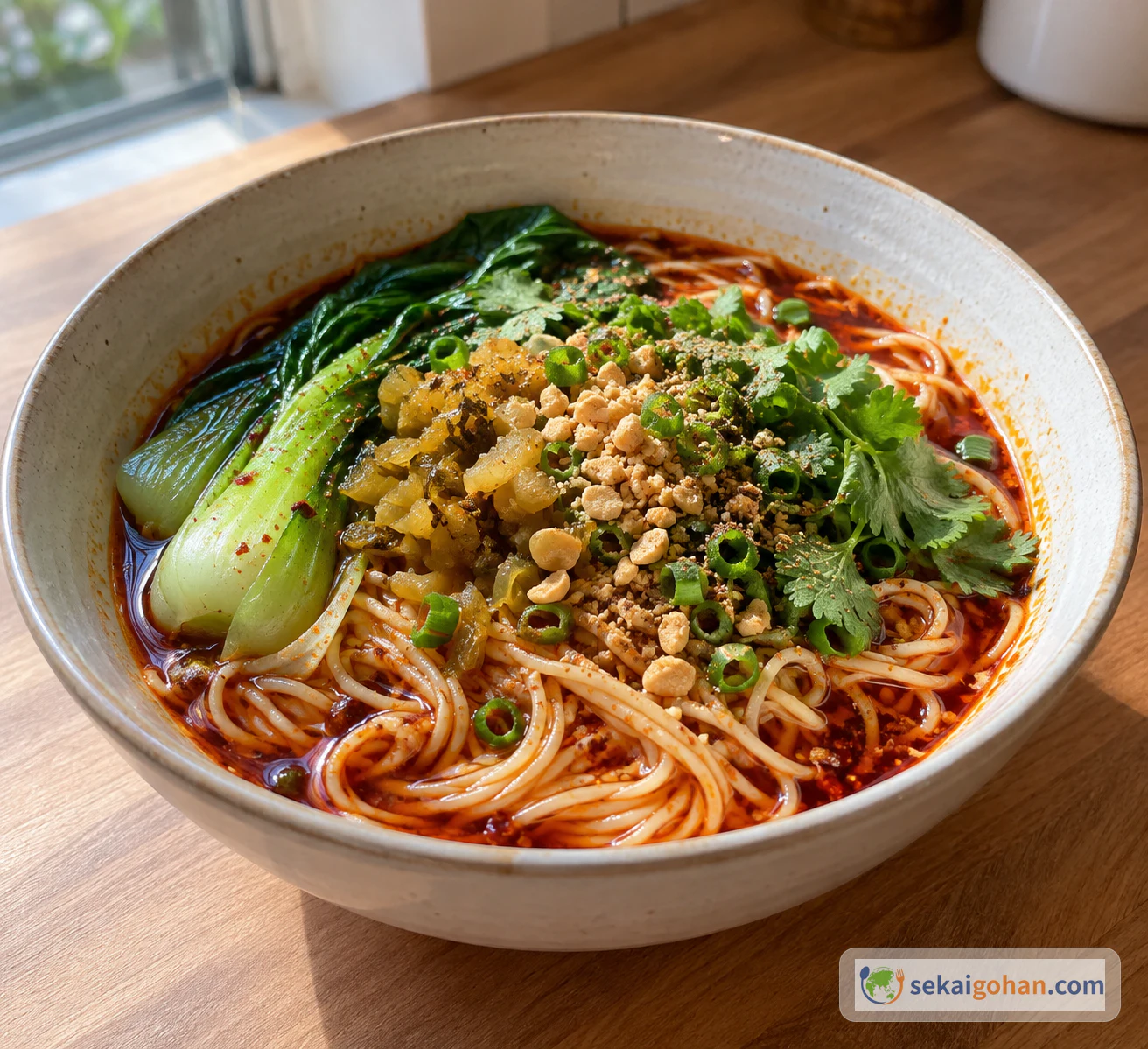
Chongqing Noodles (Chongqing Xiaomian, 重庆小面): Red Oil and Sichuan Pepper Mixed in the Bowl
How to make Chongqing noodles (xiaomian, 重庆小面) from cook Elaine's China Sichuan Food recipe card: the seasoning goes straight into the serving bowl, is loosened with noodle-cooking water, then topped with noodles, bok choy, peanuts, scallion, coriander and zha cai. Also covers Chongqing's breakfast noodle culture, choosing noodles, chili oil and zha cai, the card's unresolved yield, and fixes for a bowl that isn't quite right.
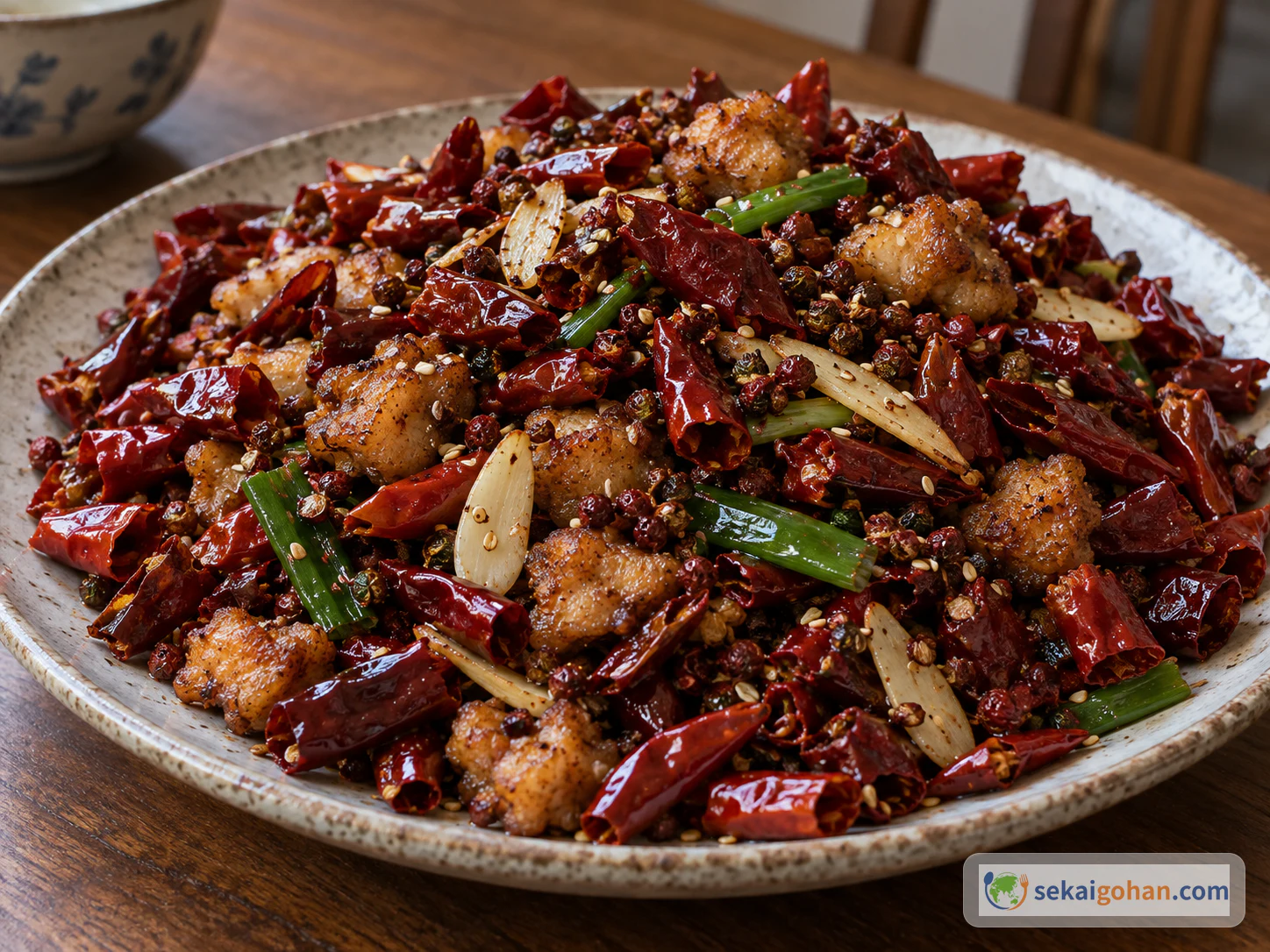
Chongqing Laziji: Twice-Fried Chicken Hidden in a Mound of Red Chilies (辣子鸡)
How to make Chongqing laziji (辣子鸡, làzǐjī), small cubes of boneless chicken thigh fried twice and tossed with whole dried Sichuan chilies, Sichuan peppercorns, sesame and scallions. Based on Taylor Holliday's home recipe, first published in 2015. Covers keeping the chili flakes and Sichuan pepper separate for the coating and the finishing oil, the two frying temperatures, checking that the chicken is cooked through, where to find the specialist ingredients, and how this dish sits in Chongqing's food culture.
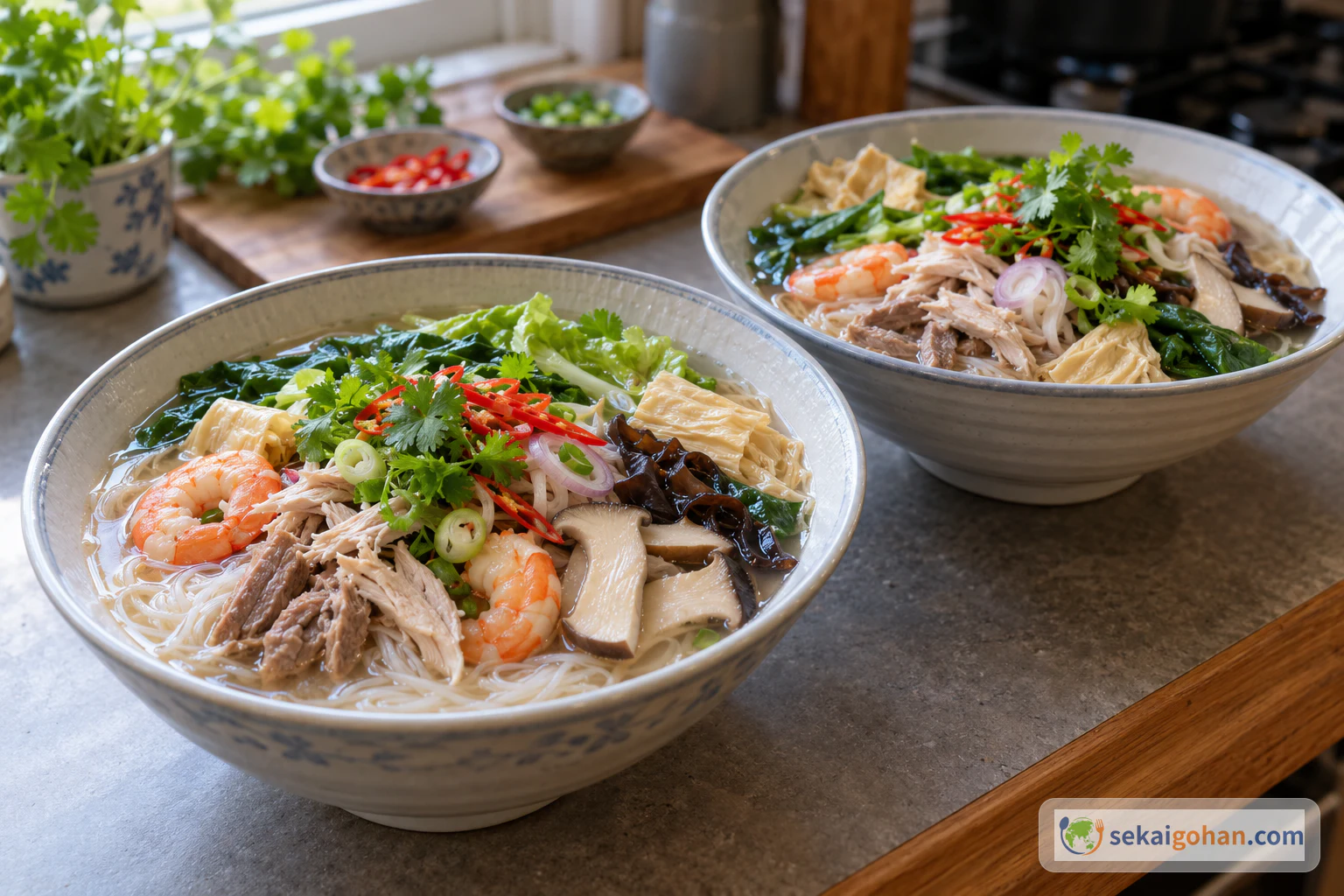
Crossing the Bridge Noodles (过桥米线): Rice Vermicelli Under a Fresh Boil of Pork and Chicken Stock
How to make crossing the bridge noodles (過橋米線 / 过桥米线, guò qiáo mǐxiàn) for two, following Ching-He Huang's BBC Good Food version. Pork ribs and skinless chicken thighs are blanched, then simmered in fresh water for a clear stock, shredded, and set in wide bowls with cooked rice vermicelli, cooked tiger prawns, mushrooms and greens under reboiled broth, with six separate condiments on the side.
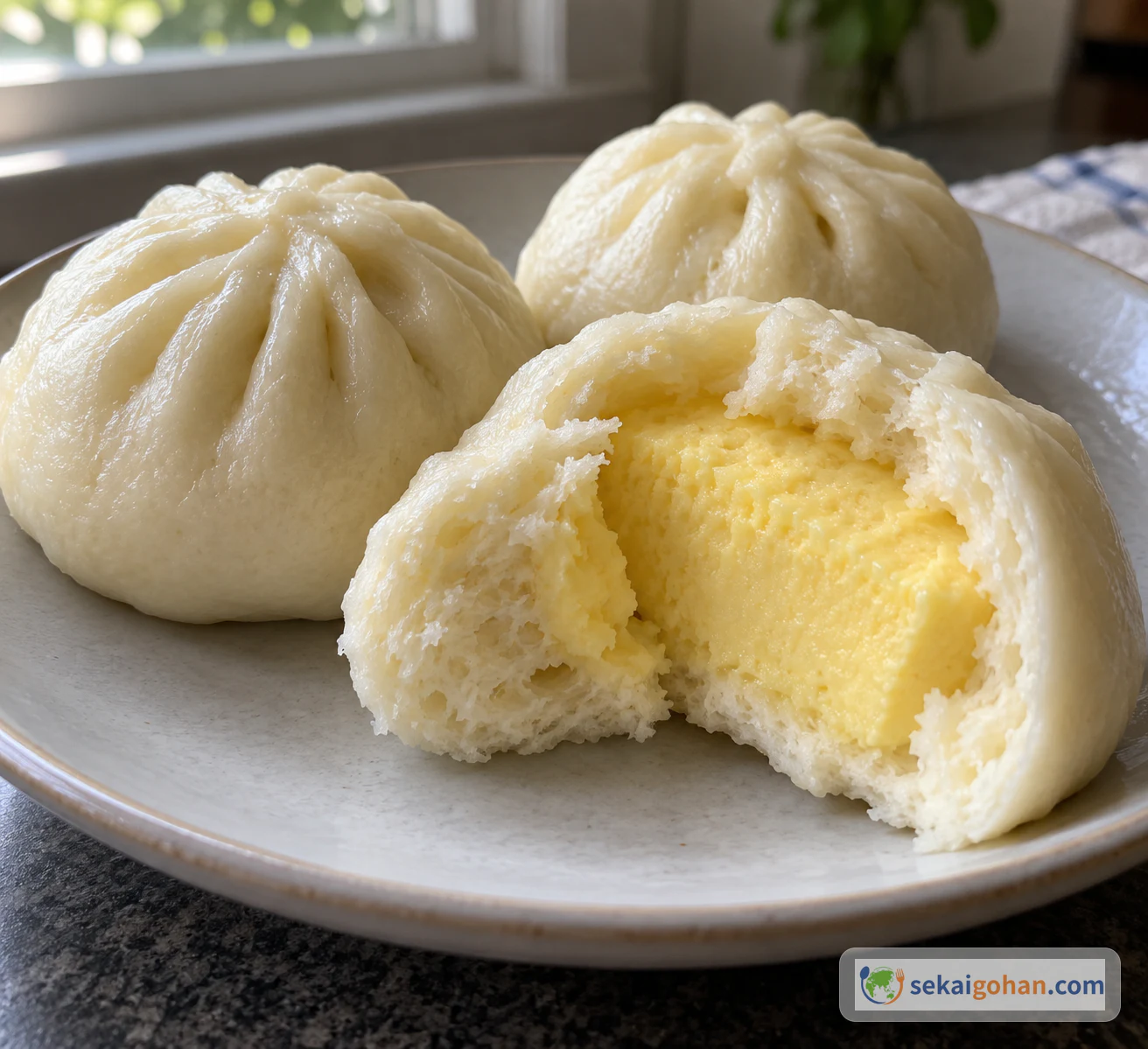
Nai Wong Bao: Cantonese Steamed Custard Buns (奶黃包)
How to make nai wong bao (奶黃包), Cantonese steamed custard buns, following Judy's 12-bun recipe from The Woks of Life. A thick egg-and-dairy custard is cooked over a water bath, cooled, rolled into balls and wrapped in a lightly sweet coconut-milk dough. Filling and dough are measured separately, milk is added to the dough a tablespoon at a time depending on humidity, and the steaming is timed from the moment the heat goes on.
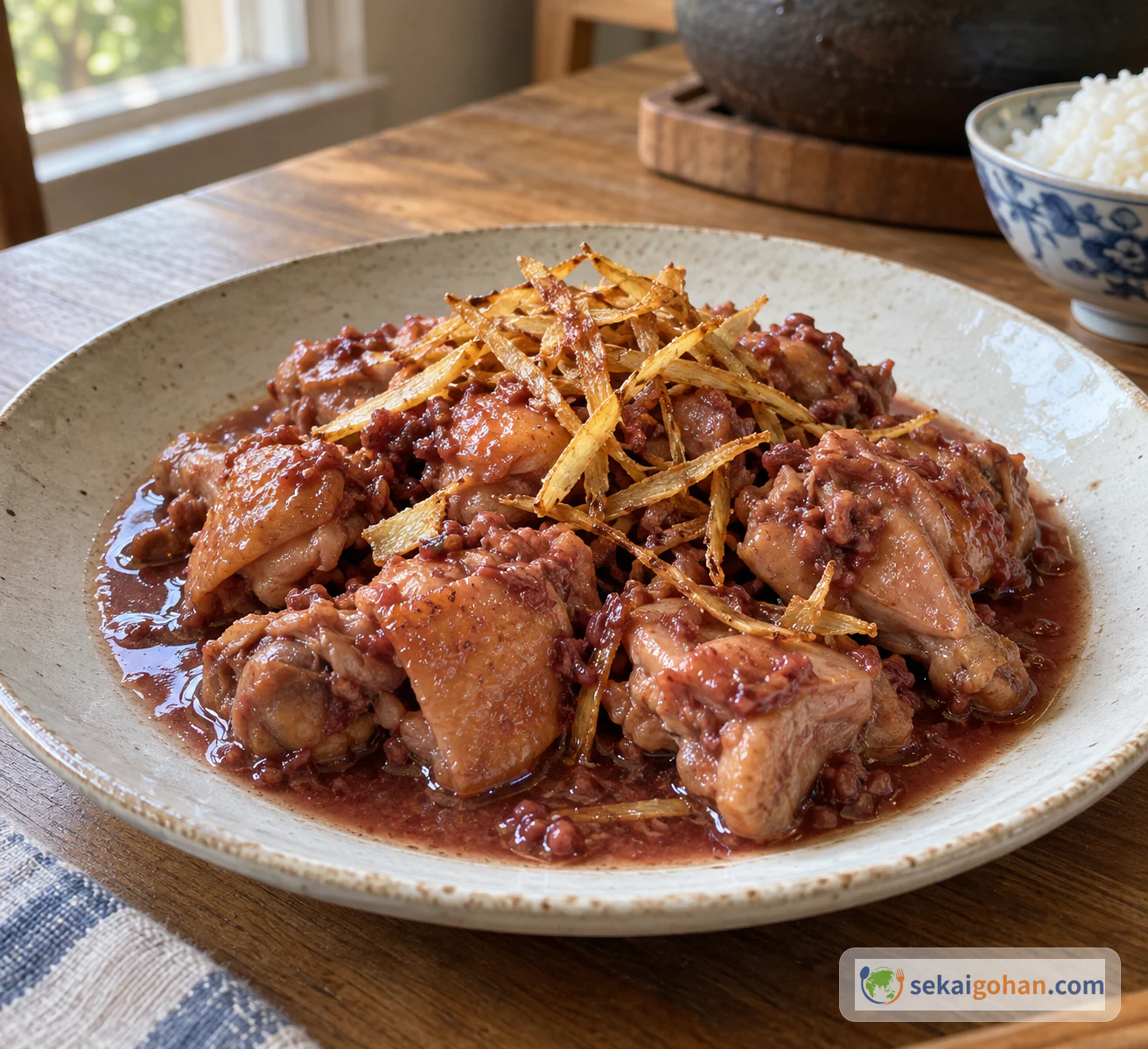
Hong Zao Ji: Foochow-Style Chicken Braised in Red Rice Wine Lees (紅糟雞)
How to make hong zao ji (紅糟鶏 / 红糟鸡 / 紅糟雞), a Foochow-style home dish of chicken thigh marinated in red glutinous rice wine lees and braised in red glutinous rice wine with fried ginger. Covers the 500 g recipe step by step, why this is not grape red wine chicken, how to shop for the specialty ingredients, checking doneness with a thermometer, honest substitutions, and how it differs from other red-lees chicken dishes around Fuzhou.
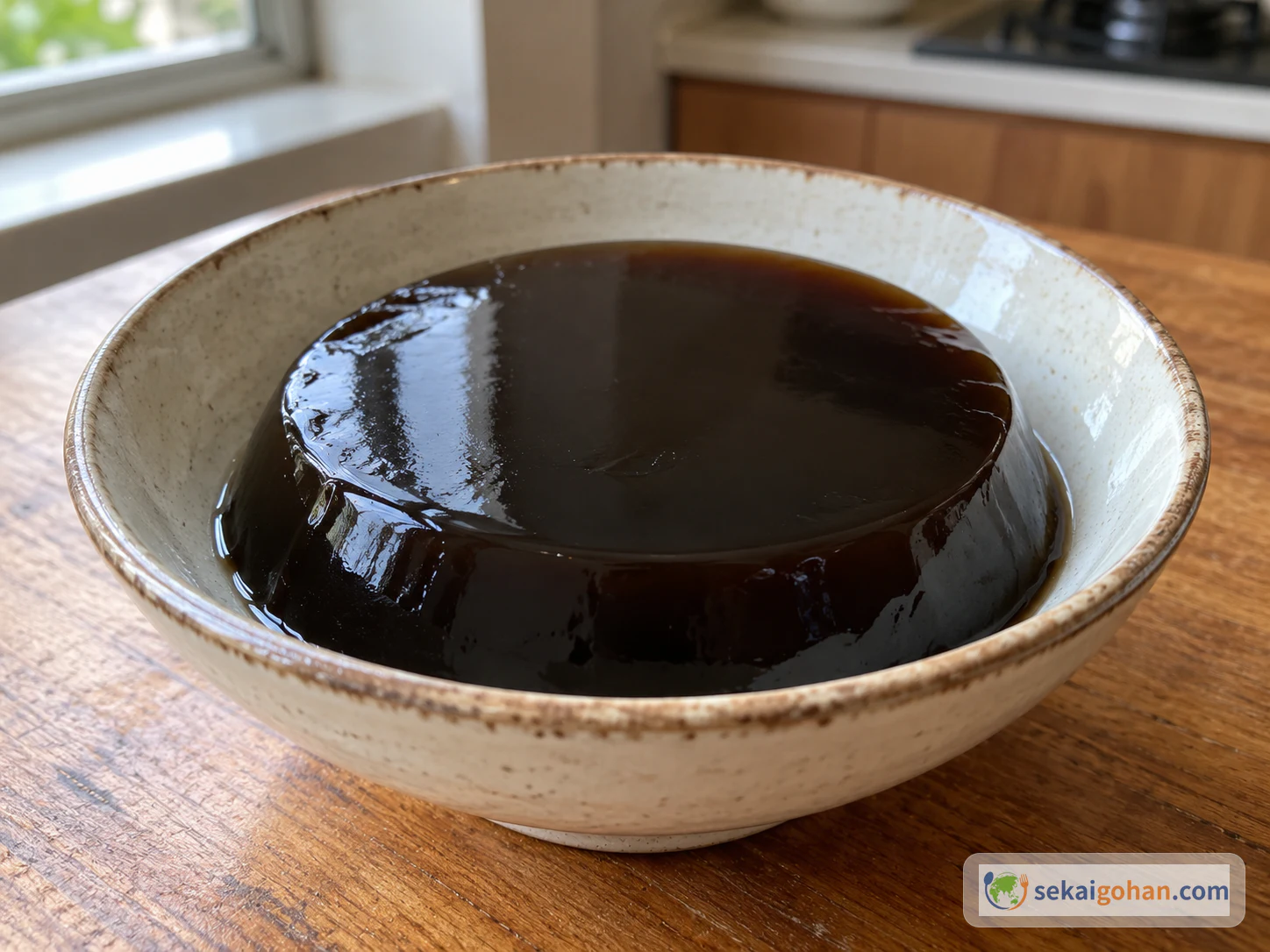
Guilinggao (龟苓膏): Herbal Jelly Made from One Sachet of Powder
How to make guilinggao (龟苓膏 / 龜苓膏) from one 50g sachet of Original guilinggao powder: 250ml cooled boiled water, a separate 1L of water and 150g sugar, then 10 minutes of stirring over low heat. Also covers how this home powder version differs from the guilinggao craft of Wuzhou, why grass jelly is a different food, and how to handle leftovers.
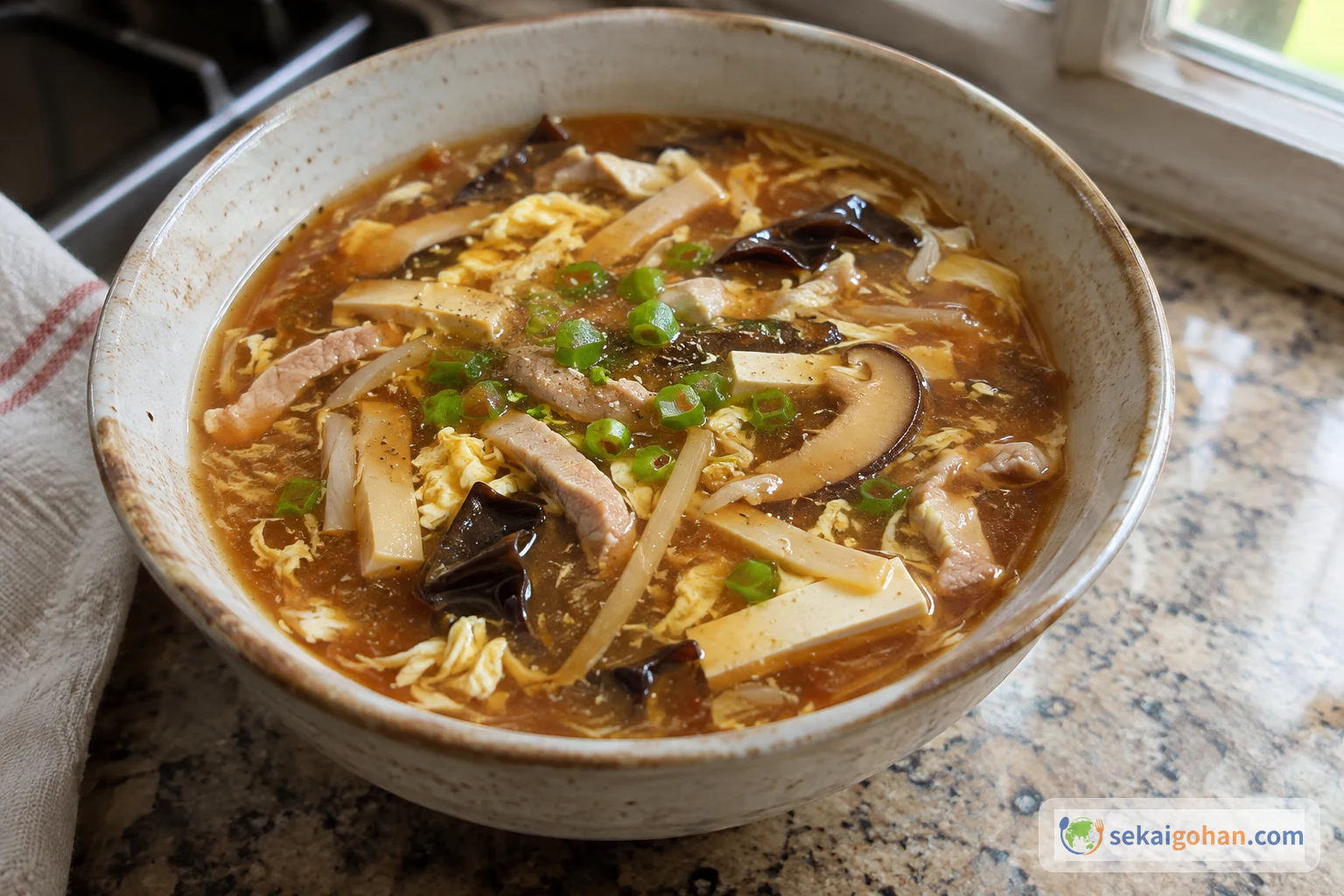
Hot and Sour Soup (Suān Là Tāng): A Chinese American Takeout-Style Family Recipe
How to make hot and sour soup (酸辣湯, suān là tāng) in the Chinese American takeout style, from a family recipe rooted in a US Chinese restaurant. Covers white pepper and distilled white vinegar, soaking lily flowers, wood ear and shiitake, two kinds of tofu, cornstarch thickening and egg ribbons, with safe cooking of the pork and honest notes on substitutions.
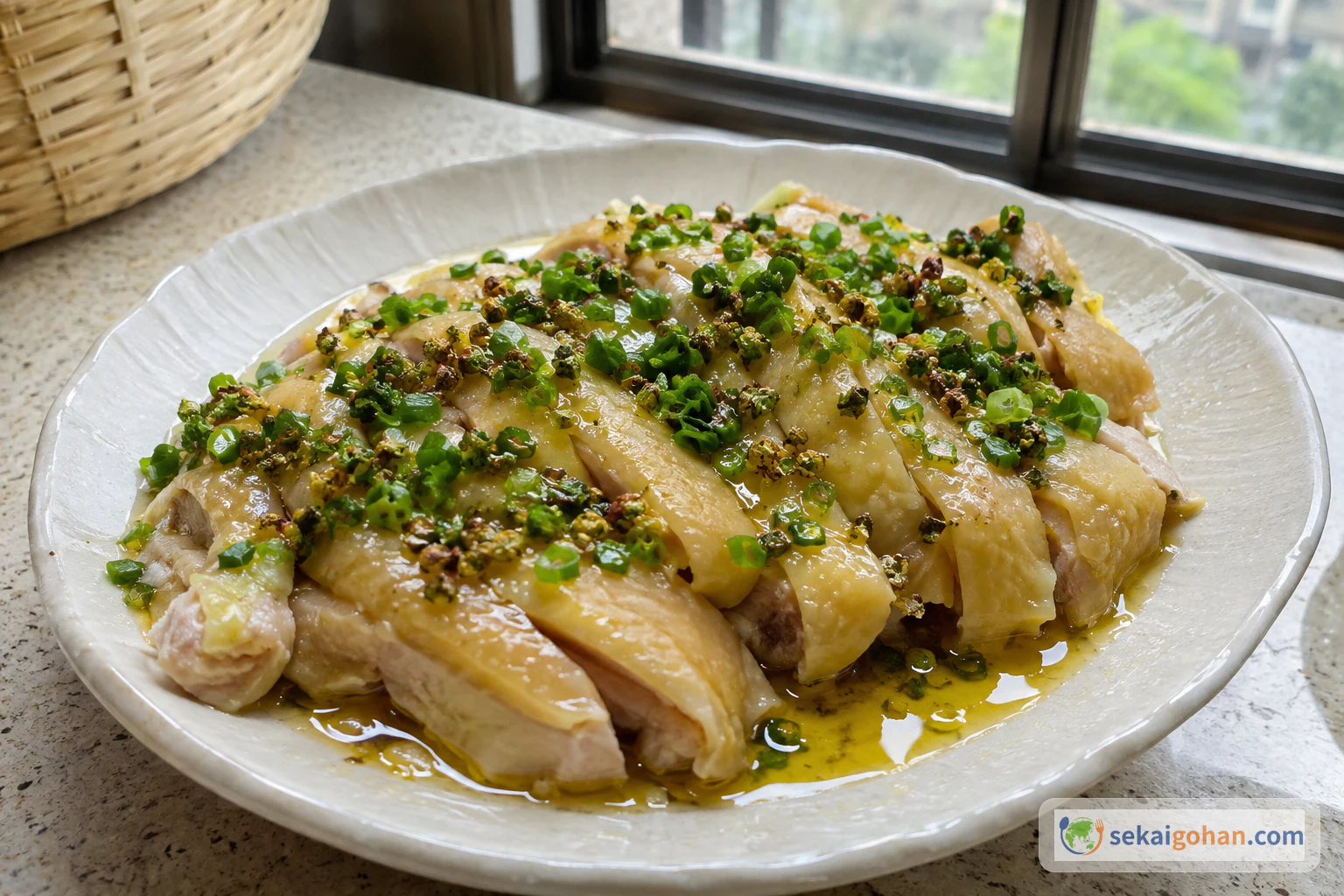
Jiao Ma Ji: Sichuan Cold Steamed Chicken with Sichuan Pepper and Scallion Oil (椒麻雞)
How to make jiao ma ji (椒麻雞 / 椒麻鸡), a Sichuan-style cold dish of steamed boneless chicken thigh dressed with scallion greens and crushed Sichuan pepper bloomed in hot rapeseed oil, then loosened with the chicken's own steaming juices, salt and a little sesame oil. Covers how it differs from fried Taiwanese jiao ma ji and red chili-oil chicken, choosing the pepper and oil, checking doneness with a thermometer, and handling the chilled chicken safely.
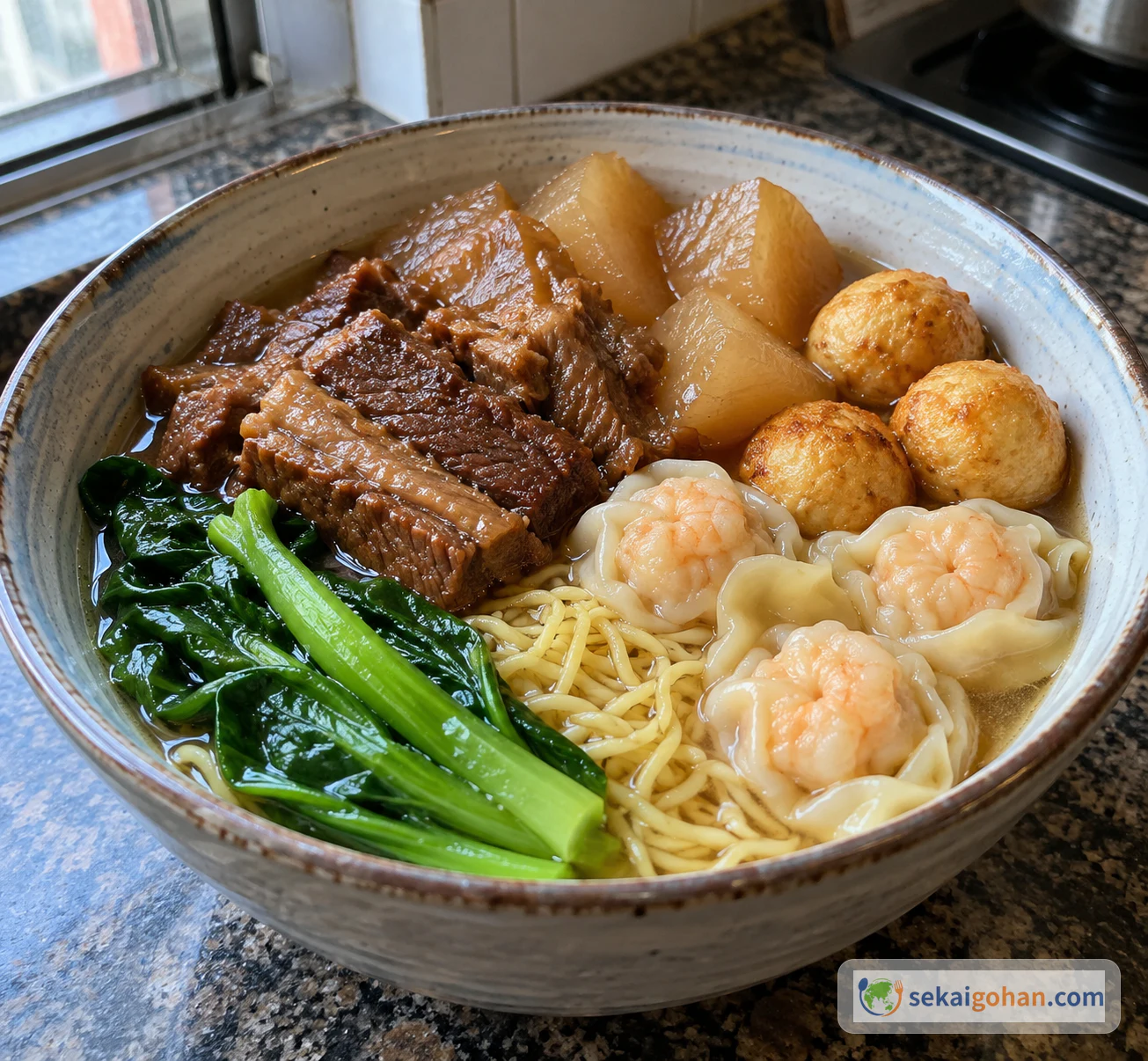
Hong Kong Cart Noodles (車仔麵): Oil Noodles with Chu Hou Brisket and Radish, Satay Fish Balls, Shrimp Wontons and Choy Sum
How to make Hong Kong cart noodles (車仔麵) at home: Cantonese oil noodles warmed in leftover steamed-chicken broth and choy sum water, topped with chu hou braised beef brisket and radish, satay fish balls, shrimp wontons and choy sum. Covers the two topping pots, the assembly order, safe thawing and cooking temperatures, and what the recipe leaves unspecified.
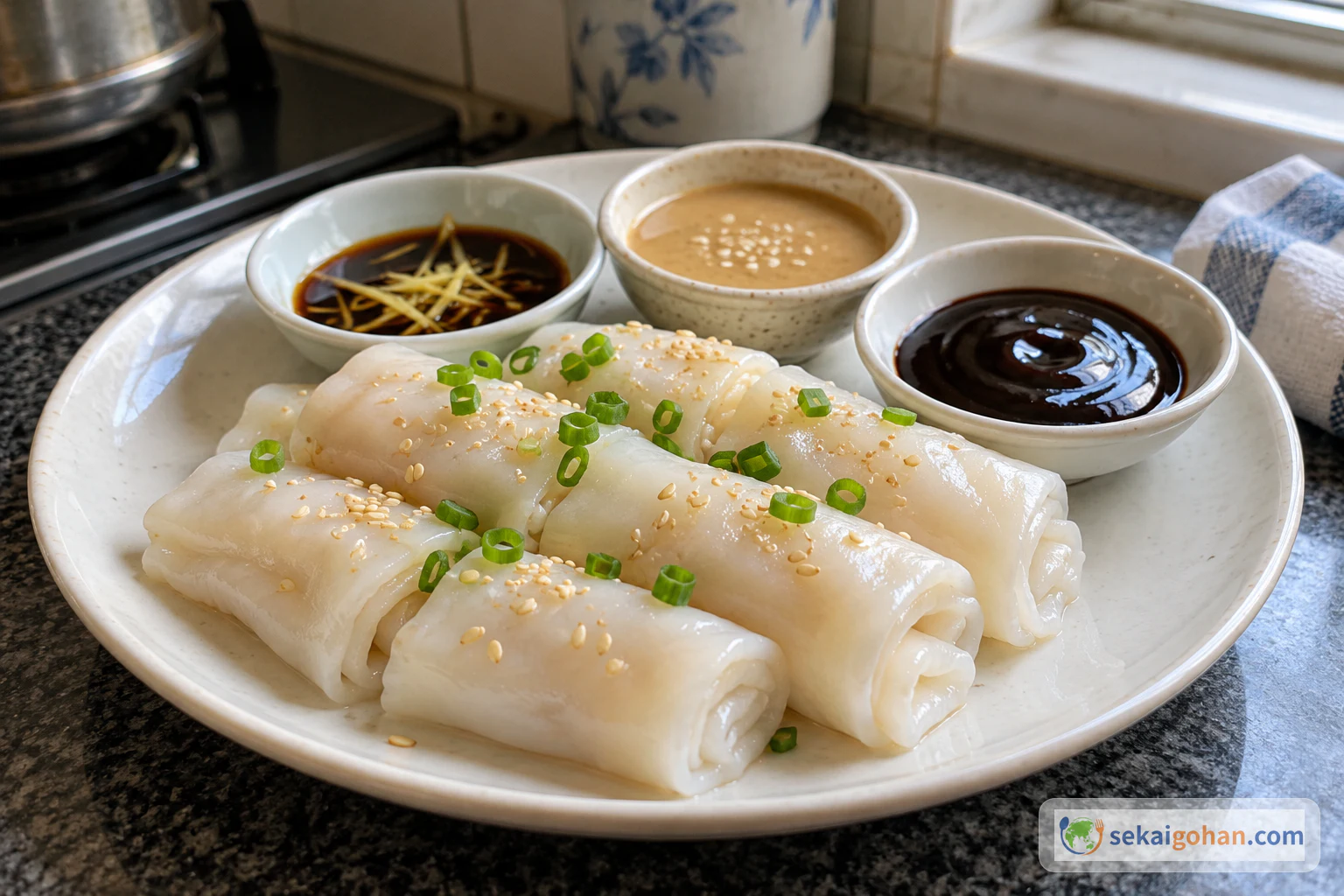
Cheung Fun: Hong Kong Steamed Rice Noodle Rolls (腸粉)
How to make plain Hong Kong-style cheung fun (腸粉) at home. A batter of rice flour, corn starch, tapioca starch and mung bean starch is steamed in thin sheets on a shallow tray, rolled without filling, sliced, and served with three sauces: ginger soy, sesame peanut, and sticky sweet hoisin. Includes where the dish sits in Hong Kong dim sum and street food, how to choose the starches, and how to spot a cooked sheet.
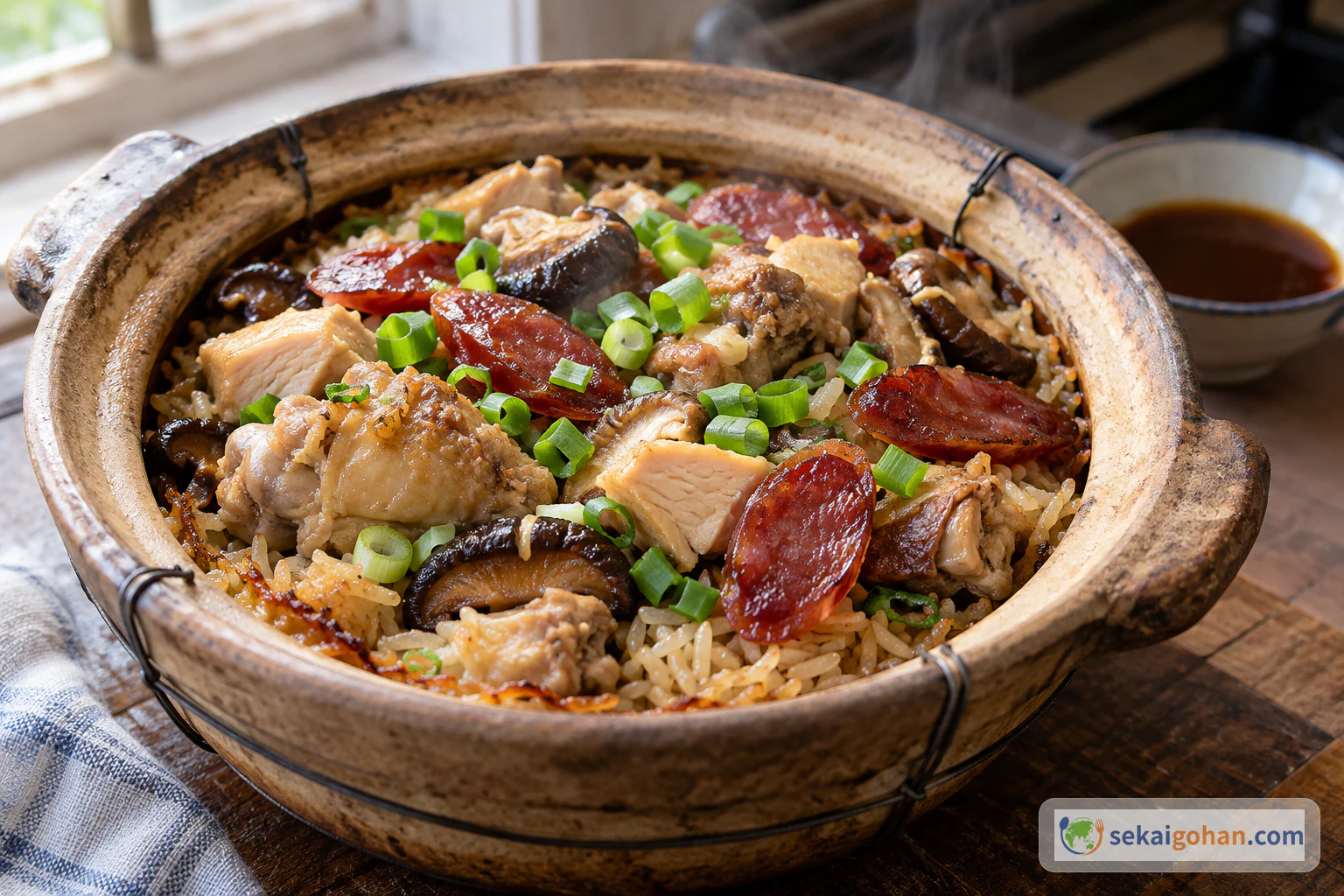
Hong Kong Claypot Rice (煲仔飯): Chicken and Chinese Sausage in a Clay Pot
One version of Hong Kong claypot rice (煲仔飯), made with chicken, whole Chinese sausage, dried shiitake and long-grain rice. Covers the boiling-water soak and fresh cooking water, when each oil goes in, the two covered tilting passes for the crust, and how to use the serving sauce.
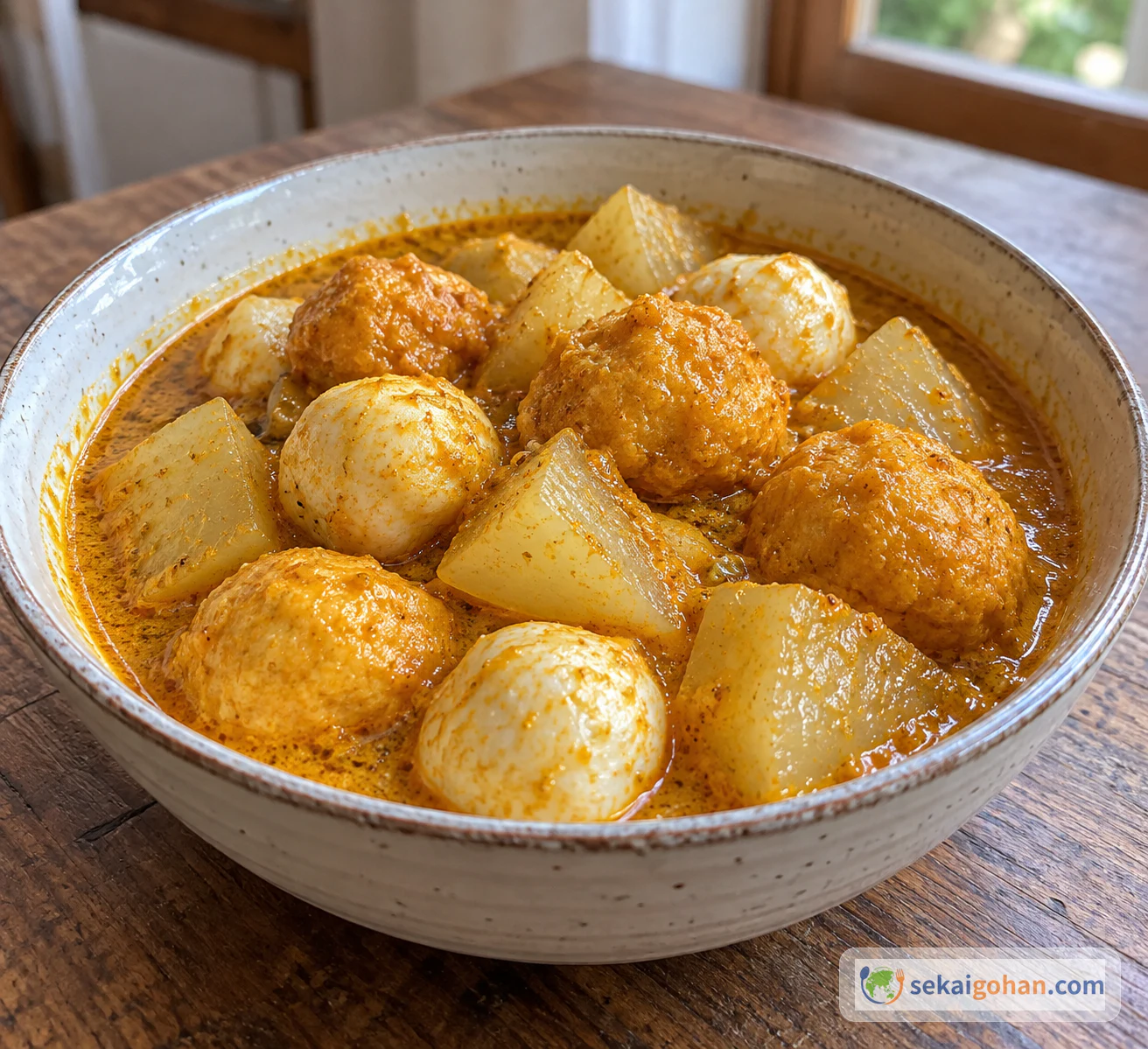
Curry Fish Balls with Radish: A Hong Kong Home Version (咖哩蘿蔔魚蛋)
How to make curry fish balls with radish (咖哩蘿蔔魚蛋): prepared fried yellow and boiled white fish balls simmered with radish in a curry-paste sauce with chicken stock, oyster sauce, soy sauces, coconut milk and raw sugar. Covers the ingredients, the order of the nine steps, how this home version differs from other Hong Kong street-food-style recipes, and what the recipe does not specify.
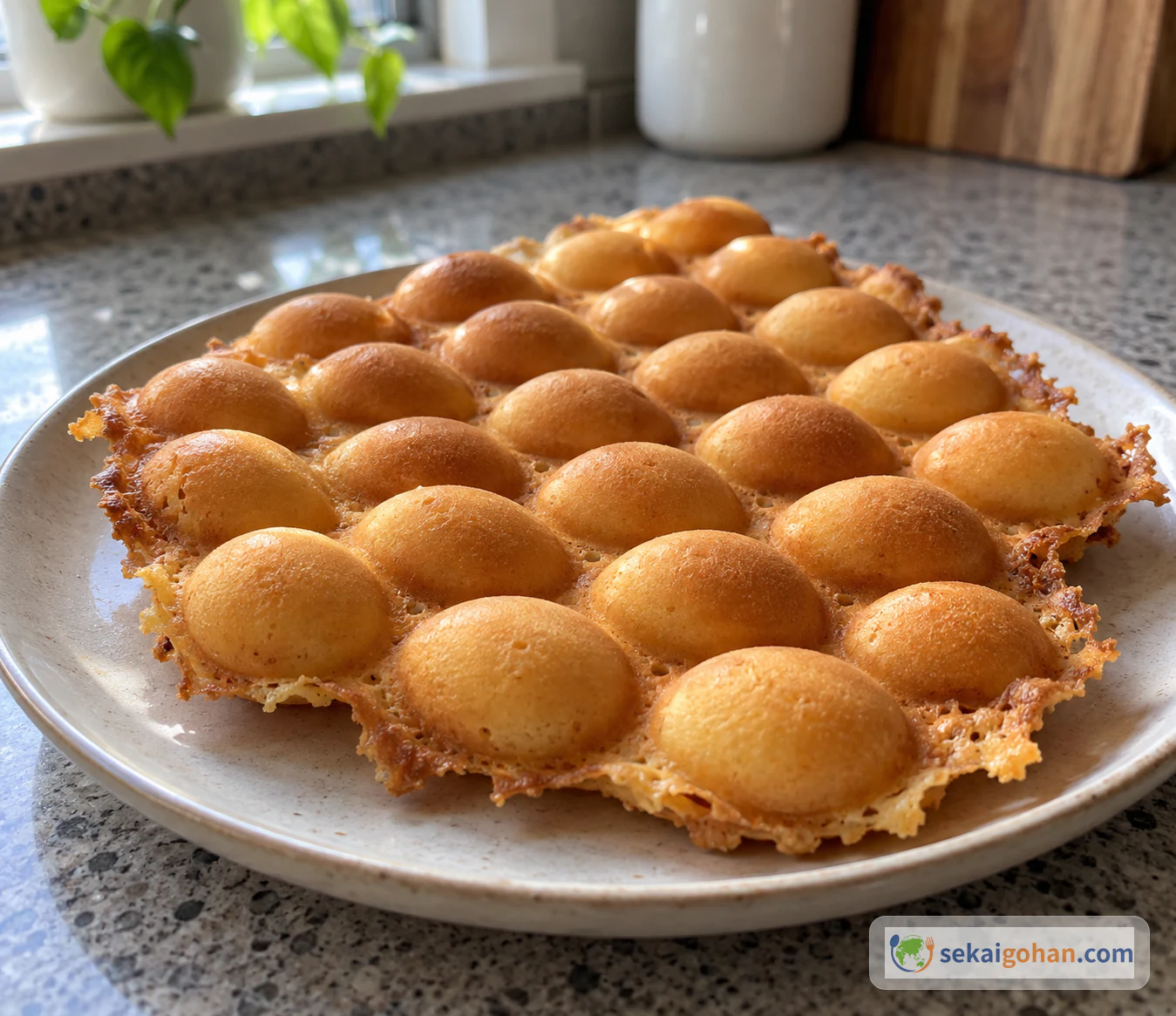
Hong Kong Egg Waffles (Gai Daan Jai): A Rice-Flour Recipe for a Stovetop Iron
How to make Hong Kong egg waffles (gai daan jai) at home with one author's rice-flour recipe and a manual two-sided stovetop iron. Covers every ingredient amount, how full to fill the mold, flipping and judging golden color, fixing sticking and over-browning, the plain style versus newer flavors, and where the street snack sits in Hong Kong food culture.
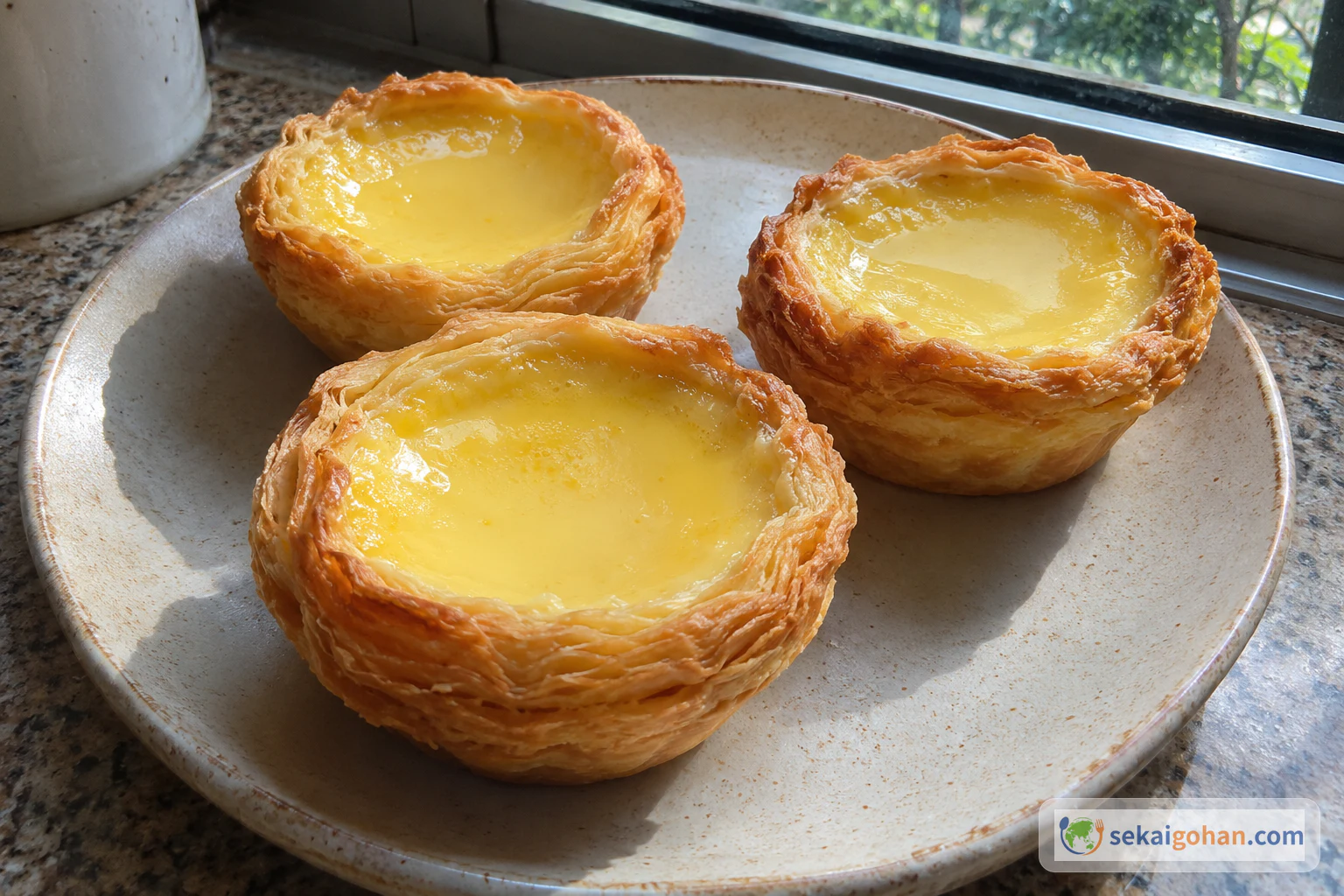
Hong Kong Egg Tarts (蛋撻) with Flaky Rough-Puff Pastry
How to make Hong Kong egg tarts (蛋撻) with a buttery rough-puff crust and a smooth, pale evaporated-milk custard. This home version makes 15 tarts in 3-inch molds and walks through every fold, the rested custard, the two-temperature bake on a baking steel or stone, and serving warm. It also covers fixes and how this flaky style differs from other Hong Kong crusts and from Portuguese custard tarts.
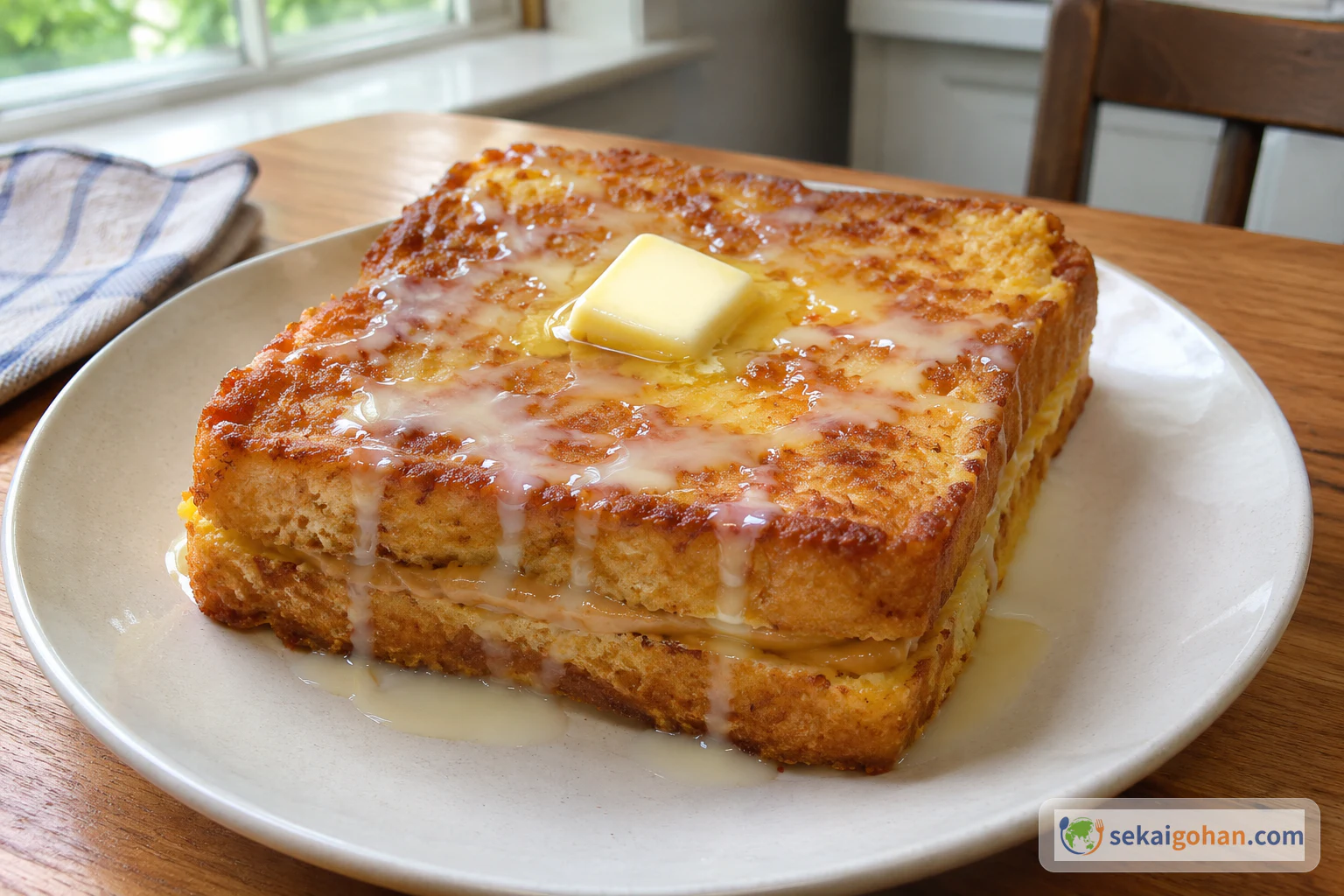
Hong Kong-Style French Toast (西多士): Peanut Butter Sandwiched, Dipped and Fried
How to make Hong Kong-style French toast: milk bread sandwiched with sweetened peanut butter, quickly coated in egg, fried two at a time and finished with sweetened condensed milk and unsalted butter. Covers the cha chaan teng setting, choosing the bread and peanut butter, the order of spreading, closing and trimming, frying in a skillet at 350°F, swaps, and common questions.
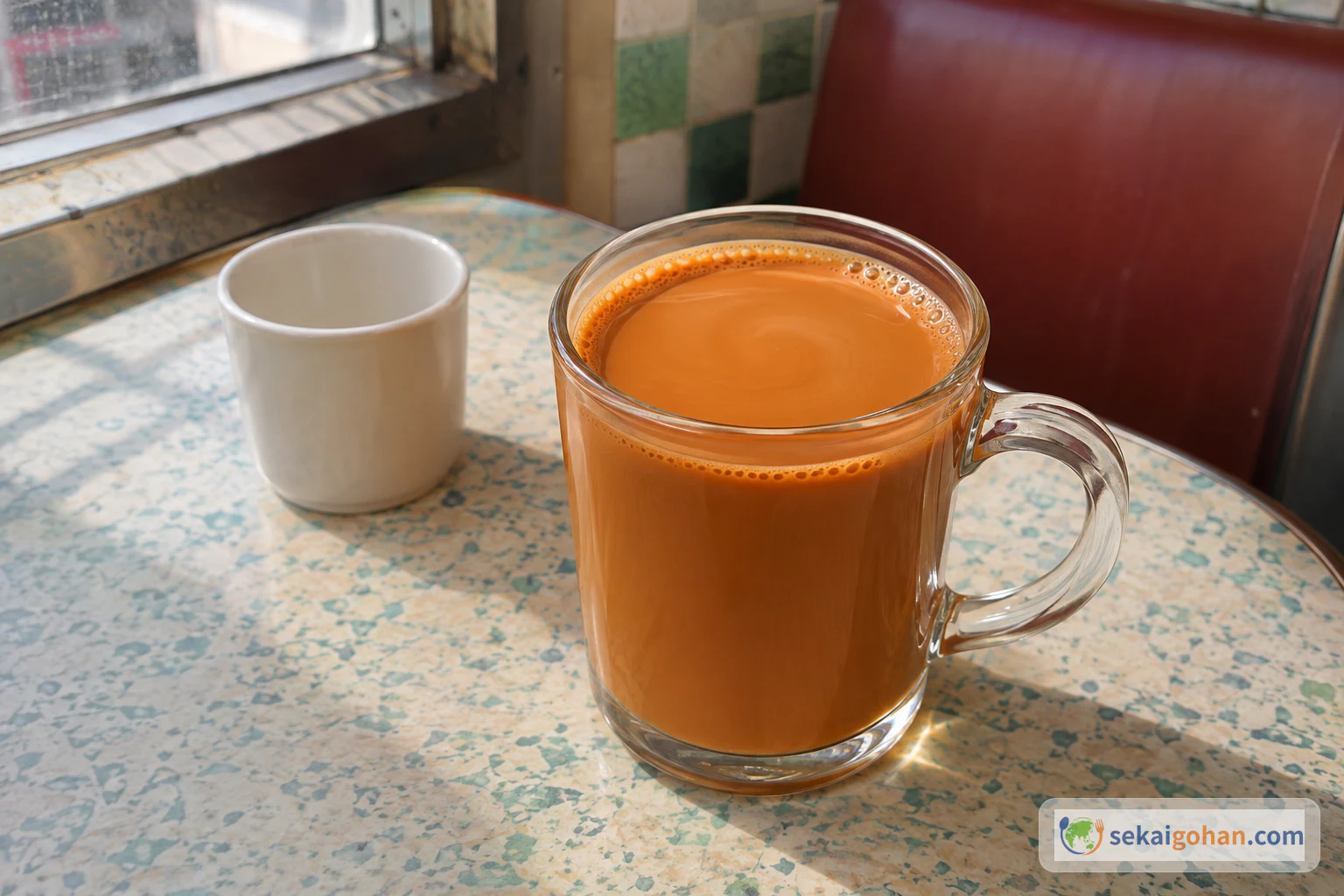
Hong Kong-Style Milk Tea (絲襪奶茶): Strong Brewed Black Tea with Evaporated Milk
How to make Hong Kong-style milk tea at home: black tea leaves boiled and then simmered for 15 minutes, strained through a cloth-lined fine-mesh strainer, and finished with evaporated milk and a little sweetened condensed milk. Four servings in US measures, plus the story behind the name 'silk stocking milk tea' and the cha chaan teng culture it comes from.
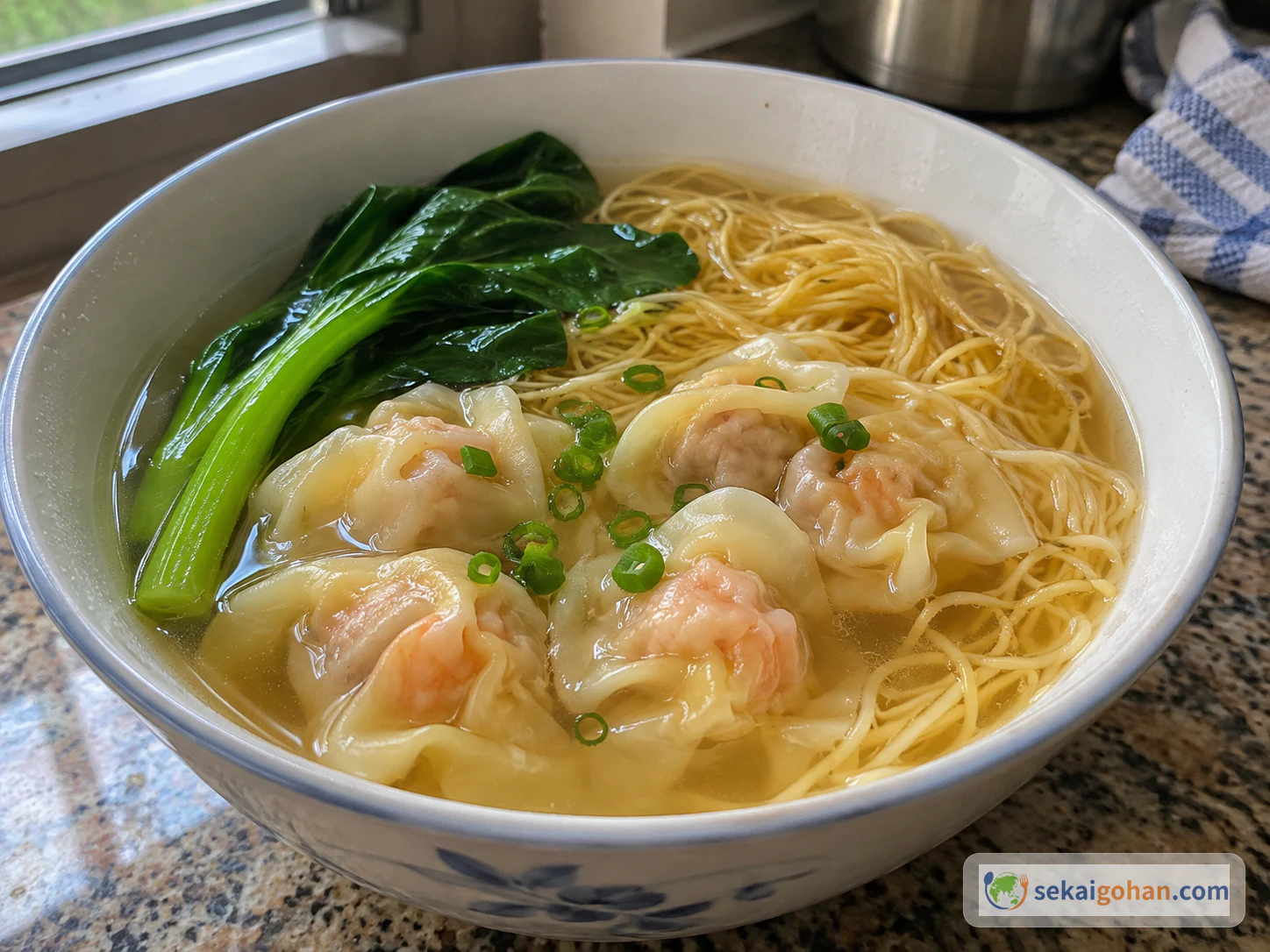
Hong Kong-Style Wonton Noodles (雲吞麵): Shrimp and Pork Wontons in Clear Chicken Broth
How to make Hong Kong-style wonton noodles at home: shrimp and pork wontons wrapped as small purses, thin yellow egg noodles, and a clear chicken broth kept in its own pot. Covers the sticky filling, keeping wrappers from drying, cooking noodles and wontons in plain water, checking the wonton center, assembling just before eating, and honest substitutions.
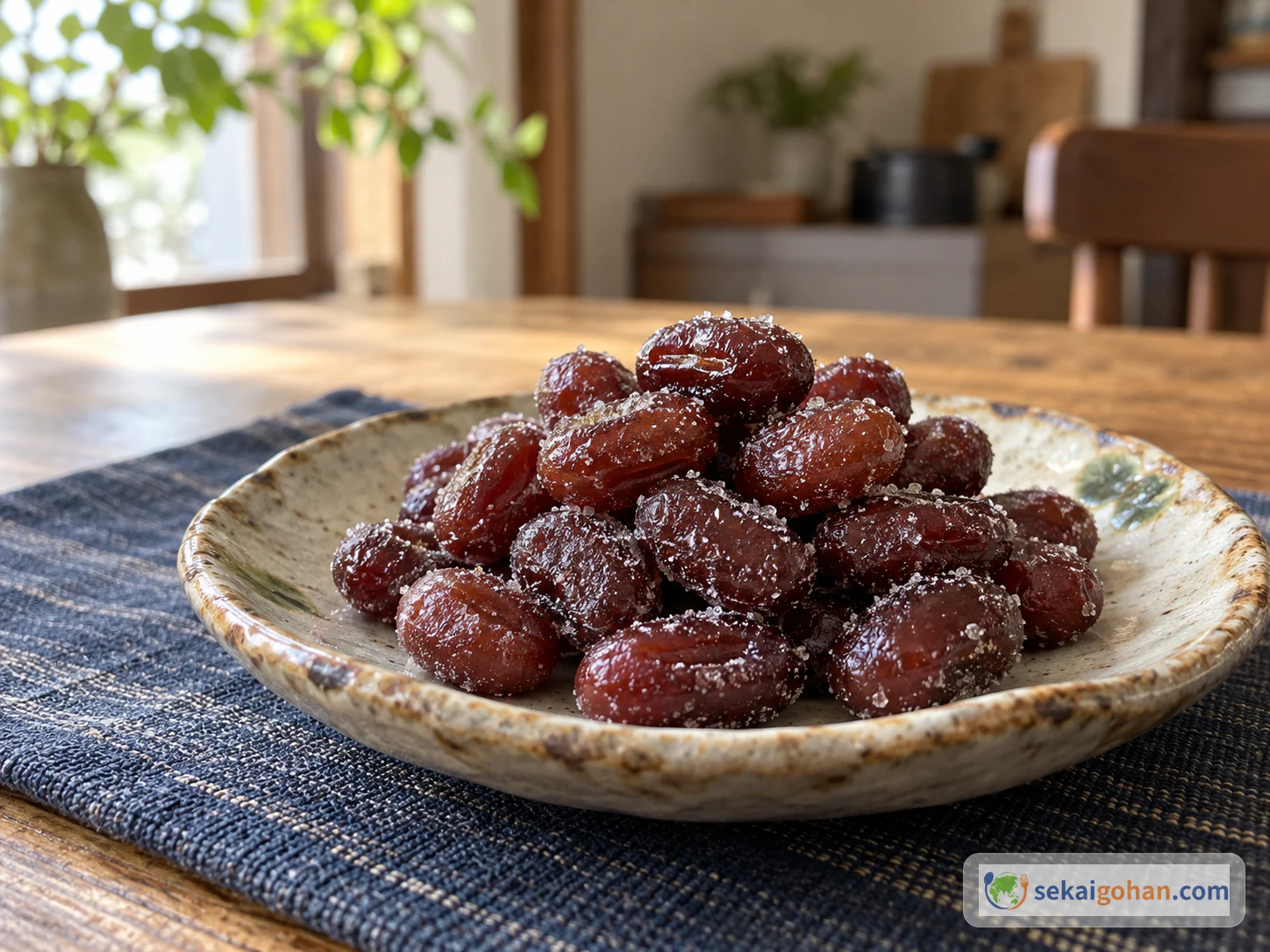
Amanattō: Japanese Sweet Beans Made from Dainagon Azuki (甘納豆)
How to make amanattō (甘納豆), the Japanese tea-time sweet of whole beans steeped in syrup, using large Dainagon azuki beans. Covers sorting and parboiling the beans, gentle simmering, two overnight syrup soaks, drying, and the optional sugar coating, plus the dish's history as Eitaro tells it and how it differs from fermented natto.
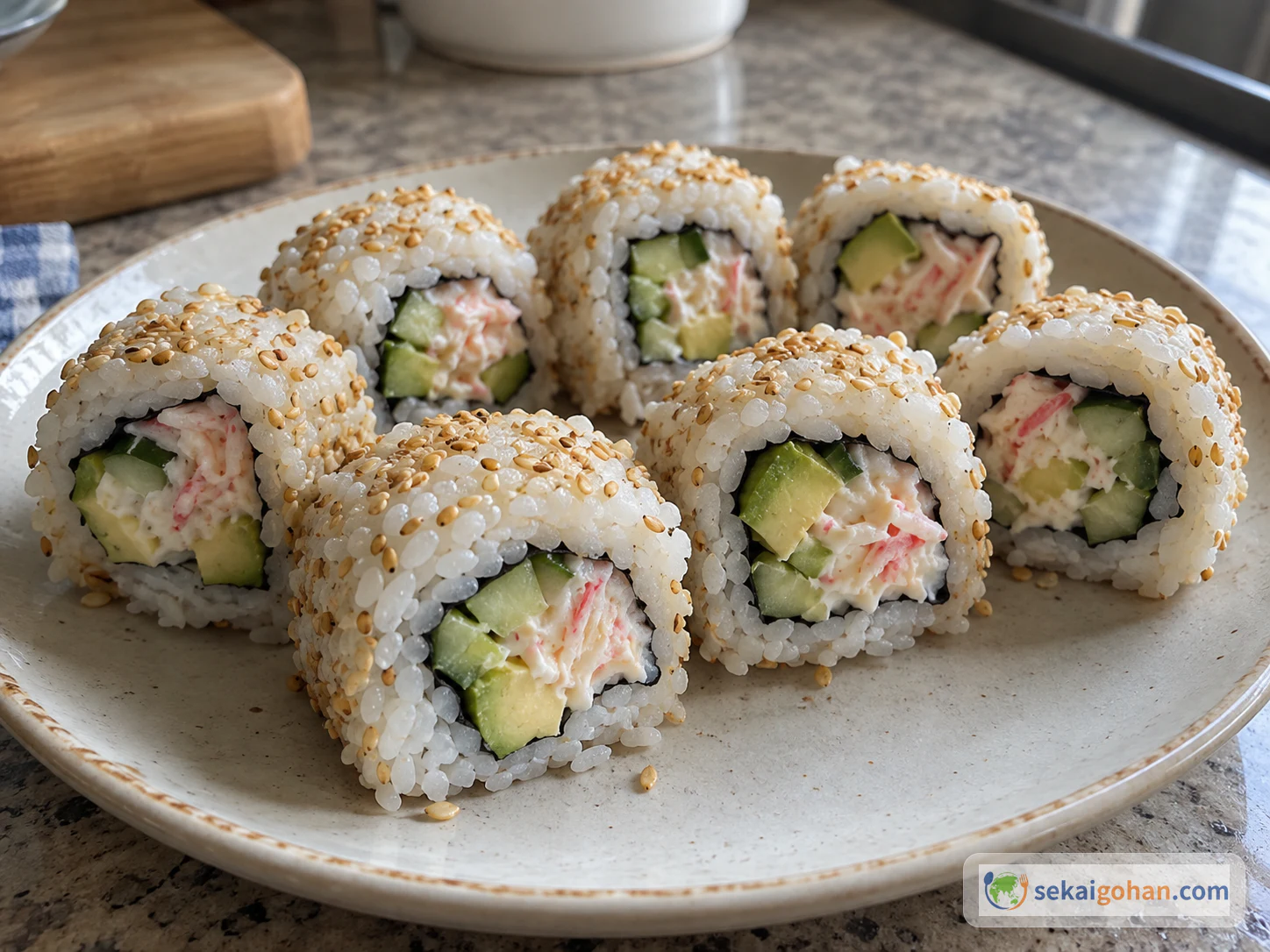
California Roll: How to Make an Inside-Out Sushi Roll, and Why Its Origin Is Still Debated
How to make California rolls with the rice on the outside, filled with precooked imitation crab and Japanese mayonnaise, cucumber and avocado. This recipe makes 8 rolls cut into 8 pieces each, uses no raw fish, and shows where to place the nori and filling on the mat. It also covers safe holding of sushi rice and the competing origin stories from Los Angeles and Vancouver.
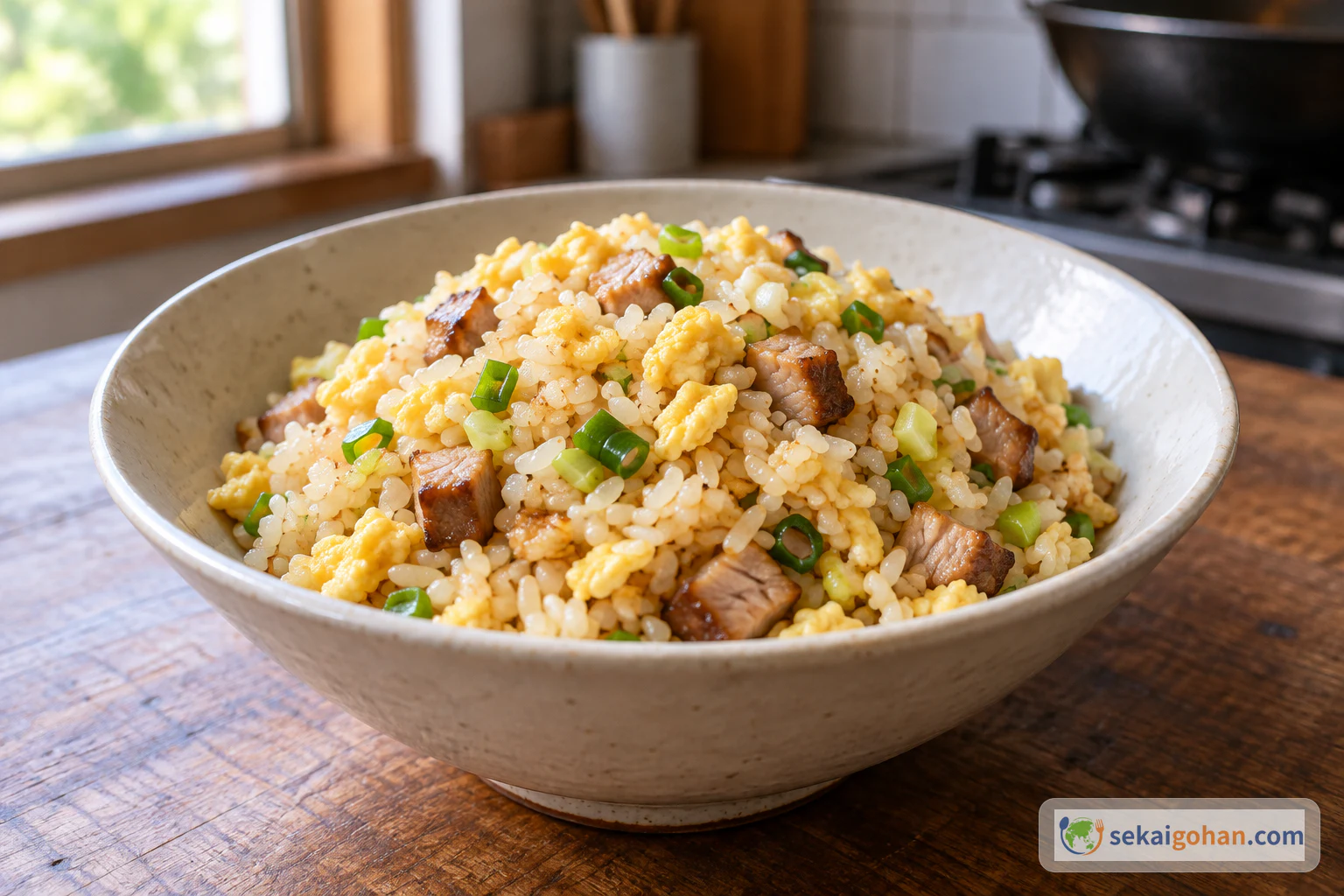
Chāhan: Ramen-Shop-Style Fried Rice with Char Siu and Negi Oil (One Serving)
A one-serving Japanese chāhan made with 200 g of warm cooked rice, char siu, egg, long green onion and garlic. Half the negi and the garlic are warmed in oil over low heat for 2–3 minutes, then egg, rice, chicken-stock powder, soy sauce, pepper, the remaining negi and the char siu go in, one batch at a time on a home burner.
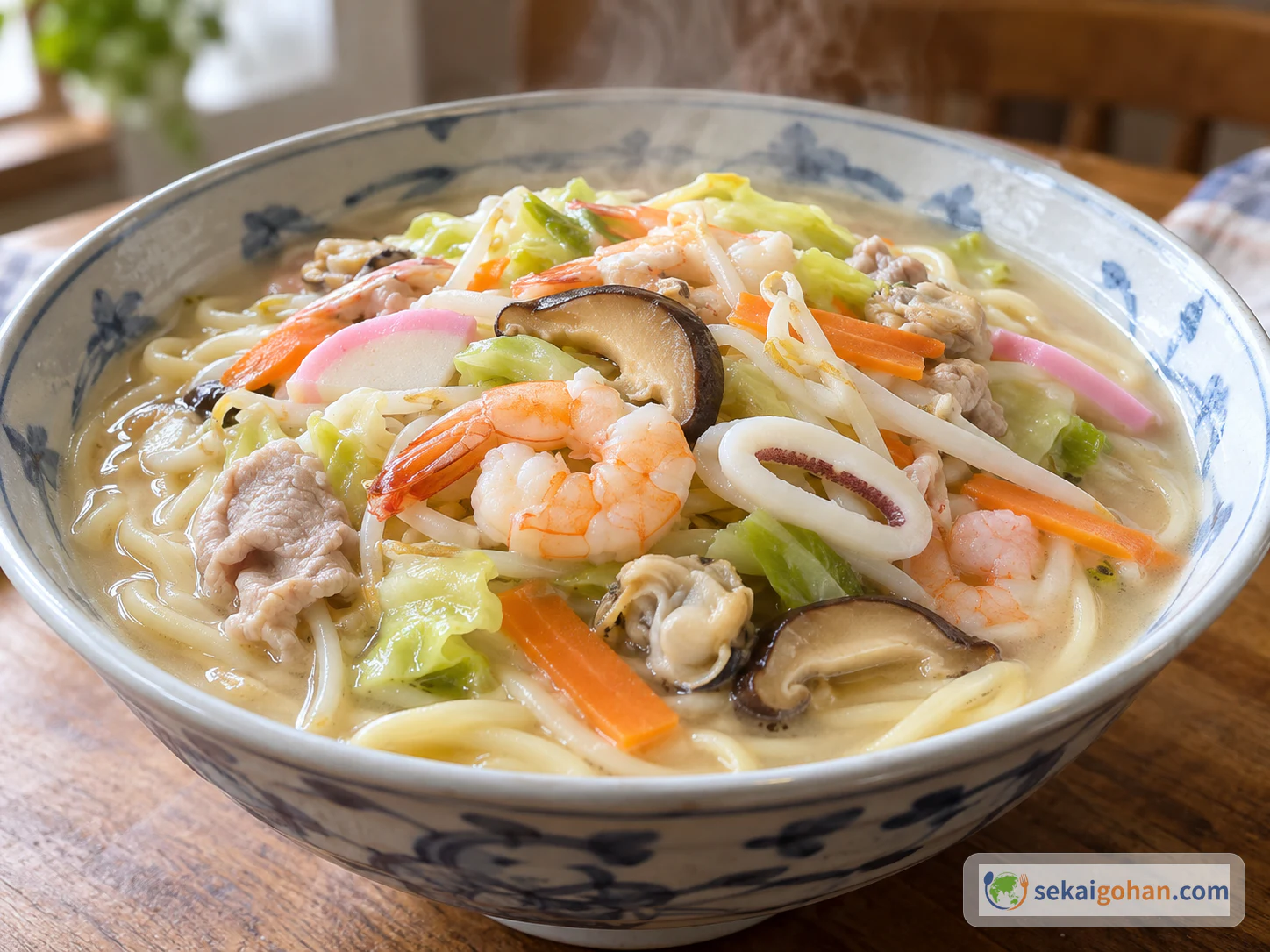
Nagasaki Champon: Pork, Seafood and Vegetables Simmered with Noodles in One Soup (Chanpon)
How to make Nagasaki champon (ちゃんぽん) for two, based on the Japanese Ministry of Agriculture's regional recipe. Boil the champon noodles separately, stir-fry pork and seafood, add vegetables and a mixed soup of oyster sauce and chicken stock powder, then simmer the noodles in it. Also covers how champon differs from sara udon, ramen and yakisoba, the origin accounts, and how ingredients and soups vary across Nagasaki.